
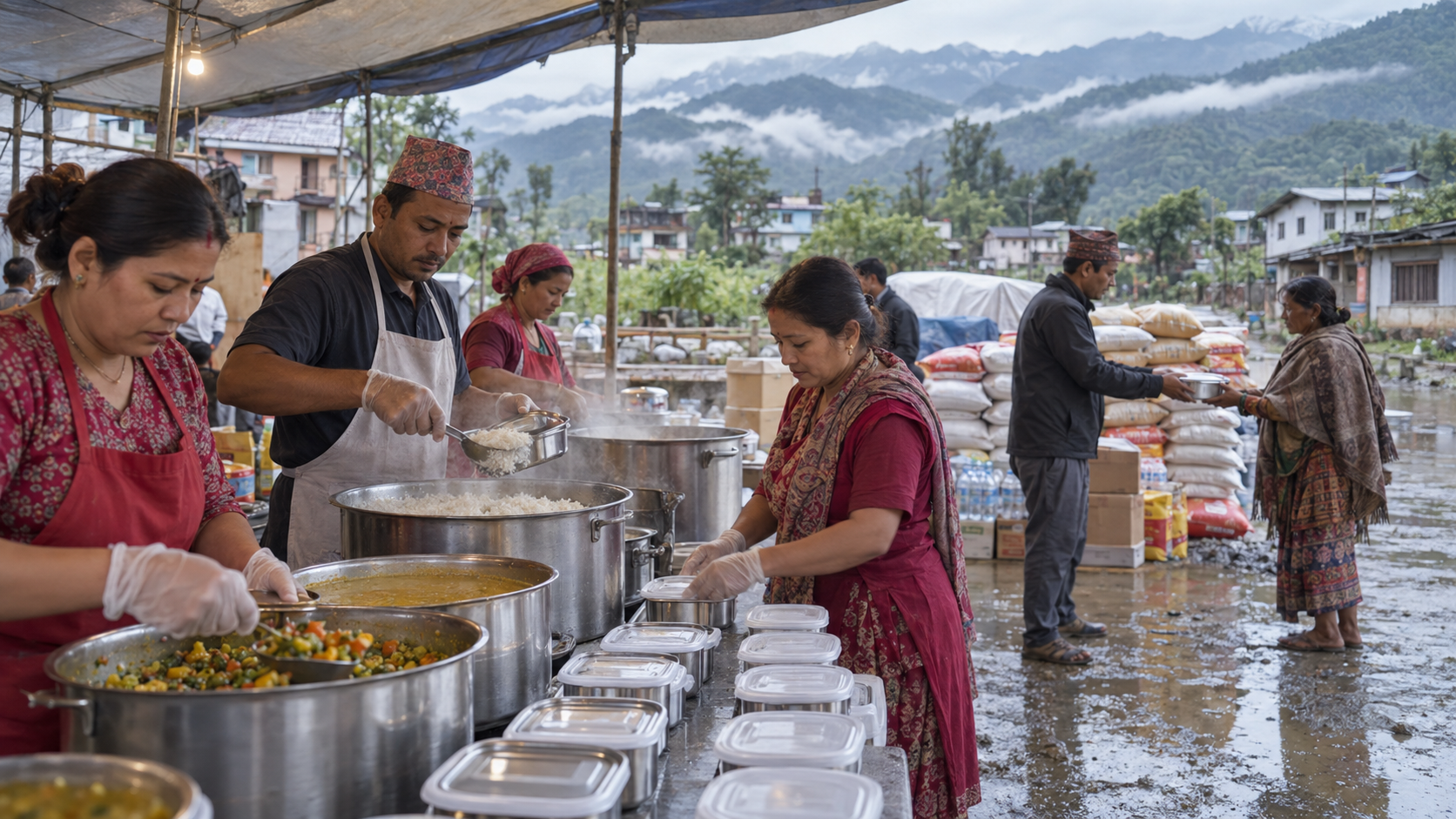
You see news of devotees serving flood-affected families in Nepal and want to help. Before you donate or share the appeal, you need to know what has been confirmed, what remains unknown, and how to keep your response useful.
Devotees are on the ground preparing hot prasadam and distributing it with essential food relief among communities affected by flooding. That is the firm core of the account. No meal count, distribution area, operating timetable, quantified needs list, or authenticated payment channel has been confirmed in the information available here.
Key takeaways
- Devotees in Nepal are cooking hot prasadam and distributing it alongside essential food relief in flood-affected communities.
- No public figures for meals, beneficiaries, locations, funds, or duration should be repeated without direct confirmation from the relief team.
- If you want to donate, obtain current payment instructions through an authenticated organizer rather than relying on a forwarded account number or an old screenshot.
- Ask what is needed before sending physical goods. Unrequested supplies can consume transport, sorting, storage, and volunteer capacity.
- When sharing the relief effort, link to the original update or field footage and keep your caption within the facts that can be verified.
What has actually been established in Nepal
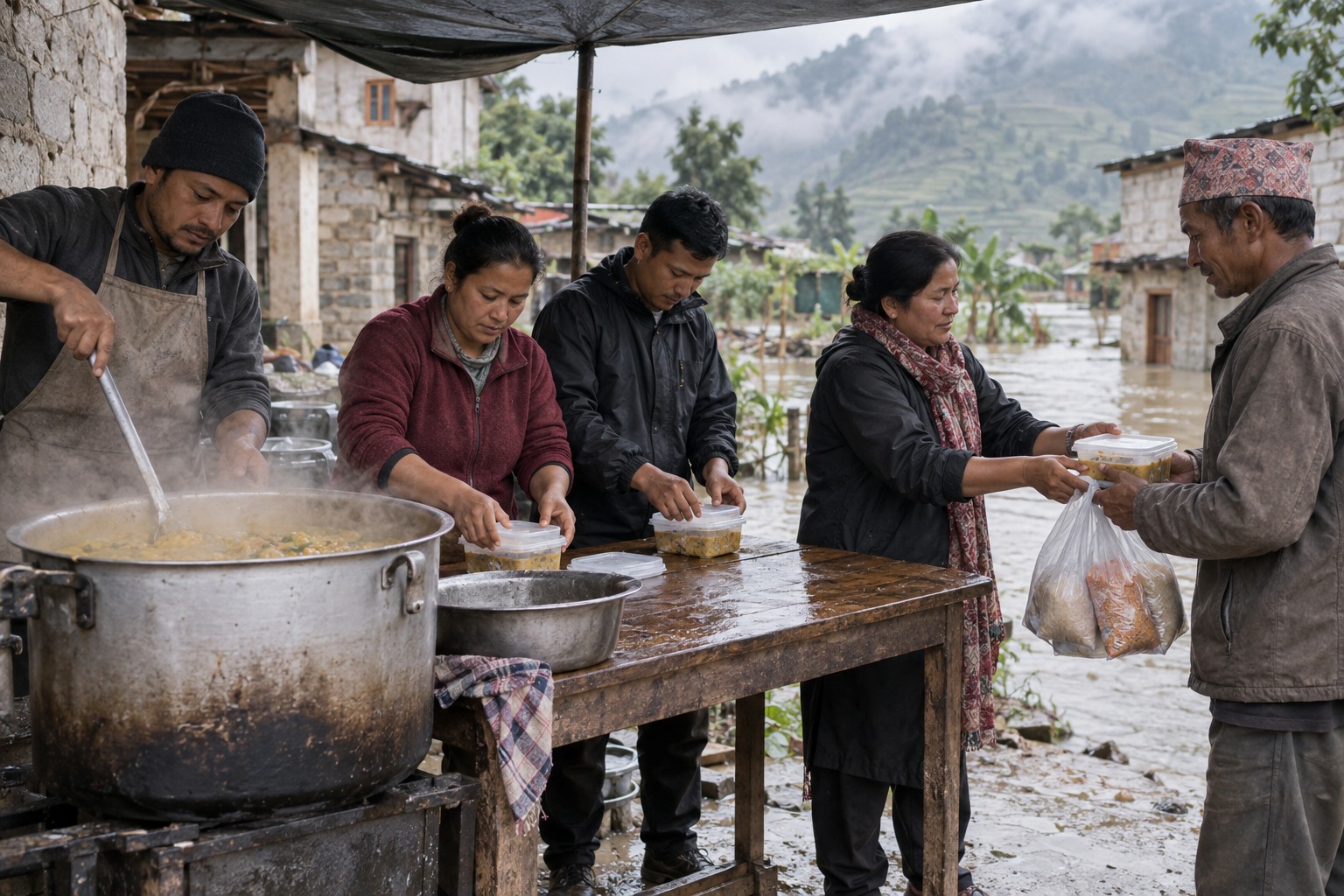
The confirmed activity has two parts. Devotees are cooking and serving hot prasadam, and they are distributing essential food relief. The beneficiaries are communities affected by the floods. Linked field footage provides a direct view of the service activity.
That is enough to recognise genuine seva in progress, but it isn’t enough to calculate the scale of the operation. A video can show that distribution is happening; it cannot, by itself, establish how many people have been reached, which settlements are covered, how much money has been spent, or what the team will need next.
If you discuss the effort, use precise language: devotees are serving flood-affected communities in Nepal. Avoid upgrading that statement into claims about nationwide coverage, a fixed number of meals, particular districts, or the length of the operation unless the people running the relief publish those details.
Why prasadam is more than a relief label
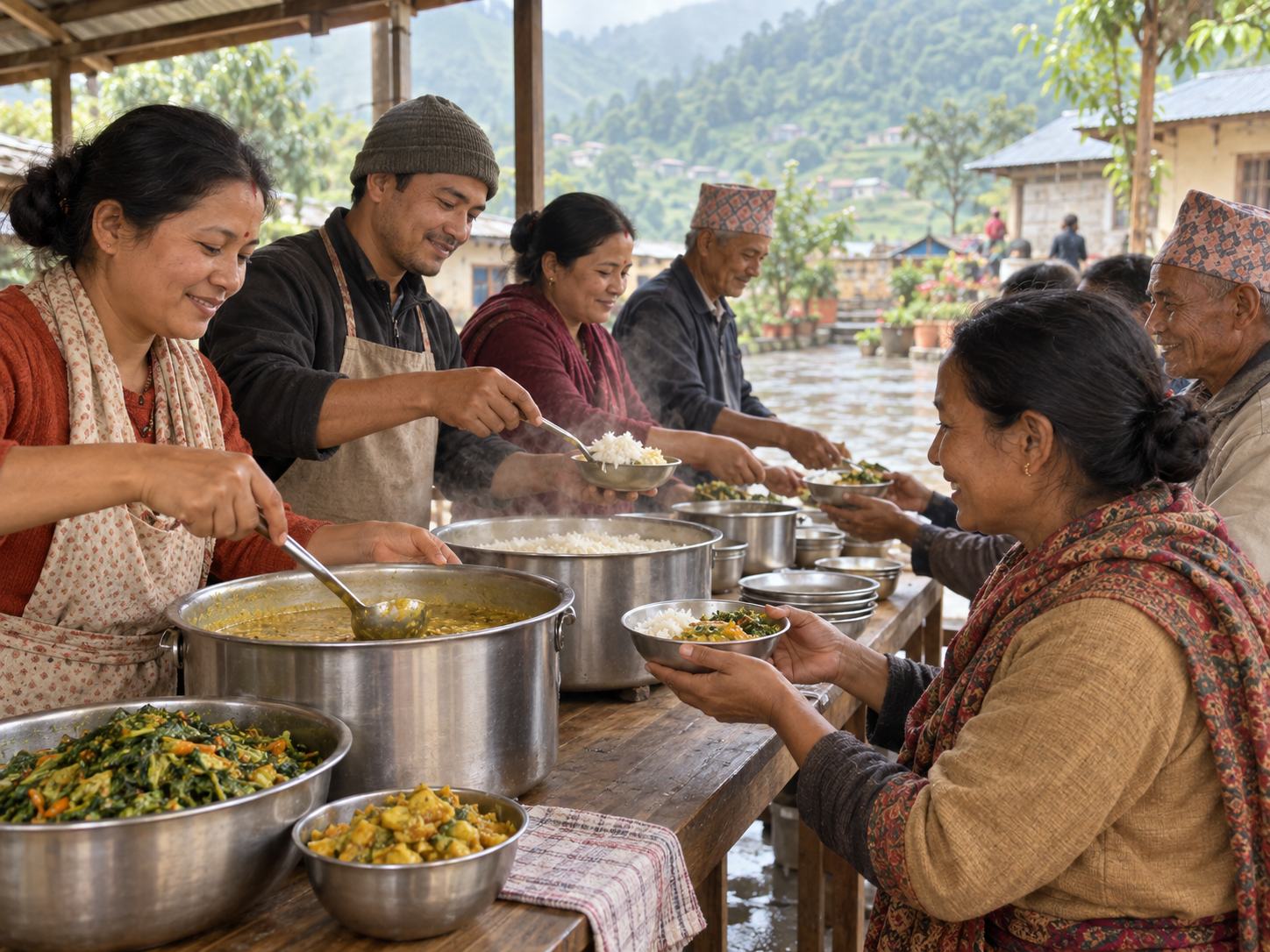
Prasadam is food prepared and offered in devotion, then received as grace. When devotees serve it during a disaster, the spiritual act and the material act meet in the same plate: hunger is addressed through food prepared with a devotional intention.
The word must not distract us from the practical standard of the service. Flood relief food still has to reach the people who need it, at the time they can receive it, in a form they can safely eat. In any flood emergency, access to kitchens, fuel, markets, transport, and stored food may be disrupted. A prepared hot meal can therefore meet an immediate need that uncooked supplies do not meet on their own.
For a Dharmic community, this is seva rather than spectacle. The recipient isn’t a backdrop for someone else’s display of piety. The dignity of the person receiving food comes first. That means avoiding intrusive images, exaggerated captions, or language that turns suffering into promotional material.
It also means that help should remain help. Food relief should not depend on a recipient participating in worship, expressing gratitude publicly, or appearing in photographs. Prasadam carries its devotional meaning through the spirit in which it is offered, not through pressure placed on a person facing hardship.
How to support the seva without burdening the team
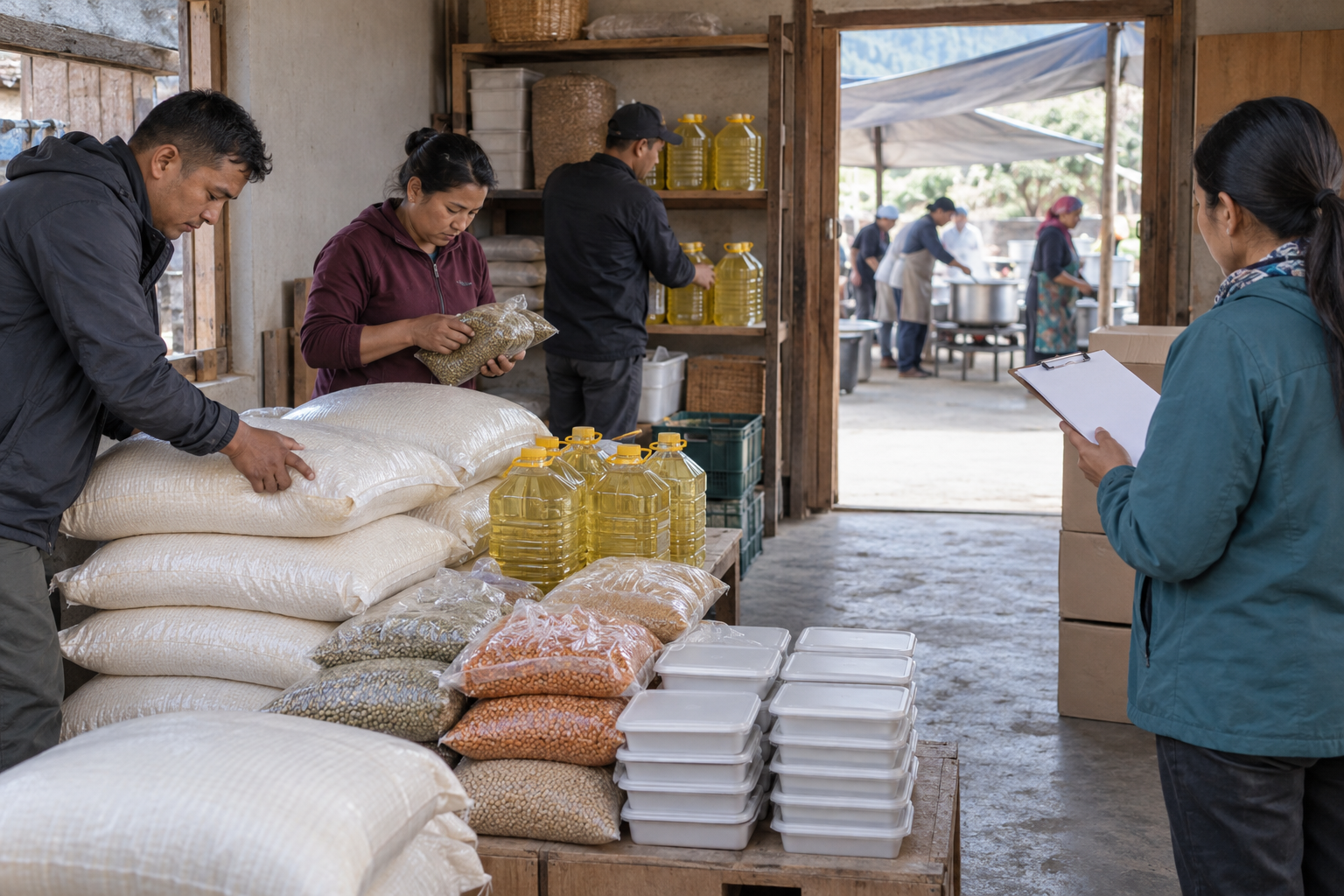
Urgency can push a sincere donor into the least useful form of giving. A forwarded bank account may be fraudulent. A truckload of unsolicited goods may arrive where there is no storage, sorting capacity, or onward transport. The safer response is to verify first and then follow the field team’s stated needs.
- Find the current appeal. Begin with the original update, then look for contact or donation instructions issued by the same organizing team. Check when the instructions were published; flood-relief needs can change quickly.
- Authenticate the recipient. Make sure the payment account, organization name, telephone number, and appeal belong together. If the only evidence is a cropped screenshot or a message forwarded through several groups, do not transfer money yet.
- Ask whether money or materials are needed. Do not assume that rice, clothing, bottled water, cooking equipment, or any other item is wanted merely because it sounds useful. Ask for a current needs list and a collection point before purchasing or shipping supplies.
- Clarify how restricted donations will be handled. If you want your contribution used only for Nepal flood relief, state that clearly and ask what happens if immediate needs are already covered. The answer may be continued relief, rehabilitation, another emergency programme, or a refund; you should know before paying.
- Keep a record. Save the appeal, payment confirmation, recipient details, and any acknowledgement. This protects you if an account is impersonated and makes it easier to reconcile a contribution later.
- Look for accountable follow-through. Useful updates may identify the types of food distributed, areas served, remaining needs, and how donated resources were used. Do not demand sensitive details about recipients, but do expect enough information to connect contributions with relief activity.
The verified information available here does not identify an authenticated donation channel. We therefore cannot responsibly direct you to a bank account, payment handle, or collection centre. Waiting for confirmed instructions is not indifference; it is how you prevent generosity from being diverted or converted into a logistics problem.
How to share the relief effort responsibly
You can help even before a verified donation route is available. Careful sharing can connect the field team with supporters, but only if the information remains attached to its origin and isn’t embellished along the way.
- Share a direct link. A link lets people inspect the update and any subsequent corrections. A copied photograph or detached video clip removes that context.
- Use only confirmed descriptions. Say that devotees are cooking and distributing hot prasadam and essential food relief to flood-affected communities in Nepal. Do not add totals, place names, casualty claims, or fundraising targets that have not been established.
- Include the date you viewed the information. This helps readers distinguish an active appeal from an older update recirculating after circumstances have changed.
- Separate service news from donation instructions. Evidence that meals are being served does not authenticate every payment request using the same images. Verify the financial channel independently.
- Protect recipients’ dignity. Avoid reposting close-up images of distressed people when the service can be described without exposing them. Never infer a person’s name, religion, health, losses, or family situation from an image.
- Correct inflated claims. If your earlier message included an unsupported figure or location, update it plainly rather than letting urgency excuse the error.
Keep compassion tied to verification

The next responsible step is simple. Share the confirmed relief activity without adding scale that hasn’t been documented. If you want to give money or goods, wait for current instructions from an authenticated organizer and ask what the field team needs now.
That discipline does not weaken seva. It directs your concern toward the people affected by the floods, preserves trust in devotee-led relief, and gives every contribution a better chance of becoming food in someone’s hands.
References
- Dandavats — Live from Nepal – Prasadam Distribution
- Facebook — Field footage of prasadam distribution in Nepal
