

If you’re planning a student program on the national flag or Bharat’s revolutionaries, the main danger isn’t a lack of patriotic feeling. It is a program that produces emotion for an hour but leaves students unable to explain what they learned, verify a historical claim, or act with greater civic responsibility.
Hindu Janajagruti Samiti reported that its Kolhapur district guidance sessions reached more than 1,200 students, combining respect for the national flag with the contributions of revolutionaries and an appeal to counter false narratives. That reach is reported by the organizer rather than established through an independent evaluation. The useful idea, however, does not depend on the attendance figure: connect a national symbol to the people, sacrifices, evidence, and duties that give it meaning.
Pair reverence for the flag with serious historical inquiry
A flag-respect session can easily become a list of instructions. A revolutionary-history session can just as easily become a roll call of names. Neither approach is enough. Students need to understand both conduct and context: how to treat a shared national symbol, and why generations of people accepted hardship in pursuit of freedom.
Begin with two questions. What does respectful conduct toward the national flag require? What historical choices and sacrifices made national freedom possible? The first question directs attention to behaviour. The second prevents that behaviour from becoming an empty ceremony.
Do not make students choose between reverence and questioning. Respect does not require them to accept every circulating anecdote. In a Dharmic approach grounded in satya, affection for Bharat should strengthen the demand for accuracy. An unsupported quotation does not become true because it sounds patriotic. A miscaptioned image does not become useful because it produces a strong reaction.
Use official instructions when teaching actual rules for the national flag. If the facilitator cannot verify a supposed rule, leave it out until it can be checked. Apply the same discipline to history: dates, quotations, identities, images, and claims about a revolutionary’s actions should be traceable to credible material.
Move students from conduct to evidence and responsibility
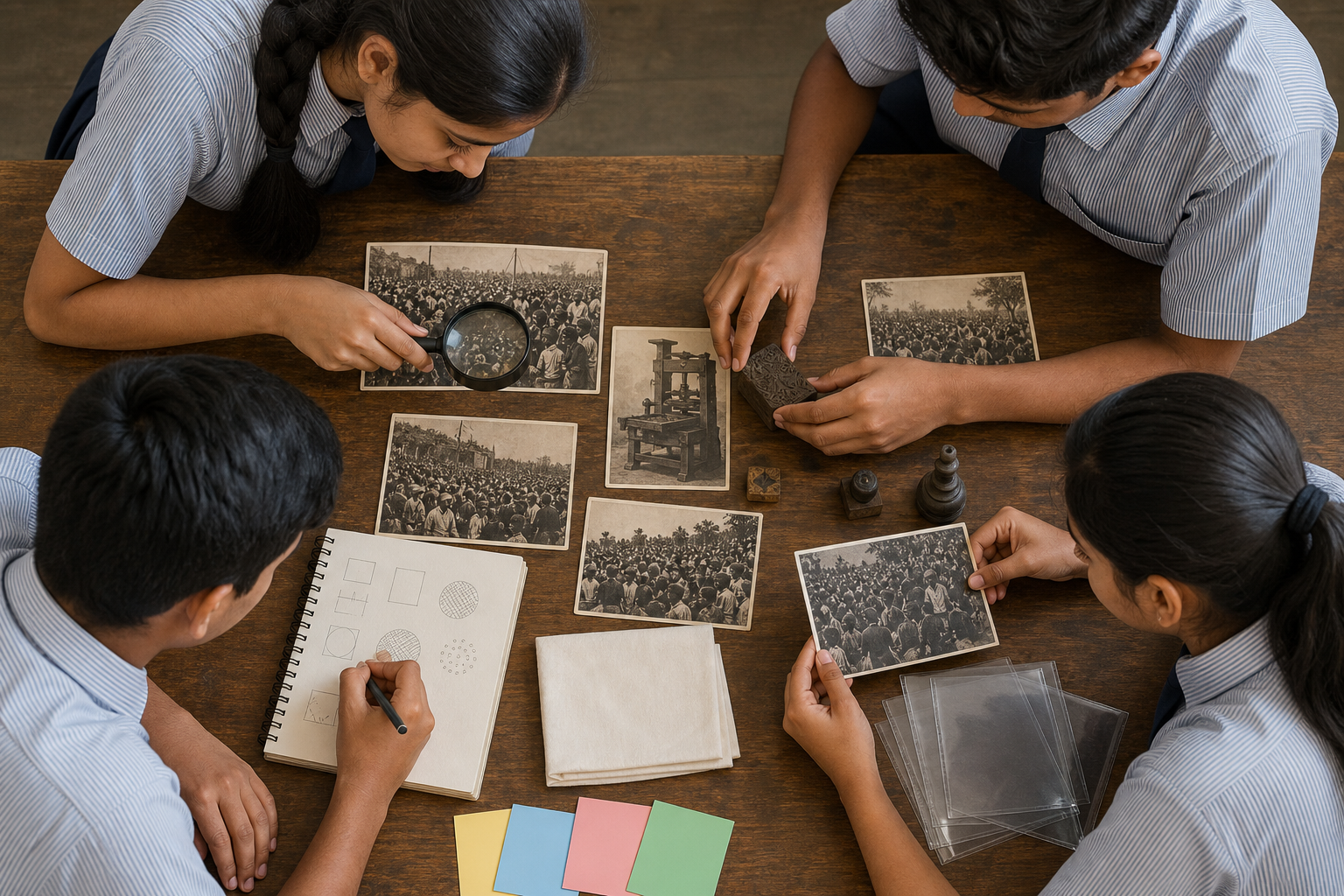
A useful session has a clear movement. It begins with what students do, proceeds to how they know, and ends with what they will carry forward. You can build that movement with the following sequence.
- Surface existing beliefs. Ask students what they have heard about flag etiquette and the revolutionary movement. Record the claims without immediately approving or ridiculing them. This reveals what actually needs clarification.
- Separate rules from customs. Show which flag practices come from verified guidance, which are local ceremonial conventions, and which still require checking. Students should leave knowing that not every familiar practice has the same status.
- Examine a historical claim. Present a claim about a revolutionary together with the material supporting it. Let students identify the person, action, context, and evidence rather than merely copying a conclusion.
- Mark uncertainty honestly. Label a claim as verified, contested, or unresolved. If credible accounts disagree, explain the disagreement instead of manufacturing certainty.
- Assign a civic response. Ask students to create a properly sourced display, correct a misleading caption, explain a verified flag practice to their family, or submit a claim for further checking. The task should produce something observable, not just a promise to be patriotic.
A simple claim-checking sheet makes this process repeatable. It also gives teachers something they can reuse after the visiting speaker has left.
| Claim being examined | Evidence the student should locate | Possible status |
|---|---|---|
| A rule about national-flag conduct | The exact instruction from the verified authority used by the program | Verified, needs checking, or remove |
| A revolutionary made a particular contribution | A complete citation and enough context to understand the action | Verified, contested, or unverified |
| A quotation or historical image is authentic | The earliest traceable publication or reliable archival context available | Authenticated, misattributed, miscaptioned, or unresolved |
Keep the status column visible. It teaches a habit that matters beyond the session: confidence should follow evidence. Students are then equipped to say, “This is supported,” “This remains disputed,” or “I should not forward this yet.”
Counter false narratives without creating new ones

If your outreach promises to challenge false narratives, define the phrase carefully. A claim is false because reliable evidence contradicts it, not merely because the claim is uncomfortable, hostile, or politically inconvenient. Without that distinction, “countering narratives” can collapse into exchanging one set of slogans for another.
Require the facilitator to prepare citations before entering the classroom. A slide containing a historical claim should have a source in the working notes even when the full citation would clutter the projected screen. Any quotation should be checked for exact wording, speaker, occasion, and context. Any image should be checked for identity, location, and caption.
A pro-Bharat account loses authority when a student discovers that its most dramatic claim cannot be supported. The answer is not to avoid strong claims. It is to make only those claims that can carry the weight placed upon them.
- Distinguish a documented event from a later interpretation of that event.
- Distinguish a person’s verified words from a quotation assigned to that person on social media.
- Distinguish respectful disagreement about historical meaning from denial of established facts.
- Distinguish an oral family memory from a documented public record. Oral memory can guide inquiry, but it should be labelled for what it is.
- Correct an error without humiliating the student who repeated it. The goal is to improve judgement, not reward the fastest accusation.
Revolutionaries should also be presented as historical people rather than interchangeable patriotic icons. Ask what problem a person confronted, what method that person chose, what risks followed, and what evidence supports the account. This preserves human agency and prevents a complex freedom struggle from becoming decorative mythology.
Make the outreach survive beyond the event
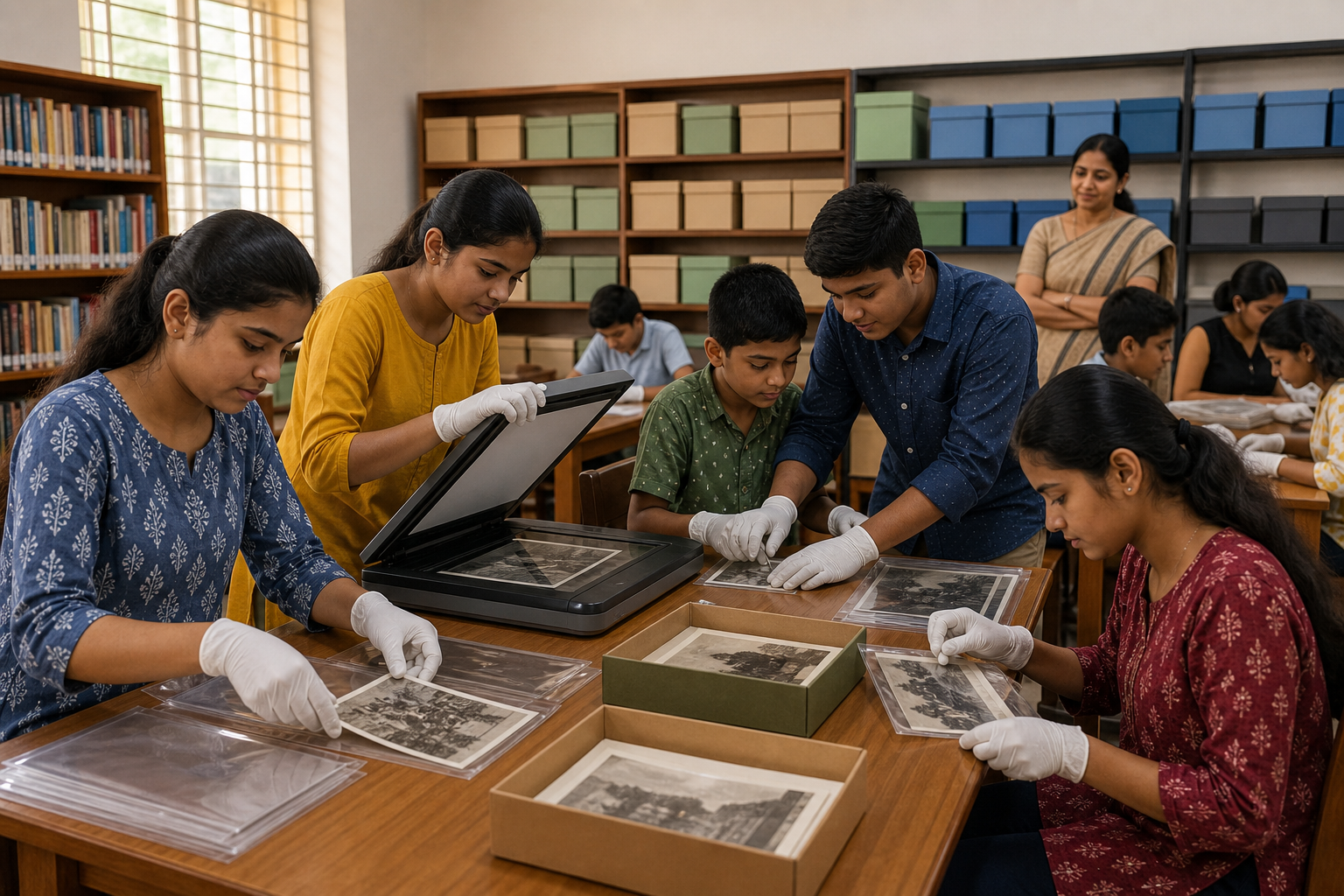
Attendance measures reach. It does not establish understanding, retention, or action. If the only record after a program is the audience count and a set of photographs, you cannot tell whether students learned the flag guidance, understood a revolutionary’s contribution, or became better at identifying unsupported claims.
Before the session ends, ask students to answer three exit prompts: What practice concerning the national flag can you now explain and verify? What contribution by a revolutionary can you describe in your own words, and what supports it? What claim did you encounter that still needs checking? These answers reveal whether the program changed judgement rather than merely producing agreement.
Give the host teacher a compact follow-up packet containing the claim-checking sheet, the materials actually used, a short assignment, and a way to report corrections. Assign responsibility for the follow-up before everyone leaves. A resource without an owner usually becomes a file that nobody opens.
Keep an outreach log that records the institution, reported participation, material distributed, questions students raised, claims requiring correction, the follow-up owner, and the agreed follow-up date. This lets organizers improve the next session. It also prevents a corrected error from reappearing in the same presentation elsewhere.
Photographs can document activity, but they are not substitutes for learning evidence. When students are minors, follow the host institution’s consent and privacy process before publishing identifiable images. Educational outreach should not ask families to trade privacy for participation.
Finally, keep civic education distinct from organizational recruitment or party messaging. Students should be able to examine evidence, ask difficult questions, and participate without feeling pressured to adopt an unrelated affiliation. That boundary makes the lesson more credible and keeps the national flag where it belongs: as a shared symbol rather than an organizational possession.
Key takeaways
- Teach respect for the national flag together with the historical context that makes the symbol meaningful.
- Verify flag instructions, quotations, images, dates, and historical claims before presenting them to students.
- Use a visible claim-evidence-status method so students learn how conclusions are formed.
- Define a false narrative through contradictory evidence, not through political discomfort.
- Measure understanding with student explanations, source checks, and completed follow-up work rather than attendance alone.
- Keep the program civic, educational, and open to questions; do not turn the classroom into a recruitment venue.
If you’re organizing the next flag or revolutionary-history program, start with one verified set of materials, one claim-checking exercise, and one assigned follow-up. The standard is not how loudly the room responds. It is whether students leave more careful with the flag, more truthful about history, and more capable of serving Bharat through informed conduct.
References
