

Two prospective Russian decisions point in opposite directions for Bharat. Possible Russian use of Gwadar would associate Moscow with a China-backed corridor that New Delhi rejects on sovereignty grounds, while Russian consent for a possible BrahMos sale to the UAE would support Bharat’s emergence as a defence exporter.
Read together, the source articles show how the same Russian pursuit of access, revenue and diplomatic flexibility can either strain or reinforce an established partnership. The important question is therefore not whether Moscow is becoming closer to one country or another, but how each arrangement distributes agency, risk and strategic benefit.
One strategy, two very different instruments
Both source articles place Russia’s choices within a sanctions-constrained, increasingly multipolar environment. In the Gwadar case, Moscow is portrayed as seeking additional markets and transport routes outside Western-controlled systems. In the BrahMos case, it could preserve defence revenue, remain connected to third-country markets and demonstrate that its military-technical partnership with Bharat can generate exports.
The resemblance ends there. Gwadar is infrastructure built within the China-Pakistan Economic Corridor, an initiative over which Bharat has little agency and a fundamental political objection. BrahMos, by contrast, is a product of Indo-Russian co-development. The reported export mechanism requires Russian consent, but it also gives Bharat the role of producer, seller and diplomatic interlocutor.
This distinction explains why New Delhi could interpret the two possibilities so differently. Russian participation at Gwadar could appear to discount a core Indian concern. Approval of a BrahMos export could affirm that Bharat is a capable strategic partner rather than merely a customer for Russian equipment.
Gwadar combines commercial logic with a sovereignty dispute
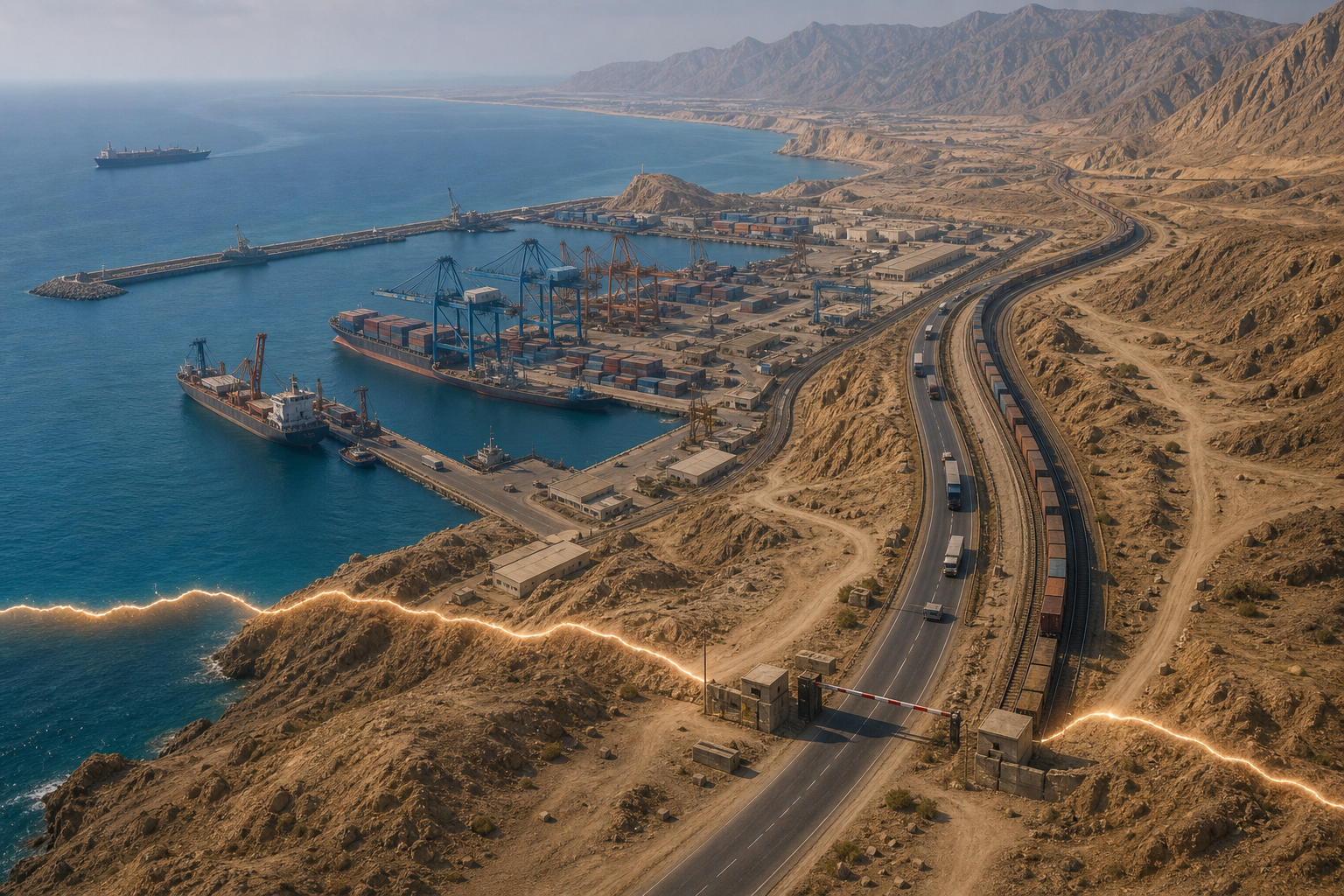
The Gwadar source describes the port as CPEC’s maritime terminal and notes that a Chinese company operates it. It also reports that CPEC crosses the Pakistani-controlled part of Kashmir claimed by Bharat. Consequently, Russian use of Gwadar would not be received in New Delhi as an ordinary decision about shipping capacity: it could be seen as lending international legitimacy to infrastructure connected with disputed territory.
The proposal remains tentative in the source material. The article reports that a Pakistani energy minister welcomed Russian Deputy Prime Minister Alexei Overchuk’s apparent openness to the idea; it does not describe a completed operational agreement. Islamabad’s incentive would be to present Russian interest as evidence that CPEC can function as a wider Eurasian platform rather than only a China-Pakistan project.
Moscow’s possible interest has an intelligible economic basis. According to the Gwadar article, Pakistan offers a large consumer market and access to the Arabian Sea, while a connection through Iran could complement the broader North-South Transport Corridor concept. For Russia, the attraction would be route redundancy and additional access to South Asian and Indian Ocean trade. Those advantages, however, establish why the option might be explored; they do not erase its political geography.
Nor do they guarantee commercial viability. The same source highlights separatist militancy in Balochistan and reported attacks on CPEC-linked projects. Roads, customs facilities, storage, insurance and personnel security all matter to a functioning corridor. A strategically placed port can therefore remain an expensive or unreliable option if the inland network demands exceptional protection.
The diplomatic cost could outlast any initial logistics experiment. The Gwadar article argues that Bharat would be unlikely to break immediately with Russia because of energy ties and its continuing dependence on Russian-origin military platforms, maintenance and spare parts. It nevertheless suggests that mistrust could encourage New Delhi to accelerate defence diversification and domestic production. Gwadar’s greatest consequence might thus be gradual erosion of Russian influence rather than a visible bilateral crisis.
BrahMos exports make Bharat a bridge rather than a bystander
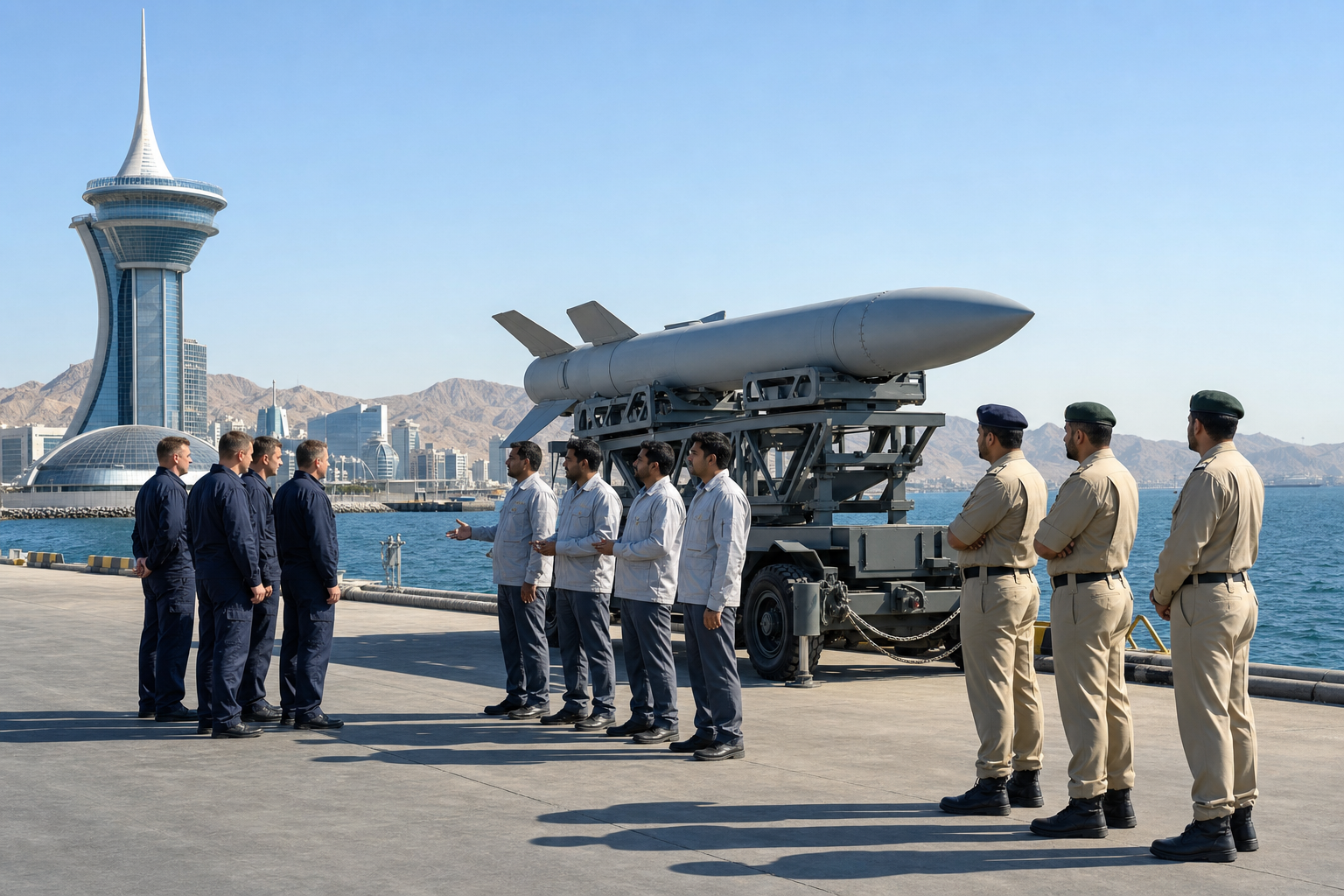
The BrahMos source reports discussions about a possible sale of the jointly produced supersonic cruise missile to the UAE. Because Russian entities participate in the programme, the article says that an export requires Moscow’s approval. The reported talks should not be confused with a finalized sale, but the approval question already reveals a different model of Russian engagement.
Consent would help Bharat demonstrate defence-industrial credibility in a significant arms market while allowing Russia to retain a place in the resulting commercial and strategic network. Rather than competing directly with its Indian partner, Moscow could benefit from Bharat’s relationships with countries that Russia also wishes to engage. Co-development would then become a platform for shared external influence, not simply a bilateral production arrangement.
The source uses the Philippines as an important precedent. It identifies Manila as the first foreign BrahMos customer and notes both its treaty relationship with the United States and its maritime tensions with China. Russian approval of that export, as presented by the article, suggests that Moscow can permit a jointly developed system to strengthen a state balancing one of Russia’s major partners without treating the transaction as a change of alliance. The article also discusses Vietnam as a compatible prospective customer and reports Indonesian interest, although neither example is presented as a completed parallel to the Philippine sale.
The UAE would bring a different set of sensitivities. The BrahMos article describes Abu Dhabi as closely connected to the United States, normalized with Israel and at odds with Iran, while also maintaining pragmatic economic and diplomatic ties with Russia. Moscow’s close relations with Tehran therefore do not automatically determine its decision. The source’s interpretation is that Russia seeks room to work with competing partners rather than accepting every regional preference of any one of them.
For Bharat, this flexibility can be productive when it expands the market for a jointly developed Indian system. It becomes troubling when the same flexibility is applied to CPEC despite India’s stated sovereignty objection. BrahMos diplomacy and the Gwadar proposal therefore illuminate both the promise and the limit of multipolar cooperation: partners can collaborate across rival networks, but they do not assign equal weight to every concern.
The decisive issue is how Russia manages asymmetry

The contrast can be assessed through three questions. The first is agency: Bharat helps produce and market BrahMos, whereas it would have no comparable role in a Russian-Pakistani Gwadar arrangement. The second is political meaning: a missile export requiring Indo-Russian coordination can display partnership, while use of CPEC-linked infrastructure carries a sovereignty implication that commercial language cannot neutralize. The third is reciprocity: Moscow wants partners to accept its dealings across geopolitical divides, but New Delhi will still judge whether Russian flexibility respects India’s most sensitive interests.
This framework also avoids simplistic bloc analysis. Possible Russian use of Gwadar would not by itself prove that Moscow had chosen Pakistan over Bharat, just as approval of a UAE BrahMos sale would not prove that Russia had chosen Abu Dhabi over Iran. Yet the absence of a formal alignment does not make either decision politically weightless. Strategic trust is shaped by accumulated signals, especially when one partner believes that territorial sovereignty is involved.
China is the connecting variable. Russian activity at Gwadar could reinforce a signature Chinese infrastructure project and increase the appearance of Moscow operating within Beijing’s regional architecture. BrahMos exports, including the Philippine precedent described by the source, show Russia tolerating Indian defence relationships that may complicate China’s security environment. Moscow’s challenge is to preserve both forms of flexibility without appearing dependent on China in one theatre or indifferent to Bharat in another.
Key takeaways
- Russia’s possible interest in Gwadar is economically understandable, but CPEC’s route through disputed territory makes participation politically consequential for Bharat.
- Gwadar’s security and inland-logistics problems could reduce the practical value of its favourable maritime location.
- Russian approval of a possible UAE BrahMos sale would strengthen a co-development model in which Bharat gains export agency and Moscow retains commercial influence.
- The two cases show that multipolar diplomacy is judged not only by whom a country engages, but also by whether the arrangement shares benefits and respects a partner’s core concerns.
The next phase will depend on whether reported possibilities become concrete arrangements and on the terms attached to them. Careful Russian consultation over Gwadar, alongside continued support for genuinely shared defence ventures, would determine whether strategic flexibility remains compatible with long-term trust between Moscow and New Delhi.
References
- DharmaRenaissance Blog — Gwadar’s High-Stakes Gamble: Why Russia’s CPEC Option Alarms Bharat
- DharmaRenaissance Blog — BrahMos to UAE: Russia’s High-Stakes Calculus Behind Bharat’s Defence Rise