
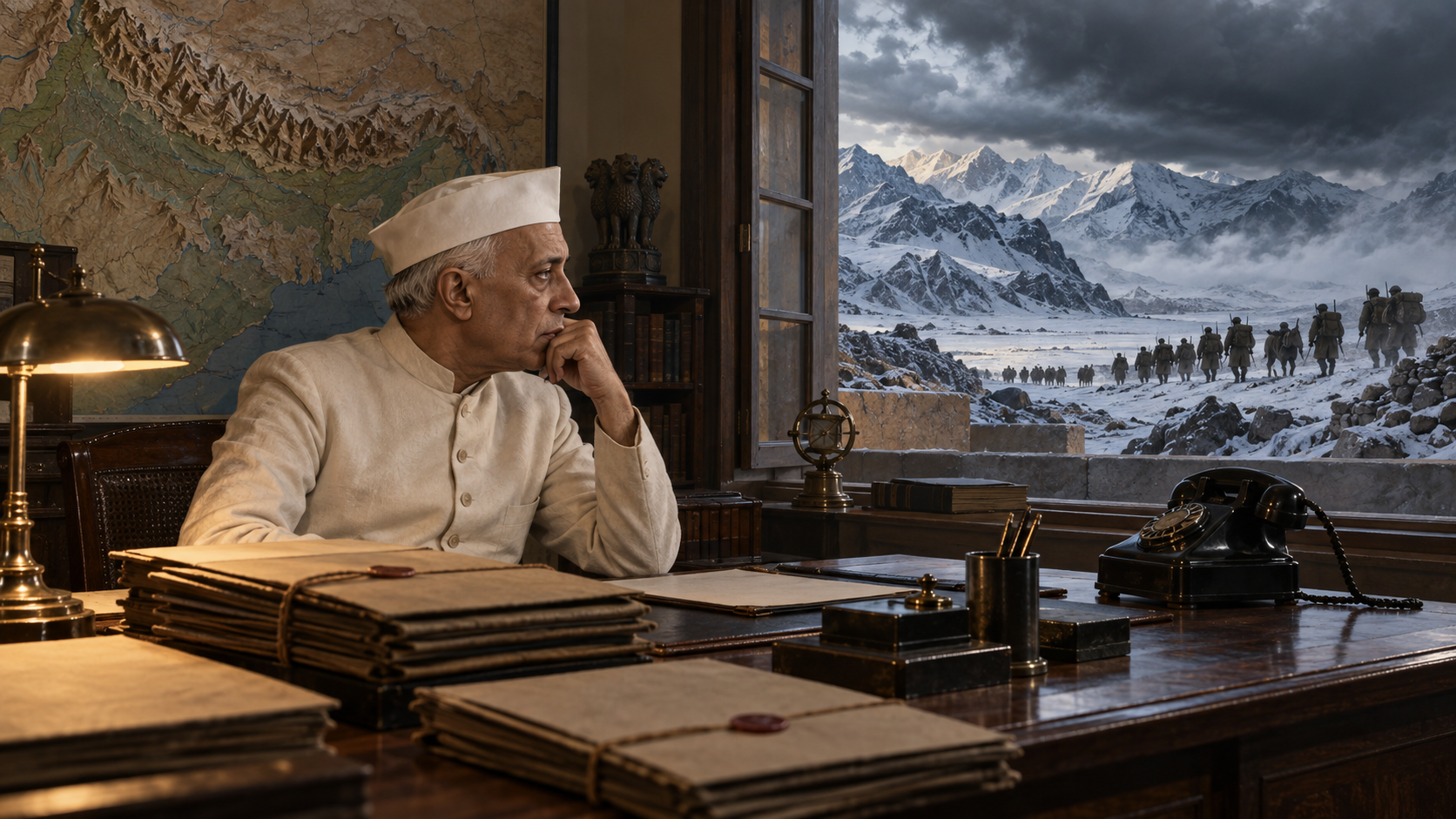
If you have heard the charge that Jawaharlal Nehru simply “gave away Tibet,” ask a sharper question: what choices did India actually possess between 1947 and 1950, and which of them did New Delhi decline to use? Military intervention was only one possible response. Recognition, border settlement, diplomatic pressure, international sponsorship and support for Tibetan representation were separate choices.
The strongest case against Nehru’s policy does not depend on proving that India could have defeated China or guaranteed Tibetan independence. It rests on a more defensible conclusion: New Delhi repeatedly subordinated Tibetan agency and India’s Himalayan security to accommodation with Beijing, even when measures short of war remained available.
Key takeaways
- Tibet was governing itself in practice before the invasion. It had its own currency, postal system and army, while Tibetan passports issued in 1948 were accepted by other countries.
- India encountered several decision points before 7 October 1950: Tibet’s treatment at the 1947 Asian Relations Conference, a Tibetan territorial telegram, a request for recognition and a parliamentary warning about the Himalayan frontier.
- After the Chinese attack began, Nehru’s 21 October message concentrated on the danger that the conflict would delay the People’s Government of China’s admission to the United Nations.
- India neither had to invade Tibet nor remain diplomatically passive. It could have clarified the frontier, preserved Tibet’s separate negotiating status, sponsored its appeal and made support for Beijing conditional on a peaceful settlement.
- Claims that early recognition would certainly have saved Tibet go beyond the evidence. The policy failure lies in abandoning available leverage without first testing it, not in failing to produce a guaranteed counterfactual outcome.
The real choice was larger than war or acquiescence
Debate over Tibet is often trapped inside a false binary. Either India had to send an army onto the Tibetan plateau, or it had to accept China’s claim and avoid provocation. That framing erases most of the instruments available to a government: recognition, formal protest, mediation, border negotiation, international coordination and the use of diplomatic support as leverage.
Three terms must also be kept separate. De facto independence means that a territory governs itself in practice. Diplomatic recognition is a decision by another state to acknowledge that status. Suzerainty describes a claimed superior relationship that can fall short of direct administration. An old claim of suzerainty is not the same thing as continuous government, and declining recognition is not the same thing as being powerless.
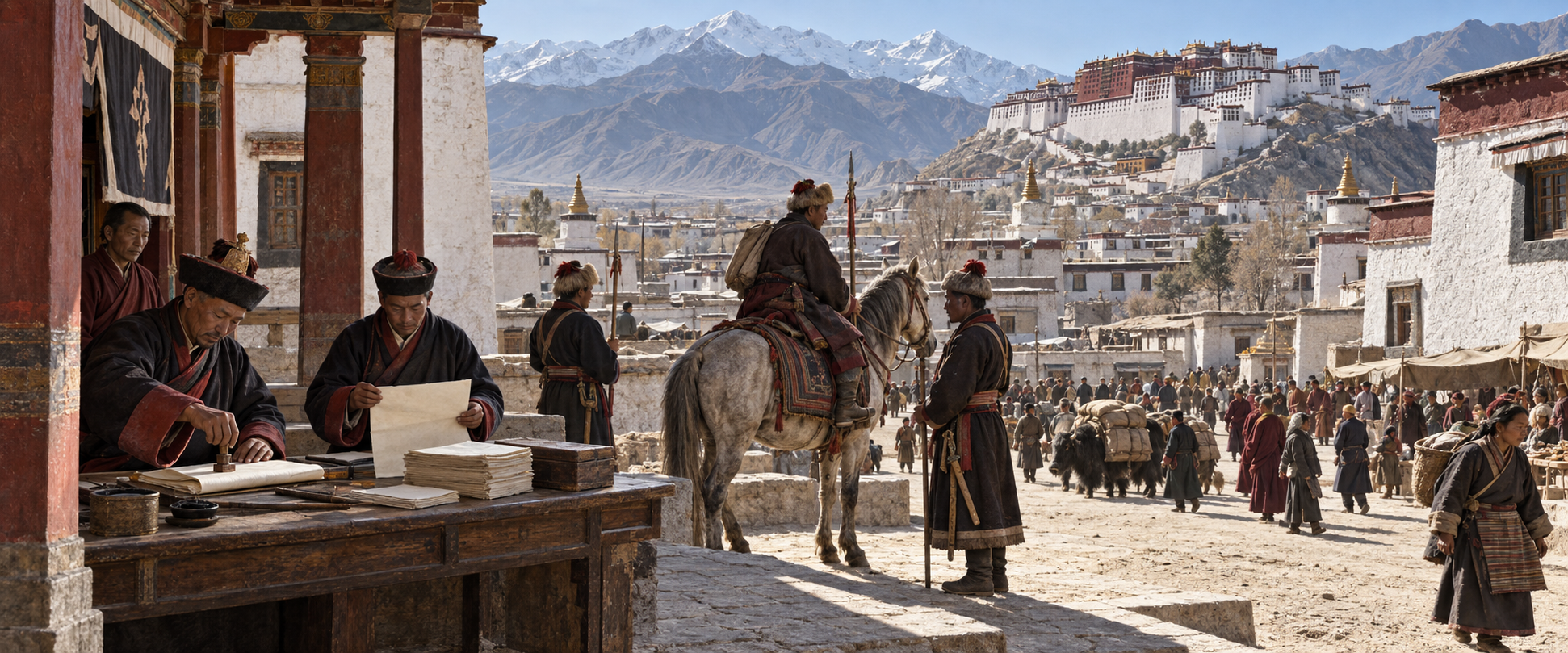
Whatever view you take of earlier Sino-Tibetan relations, the practical situation after 1912 was unusually clear. The Chinese agent known as the Amban had been expelled, and China no longer exercised administrative control from Lhasa. Tibet maintained its own coins and currency, postal arrangements and army. It also issued passports. These are not abstract civilizational claims; they are the working attributes of self-government that Indian policymakers could observe.
Nehru understood Tibet’s distinctiveness. Its culture, religion, language and script were not those of Han China, and he had depicted Tibet outside the Chinese empire in Glimpses of World History. Yet recognition was repeatedly avoided. This makes the central problem harder to dismiss as ignorance: the government knew that Tibet functioned separately but chose not to convert that knowledge into a durable policy.
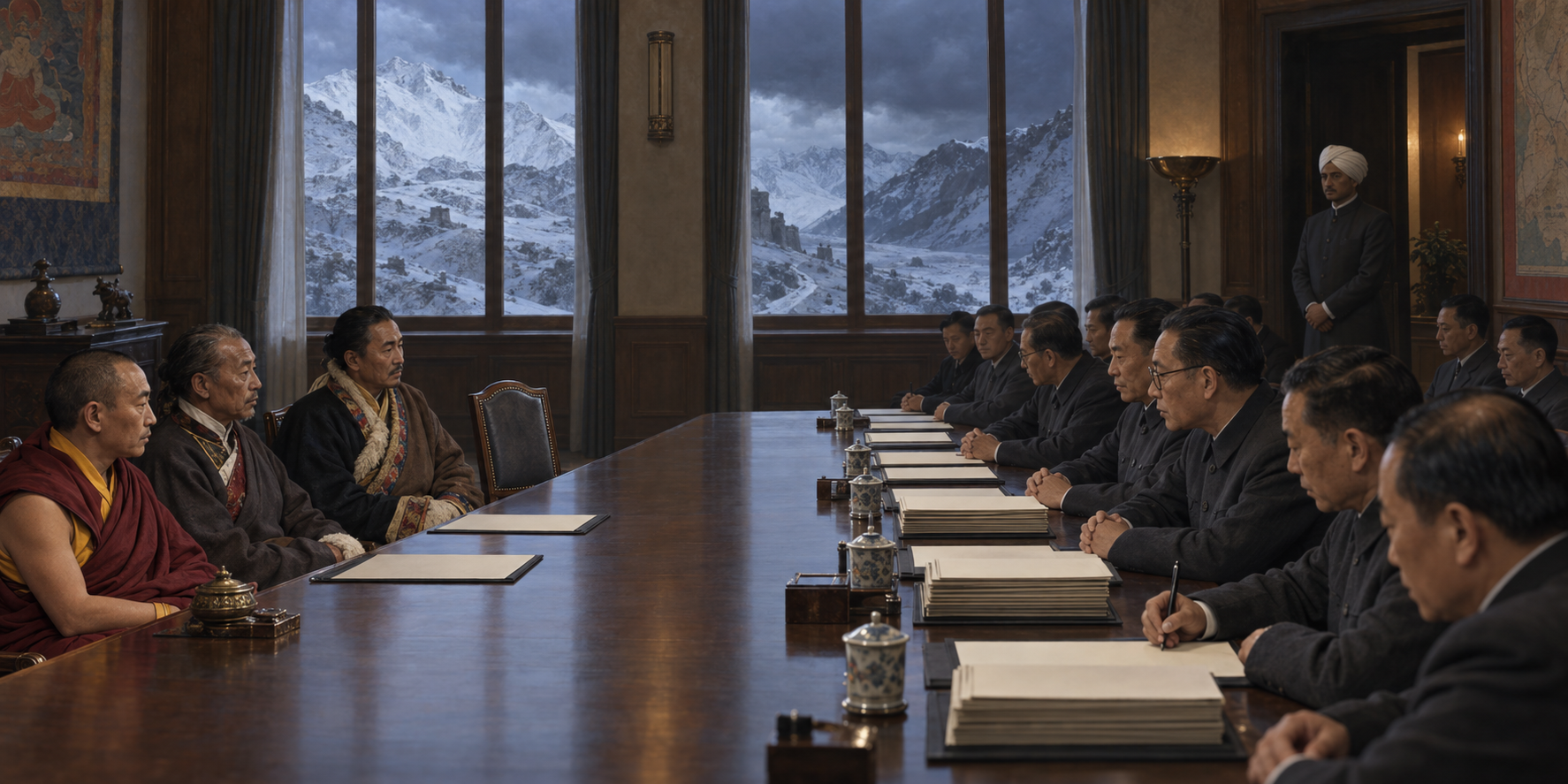
The first missed opening came before the invasion. At the Asian Relations Conference in March 1947, Tibet was among 28 invited delegations. Chinese objections led to its status being reduced to that of a representative, while the boundary separating Tibet and China on the conference map was erased. The immediate concession may have looked symbolic. Its practical effect was to signal that Tibetan standing could be lowered whenever Beijing objected.
A second opening appeared on 16 October 1947, when Tibet asked New Delhi for the return of certain territories. India did not answer. Accepting the claim was unnecessary. A clear rejection, followed by formal border negotiation and a decision on recognition, would have reduced ambiguity at a moment when the Tibetan frontiers with India, Nepal and Burma were not properly delineated. Silence left both the political relationship and the territorial question unresolved.
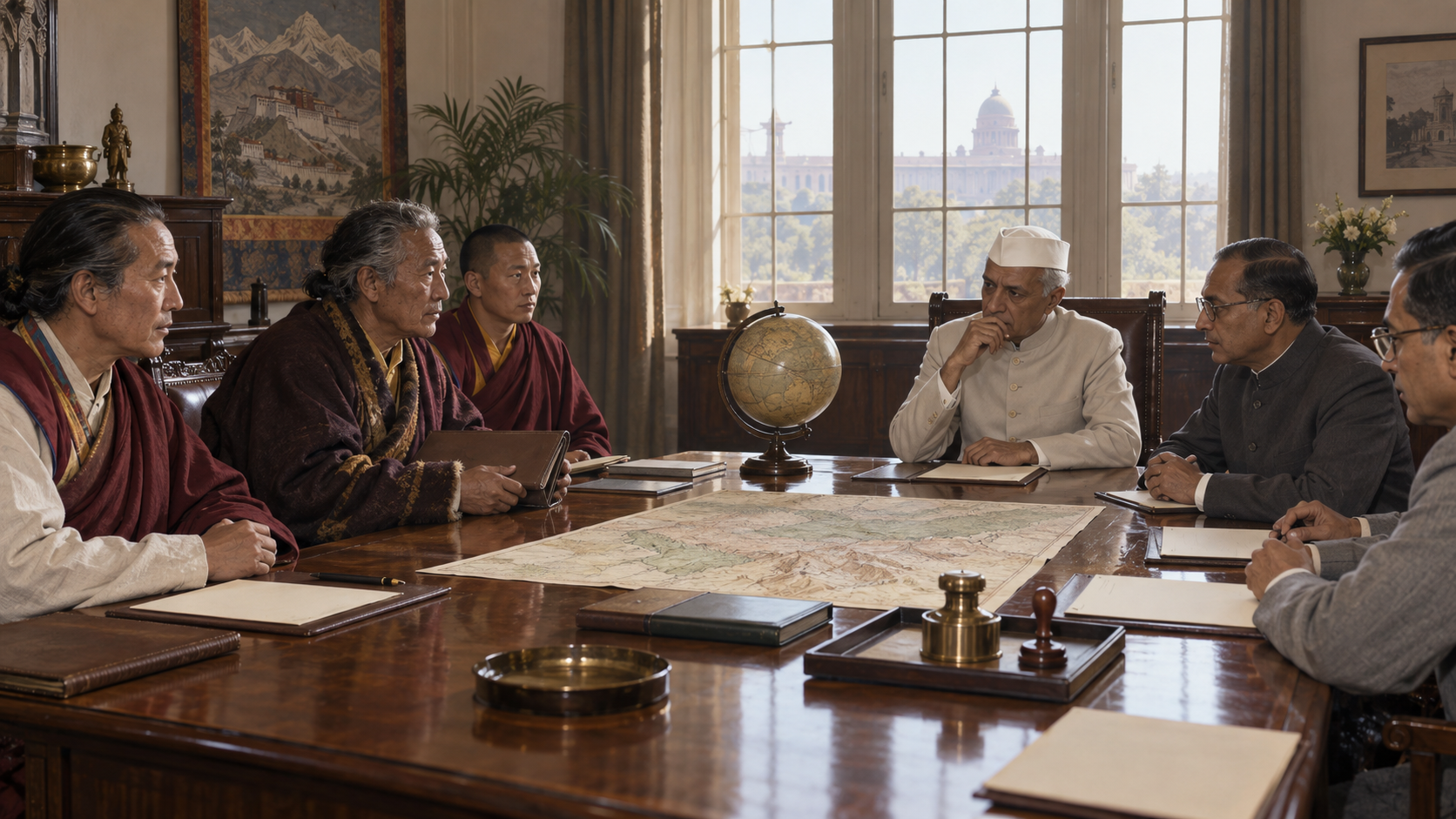
A Tibetan delegation subsequently sought recognition from newly independent India, and Nehru refused. Recognition might not have produced matching decisions from Britain, the United States or the Soviet Union; that possibility must remain a counterfactual, not a certainty. But an explicit decision would at least have established India’s position before Chinese troops changed conditions on the ground.
The sequence from 1947 to 1954 reveals the priority
Policy is best judged in sequence. Looking only at the final invasion makes every earlier option appear weaker than it was. Looking only at Nehru’s speeches hides the operational choices that followed them.
| Date | Decision or warning | Why it matters |
|---|---|---|
| March 1947 | Tibet’s standing at the Asian Relations Conference was reduced after Chinese objections. | New Delhi demonstrated that avoiding offence to China took precedence over preserving Tibet’s separate diplomatic voice. |
| 16 October 1947 | Tibet requested the return of certain territories; India did not respond. | A chance to reject the claim, clarify the frontier and define the relationship was allowed to pass. |
| After Indian independence | A Tibetan delegation requested recognition; Nehru refused. | India retained ambiguity instead of establishing its position while Tibet still governed itself. |
| 17 March 1950 | A member from Assam warned Parliament that Tibet might be swallowed up and that frontier complications could follow. | The security danger was raised before the attack, so it cannot be dismissed as hindsight. |
| 20 August 1950 | Chou En-Lai called Tibet’s “liberation” a sacred Chinese duty but indicated that it would proceed through negotiation. | India had notice of Beijing’s objective and a stated commitment against which later conduct could be tested. |
| 7 October 1950 | Chinese forces began their attack on Tibet. | The dispute moved from diplomatic pressure to military action. |
| 21 October 1950 | Nehru appealed to Chou for a peaceful settlement while emphasizing the effect on China’s United Nations admission. | The message exposed which consequence New Delhi considered most urgent. |
| After the attack | Lhasa sought Indian help with an appeal to the United Nations; India told Tibet to approach the body directly. | Tibet lacked UN membership and needed sponsorship, turning nominal neutrality into a practical obstacle. |
| 1954 | The Panchsheel agreement formalized India’s accommodation of China’s position in Tibet. | The earlier ambiguity ended within a framework that no longer protected Tibetan autonomy as an Indian objective. |
The pivotal evidence is Nehru’s message of 21 October, sent two weeks after the attack began. He argued that Tibet was unlikely to offer serious military resistance and that postponement would not damage Chinese interests. His expressed concern was that avoidable events in Tibet might delay Beijing’s international admission.
The Government of India’s interest … is only to see that the admission … is not again postponed.
Jawaharlal Nehru, letter to Chou En-Lai, 21 October 1950
This was not simply a neutral request to stop the fighting. It treated restraint as useful partly because invasion was inconvenient to a diplomatic objective India supported on China’s behalf. Tibetan survival and Indian frontier security did not receive the same emphasis.
The response to Lhasa’s United Nations appeal deepened the contradiction. Because Tibet was not a member, Indian sponsorship would have mattered. New Delhi instead directed Lhasa to approach the United Nations itself. El Salvador was willing to sponsor the Tibetan cause, while India maintained neutrality and pressed Britain against placing the matter before the General Assembly. A formally non-belligerent posture therefore produced a concrete result: the invaded party received less international consideration, while the invading power avoided a larger diplomatic contest.
The moral and strategic failures reinforced each other
For a Dharmic reader, Tibet was not merely useful terrain. It was a living Buddhist civilization within the wider Dharmic world. Its institutions were its own, and its people were entitled to a political voice regardless of whether outsiders considered Tibetan society modern, isolated or feudal.
Nehru had publicly maintained that the final voice on Tibet should belong to Tibetans. Yet he also argued that a backward, feudal country could not remain isolated and denied that Tibet was independent. The second proposition did not answer the first. A society’s internal condition can justify reform; it does not transfer the right of reform to a neighbouring army. If self-determination applies only to societies already approved by powerful states, it is not much of a principle.
This is where dharma provides a more demanding standard than sentiment. Dharma does not require reckless warfare. It does require clarity about aggression, fidelity to one’s stated principles and concern for the consequences imposed on a weaker neighbour. Calling for peace while helping to keep the victim’s case off the international agenda fails that test.
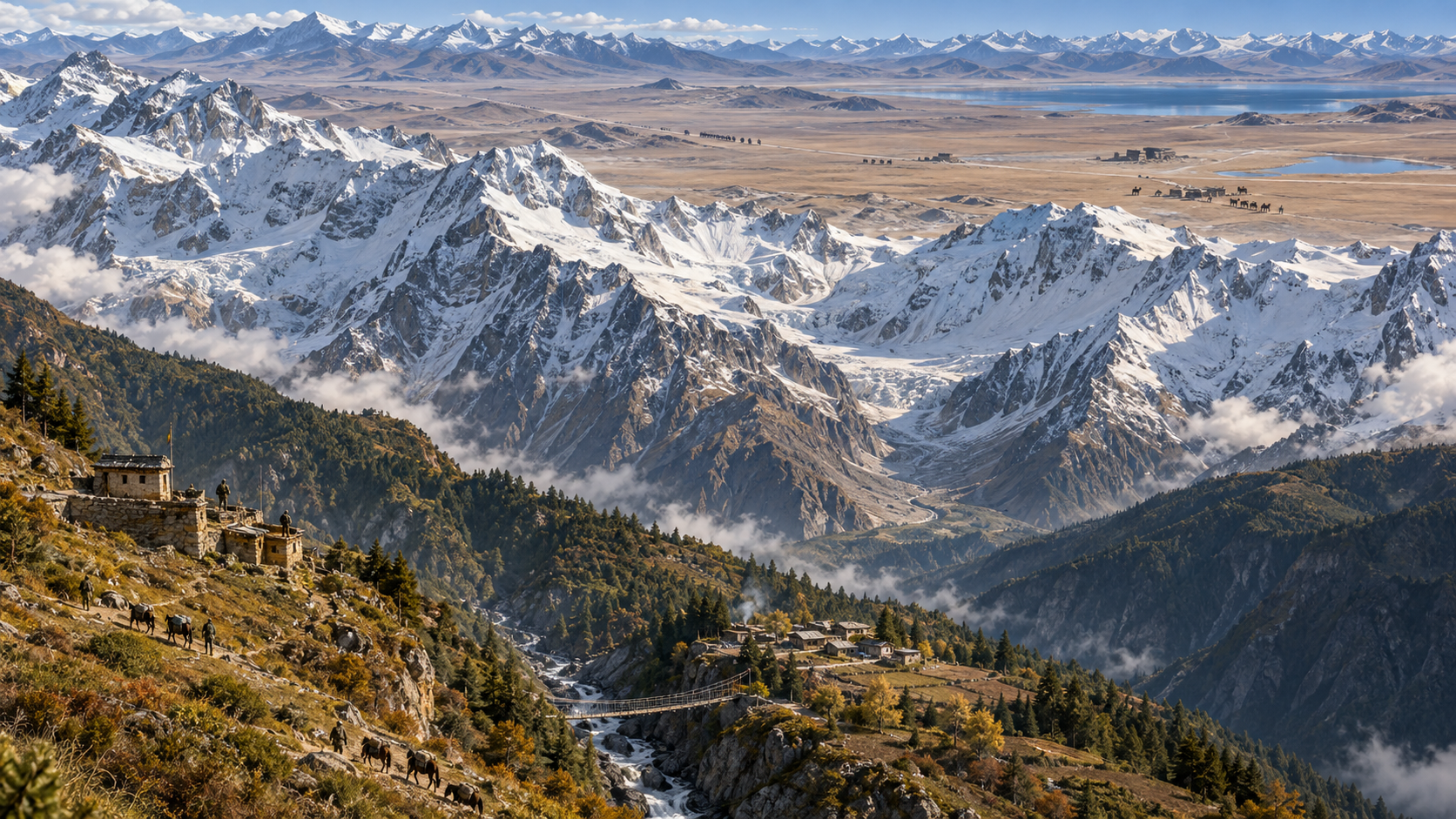
The security case was just as concrete. A member from Assam had already warned Parliament on 17 March 1950 that the absorption of Tibet could produce complications for India’s frontier. The warning identified the mechanism: Chinese success would change who controlled the territory immediately beyond India’s Himalayan approaches. Once that happened, a civilizational and geographic buffer would become a zone of direct strategic pressure.
General Tucker of the British Army had assessed the Tibetan plateau as terrain from which air power could cover eastern India and support airborne operations directed toward Uttar Pradesh, Bihar and Bengal. You do not have to accept every operational forecast to grasp the enduring point. The military occupation of the plateau would alter India’s defensive environment, and that risk deserved greater weight before occupation became an accomplished fact.
The moral and security arguments therefore did not compete. Supporting Tibet’s right to speak for itself also served India’s interest in preventing a powerful military state from extending its reach across the plateau. When ethical duty and strategic prudence pointed in the same direction, passivity was not realism. It was the surrender of leverage before its value had been tested.
What a responsible alternative would have required
A serious alternative must avoid two easy myths. India could not assume that one declaration would deter China. It also did not need to begin with a military expedition. A responsible policy would have moved through an escalating diplomatic sequence while Tibet still possessed room to negotiate.
- Resolve the frontier question after the 1947 telegram. India could have rejected claims it considered invalid, documented its border position and opened direct negotiations with Lhasa. Leaving a disputed communication unanswered preserved uncertainty at precisely the wrong time.
- Protect Tibet’s status as a negotiating party. Its separate representation at international gatherings should not have been downgraded merely because China objected. Even without immediate recognition, India could have insisted that no settlement was legitimate without Tibetan participation.
- Decide recognition explicitly. If New Delhi believed Tibet’s de facto independence warranted recognition, the useful time to act was before Chinese military control. If it rejected recognition, it still owed Parliament and Tibet a clear explanation of what autonomy it would defend.
- Use support for Beijing as leverage. India’s advocacy for the People’s Government of China’s admission to the United Nations need not have been unconditional. New Delhi could have tied its diplomatic support to continued negotiation, non-use of force and respect for a Tibetan settlement.
- Sponsor international consideration once the attack began. Supporting Lhasa’s appeal would not itself have amounted to war. It would have forced the invasion into an international forum, tested the willingness of other powers to act and increased the political cost of imposing a settlement by force.
- Prepare for the security outcome India feared. Once parliamentary warnings identified the risk to the Himalayan frontier, diplomatic policy and defence planning should have been treated as parts of the same problem. Hope for friendship could not substitute for contingency planning.
None of these steps guarantees that Tibet would have remained independent. Britain, the United States and the Soviet Union might still have declined recognition or meaningful support. China might still have used force. Counterfactual honesty requires us to admit those possibilities.
But uncertainty cuts both ways. The absence of a guaranteed success did not justify refusing to test diplomatic resistance. Governments routinely act under uncertainty when the cost of inaction is permanent. The proper question is whether India used proportionate tools before accepting an irreversible strategic change. On the sequence above, it did not.
India’s later grant of asylum to the Dalai Lama deserves recognition as a humane act. It should be judged on its own merits, not used to erase the earlier decisions. Helping a displaced spiritual leader does not restore the political space that was lost when Tibet sought recognition and international support.
When you encounter claims about Nehru and Tibet, test them against five questions: What did Tibet control in practice? What did India know before 7 October 1950? Which non-military tools remained available? What priority did official conduct reveal? Which alleged outcomes are facts, and which are counterfactuals? That method produces a firmer verdict than either hero worship or slogan.
For the next Himalayan crisis, the lesson is direct. Do not let the vocabulary of peace conceal the abandonment of leverage. Define the frontier, give the affected people a voice, internationalize aggression early and make diplomatic support conditional before facts on the ground become permanent.
References
- DharmaRenaissance Blog — Nehru’s Tibetan Blunder
