
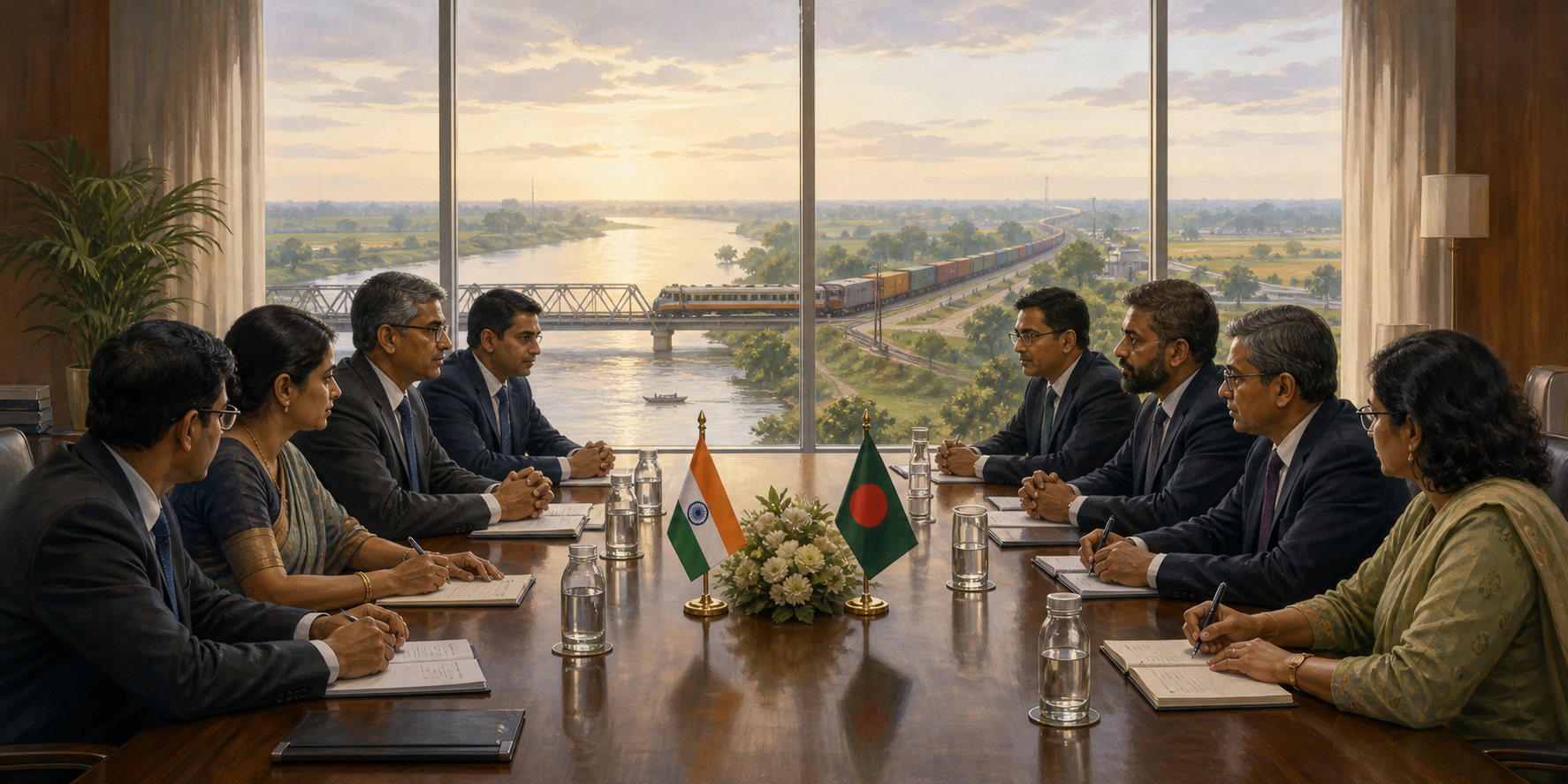
India and Bangladesh have entered a diplomatic phase in which reassuring symbols matter, but administrative outcomes will determine whether confidence actually returns. The reported appointment of Dinesh Trivedi as India’s High Commissioner offers a useful lens through which to distinguish a political signal from a completed policy reset.
The central question is whether Trivedi’s political experience and access can help the two governments convert renewed engagement into more predictable travel, trade, border management and negotiations. The available source presents reasons for guarded optimism, while also identifying disputes that cannot be settled through personal diplomacy alone.
An appointment designed to carry political weight
The DharmaRenaissance report says India’s Ministry of External Affairs announced Trivedi’s appointment on 27 April 2026. It describes the choice as a departure from the recent institutional pattern because Trivedi is a former Union railway minister, veteran parliamentarian and senior Bharatiya Janata Party politician rather than a career Indian Foreign Service officer.
The distinction matters because the bilateral difficulties described in the report extend beyond conventional diplomatic communication. Progress may require coordination among central ministries, political parties, security institutions and state governments. A former national politician could potentially understand those domestic constraints and obtain high-level attention when an issue becomes stalled. His experience representing West Bengal may also help him interpret sensitivities spanning Dhaka, Kolkata and New Delhi.
The reported accreditation timeline reinforced the seriousness of the assignment. Trivedi crossed into Bangladesh through the Petrapole-Benapole land route on 12 June 2026, subsequently submitted copies of his credentials and met Foreign Secretary Asad Alam Siam. The report says he formally assumed office after presenting his Letter of Credence to President Mohammed Shahabuddin at Bangabhaban on 25 June.
These events establish political intent and official standing, but not substantive success. A high commissioner can improve access, accelerate communication and clarify what each government can realistically deliver. Agreements on technically difficult matters still require institutional preparation, political authorization and implementation by agencies on both sides.
Why the land border became the opening message
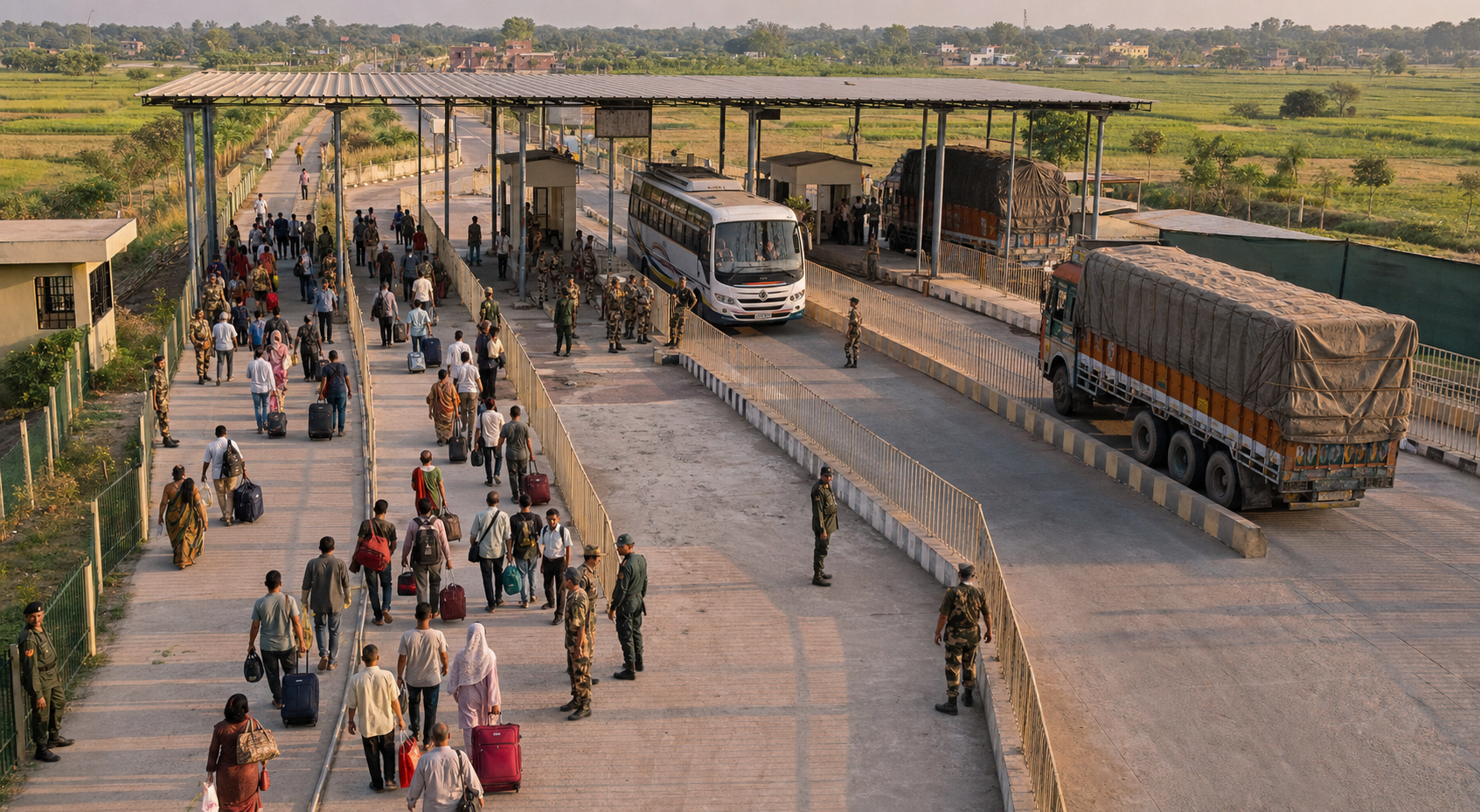
Beginning the assignment at Petrapole-Benapole placed the everyday India-Bangladesh relationship at the centre of the diplomatic narrative. According to the source, Trivedi entered by road and continued to Dhaka rather than beginning his public role with a routine arrival by air. The choice directed attention toward the place where passengers, traders, patients, families and officials encounter bilateral policy in practical form.
The report records Trivedi saying that India and Bangladesh share the same sky and framing cooperation around the welfare of approximately 160 crore people. That language sought to reduce psychological distance without denying the existence of two sovereign jurisdictions. Its policy implication is straightforward: citizens will judge improved relations through queues, documents, transport costs, customs procedures and the consistency of official treatment.
The border symbolism therefore creates a demanding test. If procedures become safer, clearer and more efficient, the journey may be remembered as the beginning of a citizen-facing reset. If daily friction remains unchanged, it will survive mainly as a carefully staged diplomatic gesture.
The inherited disputes operate on several levels
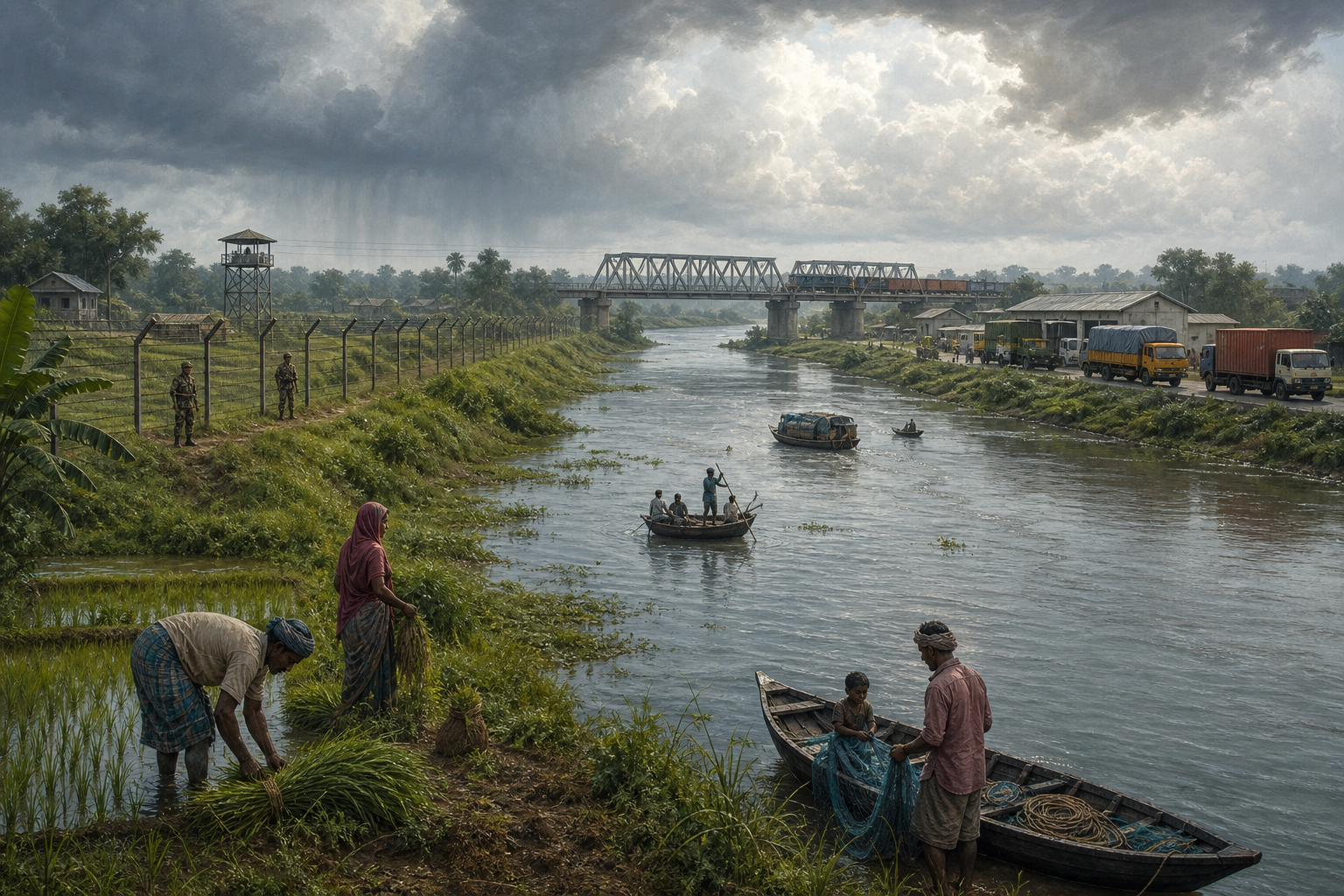
The source situates Trivedi’s arrival after a period of deterioration following the removal of Sheikh Hasina’s government in August 2024 and strained relations during the interim administration led by Muhammad Yunus. It reports that the formation of a Bangladesh Nationalist Party government under Prime Minister Tarique Rahman in 2026 created a different political setting, but did not erase accumulated distrust.
That distrust cannot be treated as a single disagreement. The report identifies allegations involving cross-border push-ins, deaths and violence near the boundary, travel restrictions, tariff and non-tariff barriers, trade imbalances, water sharing, security concerns and competing domestic narratives about the neighbouring country. These issues belong to different negotiating tracks and involve different institutions. A concession in one area will not automatically resolve another.
Three layers consequently have to move together. Political leaders must establish an acceptable direction; officials must translate it into workable rules; and citizens must regard the results as reasonably fair and respectful of sovereignty. A technically sound arrangement can remain politically fragile when it is seen as opaque or unequal. Conversely, a limited administrative improvement can have strategic value when it removes uncertainty from many routine interactions.
Geography makes sustained engagement necessary even when political sentiment is difficult. As the report emphasizes, the countries’ interests intersect in border security, rivers, energy, transport, commerce, migration, disaster response and regional connectivity. The purpose of a reset is therefore not to eliminate disagreement, an unrealistic standard, but to build mechanisms capable of managing recurring disagreements without allowing the entire relationship to seize up.
The envoy’s real test is connecting access with expertise
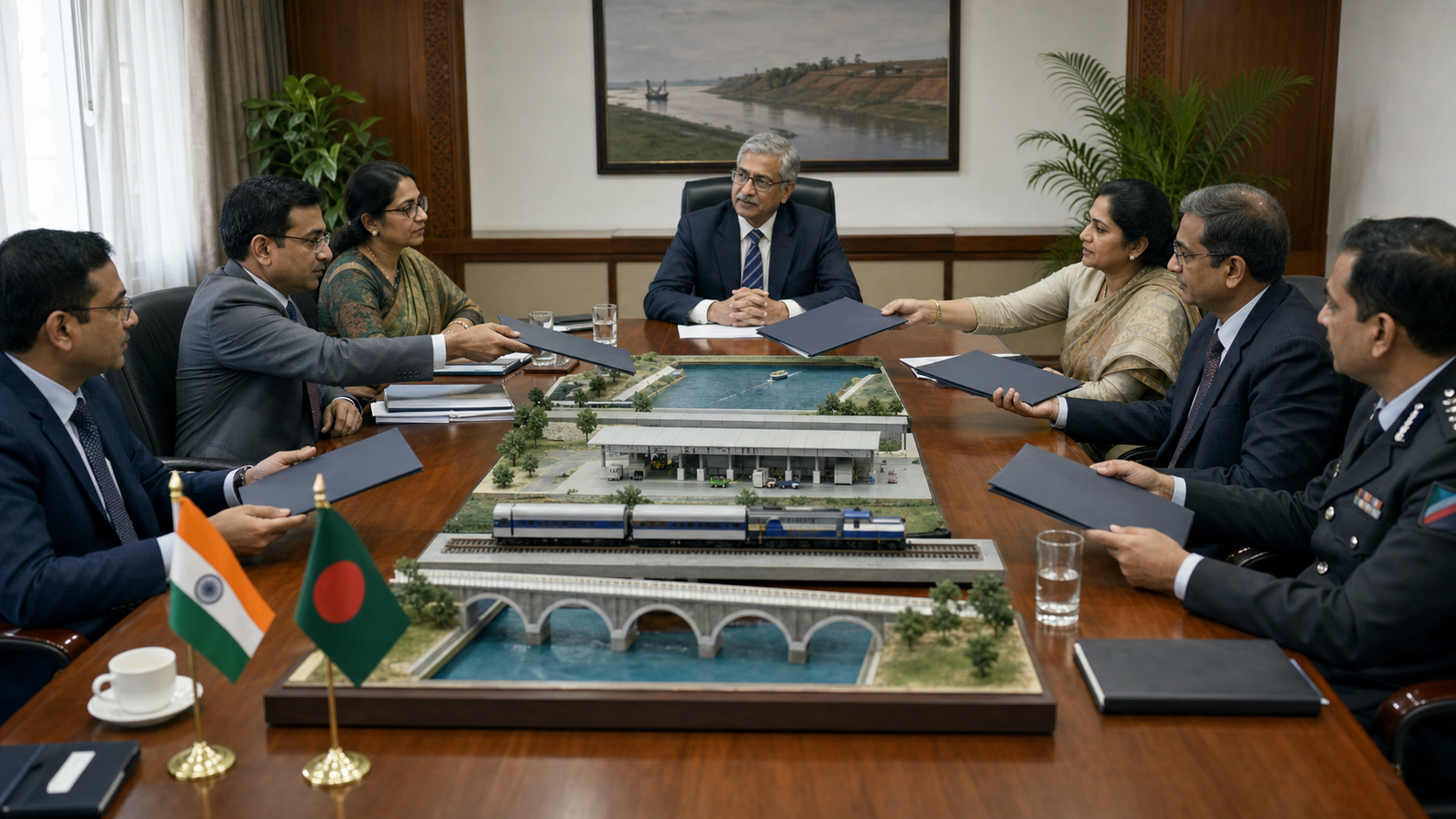
Trivedi’s principal comparative advantage is likely to be political reach. He may be able to explain Bangladeshi concerns to influential decision-makers in India, identify the domestic limits surrounding a proposal and elevate problems that would otherwise move slowly through official channels. That role is particularly relevant when reassurance is needed at senior levels.
Political access, however, is only one part of diplomatic capacity. The source notes that a high commission includes specialists working across political affairs, commerce, security, development, culture and consular services. Border procedures, customs rules and water arrangements require technical knowledge, institutional memory and careful drafting. Effective leadership would connect that professional machinery to political authority rather than attempting to replace it.
This makes the appointment an institutional experiment as well as a bilateral initiative. Its success should not be measured by the number of cordial meetings or favourable statements. The meaningful question is whether senior access helps specialists secure decisions, whether those decisions produce implementable procedures and whether both governments sustain them when domestic criticism intensifies.
Key takeaways
- Trivedi’s appointment is evidence of elevated political attention, not evidence that the underlying disputes have already been resolved.
- His Petrapole-Benapole arrival makes border experience a natural benchmark for judging the diplomatic initiative.
- Visible progress would include more predictable travel and consular processes, safer border management and fewer avoidable customs and trade obstacles.
- Water, security and border disputes will require specialized negotiations backed by decisions at the political level.
- A durable reset must be publicly credible in both countries; agreements perceived as one-sided or opaque may struggle to retain support.
The next phase will reveal whether the appointment can create a working bridge between political leadership and administrative delivery. If routine interactions become more predictable while difficult negotiations remain active, the reset will have acquired substance. Until then, the prudent assessment is that New Delhi has sent a consequential signal whose policy value remains to be demonstrated.