

If you are trying to decide which account of Kashmir to trust, the loudest clip will usually give you the least useful starting point. Begin with a harder question: what does this claim ask you to forget?
That question matters because Kashmir arguments routinely compress territory, demography, displacement, war and moral responsibility into one slogan. You can resist that compression. A disciplined method lets you challenge Pakistan’s claims, preserve Kashmiri Pandit memory and still refuse exaggeration or collective blame.
Separate the four claims hidden inside one slogan
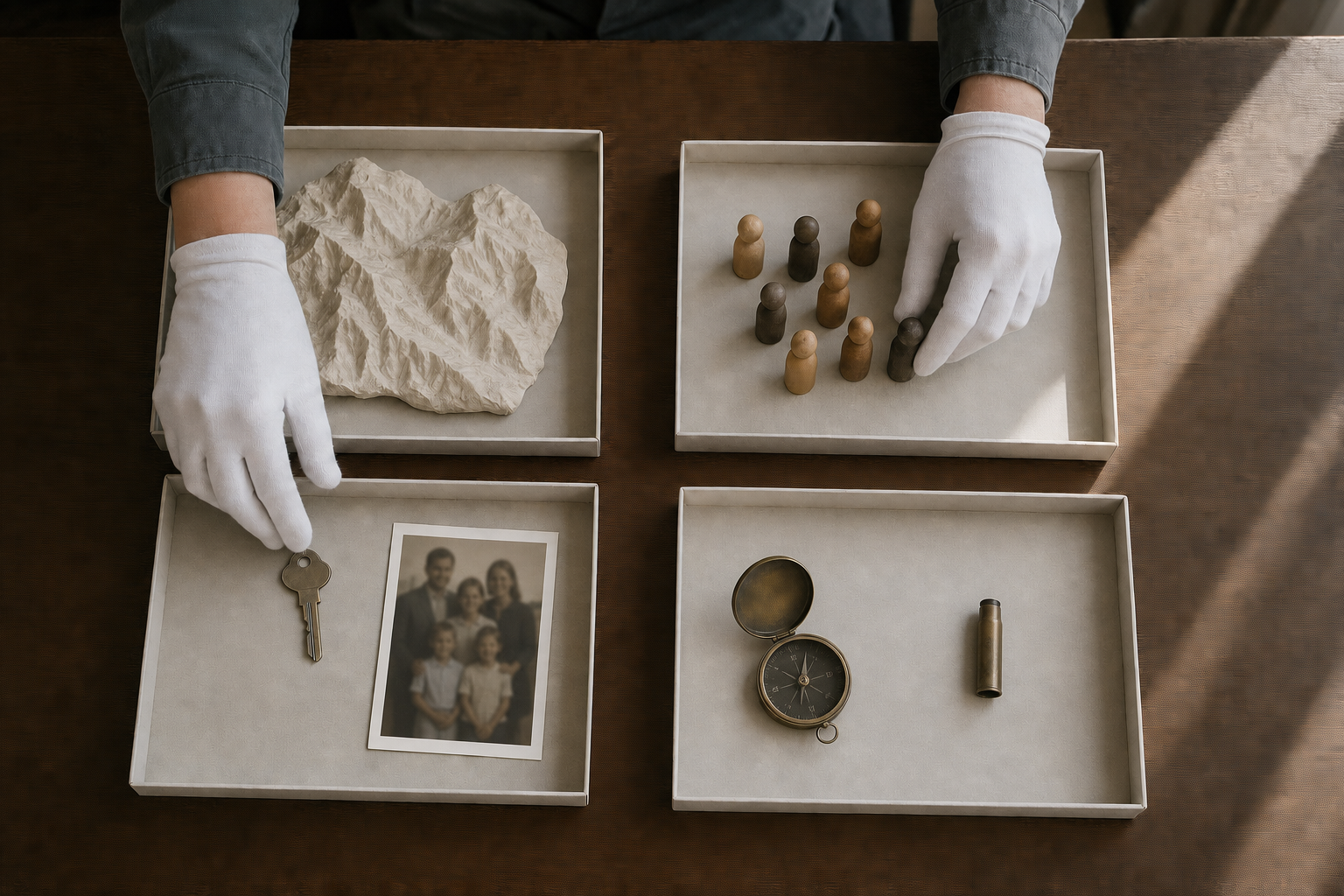
Most sweeping statements about Kashmir contain several different claims. They may reinforce one another, but none proves the others automatically. Before you accept or repeat a statement, identify which of these four questions it is actually trying to answer:
- Territorial: Who possesses sovereignty or administrative authority, and on what stated basis?
- Demographic: Which communities lived in a defined place at a defined time, and how did migration, coercion or displacement alter that population?
- Causal: Which people, institutions or state policies produced a particular outcome?
- Moral: Who suffered an injustice, what is owed to them, and which remedy would address the injury?
This separation prevents a common argumentative shortcut. A demographic fact does not establish sovereignty by itself. A military result does not settle every moral question. The truth of one community’s suffering does not make every political conclusion advanced in its name correct. Yet a territorial narrative that deletes a displaced community’s history is also defective at its foundation.
Suppose someone tells you that Kashmir’s demography proves a complete political case. Ask five questions before going further: Which part of the wider region? What period? What record supports the population claim? Did displacement affect the stated baseline? What precise conclusion is supposed to follow? If those qualifiers are missing, the conclusion is running ahead of the evidence.
Apply the same discipline to arguments you agree with. A pro-India case should not depend on an inflated claim that collapses as soon as an informed listener checks it. Accuracy is not a concession to an opponent. It is what makes an argument durable.
Put Kashmiri Pandit memory back into the chronology

The exodus of Kashmiri Pandits cannot be treated as a detachable humanitarian footnote. It altered who could remain, who could transmit a tradition in its native setting and whose presence would be visible to later generations. Describing that rupture as an erasure of “thousands of years of history” expresses the scale of the civilizational loss, not merely a change in population totals.
Historical memory can be truthful and partial at the same time. A displaced person’s testimony can establish lived loss without independently resolving every question about sovereignty, state conduct or regional politics. You should neither demand that a victim solve the entire geopolitical dispute before acknowledging the displacement nor ask one testimony to prove more than it contains.
When you encounter a Kashmir narrative, test whether it can answer four concrete questions about the Pandit exodus:
- Does it name the displaced community clearly, or hide the exodus inside a vague phrase such as “demographic change”?
- Does it examine the conditions that made departure necessary, or begin its chronology only after people had left?
- Does it consider cultural continuity as well as physical survival?
- Does it specify the safety, dignity and rights required for a voluntary return?
A narrative that cannot answer those questions may still contain individual facts, but it cannot claim to be a complete moral history of Kashmir. Demography is not a still photograph. If coercion or fear changes who can live in a place, the resulting population pattern cannot be interpreted honestly without the preceding rupture.
Memory must also lead somewhere. Invoking Kashmiri Pandits only as a debating weapon leaves the central work undone. A serious position must connect remembrance to cultural preservation, justice, security and a credible right of return. A return announced without safety would not constitute restitution. Cultural celebration without the conditions for living continuity would not repair the loss either.
Recognising this specific injury does not require you to deny the suffering or dignity of Muslims, Buddhists, Sikhs, Jains or any other community connected to the region. Pluralism does not mean pooling every injury into the anaesthetic phrase “everyone suffered.” It means naming each injury accurately, judging responsibility from evidence and protecting every person without making recognition conditional on political usefulness.
Test 1971 and debate-stage rhetoric with the same method

A widely discussed Oxford Union intervention by Kautilya Pandit brought historical memory, Pakistan’s military record and the Kashmiri Pandit exodus into one forceful response. Such interventions can break through evasive language. They can also move so quickly that listeners mistake rhetorical impact for a complete chain of proof.
Consider the invocation of the 1971 Liberation War and the surrender of “93,000 Pak soldiers”. The reference can challenge triumphalist or militarised storytelling, but you still need to ask what work it is doing in the argument:
- Relevance: Is 1971 being used to establish a direct historical connection, to challenge institutional credibility or merely to humiliate an opponent?
- Causation: Has the speaker explained the decisions and mechanisms connecting the historical event to the present claim?
- Level of responsibility: Does the evidence concern a government, a military institution, particular leaders or an entire population?
- Lesson: Is the event being used to support restraint and accountability, or converted into a permanent entitlement to contempt?
A sharp line such as “You reap what you sow” can state a principle of consequence. It cannot substitute for identifying who sowed what, through which institution and with what effect. Without that chain, accountability becomes collective accusation.
This distinction matters especially in India-Pakistan discourse. A claim about Pakistan’s military establishment should name that establishment. A claim about a state policy should name the state action. Neither should be silently expanded into a judgement about every Pakistani civilian. Precision does not absolve an institution; it concentrates responsibility where the evidence places it.
Use this short verification routine before sharing any debate clip:
- Write down the exact factual claim, including every number, date, place and institutional name.
- Label it as an observed fact, an interpretation, a causal claim, a moral judgement or a prediction.
- Add the missing qualifiers: geographic unit, time period, population category and decision-making institution.
- Check whether the available record supports the precise wording rather than a weaker neighbouring claim.
- State what the claim proves, what it does not prove and which evidence would change your conclusion.
Do not silently upgrade a speaker’s wording. If someone says “soldiers,” do not broaden or narrow the category without corroboration. If someone describes historical erasure, do not paraphrase that as literal total disappearance. If a line is plainly sarcasm, treat it as institutional criticism rather than as statistical evidence. These small distinctions are where a trustworthy account separates itself from propaganda.
Key takeaways
- Separate territorial, demographic, causal and moral claims before deciding whether an argument holds.
- Any serious Kashmir chronology must account explicitly for the Kashmiri Pandit exodus and its cultural consequences.
- Memory can establish real loss without automatically settling every geopolitical question.
- Use 1971 to examine decisions, institutions and consequences, not to assign hereditary guilt to a population.
- Before sharing a powerful clip, identify exactly what it proves and which part remains interpretation.
- A Dharmic response combines truth, specific accountability, minority safety, cultural continuity and restraint in language.
Build a Dharmic position around truth, return and restraint
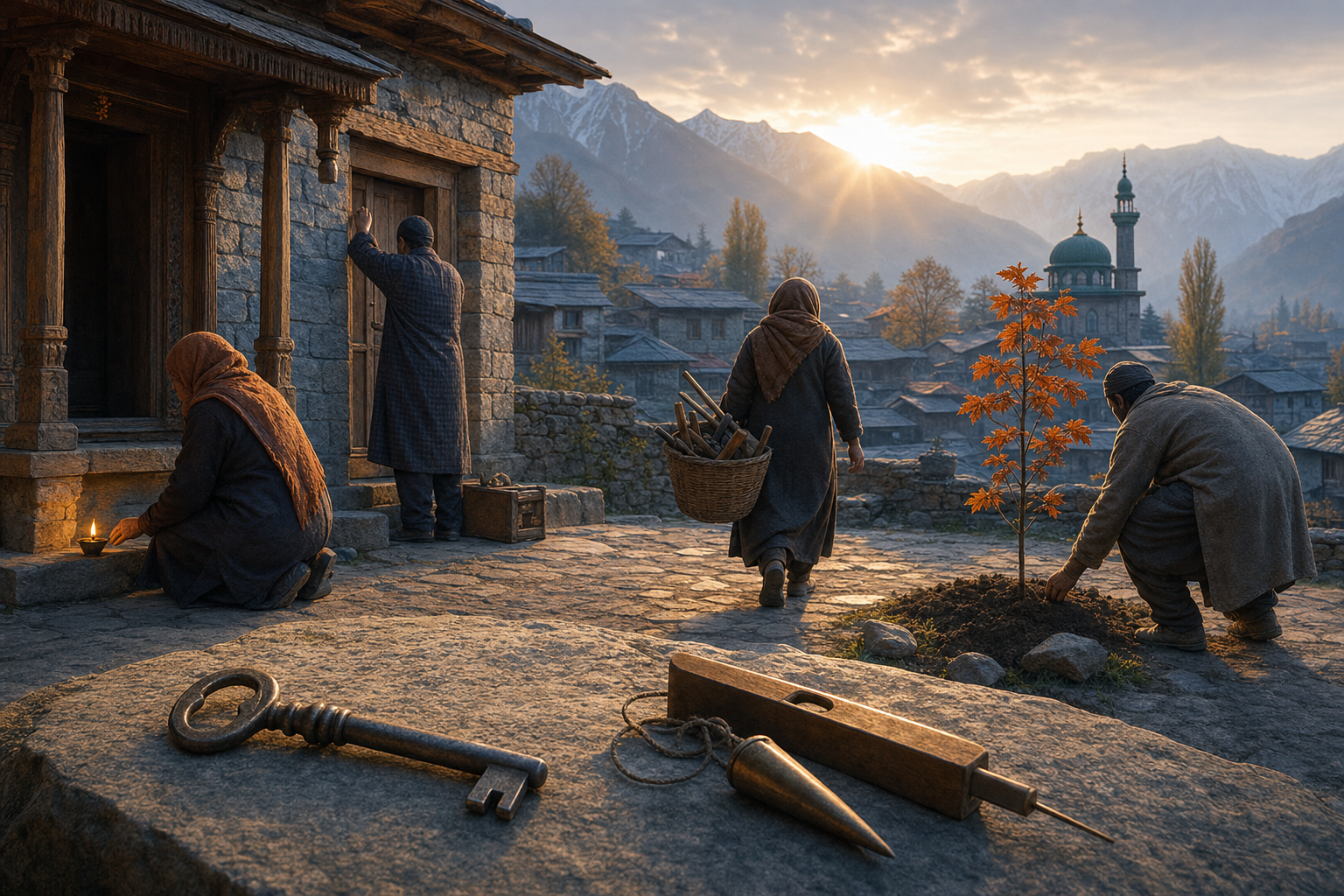
Satya and ahimsa are not competing rules for public argument. Truth without restraint can be turned into humiliation; restraint without truth can become an excuse for silence. A Dharmic position needs both: refusal to erase targeted suffering and refusal to dehumanise people who did not commit the act being condemned.
That standard gives you a practical set of demands:
- Truth: Build chronologies that include displacement rather than starting after demographic disruption has occurred.
- Justice: Treat the dignity, safety and return of Kashmiri Pandits as substantive obligations, not ceremonial language.
- Cultural continuity: Protect the memory and living heritage of communities whose connection to the region cannot be reduced to present-day population share.
- Accountability: Name the governments, military institutions, leaders and policies implicated by the evidence instead of transferring blame to an ethnicity or nationality.
- Pluralism: Defend every community’s security while refusing to make one community’s recognition contingent on denying another’s pain.
- Diplomacy: Seek reconciliation only on terms that preserve historical truth; amnesia may suppress an argument temporarily, but it cannot create trust.
This approach does not weaken a pro-India case. It makes that case harder to dismiss. India’s civilizational claim to unity in diversity carries a concrete test in Kashmir: whether a displaced Hindu community’s history, safety and continuity can be defended without adopting the collective hatreds that pluralism is meant to overcome.
Before you share the next Kashmir clip, add one sentence beneath it: “This establishes X; it does not by itself establish Y; the missing evidence is Z.” If you cannot fill in those three parts, pause. That small habit protects Kashmiri memory from being consumed by the same propaganda cycle that claims to defend it.
References
