

If you have family in Bangladesh and are trying to decide what to ask a lawmaker or community organization to do, a forceful statement is not enough. You need a protection agenda that works before an attack, during an emergency, and through investigation and recovery.
On February 12, 2026, several US lawmakers raised concerns about reports of "systematic persecution" of Hindus as Bangladesh approached crucial polls. That is a grave report-based allegation, not a substitute for investigating individual cases and publishing reliable data. The responsible response is neither dismissal nor unverified amplification. It is to build a system that can prevent harm, establish what happened, hold offenders accountable, and help victims recover.
What genuine minority protection must deliver
The first practical mistake is treating protection as a single action. Police outside a temple on one sensitive day may be useful, but it cannot replace an accessible reporting channel, a credible investigation, prosecution, compensation, or restoration. Protection is a chain, and a missing link can leave a family exposed even after the immediate danger has passed.
Use four tests when you assess any promise made by an authority, political party, diplomatic mission, or advocacy organization:
- Prevention: Are places of worship, cultural sites, and vulnerable communities covered before foreseeable periods of tension? Are national and local leaders clearly rejecting intimidation and communal violence?
- Response: Can a threatened person reach a functioning hotline, police contact, legal-aid provider, or trusted civil-society channel? Is there a defined route for escalating an urgent report?
- Accountability: Will allegations be investigated in a verifiable way? Can victims learn what happened to their complaints, and will substantiated offenses proceed toward prosecution?
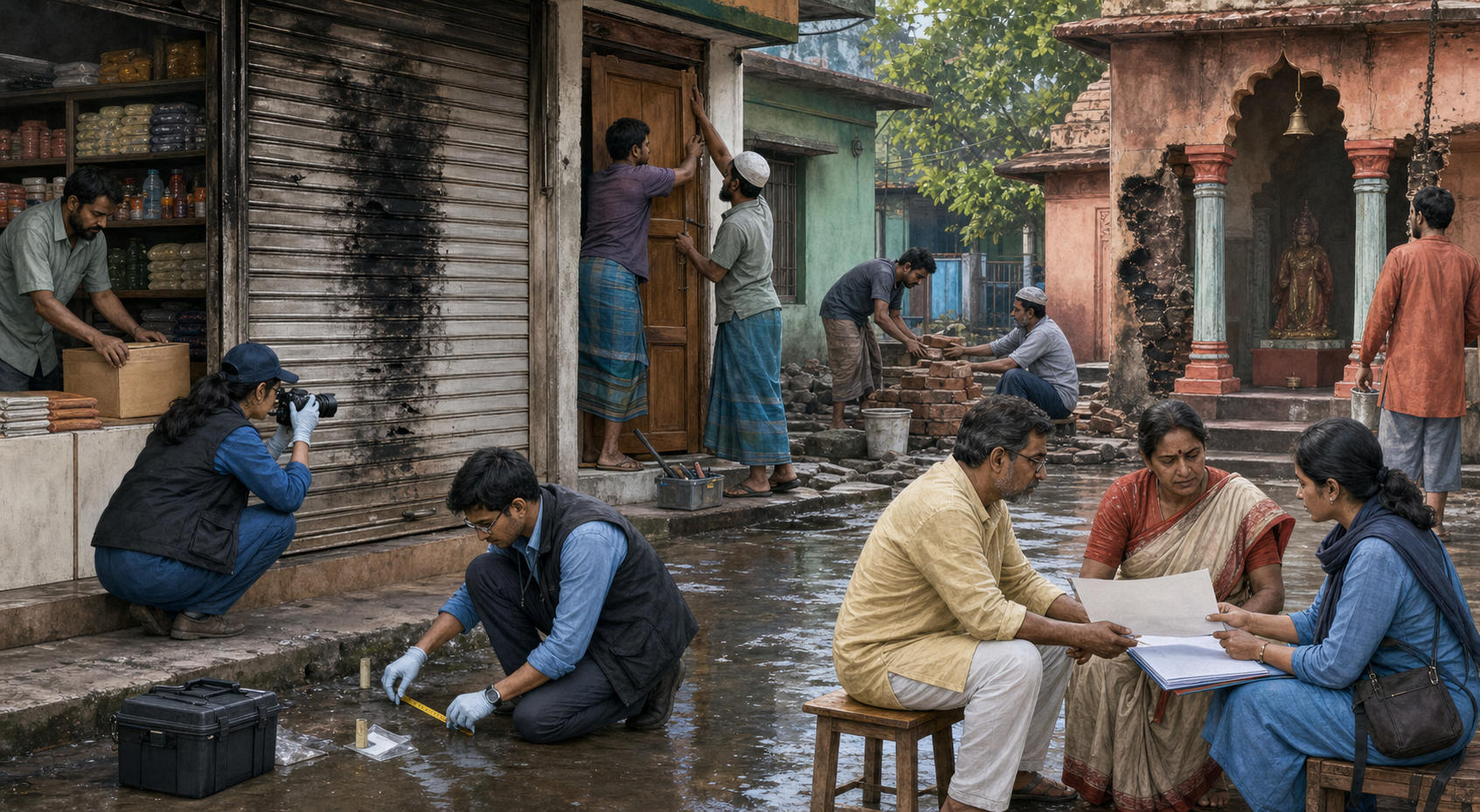
- Repair: Is there a workable path to compensation, restoration of damaged temples and cultural sites, recovery of homes and livelihoods, and legal assistance for affected families?
These tests expose symbolic responses. Security without investigation allows impunity to survive. Investigation without accessible reporting excludes people who cannot safely enter the system. Prosecution without repair may punish an offender while leaving a family unable to reopen a business or return home. Compensation without accountability can reduce immediate hardship but does little to deter repetition.
The governing standard is equal citizenship, not emergency charity. Bangladesh’s constitutional commitments and international human-rights obligations require protection that does not depend on a citizen’s faith or political usefulness. A Hindu family should not need special patronage to obtain the ordinary protection of law.
Hindus must be named when Hindus are being threatened. At the same time, the protective framework should cover Buddhists, Jains, Sikhs, indigenous peoples, and other vulnerable religious and ethnic communities. That wider commitment does not erase the Hindu experience. It establishes a rule no government or political faction can selectively apply.
Ahimsa is not passivity in the face of intimidation. In public life, it means preventing harm without collective blame and pursuing justice without retaliation. Cross-community solidarity, including visible cooperation between Hindus and Muslims, makes the standard plain: nobody should fear violence because of faith.
Election safeguards must exist before tensions peak
Election-related danger is partly a problem of timing. Polarized rhetoric can turn into threats, vandalism, or intimidation when local safeguards are weak or slow. By the time damaged property appears in a photograph, prevention has already failed. Authorities therefore need an operational plan before polling periods and other sensitive dates, not an improvised response after harm has occurred.
Ask whether that plan contains the following elements:
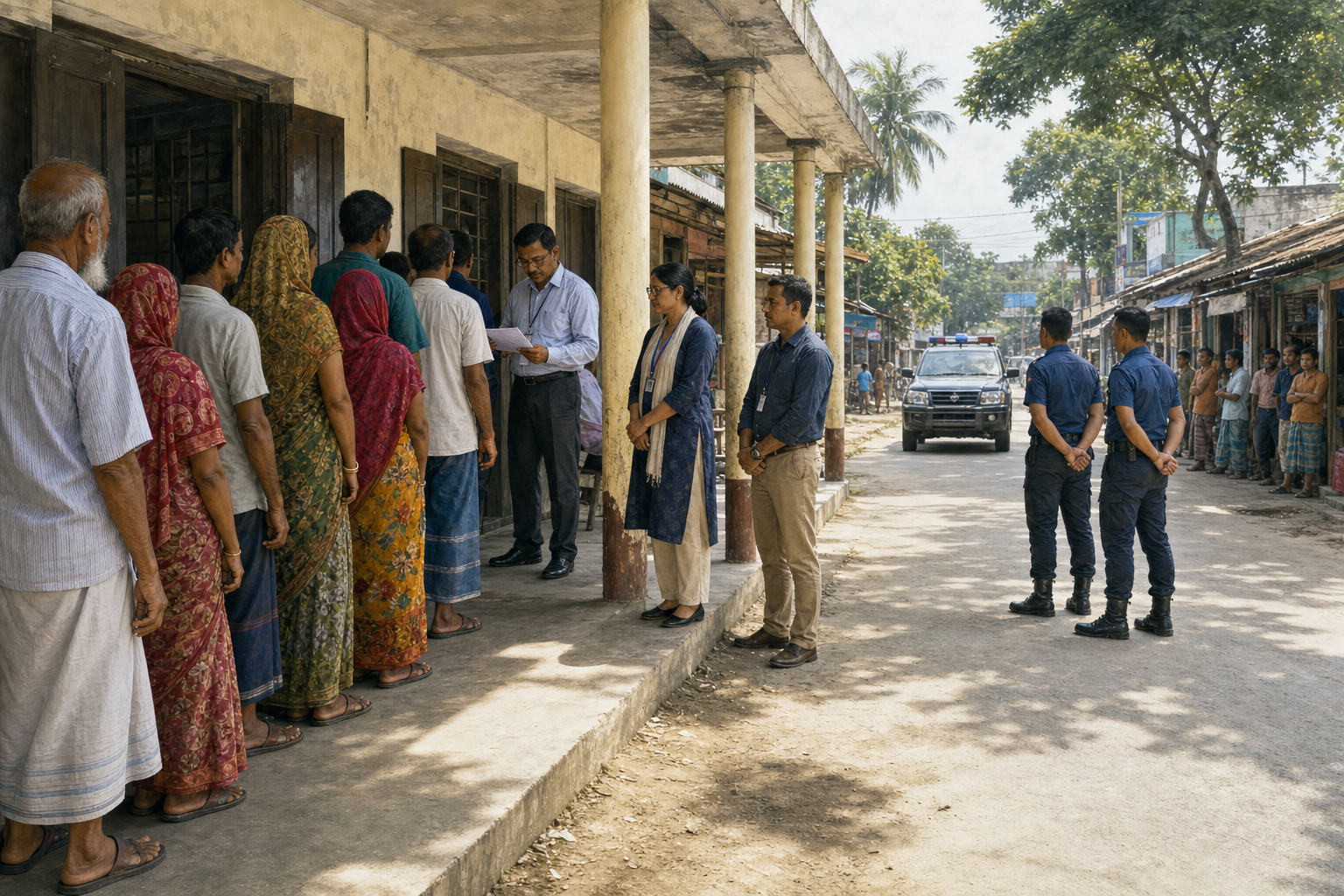
- Risk coverage: Police and administrators should internally identify vulnerable localities, temples, houses of worship, and cultural sites. The public should receive confirmation that these locations are covered, without publication of tactical details that could create new security risks.
- A visible chain of responsibility: Residents should know which local institution receives a report, who can order a rapid response, and where a complaint goes if the first contact does not act.
- A dedicated reporting route: A specialized hotline is useful only when somebody receives the call, records the matter, assesses urgency, and refers it to an authority capable of acting. Publishing a telephone number is not the same as operating a response system.
- Early warning and verification: Civil-society groups, community representatives, police, and the election administration should have a way to share credible warnings and distinguish an immediate threat from rumor.
- A disinformation protocol: Authorities need a prompt method for correcting inflammatory falsehoods without suppressing genuine testimony. Corrections should address the claim, show what has been verified, and avoid exposing victims or witnesses.
- Unambiguous public messaging: National and local leaders should state before a crisis that attacks on citizens, homes, businesses, and places of worship will be investigated and prosecuted regardless of the victim’s faith or presumed politics.
The test is operational, not rhetorical. Who receives the warning? Who dispatches help? How is the report logged? Who checks whether action occurred? A plan that cannot answer those questions is still an aspiration.
Authorities should also avoid publishing sensitive deployment information merely to demonstrate activity. Communities need to know that protection exists and how to reach it; potential attackers do not need patrol routes, staffing gaps, or the identities of vulnerable residents.
When harm occurs, follow the case beyond the headline
If you or your relatives are directly affected, personal safety comes before documentation. Do not remain near a violent crowd to obtain footage, confront suspected attackers, or circulate a victim’s location while danger is active. Move to a safer place and contact emergency services, local authorities, or trusted community support when it is safe to do so.
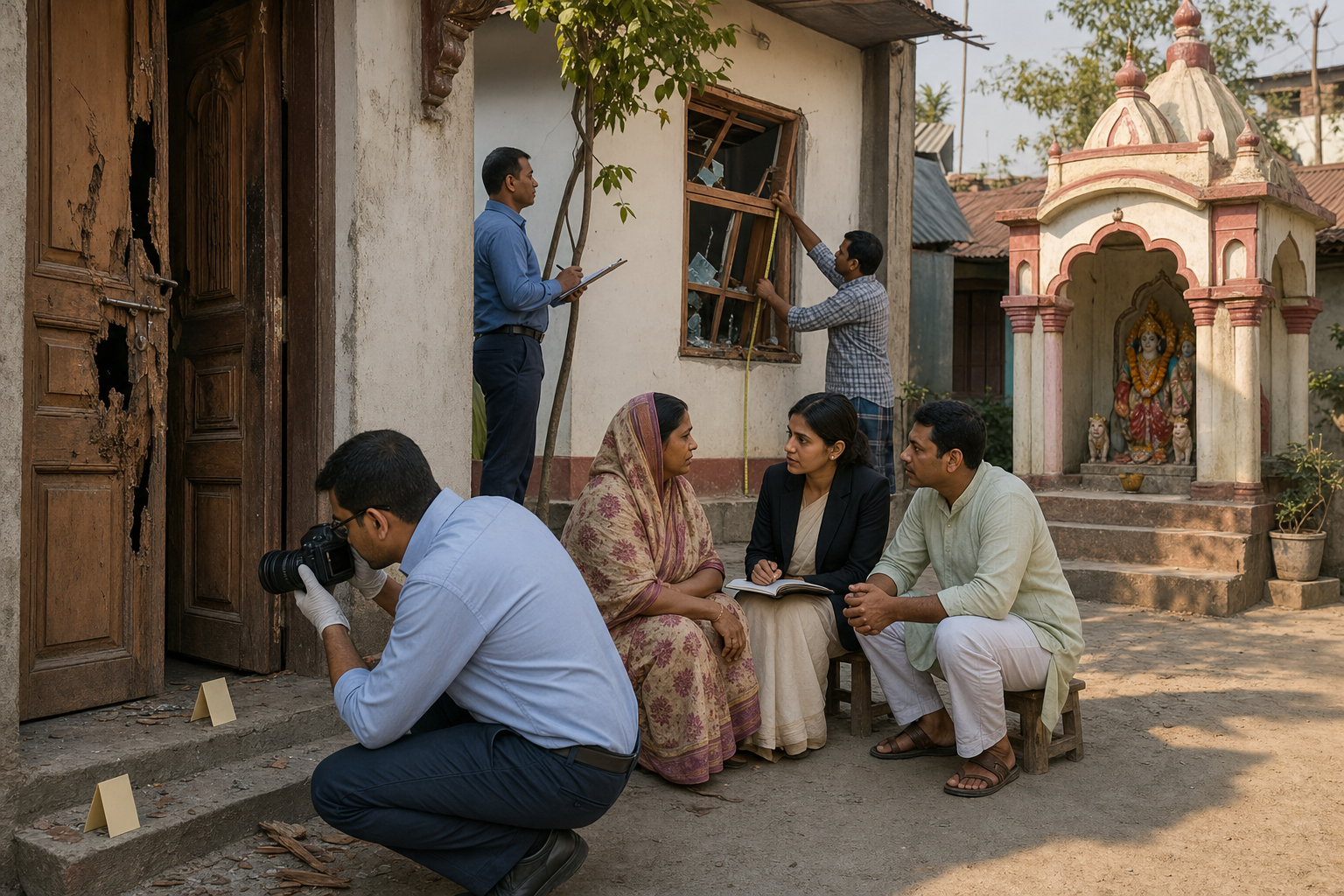
Once immediate danger has passed, careful documentation can help investigators, lawyers, relief providers, and advocates. Use this sequence:
- Create a factual incident log. Record the date, approximate time, precise location, people or property affected, what you directly witnessed, and what somebody else told you. Keep direct observation separate from hearsay.
- Preserve original material. Retain unedited photographs, videos, messages, complaint receipts, medical records, and records of damaged property when doing so is safe. Keep a backup rather than relying on a social-media upload.
- Protect identities. Ask permission before publishing names, faces, addresses, religious affiliations, or testimony. A person may want help without becoming publicly identifiable.
- Use a trusted reporting route. Contact police, an official hotline if one has been established, a legal-aid provider, or a credible civil-society organization. Do not rely on a viral post as the only record of the incident.
- Retain the complaint reference. If the reporting process issues a case number, receipt, or written acknowledgment, keep it and record each subsequent contact. This makes it harder for a complaint to disappear between institutions.
- Track the whole remedy. Ask whether an investigation opened, whether suspects were charged or prosecuted, whether urgent assistance arrived, and whether compensation, legal aid, livelihood recovery, or restoration of a damaged temple was completed.
This is a safety and documentation framework, not Bangladesh-specific legal advice. Local procedures may differ, and instructions from a qualified local lawyer or emergency authority should take priority where they conflict with a general checklist.
Do not let attention stop at an arrest announcement. An arrest is not a completed prosecution, and a prosecution does not by itself repair a destroyed livelihood or place of worship. The practical proposals already placed in public debate include verifiable investigations, swift prosecution, compensation, legal aid, and restoration. Each needs a visible status that affected families can follow.
Turn diaspora concern into an accountability scorecard
Diaspora advocacy is most useful when an official can answer it with a commitment and later show evidence of implementation. A broad demand to "protect minorities" is morally correct but administratively easy to acknowledge and forget. Convert it into requests that can be checked.
| Area | Commitment to request | Proof to request later |
|---|---|---|
| Prevention | Protection for vulnerable communities and houses of worship around sensitive dates | A public description of coverage, the responsible institutions, and the escalation route |
| Reporting | A dedicated hotline and rapid referral process | Published contact details, a handling procedure, and anonymized information about action on reports |
| Accountability | Verifiable investigations and prosecution of substantiated offenses | Anonymized case status, procedural milestones, and outcomes rather than arrest announcements alone |
| Recovery | Compensation, legal aid, livelihood support, and restoration of damaged religious or cultural sites | A clear application process and status reporting on approved remedies |
| Transparency | Credible monitoring and an early-warning mechanism | Regular anonymized reporting that explains what was counted, verified, referred, and resolved |
| Public trust | Joint messaging from national, local, and cross-community leaders | Named points of contact and visible cooperation before as well as after a crisis |
When you contact an elected representative, diplomatic mission, journalist, or community organization, lead with the most verifiable information available. Distinguish a firsthand account from a secondhand claim. State what remains unknown. Include the location and date when you have permission and confidence in them. Avoid sending graphic media unless it is necessary, relevant, and shared with the consent of the affected person.
Suggested wording: Please urge Bangladesh’s national and local authorities to publish protection arrangements for vulnerable religious communities around sensitive dates; operate accessible reporting and escalation channels; disclose anonymized case progress; prosecute targeted violence; and provide compensation, legal aid, livelihood recovery, and restoration for damaged homes, businesses, temples, and cultural sites. Please also identify how these commitments will be monitored and when implementation will next be reported.
This framing is firm without treating external engagement as an attack on Bangladesh. Concern in Washington was presented as support for Bangladesh’s stability, equal citizenship, and democratic processes. That is the sound geopolitical argument: impunity weakens trust, constrains economic opportunity, and damages democratic legitimacy, while reliable protection strengthens the country as a whole.
Verification discipline matters here. If you cannot establish when or where an image originated, do not present it as a confirmed current incident. Label uncertainty and seek corroboration. Accuracy protects genuine victims because officials cannot use one avoidable error to dismiss a larger body of credible testimony.
Key takeaways for constructive minority protection
- Judge every protection promise by prevention, emergency response, accountability, and repair.
- Require safeguards before elections and other sensitive dates; an after-the-fact relief effort is not a prevention plan.
- Demand a functioning reporting and escalation system, not merely a published hotline number.
- Separate direct observation, testimony, and unverified claims when documenting an incident.
- Protect victims’ safety and consent before seeking publicity, and never expose tactical security details or vulnerable locations unnecessarily.
- Track investigations through prosecution and track relief through compensation, livelihood recovery, legal aid, and restoration.
- Name anti-Hindu targeting clearly while supporting equal protection for every vulnerable religious and ethnic community.
Your next step can be concrete. Choose the institution you are already able to reach, send it the scorecard above, and ask who owns each commitment and how implementation will be shown. Continue following the case after public attention moves elsewhere. Protection becomes credible when a threatened person can reach help, an offender expects investigation, and an affected family can return to a restored life.
References
