
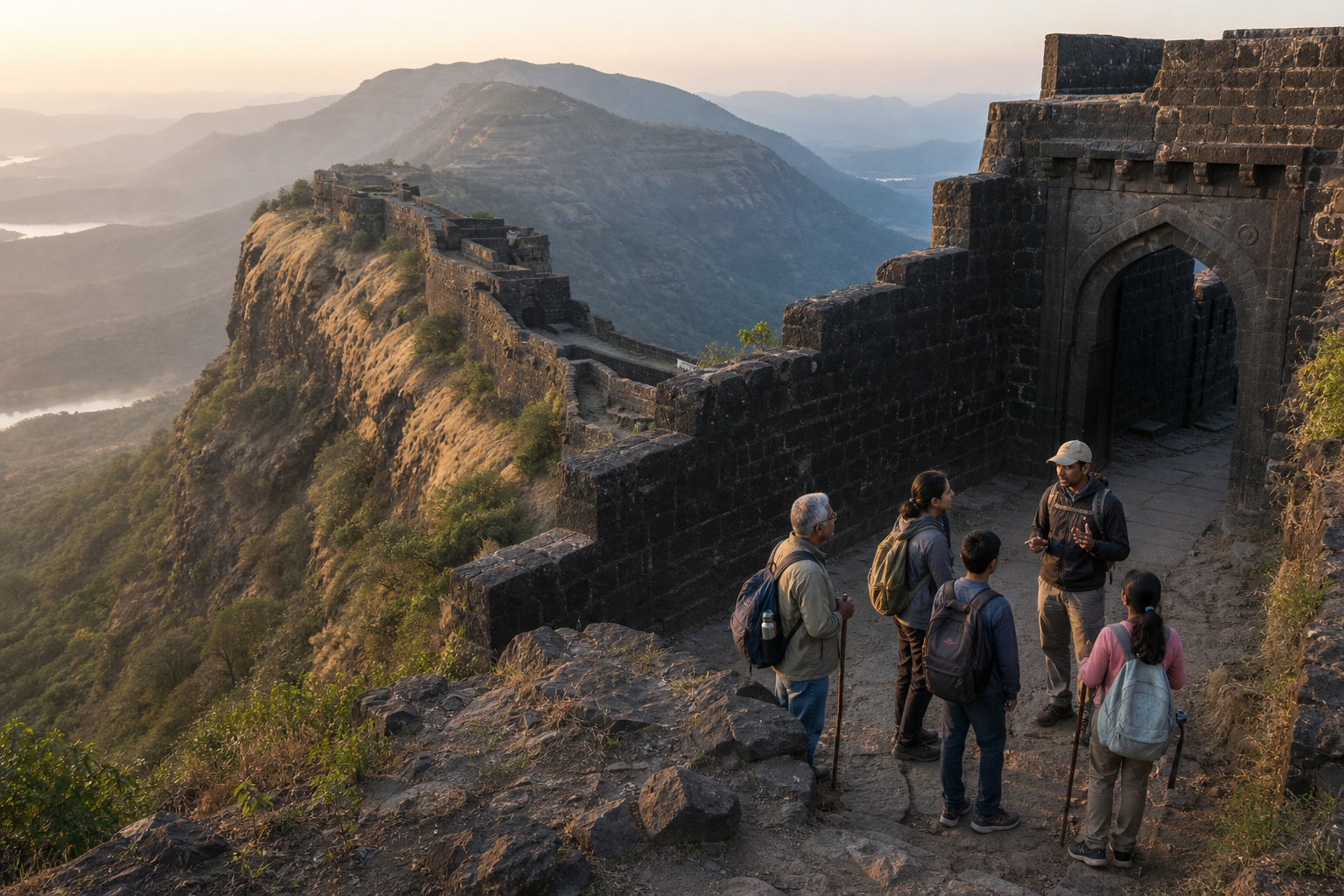
You want a Shivaji fort excursion to do more than fill a day, produce photographs and end with a slogan. You want the fort to become legible: as terrain, defensive architecture, a centre of logistics and governance, and a place where Chhatrapati Shivaji Maharaj’s leadership can be examined through visible evidence.
That takes deliberate planning. Choose the historical question before you choose the activities, insist on a guide who distinguishes evidence from assumption, and make safety and stewardship part of the lesson. The result can be both reverent and intellectually serious.
Begin with a question the fort can help you answer
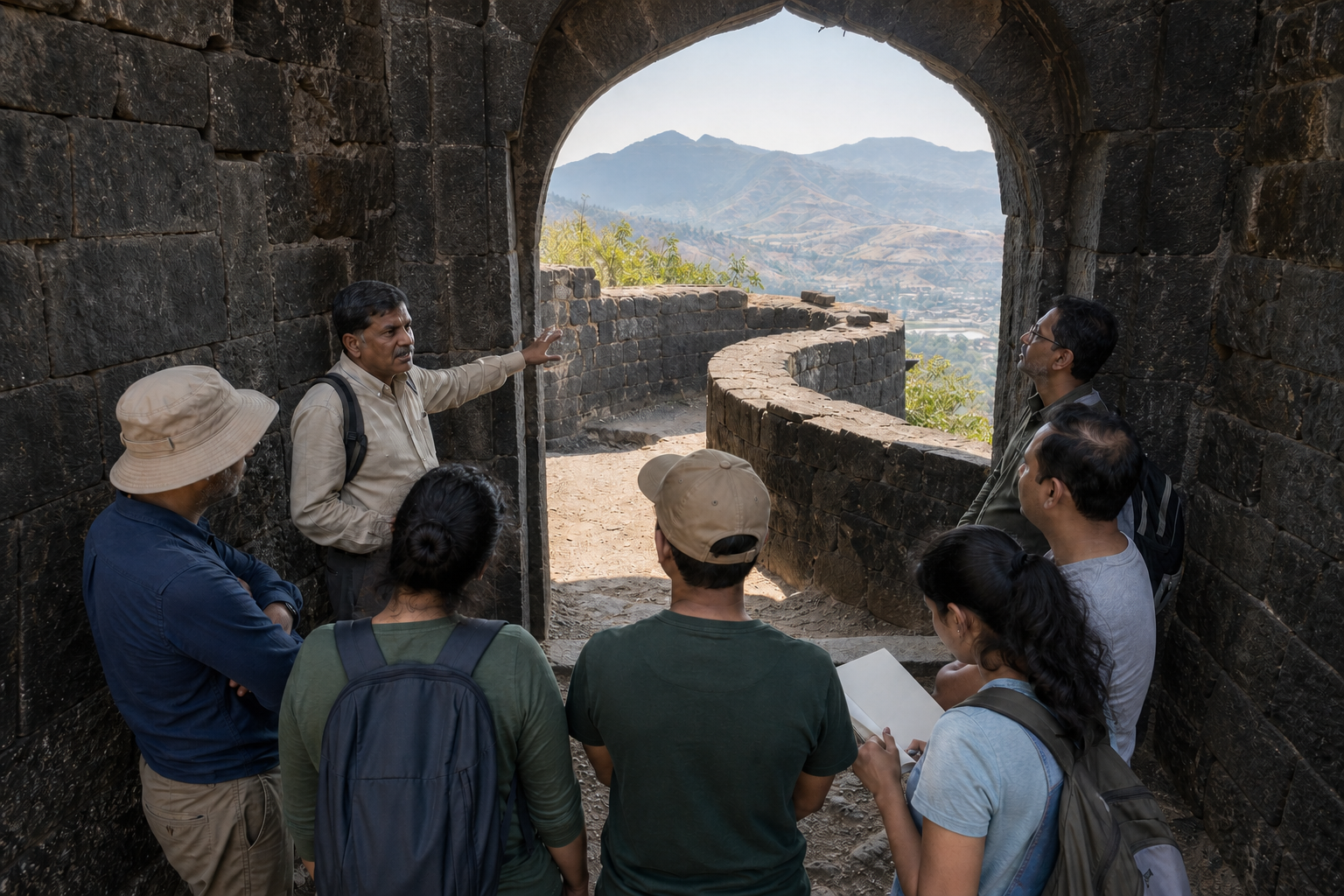
A fort is not self-explanatory. Its slopes, walls, gateways and internal spaces can provide evidence, but they do not automatically tell visitors who built a feature, when it changed, or how it was used. A good excursion therefore begins with an inquiry question rather than a long lecture.
A useful central question might be: How did leaders turn geography into security, administration and public responsibility? That question keeps the group attentive to the relationship between terrain, construction, movement, supplies and governance. It also gives you a disciplined way to discuss Chhatrapati Shivaji Maharaj’s strategic acumen without reducing his legacy to military spectacle.
The HJS campaign called “A Day in Presence of Chhatrapati Shivaji Maharaj” found that young participants responded enthusiastically to guided, place-based encounters with fort history. Participants also expressed interest in more excursions combining scholarship, safety and accessibility. That response points to an important planning principle: people connect with history when they are asked to observe, interpret and take responsibility, not merely listen.
Send the inquiry question to participants before the excursion. Ask them to arrive ready to notice:
- A visible feature that appears shaped by the terrain.
- A place where movement seems to have been channelled, slowed or observed.
- A logistical problem that inhabitants would have needed to solve.
- A connection between physical security and responsible governance.
- A claim made during the excursion that deserves verification afterward.
This preparation changes the visitor’s role. Instead of waiting to be impressed, each person arrives as an attentive student of the landscape.
Read the fort through terrain, design, logistics and governance
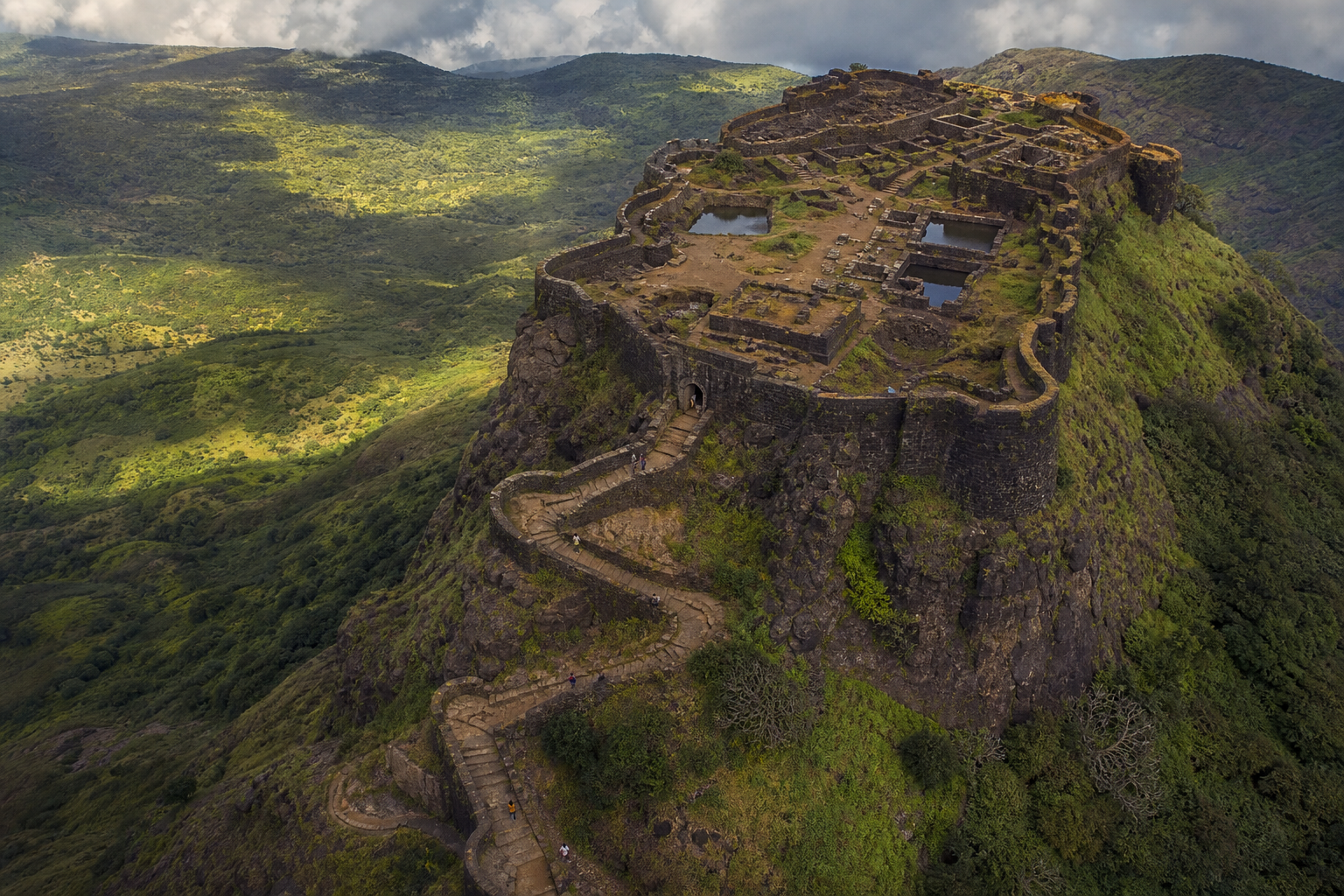
Move through the site slowly enough for the group to examine relationships. On the approach, look at slope, visibility and possible routes. At a gateway or passage, ask how the built form affects movement. Within the fort, discuss how people, messages and essential supplies might have circulated, but identify a feature’s function only when the guide can support that identification.
| Lens | What to examine | Question to ask |
|---|---|---|
| Terrain | Slopes, sightlines and routes visible from the stopping point | What opportunities or constraints does this ground create? |
| Built form | Gateways, walls, passages and other features that can be identified responsibly | How does the structure work with the surrounding terrain? |
| Logistics | Documented arrangements for access, storage, supply or internal circulation | What would be required to sustain the fort rather than merely occupy it? |
| Governance | Spaces, inscriptions or records that a qualified guide can place in context | How were security, administration and public duty connected? |
Use an observation-inference-verification method at every major stop. An observation describes only what is visible: for example, a path appears to narrow before a gateway. An inference proposes a possible purpose: narrowing may have helped regulate movement. Verification then asks whether architectural analysis, an inscription, an archival record or a reliable historical account supports that interpretation.
This distinction protects the excursion from confident folklore. A guide should be comfortable saying, “We can see this,” “historians identify it this way,” or “this is a local tradition that still requires corroboration.” Respect for Shivaji Maharaj does not require certainty where evidence is incomplete. Careful attribution makes the history more credible and gives participants a method they can use at every heritage site.
Do not turn the visit into an inventory of architectural terms. Pause after each explanation and ask what the feature reveals about a decision. Why was movement managed here? What had to be supplied? What kind of communication would administration require? The lesson lies in the system formed by geography, construction, people and purpose.
Plan for the least experienced participant, not the fastest
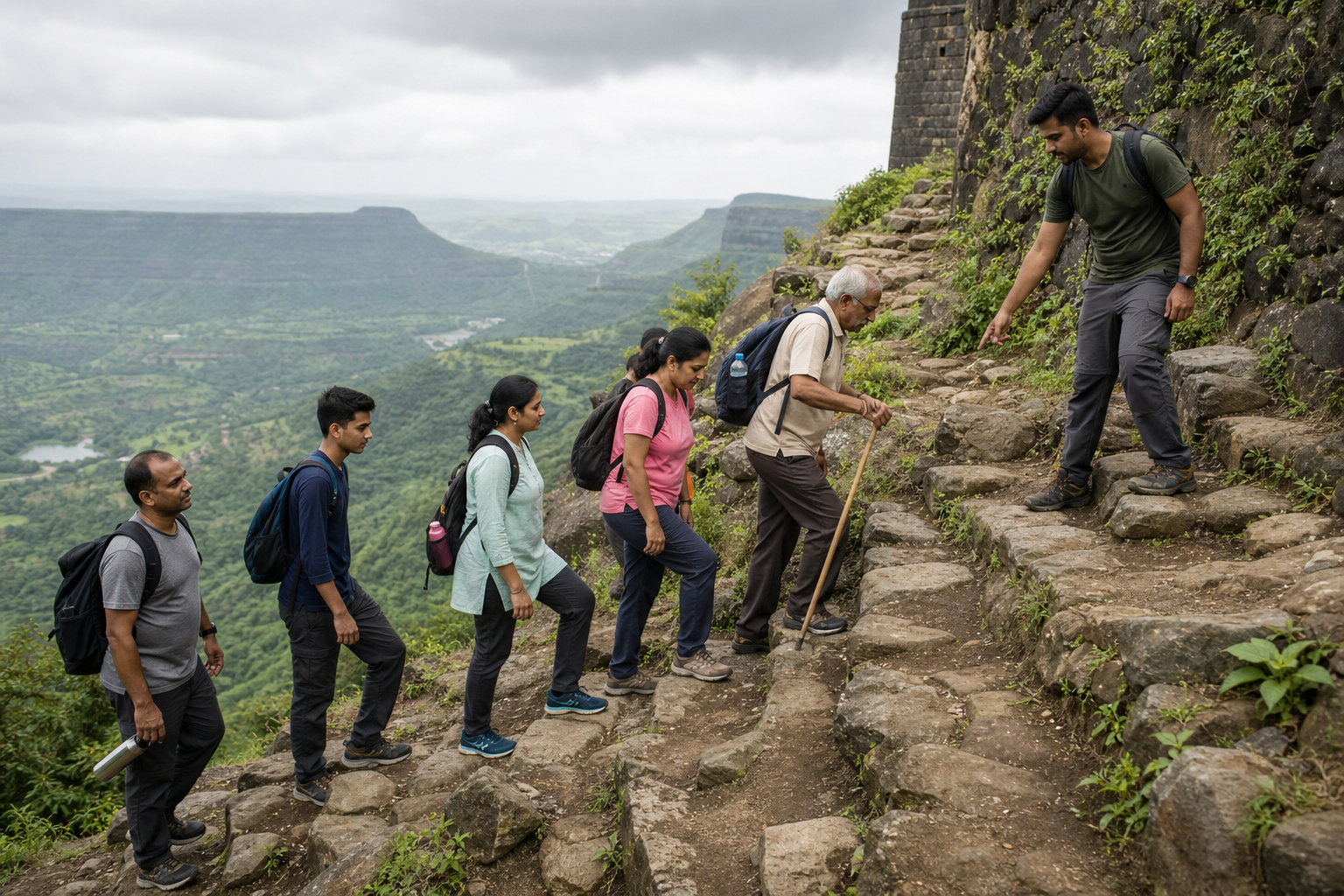
A heritage excursion fails educationally when part of the group is frightened, exhausted, left behind or pushed toward an unsafe edge. Before confirming the route, obtain current information about access, local restrictions, weather, trail conditions and any required permission from the responsible organiser or authority. Conditions can change; an old itinerary is not a safety check.
Give participants a candid route briefing. Identify uneven ground, steep or exposed stretches, limited shade, difficult access points and places where the group may need to turn back. Tell everyone what footwear, water, weather protection and personal medication they must bring. Place first-aid supplies with someone competent to use them, keep emergency contact details available, and establish who leads and who stays at the rear.
- Keep the group within visual or agreed communication range, and account for everyone after transitions and rest stops.
- Set a turnaround decision based on conditions and the least prepared participant. Reaching the highest point is never worth an avoidable injury.
- Do not permit climbing on walls, battlements or unstable masonry. A historic structure is neither a viewing platform nor exercise equipment unless the managed route expressly treats it as such.
- Do not use shortcuts that damage vegetation, erode slopes or separate people from the group.
- Prepare an alternative learning plan for anyone who cannot complete the route. Photographs, maps, a viewpoint discussion and a documentation role can preserve meaningful participation.
Accessibility is not an afterthought. Ask about mobility needs and relevant health constraints before choosing the route, while respecting privacy. Share a truthful description of surfaces and obstacles so participants can make an informed decision. The educational objective is to understand the fort; physical hardship is not proof of devotion.
Scholarship also needs advance planning. Ask the guide to separate visible evidence, established historical interpretation and living tradition. If a story depends on a particular inscription or archival record, note enough information for participants to locate a transcription, photograph or citation later. Dramatic storytelling can hold attention, but it must not erase the line between evidence and embellishment.
Make dharmic values visible in the group’s conduct
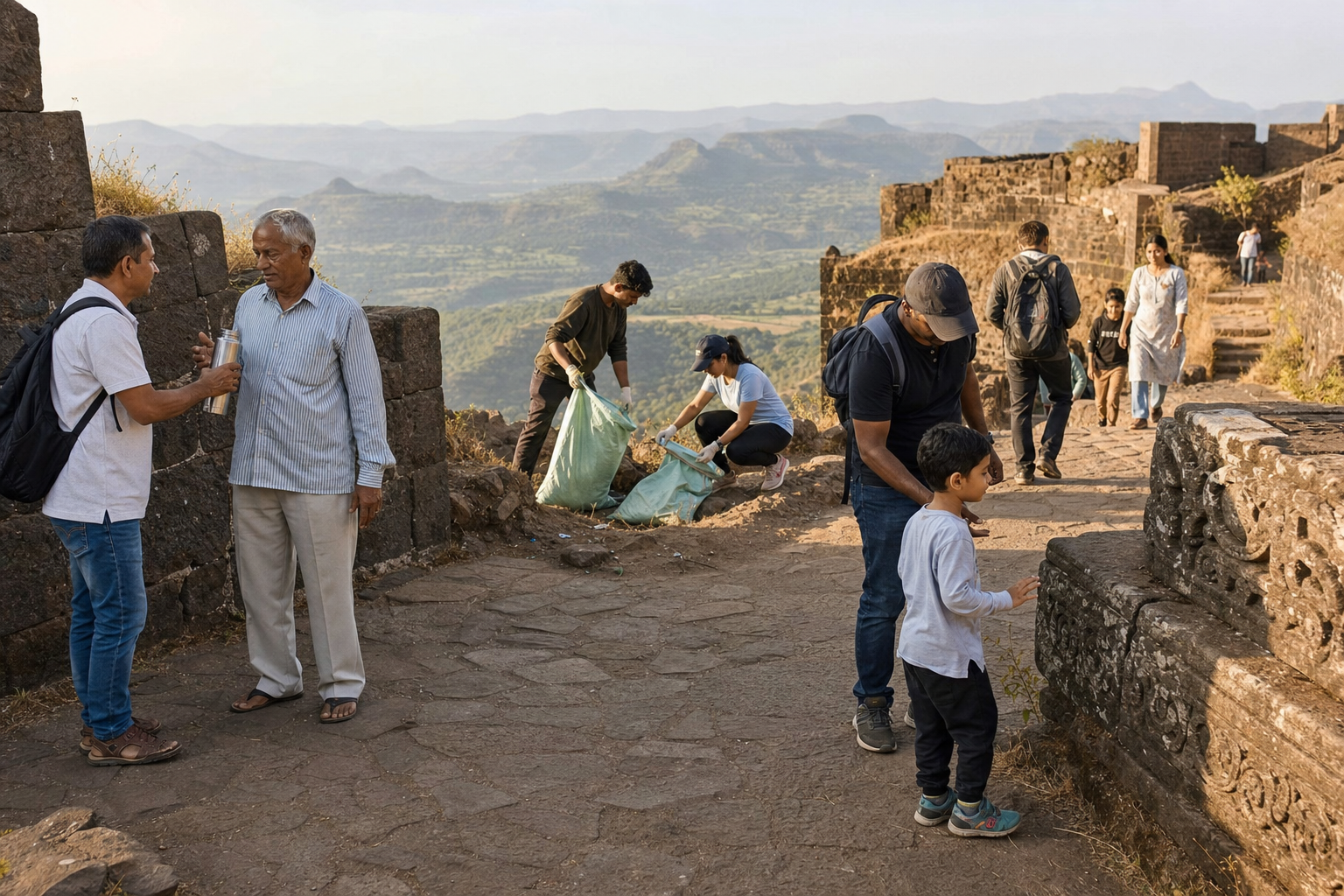
Discipline, courage, responsibility and seva become meaningful when they govern what the group actually does. Discipline means arriving prepared and following the route protocol. Courage means making a sound decision under difficulty, including turning back when conditions are unsafe. Responsibility means testing historical claims before repeating them. Seva means helping another participant and leaving the site in better condition than you found it.
This language can also support an inclusive dharmic excursion. Hinduism, Buddhism, Jainism and Sikhism are distinct traditions; unity does not require flattening those differences. Participants can still meet through a shared conversation about ethical conduct, self-command, service and duty to the wider community. Keep the focus on conduct rather than asking everyone to endorse identical theological formulations.
Heritage stewardship should be built into the itinerary. Tell participants not to scratch, paint, paste, remove stones, collect fragments or handle inscriptions. Carry out personal waste. If the group notices damage, record its location without disturbing the area and report it through the appropriate local channel. Conservation is not a ceremonial message delivered at the end; it is the standard that controls the entire visit.
Close the excursion with a short evidence-based debrief. Ask each participant to record an observation, the inference it prompted, the evidence needed to verify that inference, and one duty the visit created for them. The duty might involve checking a historical claim, explaining a defensive feature accurately to family members, supporting responsible conservation, or helping plan a safer and more accessible excursion.
Key takeaways
- Choose a historical inquiry question before choosing activities.
- Teach participants to separate observation, inference and verification.
- Read terrain, architecture, logistics and governance as one connected system.
- Plan the route around current conditions and the least experienced participant.
- Express dharmic values through safe conduct, truthful history, seva and conservation.
- End with a documented question or stewardship action, not only a photograph.
Before booking your excursion, write the question that the fort will help your group investigate. If the guide, route and debrief do not serve that question safely and responsibly, revise the plan. A Shivaji fort deserves more than a visit; it deserves attentive students and future custodians.
References
