
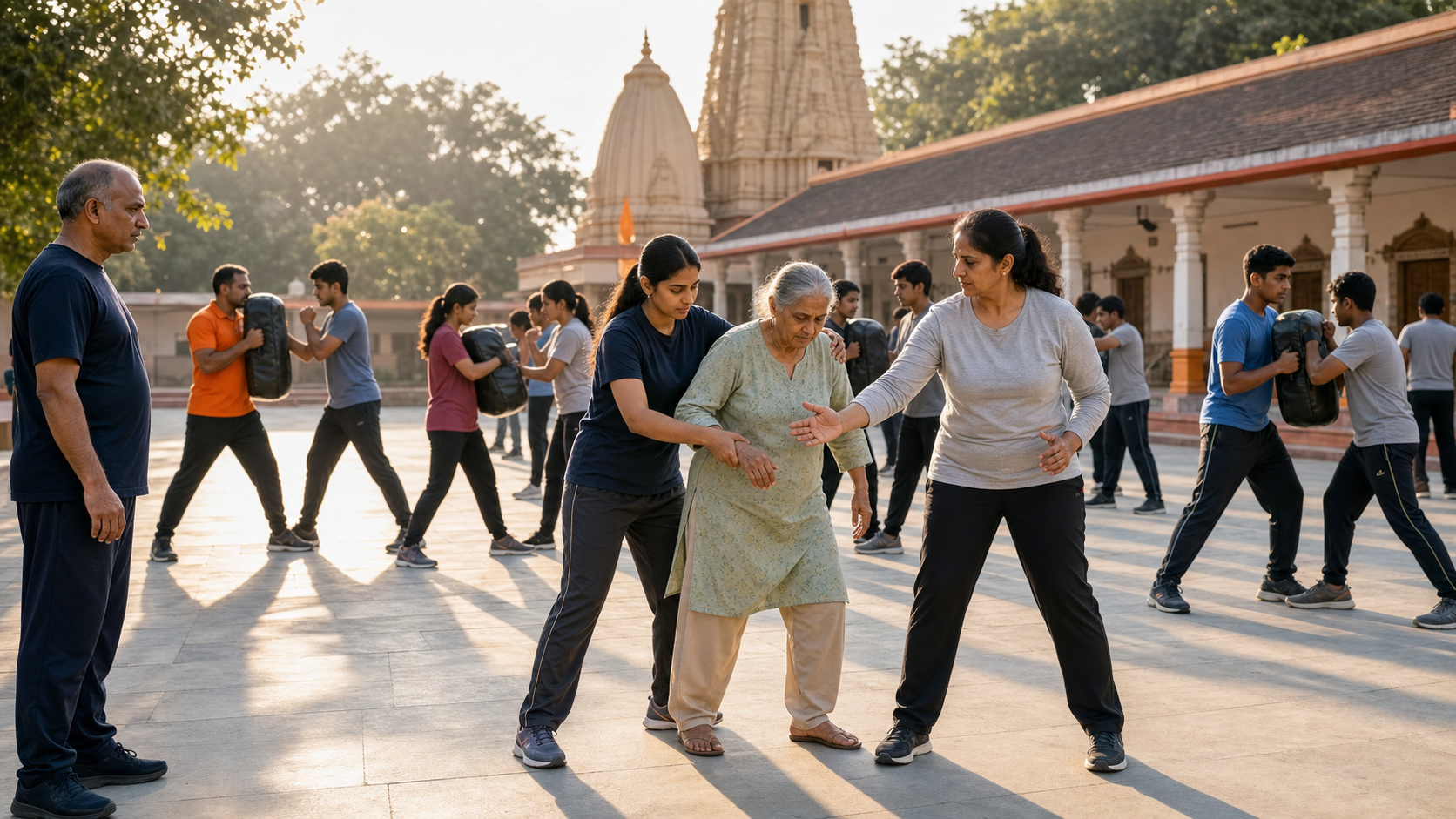
If your mandir, gurukul, youth group or neighbourhood association is considering a self-defence camp, settle the purpose before discussing techniques. The real test is whether the programme makes people more observant, disciplined and dependable without making them eager for confrontation.
A Shiv-era camp should prepare participants to notice danger, make sound decisions, protect vulnerable people and seek help early. Physical ability may support that purpose, but it cannot replace judgement. The safest success may be an incident that never becomes a fight.
Begin with a dharmic definition of success
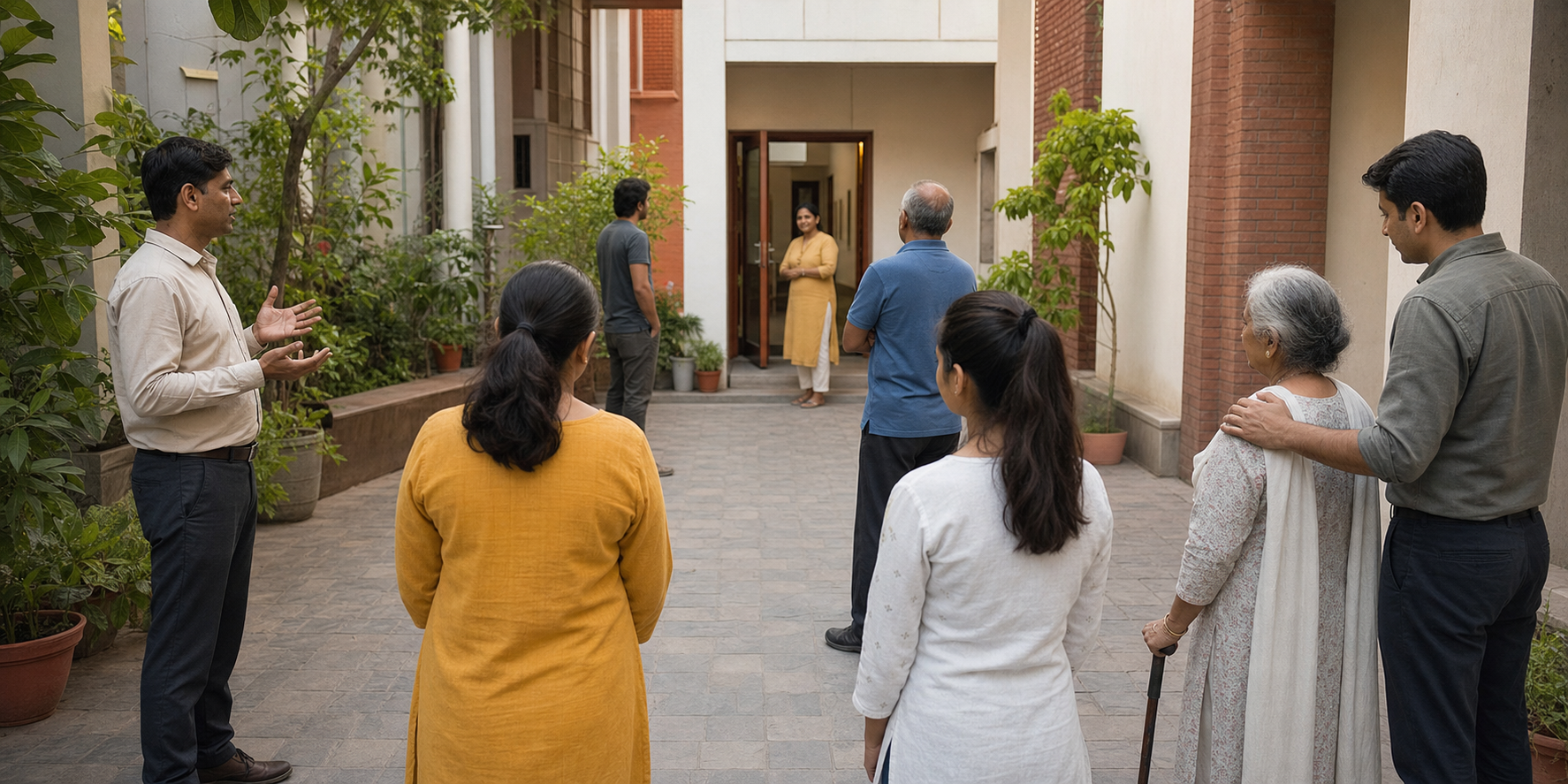
The Shiv-era ethos is useful when it is translated into present responsibilities: courage under discipline, organised cooperation and protection of society. It should not become battlefield theatre, aggressive rhetoric or a licence to treat neighbours as enemies.
Veermata Jijamata and Swami Vivekananda offer complementary anchors for that work. Jijamata represents formative guidance, moral clarity and the patient making of responsible leadership. Vivekananda represents fearlessness joined to self-mastery and service. A camp commemorating them should therefore ask not only, “Can you defend yourself?” but also, “Can others trust your strength?”
Write a short camp charter before recruiting participants. It should answer four questions:
- Who should be safer because this camp exists?
- What should a participant learn to notice, communicate and decide?
- Which conduct is incompatible with the camp, even if someone calls it bravery?
- How will participants use their training in service of family and community?
A workable mission could be: “We train calm awareness, lawful self-protection, teamwork and service so that participants can reduce danger and protect life without unnecessary escalation.” Put that statement on registration material, read it at the opening session and use it to judge every exercise. If an activity does not support the mission, remove it.
Build a progression, not a collection of dramatic drills
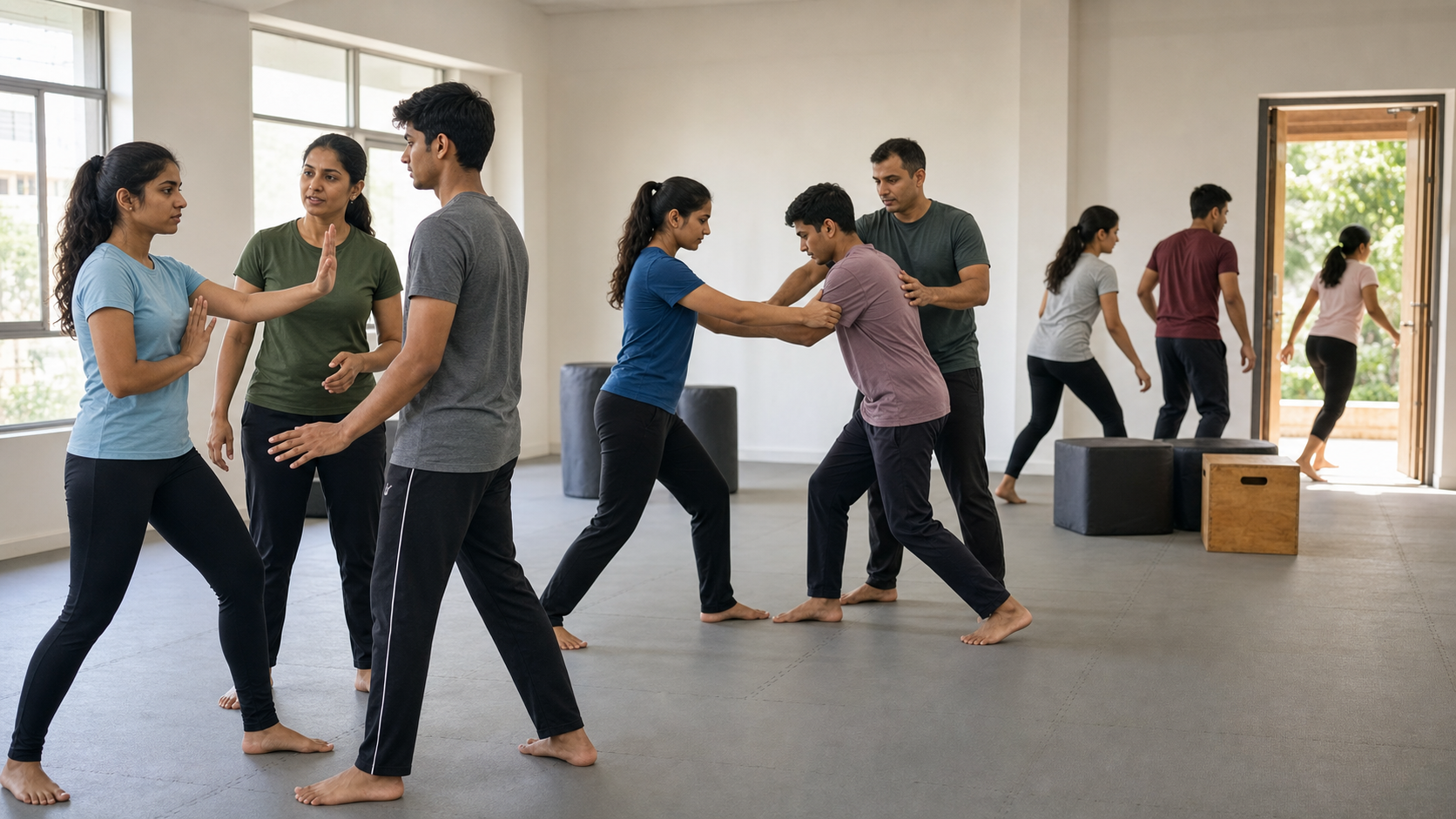
An eight-day camp in Chhatrapati Sambhajinagar connected physical preparedness with discipline, ethical living, civic awareness and teamwork. Its length is not proof that every community needs eight days. The transferable lesson is that character, judgement and coordination require progression rather than a single demonstration.
The organising structure matters as much as the syllabus. The Chhatrapati Sambhajinagar programme was a joint effort of Hindu Janajagruti Samiti, Rashtriya Dharma Raksha Gurukul and Dharmayoddha Sangh. Whether one organisation or several run your camp, assign three functions clearly: qualified instruction, participant safeguarding and logistics, and community liaison. Do not leave all three to one charismatic trainer without oversight.
Arrange the learning in this order:
- Orientation: explain the charter, the limits of training, the right to stop an exercise and the procedure for reporting an injury or concern.
- Awareness and communication: practise noticing exits, identifying sources of help, communicating a firm boundary and alerting other people without creating panic.
- Controlled foundations: let a qualified instructor teach only what can be supervised safely, with clear partner consent and appropriate protective measures.
- Judgement scenarios: rehearse leaving danger, summoning help, guiding a vulnerable person and coordinating with others. Avoidance should count as success.
- Community application: connect lessons to event stewardship, family emergency planning, safe travel habits and assistance for elders or other people who may need support.
- Closing assessment: ask participants to demonstrate safe decisions, explain the ethical limits of what they learned and identify how they will continue serving the community.
Use the same rhythm in each session: state the purpose, teach one bounded skill, practise it under control, reflect on the decisions involved and connect it to an ordinary community situation. Repetition of this rhythm helps participants understand that restraint is part of the skill rather than a warning added at the end.
Completion should never depend only on physical performance. A participant who communicates clearly, chooses the safer exit and helps a partner may have shown more readiness than someone who performs a technique forcefully but ignores instructions.
Make restraint, consent and safety non-negotiable
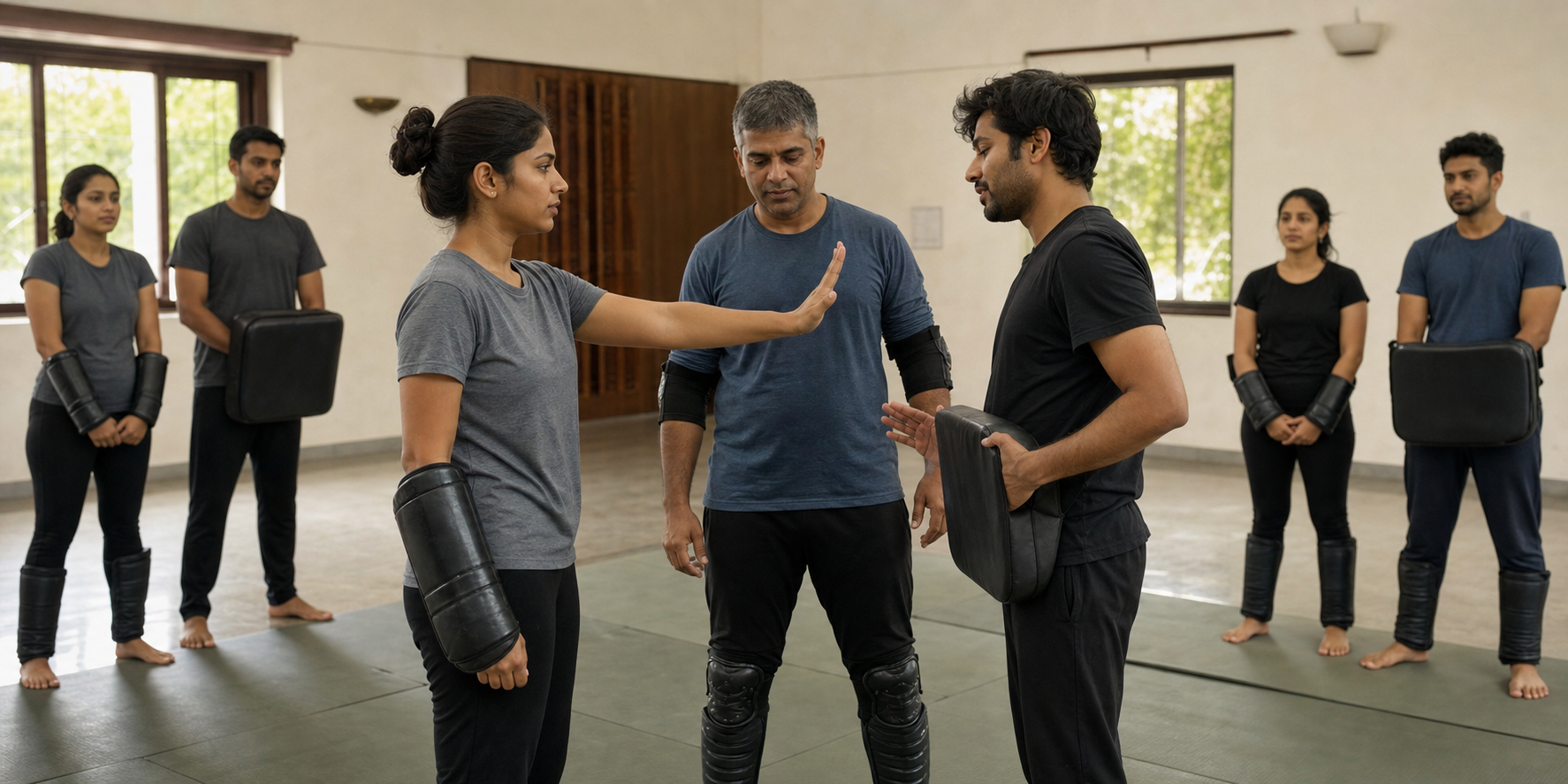
Ahimsa is not helplessness, and self-defence is not permission to retaliate. Ahimsa, self-discipline, seva and protection of vulnerable people provide constructive ethical ground across Hindu, Buddhist, Jain and Sikh participation. These traditions do not express every principle in an identical way, so do not flatten their differences. Use the shared values as behavioural constraints: minimise harm, control the ego, help the person at risk and stop when the danger has ended.
Physical training can cause injury. If you cannot secure a suitably qualified instructor, appropriate supervision and a clear emergency procedure, do not run the physical component. A motivational speaker or respected community figure is not automatically qualified to supervise contact training.
Set these boundaries in writing:
- No participant is forced to perform a drill, disclose a frightening experience or continue after withdrawing consent.
- No exercise uses humiliation, surprise contact or uncontrolled force as a test of courage.
- No religious, ethnic, political or social group is presented as an enemy archetype. Train recognition of unsafe behaviour, not suspicion of an identity.
- No participant is encouraged to pursue, punish or confront someone after an immediate route to safety becomes available. Community self-defence is not vigilantism.
- Any activity involving a risk of injury requires suitable safeguards and competent supervision. Stop the activity when either is missing.
- If children participate, use appropriate safeguarding, guardian consent, vetted supervision and exercises suited to their age and ability.
- Photographs and recordings require informed consent. Protect participants who do not want their attendance or identity publicised.
Laws governing self-defence and the use of force vary by place and circumstance. Do not improvise legal assurances during training. Obtain local professional guidance for the programme, and teach participants to prioritise leaving danger, seeking help and contacting the appropriate emergency services when an immediate threat exists.
Measure readiness through decisions and conduct
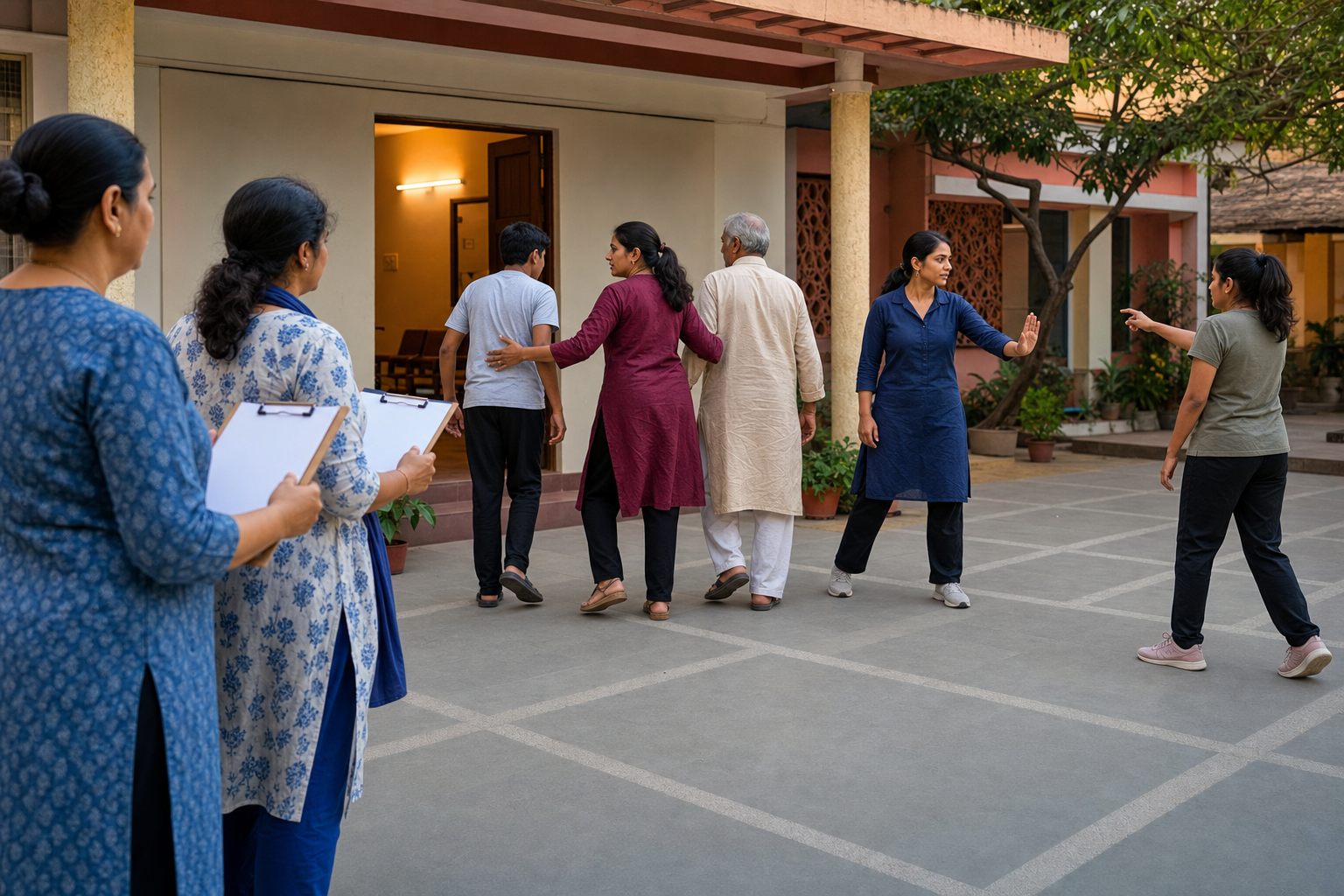
Participants in the Chhatrapati Sambhajinagar camp described greater confidence, situational awareness and teamwork. Those are valuable outcomes, but confidence is a personal perception rather than proof of competence. A responsible organiser checks what participants can explain and demonstrate safely.
Use three kinds of evidence at the close:
- Participant reflection: What risk do you notice now that you might previously have missed? When would you leave rather than engage?
- Instructor observation: Does the participant follow limits, communicate with a partner, maintain control and stop immediately when directed?
- Community review: Did the programme strengthen trust and readiness, or did any part encourage fear, bravado, exclusion or unsafe behaviour?
A simple completion rubric can assess awareness, communication, judgement, teamwork and responsibility. For each area, ask for an observable action. Can the participant identify a safer route? Can they call for help clearly? Can they choose de-escalation when it is available? Can they assist another person without taking over? Can they explain the camp’s limits?
Keep a record of injuries, near misses, participant concerns and exercises that had to be stopped. Review them before repeating the programme. A near miss is not evidence that the drill was exciting; it is information that the design or supervision may need to change.
Key takeaways for your organising team
- Define success as safer judgement, disciplined conduct and service, not dominance in a physical drill.
- Give instruction, safeguarding and community liaison to clearly accountable people.
- Teach awareness, communication and withdrawal before testing physical responses.
- Treat consent, qualified supervision and an emergency procedure as conditions for training, not optional paperwork.
- Assess what participants notice and decide, not merely how confident they feel.
- Reject vigilantism and identity-based threat narratives explicitly.
Before booking a venue, send your proposed charter to the instructor and organising committee. Ask them to accept it as the standard governing every session. If they resist its limits on aggression, consent or accountability, do not proceed with that programme.
The clearest sign of a sound Shiv-era camp is not louder bravado. It is a participant who notices risk earlier, helps another person reach safety, acts without panic and knows when not to fight.
References
