
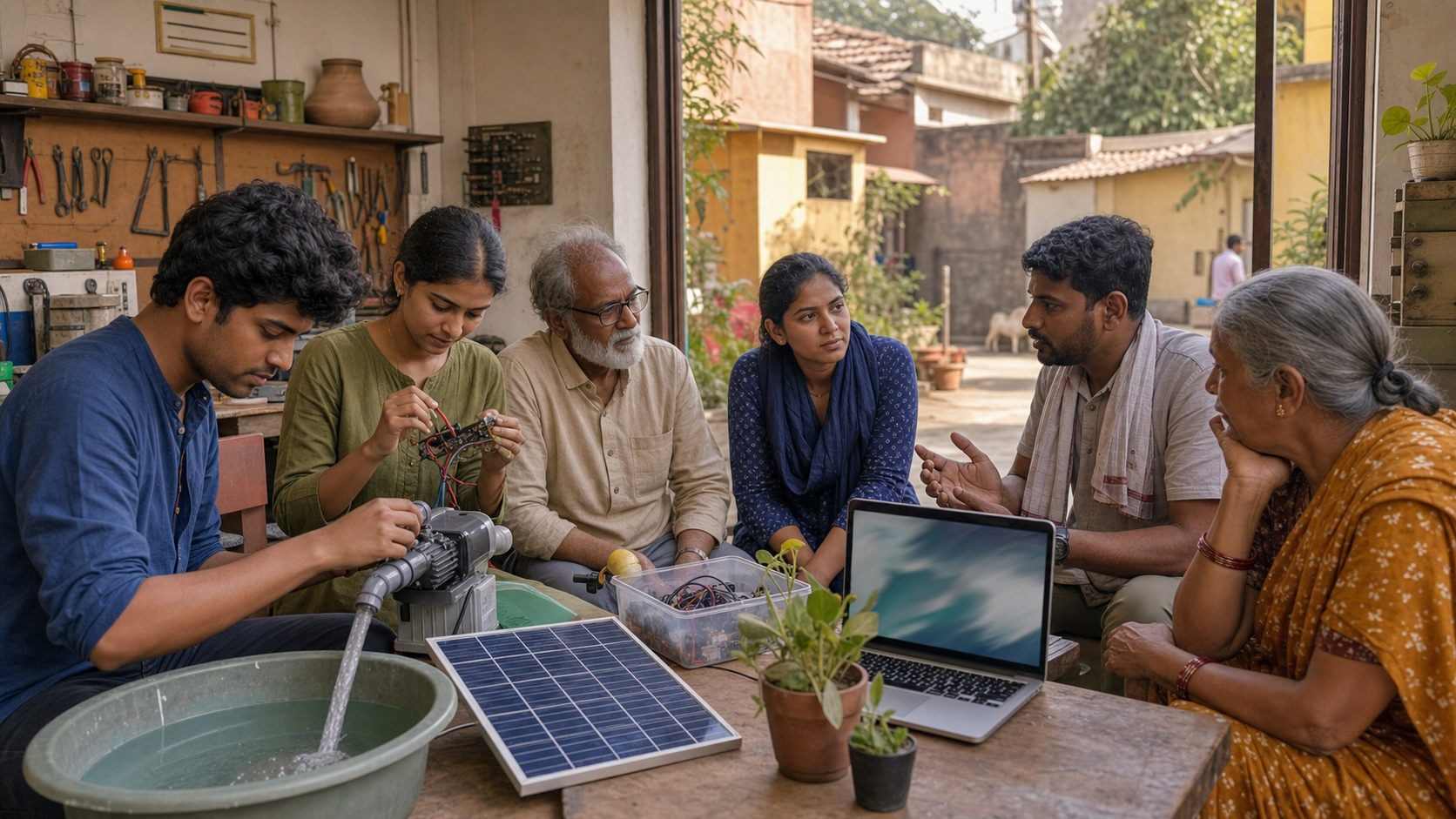
You may be deciding between a technical course, a degree, an internship, or more time in community service. The difficult part is not finding something to learn. It is choosing a capability that remains useful when tools change, employers change, and the people around you do not share your assumptions.
Use a demanding test: can you complete useful work, cooperate across differences, explain your decisions, and take responsibility for the consequences? Add a Dharmic test – does your ability serve a real need without sacrificing truth, dignity, or restraint? That is how learning becomes preparation for a shared future rather than merely private advancement.
Stop collecting skills without choosing a use
A certificate can show that you completed formal learning. By itself, it cannot show how you respond when a problem is unclear, a stakeholder disagrees, or your first attempt fails. Capability becomes visible when you can move from a need to a responsible result.
Begin with a problem, not a course catalogue. Write a short project brief using these fields:
- Need: Name the person or group that cannot complete a task, then identify the obstacle.
- Deliverable: Define what you will hand over – a working spreadsheet, translated notice, lesson resource, accessible calendar, repaired process, or documented workflow.
- Boundary: State what the project will not cover. A clear boundary prevents a small task from becoming an indefinite obligation.
- Permission: Identify who may authorize the work and whose data, image, story, or space may be involved.
- Evidence: Decide what will demonstrate usefulness: a successful handoff, fewer repeated errors, feedback from users, or a revision based on an observed difficulty.
Only then ask what you need to learn. If a community centre cannot keep track of supplies, the immediate gap may be spreadsheet design and process documentation. If families cannot understand an event notice, the gap may involve translation, plain-language writing, and a reliable approval process. If a cultural class loses its materials every term, the gap may be file organization, access control, and succession planning.
This order matters. When you choose a fashionable skill first, you start searching for somewhere to display it. When you choose a real need first, you learn what the work actually demands.
Build a skill stack that includes judgment

Technical ability remains necessary, but it is no longer a complete description of readiness. A useful skill stack brings together technical, digital, AI, green, social-emotional, and civic capabilities. The point is not to become an expert in every field. It is to stop treating the human and public consequences of technical work as somebody else’s responsibility.
| Capability | Question to practise | Evidence you can keep | Dharmic check |
|---|---|---|---|
| Technical | Can you perform the core task reliably and explain how it works? | A functioning deliverable, test record, or repair log | Do not claim competence beyond what you can demonstrate. |
| Digital | Can you organize information, protect access, and choose an appropriate tool? | A documented workflow with permissions and a handoff | Convenience does not justify careless handling of another person’s information. |
| AI | Can you frame a task, inspect the output, verify claims, and recognize when the tool should not be used? | A before-and-after record showing your checks and revisions | Do not outsource truthfulness or accountability to a machine. |
| Green | Can you notice avoidable waste, energy use, material use, or maintenance burdens? | A process revision that reduces waste without shifting harm elsewhere | Efficiency is incomplete if its costs are merely hidden from view. |
| Social-emotional | Can you listen, explain, receive criticism, disagree constructively, and revise? | Feedback and a record of what changed because of it | Treat every participant as a person, not as an obstacle to delivery. |
| Civic | Can you identify affected people, applicable rules, access barriers, and public consequences? | A stakeholder map, consultation note, or accessibility check | Ask who is excluded, unheard, or required to carry the burden. |
Choose an anchor capability and surround it with supporting fluencies. If data analysis is your anchor, you should also be able to explain a result in ordinary language, document any AI assistance, protect private records, recognize a misleading comparison, and revise the presentation after users misunderstand it. You need not become a professional communicator, ethicist, or security specialist. You do need enough awareness to recognize when your work requires one.
Before enrolling in a programme, ask what you will produce, who will critique it, and whether you will revise it after feedback. A course that provides information but no application, critique, or revision may expand your vocabulary without developing dependable capability.
Turn seva into a serious apprenticeship

Seva can train attention, humility, reliability, and cooperation, but only when it addresses an actual need. Turning up is valuable; learning to notice what would make the work safer, clearer, or easier to sustain is a deeper form of participation.
Look for neglected tasks at a faith or community institution:
- Create an inventory process for a community kitchen, while following its approved food-safety procedures rather than improvising your own.
- Make event information readable on a phone, easy to translate, and usable by people who rely on accessibility features.
- Organize educational materials so the next teacher can find, update, and reuse them without depending on your private account.
- Document how recurring events are prepared, including approvals, contacts, deadlines, and the location of shared files.
- Help community members use essential digital services while protecting passwords, personal records, and private conversations.
- Build a responsible archive workflow that records consent, ownership, access limits, and the context of cultural material.
Do not assume that good intentions authorize access. Ask who owns the information, who may approve changes, who is affected, and who will maintain the result after you leave. Never place identifiable community data, photographs, or personal stories in a public portfolio without informed permission. If permission is uncertain, use a blank demonstration, anonymized example, or private description of the process.
Seva is also not a licence for an organization to replace paid specialist work with unlimited free labour. Keep the project bounded, be honest about your competence, and refer tasks involving legal duties, financial controls, safeguarding, health, structural safety, or professional security to qualified people. Service requires the humility to know when not to improvise.
At the end of the task, record the original need, the constraints you discovered, the decisions you made, the feedback you received, the revision you completed, and the handoff. That record turns an act of service into a repeatable learning cycle. It also shows that you can finish work without making yourself indispensable.
Put dharma between capability and action

Skill is not morally self-directing. The same ability can educate or manipulate, include or exclude, preserve knowledge or strip it of context. Technical competence answers whether something can be done. Dharma asks whether it should be done, for whom, under what conditions, and with what duties attached.
Hindu, Buddhist, Jain, and Sikh traditions should not be flattened into a single doctrine. Their philosophies, authorities, and disciplines differ. You can still bring a recognizably Dharmic seriousness to work by testing conduct through truth, non-harm, service, restraint, and responsibility. Translate these tests into the vocabulary and discipline of your own tradition:
- Truth: Can you explain where the information came from, what you changed, and what remains uncertain? If a tool helped draft or transform the work, would hiding that assistance mislead the audience?
- Non-harm: Who could be exposed, misclassified, humiliated, excluded, or burdened if the work is wrong? What safer route is available?
- Service: Does the result meet a need identified by the people affected, or merely display your cleverness?
- Restraint: Are you collecting more data, automating more decisions, or publishing more material than the task genuinely requires?
- Responsibility: Is a named person accountable for checking, maintaining, correcting, and eventually retiring the work?
- Plurality: Can people participate without concealing their identity or accepting your theological, cultural, or political assumptions?
These questions are especially important when you use AI. A fluent answer can conceal a false premise, fabricated detail, missing context, or unfair assumption. Do not place confidential community information into an AI service without explicit authorization. Check names, dates, quotations, translations, and scriptural references against dependable originals before publication. Keep a human owner responsible for the final decision. Use automation to assist judgment, not to make accountability disappear.
The same discipline applies beyond technology. Communication without truth becomes persuasion for its own sake. Civic confidence without listening becomes domination. Service without competence can create new dependency. Restraint is therefore not the enemy of ambition. It is what keeps ambition aligned with duty.
Show capability without turning your life into a brand
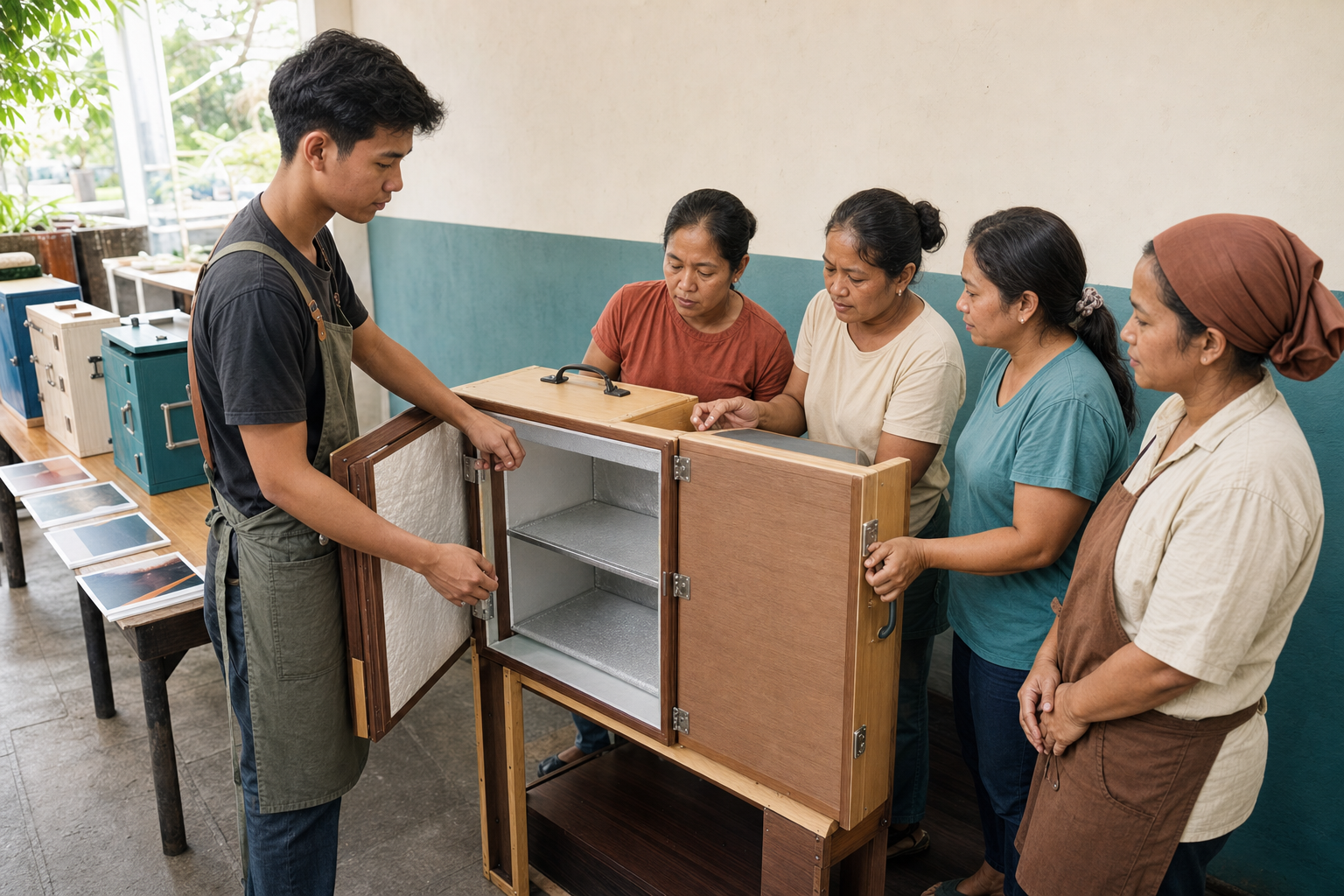
You do not need to broadcast every act of service. You do need a clear record of what you can do, particularly when applying for work, further study, responsibility in an institution, or support for a larger project.
Keep a private capability record with these fields:
- Context: What situation existed before you became involved?
- Role: What did you personally own, and what belonged to other participants?
- Constraints: What permissions, resources, accessibility needs, risks, or cultural expectations shaped the task?
- Decisions: Why did you choose this method or tool?
- Evidence: What shows that the deliverable worked?
- Feedback: What did an affected person, practitioner, teacher, or organizer ask you to change?
- Revision: What became different after that feedback?
- Handoff: Who can operate and maintain the result now?
- Reflection: Where did truth, non-harm, service, restraint, or responsibility alter your decision?
This record is more useful than a list of fashionable nouns. Replace claims such as leadership, teamwork, innovation, or AI expertise with accountable verbs. Can you configure, test, repair, translate, facilitate, verify, document, teach, revise, or hand over? Then attach evidence that respects privacy and consent.
When comparing learning opportunities, prefer the one that requires a real output, informed critique, revision, and a responsible handoff. Check whether the cost and workload are realistic for you. Ask whether the instructor explains safety, privacy, attribution, accessibility, and failure modes. A polished syllabus is less important than a credible practice cycle.
Key takeaways
- Choose a real need before choosing a course, platform, or fashionable tool.
- Pair your anchor capability with digital judgment, communication, ecological awareness, and civic responsibility.
- Use seva as bounded, consent-based practice that ends with feedback, revision, and a handoff.
- Apply truth, non-harm, service, restraint, responsibility, and plurality before deploying what you build.
- Document capability with evidence while protecting the dignity and privacy of the people involved.
Before you enrol in another programme, ask a community you already belong to about a neglected, bounded task. Secure permission, define what completion means, learn what the task requires, deliver it, and invite the people affected to challenge the result. Then revise it. That cycle – responsible work followed by honest correction – is a skill no changing technology can make irrelevant.