
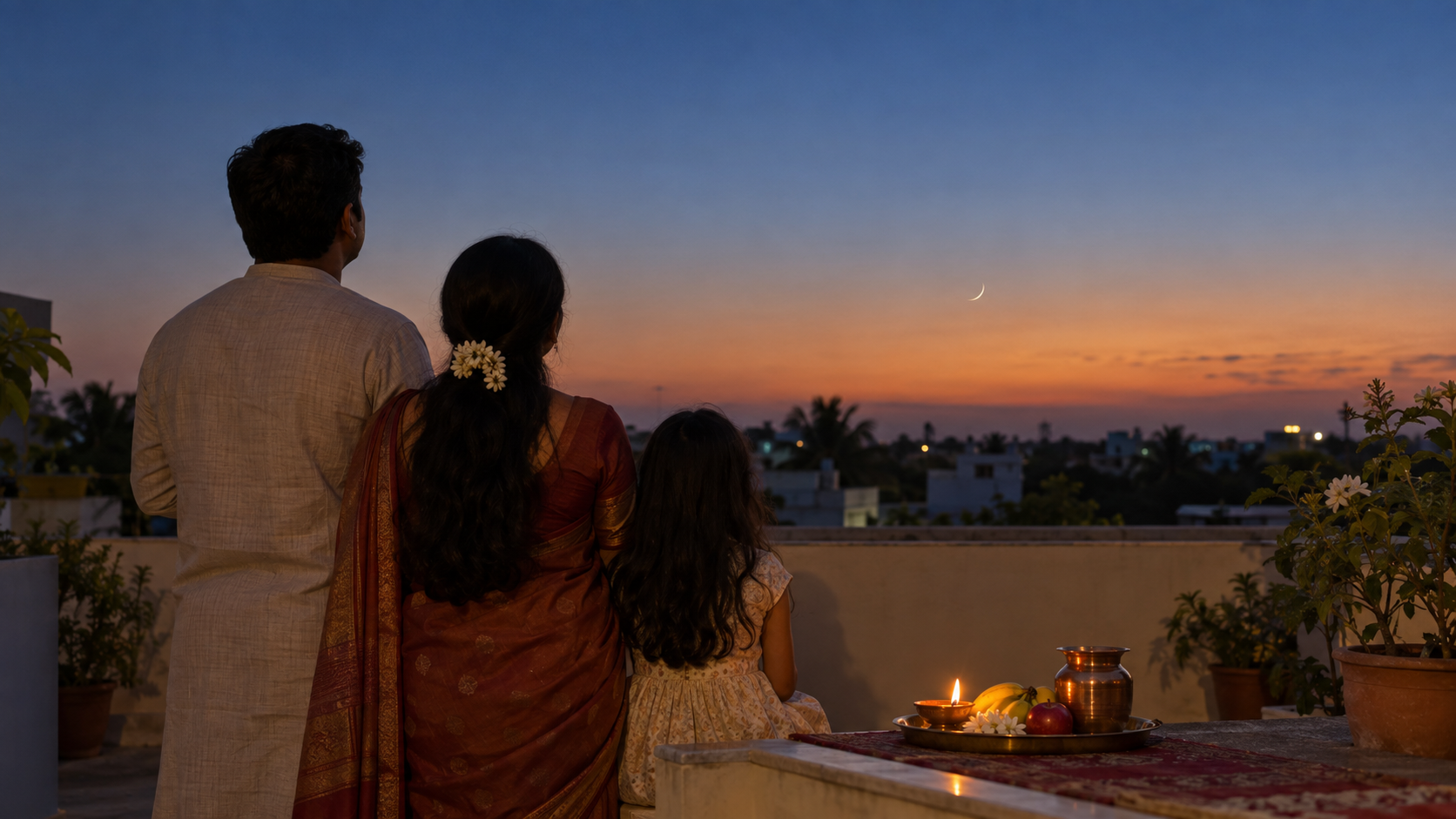
If you are trying to settle the September Chandra Darshan date before arranging your family observance, mark September 12, 2026. That is the date to plan around; the precise viewing interval should come from a panchang configured for your location.
The regional month names can make the entry look less certain than it is. A North Indian calendar may call it Bhadrapada Chandra Darshan, while Tamil, Malayalam, Bengali and Nepali calendars place the same observance under their own month names. You do not need to reconcile those names into one formula. You need to use the calendar language followed by your household.
Key takeaways
- Observe the September 2026 Chandra Darshan on September 12.
- It falls in Bhadrapada in calendars followed across North India, Andhra Pradesh and Karnataka.
- The corresponding regional names are Avani in the Tamil calendar, Chinga in the Malayalam calendar, Bhadra in the Bengali Panjika and Bhadon in the Nepali calendar.
- Use a city-specific panchang for the viewing interval rather than copying a clock time from another location.
- Follow your family or sampradaya’s established worship method; not every optional offering is a universal requirement.
The date to enter in your calendar
For the September observance, enter Chandra Darshan — September 12, 2026. In the calendars commonly followed in North India, Andhra Pradesh and Karnataka, it is the Bhadrapada month Chandra Darshan, also rendered as Bhadrapad or Bhadrapada Masam according to regional usage.
Treat the date and the clock time as two different pieces of information. The date tells you which evening to reserve. The local panchang tells you when the young crescent may be observed from your city. A time copied from another city can be misleading because sunset, moonset and the moon’s position relative to the horizon vary by location.
Add the date now, but check the local interval closer to the observance. If your household keeps a formal vrata or uses a detailed sankalpa, confirm the tithi and wording through the panchang or priest your family normally trusts. Do not infer a ritual formula merely from the English calendar date.
Why your regional calendar may show another month name
Bharat’s regional calendars do not all use the same month vocabulary. That difference becomes especially visible when relatives share festival reminders across states or when a temple notice uses a calendar other than the one kept at home.
| Calendar or region | Month containing the observance |
|---|---|
| North Indian calendars | Bhadrapada |
| Andhra Pradesh and Karnataka calendars | Bhadrapada Masam |
| Tamil calendar | Avani Masam |
| Malayalam calendar | Chinga Month |
| Bengali Panjika | Bhadra Month |
| Nepali calendar | Bhadon Month |
These labels identify the same September 12 observance through different calendrical traditions. If one relative calls it Bhadrapada Chandra Darshan and another places it in Avani, the different month names do not by themselves indicate different dates.
For a family message, include the civil date first and the relevant regional month second. “Chandra Darshan on September 12, during Bhadrapada” is less likely to be misunderstood than a reminder containing only the lunar or regional month. During the sankalpa, however, retain the terminology prescribed by your own panchang and parampara rather than combining names from several systems.
Build the observance around your local sky
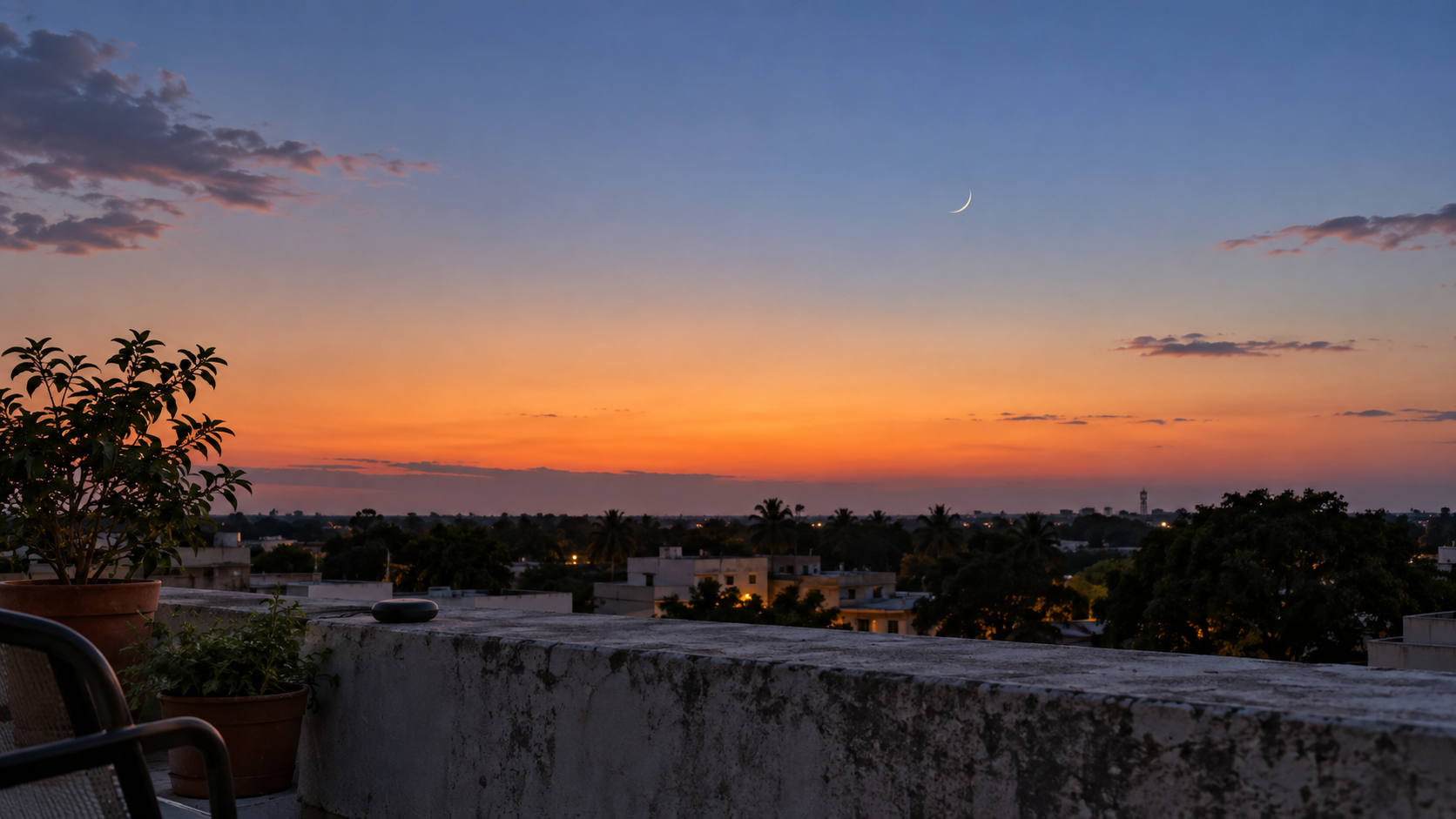
Chandra Darshan is associated with beholding the young waxing moon after amavasya. That makes the sky itself part of the observance. The crescent can be faint and low after sunset, so a correct date does not guarantee that it will be easy to see from a particular window or courtyard.
- Set the correct city in your panchang. Record the Chandra Darshan interval and, if displayed, the local sunset and moonset times.
- Choose the viewing place beforehand. Look for a safe location with a clear western horizon. Nearby buildings, trees and hills can conceal a low crescent even when the rest of the sky appears open.
- Be ready before the listed interval. Waiting until the sky is fully dark can mean waiting until the moon is too low or has already set.
- Keep weather separate from the calendar. Clouds may prevent physical sighting, but they do not give you grounds to invent another observance date.
- Do not borrow another city’s time. A festival announcement can supply the date, but only local calculations can supply a useful viewing interval.
If you live outside Bharat, the location setting matters even more. Begin with September 12 as the published observance date, then verify the local details with the panchang used by your temple or community. If that almanac assigns a different local civil date, follow the tradition whose calculations govern your observance rather than mixing its date with another calendar’s timing.
A simple home observance that respects your parampara
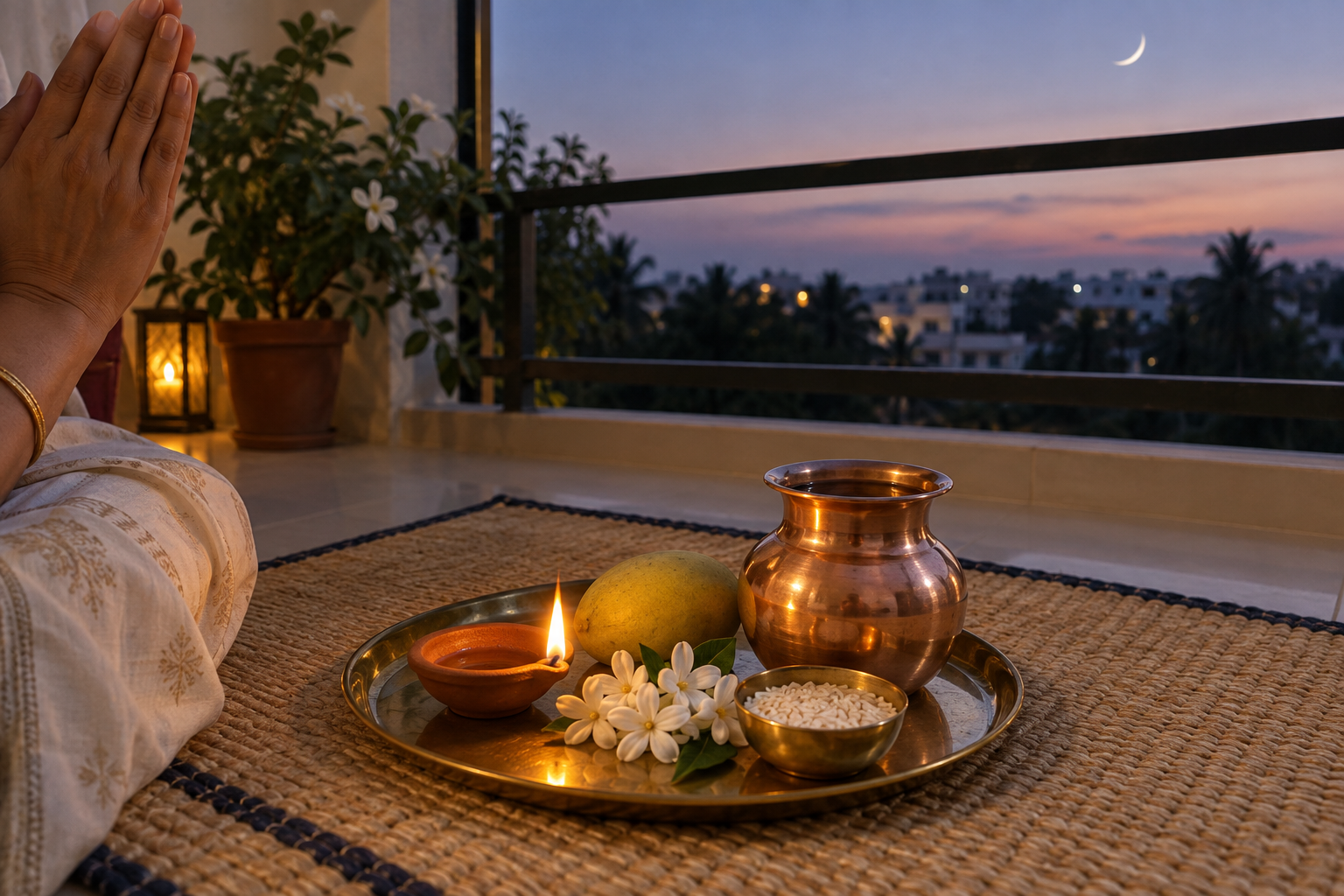
A useful home plan should preserve devotion without pretending that every Hindu household follows an identical ritual. Your kula, region, sampradaya or temple may prescribe a mantra, arghya, naivedya or vrata rule. Where such a practice exists, it takes precedence over a generic checklist.
- Prepare before the viewing interval. Clean the prayer space and gather only the items normally used in your household. If lighting a lamp, arranging flowers or preparing an offering belongs to your custom, have it ready before going out to view the moon.
- Move to the viewing place calmly. Bring family members together early enough that the observance does not turn into a hurried search for the crescent.
- Offer darshan with attention. When the crescent becomes visible, pause and offer namaskara to Chandra Deva. Let the act be deliberate rather than treating the moon as something merely to locate and photograph.
- Use the prayer you actually know. Recite the mantra, stotra or prayer received through your family or tradition. If no prescribed recitation has been handed down, a sincere namaskara is more honest than presenting an unfamiliar internet formula as compulsory.
- Complete customary offerings. Offer arghya, flowers, incense or naivedya only in the manner followed by your household. Optional regional practices should not be turned into universal rules.
- Close according to family practice. Finish with prayer and distribute any offered food as your tradition directs.
If clouds or an obstructed horizon prevent sighting, do not claim that you saw the moon and do not move the observance on your own. Continue according to your household’s established rule. When an actual sighting affects a formal vrata, ask your family priest or temple how that tradition handles poor visibility.
Put September 12 in your calendar now, save the city-specific panchang entry beside it, and ask an elder which month name and worship sequence your family uses. With those details settled in advance, you can meet Chandra Darshan as a living observance rather than a last-minute calendar puzzle.
References
