

If you are trying to choose a 2026 date for a business launch, property purchase, griha pravesh, course of study, or new spiritual discipline, a bare festival list is not enough. You need to know which Sade Teen Muhurat suits the undertaking, when local timing matters, and what must be settled before the auspicious day arrives.
The four dates give you a traditional framework for beginning well. They do not replace preparation, ethical judgment, or the requirements of your sampradaya. Used properly, they bring the outer act, the inner sankalpa, and your responsibilities to other people into one deliberate beginning.
The four Sade Teen Muhurat dates in 2026
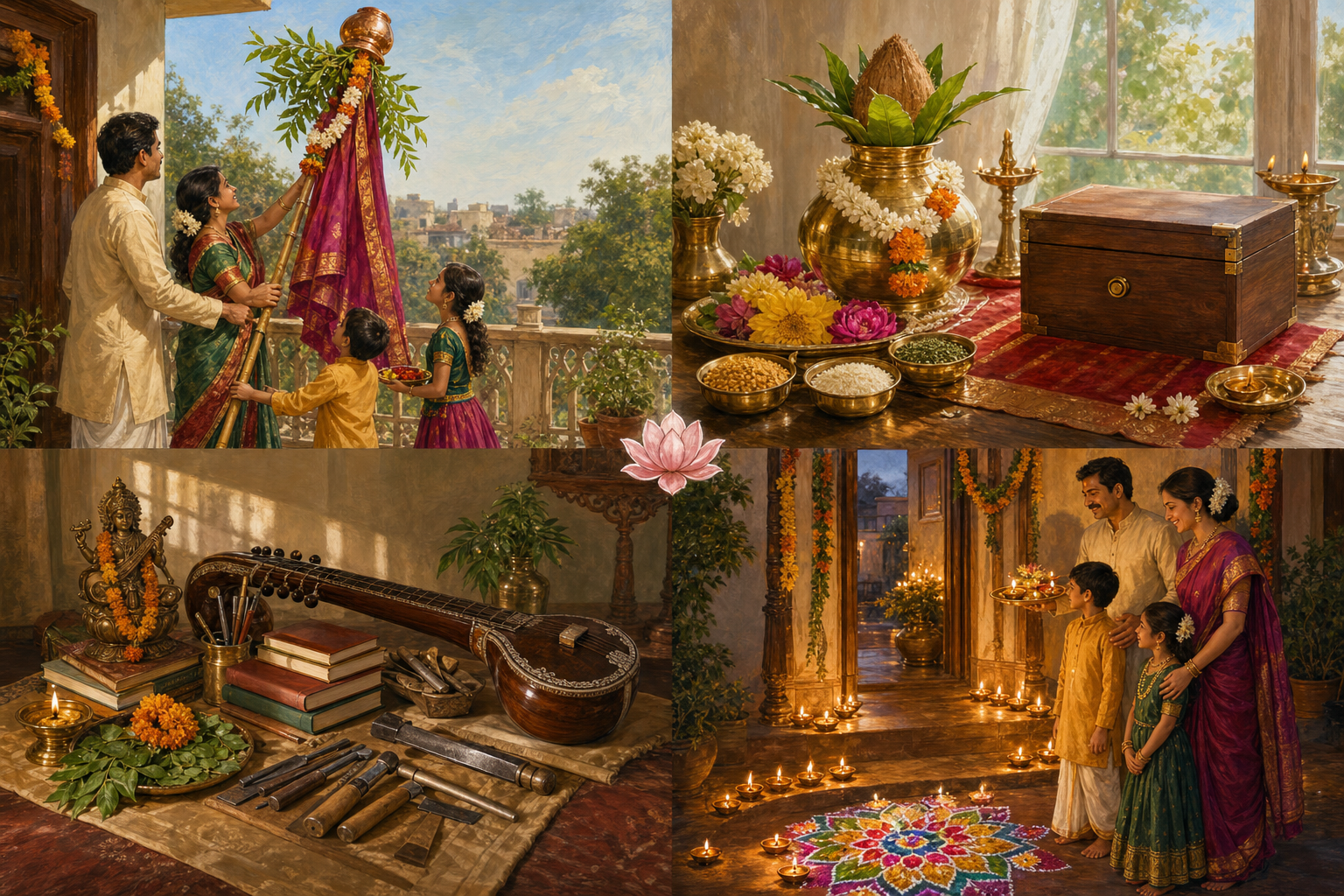
For planning in Indian Standard Time, the 2026 Sade Teen Muhurat dates are 20 March, 18 April, 20 October, and 9 November. These are indicative dates for India. Tithi is determined locally, so you should verify the final civil date and usable period in a panchang configured for the city where the act will occur.
| Observance | Indicative 2026 date in IST | Particularly suited to | Timing point |
|---|---|---|---|
| Gudi Padwa, Chaitra Shukla Pratipada | 20 March 2026 | Annual renewal, household or business beginnings, accounts, foundational documents, and griha-related rites | One of the three full Sade Teen Muhurat days; confirm the local tithi and any customary exclusions |
| Akshaya Tritiya, Vaisakh Shukla Tritiya | 18 April 2026 | Long-term enterprise, property or asset purchases, charity, study, japa, and enduring commitments | One of the three full days; local sunrise and the presence of Tritiya still matter for festival observance |
| Vijaya Dashami, Ashwin Shukla Dashami | 20 October 2026 | Vidyarambham, tools and equipment, a difficult launch, and undertakings framed as a victory over obstacles | The principal auspiciousness is concentrated in Aparahna, especially the local Vijaya Muhurta |
| Kartik Shukla Pratipada | 9 November 2026 | New ledgers, commercial renewal, partnerships, gratitude, and a new business year | One of the three full days; the ritual form varies among Govardhan Puja, Annakut, Bali Pratipada, and Bestu Varsh traditions |
The name Sade Teen, or three and a half, does not mean that one festival has only half the spiritual value of the others. Gudi Padwa, Akshaya Tritiya, and Kartik Shukla Pratipada are treated as three full auspicious days. Vijaya Dashami supplies the half because its most significant commencement period is the Aparahna portion of the day, with particular attention to Vijaya Muhurta.
Key takeaways
- Use the four published dates as planning markers, then confirm the date and time for your actual location.
- Choose the observance by the nature of the undertaking, not merely by whichever date is most convenient.
- For Vijaya Dashami, obtain the local Aparahna and Vijaya Muhurta instead of treating the entire day as interchangeable.
- A full Sade Teen Muhurat day can still contain intervals that your family or sampradaya avoids, including Rahu Kalam or Yamaghanta.
- Complete legal, financial, technical, and practical checks before the date. Auspicious timing does not make a defective agreement or unsafe purchase sound.
Match the muhurat to the beginning you intend to make

All four observances carry inherent shubhatva, but they do not express the same aspect of beginning. Selecting by purpose gives the day a clearer sankalpa and prevents the choice from becoming a purely mechanical calendar exercise.
Gudi Padwa: set the direction of a new cycle
Gudi Padwa marks Chaitra Shukla Pratipada and the traditional New Year in several regions. In Maharashtra, raising the Gudi gives the day a visible language of victory, auspicious ascent, and renewal. Panchanga Shravanam turns attention toward the year ahead.
Choose this date when the undertaking establishes a new direction: opening household or business accounts, commencing a venture, executing foundational documents, or beginning a home-related rite. Prepare the documents and decisions beforehand. On the day, perform the puja accepted in your household, state the sankalpa precisely, and carry out the first substantive act. The point is to inaugurate a defined course, not merely to announce an intention that has no next step.
Akshaya Tritiya: begin what you want to sustain
Akshaya conveys the sense of that which does not diminish. That makes Akshaya Tritiya especially fitting for commitments expected to mature over time: a business, a long course of education, disciplined sadhana, charitable giving, or the acquisition of an important asset.
Gold, vehicles, machinery, property, and business registrations are commonly associated with the day, but akshaya is not a promise that every purchase will appreciate or every venture will succeed. If money or legal ownership is involved, settle the budget, inspect the asset, verify title or contractual terms, and understand the obligations before committing. If a problem remains unresolved, postponing the transaction is wiser than using the date to pressure yourself into a bad decision.
The day also has a Jain dimension associated with Tirthankara Rishabhanatha, food offering, tapasya, and renewal through discipline. That perspective guards against reducing Akshaya Tritiya to shopping. Dana, annadana, study, japa, or a vow of sustained practice can be as central as a commercial beginning.
Vijaya Dashami: place the first act inside the victory window
Vijaya Dashami concludes Sharad Navratri and carries the motif of victory over both outer obstacles and inner disorder. Shami Puja, Ayudha Puja or Shastra Puja, and Vidyarambham give that motif practical forms: honoring the instruments of work, initiating learning, and stepping across a threshold with resolve.
This is the one member of Sade Teen Muhurat for which you should resist vague all-day planning. Ask for the local Aparahna and Vijaya Muhurta, then put the first meaningful act within that interval. Depending on the undertaking, that might be the formal inauguration, the first lesson, the commissioning of machinery, or the accepted ritual of commencement in your tradition. Preparation may occur earlier; the threshold act is what you reserve for the focused window.
Kartik Shukla Pratipada: renew prosperity through gratitude
Kartik Shukla Pratipada appears in several regional forms. Vaishnava communities may observe Govardhan Puja and Annakut; other regions know Bali Pratipada; Gujarat welcomes Bestu Varsh. Business households use the Diwali period for ledger worship and the renewal of commercial life.
Choose this day for opening fresh ledgers, beginning a new commercial cycle, affirming a partnership, or setting new standards for how an enterprise will operate. Pair the financial beginning with an ethical one: decide how accounts will be kept, how commitments will be honored, and where seva or community responsibility belongs in the coming year. Annakut and Govardhan traditions add gratitude, nourishment, and stewardship to the meaning of prosperity.
What “no separate muhurta needed” really means
Sade Teen Muhurat days are traditionally treated as calendar-wide auspicious occasions. Their inherent shubhatva can supersede many routine concerns involving nakshatra, weekday doshas, and ordinary tithi-yoga combinations. This is why families often select one of these dates without undertaking the same elaborate search required for an ordinary day.
That principle should not be stretched into the claim that place, tithi, ritual, and family practice no longer matter. Most festival determinations still depend on the tithi present at local sunrise. Regional panchangs can therefore differ, especially when a tithi begins or ends near sunrise. Outside India, the applicable civil date may move by a day because sunrise and tithi alignment are local rather than permanently tied to IST.
Some traditions also continue to exclude Rahu Kalam or Yamaghanta on an otherwise auspicious day. A griha pravesh, bhoomi pujan, temple rite, or samskara may carry procedures beyond the general Sade Teen rule. Follow the practice of the sampradaya under which the rite is actually being performed. If a priest or acharya will officiate, confirm the calendrical method with that person before inviting guests or paying non-refundable deposits.
A useful distinction is to separate three questions. First, is the day inherently auspicious for a beginning? Second, what is the locally valid tithi or preferred clock interval? Third, does this particular rite have additional requirements? Sade Teen Muhurat answers the first question strongly. Your local panchang and ritual tradition answer the other two.
Prepare the undertaking before you reach the date
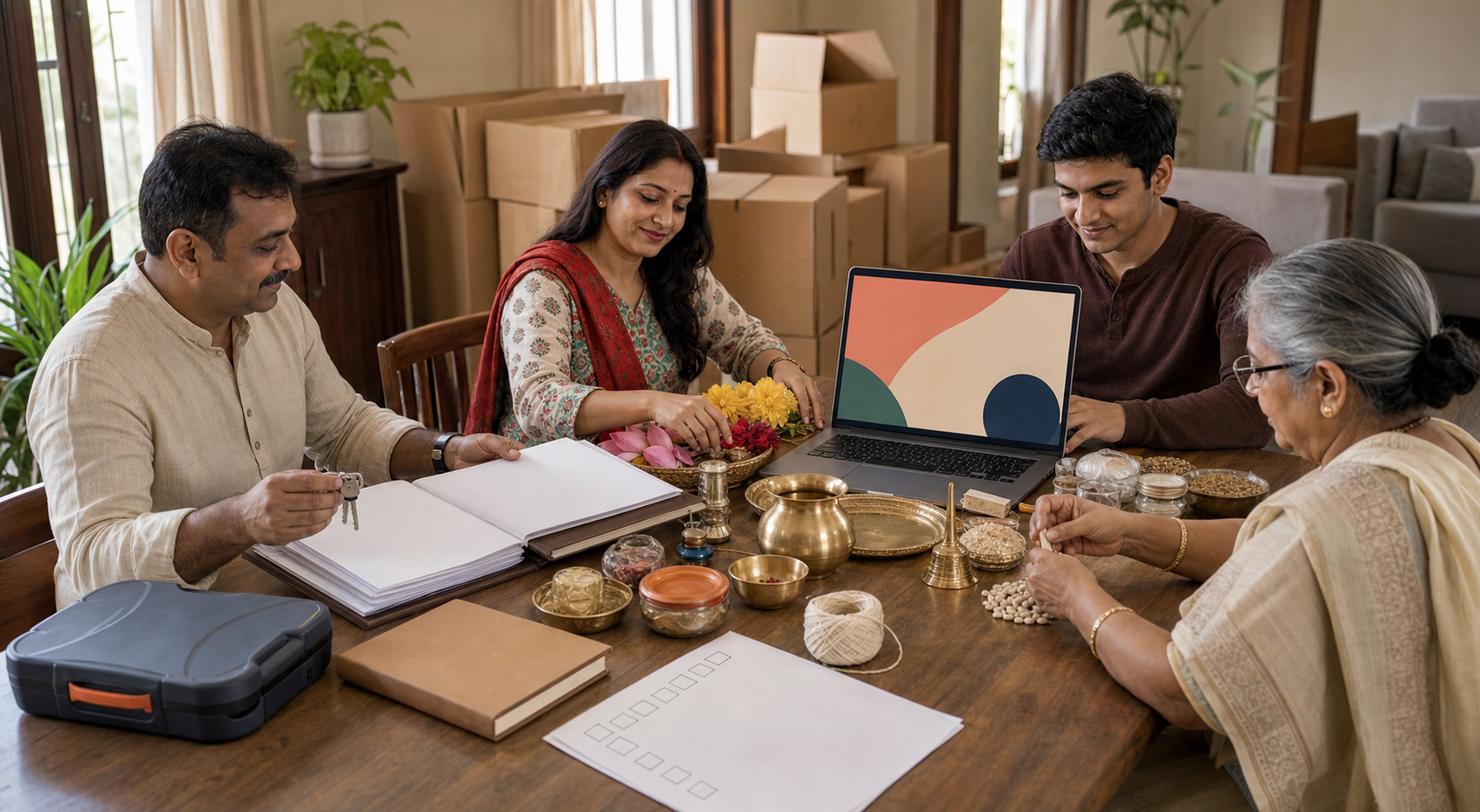
An auspicious commencement works best when the day holds the beginning rather than a pile of unfinished decisions. Use this sequence once you have identified the undertaking.
- Name the beginning precisely. “Register the new enterprise,” “perform bhoomi pujan for the family home,” and “begin a daily japa discipline” are usable sankalpas. “Do something new” is not.
- Select the day by its character. Use Gudi Padwa for a new annual direction, Akshaya Tritiya for endurance and growth, Vijaya Dashami for learning or overcoming an obstacle, and Kartik Pratipada for commercial renewal and gratitude.
- Verify the local panchang. Set the actual city, not only the country or time zone. Confirm the festival date, the tithi at sunrise, and any interval your tradition asks you to use or avoid. For Vijaya Dashami, obtain Aparahna and Vijaya Muhurta explicitly.
- Finish due diligence first. Review contracts, ownership, financing, inspections, permissions, and technical readiness before the day. Dharma does not require you to ignore a defect for the sake of a preferred date.
- Define the threshold act. Decide what will count as commencement: signing the valid instrument, opening the ledger, conducting the inaugural puja, beginning the first lesson, or starting the committed spiritual practice. Make sure the necessary people and institutions will be available.
- Join sankalpa to conduct. A short puja, japa, homa where appropriate, dana, annadana, or another act of seva places prosperity within responsibility. Write down what ethical discipline must continue after the ceremony.
Administrative reality deserves attention. Registration offices, banks, contractors, teachers, or business partners may not operate according to your ritual calendar. Check availability before fixing a public launch or promising a completion date. Where the legal and ceremonial acts cannot occur together, ask your officiant which act should carry the ritual commencement and plan the later administrative completion transparently.
Do not manufacture urgency simply because the next muhurat is months away. A well-prepared undertaking on a later suitable date is more consistent with dharma than an unsafe, unaffordable, or deceptive act rushed through on an auspicious one.
Honor regional forms without flattening their differences
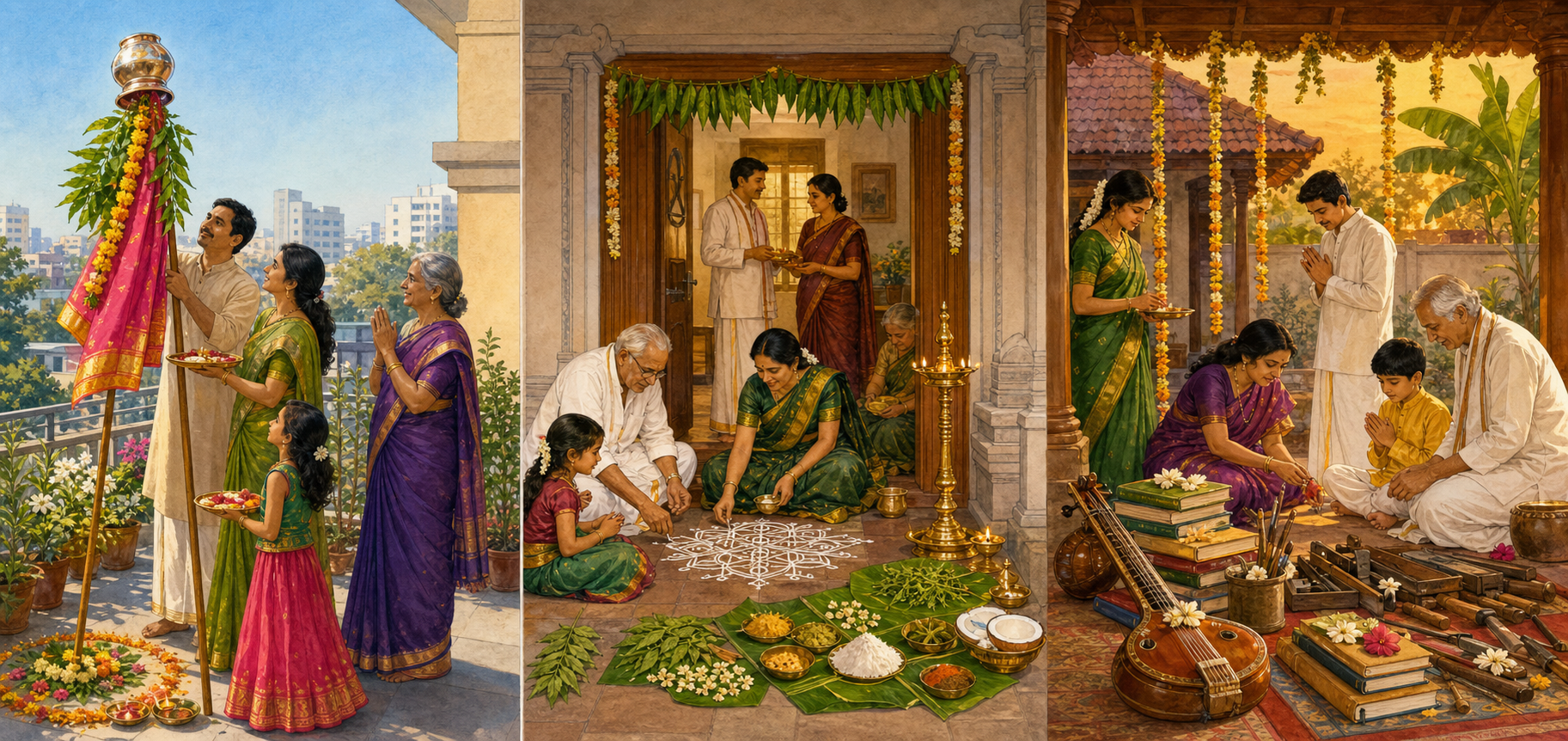
The shared calendar creates unity, but it does not require identical ritual practice. Gudi Padwa in Maharashtra aligns with the Chaitra New Year observed as Ugadi in parts of Karnataka, Andhra Pradesh, and Telangana, while Sindhi communities celebrate Cheti Chand in their own form. Akshaya Tritiya carries Hindu and Jain meanings. Vijaya Dashami includes Dussehra, Ayudha Puja, Shami Puja, and Vidyarambham traditions. Kartik Pratipada may center Govardhan, Annakut, Bali, or the Gujarati New Year.
Some Jain and regional Sikh or Buddhist households also organize family life around the lunisolar cycle, but that does not make every ritual a uniform doctrine across all Dharmic paths. Use the common calendar to recognize shared values such as renewal, learning, discipline, courage, gratitude, and responsible prosperity. Use your inherited practice, temple, guru, or community to determine the actual form of worship.
Put the four dates into your 2026 calendar now and write one intended beginning beside the date that fits it best. Before you commit money or invite others, replace the indicative IST date with the locally verified panchang date and time. Then arrive with the documents complete, the ritual understood, and the sankalpa clear enough to guide what happens after the auspicious day.