
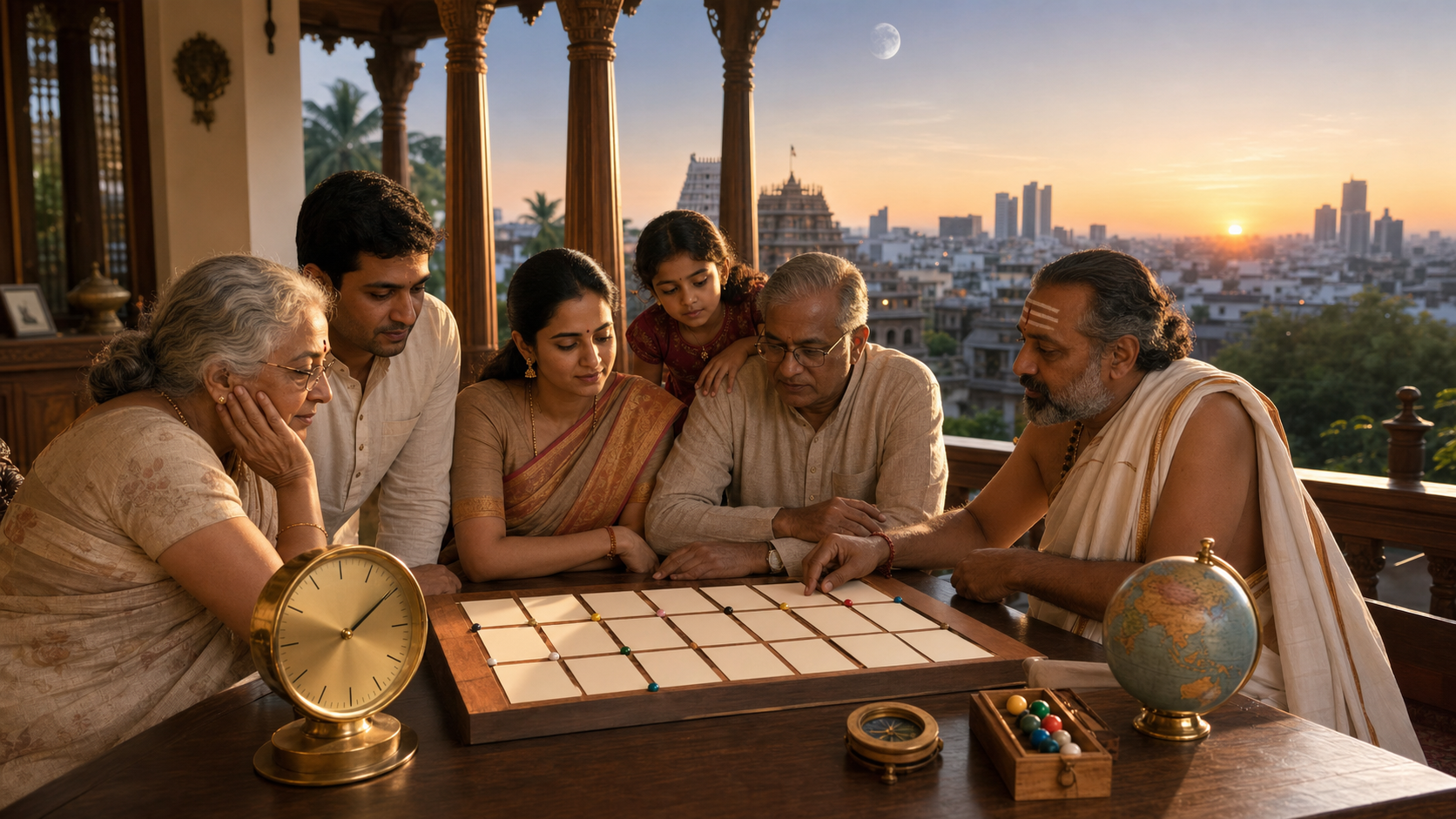
You have a ceremony, vrata, temple program or construction milestone somewhere in 2026, and someone has already forwarded an auspicious date. Before you book a venue, mobilize a contractor or print invitations, ask one question: for which city was that time calculated?
The reliable method is to separate annual planning from final Muhurta selection. Use broad Panchang criteria to find candidate dates, then confirm the actual local overlap of Tithi, Nakshatra, Lagna and any periods your tradition avoids.
Build a 2026 planner that distinguishes dates from windows
A calendar date and a Muhurta are not interchangeable. The date tells you where to begin looking. The Muhurta is a specific interval, calculated for a specific place, during which the required factors remain suitable for the intended activity.
The five limbs traditionally associated with Panchang are Tithi, Vara or weekday, Nakshatra, Yoga and Karana. Event planning may add Lagna, Rashi considerations, family or temple rules, and the avoidance of periods such as Rahu Kalam, Yamaganda and Gulika Kalam. Bhadra may also matter where the relevant regional or lineage-based convention calls for it. A date that looks suitable under one factor can therefore fail when the remaining factors are applied.
Create one record for every important 2026 observance. Each record should contain:
- Purpose: the precise rite or activity, not merely a label such as family function.
- Tradition: the temple, sampradaya, regional calendar or Kula Devata practice whose rules will govern the choice.
- Place: the city where the rite will physically occur. If the venue changes, the calculation must be checked again.
- Candidate date: a date that has passed the first broad screening but has not yet been booked as final.
- Local transitions: the beginning and ending times of the relevant Tithi and Nakshatra, recorded in the venue’s local time.
- Additional factors: weekday, Yoga, Karana, Bhadra status where applicable, selected Lagna and any Rashi consideration required by the family method.
- Excluded periods: the local Rahu Kalam, Yamaganda and Gulika Kalam intervals, plus any event-specific prohibition supplied by the officiant.
- Usable window: the final interval after all required factors have been overlaid.
- Status: provisional, locally verified or final, together with the name of the priest, astrologer or temple office that confirmed it.
This record prevents the most common planning error: copying a promising date from a general calendar and silently treating the whole civil day as auspicious. Tithi and Nakshatra can change while that date is still in progress, and local sunrise and geographic coordinates are needed to refine the usable interval.
Turn each candidate date into a defensible Muhurta

Think of Muhurta selection as a sequence of gates. A date remains provisional until it passes every gate required for that particular rite.
- Define the activity precisely. A daily prayer, vrata sankalpa, temple visit and foundation ceremony do not require an identical set of rules. Ask the officiant which factors are essential and which are customary preferences.
- Screen the year broadly. Identify dates with the Tithis, Nakshatras and weekdays generally accepted for the activity. For constructive undertakings, Shukla Paksha Tithis are often preferred in many regional practices, but that preference is not a complete ruling.
- Replace generic data with city-specific data. Obtain the local sunrise and the exact start and end of each relevant Panchang element. Do this for the place of the ceremony, not the city where the family normally lives.
- Calculate the actual overlap. The usable interval must sit inside the favorable Tithi and Nakshatra at the same time. If either changes halfway through a proposed ceremony, decide whether the essential act can be completed before the change or whether another window is cleaner.
- Apply Lagna and event-specific rules. Lagna is time-sensitive and cannot be established from a date-only list. For property-related work, the condition of the fourth house may receive particular attention.
- Remove the periods your tradition avoids. Exclude Rahu Kalam, Yamaganda, Gulika Kalam, Bhadra or another restricted interval only according to the convention being followed. Do not assume that a favorable Tithi automatically cancels every other restriction.
- Test practical feasibility. Confirm that the officiant, family and venue can complete the central ritual act inside the surviving window. Arrival, decoration and seating can happen outside it when the officiant agrees; the essential sankalpa or ritual action should not be left to the final minute.
- Freeze the decision. Record the final local start and end, the location and the governing tradition in writing. If any of those changes, reopen the calculation rather than carrying the old time into the new arrangement.
The logic can be stated simply: your final window is the intersection of all required favorable factors, minus the intervals your tradition excludes. A high rating for one element does not compensate for missing data in another.
If two calendars give different answers, do not settle the matter by choosing the more convenient time. Check whether they use the same city, local sunrise, calculation method and regional convention. Then ask which exact element produces the disagreement. A difference in a Tithi end time is a different problem from a difference over whether a particular Nakshatra is accepted for the rite.
January 25 shows why a civil date is not one Tithi
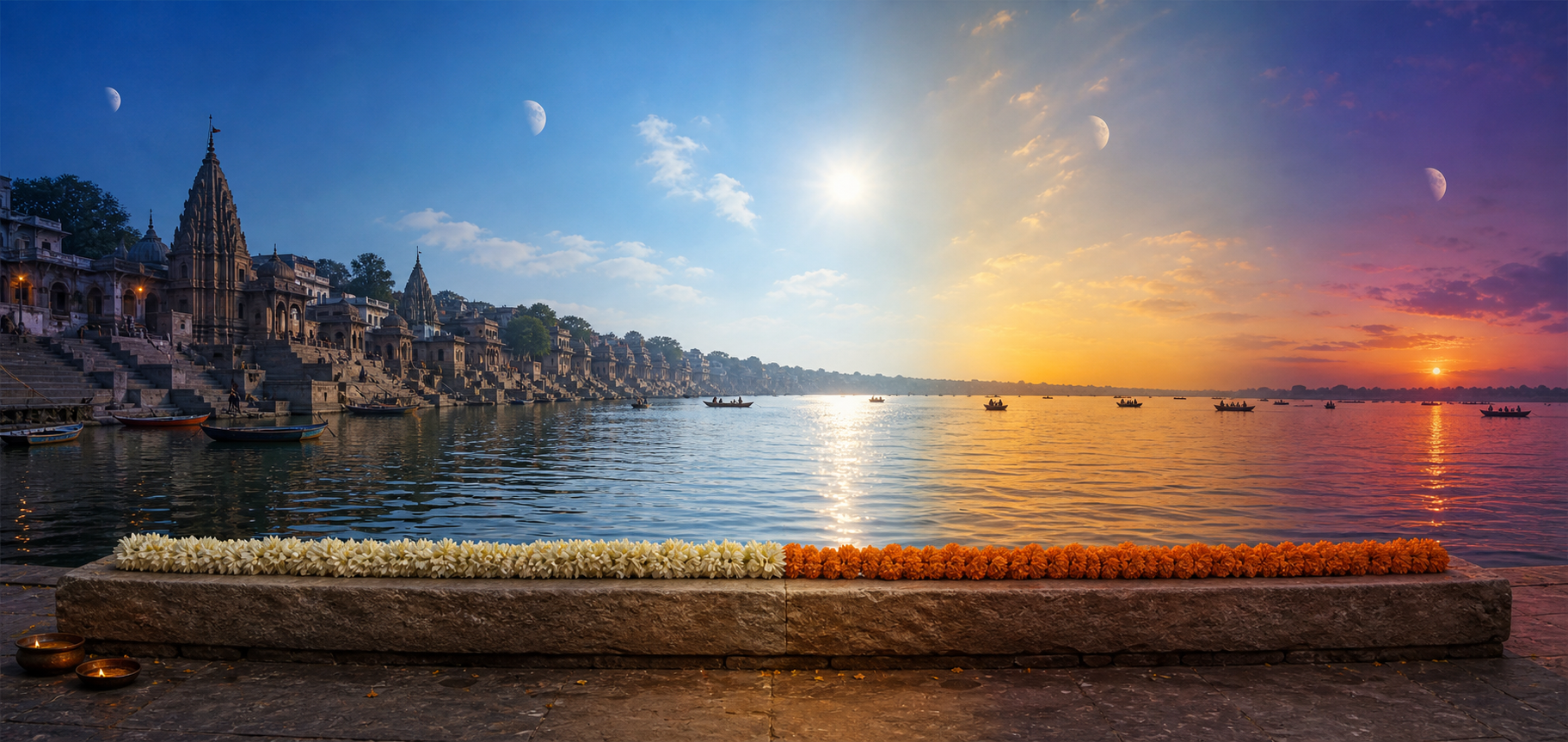
Sunday, January 25, 2026 is a useful planning example because its lunar identity changes during the evening. In the general timing available for most regions, Shukla Paksha Saptami continues until 8:44 PM and Shukla Paksha Ashtami begins afterward. Local sunrise-based calculations may produce a modest variation, so 8:44 PM is an anchor to verify, not a universal instruction for every city.
If your purpose is Saptami-oriented Surya aradhana, place the snana, japa, worship, dharmic study and Saptami sankalpa earlier in the day. This leaves a margin before the transition instead of forcing the essential act against the endpoint. If an evening observance begins after the locally verified change, acknowledge Ashtami rather than continuing to describe the date as Saptami merely because the printed calendar still says January 25.
This example also shows what Tithi cannot tell you. It does not establish the day’s Nakshatra, Rashi or final Shubha Muhurta for your city. Those elements must be checked separately. A suitable devotional use of Saptami should not be inflated into a blanket claim that every undertaking on the date is auspicious.
Use the same method whenever a 2026 Tithi ends close to your proposed ceremony. Record three times: the local start of the favorable interval, the planned start of the central rite and the local transition that closes the interval. Then build enough room for the rite to be performed calmly before that closing time.
Use a stricter process for Griha Arambha and Bhumi Pujan
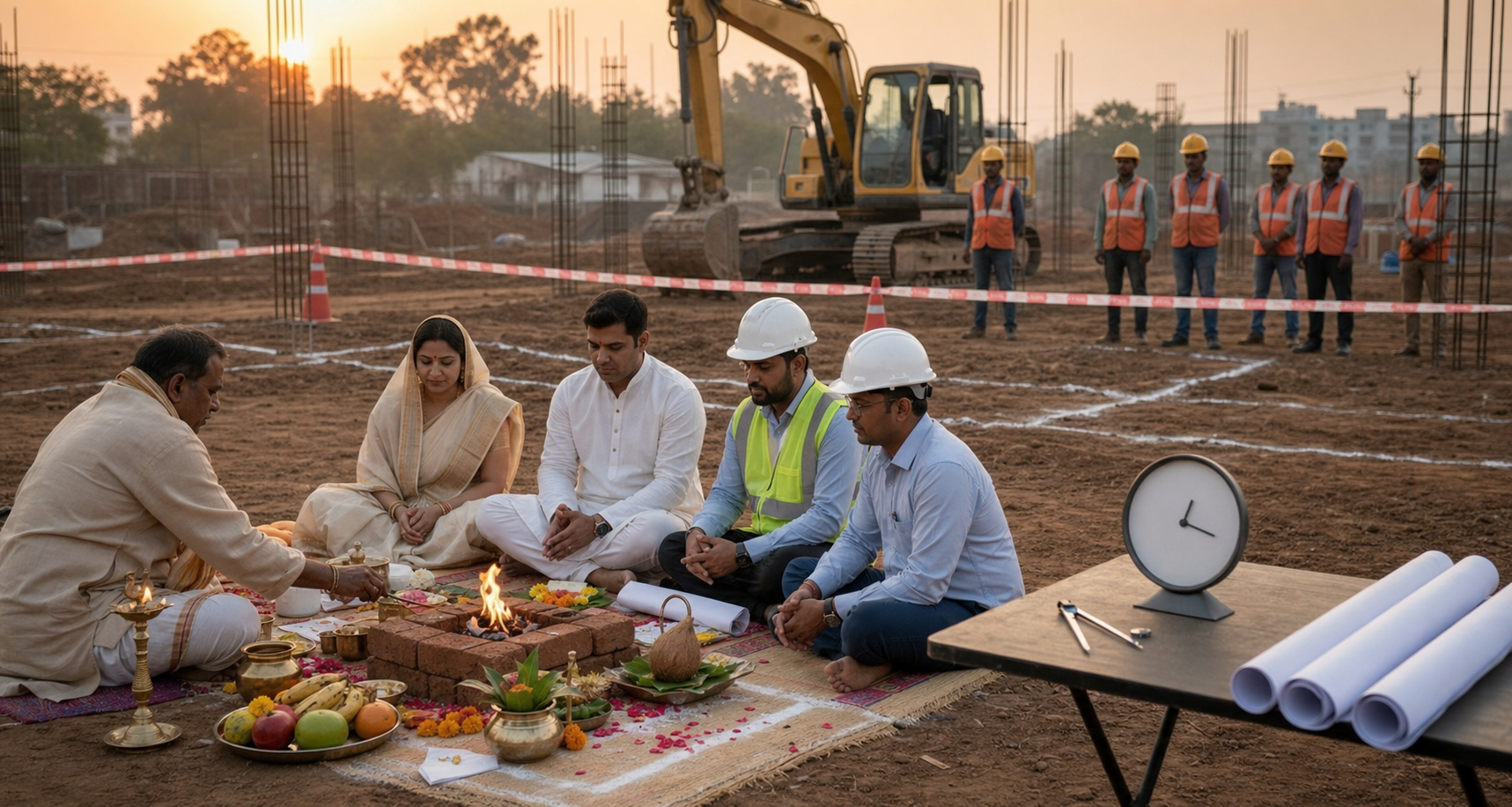
Griha Arambha deserves more care than copying an auspicious day into a family calendar. Neev Pujan and Bhumi Pujan consecrate the beginning of work on the land or foundation, so the ritual decision has to meet a real construction schedule. A generic 2026 list can supply candidates; it cannot account for the plot’s location, the local daytime window, the selected Lagna or the family’s practice.
For the first screening, many traditions favor Shukla Paksha Tithis for constructive work. Rohini, Mrigashira, Uttara Phalguni, Hasta, Anuradha and Revati are frequently treated as favorable Nakshatras for Griha Arambha in numerous regional practices. This is a shortlist, not a universal whitelist. Local custom can accept, qualify or reject a candidate, and the Lagna still has to be examined.
For property-related work, the astrologer may seek a stable, well-aspected Ascendant and strength connected with the fourth house. That judgment is time-specific. After a Lagna window is selected, remove the locally calculated Rahu Kalam, Yamaganda and Gulika Kalam periods and check Bhadra if the governing convention requires it. The resulting overlap, rather than the date printed in large type, is the proposed Muhurta.
Coordinate the ritual and construction sides in this order:
- Give the priest or astrologer the exact plot location, the intended ritual and several workable candidate dates.
- Ask for the local Muhurta as a start-and-end interval, along with the central act that must occur within it.
- Confirm with the contractor that the site can be made safe and accessible before the ritual without beginning a prohibited or contractually significant stage by mistake.
- Separate ordinary preparation from the sacred commencement. Cleaning, arranging materials and receiving participants need not consume the best part of the Muhurta when the officiant permits them beforehand.
- Do not order a concrete pour, excavation or structural operation merely to chase a ritual time if permits, engineering review, soil conditions or site safety are not ready. Use a permitted symbolic first act only after the officiant and relevant professionals agree on what it signifies.
- Keep one written final schedule shared by the family, officiant, site supervisor and contractor. A verbal time passed through several people is too easy to distort.
Prepare ritual materials only after confirming the local procedure. A common Bhumi Pujan set may include clean water, flowers, grains, turmeric, kumkum, a copper pot, sanctified soil, incense or cow dung cakes, and the first brick or stone. Your officiant may require a different set or sequence. Ask before buying, choose sattvic and locally appropriate offerings, and plan for minimal waste and responsible cleanup.
The formal Panchang and Muhurta calculation belongs chiefly to Hindu calendrical and ritual practice. Reverence for the earth, disciplined intention, ethical stewardship and community well-being resonate more broadly across dharmic paths, but that shared ethical ground should not be used to erase differences among Hindu, Buddhist, Jain and Sikh observances.
Key takeaways for your 2026 calendar
- Treat every date-only recommendation as provisional. It becomes actionable only after the location and local transitions are known.
- Match the method to the rite. The favorable combination for worship is not automatically the right combination for construction or another major samskara.
- Plan with intervals, not labels. Record when Tithi, Nakshatra and Lagna begin and end, then identify their usable overlap after exclusions.
- Leave a margin before a transition. Do not schedule the central ritual act at the final moment of a favorable Tithi or Nakshatra.
- Recalculate after a material change. A new city, venue, ceremony time or governing tradition can change the answer.
- Keep practical safeguards intact. Muhurta gives sacred structure to a beginning; it does not replace permits, engineering judgment, site safety or contractual planning.
Open your 2026 planner now and give each important event a purpose, city, tradition and provisional status. Shortlist first, obtain the city-specific calculation second, and make hard-to-reverse bookings only after the final window and its essential ritual act have been confirmed.
References
- DharmaRenaissance Blog — January 25, 2026 Panchang: Saptami to Ashtami | Auspicious Tithi, Good Time, Rashi & Nakshatra
- DharmaRenaissance Blog — Griha Arambha Muhurtham 2026: Auspicious Neev Pujan Dates, Bhumi Pujan Guide, Timing Tips
