

You may be trying to choose a fasting day, book a temple seva, or put one reliable date in a family group chat. In 2026, the name Jyeshtha by itself cannot do that job. An intercalary Adhik Jyeshtha comes before Nija Jyeshtha, regional calendars label the same season differently, and the correct civil date still depends on where the decisive tithi falls in your city.
Use the ranges below as a planning map, not as an all-India muhurta sheet. First identify your regional calendar and whether it means Adhik or Nija Jyeshtha. Then observe each vrata by its own timing rule, using a panchanga calculated for the place where you will actually worship.
Read the 2026 calendar as two Jyeshthas

An Adhik Maas is inserted when no solar sankranti occurs between two successive Amavasyas. The intercalary month takes the same name as the regular month that follows it, producing Adhik Jyeshtha and then Nija Jyeshtha. In the Marathi amanta reckoning, Adhik Jyeshtha runs from 17 May through 14 June 2026, followed by Nija Jyeshtha from 15 June through 14 July.
The astronomical distinction is practical. The Sun remains in Vrishabha during the intercalary lunation, with no change of rashi between its bounding Amavasyas. The following lunation contains Mithuna Sankranti, around 15 June, and is therefore the regular month. This changes the month name used in a sankalpa and affects where annual observances are placed; it does not mean that every annual festival is automatically celebrated twice.
| Region or calendar | Reckoning and terminology | Useful 2026 planning range | What you must confirm |
|---|---|---|---|
| Maharashtra | Amanta; Adhik Jyeshtha followed by Nija Jyeshtha | 17 May–14 June for Adhik; 15 June–14 July for Nija | Local sunrise assignment and any Smarta or Vaishnava Ekadashi distinction |
| Gujarat | Amanta; Jeth Sud is Shukla Paksha and Jeth Vad is Krishna Paksha | Adhik Jeth from roughly mid-May through 14 June; Nija Jeth from 15 June to about 14 July | The almanac for Ahmedabad, Surat, Rajkot, Vadodara, or the actual place of observance |
| Karnataka | Amanta Kannada Panchanga | The regular Jyeshtha window is given as 15 June–13 July in IST | City-specific sunrise, moonrise, tithi endings, and whether the compilation uses drik or a Surya Siddhanta-based calculation |
| Much of North India | Purnimanta; months run from Purnima to Purnima | The Krishna Chaturthi observed on 3 June is identified as part of Adhika Jyeshta | Do not transfer a Purnimanta month label mechanically into an amanta sankalpa |
| Tamil, Malayalam, and Bengali solar calendars | Solar month names coexist with lunar tithis | The evening of 16 June falls in Aani, Mithunam, and Ashar respectively | These solar names are parallel calendar coordinates, not competing dates for the lunar event |
Gujarat also numbers this period within Vikram Samvat 2082 because the Gujarati year begins at Diwali. A Chaitra-based Vikram Samvat calendar calls the same period 2083. If you are recording a donation, temple booking, or family ceremony across states, write the regional era and month convention instead of recording only the Samvat number.
The apparent 13 July versus 14 July difference at the end of Nija Jyeshtha is exactly why a month range should not be treated as a muhurta. A tithi can cross midnight and sunrise, while calendars may describe its civil placement according to their own location and assignment rules. If the puja is in Bengaluru, use Bengaluru calculations; if it is in Pune, use Pune calculations even when the person arranging it lives abroad.
Match each observance to its decisive timing rule
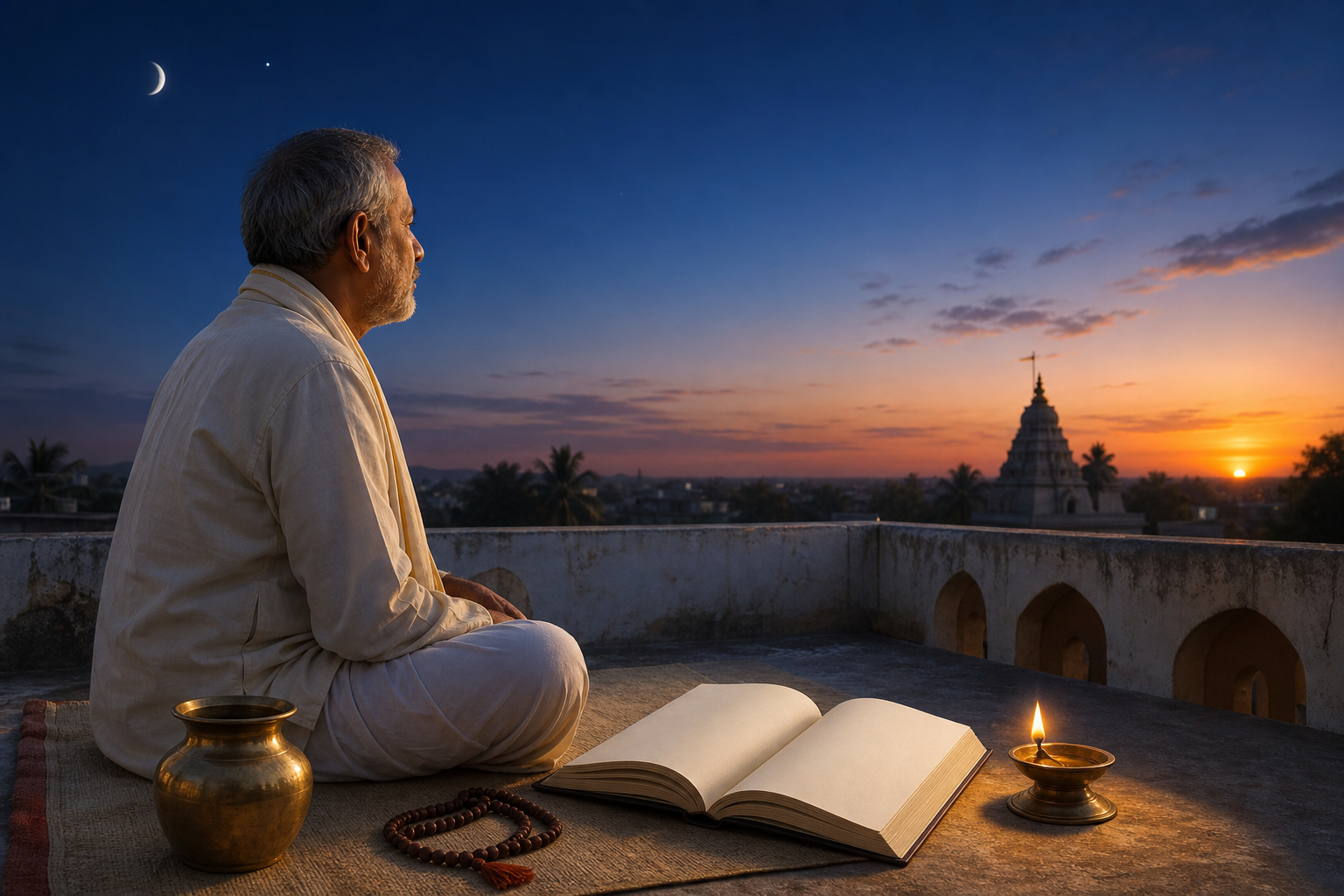
A tithi is produced by each 12-degree increase in the angular separation of the Moon and Sun. It can begin or end at any clock time, so the date printed beside a festival is the result of an assignment rule, not simply the date on which the tithi begins.
- Ekadashi: the fasting day is generally selected by the presence and qualification of Ekadashi at local sunrise. Smarta and Vaishnava observances can diverge, so confirm both the fasting date and the parana period with your sampradaya.
- Sankashti Chaturthi: Krishna Chaturthi must be evaluated at local moonrise. The fast is concluded after Chandra darshan and the prescribed Ganesha and Chandra rites, not merely when a calendar app changes the date.
- Pradosha: Trayodashi must prevail during the relevant evening twilight period. A sunrise-only festival list is insufficient.
- Purnima and Amavasya rites: use the tithi present in the ritual’s prescribed window. Snana, vrata, pitru tarpan, and a temple celebration may not all use an identical clock criterion.
- Chandra Darshan: the physical viewing opportunity begins after local sunset and ends at moonset. The first crescent is low in the western sky, so weather, haze, and the horizon matter in addition to the tithi.
Before accepting any date, run a five-part check:
- Name the city where the observance will occur.
- Identify the calendar family: amanta, purnimanta, or a regional solar calendar used alongside lunar tithis.
- Check whether the month is Adhik Jyeshtha or Nija Jyeshtha.
- Apply the rule of your sampradaya or temple, especially for Ekadashi and annual Amavasya observances.
- Confirm the decisive local window: sunrise, moonrise, evening twilight, sunset-to-moonset, or another stated kala.
This procedure matters even between nearby cities. Sunrise, moonrise, and tithi-ending times can differ by minutes across Karnataka or Gujarat, and those minutes become decisive when a tithi changes near the required window. Outside India, do not convert an IST time manually and assume the Indian festival date survives the conversion. Use a location-adjusted panchanga for the diaspora city.
A practical planner for the main 2026 observances
The dates below show where to begin checking. Entries marked as approximate must be finalized against the local tithi table before you announce a vrata, print a temple notice, or make travel arrangements.
| 2026 civil-date anchor | Observance or transition | Regional placement | Your practical action |
|---|---|---|---|
| 17 May | Beginning of Adhik Jyeshtha in the Marathi amanta sequence | Adhik Jyeshtha | Mark the start of the intercalary devotional period; do not assume that a generic Jyeshtha festival sheet refers to this month |
| Wednesday, 3 June | Sankashti Chaturthi | Adhika Jyeshta Krishna Chaturthi in North Indian naming | Obtain the moonrise time for your city and keep Chaturthi-at-moonrise as the deciding rule |
| 14 June | Amavasya and end of the Adhik lunation in the Marathi and Gujarati sequence | Boundary between Adhik and Nija reckoning | Check carefully before attaching Shani Jayanti or another annual designation; regional assignments are not uniform |
| 15 June | Beginning of Nija Jyeshtha in the Marathi and Gujarati amanta sequence; Mithuna Sankranti occurs around this transition | Nija Jyeshtha, with a separate solar marker | Keep the lunar-month boundary and solar sankranti as two distinct calendar facts |
| 16 June | Chandra Darshan | Nija Jyeshtha in the cited lunar reckonings; Aani, Mithunam, or Ashar in regional solar calendars | Look west after sunset; the most useful viewing period is generally about 20–60 minutes after sunset, subject to local visibility and moonset |
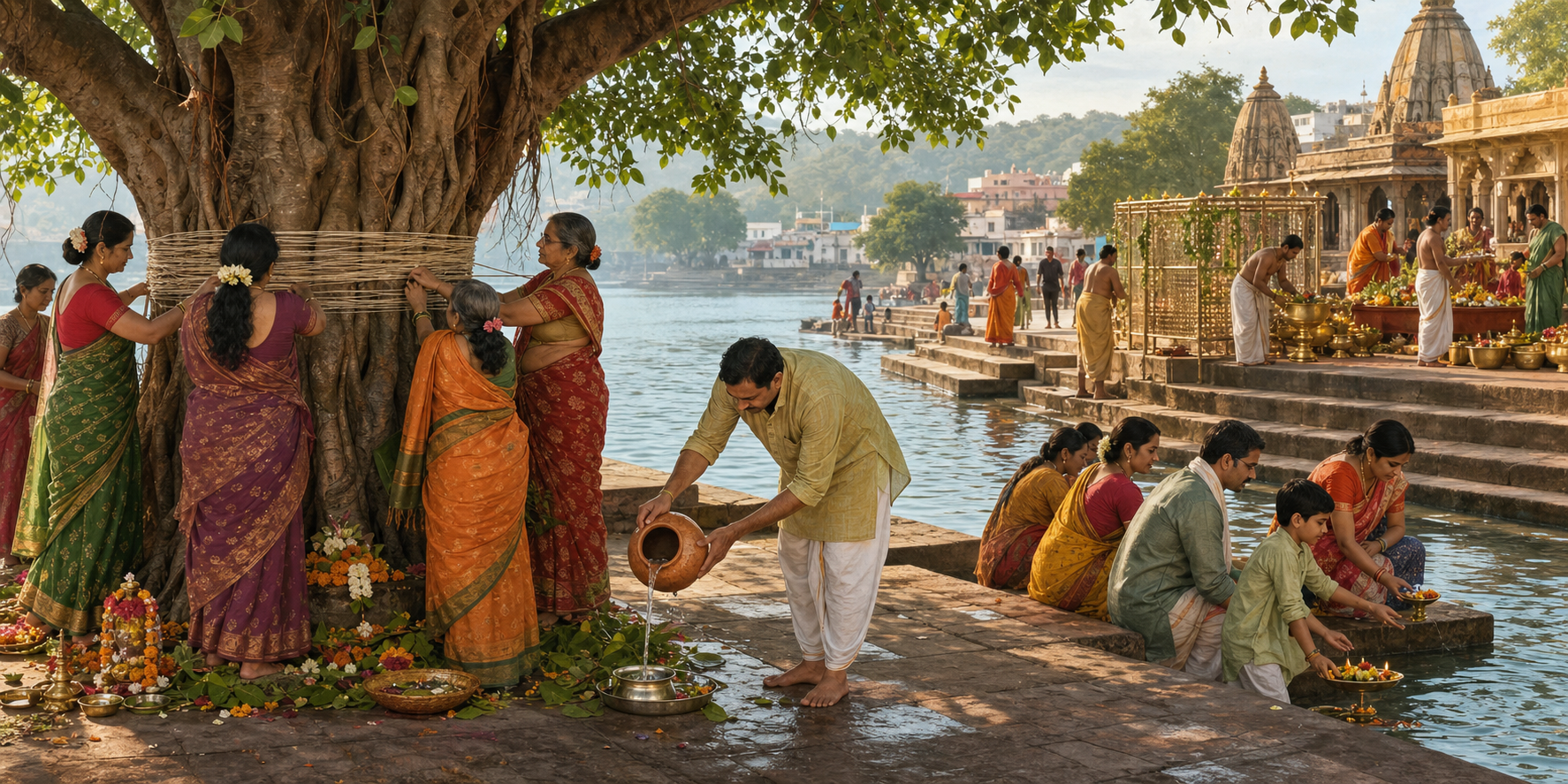
| Around 24 June | Ganga Dussehra, Jyeshtha Shukla Dashami | Nija Jyeshtha | Confirm Dashami assignment locally before fixing snana, Ganga worship, jal-daan, or a community water-service program |
| Around 25 June | Nirjala Ekadashi, Jyeshtha Shukla Ekadashi | Nija Jyeshtha | Confirm the sunrise-based fasting day, sampradaya variation, and parana time; decide in advance whether a health-appropriate modified fast is required |
| Around 29 June | Jyeshtha Purnima, Vat Purnima, and Deva Snana Purnima observances | Nija Jyeshtha | Follow the regional practice: Vat Purnima is prominent in Maharashtra and Gujarat, while Jagannath temples may emphasize ceremonial snana and abhisheka |
| 13–14 July | Nija Jyeshtha Amavasya and month-end observances | 13 July in the Karnataka schedule; 14 July in the Marathi schedule | Confirm the Amavasya window for pitru tarpan and the regional assignment of Shani Jayanti rather than averaging the two dates |
The word around is deliberate in the late-June entries. Ganga Dussehra, Nirjala Ekadashi, and Jyeshtha Purnima are tithi observances. A civil date is useful for preparing supplies or reserving time, but it becomes authoritative only after the applicable local rule has been checked.
Shani Jayanti deserves particular care in 2026. The Karnataka amanta schedule associates it with the Nija Jyeshtha-ending Amavasya on 13 July, the Marathi sequence expects Jyeshtha Amavasya around 14 July, and some purnimanta traditions can associate Shani Jayanti with the mid-June Amavasya. Do not merge these into an artificial national date. Follow the panchanga and parampara of the temple or household conducting the worship.
Use Adhik and Nija Jyeshtha for different kinds of planning
Adhik Jyeshtha is active devotional time
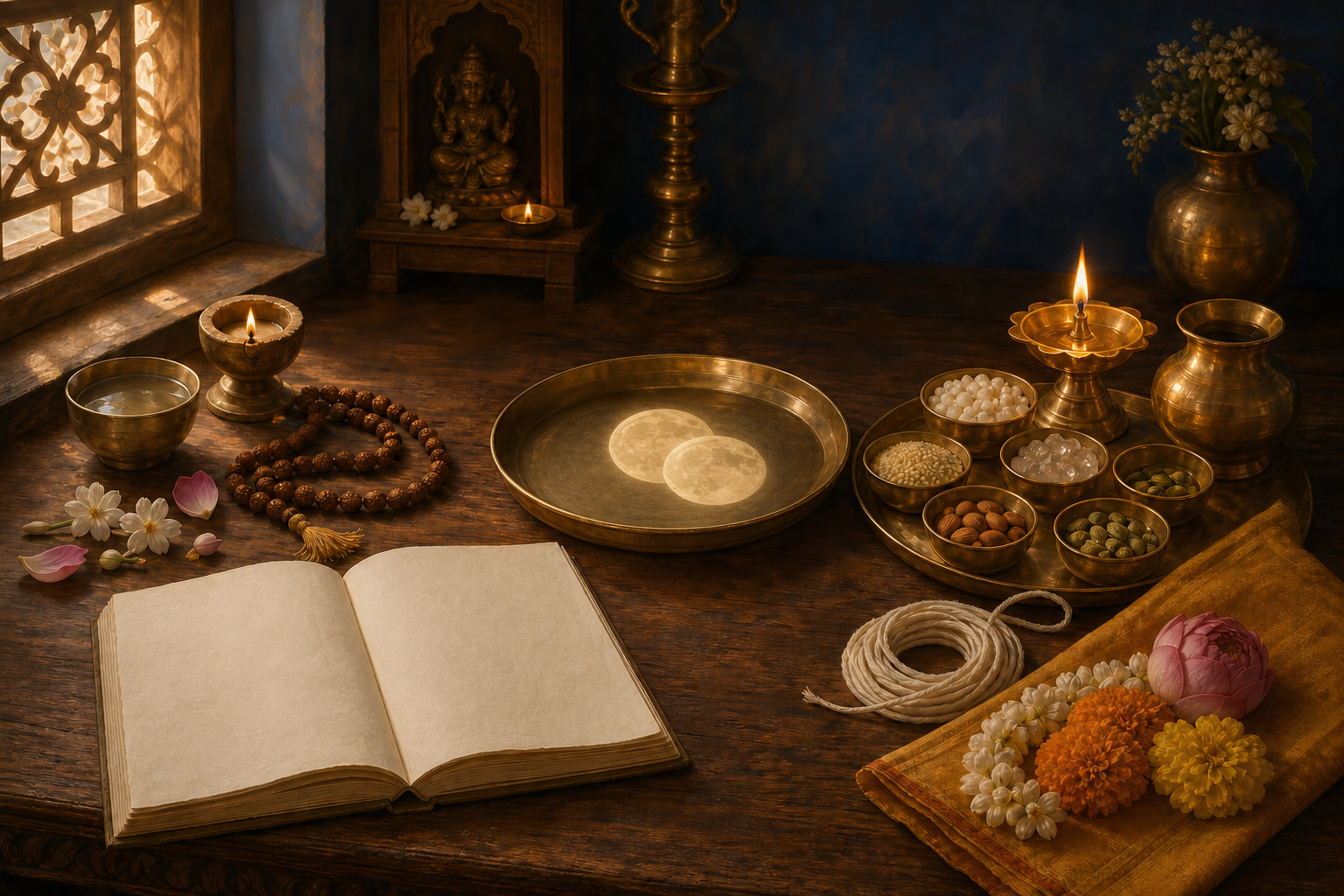
Adhik Maas is not an empty month. Japa, dana, snana, scriptural study, Ekadashi, Pradosha, Purnima, Amavasya, and monthly vratas continue. The 3 June Sankashti Chaturthi is a clear example: its place in an intercalary month does not diminish the vrata, and its moonrise rule remains unchanged.
Major samskaras such as marriage, griha-pravesha, large-scale upanayana, and foundation ceremonies are commonly deferred during Adhik Maas. If you already have a fixed ceremony, do not cancel it solely from a general calendar table. Give your family purohita the city, proposed time, family tradition, and purpose of the ceremony so that any applicable exception can be assessed within that tradition.
Nija Jyeshtha carries the main seasonal observances
Use the second half of June to prepare for Ganga Dussehra, Nirjala Ekadashi, Vat Purnima, and Deva Snana Purnima. This preparation can be concrete: arrange clean water for jal-daan, decide who will perform the Vat Savitri rites, ask the local Jagannath temple about its snana schedule, and obtain the correct Ekadashi parana time before the fast begins.
A waterless Nirjala fast during Grishma heat can cause real harm. If you are pregnant, nursing, elderly, medically unwell, taking medicines that require food or water, or otherwise at risk of dehydration, do not imitate the rigorous form without appropriate medical and traditional guidance. A health-compatible phalahara or hydrated observance, where permitted by your parampara, is safer than treating physical danger as proof of devotion. Nirjala Ekadashi is not a substitute for medical care.
The ethical counterpart to personal restraint is service. Jal-daan, annadana, care for animals, and responsible use of water give Jyeshtha’s seasonal discipline a public form. Hindu, Jain, Buddhist, and Sikh families may follow distinct liturgical calendars, yet they can cooperate in water stewardship, daya, seva, and protection of life without pretending that their rites are identical.
At home, keep the ritual proportional to the observance. Chandra Darshan can consist of a clean western view, a simple water offering, Chandra mantra, and prasada after the sighting. Sankashti needs Ganesha worship and the local moonrise discipline. Karnataka temple practice may add cooling offerings such as chandana and fruit during the hot season. Vat Purnima centers the vat tree and the Savitri–Satyavan remembrance. Precision does not require making every day elaborate; it requires doing the right act in the right ritual window.
Key takeaways
- For cross-regional planning, treat 17 May–14 June as the Adhik Jyeshtha window in the Marathi sequence and 15 June onward as Nija Jyeshtha; Gujarat follows a similar two-month pattern.
- The regular month’s endpoint is listed as 13 July in the Karnataka schedule and about 14 July in Marathi and Gujarati reckonings. Use the panchanga for the actual place of worship.
- Jeth, Jyeshtha, Aani, Mithunam, and Ashar can describe the same season from different calendar systems. A different label does not necessarily mean a different astronomical event.
- Sunrise decides many Ekadashi assignments, moonrise decides Sankashti Chaturthi, evening twilight decides Pradosha, and sunset-to-moonset visibility governs Chandra Darshan.
- Use around 24 June for Ganga Dussehra planning, around 25 June for Nirjala Ekadashi, and around 29 June for the Purnima observances, but finalize all three locally.
- Shani Jayanti is regionally sensitive in this intercalary year. Follow one coherent panchanga and parampara instead of combining dates from unrelated calendars.
Before you book a seva or announce a family observance, write one line containing the city, calendar convention, sampradaya, tithi, and decisive ritual window. A useful request would be: Pune; Marathi amanta; family Smarta practice; Jyeshtha Shukla Ekadashi; please confirm the sunrise fasting date and local parana. That small discipline prevents most 2026 calendar confusion while respecting both the unity and the legitimate regional diversity of dharma.
References
- DharmaRenaissance Blog — Jyeshta Maasa 2026 in Kannada Panchanga: Exact Dates, Sacred Rituals, and Auspicious Timings
- DharmaRenaissance Blog — Jyeshta Maas 2026 (Jeth Mahino) in Gujarati Panchang: Precise Dates, Festivals, and Significance
- DharmaRenaissance Blog — Jyeshtha Mahina 2026 in Marathi Panchang: Definitive Dates, Adhik Maas Insights, and Key Vrats
- DharmaRenaissance Blog — Sankashti Chaturthi June 2026: Date, Moonrise Rituals, Puja Vidhi & Deep Significance
- DharmaRenaissance Blog — Chandra Darshan 16 June 2026: Powerful First-Moon Sighting, Rituals, and Calendar Map