

You may be seeing several names for the August 2026 Amavasya and wondering whether they refer to different days. They do not. For planning purposes, mark 12 August 2026, then use the month name and tharpanam procedure followed by your own family tradition.
The date is only the first layer. Before you begin, you also need the applicable timing for your location and the complete sankalpam and ritual method accepted in your sampradaya. Keeping those three matters separate prevents most avoidable confusion.
Key takeaways
- August 2026 Amavasya tharpanam is associated with 12 August 2026.
- Shravan Amavasya, Ashada Amavasya, Aadi Amavasai and Karkidaka Masam Amavasya are regional calendar names attached to this date.
- A different month name does not automatically mean that someone has selected a different Amavasya.
- The civil date does not supply the exact local tithi window; confirm that separately for the city where you will perform the rite.
- Use the sankalpam and tharpanam method received through your family, acharya, purohit or temple rather than assembling a procedure from unrelated fragments.
One date appears under four calendar names

The calendrical anchor is 12 August 2026. Its month designation changes with the regional calendar convention being used:
| Calendar convention | Name used for the observance |
|---|---|
| North Indian Hindi calendars | Shravan Amavasya |
| Amavasyant calendars | Ashada Amavasya |
| Tamil calendars | Aadi Amavasai |
| Malayalam calendars | Karkidaka Masam Amavasya |
This is a naming difference, not evidence of four separate Amavasyas. A Tamil family may naturally refer to Aadi Amavasai, while a North Indian family may say Shravan Amavasya. Each is locating the observance within its own calendar vocabulary.
Use the name embedded in your inherited sankalpam. There is no benefit in replacing Aadi with Shravan, or Ashada with Karkidaka, merely because another calendar is more familiar to you. The practical test is whether the wording agrees with the calendar system and ritual lineage you actually follow.
What your sankalpam must get right
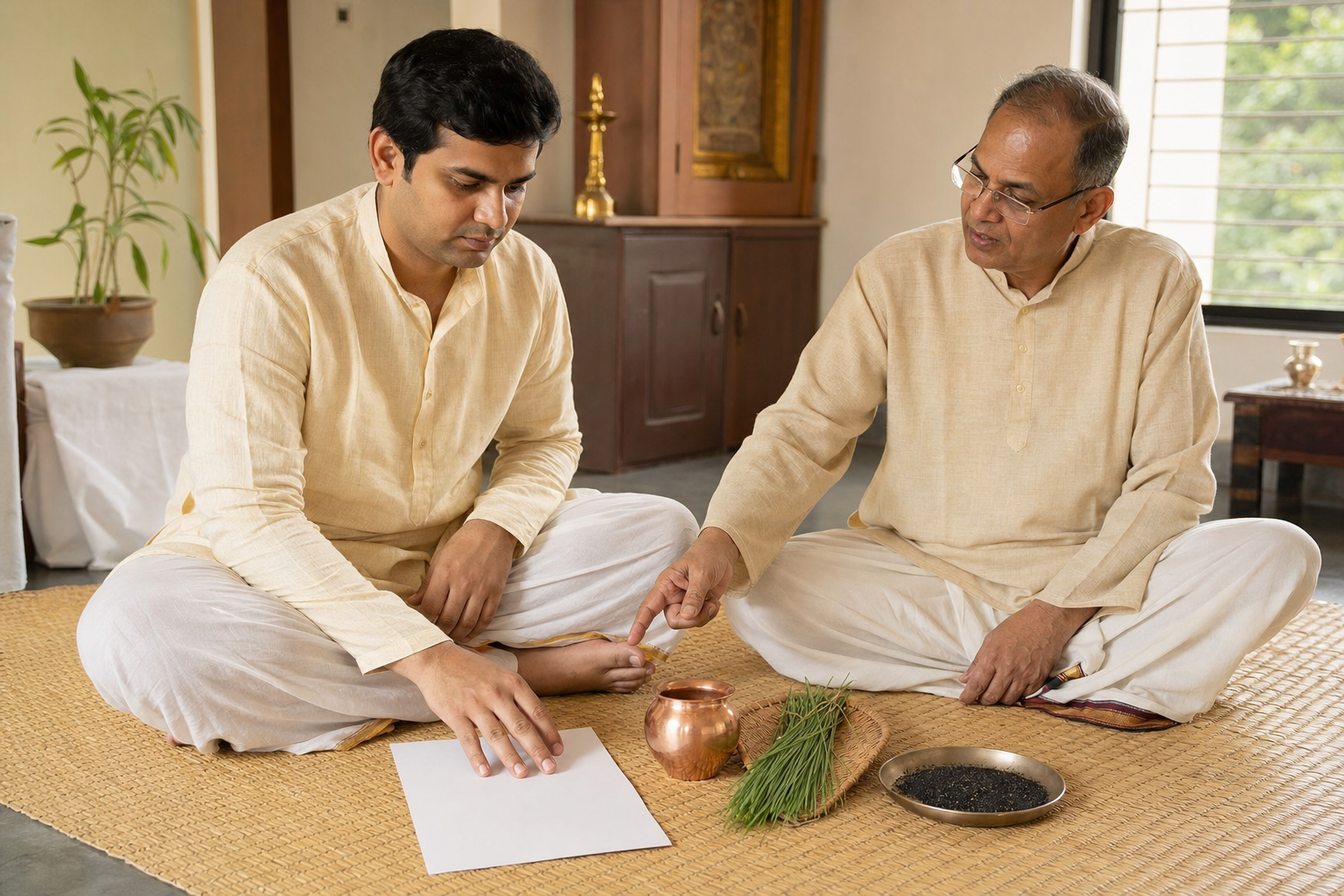
Sankalpam is the formal statement that places a ritual within its intended sacred and calendrical context. Tharpanam is the ancestral offering itself. They belong together, but the sankalpam should not be mistaken for the complete tharpanam procedure.
A generic line copied for the date may omit wording, sequence or identifiers required by your family practice. Before 12 August, confirm the following:
- Calendar convention: Determine whether your family uses the North Indian, Amavasyant, Tamil, Malayalam or another established form.
- Local observance window: Ask for the applicable tithi timing in the city where the rite will be performed. A lunar tithi does not simply begin and end with the civil day at midnight.
- Complete ritual text: Obtain the sankalpam together with the tharpanam method used in your tradition. Do not assume that the date-specific words constitute the entire rite.
- Family identifiers: If your procedure calls for names, relationships, gotra or other lineage details, verify their accepted form and pronunciation with a knowledgeable elder or purohit. Do not guess missing information.
- Materials and sequence: Follow the list given with your family procedure. Customs differ, so a universal shopping list can create more confusion than it resolves.
- Eligibility and substitutions: If you are unsure whether you should perform the rite yourself, or what to do when a customary element is unavailable, settle that question with your acharya or purohit before the observance begins.
This distinction is especially important when a family has preserved the act of tharpanam but not a written copy of its wording. Recover the procedure from a reliable person within that tradition instead of joining together mantras found under several regional labels.
Prepare for 12 August without last-minute guesswork
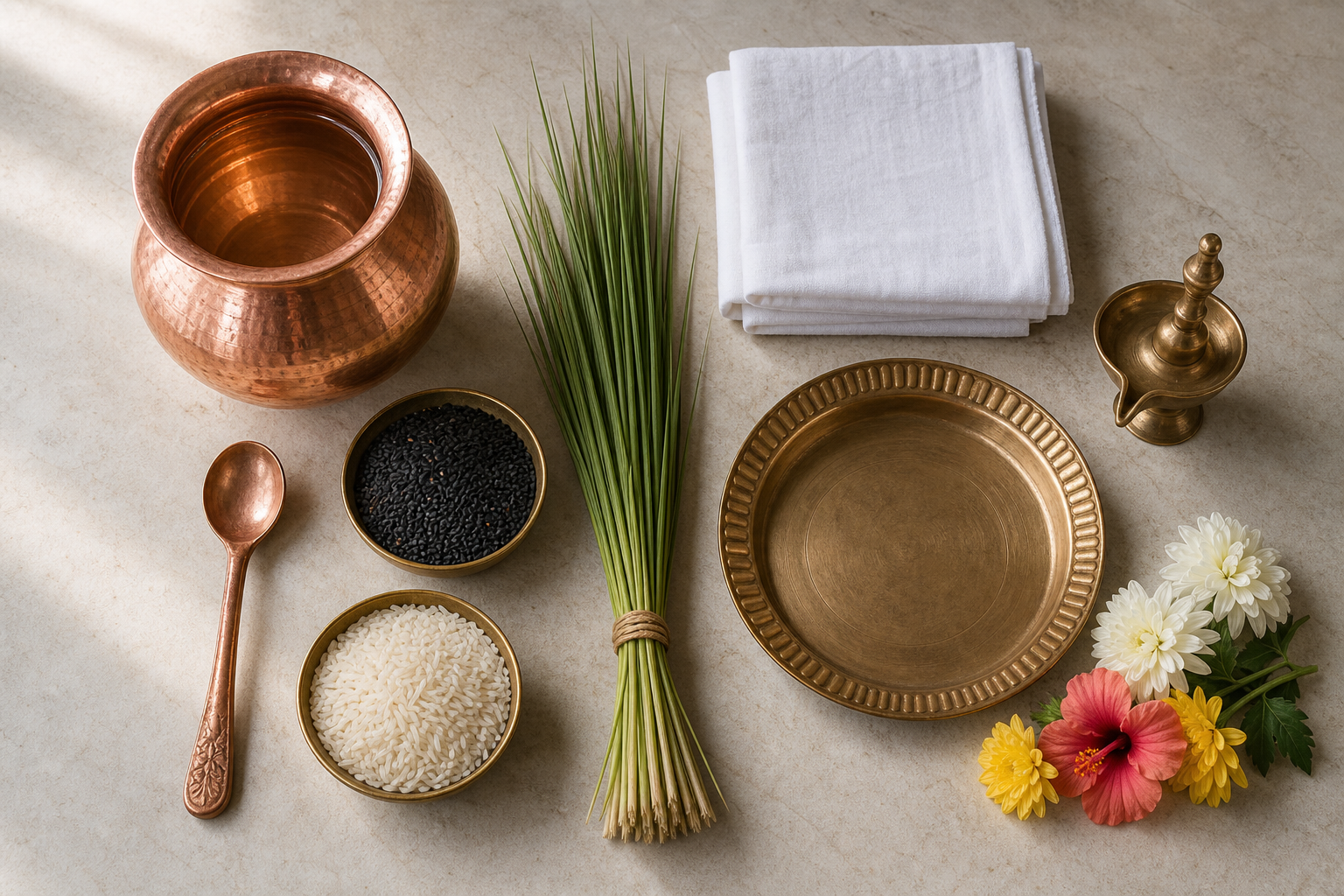
You do not need to solve every regional calendar question. You need a verified procedure for your location and family. Use this sequence:
- Save the date. Enter 12 August 2026 in your calendar under the name your family uses, such as Aadi Amavasai or Shravan Amavasya.
- Identify your reference person. Contact the family purohit, acharya, temple priest or elder who normally guides ancestral rites.
- Give your actual location. State the city and country where you will perform tharpanam. Ask for the locally applicable observance window rather than copying a time published for another place.
- Request the complete wording. Ask for the August 2026 sankalpam in the form used by your tradition, together with any accompanying instructions. Mark unfamiliar words before the ritual day so you are not trying to decipher them during the rite.
- Verify family details. Prepare any names, relationships or gotra information that your established procedure requires. Preserve the form traditionally used in your family.
- Arrange customary materials in advance. Work from the verified procedure, not from a generic checklist attached to a different regional custom.
- Keep the verified version. After the observance, save the sankalpam, location-specific timing and family notes together. That record will make a future Amavasya easier to prepare for, though the date-specific wording and timing must still be updated.
If you live outside Bharat, the third step deserves particular attention. Your inherited calendar language can remain Tamil, Malayalam, Hindi or another traditional form, but the timing question belongs to the place where you are physically performing the rite. Do not transplant an Indian city’s clock time into another time zone.
Avoid the mistakes that change the ritual context
The most common planning error is to treat differing month names as contradictory dates. Resolve the civil date first, then stay with your family’s calendar vocabulary. Mixing labels midway through a sankalpam does not make it more inclusive; it makes its calendrical frame unclear.
A second error is to copy a mantra without its instructions. Even when the date words are correct, the order of the rite, family identifiers and customary materials may not match your practice. Use one coherent procedure from one trusted lineage rather than combining several versions.
A third error is to confuse a published date with a complete local muhurta or tithi calculation. The date lets you plan. Your local panchanga or ritual adviser supplies the performance window. This matters most when you are consulting information prepared for another region or country.
Put 12 August 2026 on your calendar now. Then obtain two confirmations well before the day: the local tithi window for your city and the complete sankalpam-tharpanam method used by your family. Once those are settled, you can approach the observance without changing traditions at the last minute.
References
