
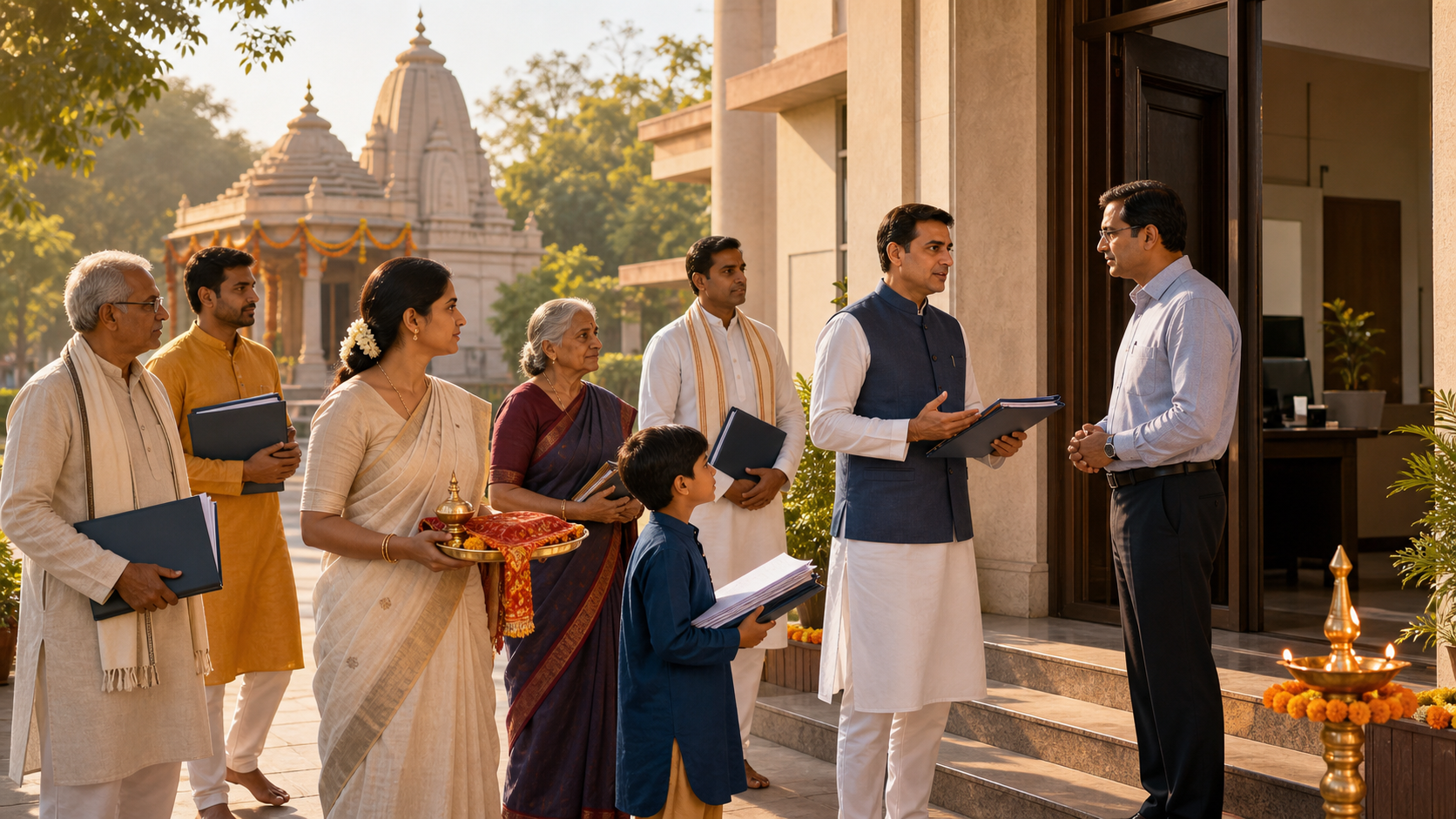
If a temple ritual is blocked, your child is targeted at school, or a Hindu organisation is treated as suspect because of its identity, the first question is not simply whether the incident feels unfair. You need to establish what happened, who had authority, what evidence exists, and which remedy you want.
Your earliest decisions can determine whether an institution investigates the underlying problem or dismisses it as an emotional dispute. Silence leaves no record. An uncontrolled confrontation can bury the original grievance beneath a new controversy. The stronger path is disciplined, peaceful, and specific.
Start by naming the dispute you actually have
Do not begin with the broadest possible accusation. Begin with a working classification. This is not a final legal conclusion; it is a way to direct your complaint to the right decision-maker and ask for the right response.
| What happened | Your immediate question | What to preserve |
|---|---|---|
| A ritual, procession, temple visit, or use of a sacred site was restricted | Who made the decision, under which written authority, for how long, and with what review process? | Orders, notices, maps, permits, prior correspondence, access conditions, and the history of the practice |
| A school, employer, service provider, or public body treated someone differently because they were Hindu | What policy applies, how was it applied to comparable cases, and where is the formal complaint route? | Messages, exact statements, names, dates, policy documents, witnesses, and evidence of unequal treatment |
| A temple, murti, home, person, or event received a threat or suffered targeted damage | Is anyone in immediate danger, and which authority can secure the location and record the incident? | Original images, video, messages, damaged property, witness details, report numbers, and security footage |
| Someone criticised Hindu doctrines, Indian policy, Hindutva, a political party, or a leader | Was this protected disagreement, or was Hindu identity used to threaten, exclude, degrade, or penalise people? | The full context rather than an isolated sentence, especially if adverse conduct followed the speech |
| An official or judicial direction appears inconsistent with what happened on the ground | What does the authenticated direction actually require, and who was responsible for implementing it? | The complete direction, subsequent instructions, names and ranks of officials, timestamps, and access restrictions |
These categories often overlap. The Madurai Karthigai Deepam dispute combined a sacred-site question, a High Court direction concerning the Deepathoon lamp site, police restrictions, and a confrontation after the ritual was halted. Treating such a situation only as a clash misses the underlying issue. Treating it only as a religious grievance misses the operational and public-safety questions.
Criticism alone should not be labelled Hinduphobia. A harsh argument about theology or politics may be unfair, inaccurate, or offensive without becoming a civil-rights violation. The line becomes more serious when Hindu identity is the reason for intimidation, vandalism, exclusion, discriminatory treatment, or a threat. Insisting on this distinction protects free inquiry while making genuine anti-Hindu conduct harder to dismiss.
Build an incident record that an institution can use
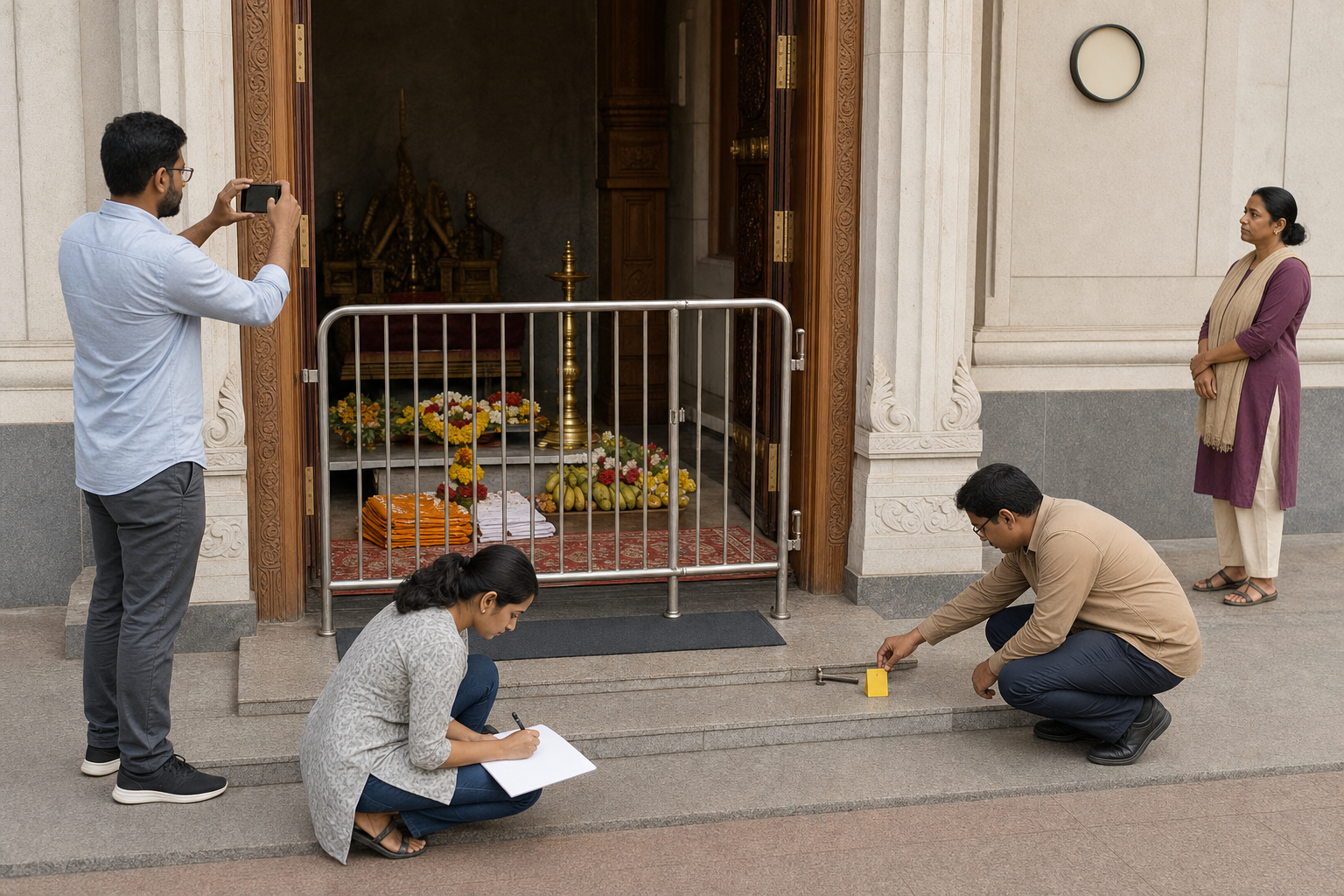
A long social-media thread is not an incident file. Institutions need a chronology, original evidence, identifiable decision-makers, and a concrete request. Start one master record and keep interpretation separate from observable fact.
- Secure people first. If there is an immediate threat, move to safety and contact the appropriate emergency service. Do not remain in danger merely to obtain better footage.
- Write the basic facts promptly. Record the date, time, location, event, exact words used, conduct observed, names or descriptions of those involved, and how each witness can be reached. Mark what you saw yourself, what another person reported, and what you inferred.
- Preserve originals. Keep the original photo, video, email, voice message, or document. Do not crop or annotate the only copy. Make a duplicate for public sharing, and protect minors, home addresses, telephone numbers, and other private information.
- Request records before they disappear. Ask the organisation controlling CCTV, access logs, attendance records, or internal correspondence to preserve relevant material. Retention periods vary, so make the request promptly and keep proof that it was received.
- Ask for the decision in writing. Request the name and office of the decision-maker, the policy or order relied upon, the duration of the restriction, and the available review or appeal channel. If an official will not provide a written response, note when and how you asked.
- Report through the correct channel. That may be a school administration, employer, temple board, municipal authority, police service, civil-rights body, or qualified local lawyer. Obtain an acknowledgement, complaint number, or case number rather than assuming that a conversation opened a file.
- State the remedy. Ask for something the recipient can decide: restored access, a safety plan, repair of damage, policy correction, preservation of evidence, an investigation, staff training, a public clarification, or a meeting with the responsible official.
A useful opening for a written complaint is: “On [date and time], at [place], [identified person or office] took [specific action]. I believe Hindu identity or practice was relevant because [specific evidence]. The immediate effect was [access denied, threat, damage, discipline, or other harm]. I request [specific remedy] and preservation of [identified records].” Attach evidence in a numbered list and retain the version you submitted.
Avoid adjectives where a fact will do more work. “The administrator was hostile” invites disagreement. “The administrator approved the same facility for three other student groups but denied the Hindu observance under the same written policy” identifies a question that can be investigated. If you do not have comparator evidence, do not invent it; ask how comparable requests were handled.
Legal rights, filing deadlines, and available remedies differ by jurisdiction. When a threat, arrest, court direction, employment penalty, school discipline, or significant property damage is involved, obtain advice from a lawyer qualified in that jurisdiction. A public campaign cannot substitute for preserving legal options.
Protect a sacred observance without losing the rights issue
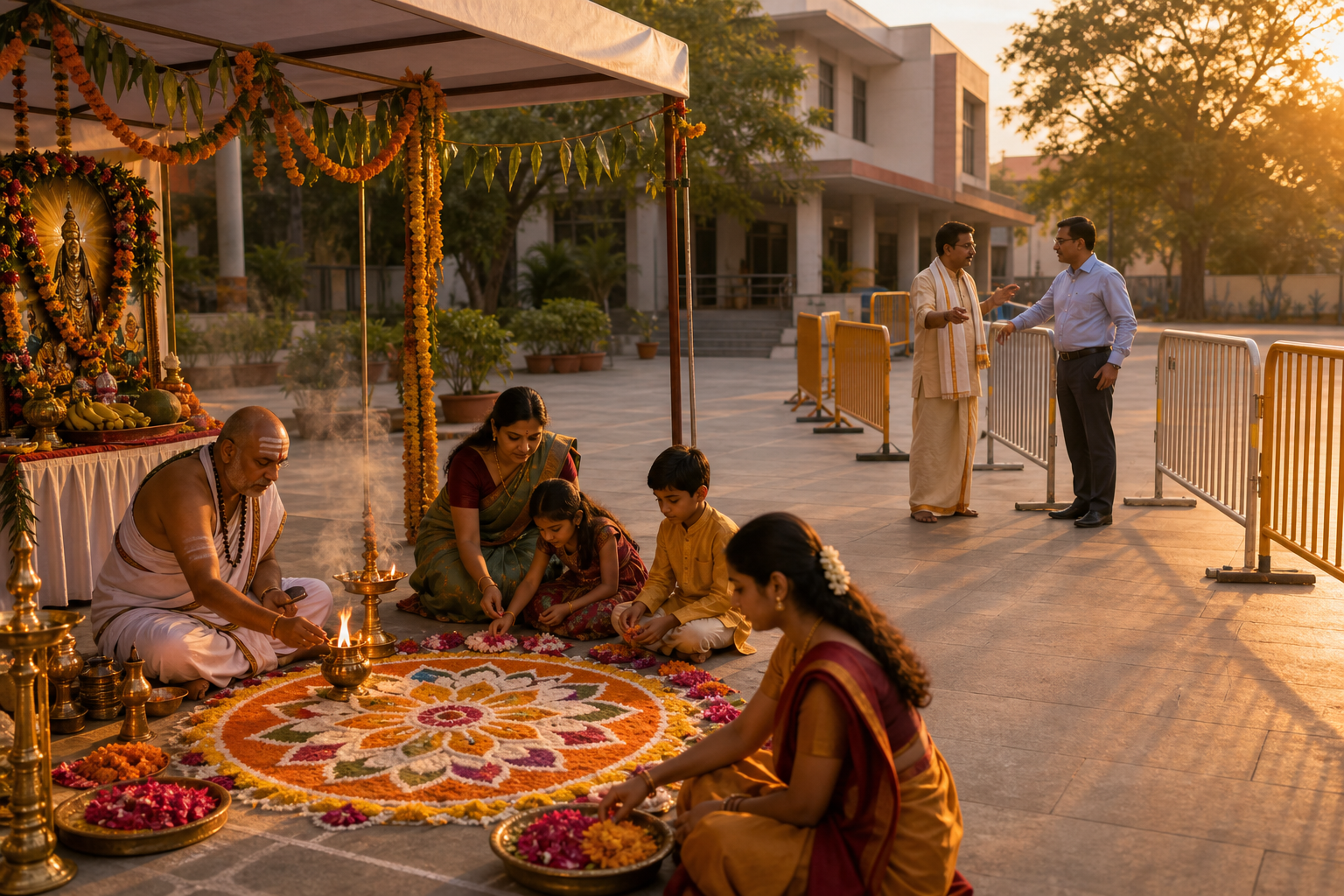
A sacred time and place are not interchangeable administrative details. Karthigai Deepam carries generational significance through the lighting of lamps, prayer, and community observance. If a particular pillar, temple, route, or hour is part of the tradition, explain that significance before authorities reduce the issue to crowd movement alone.
A favourable direction on paper can still fail at implementation if nobody resolves the access gate, restricted boundary, timing, police chain of command, or identity of the authorised ritual participants. Temple trustees and community organisers should settle those operational points in writing before devotees arrive.
- Verify the controlling document. Use the complete permit, order, judgment, or administrative notice, not a screenshot or forwarded summary. Confirm whether a later direction changed it.
- Map the exact place. Mark the sacred location, access route, adjacent religious properties, police barriers, and any disputed boundary. A disagreement about “the hill” or “the site” can conceal a much narrower dispute about one pillar or approach road.
- Appoint named contacts. Designate one liaison for authorities, one person responsible for documentation, and trained volunteers for crowd communication. Participants should know whose instructions are authentic.
- Request an operational plan. Ask in writing which entrance will open, at what time, who may conduct the ritual, which items may be carried, where devotees may stand, and which official can resolve a last-minute conflict.
- Prepare an escalation ladder. List the on-site commander, senior administrative contact, temple counsel, and community representative in the order they should be called. Do not improvise this chain after a barrier closes.
If access is denied at the event, send a small delegation to ask for the official’s name, agency, instruction, and stated authority. Document from a lawful and safe position. Do not breach a cordon, threaten personnel, damage property, or encourage a crowd to surge. Such conduct can endanger devotees and shift public attention from the original religious-freedom question to the confrontation.
Non-violence does not mean passive acceptance. It means creating a clear record, requesting immediate review, preserving the sacred claim, and returning through legal and administrative channels with evidence. Religious leaders, not police or political campaigners, should decide whether a temporary alternative observance is spiritually valid. If an alternative is used, record why the original practice could not proceed rather than allowing the emergency arrangement to be misrepresented as the settled tradition.
Name Hinduphobia precisely enough to defend civil rights
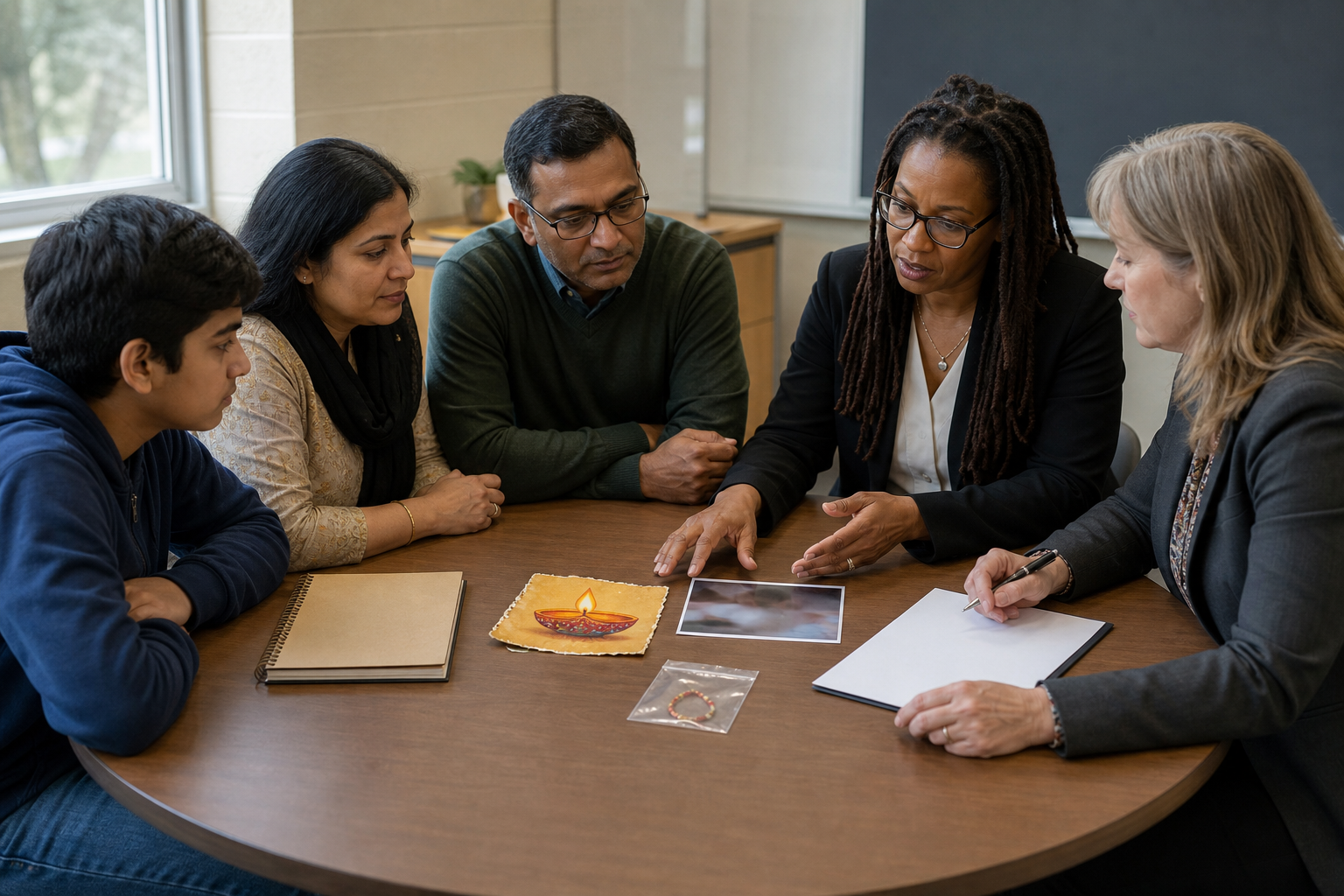
Hinduphobia is a useful civil-rights term when it identifies hostility, prejudice, intimidation, discrimination, or violence directed at people or institutions because they are Hindu or are perceived to be Hindu. It becomes less useful when applied to every disagreement involving India, Hindu philosophy, caste, history, or electoral politics.
Use five questions before applying the label:
- Who or what was targeted? Identify the person, temple, organisation, practice, symbol, or event.
- What was the conduct? Distinguish criticism from exclusion, unequal treatment, harassment, threats, vandalism, or violence.
- What connects the conduct to Hindu identity? Look for explicit statements, identity-based slurs, desecration of recognisable symbols, selective enforcement, or a documented pattern.
- What is the full context? Preserve the exchange before and after the disputed words. Context can strengthen a valid complaint or reveal that the initial interpretation was incomplete.
- What response fits the harm? Debate calls for a reasoned answer. Discrimination calls for institutional review. A specific threat calls for immediate safety action. Vandalism calls for evidence preservation and reporting.
The civil-rights rationale offered for Georgia Senate Bill 375 was deliberately narrow: document Hinduphobia alongside other forms of discrimination without creating new penalties or prohibiting criticism of a religion, country, or political leader. That distinction supplies a sound test for any proposed definition. It should help institutions recognise targeted harm, train staff, and record patterns without becoming a shield against legitimate scrutiny.
Historical memory matters because anti-Hindu hostility is not always expressed through sophisticated policy language. Reported “No Dots” signs in Forsyth County recalled the racialised hostility associated with the Dotbusters era. Temple vandalism, school bullying, workplace bias, and suspicion directed at ordinary civic participation can likewise target people through a mixture of religion, ethnicity, ancestry, and perceived foreignness.
When Hindu advocacy is dismissed as foreign-driven or extremist, ask for the specific conduct, evidence, and standard behind the label. Separate four questions that are often collapsed: a person’s religious identity, an organisation’s actual conduct, a view about Indian politics, and compliance with local law. Membership in a diaspora community is not evidence of disloyalty, and disagreement with an advocacy group does not justify adverse treatment of Hindus as a class.
Solidarity across Hindu, Buddhist, Jain, and Sikh communities can be valuable when stereotypes or attackers blur Dharmic identities. Solidarity should not erase their differences. Record the identity that was actually invoked, include each affected community in decisions about its own representation, and resist using one tradition merely as supporting evidence for another’s complaint.
Key takeaways
- Classify the event before choosing a remedy: access dispute, discriminatory treatment, threat or vandalism, political disagreement, or failure to implement an official direction.
- Preserve original evidence, a factual chronology, the written authority behind the decision, and proof that your complaint was received.
- For public observances, settle the exact site, route, timing, access conditions, chain of command, and escalation contacts before the gathering begins.
- Do not call every criticism Hinduphobia. Use the term where Hindu identity is connected to hostility, exclusion, intimidation, discrimination, vandalism, or violence.
- Keep protest peaceful and requests specific. The objective is not merely to express outrage; it is to secure safety, accountability, restored access, or a durable policy correction.
Your next move should fit on one page: the verified facts, the authority involved, the evidence preserved, the person who must decide, and the remedy requested. Send that page through the proper channel, retain proof of submission, and set a date to follow up. Disciplined civic action gives both dharma and civil rights their strongest public defence.
References
- DharmaRenaissance Blog — Madurai Erupts on Karthigai Deepam: Court Order Defied, Sacred Flame Halted Amid Clashes
- DharmaRenaissance Blog — Naming Hinduphobia: Why Clarity Protects Civil Rights and Strengthens Dharmic Unity
