

You wear a tilak to work, training, or school. An official tells you to remove it, but cannot immediately explain which rule it violates. Or a violent slogan is directed at Hindus, and people around you cannot agree whether to report it, answer it, or organize a protest.
In either situation, anger can make the next step less effective. A disciplined response does more: identify the exact problem, protect immediate safety, preserve evidence, demand a written decision, and use the channel suited to the remedy you need. This is how you defend Hindu religious expression without surrendering either dignity or the rule of law.
First classify the conflict, because the remedy changes

Not every dispute over religious identity is the same. Before you respond publicly, decide which of these situations you are actually facing:
- An accommodation dispute: A generally applicable uniform, appearance, safety, or scheduling rule conflicts with a sincere religious practice.
- Unequal treatment: Comparable secular or religious practices are permitted, but your Hindu practice is singled out, mocked, or subjected to an unexplained restriction.
- A safety incident: Someone makes an explicit threat, calls for physical harm, reveals private identifying information, or appears to be preparing an attack.
- A public grievance: A reported act of violence or discrimination calls for investigation, diplomatic engagement, institutional reform, or peaceful civic action.
These categories can overlap, but their first remedies differ. An accommodation request belongs with the institution able to modify a rule. A credible threat belongs with security personnel or law enforcement. A disputed public allegation requires verification and due process. A peaceful campaign needs a precise demand, responsible organizers, and safeguards against escalation.
Two mistakes are especially common. The first is assuming that a visible religious mark must automatically override every operational rule. The second is accepting an official’s assertion that a rule exists without asking what the rule says, who made the decision, and what concrete harm the practice would cause. The useful question is not whether a tilak looks unfamiliar. It is whether the institution can identify a genuine operational obstacle and whether a narrower accommodation can remove it.
That distinction changed the course of Second Lieutenant Harish Rao’s reported dispute in the US Army. Rao was removed from training and warned of possible deportation after wearing a tilak. A military chaplain assessed the practice, found no operational impediment, and helped secure his return. Rao completed training, earned leadership citations, and commissioned as an officer.
The practical lesson is larger than one military case. If the asserted harm is vague, ask for an assessment tied to function: protective equipment, hygiene, identification, uniformity, security, or another named requirement. If the concern is real, explore the least disruptive accommodation consistent with your practice. If no one can identify the harm, the restriction deserves closer review.
Keep jurisdictions separate. A US military accommodation process, an Indian constitutional dispute, and a protest concerning events in Bangladesh involve different laws and authorities. Do not cite a foreign outcome as though it automatically controls your case. Use it to frame the right questions, then obtain advice grounded in the rules that actually govern you.
Build an accommodation request that can be decided

If an employer, school, military command, public office, or other institution challenges your tilak, mala, religious dress, or observance, avoid turning the first conversation into a debate about the validity of Hinduism. Your immediate goal is to create an accurate record and give the proper decision-maker a clear request.
- Record the instruction precisely. Note the date, time, place, people present, the words used, and whether you were ordered to comply immediately. Keep relevant emails, messages, policy extracts, photographs, and witness names. Write facts before interpretations.
- Ask for the governing rule. Request the policy name, relevant provision, decision-maker, and review process. A supervisor’s preference and an adopted institutional rule are not necessarily the same thing.
- Describe the practice briefly. State what you wear or do, how frequently you observe it, and which elements are religiously important. You do not need to deliver a theological lecture, but the institution needs enough information to understand the request.
- Ask what operational problem has been identified. Request a specific explanation. Words such as professionalism, consistency, or safety are conclusions unless the official explains how the practice interferes with the work.
- Offer a narrow accommodation where conscience permits. Depending on the practice and setting, the discussion might concern size, placement, timing, interaction with protective equipment, or another practical detail. Do not offer a change you cannot sincerely accept merely to end an uncomfortable meeting.
- Use the designated channel. That may be a chaplain, human-resources office, religious-accommodation officer, equal-opportunity office, student-affairs office, union representative, grievance body, or commanding officer. Ask who has authority to approve the request rather than relying only on the person who first objected.
- Request the outcome in writing. A written approval should state its scope. A written refusal should identify the reason, policy, evidence considered, and appeal route. If the institution will not provide a formal answer, document that refusal in a calm follow-up message.
- Protect every deadline. Internal appeals and legal claims may have short or jurisdiction-specific time limits. Record when the decision was received and seek locally qualified advice promptly if serious consequences are possible.
A chaplain can be especially useful in a rules-driven institution. The role is not merely ceremonial. A competent chaplain can explain a religious commitment in operational language, identify the accommodation process, and help distinguish a mission requirement from unfamiliarity or bias. If no chaplain is available, look for the office responsible for conscience, equality, personnel policy, or formal grievances.
Immediate consequences require a higher level of caution. If you are threatened with detention, deportation, termination, expulsion, discharge, or a criminal allegation, do not sign a statement you do not understand or assume an informal assurance has resolved the matter. Ask for time to review the document and contact a lawyer qualified in the relevant jurisdiction and field. General information about religious freedom is not a substitute for advice on your individual legal position.
If compliance is demanded on the spot, assess safety and reversibility. You can state that you object, request a written direction, ask whether temporary accommodation is possible, and reserve your right to seek review. Whether to comply temporarily or refuse may carry employment, immigration, military, educational, or legal consequences. That decision should be made with qualified advice whenever time allows.
Treat violent threats as evidence, not content to amplify
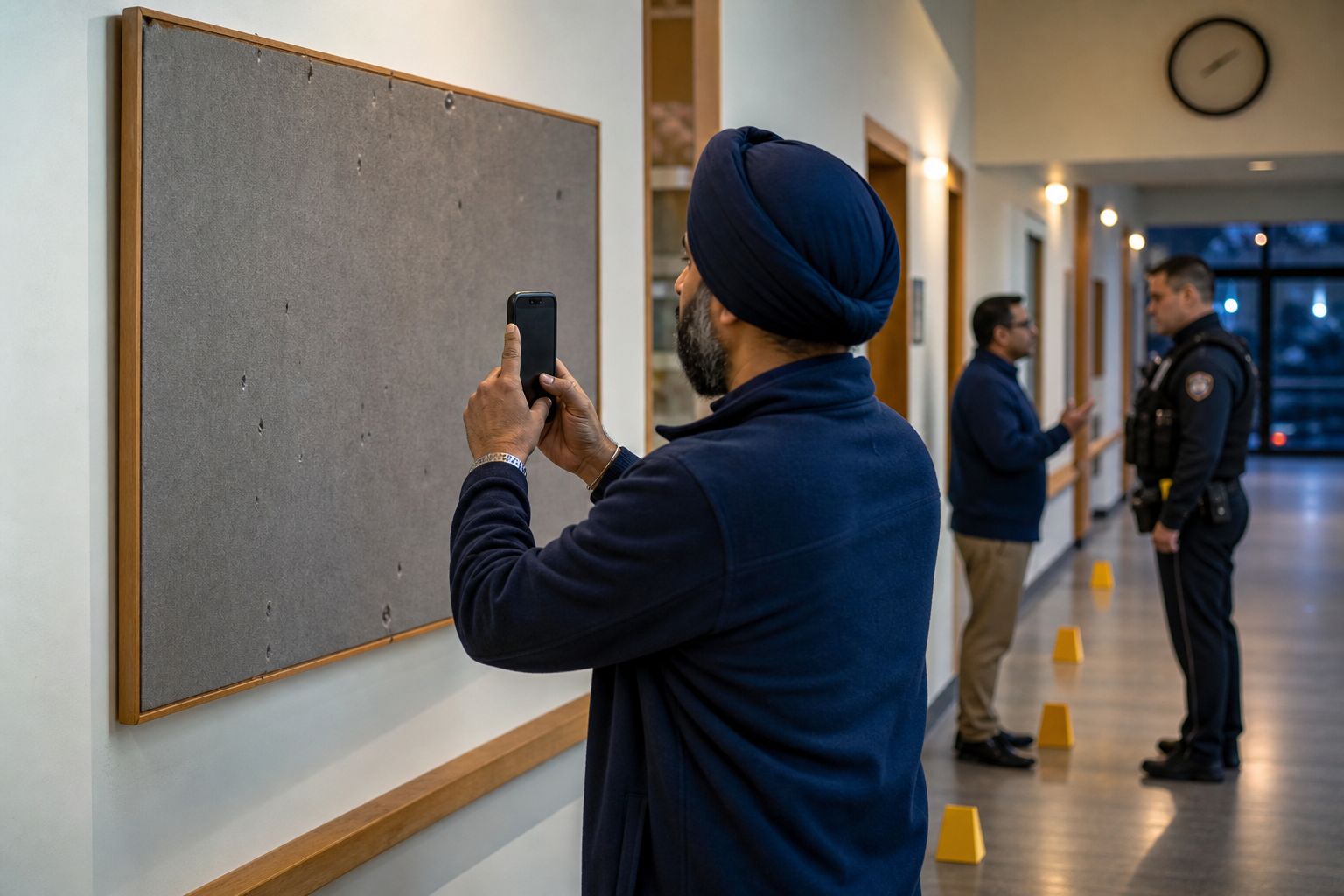
The rule of law requires two refusals at once. We should not normalize explicit incitement to violence, and we should not label every hostile opinion or religious insult a criminal threat. Collapsing those categories weakens genuine safety complaints and turns legal protection into partisan censorship.
In the Indian context, the Allahabad High Court concluded on December 21, 2025, that the slogan Sar Tan Se Juda constituted an offence against the State because it challenged India’s sovereignty and incited armed rebellion. The Court treated the language as violent provocation rather than ordinary disagreement protected without limit under Article 19(1)(a).
That conclusion belongs to a particular Indian legal setting. It should not be presented as a universal rule for every country, every use of the words, or every offensive statement. Context, intent, immediacy, applicable statutes, evidence, and judicial procedure matter. Let police, prosecutors, and courts determine criminal liability; your task is to preserve what happened without contaminating the evidence or provoking a second confrontation.
- Move to safety first. If danger appears immediate, leave the exposed location, alert people responsible for site security, and contact local emergency services. Do not remain nearby merely to collect a better recording.
- Preserve the original material. Save the exact words, account name, date, time, URL, message headers, and surrounding context. For an in-person incident, record the location, witnesses, identifying details, and sequence of events as soon as it is safe.
- Keep evidence separate from commentary. Retain unedited copies. If you annotate a screenshot or video for public explanation, preserve the original separately so investigators can assess it without your additions.
- Report to the authority suited to the risk. That may include police, an institutional security office, an employer or school, a venue operator, or the digital platform hosting the material. Ask for a complaint or reference number where the process provides one.
- Limit unnecessary circulation. Send evidence to people who can act on it. Reposting a threat to a large audience may spread the threatening message, reveal a target’s routine, trigger harassment, or make verification harder.
- Track what happens next. Keep copies of reports, names of officials contacted, promised actions, and follow-up dates. If the response is inadequate, the record will help a lawyer, oversight body, elected representative, or responsible community organization assess the next step.
Do not threaten back, publish an alleged offender’s private information, pressure witnesses to adopt a common account, or announce guilt before an investigation. Those acts can endanger innocent people, compromise a case, and expose you to legal consequences of your own.
Apply the same standard across communities. A call to kill Hindus is not redeemed by the speaker’s political or religious identity. A retaliatory call to harm Muslims, Christians, or anyone else is not redeemed by Hindu grief. Ahimsa does not mean ignoring danger. It means pursuing protection and accountability without reproducing the violence you oppose.
Turn community grief into disciplined public action
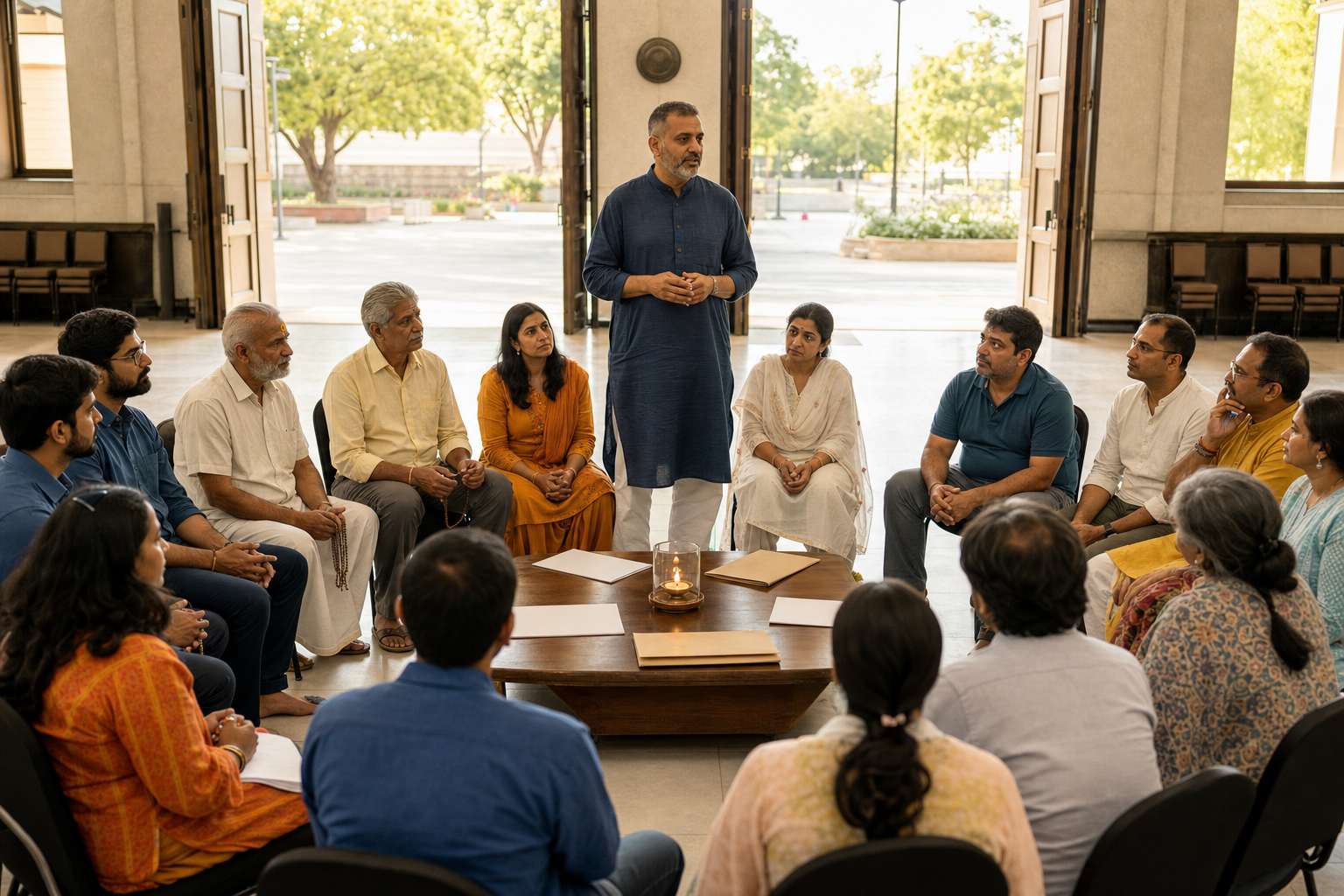
Public assembly can draw attention to a neglected case, but a crowd without a defined remedy can quickly become a vehicle for rumor or collective blame. Before announcing a demonstration, write one sentence that answers: what verified or clearly attributed event concerns us, which authority can act, and what action are we requesting?
A useful model emerged in Kolkata on December 22, 2025. Following reports that Hindu man Dipu Chandra Das had been killed in Mymensingh, demonstrators near the Bangladesh Deputy High Commission called for a transparent, time-bound investigation. The stated demands included impartial inquiry, sustained consular dialogue, human-rights monitoring, and public communication about investigative progress. Organizers also urged calm, lawful conduct, and freedom from communal polarization.
If you are organizing a similar response, build the event around accountability rather than an enemy image:
- Separate confirmed facts from reports. Use words such as reported, alleged, or unverified where the evidence requires them. Correct a false claim publicly rather than allowing it to remain useful because it supports your cause.
- Name the responsible authority. A demand should identify who can investigate, disclose progress, protect witnesses, conduct consular engagement, or review institutional failure.
- Request measurable process. Ask for an impartial investigation, a public point of contact, the next status milestone, and regular communication. Do not invent a deadline that the investigative process cannot responsibly meet, but do insist that the case not disappear into silence.
- Check local assembly requirements. Permits, routes, sound limits, public-safety rules, and restrictions near diplomatic premises differ by location. Confirm them before publishing logistical details.
- Set a conduct standard for speakers and participants. Reject violent slogans, collective blame, threats, doxxing, destruction, and speculation about guilt. Make this rule known before the event, not after a problem occurs.
- Assign responsibility. Designate organizers for liaison with authorities, crowd safety, factual verification, media communication, and de-escalation. Participants should know whom to approach if a provocation or medical emergency occurs.
- Protect the dignity of the victim and family. Do not circulate graphic imagery or private family information merely to intensify attention. Center the remedy the family and community need.
- Submit a written memorandum. Record the demands, authority addressed, date delivered, recipient, and promised follow-up. A demonstration creates attention; a documented process converts attention into an accountability trail.
Cross-border cases require particular discipline. A diplomatic mission can receive representations and support dialogue, but it does not replace the police, prosecutors, courts, or human-rights bodies with authority in the country where the alleged crime occurred. Direct each demand to the institution capable of fulfilling it.
Solidarity should widen the zone of safety. It should not expose unrelated neighbors, businesses, places of worship, or students to retaliation. A campaign that demands minority protection abroad while intimidating another minority at home defeats its own moral and civic case.
Key takeaways: firmness without lawlessness
- Classify the incident before choosing a remedy: accommodation dispute, unequal treatment, immediate threat, or public grievance.
- Ask which written rule applies, who made the decision, and what concrete operational harm the Hindu practice is said to cause.
- Describe the religious practice clearly, propose a workable accommodation where conscience permits, and request the outcome in writing.
- When violence is threatened, prioritize physical safety, preserve original evidence, report through the proper channel, and avoid unnecessary amplification.
- Build protests around verified facts, named authorities, specific remedies, lawful conduct, and documented follow-up.
- Demand the same protection from threats and collective punishment for every community. Consistency is what makes a rule-of-law argument credible.
Prepare before the next incident. Save a one-page protocol containing local emergency contacts, your institution’s accommodation and appeal channels, a qualified legal contact, an evidence checklist, and the name of a community spokesperson authorized to communicate verified facts. The middle of a confrontation is the worst time to invent a process.
You do not have to choose between visible Hindu identity and civic discipline. Insist on objective rules, proportionate accommodation, equal protection, truthful public speech, and nonviolent accountability. That combination protects the person facing the immediate conflict and strengthens the standard every dharmic community will need in the next one.
References
- DharmaRenaissance Blog — Chaplain’s Stand Saves Hindu US Army Officer: Tilak Dispute Exposes Gaps in Religious Freedom
- DharmaRenaissance Blog — Allahabad HC declares Sar Tan Se Juda an offence against the State, reinforcing unity and rule of law
- DharmaRenaissance Blog — Grief and Solidarity in Kolkata: Protest Near Bangladesh Mission After Mymensingh Killing
