
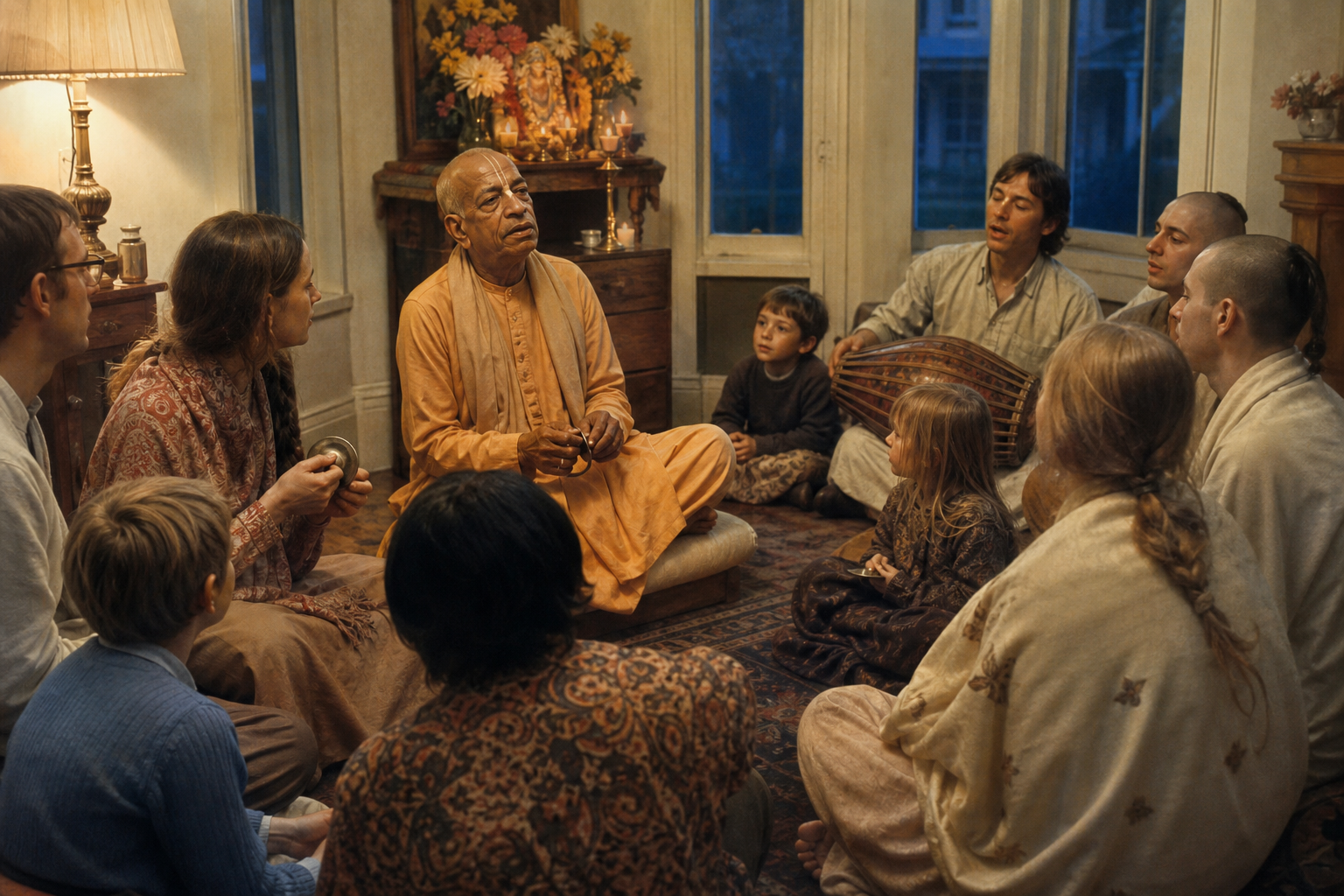
If you are trying to honour Srila Prabhupada – in your own practice, a family programme, a temple commemoration or a cultural project – the easiest mistake is to preserve the appearance of his mission while missing its method. Photographs, anniversaries and performances have value, but they become legacy only when they lead someone toward hearing, remembrance, devotion and service.
His enduring achievement was not simply that Krishna-bhakti crossed an ocean. It was that an ancient and exacting tradition became practicable in unfamiliar surroundings without concealing its identity. That gives you a clear standard for judging anything done in his name: does it help a person encounter Krishna-bhakti, understand it, practise it and eventually serve others through it?
Key takeaways: how the legacy works
- Srila Prabhupada joined fidelity to Gaudiya Vaishnavism with humility toward the people he hoped to reach. Neither element is optional.
- The Hare Krishna mantra was presented as a practice of devotion and remembrance, not merely as a cultural performance or identifying slogan.
- Clear analogies made metaphysical teaching memorable without requiring the philosophy to be diluted.
- Devotional music, drama and collaborative service turned sacred narratives into a culture people could inhabit together.
- Respect for Buddhism, Jainism and Sikhism is strongest when shared dharmic disciplines are recognised without pretending that the traditions are interchangeable.
- You preserve the legacy best by linking practice, teaching, cultural expression and seva rather than treating them as separate activities.
The Boston arrival reveals the governing principle
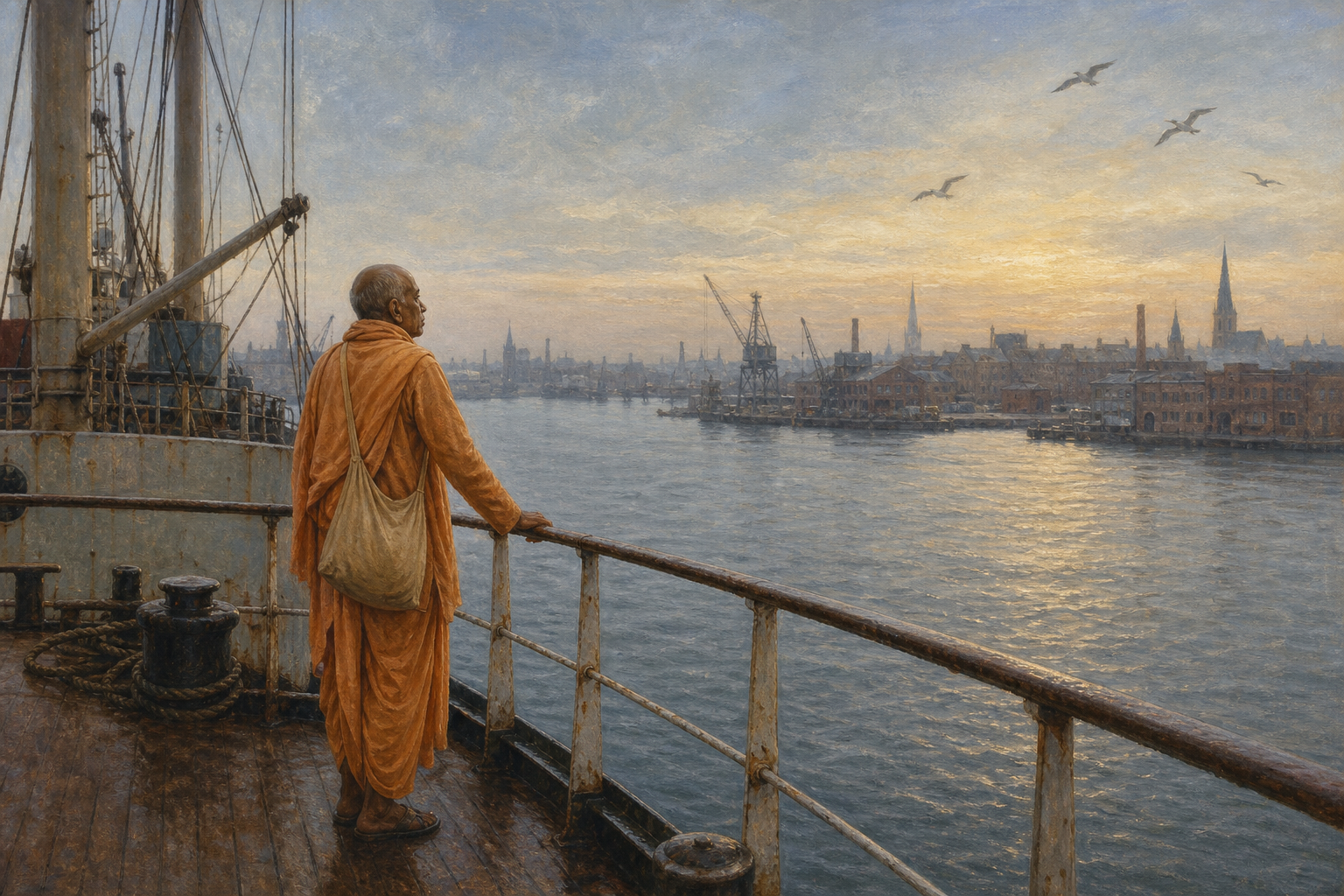
On September 17, 1965, a seventy-year-old Indian sannyasi reached Commonwealth Pier in Boston after crossing the ocean as the sole passenger aboard the cargo ship Jaladuta. His passage had been extended by the Scindia Steamship Company, and his purpose arose from the instruction of his spiritual master: carry Krishna-bhakti beyond the society in which it had long flourished. The circumstances of that arrival in Boston matter because they expose the inner architecture of the mission.
Srila Prabhupada did not approach the task as though spiritual truth depended on his personal force. His prayer aboard the Jaladuta placed the possibility of success in divine mercy and the potency of the holy name:
I have no devotion, nor do I have any knowledge, but I have strong faith in the holy name of Krsna.
Srila Prabhupada, aboard the Jaladuta
This humility should not be mistaken for uncertainty about the tradition. He was humble about his own qualification while remaining firm about Krishna, guru and the holy name. That distinction is essential. Confidence without humility turns outreach into self-assertion; humility without conviction turns it into vague goodwill. His example holds the two together.
If you teach this history, do not reduce it to an inspiring travel story. Ask what actually governed the journey. The motive was service to guru. The means was accessible devotional practice. The posture toward new listeners was compassionate invitation. The source of confidence was not cultural prestige but faith in Krishna’s mercy.
That pattern also helps you distinguish adaptation from dilution. Adaptation changes the doorway so that a new listener can enter: familiar language, an intelligible analogy, public chanting or a dramatic presentation. Dilution removes what the doorway is meant to reveal. If Krishna, devotion, disciplined practice and the teacher-disciple relationship disappear, cultural accessibility has ceased to serve transmission.
A living legacy has three mutually supporting forms
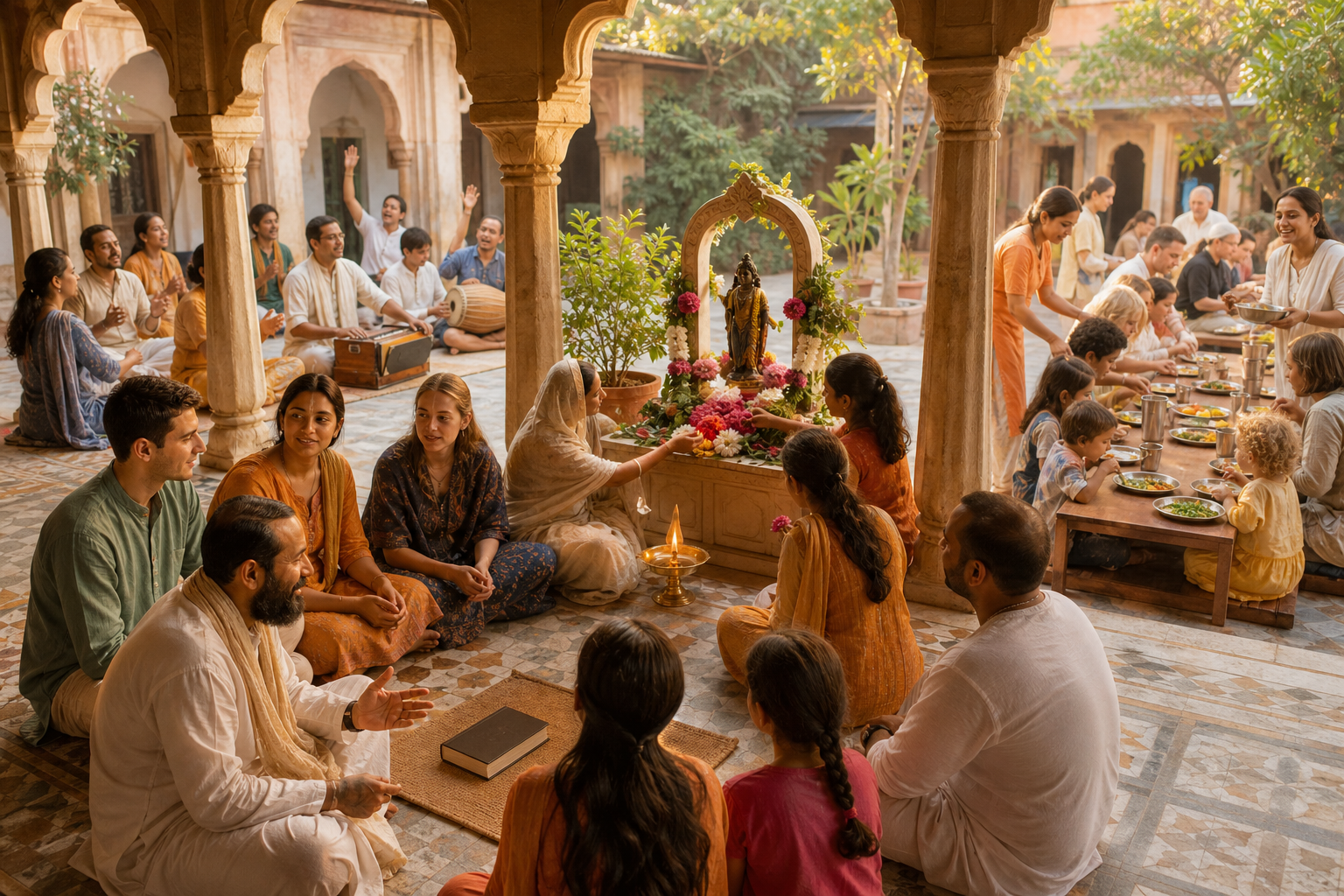
Srila Prabhupada’s legacy is easiest to understand as a relationship among devotional practice, intelligible teaching and participatory culture. Each corrects a weakness in the others. Practice without understanding can become mechanical. Philosophy without practice can remain cerebral. Culture without either can become spectacle.
The holy name makes theology practicable
The Hare Krishna mantra stood at the centre of the mission because sacred sound was both theological and practical. Chanting gives the mind an object of remembrance, gives a community a practice it can share and allows a newcomer to participate before mastering a large philosophical vocabulary. It does not replace philosophy; it opens a lived route into it.
This is why the mantra should not be treated as background music at an otherwise secular cultural event. If you organise kirtan, make room for attentive participation. Explain briefly that the sound is an act of devotion and remembrance. Let the chanting carry the gathering instead of crowding it between announcements. The purpose is not merely to make people feel that they have encountered something Indian. It is to let them encounter a practice directed toward Krishna.
The same principle applies privately. Attach japa or attentive chanting to a stable point in your day, protect that time from casual interruption and notice whether the practice is shaping how you speak and serve afterward. The legacy is not preserved by possessing beads or knowing devotional vocabulary. It is preserved when remembrance becomes regular enough to influence conduct.
Analogies let difficult teachings enter ordinary thought
Srila Prabhupada repeatedly moved between metaphysical principles and everyday images. A collection of more than 175 analogies attributed to him draws from the Srimad Bhagavatam, Bhagavad-Gita As It Is, Teachings of Queen Kunti, Teachings of Lord Kapila, Life Comes from Life and Path of Perfection. Their range shows how ordinary comparisons can clarify body and self, desire, time, death, transformation and devotion.
Consider the body as an apartment and the embodied self as its tenant. The comparison gives a listener an immediate distinction between dwelling and dweller. Or consider iron placed in fire: it takes on the qualities of fire, making spiritual transformation easier to imagine. These comparisons are useful because they give abstract teaching a structure the mind can retain.
A good teacher does not stop at the image. Use a simple sequence: state the principle, offer the analogy, identify the point of correspondence and return to the principle. You can also name where the comparison ends. The self is not literally a renter, and spiritual transformation is not a metallurgical process. An analogy illuminates one relationship; it does not become a substitute for the full teaching.
This method is especially valuable with young people and first-time listeners. Instead of beginning with a dense chain of specialised terms, begin with an experience they already recognise. Then supply the Sanskrit term and its theological setting. Accessibility should help the listener grow into the tradition’s language, not permanently shield the listener from it.
Sacred performance turns spectators into participants
Devotional culture adds sound, movement, story, memory and shared labour to verbal instruction. At ISKCON Vrindavan Cultural Theatre, carefully composed dialogue, expressive acting and devotional music present Krishna’s leelas as occasions for sravanam, hearing, and smaranam, remembrance. The theatre therefore functions as more than entertainment: it is a performative form of contemplation and cultural transmission.
The work behind the stage is part of the inheritance. Music, choreography, acting, stagecraft and organisation create distinct openings for seva. A person who is not ready to lecture may be ready to sew a costume, rehearse music, manage props or help an audience understand the narrative. Participation gives cultural preservation a devotional centre and allows skills to pass between generations.
If you organise a drama, keep the contemplative purpose visible. Give the audience enough context to know which pastime is being portrayed. Avoid interrupting the devotional atmosphere with excessive explanation. Afterward, invite reflection on a particular action, relationship or choice in the narrative. This helps the audience move from visual impression to remembrance.
Families can apply the same principle without a formal theatre. Read a sacred episode aloud, assign voices, add a simple song and let children help prepare the space. The scale is secondary. What matters is that sacred narrative becomes something the household hears, enacts and remembers together rather than material encountered only through a screen.
Test preservation by what it enables, not what it displays
A legacy project can look impressive and still fail to transmit much. Before approving a programme, exhibition, course or performance, ask what a participant will actually be able to do afterward. The following distinctions make that assessment more concrete.
| When preservation goes wrong | What you will notice | What to change |
|---|---|---|
| Museum preservation | Objects, dates and personalities are displayed, but no devotional practice is offered. | Connect the history to chanting, hearing, study or a defined opportunity for seva. |
| Brand preservation | Srila Prabhupada’s name and image are prominent, but his governing principles do not shape the programme. | Make fidelity, humility, clear teaching and service visible in the design of the event. |
| Vocabulary without communication | Specialised terms accumulate faster than listeners can understand them. | Define the term, use one accurate analogy and then return to the scriptural idea. |
| Culture as spectacle | Music or drama attracts attention but leaves no space for hearing and remembrance. | Frame the sacred subject clearly and protect the contemplative rhythm of the presentation. |
| Generic spirituality | Krishna-bhakti is hidden in an attempt to make the message universally acceptable. | Name the Gaudiya Vaishnava foundation while welcoming people to approach it freely. |
| Sectarian isolation | Fidelity is expressed by dismissing neighbouring dharmic traditions. | State the theological identity precisely and recognise shared disciplines without claiming sameness. |
The final distinction deserves care. Hindu, Buddhist, Jain and Sikh traditions share a civilizational regard for disciplined remembrance, ethical restraint, compassion and service. Japa, the Namokar mantra and naam simran also show the importance that dharmic paths place upon sacred or contemplative repetition. These family resemblances offer real ground for respect.
Respect does not require flattening theological differences. Srila Prabhupada’s mission was specifically rooted in Krishna-bhakti and Gaudiya Vaishnavism. Presenting it as generic meditation would weaken both historical accuracy and devotional integrity. A better form of dharmic solidarity says: these traditions are not identical, yet they can recognise one another’s disciplines and defend the civilizational space in which distinct paths can flourish.
You can apply this balance in an inter-dharmic gathering. Name the practice and its lineage. Explain its intended devotional meaning. Then identify a shared ethical or contemplative concern without claiming a shared theology. That sequence creates hospitality without asking anyone to surrender precision.
Carry the legacy forward through a complete chain
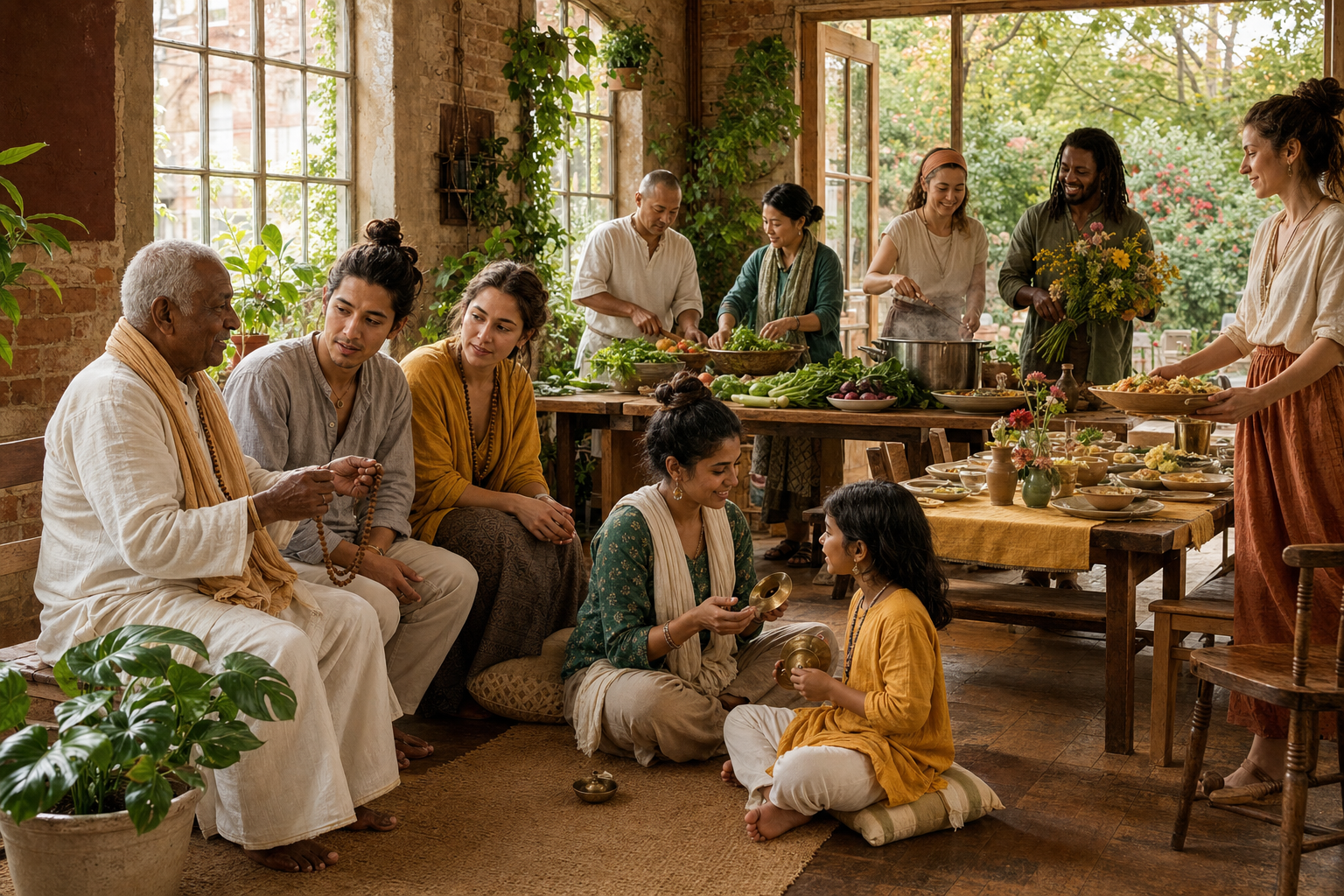
You do not need to reproduce the outward conditions of 1965 to inherit Srila Prabhupada’s governing pattern. You need a chain in which personal practice leads to understanding, understanding becomes communication, communication invites participation and participation matures into service.
- Anchor one devotional practice. Give chanting or attentive hearing a reliable place in your routine. Choose a cue you already observe, remove avoidable distractions and treat regularity as more important than display.
- Study one theme deeply enough to explain it. Body and self, the discipline of desire, death, devotion or spiritual transformation can each provide a coherent starting point. Stay with the theme until you can state its central distinction plainly.
- Use an analogy as a bridge. Select an everyday image that clarifies the principle. Explain exactly what it reveals, acknowledge where the comparison ends and guide the listener back to the teaching.
- Give the teaching a cultural form. Kirtan, recitation, drama, music or a family reading can help an idea become memorable. Choose the form according to the people present, but keep its devotional object explicit.
- Create a real role for service. Let participants help with preparation, music, hospitality, stagecraft, teaching or follow-up. Service changes a gathering from something consumed into something jointly sustained.
- Review the fruit. Ask whether the activity increased attentive hearing, remembrance, humility, understanding and willingness to serve. If it produced excitement without any of these, adjust the structure rather than merely enlarging the event.
This chain also gives parents and educators a practical safeguard. Do not ask a young person only to admire Srila Prabhupada. Let the person chant, ask a difficult question, test an analogy, take a role in a performance and complete a useful service. Reverence becomes durable when it acquires practice, understanding and responsibility.
Choose the weakest link in your own setting and strengthen it next. If you have philosophy but little shared practice, make room for chanting. If you have lively festivals but thin explanation, prepare one clear teaching. If you have regular audiences but few participants, offer specific forms of seva. That is how a historical inheritance remains a living culture: not by repeating the past’s surface, but by carrying its devotional purpose into the next person’s life.
References
- DharmaRenaissance Blog – Srila Prabhupada’s Boston Arrival: The Hare Krsna Mantra and a Historic Mission of Compassion
- DharmaRenaissance Blog – Timeless Analogies that Illuminate Dharma: Powerful Insights from the Bhagavatam and Gita
- DharmaRenaissance Blog – Immersive Devotional Dramas at ISKCON Vrindavan: Srila Prabhupada’s Living Legacy
