You may welcome the idea of a civilizational bond between Hindu and indigenous traditions yet still hesitate over the language used to describe it. Does calling an indigenous faith the mother of Hindutva honour a living inheritance, or quietly absorb that inheritance into a larger identity? In Manipur, where ritual belonging is layered and politically sensitive, the answer cannot rest on a slogan.
You can judge the claim by what follows it. Plural Hindutva becomes credible when communities retain their names, custodians control their traditions, similarities do not erase differences, and shared belonging produces service chosen by local people. The practical test is not whether everyone accepts one label. It is whether unity enlarges community agency.
What the mother metaphor should require
Indigenous faith is the mother of Hindutva.
Rajesh Deshkar, Seva Pramukh of RSS Assam Kshetra, speaking at a Sangh training camp in Manipur
This sentence can carry either humility or appropriation. In its more generous sense, it recognises that civilizational values do not descend from a single institution or textual stream. They grow through local relationships among people, ancestors, land, duty, worship, memory, and mutual care. Indigenous traditions are then treated as formative participants in the civilization, not as isolated remnants outside it.
But the metaphor is not a completed historical argument. It supplies no dates, lines of transmission, or textual genealogy. It cannot by itself prove that every indigenous tradition is a branch of Hinduism, nor can it settle how every practitioner wishes to be identified. Asking the metaphor to do that work turns a possible expression of gratitude into a claim of ownership.
A better reading turns motherhood into obligation. If an indigenous faith is called a mother, it cannot be left anonymous. It must be known by its own name. Its living custodians must be heard. Its ritual boundaries must be respected. Its knowledge cannot become somebody else’s unrestricted cultural property. Above all, the relationship must benefit the people carrying the inheritance rather than merely decorating a broader narrative.
For this purpose, plural Hindutva means civilizational belonging spacious enough to accommodate more than one ritual authority, theological vocabulary, and community identity. It does not require every participant to describe that belonging in the same terms. The dharmic ideals of Sarva Dharma Sambhava and Vasudhaiva Kutumbakam can support such a relationship, but only when they discipline power as well as express goodwill. Equal regard is not permission to speak for another path. Calling the world a family does not give distant relatives control over the household shrine.
Manipur is already layered, not waiting to be unified
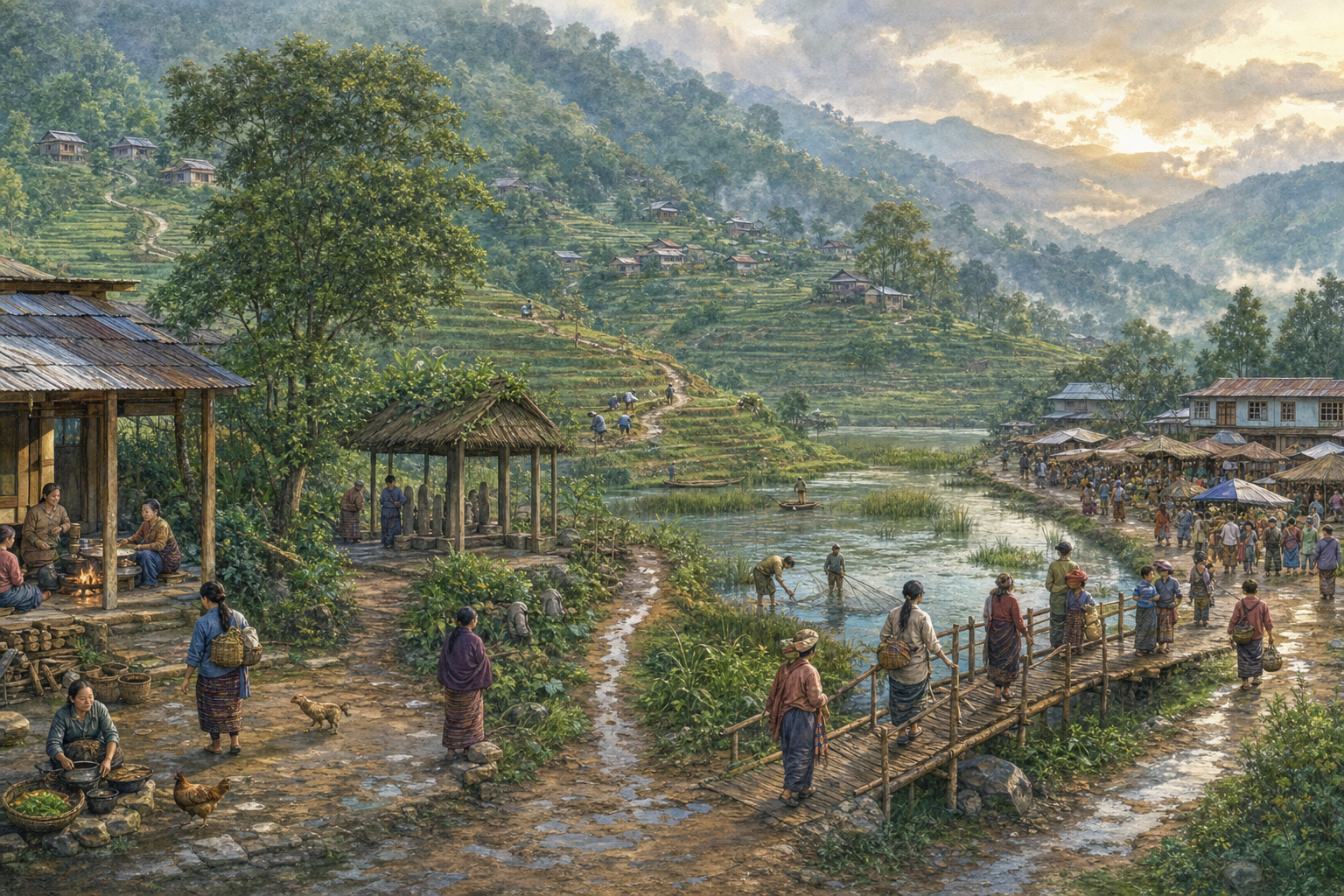
Manipur’s religious life resists neat either-or categories. Many Meitei households maintain Sanamahi traditions alongside Vaishnavite practices. That coexistence is not a defect requiring an administrative solution. It is part of the region’s lived religious history.
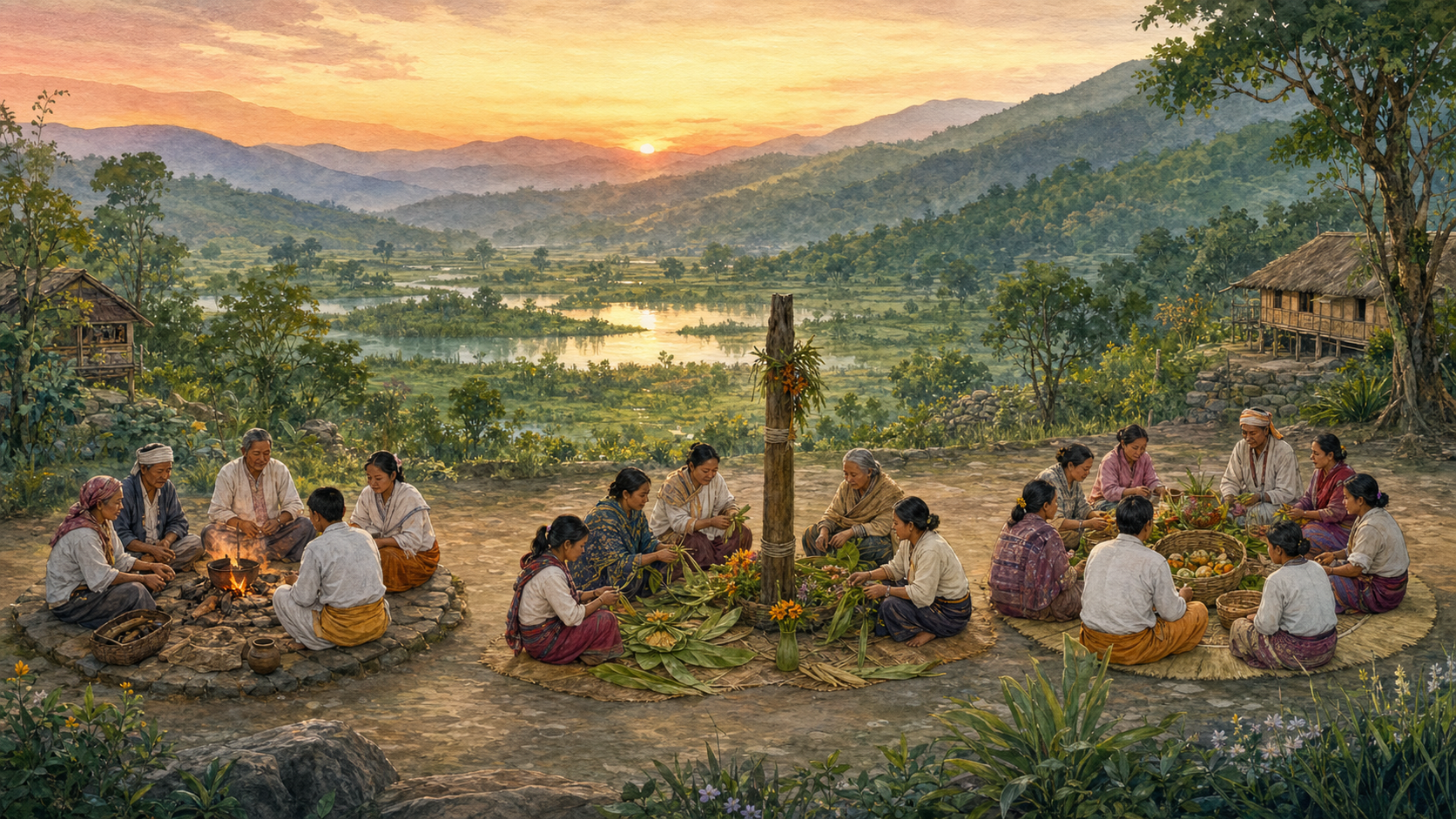
Lai Haraoba carries ritual memory, ecological awareness, and relationships among community, place, and inherited obligation. Manipur’s sankirtana tradition displays another dimension of the same layered landscape: a devotional form of great aesthetic and spiritual depth that has received recognition beyond the region. These currents can coexist and interact without becoming interchangeable.
When you encounter a family, festival, or institution that participates in more than one tradition, separate four questions before reaching a conclusion:
- What is practised? Identify the shrine, rite, festival, prayer, seasonal observance, or ethical discipline actually being maintained.
- How do practitioners name it? Use the community’s current term rather than replacing it with a category chosen for civilizational convenience.
- Who has ritual authority? Find out who determines protocol, access, transmission, and correction when the tradition is misrepresented.
- Where does cooperation begin? Shared service, environmental care, public celebration, and ethical dialogue can unite people without forcing agreement about ultimate identity.
This distinction matters because practice, identity, heritage, and civic solidarity operate at different levels. A household can participate in Sanamahi and Vaishnavite observances without issuing a philosophical declaration about whether the two are identical. A community can cooperate with a Hindu organization without surrendering its own custodial authority. A shared ethical vocabulary can exist without a single institutional centre.
The same restraint applies across the wider Northeast. Bathou among Bodos, Donyi-Polo among Tani communities, Seng Khasi and Niamtre in Meghalaya, and Heraka among Zeliangrong communities are living traditions with their own names, memories, authorities, and relationships to place. Their affinities with dharmic ideas can open dialogue about nature, balance, right conduct, ancestry, and service. An affinity is a meeting point, however, not proof that two identities are the same. Use analogy as a bridge, not as a boundary survey.
Five boundaries keep plural unity from becoming absorption
Good intentions are not enough because cultural harm often begins with an apparently friendly shortcut: an outsider supplies the name, records the ritual, publishes the interpretation, and decides how the material will be reused. By the time a community objects, its words, images, or sacred geography may already be circulating beyond its control.
Article 25 of the Constitution protects freedom of conscience and the right to profess and practise religion. Parts of the Northeast also have special arrangements connected with customary law and local self-governance. These protections establish an essential floor, but legality alone does not provide the etiquette of a respectful civilizational relationship. A plural initiative should pass five additional tests:
- Self-naming: Put the community’s chosen name first. Do not describe a tradition solely as a local version, surviving fragment, tribal form, or precursor of something larger unless its practitioners use that description themselves.
- Custodial authority: Identify who may interpret a rite, approve access to sacred places, teach restricted knowledge, or correct an inaccurate representation. Public visibility does not abolish custodianship.
- Informed consent: Before recording songs, photographing rites, digitising stories, designing curricula, or promoting heritage tourism, explain the intended audience, storage, reuse, revenue, and withdrawal process. Treat free, prior, and informed consent as a working ethical standard rather than a signature collected after decisions have been made.
- Reciprocity: Specify what returns to the community. That might be locally controlled archives, school materials in the relevant language, paid roles for custodians, support for apprentices, environmental restoration, or a community-approved share of tourism benefits.
- Remedy: Give people a clear route to challenge mistranslation, unauthorised reuse, false attribution, or exclusion from decision-making. A grievance process needs a named contact, a response procedure, and the ability to correct or remove material.
These boundaries do not weaken Hindu-indigenous solidarity. They make solidarity durable. A community is more likely to share knowledge when it knows that a sacred song will not become an uncredited performance asset, a traditional design will not be detached from its makers, and a shrine will not be advertised without permission.
Language offers an immediate test. Use phrases such as “in dialogue with,” “sharing an ethical concern with,” or “participating in a wider civilizational conversation” when identity remains contested or undefined. Use “part of” only when the relevant practitioners accept that relationship. If people decline the wider label, pluralism requires you to preserve cooperation without punishing that refusal.
Seva is where a civilizational claim becomes accountable
Shared ancestry and ethical kinship are difficult to verify through speeches. Service is more revealing because it places decisions, resources, and responsibility in public view. RSS engagement in the Northeast has emphasised seva, grassroots organization, and cultural outreach, while training camps commonly join physical discipline, bauddhik sessions, and a service orientation. The important question for any such effort is not whether seva appears in its vocabulary. It is whether local communities help choose, govern, and evaluate the work.
Build service around a locally chosen result
A practical partnership can be designed in five moves:
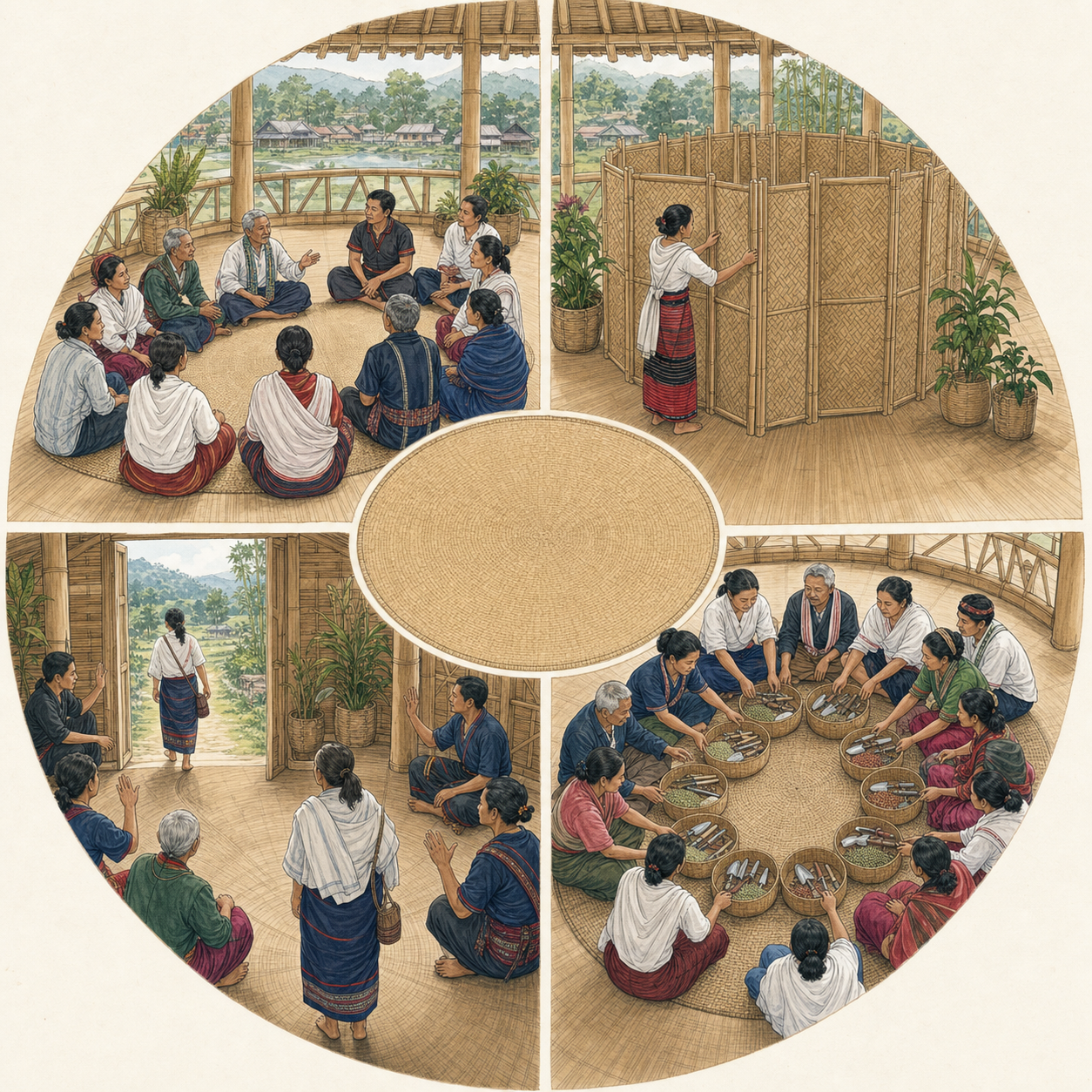
- Listen before announcing a project. Speak with local councils, women’s groups, youth associations, and the people expected to maintain the result. Separate meetings can expose priorities that a single ceremonial gathering hides.
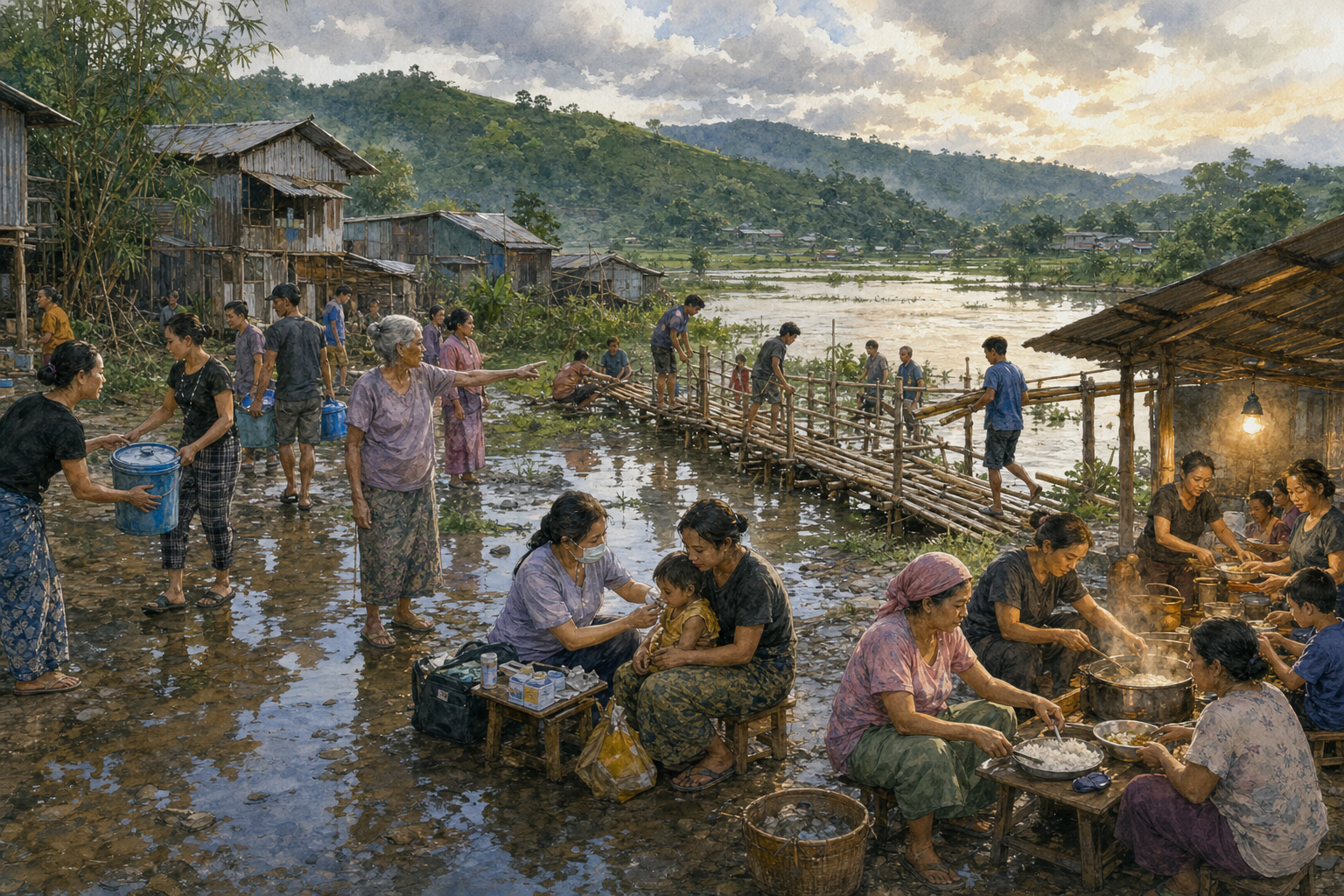
- Select one defined need. Community priorities already identified in the region include maternal health, adolescent nutrition, disaster preparedness, watershed management, education support, and skills. Choose a tractable outcome instead of attaching a broad cultural message to several unrelated activities.
- Assign decision rights. Record who approves the design, chooses participants, handles funds or materials, protects sensitive information, and can pause the work. Consultation without decision-making power is not co-creation.
- Agree on evidence of completion. Define the deliverable in ordinary terms: a locally maintained preparedness plan, a functioning water intervention, a completed training cycle, or learning material approved for use by a named community body.
- Plan the handoff at the beginning. Name the local owner, maintenance responsibility, review date, and grievance contact before publicising the partnership. This prevents a short service event from leaving a long obligation with people who never accepted it.
Do not make acceptance of a theological or political label the hidden price of participation. Seva becomes a bridge precisely when assistance, work, and responsibility can be shared by people who retain different accounts of their spiritual identity.
Let heritage projects preserve control as well as content
Documentation requires a different design. Songs, stories, kinship terms, festival knowledge, ecological practices, and ritual memory can disappear when transmission breaks. Yet an archive that removes control from custodians can create a second loss. The material survives, but the community loses authority over its meaning and use.
Start by asking the community to divide material into access levels: public, community-only, restricted to authorised practitioners, or not to be recorded. Store the original language alongside any translation. Record who supplied and approved each item. Set community-agreed rules for quotation, performance, commercial reuse, and removal. If material enters a school curriculum, local custodians should review both the selection and the explanation surrounding it.
Heritage tourism needs the same discipline. Decide who may enter a site, what may be photographed, who explains the tradition, how visitors behave, and where financial benefits go. A sacred geography is not simply an undeveloped attraction. Keeping sensitive locations out of public maps may be part of preserving them.
Youth participation can connect preservation with present needs. Training in cultural translation, conflict resolution, and environmental stewardship allows younger people to carry inherited knowledge into watershed protection, disaster readiness, local crafts, and other practical work. The goal is not to turn ritual into a development slogan. It is to let cultural confidence and civic competence reinforce each other.
How to judge the next claim of plural Hindutva
You may encounter the language of civilizational unity in a speech, training camp, school programme, service initiative, exhibition, or heritage proposal. Do not judge it only by whether the language sounds inclusive. Look for evidence that inclusion has altered who gets to name, decide, benefit, and object.
Key takeaways
- Ask for the community’s own name. A generic label such as indigenous, tribal, or folk cannot replace Sanamahi or another tradition’s chosen identity.
- Distinguish relationship from sameness. Shared ideas about duty, non-harm, nature, compassion, or service can support cooperation without proving a single theology.
- Find the custodians. An initiative is not community-led merely because community members attended its launch.
- Check consent and reuse rules. Approval to witness a rite is not automatically permission to record, publish, teach, perform, or commercialise it.
- Follow the benefit. Service and heritage work should answer a locally chosen need and leave a result the community can own or maintain.
- Look for a route to correction. Pluralism must remain visible when a local body rejects a label, challenges an interpretation, or asks for material to be changed.
- Reject compulsory unity. If cooperation depends on accepting a broader identity, the arrangement has moved from relationship to absorption.
Before you endorse, share, fund, or organise the next initiative, ask for five concrete items: the community’s chosen name, its recognised custodians, the consent and reuse terms, the locally selected outcome, and the grievance contact. If one is missing, request it before proceeding. If all five are present, revisit them when the work changes rather than treating the first approval as permanent.
That discipline gives the mother metaphor a worthy future. Manipur does not need unity purchased by silence about difference. It needs relationships in which Sanamahi and other indigenous traditions can speak in their own voices, meet wider dharmic currents without compulsion, and join common work without surrendering the keys to their inheritance.