
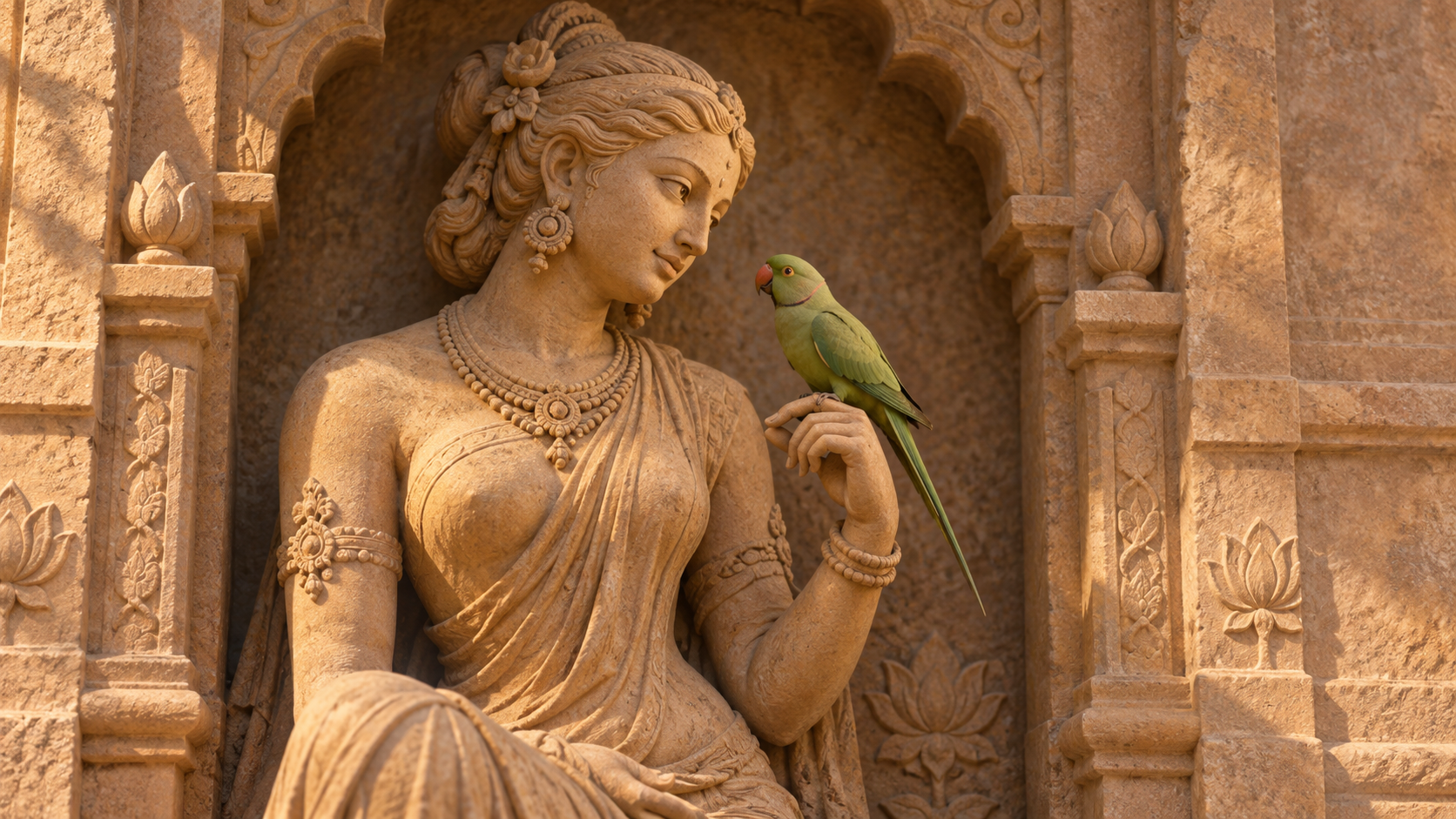
You notice a small bird beside a deity in a temple carving. Is it ornamental, an identifying emblem, an attendant, or part of a larger story? If the bird is a parrot, treating it as background decoration can make you miss one of the image’s most revealing details.
The sacred parrot, or shuka, asks you to read divine imagery relationally. It is alive, responsive, and close to the sacred figure. That makes it fundamentally different from an implement held for action. A careful reading begins with that distinction and then works outward from what you can actually see.
First, stop assuming that every ayudha is a weapon
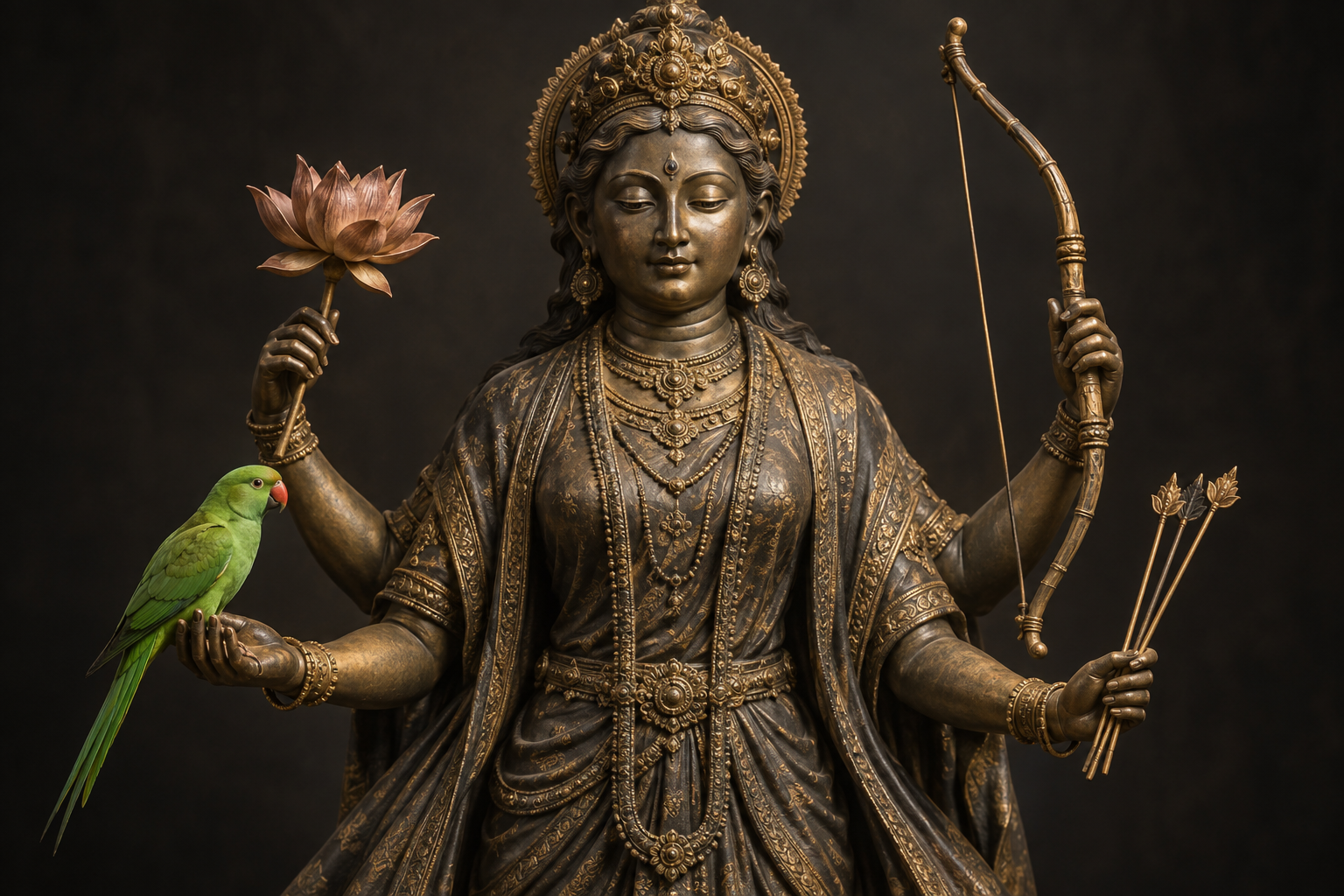
The Sanskrit term ayudha can lead an English-speaking viewer toward the narrow idea of a weapon. Hindu sculptural vocabulary is broader. A divine figure may be identified through implements, emblems, living companions, and attendant forms. The shuka belongs to the animate or attendant class of attributes: it is a living creature rather than an instrument of combat.
This distinction changes the question you should ask. With a weapon, you might begin with power, protection, or the defeat of disorder. With a parrot, begin with relationship. Why is a living being placed so near the deity? Is it resting in the hand, turning toward the figure, or occupying a carefully balanced position in the composition? The image presents not only something the deity possesses, but a creature within the deity’s sphere of presence.
That does not make the shuka insignificant or merely charming. Gentleness can carry theological weight. An animate attribute can communicate affinity with life in a way that a blade, staff, or ritual object cannot. Notice that contrast before assigning a more elaborate symbolic meaning.
Read the parrot’s relationship to the divine figure
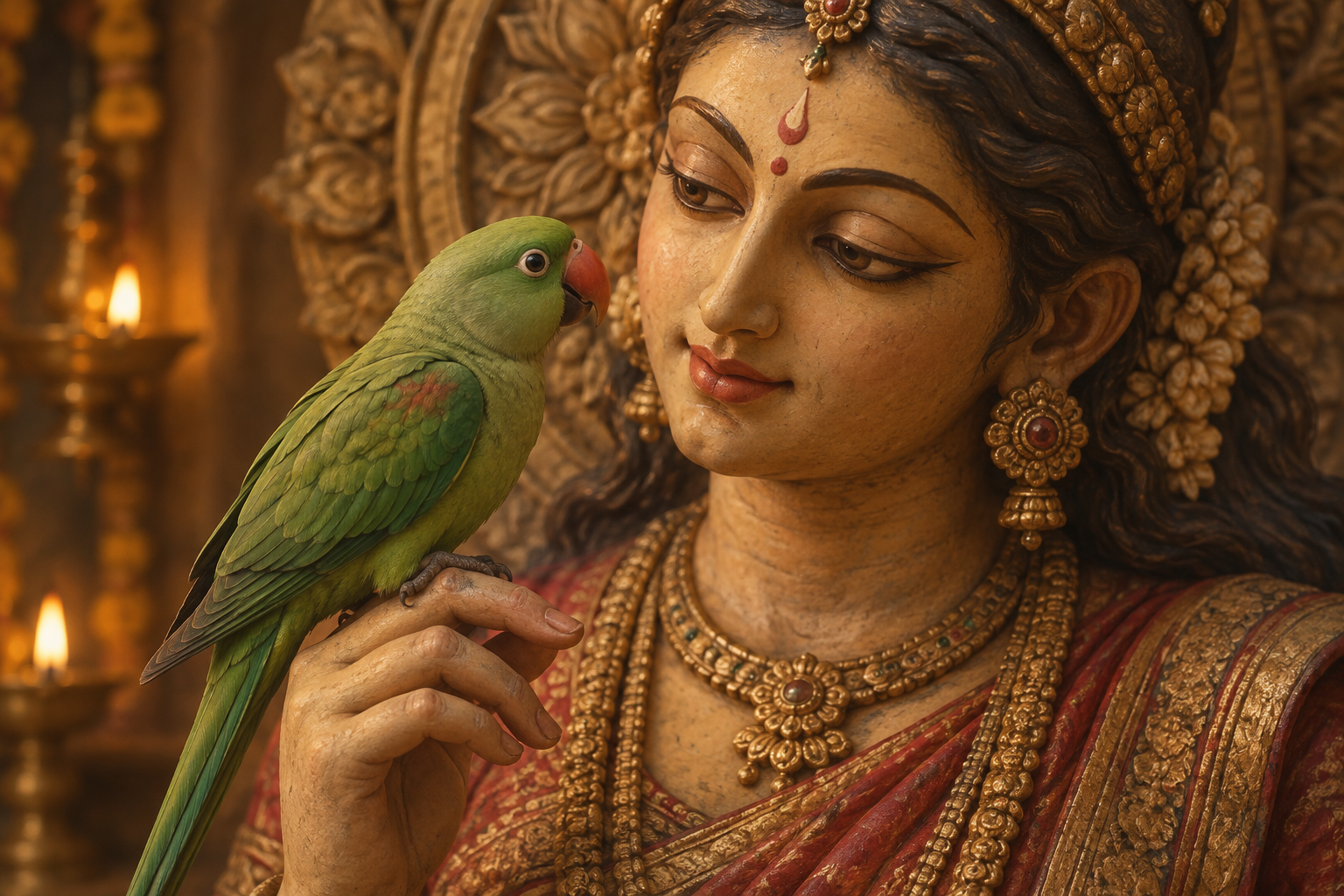
A sacred attribute does not function in isolation. Its position, scale, and contact with the principal figure tell you how it participates in the image. Even when you do not yet know the local tradition, these visual facts give you a disciplined starting point.
- Look at the contact point. A bird perched on a hand has a different relationship from one carved below the figure or placed at the edge of a panel.
- Follow its orientation. A shuka turned toward the deity creates a visual exchange. One turned outward may help connect the central figure with the surrounding space.
- Compare its scale. A small attribute can still be iconographically decisive. Do not equate physical size with importance.
- Check the other hands and attributes. The shuka is one part of an identifying arrangement. Read the whole figure before drawing a conclusion from the bird alone.
- Inspect the condition of the image. A damaged beak, tail, hand, or perch can obscure the original relationship. Record uncertainty instead of silently reconstructing what is missing.
Color can help in a painting or a well-preserved polychrome image, but it should not be your first test. Stone sculpture may have lost surface color, and later repainting may not preserve the original scheme. Form and placement are usually the safer evidence: examine the beak, tail, body, feet, and manner of perching before using color to identify the bird.
Separate identification from interpretation
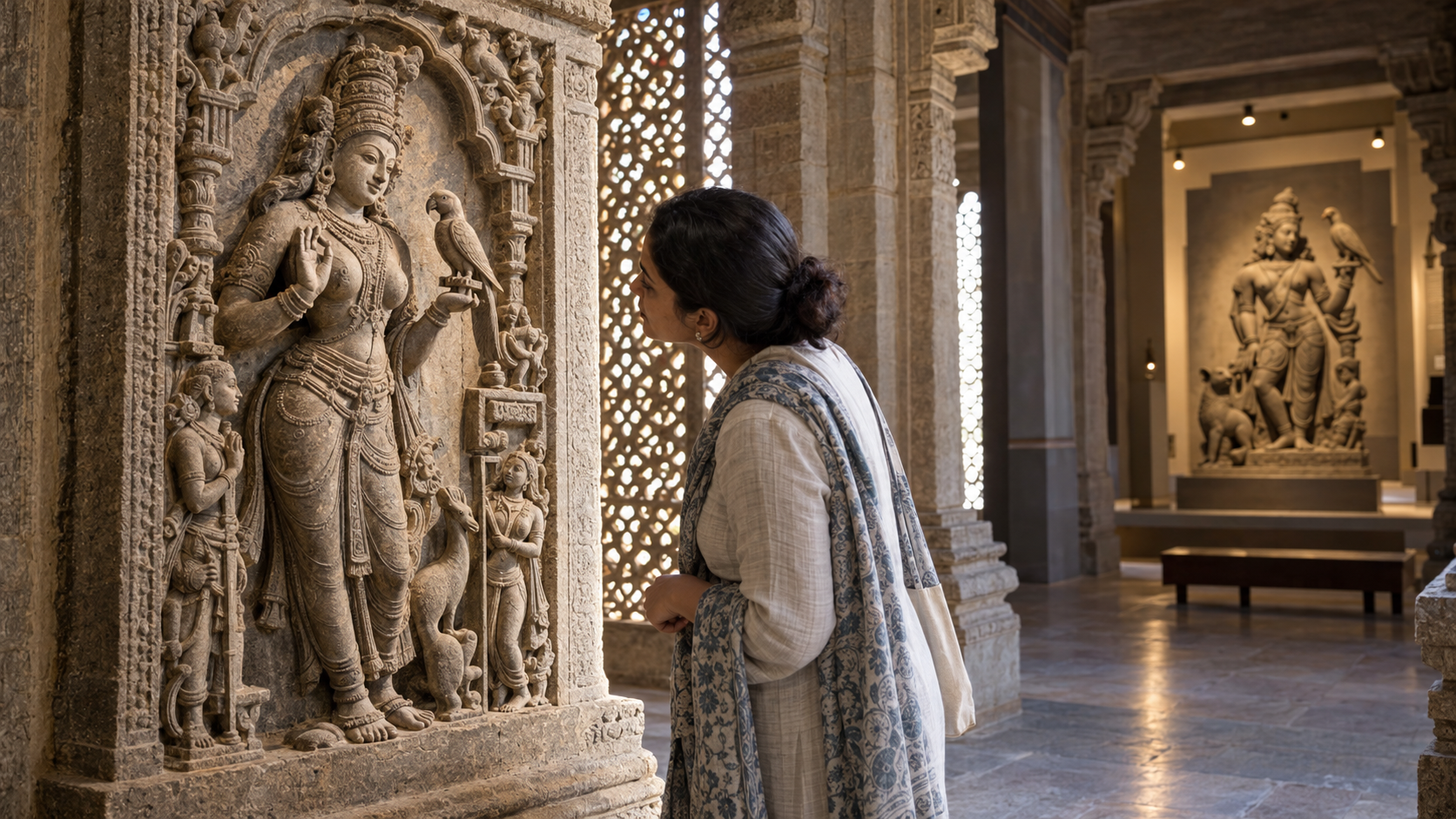
Many misreadings happen because three different tasks are collapsed into one. First you identify the form. Then you determine its iconographic function. Only then do you interpret its significance.
- Identification: Is the creature recognisably a parrot rather than simply an unspecified bird?
- Function: Does it operate as a held attribute, a companion, an attendant, or part of a narrative scene?
- Interpretation: What does that relationship contribute to this particular divine image?
The parrot’s capacity to echo human speech makes voice, repetition, and living communication reasonable interpretive possibilities. They are not automatic translations. A symbol does not behave like a dictionary entry in which one form always produces one meaning. The deity’s identity, the image’s setting, the accompanying attributes, and the tradition in which the image is honoured all constrain the reading.
Use precise language when the evidence is incomplete. Say, “The parrot may evoke speech or responsive presence in this context,” rather than, “The parrot always means speech.” The first statement keeps observation and interpretation connected. The second turns a living iconographic tradition into a fixed code.
You should be equally cautious about importing a familiar explanation from one image into every other image. Repeated motifs can carry shared resonances, but Hindu iconography is shaped by sect, region, period, medium, temple context, and living practice. If a temple tradition, catalogue, inscription, or knowledgeable practitioner supplies a specific identification, let that evidence refine what the visual form alone can establish.
Use a repeatable method at temples and museums
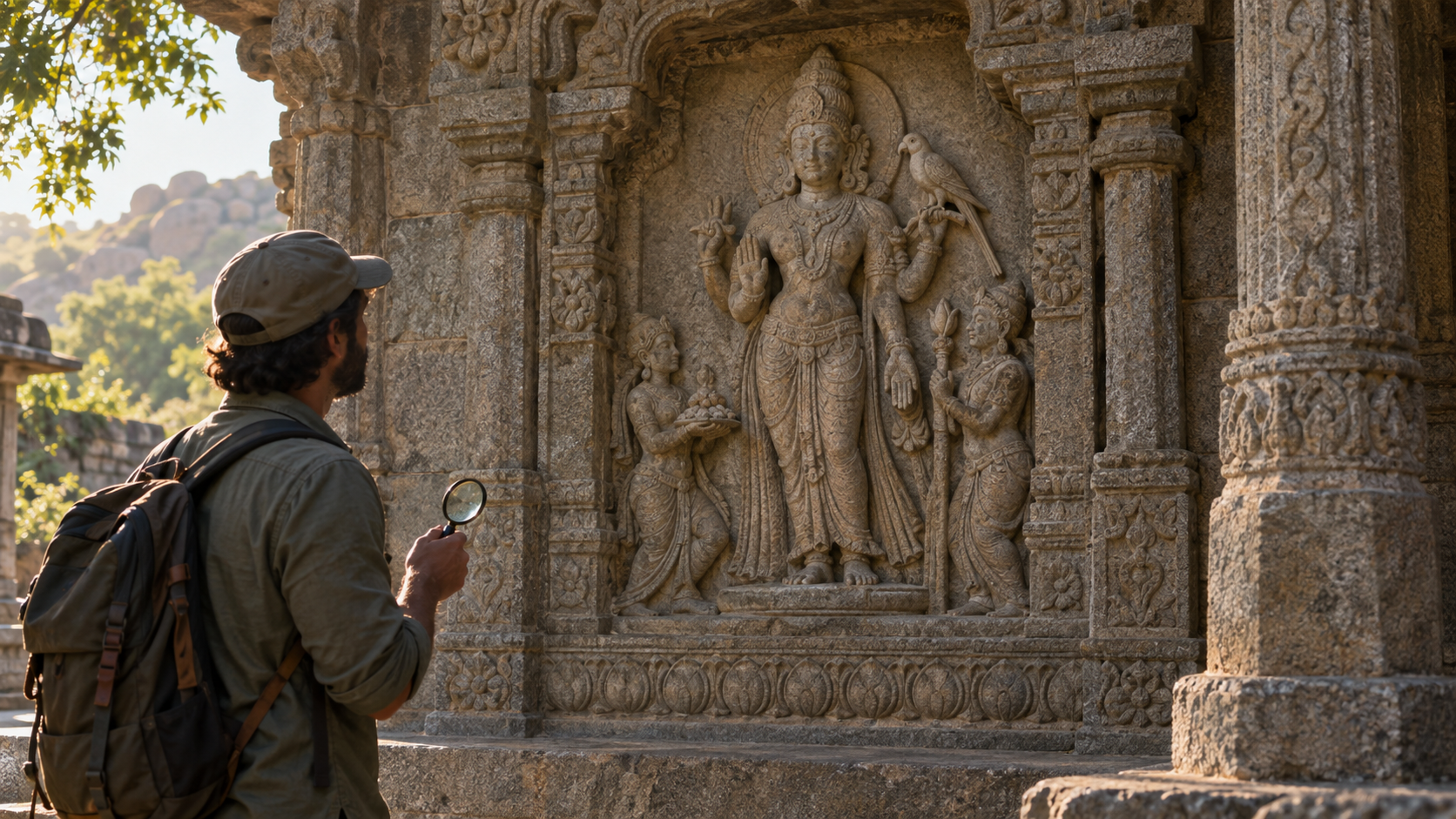
You do not need to arrive with a complete iconographic manual. You need a method that prevents a quick impression from hardening into a false certainty. When you encounter a possible shuka, work through these questions in order:
- What is visibly present? Describe the bird’s form, position, direction, and physical contact without interpreting them yet.
- Is the bird integral to the figure? Look for a deliberate perch, a supporting hand, compositional symmetry, or repeated placement in related images.
- What kind of attribute is it? Classify the shuka as animate. This prevents the misleading assumption that every item associated with a deity is a weapon or tool.
- What does the whole image emphasise? Consider the deity’s posture, expression, gestures, other attributes, and surrounding figures.
- What contextual evidence is available? Consult the temple’s living explanation, an object label, a catalogue, or a reliable account of the relevant tradition.
- How certain is the conclusion? Distinguish what you saw, what the context confirms, and what remains a plausible interpretation.
If you are making notes, use a sentence that preserves those layers: “A parrot, or shuka, perches on the figure’s hand and functions as an animate attribute; its fuller significance should be read with the identity and local context of the deity.” You can then add confirmed details without rewriting an early guess as fact.
This method also improves devotional looking. Careful observation is not opposed to reverence. It slows the impulse to reduce a sacred form to a label and makes room for the image’s deliberate relationships. The shuka matters not merely because a bird is present, but because life has been placed in intimate proximity to divinity.
Key takeaways
- Shuka means parrot, and the sacred parrot functions as an animate or attendant attribute in Hindu sculptural imagery.
- Do not translate ayudha as “weapon” in every case. The category can include an identifying living attribute that is not martial.
- Read relationship before symbolism. The bird’s perch, orientation, scale, and contact with the deity are your strongest first clues.
- Keep identification, function, and interpretation separate. This makes your conclusion clearer and prevents an attractive possibility from becoming an unsupported claim.
- Let context narrow the meaning. The complete image and its living or historical setting matter more than a one-line symbolic formula.
The next time you find a small parrot in a temple image, give it more than a passing glance. First identify what the sculptor placed before you; then notice how the bird and deity meet. That patient sequence turns a minor-looking detail into a doorway for reading the sacred image more faithfully.
References

Leave a Reply
You must be logged in to post a comment.