

You may feel a natural kinship with Hindu, Buddhist, Jain, and Sikh communities, yet hesitate when someone turns that kinship into a demand for sameness. That hesitation is worth respecting. If unity requires a community to surrender its own account of scripture, spiritual authority, liberation, worship, or history, the unity on offer is only absorption by another name.
A durable Dharmic unity makes a narrower and stronger promise: we will protect one another’s freedom to practise, preserve inherited institutions, serve our neighbours, and cooperate as citizens, while every tradition keeps authority over its own beliefs. This gives you a practical standard for deciding which invitations, organisations, and initiatives deserve your support.
Make solidarity the promise, not sameness
Shared civilizational identity belongs at the level of relationship and responsibility. It recognises that distinct traditions have participated in the civilizational life of Bharat, influenced one another, and developed ethical languages through which people can cooperate. It does not make one path an incomplete version of another. Civilizational kinship is a basis for mutual guardianship, not a shortcut around theological difference.
You can keep that distinction clear by thinking in three layers:
- Rooted practice: Each community teaches its own doctrine, preserves its own disciplines, and decides who may speak for it.
- Civilizational kinship: Communities recognise a long relationship with Bharat’s sacred geography, cultural memory, languages, institutions, and modes of ethical inquiry.
- Civic partnership: Communities work together on heritage, education, service, social harmony, and the protection of religious freedom.
Confusion begins when an agreement at one layer is treated as agreement at every layer. A Jain organisation and a Hindu temple can preserve a local archive together without endorsing the same metaphysics. Sikh and Buddhist volunteers can cooperate in seva without merging their accounts of spiritual authority. Joint work needs an agreed purpose; it does not need an invented common creed.
Within Hindu traditions, Ishta-based pluralism protects the freedom to approach the Divine through a chosen path. That theological hospitality is valuable, but it should not be used to assign Hindu categories to Buddhist, Jain, or Sikh traditions against their own self-understanding. Hospitality means making room for another voice, not translating that voice until it sounds like your own.
This changes the language you use. Replace “all our paths teach the same thing” with a more honest invitation: “Our paths differ, and we accept shared duties of non-harm, truthfulness, service, mutual respect, and protection.” The second statement asks less doctrinally and commits everyone to more practically.
Find common ground in conduct, not a manufactured creed

Ahiṃsā, satya, karuṇā, and seva provide constructive common ground for ethical living and social harmony. These words do not carry precisely the same philosophical meaning in every tradition. They are useful because they can guide conduct while allowing those interpretations to remain distinct.
- Ahiṃsā: Do not humiliate another community, pressure its members into affirming your doctrine, or treat disagreement as disloyalty.
- Satya: Separate verified facts from communal memory and interpretation. Correct a false claim even when it appears to favour your own side.
- Karuṇā: Ask whose sacred place, practice, archive, or community is vulnerable before deciding where collective attention belongs.
- Seva: Turn goodwill into a defined task with a responsible person, a completion point, and evidence that the intended community actually benefited.
- Mutual respect: Let practitioners describe their own tradition. No participant should gain authority by speaking over the people being represented.
A useful inter-tradition meeting should therefore begin with self-description rather than a speech about presumed unity. Let each participant explain what cooperation means in that community’s own language. Record both the common commitments and the limits of agreement. Acknowledged difference is safer than an artificial consensus that breaks as soon as a difficult subject appears.
End the meeting with a decision that can be checked: the heritage object to be documented, the service activity to be completed, the educational material to be reviewed, or the local concern to be addressed. Record who owns the next action, what consent is required, and how completion will be shown. Without that handoff, “unity” remains an atmosphere rather than a responsibility.
Write the charter before choosing the banner

Civilizational language carries political consequences, even when the speaker intends a cultural meaning. Some advocates use “Sanatan Rashtra” for a cultural-ethical commonwealth grounded in Dharma and compatible with constitutional citizenship, rather than a theocratic state. A listener may still hear a claim about political power. The label cannot be expected to explain or restrain itself.
If your group uses that phrase, define it before asking anyone to endorse it. Put equal citizenship, freedom of worship, non-coercion, and respect for distinct institutions in writing. Participants should also be free to share the work without adopting every umbrella term. Cooperation is demonstrated through informed consent and reliable conduct, not compulsory vocabulary.
A workable charter answers the following questions:
- Purpose: What exact cultural, educational, civic, or service outcome is the group pursuing?
- Scope: What is the group not attempting to settle, especially in doctrine, political allegiance, and internal religious authority?
- Representation: How will each participating tradition approve the description of its beliefs, practices, and institutions?
- Consent: Who may authorise access to a sacred site, manuscript, ritual record, oral history, or community image?
- Decision-making: Which matters require general agreement, and how will a recorded objection be handled?
- Accountability: What result will be made public, and who will correct errors or follow up after the event?
A concise working clause can read: We cooperate in heritage protection, education, service, and civic harmony without merging doctrines, subordinating institutions, or claiming authority to redefine another tradition. Ask every participating community to edit that sentence. The edits will reveal expectations that ceremonial speeches often conceal.
Refusal to sign a vague declaration is not necessarily hostility to Dharmic unity. It may be a request for clearer boundaries. Treat that request as useful governance work. A coalition that cannot explain its limits is not ready to manage a sacred archive, represent young people, or speak in another community’s name.
Build unity around work that leaves a trustworthy record
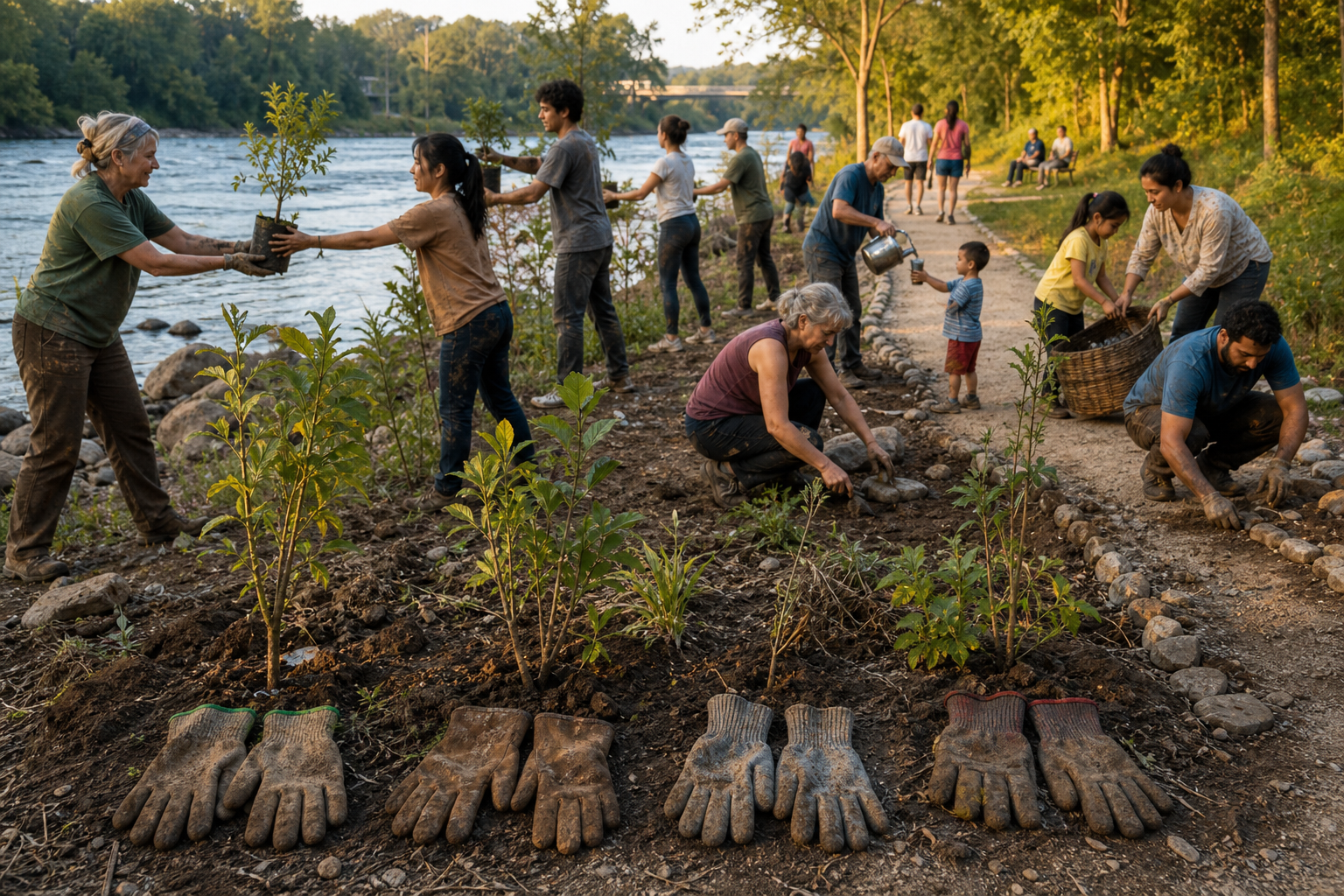
A shared stage can produce a photograph. Shared stewardship produces something a community can still use after the gathering ends. The most promising fields include sacred-site protection, manuscript and oral-history conservation, endangered-practice documentation, youth education, festivals, community service, and local conflict resolution.
Begin with a bounded heritage pilot
Choose a particular collection, place, practice, or oral-history set whose custodians want assistance. Do not begin by promising to preserve an entire civilization. Begin by finding out what exists, who is responsible for it, what condition it is in, and what kind of access is appropriate.
Prepare a simple project sheet containing:
- the object, site, practice, or collection being protected;
- the tradition and local custodians connected to it;
- the immediate risk or documentation gap;
- the desired deliverable, such as a catalogue, recording, transcription, translation, preservation plan, or digital copy;
- written permission and any restrictions on viewing, copying, or publication;
- responsibility for storing originals and digital files;
- the evidence that will show the task was completed.
Digital archiving is not merely scanning. A file without a title, provenance, custodial permission, access rule, and backup plan can become detached from the community that gave it meaning. The custodian should decide what may be public. Sacred or sensitive material should not be published simply because digitisation makes publication possible.
Make festivals and education reciprocal
A festival becomes a bridge when guests encounter a living community on terms that community recognises. Invite participating traditions to choose what they will explain, demonstrate, or share. Do not turn distinct practices into interchangeable performances under a generic spiritual label.
Apply the same rule to youth education. A shared programme can teach civilizational relationships, ethical vocabulary, heritage stewardship, and respectful disagreement. Material about a particular tradition should be reviewed by people that tradition trusts. Young readers should leave able to explain both a genuine connection and a genuine difference. If they can repeat only that “everything is the same,” the lesson has concealed the subject it was meant to teach.
Let seva create the habit of cooperation
Shared service allows people to develop trust through reliability. Choose a need identified locally, agree on the intended benefit, assign responsibilities, and ask the affected community whether the work was useful. Keep organisational publicity secondary to the service itself.
When tension does arise, a city-level forum can provide a standing process for hearing concerns, checking claims, and assigning follow-up. Its credibility depends on records: what issue was raised, whose account was heard, what was agreed, what remained disputed, and who will act next. Harmony does not mean hiding conflict. It means giving conflict a disciplined path that does not begin with public humiliation or collective blame.
Use measures that correspond to the work. For heritage, record cataloguing, permissions, storage, and access decisions. For education, record community review and corrections. For service, record the promised output and confirmation from those it was meant to help. For dialogue, record decisions and follow-up. Transparent measures protect a coalition from becoming a vehicle for personal status or partisan theatre.
Practise unity before proclaiming it
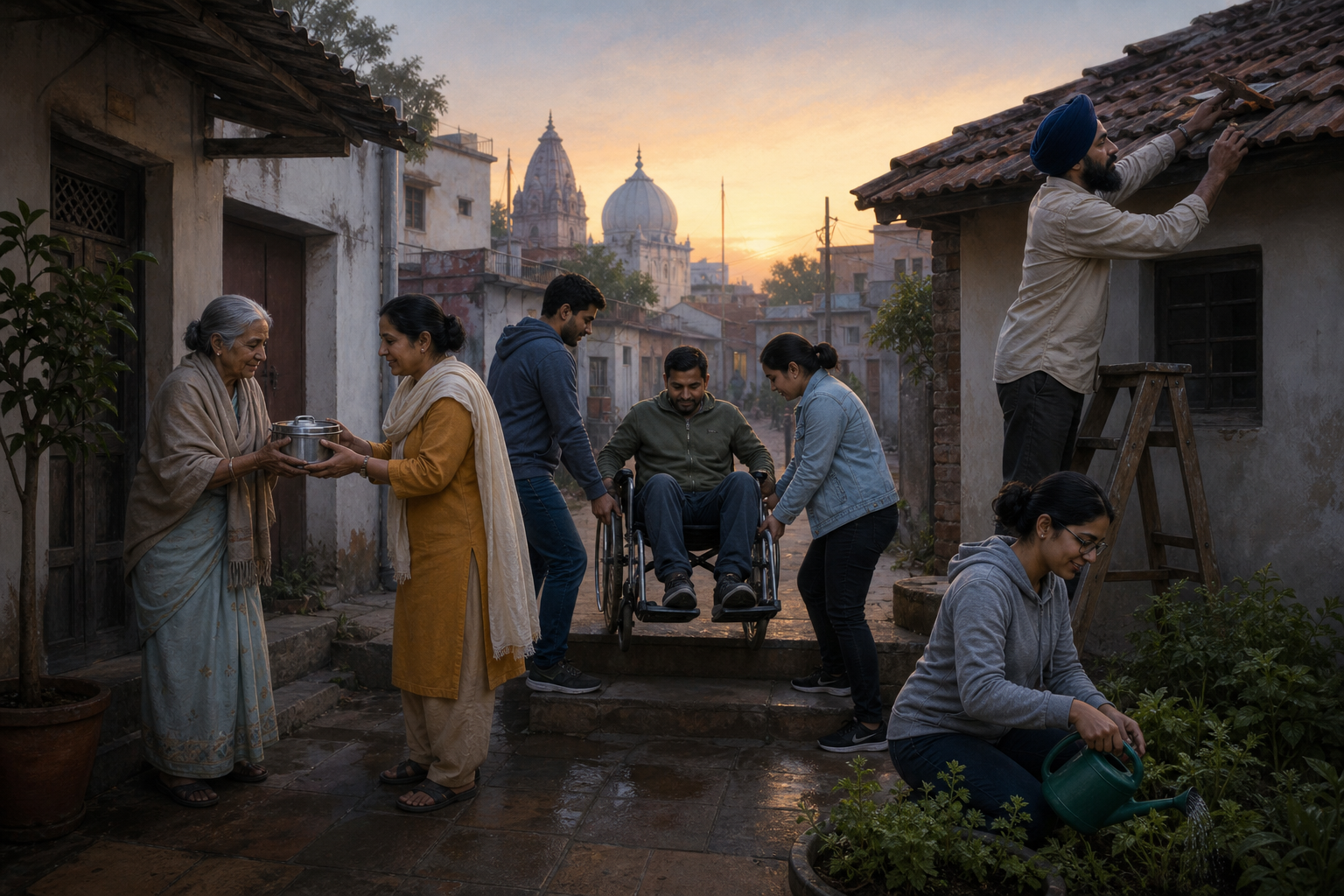
Public solidarity becomes brittle when it is detached from personal discipline. Each participant should name an authentic practice from within their own path and maintain it without turning it into a test for everyone else. Depending on the tradition and practitioner, japa, kirtana, pilgrimage, meditation, mindfulness, parayana, scriptural contemplation, satsanga, and community service can cultivate steadiness, attention, and responsibility.
Pair rooted practice with disciplined curiosity. Learn about another tradition from its practitioners, recognised institutions, and texts it regards as authoritative. Ask what outsiders commonly misunderstand. When you hear an unfamiliar term, ask how that community uses it before supplying an equivalent from your own vocabulary.
Apply the same restraint online. Do not forward an inflammatory historical, political, or religious claim merely because it flatters your community or condemns an opponent. Check the underlying evidence, distinguish a person’s act from an entire tradition, and correct the claim if it proves false. Satya is most credible when it costs your side an easy talking point.
None of this requires silence about injury or injustice. A Dharmic community can name a wrong, protect its institutions, and disagree forcefully. The discipline is to be accurate about the act, proportionate in the response, and unwilling to transfer guilt to people who did not commit it. That is where civilizational confidence differs from communal insecurity.
Key takeaways
- Define Dharmic unity as mutual guardianship and civic cooperation, not theological merger.
- Use shared ethical terms to guide conduct while allowing each tradition to interpret them in its own voice.
- Define civilizational and political labels before asking anyone to endorse them.
- Write the purpose, scope, consent rules, representation, and accountability process into a charter.
- Choose a bounded heritage, education, service, or dialogue project with a visible result.
- Measure unity by whether participants protect difference, keep commitments, correct falsehoods, and complete shared work.
Before your next gathering, bring a draft charter and a project sheet instead of another declaration. Ask every community to correct the sentence that describes it, then agree on one useful task and name who will carry it forward. If the group can preserve difference while completing that work, its shared civilizational identity will have substance.
References
- Hindu Jagruti Samiti — From Delhi, a Resonant Call to Safeguard Sanatan Dharma and Unify Dharmic Traditions
- Dandavats — TOVP 2026 New Year Message: Inspiring Devotion, Unity, and Blessings for All Dharmic Traditions
