
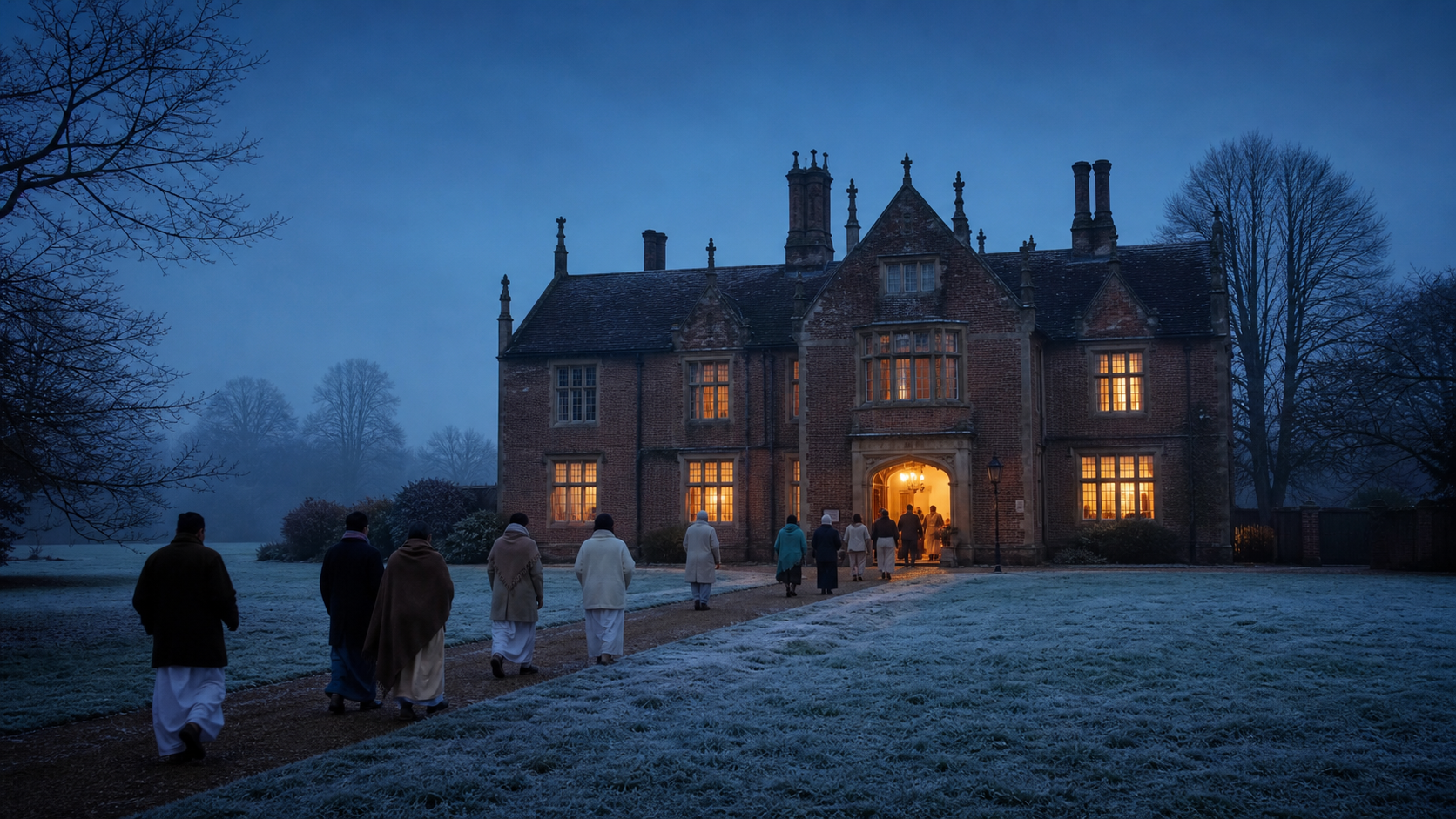
If you arrived hoping to put the Bhaktivedanta Manor Maha Morning Programme in your calendar, pause before planning the journey. The named gathering was announced for 14 December 2025, and that date has passed. A past date is not evidence of a recurring or newly scheduled programme, so verify any future session through a current official listing before you travel.
You may also be asking a more enduring question: what kind of morning is this, and how should you approach it if another one is offered? Its devotional grammar is clear. It brings together Krishna remembrance, congregational kirtan, focused japa, scriptural reflection, and community in a Vaishnava setting. Understanding how those elements fit together will help you participate with attention rather than simply observe a sequence of temple activities.
Start with the date, not an assumed timetable

The only established date for this named programme is 14 December 2025. Do not infer a present start time, booking procedure, entry arrangement, transport plan, accessibility provision, or programme length from customary ISKCON practice. Temple routines can provide context, but they do not replace current event information.
Before committing to a future visit, confirm that the listing names the Maha Morning Programme specifically, not merely a general morning service. Check the calendar date, beginning and finishing times, whether advance registration is required, and any instructions for visitors. If one of those details is absent, ask the Manor through a current official contact channel. This small check matters most when an older event page continues to appear in search results.
The distinction is simple but important: the devotional form remains meaningful after an event date has passed, while the logistics do not. You can learn from the form without treating an old notice as a live invitation.
Understand the devotional grammar before joining
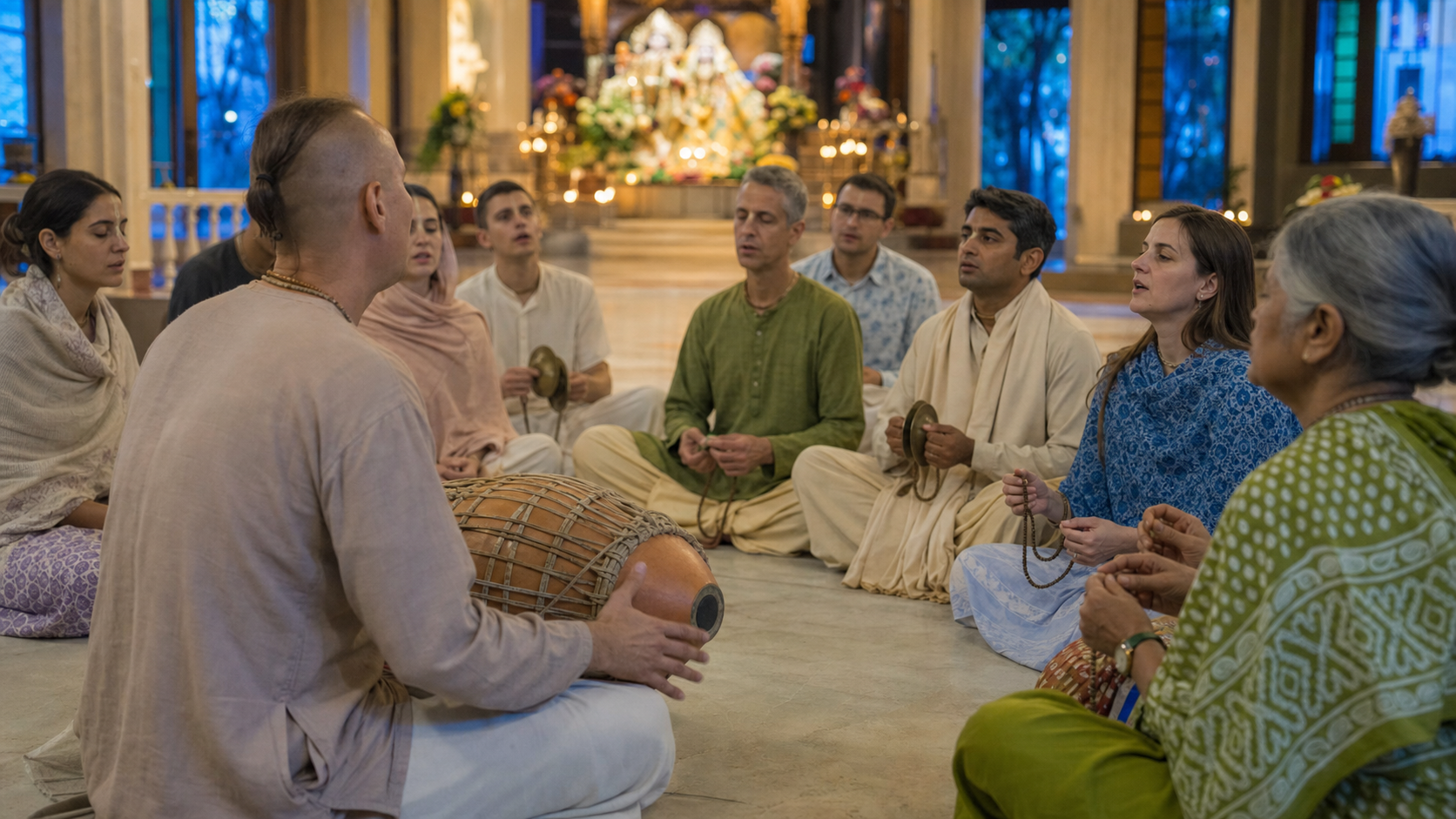
The Maha Morning Programme belongs to the Krishna-bhakti tradition and reflects ISKCON’s devotional ethos. Its likely elements are best understood as complementary practices, not interchangeable activities. Kirtan gathers attention through shared sacred sound. Japa turns that attention inward through deliberate repetition of the Hare Krishna maha-mantra. Reflection on the Bhagavad-Gita or the Srimad-Bhagavatam then gives the morning an intellectual and ethical direction.
Those elements describe the programme’s devotional character, not a verified running order. A future gathering may arrange them differently. Follow the temple’s lead rather than arriving with a private timetable that you expect everyone else to follow.
Kirtan: let participation begin with listening
Congregational kirtan is collective remembrance expressed through song. If you are unfamiliar with the melody or rhythm, listen first. Join when you can follow comfortably, and let the sacred name remain the centre of your attention. Musical confidence is not the measure of participation. The practical test is whether the singing draws the mind toward Krishna and into harmony with the assembled community.
Japa: return to the sound when attention wanders
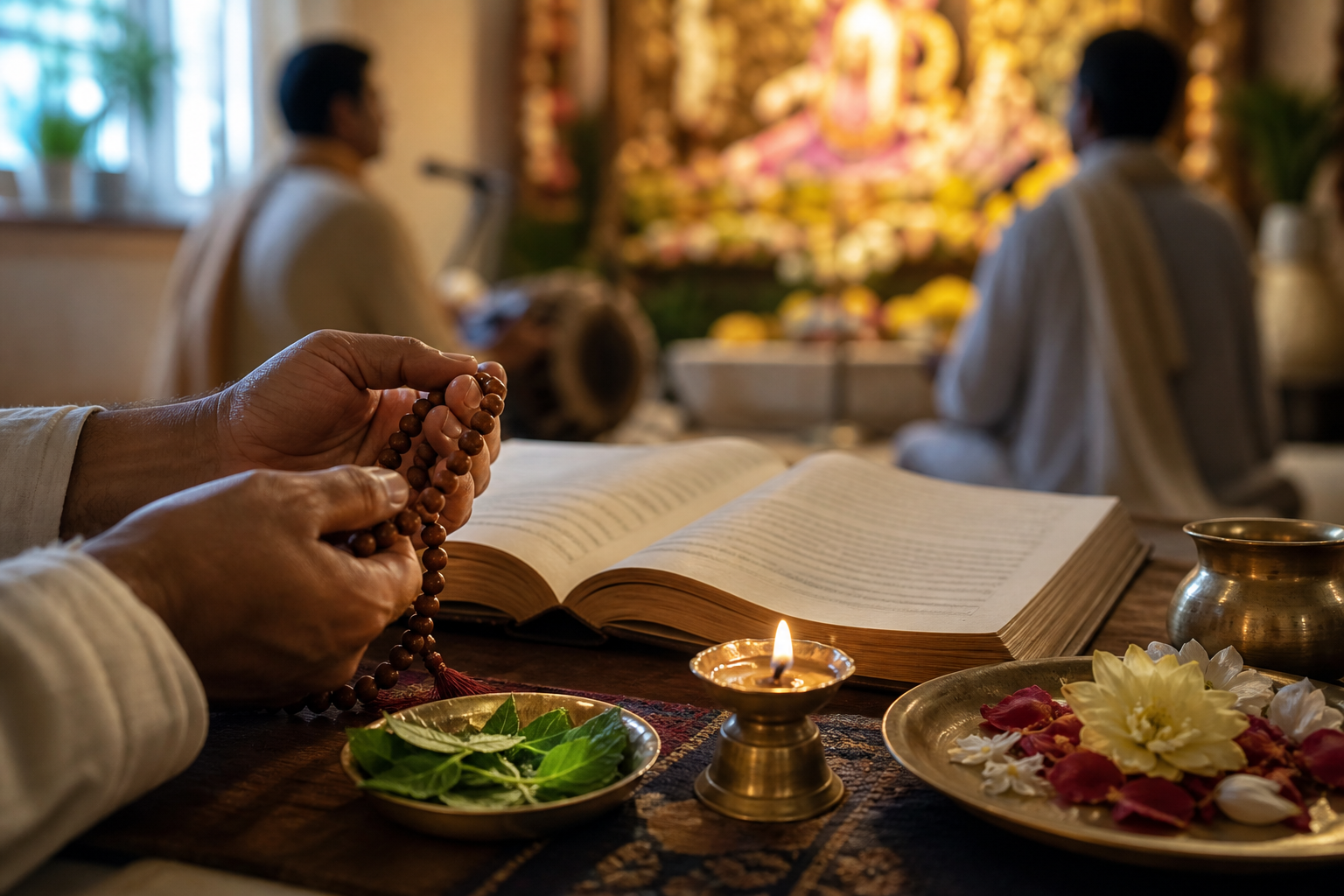
Japa asks for a different quality of attention. Keep your posture steady, allow the breath to remain measured, and listen to the mantra as you repeat it. When the mind moves toward plans, memories, or the people around you, return to the sound without turning distraction into a drama. That repeated return is the practice. Straining for an unusual mental state usually adds another distraction.
Scriptural reflection: carry away one usable principle
A discourse from the Bhagavad-Gita or the Srimad-Bhagavatam should not become information that disappears when the session ends. Listen for one principle that tests your conduct: a duty you have been avoiding, an attachment you need to see more honestly, or an opportunity for service. Write it down after the gathering if that helps. One teaching applied during the day is more useful than several remembered only as attractive phrases.
Read Krishna’s sacred identities as directions for practice
The programme’s devotional world is Vraja. Krishna is contemplated as Radha’s beloved, the beloved of the cowherd maidens, the lifter of Govardhana, the cherished son of mother Yasoda, and the delight of the inhabitants of Vraja moving through Vrindavana’s sacred groves. These are not ornamental names placed around an otherwise generic meditation. They locate the gathering within a particular theology of loving relationship, divine protection, intimacy, joy, and service.
A practical way to contemplate these identities is to ask what each one exposes in you. Reflection on divine love can reveal whether your devotion has become self-display. Govardhana’s protective meaning can turn attention toward someone who needs practical shelter or support. Krishna as Yasoda’s cherished son makes room for tenderness rather than distant abstraction. Vrindavana’s joyful service challenges the habit of treating duty as a burden performed only for recognition.
This is where the morning becomes more than a pleasant atmosphere. Sacred remembrance is meant to change the direction of attention and action. If the songs leave you calmer but no more truthful, compassionate, disciplined, or willing to serve, the experience has not yet completed its work. Choose one quality and give it a visible expression before the day ends.
Practise Dharmic unity without erasing real differences
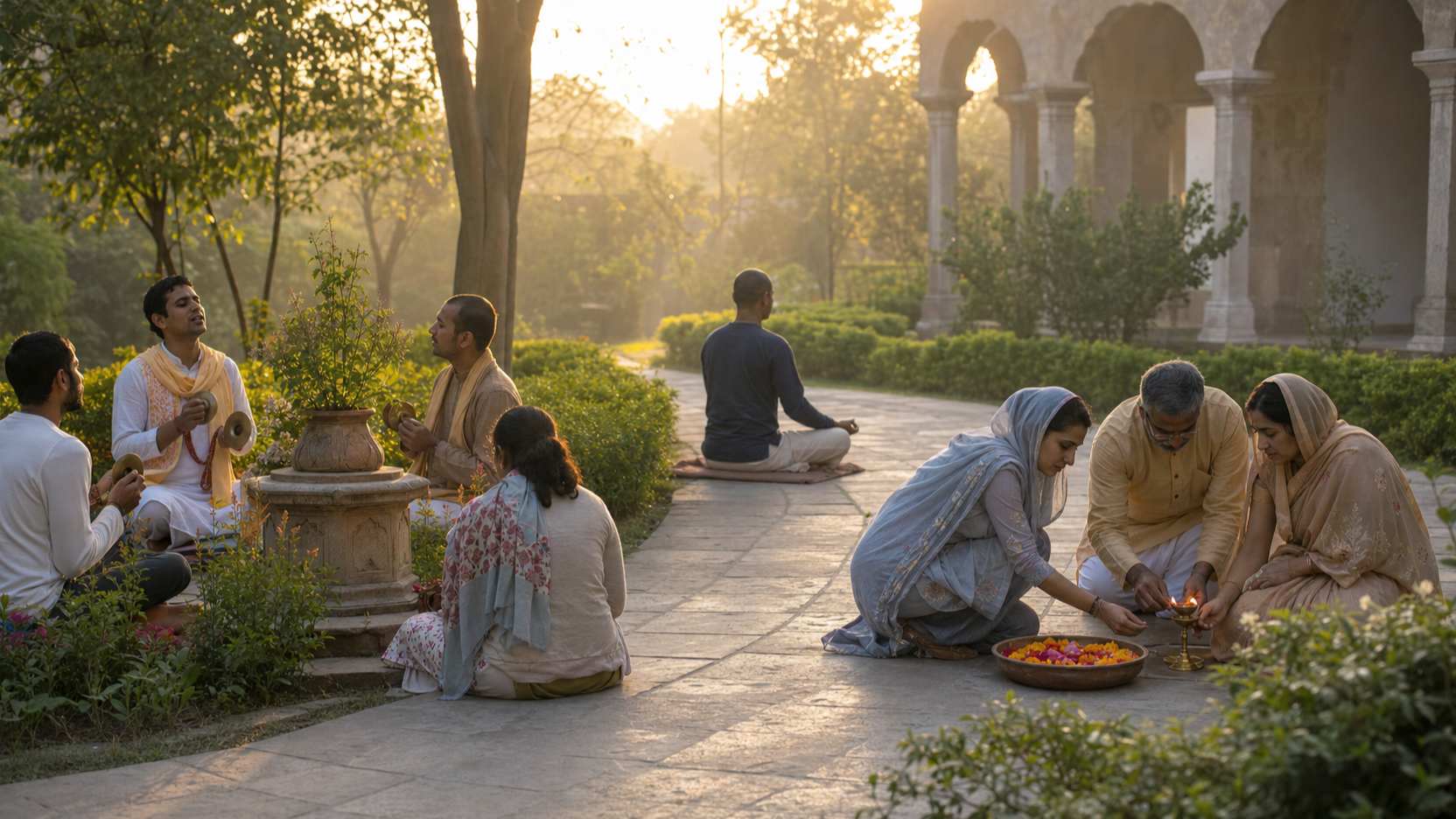
The gathering is rooted in Vaishnava Krishna-bhakti; it is not a content-free spiritual event. Its openness to sincere seekers does not require Hinduism, Buddhism, Jainism, and Sikhism to be treated as the same path. Their scriptures, doctrines, disciplines, and understandings of ultimate reality retain their integrity.
The honest meeting ground is ethical practice. Compassion, self-discipline, truthfulness, and seva are recognisable Dharmic commitments across these traditions. You can honour that kinship without making claims of theological equivalence. This distinction protects unity from becoming vague sentiment and protects difference from becoming hostility.
If you come from another Dharmic tradition, participate without pretending to hold convictions you do not hold. Listen carefully, join practices you can undertake sincerely, and receive hospitality without turning the occasion into a debate. If you are hosting or attending as a Vaishnava, inclusion does not mean hiding Krishna at a Krishna-bhakti gathering. It means presenting devotion without contempt for another seeker’s path.
Temple decorum supports that meeting. Keep your phone silent, follow guidance about where to sit or stand, avoid private conversation during chanting and reflection, and observe before copying an unfamiliar action. Reverence is often expressed through restraint: you do not need to perform familiarity you have not yet acquired.
Key takeaways for a thoughtful visit or home practice
- Verify the event before travelling. The established date was 14 December 2025. Confirm a new date and practical arrangements through a current official channel.
- Expect a devotional pattern, not a guaranteed running order. Kirtan, japa, and reflection on the Bhagavad-Gita or Srimad-Bhagavatam describe the programme’s character, but their sequence should not be assumed.
- Listen before trying to perform. In kirtan, follow the assembled community. In japa, return attention to the mantra whenever the mind wanders.
- Keep the Vaishnava centre visible. Radha, Krishna, Govardhana, Yasoda, Vraja, and Vrindavana give the morning its theological meaning; they are not interchangeable symbols for generic calm.
- Turn insight into conduct. Choose one expression of compassion, self-discipline, truthfulness, or seva and complete it that day.
- Seek unity through shared virtues. Respect among Hindu, Buddhist, Jain, and Sikh seekers does not require their distinct teachings to be collapsed into one system.
Your next step depends on what brought you here. If you want to attend a future Maha Morning Programme, verify a current listing before making plans. If you want to begin with its discipline, reserve part of your next morning for attentive mantra repetition, a short reading from the Bhagavad-Gita or Srimad-Bhagavatam, and one act of seva to be completed before the day closes.
References
