
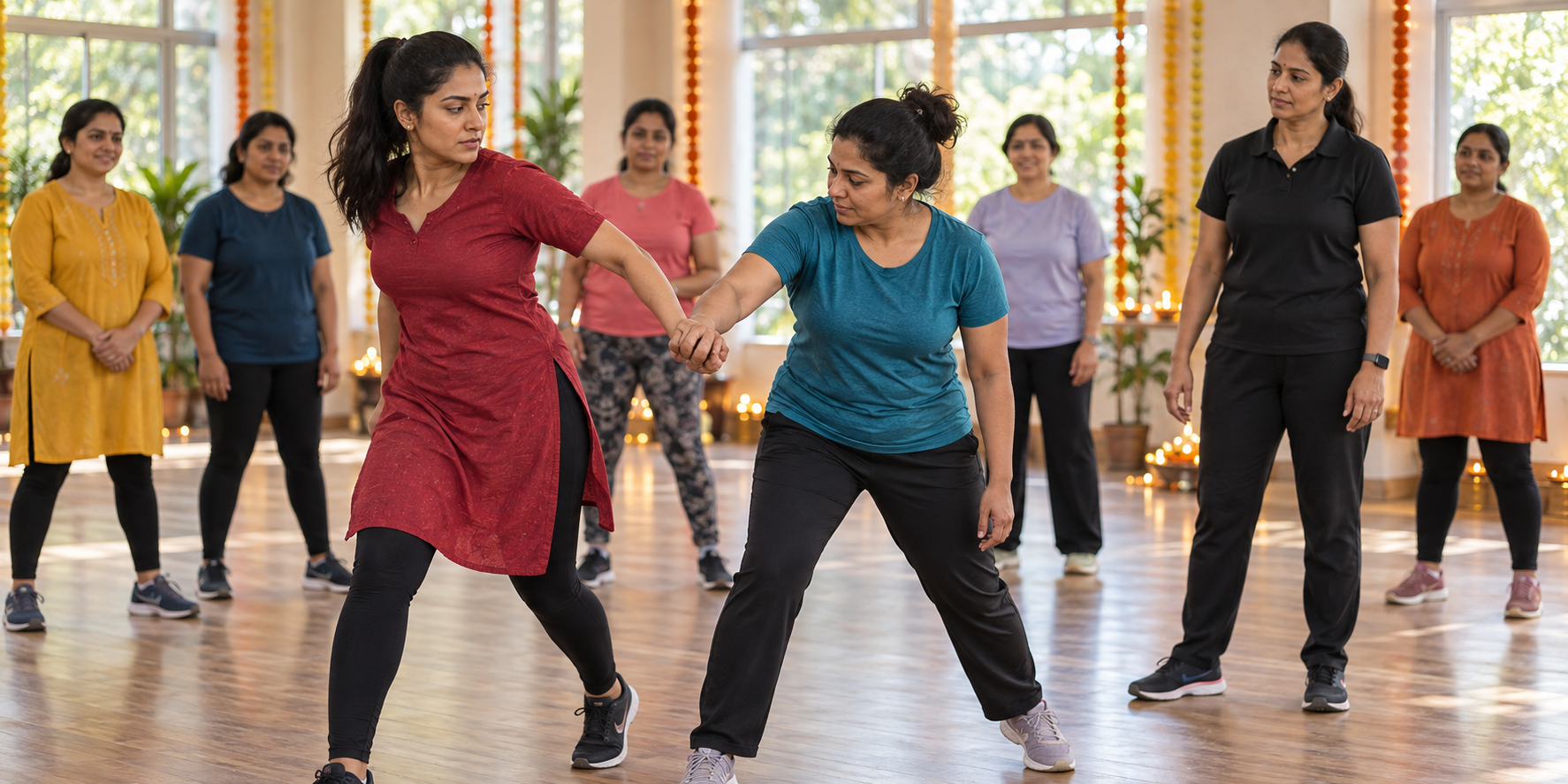
If you are considering a Navratri self-defence camp, the useful question is not whether confidence matters. It is whether the session will help you notice danger sooner, make decisions under pressure and create a realistic path to safety.
During Navratri, Hindu Janajagruti Samiti’s nationwide Main Hoon Durga initiative offers free self-defence camps for young Hindu women at several locations. Awareness, confidence and self-defence skills are its stated aims. The religious occasion can supply motivation, but you should judge any camp by what happens during training and what you can safely practise afterward.
Choose a camp that treats safety as a skill

A self-defence camp should not promise that one technique can defeat every attacker. Real situations differ in setting, distance, physical ability, available exits and the presence of weapons or other people. Useful training helps you make safer choices within those uncertainties.
Questions to ask before enrolling
- Who is teaching? Ask about the instructor’s relevant training and experience teaching beginners, not merely performing demonstrations.
- What will participants actually practise? Look for supervised practice rather than a programme consisting mainly of speeches or staged moves.
- How is consent handled? You should be told before anyone touches you, be allowed to decline a drill and be offered a non-contact version where practical.
- Can the session accommodate injuries or disabilities? Tell the instructor privately about any limitation. A responsible trainer modifies the activity instead of pressuring you through pain.
- How are younger participants protected? If minors attend, their parents or guardians should understand the supervision, contact, photography and safeguarding arrangements.
- What happens after the camp? Ask whether there will be revision material, supervised follow-up practice or another session. A skill introduced once still needs reinforcement.
Warning signs to take seriously
Walk away from an instructor who guarantees protection, mocks participants who freeze, encourages training through injury or presents complicated weapon disarms as easy. Filming should also require clear consent. A participant should not have to surrender her privacy in order to learn.
The cultural message matters too. A Dharmic programme can strengthen Hindu women without cultivating indiscriminate hostility toward another community. Self-defence is preparation for danger, not permission to treat strangers as enemies.
Train for escape, not for a dramatic victory
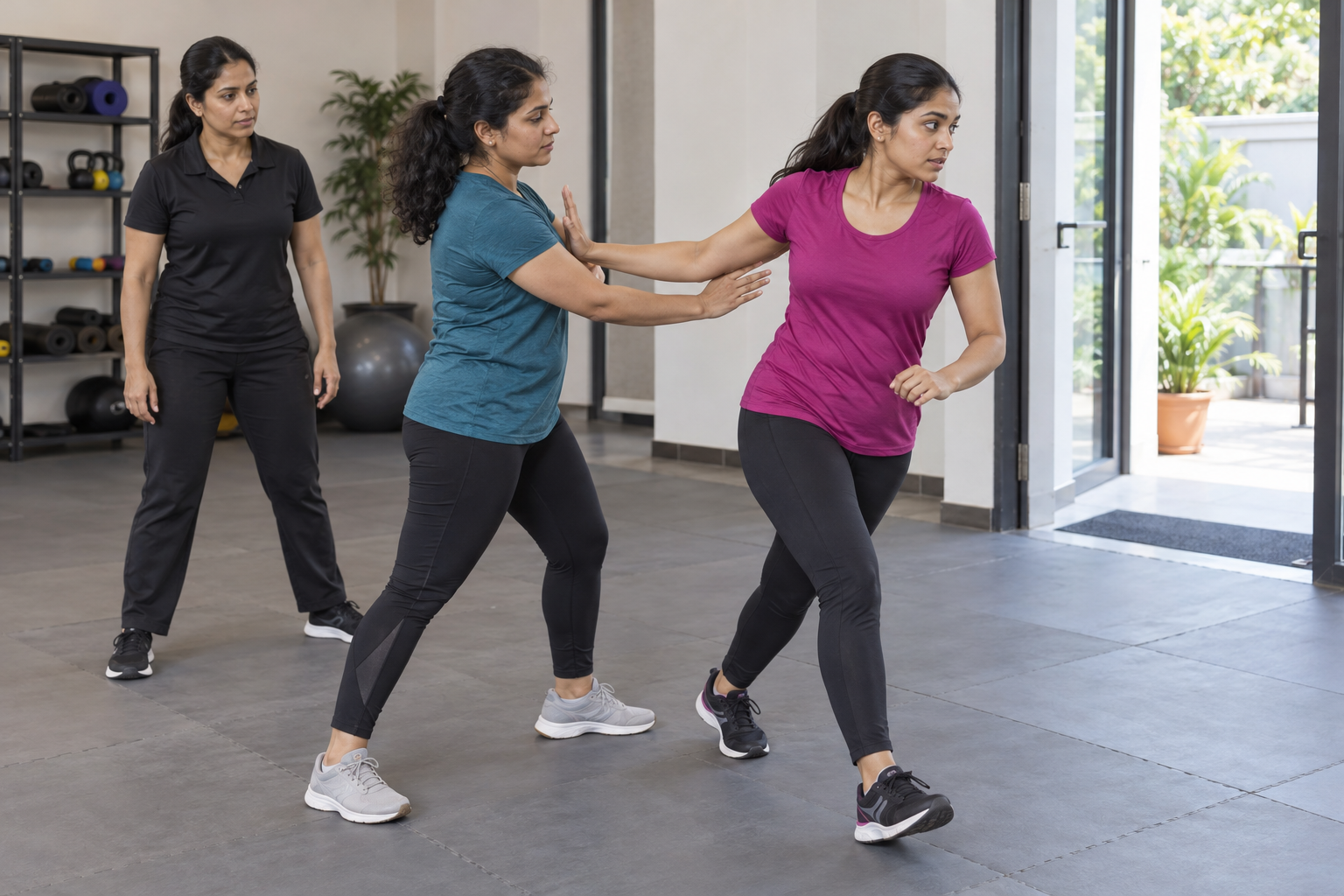
The practical goal of self-defence is usually to interrupt danger long enough to leave, reach other people or summon help. That is different from winning a prolonged fight. The distinction should shape how you listen, practise and later evaluate what you learned.
- Notice. Identify exits, staffed areas, obstacles and people who could help. Awareness should inform you, not force you into permanent fear or make you responsible for another person’s misconduct.
- Set a boundary when it is safe to do so. Practise a short, direct phrase in a clear voice. The purpose is communication and attention, not an argument with someone who is escalating.
- Create distance and move. Orient yourself toward an exit, a populated place or a safer position. If an obstacle can remain between you and a threat, use it while moving away.
- Use physical action only to serve safety. Any physical response learned in class should be practised under qualified supervision. Its purpose is to create an opportunity to disengage, not to punish or chase someone.
- Get help afterward. Once safe, contact a trusted person and the appropriate local emergency, medical or support service. If you are injured or assaulted, professional medical care matters more than embarrassment or pressure to remain silent.
If a weapon or multiple attackers are involved, there may be no reliably safe physical answer. Do not assume that a brief workshop makes a complex disarm dependable. Escape, cover, attention from others and access to emergency help should take priority whenever those options are available.
Freezing is also a normal involuntary stress response, not a moral failure. Training can give you options, but it cannot guarantee how your nervous system will react. A responsible instructor helps participants resume decision-making without shaming them.
Turn one workshop into a usable safety practice
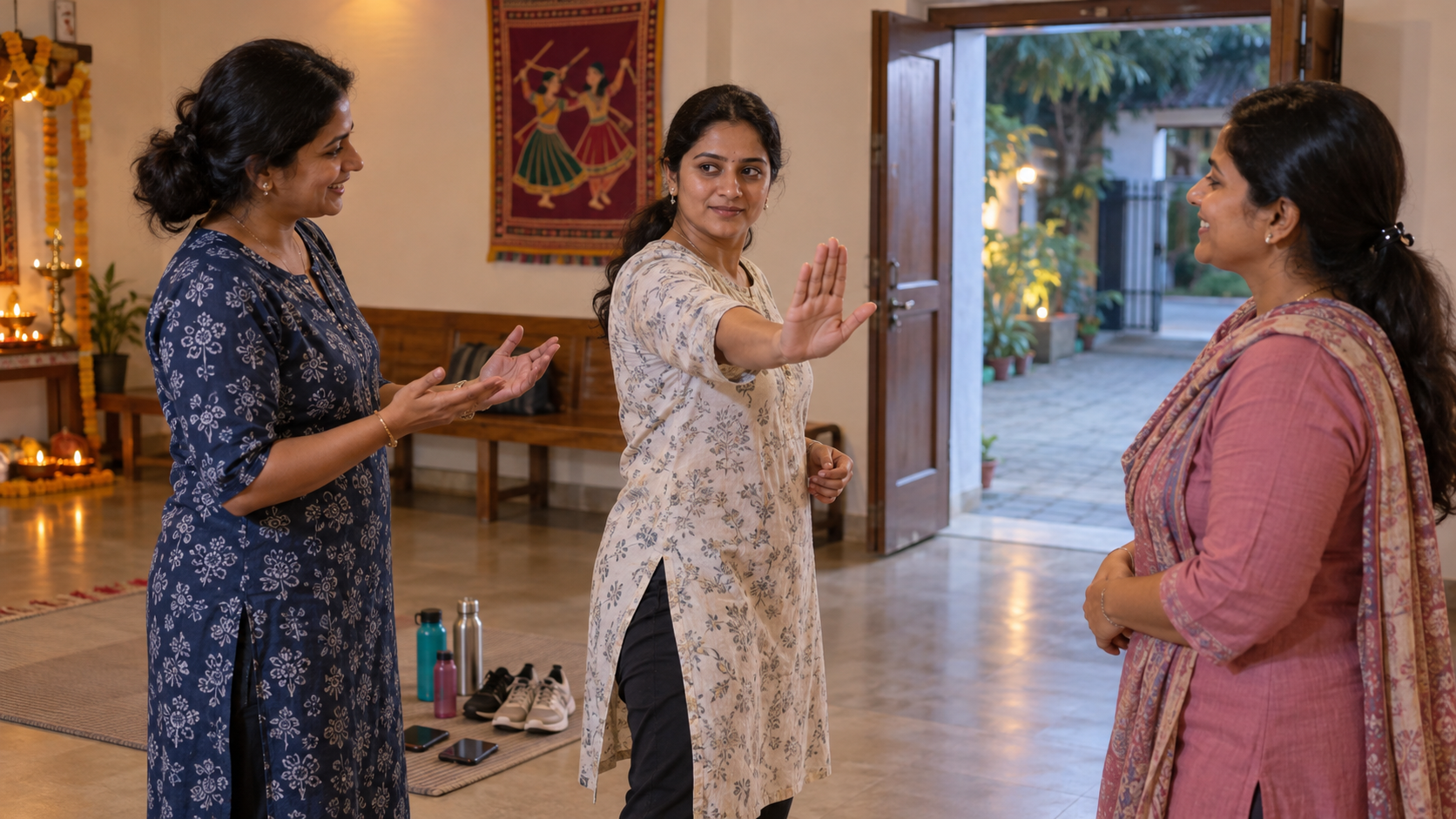
The danger after an inspiring camp is mistaking recognition for competence. Watching a movement and performing it once are not the same as retrieving it under stress. Leave with a small practice plan rather than a large collection of half-remembered techniques.
- Write down the decision sequence. Record what should make you disengage, where you would move and whom you would contact. Decision cues are easier to retain than an elaborate performance.
- Rehearse only what can be practised safely. Repeat verbal boundaries, exit identification and movement drills with a trusted partner. Practise physical techniques only as the instructor directs and with appropriate supervision.
- Apply the lesson to your real routes. On a regular commute or campus route, notice open businesses, security desks, populated areas and alternative exits. Do this calmly during ordinary travel, not by testing yourself in a dangerous situation.
- Make help reachable. Keep important contacts accessible and agree with a trusted person on what to do if you ask for assistance. Check that you know how to use your phone’s emergency features before you need them.
- Plan a refresher before motivation fades. Put follow-up practice on your calendar while the camp is still fresh. If the organiser offers continued training, ask what level comes next and what prior skills it assumes.
Measure progress by behaviour you can observe: you identify exits without panic, speak clearly during a drill, remember your first action and move toward safety instead of waiting for instructions. Feeling powerful can be valuable, but confidence should follow practice rather than replace it.
Keep the Durga message empowering, not burdensome
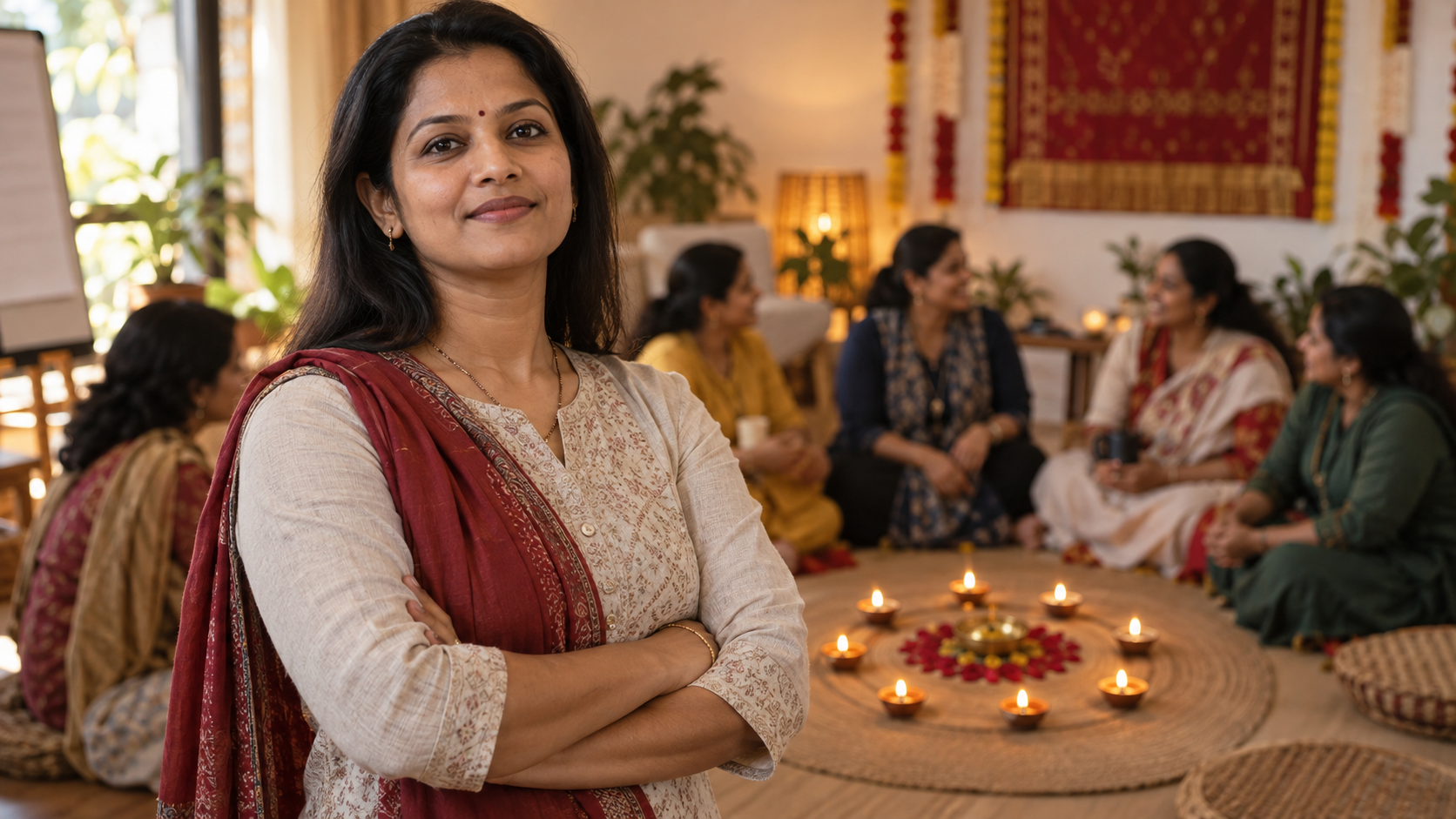
Invoking Durga or Adi Shakti during Navratri can connect physical preparation with a familiar Dharmic language of courage and protection. Yet the symbolism must not become another demand placed on women. You do not have to be fearless, physically dominant or ready to fight at every moment in order to deserve safety.
Abhaya is not recklessness. Courage may mean leaving early, calling for help, refusing unwanted contact, declining an unsafe drill or reporting misconduct. It may also mean surviving by complying when resistance would create greater immediate danger. No slogan can determine the safest choice in every encounter.
Responsibility for violence remains with the person who commits it. Clothing, travel, politeness, hesitation or lack of training does not transfer that responsibility to a woman. Self-defence expands her options; it does not provide families, organisers, employers or institutions with an excuse to ignore harassment and unsafe conditions.
A community that takes the campaign seriously should therefore do more than train women. Organisers can establish consent rules and recurring practice. Families can listen without blame when a woman describes a threatening situation. Institutions can provide clear reporting routes and respond to complaints. Men and boys can be taught boundaries, consent and responsible intervention. Women’s training is one part of communal safety, not the whole burden.
Key takeaways
- Choose a camp with qualified instruction, supervised practice, clear consent and realistic claims.
- Judge techniques by whether they help you disengage and reach safety, not by how impressive they look.
- Do not attempt advanced weapon defences on the strength of a brief workshop.
- Convert the session into a practice routine built around decision cues, safe repetition and accessible help.
- Use Durga’s symbolism to affirm women’s agency, never to blame a woman who could not resist or escape.
- Expect families, organisers and institutions to carry their share of responsibility for safe environments.
Before enrolling, send the organiser the questions above and invite another woman to attend with you. Leave the camp with a specific follow-up practice arranged, not merely a certificate or photograph. That is how Navratri’s language of Shakti can become durable capacity in ordinary life.
References

Leave a Reply
You must be logged in to post a comment.