
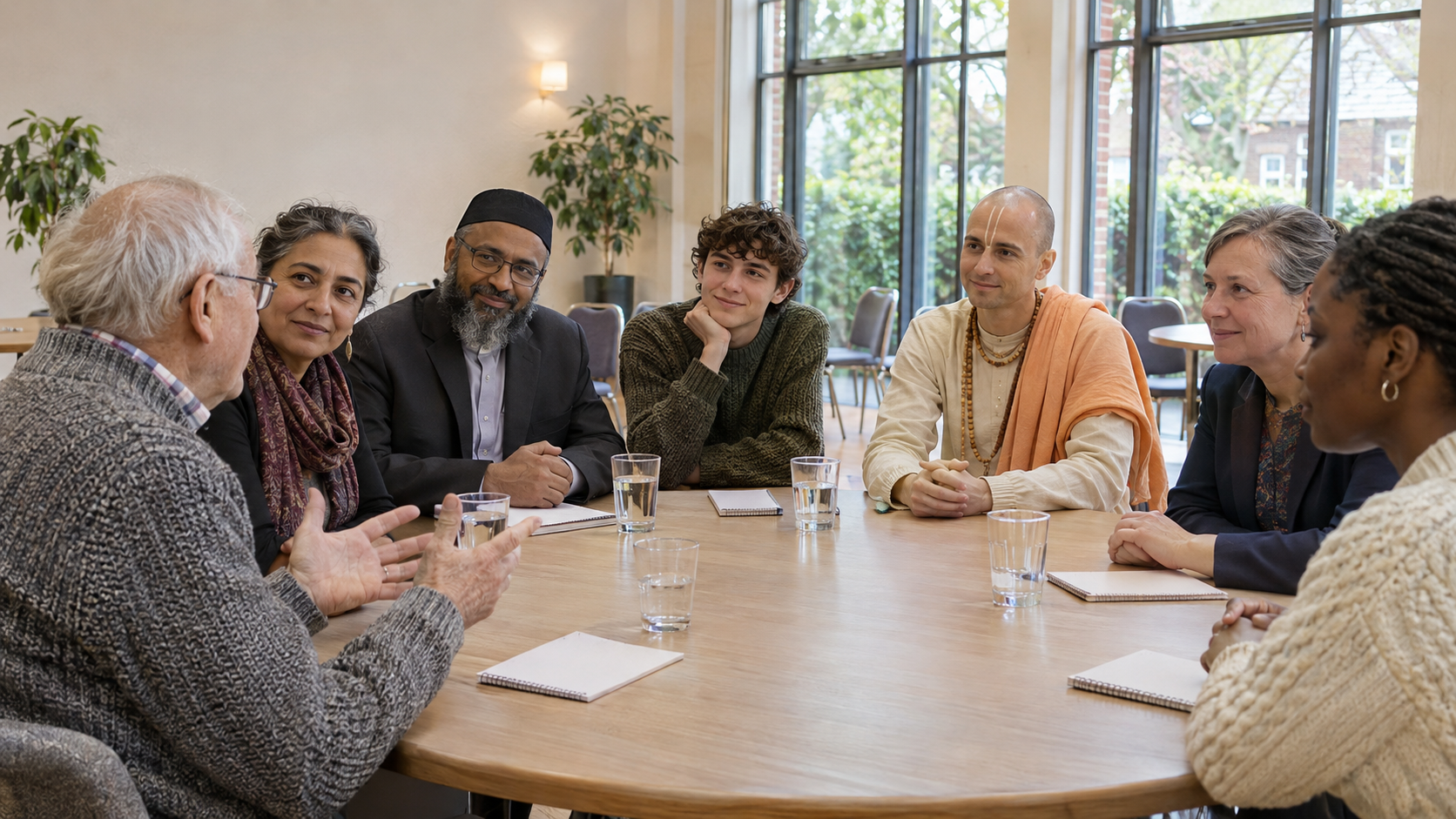
You have a civic invitation in front of you: perhaps a remembrance service, an interfaith gathering, a local celebration or a reception. The real question is not whether public visibility is good in the abstract. It is whether accepting this invitation will help you represent Krishna consciousness faithfully, understand your neighbours and build a relationship that continues after the event.
That requires more than sending someone who happens to be free. Bhaktivedanta Manor’s civic participation has ranged from community and interfaith gatherings to Remembrance Sunday commemorations, Armistice Day services, Diwali celebrations and receptions in Westminster and the City of London. These settings are different, but the same discipline applies to each: know why you are attending, arrive as an identifiable spiritual community and leave with a stronger relationship than the one you brought in.
Civic presence is neither public relations nor surrender
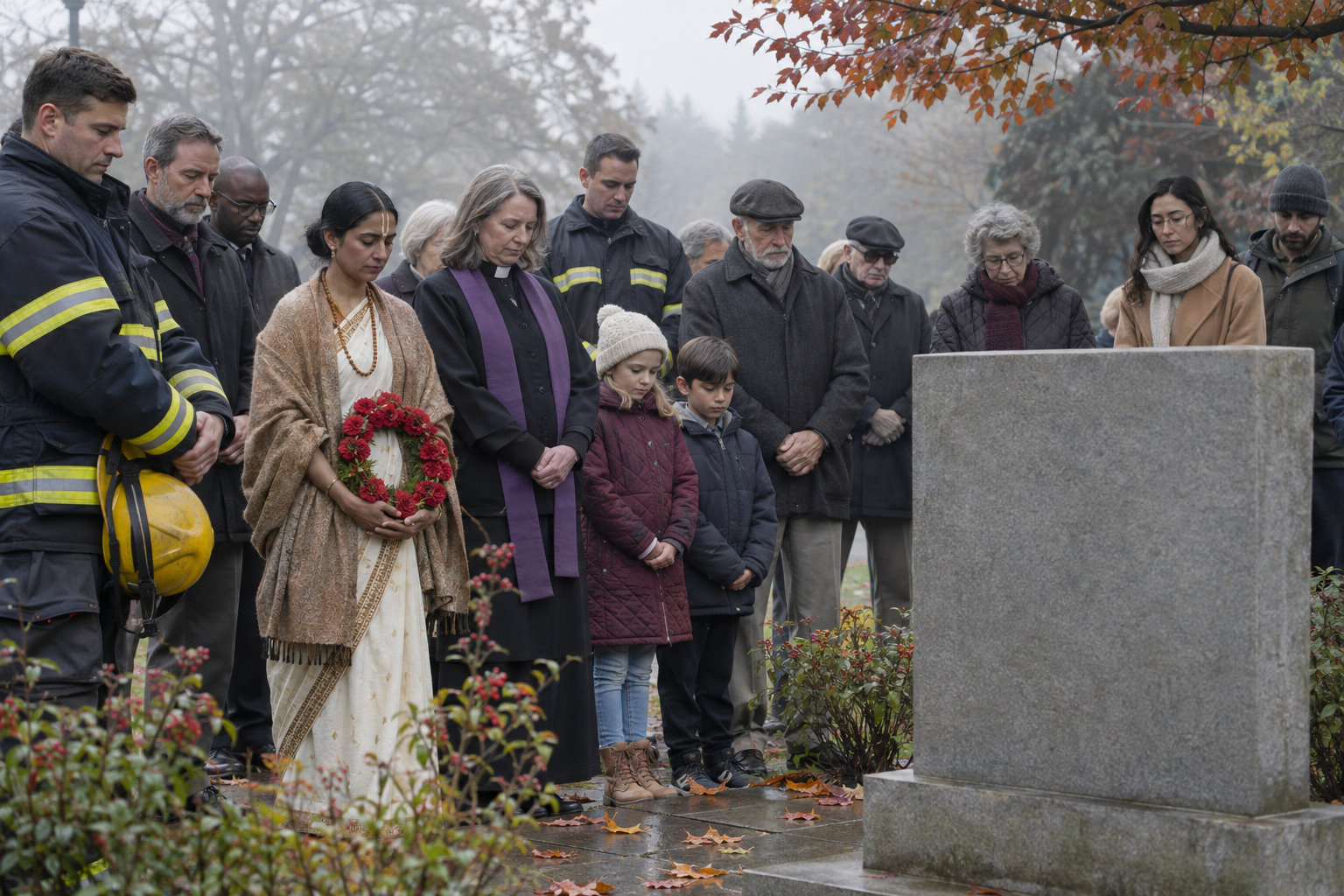
ISKCON communities can fall into a false choice. One side treats every public invitation as publicity. The other fears that participation will dilute religious identity or imply agreement with everyone present. Good civic representation does neither.
Attending a council reception, remembrance service or interfaith meeting does not require you to conceal your theology. Nor does respectful participation mean endorsing every opinion expressed in the room. A Dharmic institution can be a constructive civic neighbour while speaking honestly from its own tradition.
Before accepting an invitation, identify which of these purposes it serves:
- Presence: The wider community sees that the temple shares public occasions rather than appearing only when it needs something.
- Representation: Krishna consciousness is described by someone who understands it, instead of being defined by assumption or hearsay.
- Relationship: Temple members meet people whose work, responsibilities or communities intersect with theirs.
- Listening: The temple learns how neighbours understand it, what they value and where confusion or concern remains.
- Reciprocity: Participation in another community’s occasion creates a natural basis for welcoming its members to the temple later.
If nobody can name a real purpose, ask the host for more context before committing. An invitation is not automatically valuable because the venue is prestigious or the guest list is prominent.
There is also an important boundary between civic participation and political endorsement. If an organiser expects support for a party, candidate, campaign, policy pledge or public statement, that is a different request from attendance. Pause and obtain the appropriate internal authorisation. Do not let a photograph, quotation or event description imply an endorsement the temple never gave.
Choose invitations by purpose, not prestige
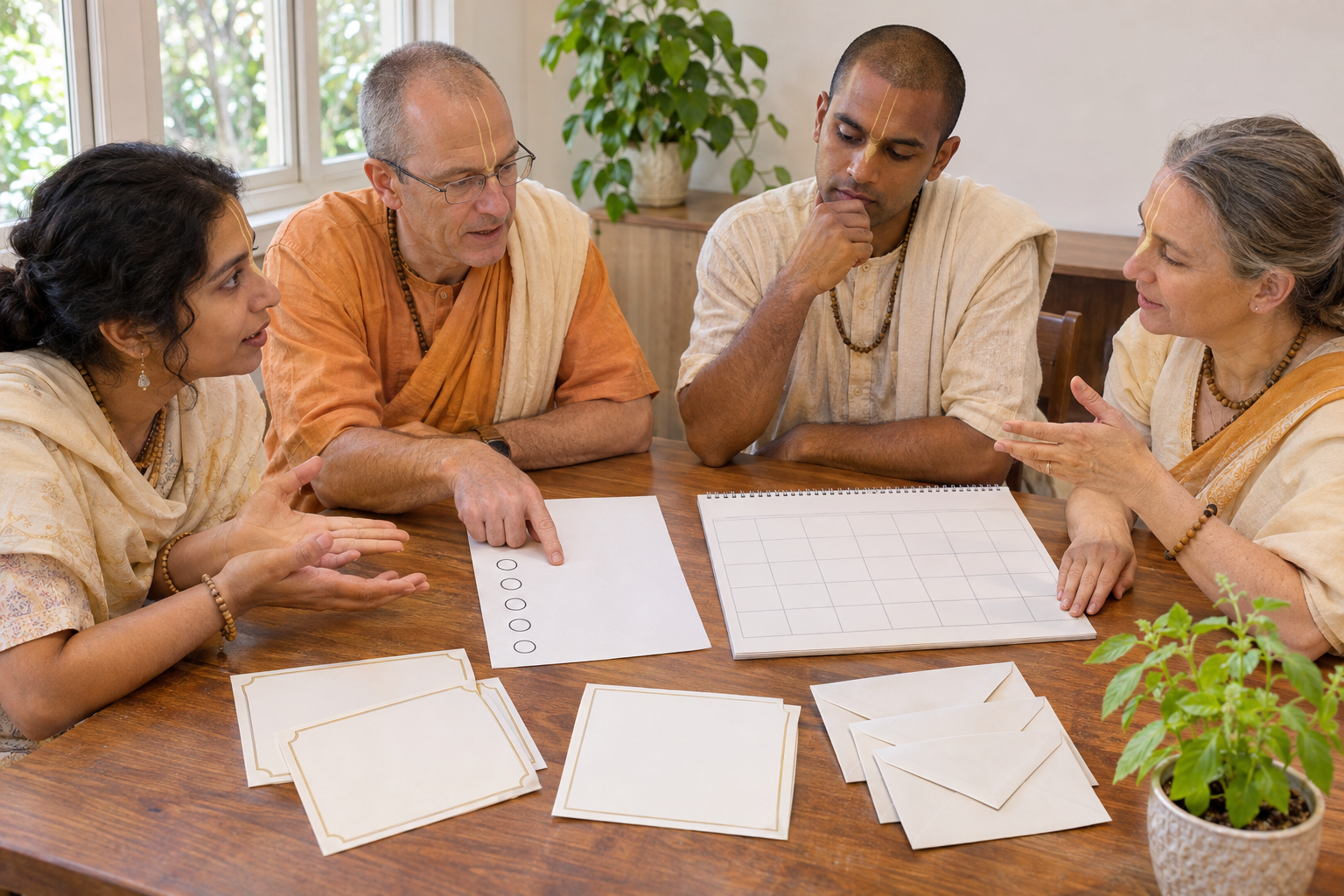
No temple can accept every invitation. The best decision is usually made before anyone starts discussing clothes, transport or social-media coverage. Use the invitation itself to answer a short set of questions.
- What is the occasion actually for? Read the programme or ask the host. A celebration, commemoration, dialogue and lobbying event place different responsibilities on a representative.
- Why has ISKCON been invited? The host may want a guest, a speaker, a religious voice, a community partner or simply a visible sign of inclusion. Each role needs different preparation.
- What will the representative be expected to do? Confirm whether the person will speak, join a discussion, participate in a ceremony, answer media questions or attend as an observer. Never discover the public role only after arriving.
- Who needs to be in the room? A temple president may be right for an event carrying institutional weight. A communications representative may be better placed to build contacts and handle follow-up. A devotee familiar with the subject may be the strongest choice for a focused dialogue.
- What useful next step could follow? That might be another conversation, a visit to the temple, participation in a public programme or a clearer channel for future communication.
These questions lead to three legitimate decisions. Accept when the purpose, role and representative are clear. Accept with conditions when the temple needs a corrected description, a defined speaking role or clarity about photographs and publicity. Decline politely when the purpose conflicts with the temple’s values, the expected role is misleading or nobody suitable can attend.
Local occasions deserve serious attention. A modest gathering where the same neighbours and community leaders meet repeatedly can produce a more durable relationship than a high-profile reception where nobody has time for a meaningful exchange. Local and national engagement are not competitors; they work at different levels.
Keep a simple invitation record containing the host, purpose, venue, expected role, audience, representative, preparation needed and intended follow-up. This turns acceptance from an impulsive diary decision into a small act of institutional judgement.
Prepare the representative, not just the schedule
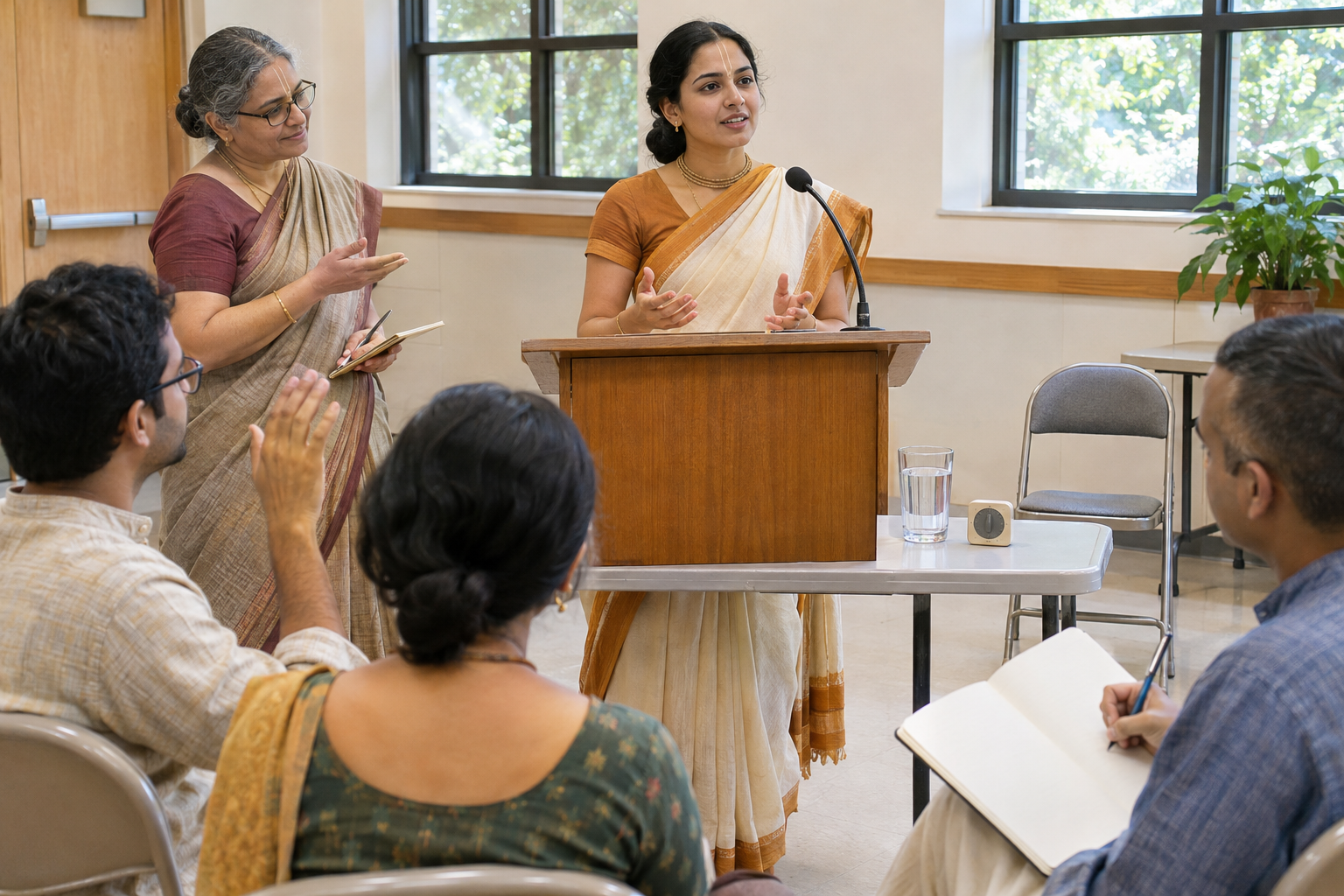
Representation often goes wrong before the event begins. The attendee knows where to be and when, but not why the temple accepted, whom to meet or what the host expects. A calendar entry is not a briefing.
At Bhaktivedanta Manor, Temple President Visakha dasi has participated alongside members of the communications team. That kind of pairing can be useful when an occasion needs both institutional authority and careful relationship management. The senior representative carries the temple’s standing; the communications representative can track introductions, context and next actions.
Every attendee should receive a concise briefing with these elements:
- The event’s purpose and running order.
- The host’s name and the reason for the invitation.
- The temple’s role and any contribution expected from it.
- The people or communities it would be useful to understand better.
- A short, accurate description of the temple and its tradition.
- Any subject on which the attendee must avoid improvising an institutional position.
- The follow-up the temple is prepared to offer.
The representative’s message need not be elaborate. It needs three parts: identity, contribution and invitation. Name the temple and Krishna-conscious tradition plainly. Explain why the community is present at this particular occasion. Then, when appropriate, open a path for continued contact or a future visit.
Do not replace religious language with vague language merely to appear acceptable. Adapt the length and level of explanation to the setting, but keep the identity intact. A remembrance service may call for restraint and attentive presence. An interfaith conversation may allow more explanation. A Diwali celebration may offer a natural opening for discussing tradition. Good judgement changes the mode of participation, not the community being represented.
Unexpected questions need discipline. Answer what you genuinely know. Distinguish personal understanding from an authorised institutional position. If the question needs a more informed response, take the person’s details and arrange a follow-up. An improvised answer can travel farther than the event itself, especially when it is recorded or repeated without context.
The representative also needs to listen. Ask what brought the other person to the event, what work they do in the community and whether they have encountered the temple before. Civic representation is weakened when the temple speaks fluently about itself but learns nothing about the people around it.
Turn attendance into a two-way relationship

The most useful civic engagement continues in both directions. By attending occasions hosted by others, a temple strengthens the relationships that can later bring people into the temple to learn about its traditions and take part in programmes and celebrations. This is not a transaction. It is reciprocity: you receive another community’s hospitality and become ready to extend your own.
Use a clear before-during-after rhythm:
- Before the event: Decide whom the representative should meet, what they need to learn and what kind of follow-up the temple can genuinely support.
- During the event: Make a few relevant introductions rather than collecting names indiscriminately. Note why each contact matters and what was discussed.
- Before leaving: Thank the host directly. If a continuing conversation would be useful, say so while the context is fresh.
- On the next working day: Send a personal note that mentions the occasion and a specific point from the conversation. A generic mass message signals that the contact was merely added to a list.
- When appropriate: Extend a proportionate invitation to a public programme, celebration, temple visit or further conversation. Make clear who will coordinate it.
- At the next relevant occasion: Reconnect with the person and refer to the previous exchange. Repeated recognition is what turns an introduction into a relationship.
A useful follow-up note can be simple: Thank you for welcoming our community to [occasion]. Your point about [specific subject] was valuable. We would be glad to continue the conversation and, when appropriate, welcome you to [programme or celebration]. [Name] will coordinate the next step.
Keep a shared contact record rather than leaving the relationship in one attendee’s private messages. Record who met, the context, what matters to the contact, any promise made and the next appropriate action. This preserves continuity when representatives change.
Review engagement by substance rather than photographs. Ask whether the temple gained a reachable contact, learned something useful, corrected a misunderstanding, received a return invitation or welcomed someone into its own space. A photograph can document attendance, but it cannot show that trust deepened.
Watch for four common failures: accepting without understanding the role, sending an unbriefed attendee, treating the event mainly as content for social media and neglecting follow-up. Each produces visibility without relationship. If that pattern repeats, a busy civic calendar can still leave the temple isolated.
Key takeaways
- Civic participation should have a named purpose: presence, representation, relationship, listening or reciprocity.
- Attendance does not imply agreement, but requests for political or institutional endorsement need separate authorisation.
- Choose the representative according to the expected role, not simply according to availability or seniority.
- Give every attendee a briefing that covers the host, purpose, message, boundaries and intended follow-up.
- Judge success by stronger relationships and better understanding, not by the number of invitations accepted or photographs published.
Start with the next invitation already in your inbox. Write down its purpose, the role expected of ISKCON, the right representative and the relationship that could responsibly follow. If any of those fields remains blank, ask the host before accepting. If they are clear, attend with confidence, listen closely and make the next contact while the meeting still has meaning.
References

Leave a Reply
You must be logged in to post a comment.