
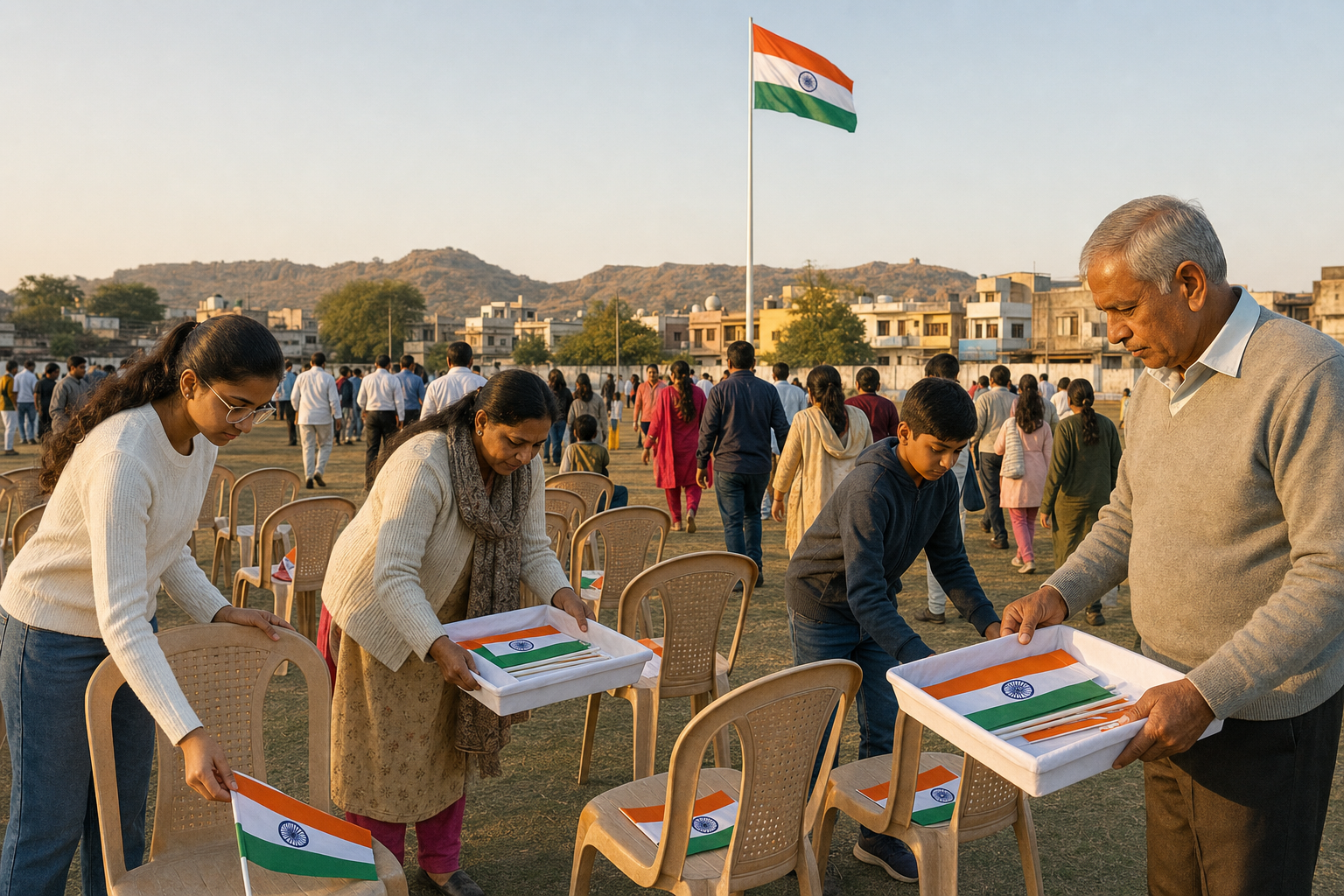
You may have the Republic Day stage, programme and procession fully planned. The harder question is what happens to every national flag after the crowd disperses. If nobody owns that responsibility, a ceremony intended to honour Bharat can end in casual neglect.
Buldhana offers a practical way to close that gap. A district-wide awareness campaign led by Hindu Janajagruti Samiti asked residents, schools and community associations to treat careful display and handling of the Tricolour as civic duties. Its most useful lesson is simple: respect cannot be confined to the moment of salutation. It has to shape the whole event.
The weak point comes after the salute
During a formal ceremony, responsibility is easy to see. Attention is on the flag, the programme has an order, and teachers or organisers are present. Once the event ends, that structure dissolves. Participants move toward refreshments, children leave with their families, volunteers begin dismantling the venue, and responsibility for smaller flags or flag-bearing displays becomes unclear.
That is where unintentional disrespect is most likely. The problem is usually not a lack of patriotism. It is a broken handoff: everyone assumes somebody else will take care of the flag after its ceremonial use.
Before distributing or displaying flags, ask four concrete questions. Who is responsible for them? Where should participants return them? Who will inspect the venue after the event? What approved procedure will the institution follow if a flag is damaged? If these questions have no named answer, the celebration is not yet fully planned.
A sound organising rule follows: do not distribute more flags than your volunteers can responsibly supervise and recover. A smaller, carefully managed display honours the Tricolour better than a larger display whose materials become anonymous once the photographs are taken.
Plan flag care before the crowd arrives
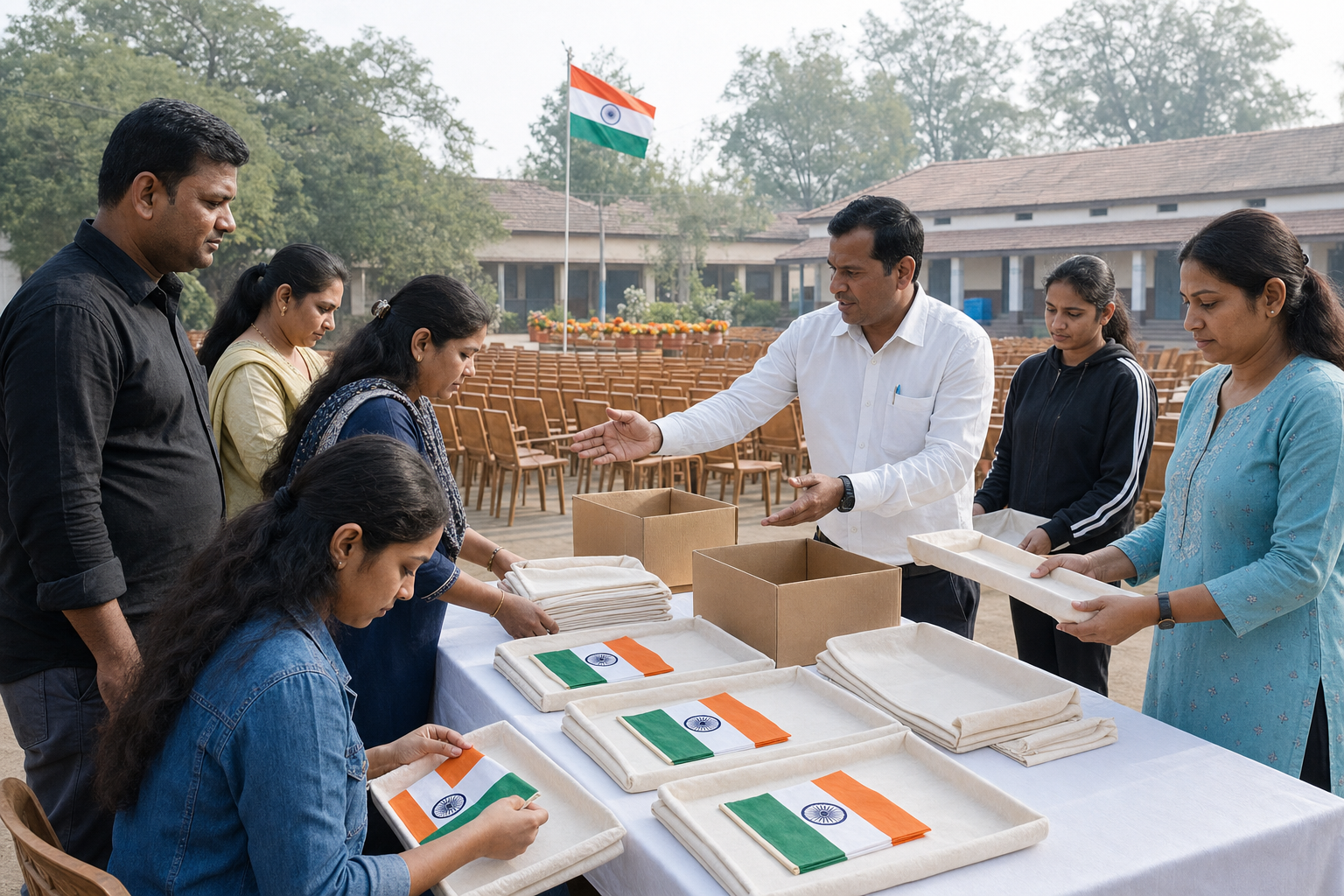
Treat flag care as a continuous responsibility with a beginning, a handoff and a close. The person managing it does not need a grand title, but the assignment must be explicit.
- Before the programme: Identify every place where the national flag will be used, including the principal ceremony, handheld flags, processions and displays. Assign a flag steward who knows where each set belongs. Tell participants where flags should be returned instead of assuming they will work it out later.
- During the programme: Keep a volunteer near each distribution or collection point. If a flag falls, becomes damaged or is no longer needed, it should be handed to that volunteer and placed in a clean, secure location. Correct mistakes calmly; public humiliation teaches defensiveness, not respect.
- After the programme: Inspect the stage, seating area, route, entrances and nearby grounds before volunteers leave. Collect flags separately from ordinary event material. If any require disposal or special handling, do not improvise. Pass them to the responsible institution and use its approved procedure.
In a school, a teacher or administrator should retain responsibility even when students assist. In a housing society, the committee member overseeing the event can hold it. In a public association, the convenor can assign the role to a volunteer and confirm completion. Children and sanitation workers should not be left to discover, after everyone else has gone home, that the organisers forgot this duty.
Your instructions can remain brief and courteous: please return the flag to the collection point before leaving; if you find one on the ground, bring it to a volunteer. Clear directions prevent more neglect than a long speech delivered without a recovery plan.
Make cleanup part of seva, not an afterthought
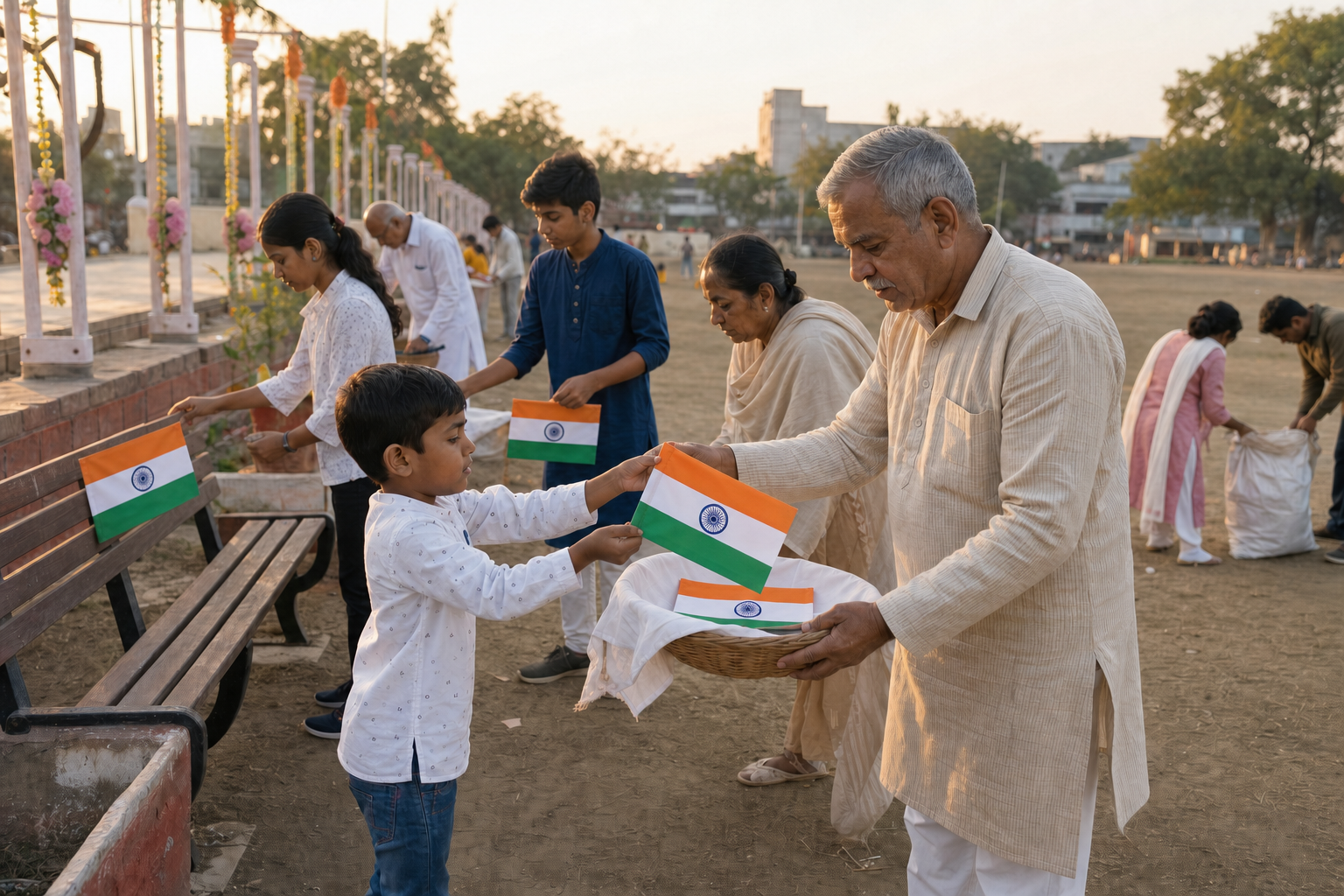
The Buldhana initiative connected flag respect with dharma, self-discipline and seva. That framing matters because it moves patriotism from emotion to conduct. Dharma asks what duty the occasion places before us. Self-discipline governs what we do when excitement makes carelessness easy. Seva includes the quiet work that remains after the applause.
This ethical vocabulary can speak to Hindus, Buddhists, Jains and Sikhs without pretending that their teachings or practices are identical. The meeting point is practical responsibility: reverence becomes credible when it changes how we handle a shared symbol.
That should change the status of post-event work. Do not describe inspection and collection as mere cleaning. Present them as the final part of the observance. Invite students and volunteers to participate under responsible supervision, and explain why the work matters. The lesson becomes tangible when the same hands that salute the flag also ensure that it is not abandoned.
There is also a test of sincerity here. Visible parts of a national celebration attract attention and recognition. Seva often begins when the audience has left. A flag-respect campaign succeeds when people still act carefully at that less visible moment.
Keep the Tricolour above faction
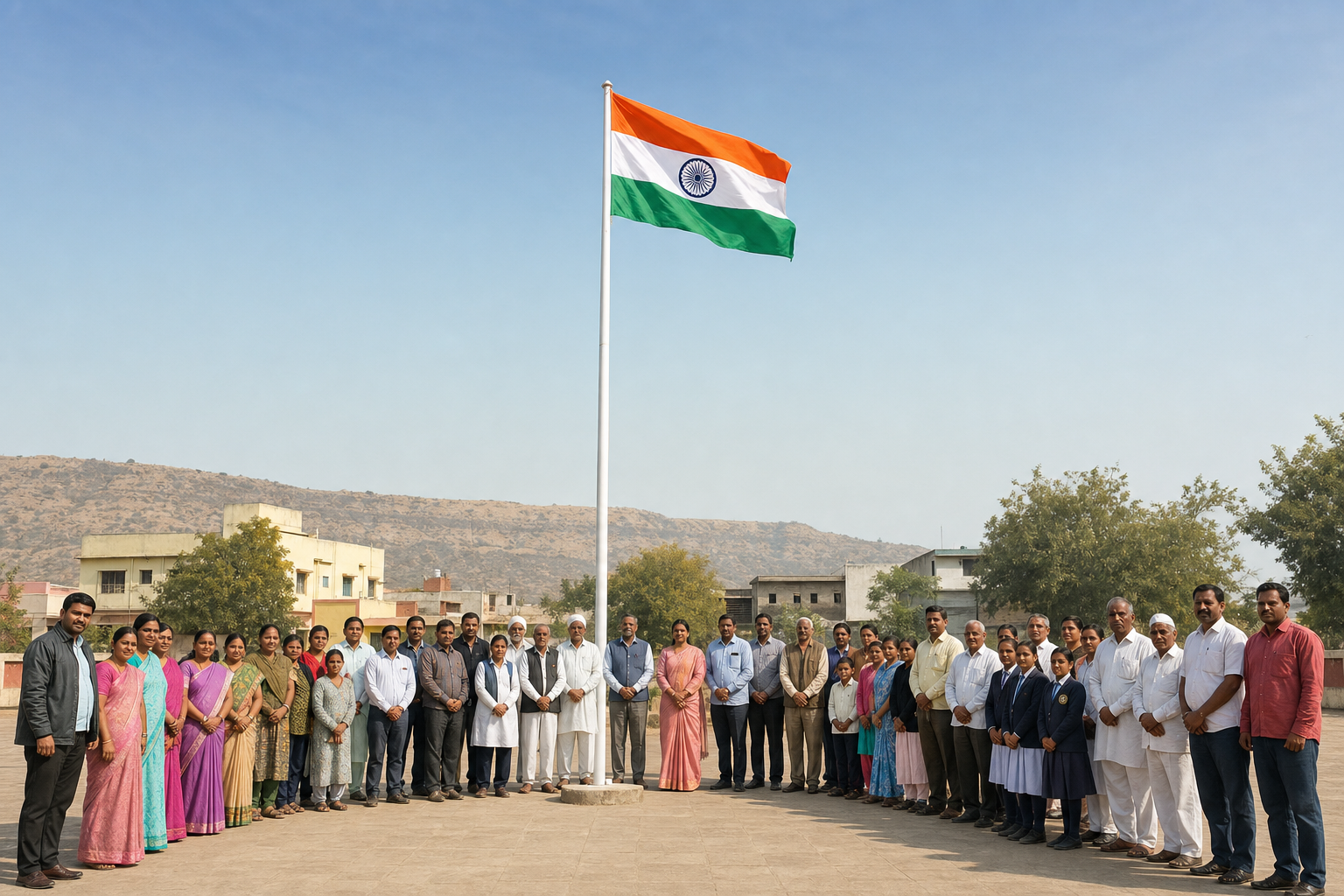
The Tricolour belongs to the nation, not to an organisation, political party or religious community. Although HJS led the Buldhana campaign, its civic purpose reaches beyond its organiser. The flag can bring different communities into a common discipline precisely because no group can claim exclusive ownership of it.
If you are adapting this model, make participation broad and the message conduct-based. Invite schools, resident groups, cultural associations and citizens to take part. Explain what respectful behaviour looks like. Do not turn an accidental mistake into a test of somebody’s ideology, and do not attach partisan slogans to instructions about flag care.
- Ask people to perform a clear action rather than merely declaring that they should be patriotic.
- Give every participant access to the same return or collection process.
- Correct mishandling promptly but discreetly, especially when a child is involved.
- Keep the national flag distinct from ordinary decorations in the event inventory and cleanup plan.
- Welcome volunteers from across the community to share the practical work.
This inclusive approach does not weaken a dharmic understanding of duty. It demonstrates it. Restraint, service and care for a common good are strongest when they build trust rather than demand recognition.
Key takeaways
- Flag respect must cover preparation, the ceremony, every handoff and the final inspection.
- Assign a named flag steward before distributing or displaying flags.
- Use only as many flags as your volunteers can supervise and responsibly recover.
- Give participants a clear return point and keep collected flags apart from ordinary event materials.
- Frame the work as dharma, self-discipline and seva while keeping the campaign open to every community.
- Use quiet correction and practical education; public shaming undermines the civic unity the Tricolour represents.
Before your next Republic Day programme, add one line to the event plan: who remains responsible for the Tricolour after the ceremony ends? Name that person, provide a collection point and complete the final inspection before the team leaves. That modest piece of organisation turns national pride into a duty actually fulfilled.
References
