
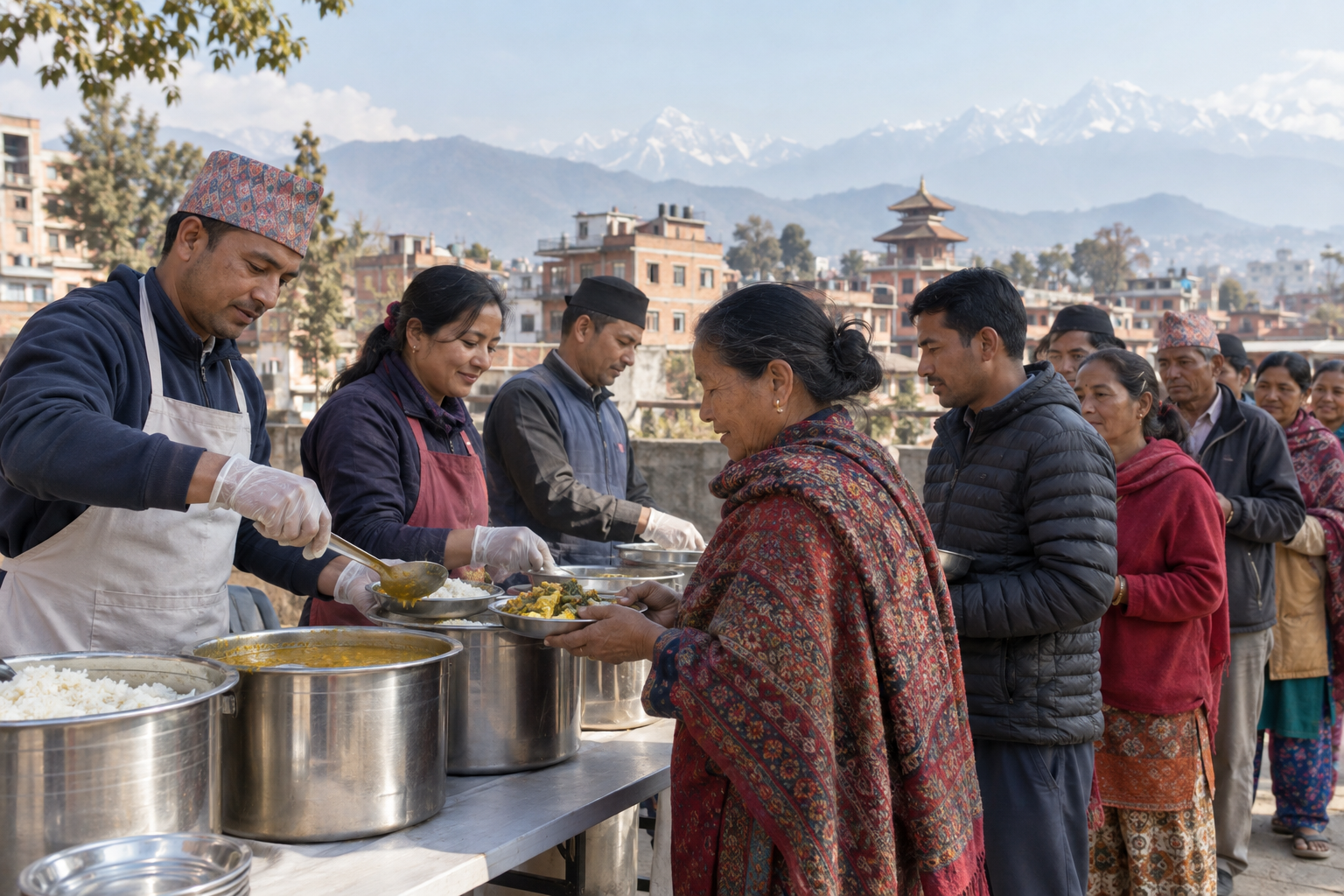
You may have reached this page after seeing a brief notice about prasadam being distributed in Nepal. You want to know whether the effort is active, whether it needs help, and how you can support it without spreading an inflated claim or sending resources to the wrong place.
The honest answer begins with a narrow fact: Rukmini Ramana Prabhu of the Food for All UK team was going out daily to distribute prasadam in Nepal. Beyond that, the current schedule, locations, number of servings, funding requirements, official payment route, and duration remain unverified. That distinction should govern what you donate, volunteer for, and share.
Read the claim at its actual scale
This is evidence of recurring service by a named team member. It is not evidence of a Nepal-wide programme. No precipitating disaster, beneficiary population, distribution district, institutional partner, or fundraising target is identified. You therefore should not add an earthquake, flood, famine, refugee emergency, or nationwide reach to the story unless a current organiser supplies that information.
The wording matters because an exaggerated appeal can travel farther than its correction. A supporter may donate under a false impression, while a genuine local effort becomes associated with claims it never made. When you share the activity, keep the claim proportionate: a Food for All UK team member was distributing prasadam daily in Nepal. Treat everything else as a question to verify.
Do not attach bank details, payment handles, serving totals, photographs, or claims about present needs merely because they appear beside the same story in a forwarded message. Confirm them through a current, authenticated contact for the organiser. A real distribution effort and an unverified fundraising request can circulate together; proof of the first does not authenticate the second.
Let prasadam shape the manner of relief
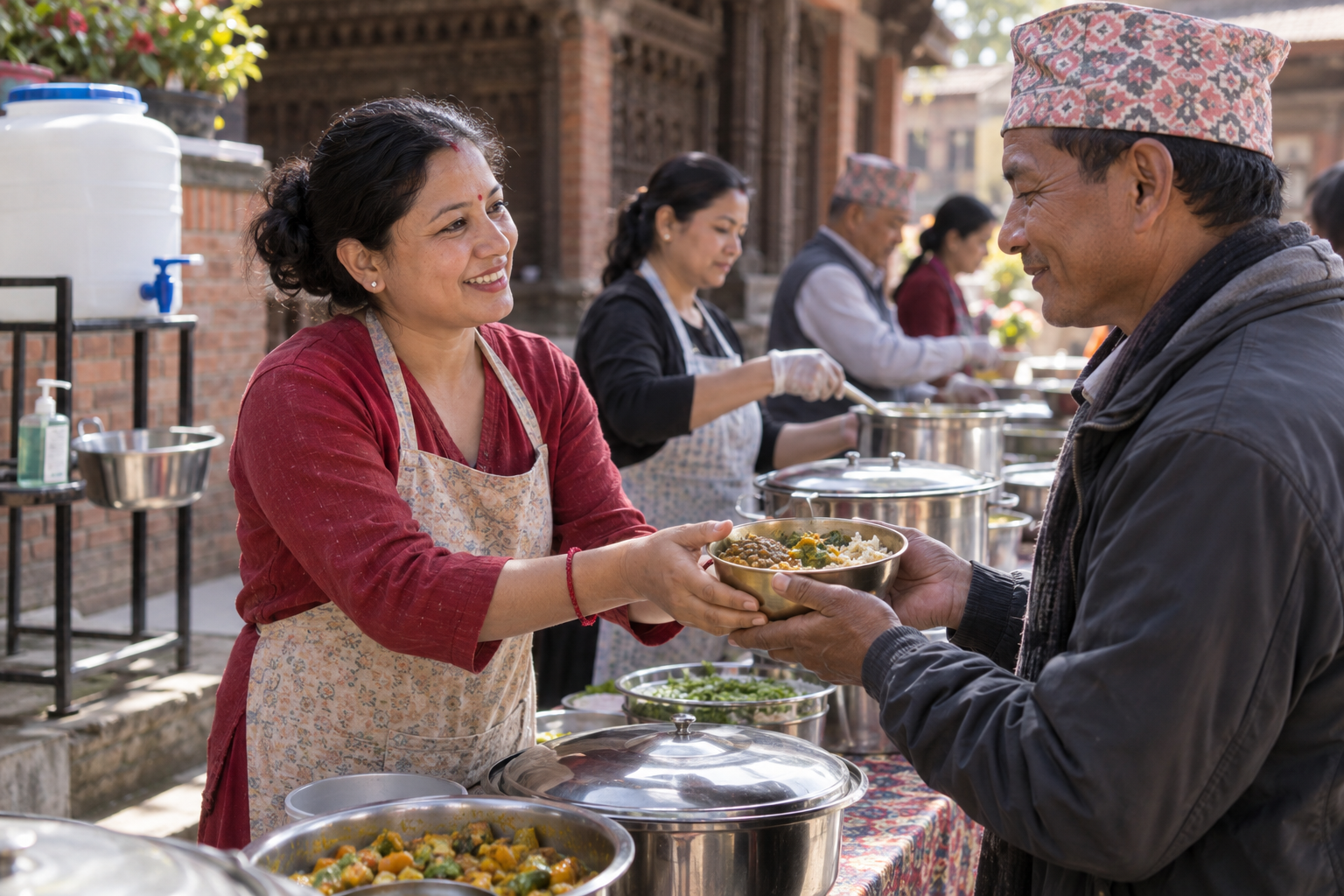
Prasadam is food first offered in worship and then received as grace. In a relief setting, that devotional meaning should deepen care for the person receiving it. It should never become a reason to lower standards of safety, dignity, consent, or accessibility.
The practical and spiritual purposes can reinforce each other. Food addresses immediate hunger; prasadam carries the intention of seva. But the recipient remains a person, not a prop for devotional publicity. A sound distribution should therefore follow a clear recipient-facing standard:
- Explain what the food contains in language recipients can understand. Do not assume that calling a meal vegetarian answers every question about ingredients or allergies.
- Offer the meal without requiring prayer, religious participation, personal information, or a declaration of belief.
- Arrange the queue so older adults, children accompanied by caregivers, and people with disabilities are not forced to compete physically for food.
- Follow applicable local food-safety requirements through cooking, packing, transport, holding, and service. If the team cannot establish that food remains safe, sanctity is not a reason to serve it anyway.
- Keep waste, used plates, and packaging under control. Leaving refuse at a distribution point transfers the burden to the same community the service is meant to help.
- Recognise the boundary of the meal. Prasadam distribution does not replace safe water, shelter, urgent medical attention, or specialised disaster response when those are needed.
If you are evaluating an initiative from a distance, ask how it protects these basics. Do not assume that the Nepal activity either meets or fails them; the limited confirmed information does not answer that question. Use the standard as due diligence, not as an accusation.
Ask for the missing operational facts before donating

The existence of a distribution does not tell you what it presently needs. Food may already be funded while transport is the bottleneck. Volunteers may be plentiful while safe preparation space is scarce. Unrequested ingredients can create storage and spoilage problems instead of solving them. Ask before you send.
- Is the Nepal distribution operating now? Ask for a current answer and the name of the person authorised to coordinate support.
- What kind of help is actually requested? Distinguish money, ingredients, cooking equipment, packaging, transport, serving labour, and longer-term sponsorship. They are not interchangeable.
- Where is the activity taking place? You do not need recipients’ private addresses, but you do need enough geographic and organisational context to know which operation you are supporting.
- Who controls the payment route? Confirm the account or payment handle directly. If the recipient’s name differs from the named organisation or organiser, ask for a clear explanation before transferring money.
- How will support be accounted for? A small effort may use simple reporting, such as dated activity summaries, aggregate serving records, expense receipts, or supply acknowledgements. Accountability does not require intrusive photographs of people receiving food.
Do not confuse modest administration with dishonesty. A local seva effort may not produce a polished annual report. What matters is whether a responsible person can state what is happening, what is needed, where support goes, and how completion will be acknowledged. Pause when payment details exist only in a forwarded screenshot, the named recipient is unexplained, or nobody can confirm that the appeal is still active.
If you want to make a restricted donation, agree on the restriction before paying. A label such as food only may prevent the organiser from covering fuel, cooking gas, containers, or transport that makes the food service possible. Let the team identify the real constraint, then decide whether that use matches your intention.
If you want to volunteer, join the local chain of command
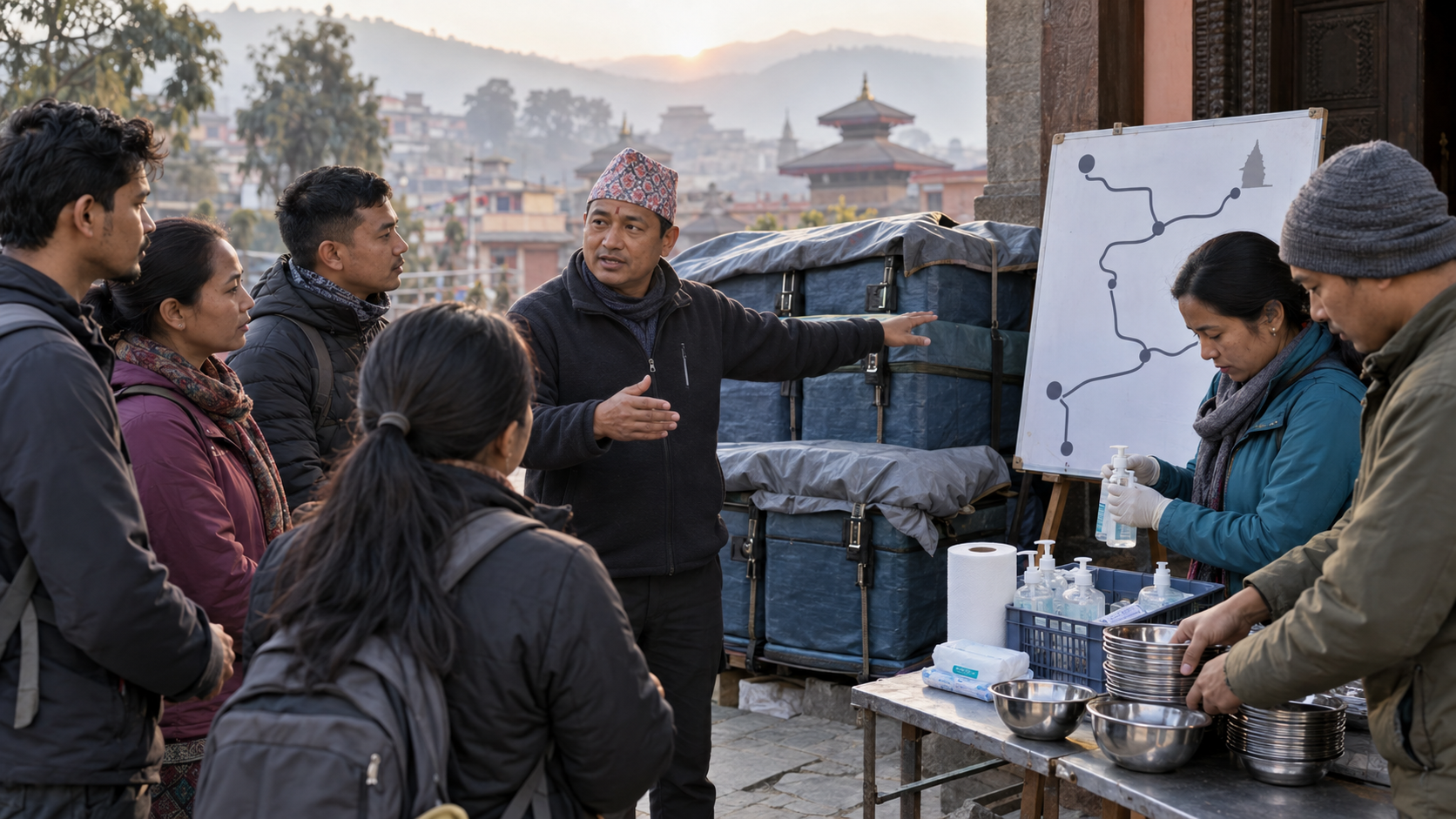
Volunteering helps when it removes work from the organiser. It becomes a burden when an unannounced visitor needs transport, accommodation, interpretation, orientation, or a role invented on arrival. Do not travel or report to a distribution point on the strength of a brief public notice.
- Contact the current coordinator and confirm that volunteers are needed on a specific day, at a specific meeting point, for a defined shift.
- Accept an assigned role such as preparation, packing, loading, queue support, serving, cleaning, or record-keeping. Do not assume that public-facing service is where help is most needed.
- Disclose relevant limitations before the shift, especially if you cannot lift loads, stand for long periods, handle food safely, or communicate with recipients.
- Bring only requested supplies. Unplanned perishable food, unsuitable packaging, or unfamiliar equipment can consume scarce storage and staff time.
- Follow the organiser’s hygiene, safeguarding, photography, and local-language instructions. Good intentions do not override the community’s rules.
- Close the loop after your shift. Return equipment, report unused supplies, record any assigned expenses, and tell the coordinator about problems that the next team must know.
If you are supporting from outside Nepal, remote work may be more useful than travel. An organiser might need authenticated fundraising administration, donor acknowledgements, translation, purchasing coordination, or accurate updates. Offer a concrete skill, then wait for the team to decide whether it solves a current problem.
A short FAQ for supporters
Does daily distribution mean the programme is active now?
No. Daily describes the reported pattern of activity; it is not a guarantee of present operations. Before donating, travelling, or publishing an appeal, obtain a current confirmation from an authorised organiser.
Is prasadam distribution the same as food relief?
The terms describe different dimensions. Food relief identifies the practical purpose of addressing hunger or immediate need. Prasadam identifies the food’s devotional character. One distribution can be both, but the spiritual designation alone does not establish its scale, beneficiaries, charitable status, or present funding need.
What is safe wording if I want to share the news?
Use a narrow statement: Rukmini Ramana Prabhu of the Food for All UK team was distributing prasadam daily in Nepal. Verify the team’s current needs and official support channel directly before donating or volunteering. Add newer claims only when you can link them to a current, accountable organiser.
Your best next step is one verified message, not a chain of assumptions. Ask whether the distribution is active, request the present priority, and use only the support route confirmed by the responsible team. That turns admiration for seva into help the people on the ground can actually use.
References

Leave a Reply
You must be logged in to post a comment.