

You may have encountered New Mayapur while looking for deeper spiritual association and wondered what to do next. Should you simply listen, plan a visit, offer support, or treat the community as a model for your own local sanga? Begin with a more searching question: what kind of spiritual life does the community make possible, and what will you do with that opportunity?
New Mayapur is the focus of the third Sadhu Sanga Podcast episode, titled In Good Hands. For a dharmic community, being in good hands is a demanding standard. It means more than preserving a place or maintaining an institution. It means transmitting practice, responsibility, character, and service from one person to another.
What being in good hands should actually mean
A sacred place can appear stable while depending heavily on a few exhausted people. It can attract appreciative visitors without forming responsible practitioners. It can preserve buildings while slowly losing the habits that gave those buildings their purpose. Stewardship therefore has to be judged by what happens on an ordinary day, not only by what happens during a festival or public event.
When you encounter New Mayapur, or any spiritual community, look for signs of living continuity:
- The community can explain plainly which practices and obligations it exists to preserve.
- Its regular rhythm does not depend entirely on special guests, major events, or one charismatic personality.
- Newcomers are taught duties before they are offered status or influence.
- Responsibility is shared, with clear ways to hand knowledge and service to the next person.
- Teachers and elders are honoured without making the institution incapable of functioning in their absence.
A useful question is: what would remain if the most visible person stepped away? If the answer is a disciplined body of practitioners, a teachable routine, and a clear purpose, the community has resilience. If the answer is confusion, personal rivalry, or paralysis, the outward appearance of stability may be misleading.
You can test this without interrogating anyone. Ask what people do when there is no public programme. Notice whether routine service is respected. Listen for how members speak about difficult or unglamorous duties. A community’s ordinary day often reveals more than its most impressive occasion.
Sadhu-sanga is participation, not spiritual proximity
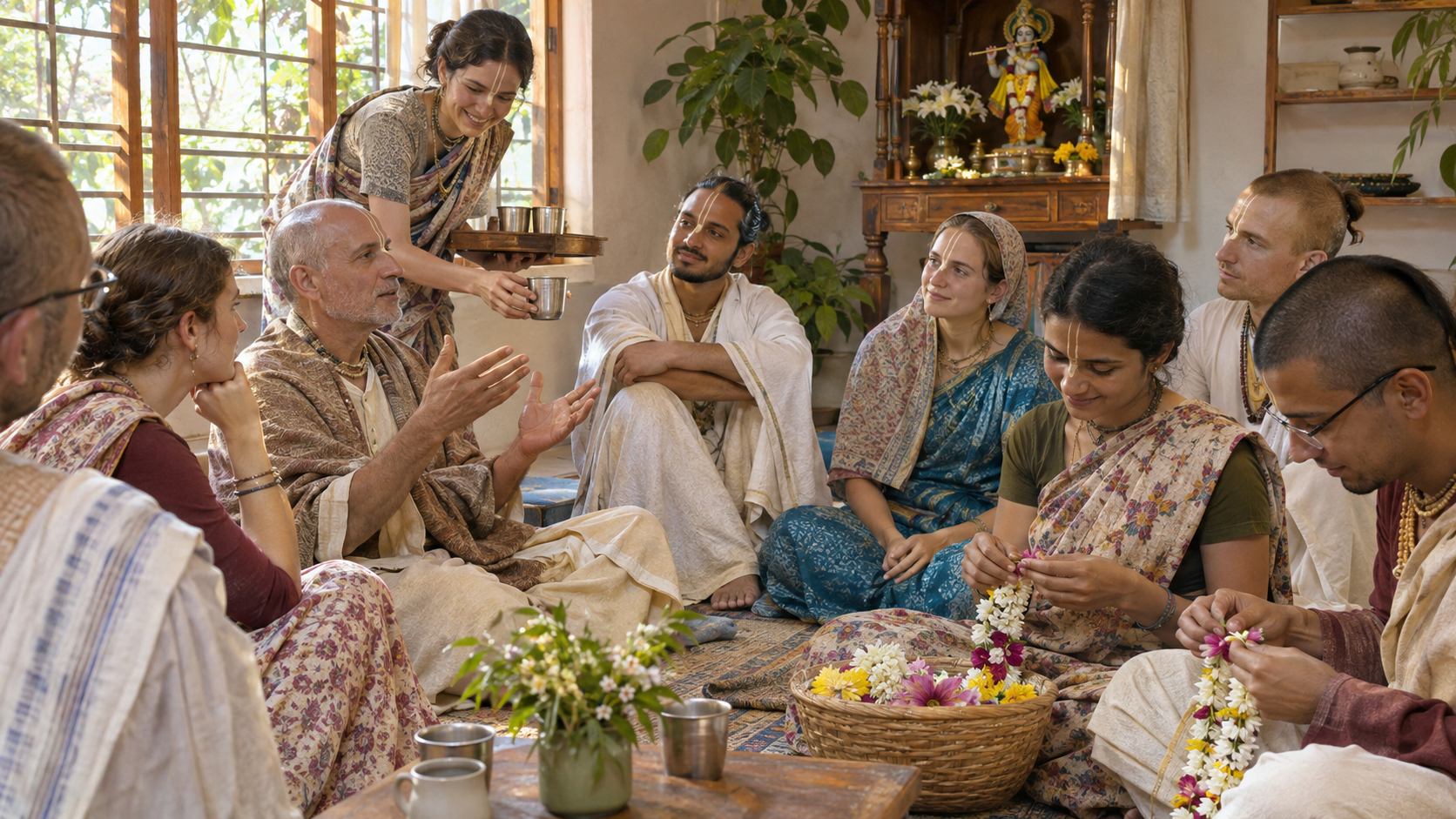
Sadhu-sanga is commonly understood as association with saintly practitioners. Yet association is not the same as occupying the same room, collecting photographs, or gaining access to respected people. In a bhakti setting, real association changes how you hear, choose, and serve.
Use a simple sequence: hear, inquire, serve. Hear long enough to understand what is actually being taught. Inquire to remove confusion rather than to display knowledge. Serve so that the teaching enters your conduct instead of remaining an admired idea.
After any meaningful encounter, ask yourself:
- What did I hear that corrects a habit, assumption, or attachment in me?
- Which part applies to my present duties rather than to an imagined future life?
- What service, restraint, or regular practice follows from it?
- Did the association make me more dependable, or merely more excited?
This distinction protects you from devotional tourism. Inspiration is valuable, but it is incomplete until it becomes steadiness. You do not need to imitate another person’s vocation or move to another community to prove that an encounter mattered. Sometimes the honest fruit of sadhu-sanga is quieter: more attentive japa, more reliable seva, less appetite for recognition, or greater patience with the people already entrusted to you.
Keep reverence and discrimination together

Respect for sadhus does not require the abandonment of discernment. Humility can expose the ego’s defensiveness, but humility is not denial of coercion, secrecy, financial pressure, or preventable harm. A healthy spiritual community can distinguish sincere questions from hostility and can answer practical concerns without humiliating the person who asks.
Look for conditions that allow trust to grow responsibly:
- Roles, boundaries, and expectations are explained before commitment is requested.
- Money and service are discussed clearly rather than through guilt or spiritual comparison.
- Personal access to a teacher is not treated as proof of spiritual advancement.
- Questions about governance, safety, or accountability receive concrete answers.
- Disagreement is not automatically described as disloyalty or lack of devotion.
- Serious complaints are handled through a process rather than through the charisma of the person involved.
Pause when urgency replaces clarity. Pressure to donate immediately, surrender independent advice, conceal an arrangement, or become practically dependent should not be spiritualised. If a concern involves abuse, coercion, safeguarding, or financial misconduct, seek qualified help outside the institution as well; internal mediation may not be sufficient.
These are general standards for responsible discernment, not allegations about New Mayapur. Apply them consistently wherever spiritual authority, money, residence, family welfare, or long-term service are involved. Fairness means neither automatic suspicion nor automatic trust.
Decide carefully before visiting, supporting, or relocating
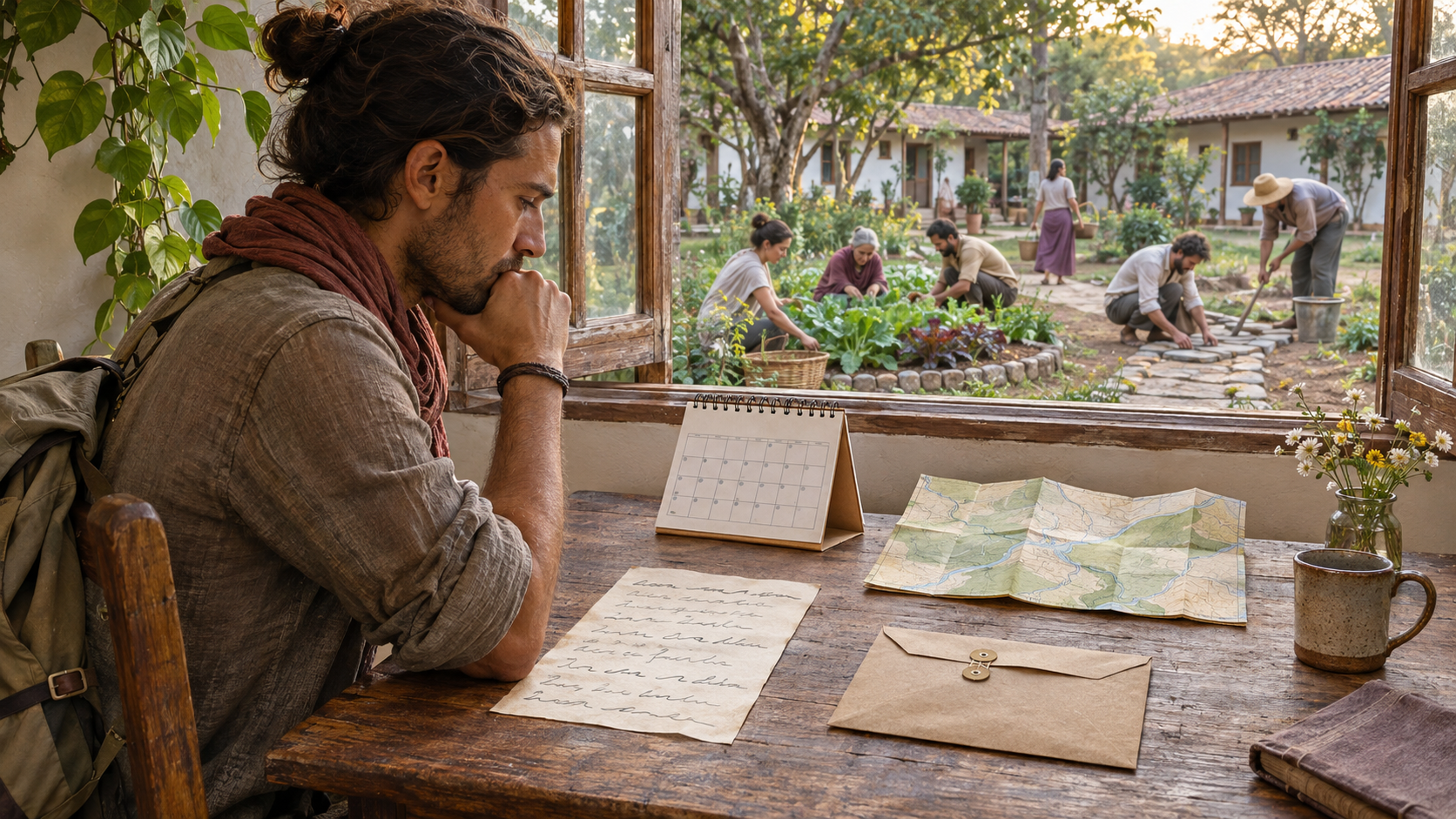
A moving account of community life can help you recognise what you value, but it cannot answer every practical question. If you are considering a direct relationship with New Mayapur, separate spiritual interest from the decision it may lead you to make.
If you hope to visit
- Confirm directly whether visitors are currently received and whether advance arrangements are required.
- Ask about the daily schedule, guest participation, accommodation, meals, costs, accessibility, and expectations concerning dress or conduct.
- State your purpose honestly. A person seeking retreat, family darshan, practical service, or serious formation may need a different arrangement.
- Leave room to observe ordinary life. A packed programme can prevent you from seeing how the community actually functions.
If you hope to volunteer or offer financial support
- For service, clarify the task, supervision, schedule, skills required, living arrangements, and who bears incidental costs.
- For a donation, ask what the money is designated for, whether it is restricted to that purpose, and how supporters are informed about its use.
- Prefer a defined commitment you can fulfil reliably over an impressive promise you may not sustain.
- Do not confuse access, titles, or public recognition with the spiritual value of service.
If you are considering a long-term commitment
Do not make a relocation or dependency decision from devotional enthusiasm alone. Independently verify housing, income, legal status, health care, schooling where relevant, personal safety, and the practical terms of community membership. If a trial arrangement is available, use it to test the fit without surrendering your return path or financial independence.
Also ask what the community expects when a member disagrees, changes service, experiences illness, or needs to leave. A dharmic commitment should be freely maintained through conviction. It should not be produced by a person’s lack of alternatives.
Key takeaways for your own practice

- Approach New Mayapur as a living question about transmission and stewardship, not merely as a destination to admire.
- Judge good hands by regular practice, shared responsibility, teachable routines, and continuity beyond prominent personalities.
- Let sadhu-sanga move through hearing and inquiry into service and changed conduct.
- Keep reverence and responsible questions together; spiritual respect is compatible with clear boundaries and accountability.
- Confirm present conditions directly before committing money, labour, family responsibilities, or a change of residence.
- Carry what you learn back into the duties and local relationships already in front of you.
Your next step can be modest and real. As you engage with New Mayapur, make notes under these prompts: what is being preserved, how are people being formed, and what can I practise where I am? Then choose one fitting action, such as attending local sanga more regularly, accepting a defined service, or repairing consistency in your own sadhana. The encounter has served you well when it leaves dharma in steadier hands, including your own.
References

Leave a Reply
You must be logged in to post a comment.