
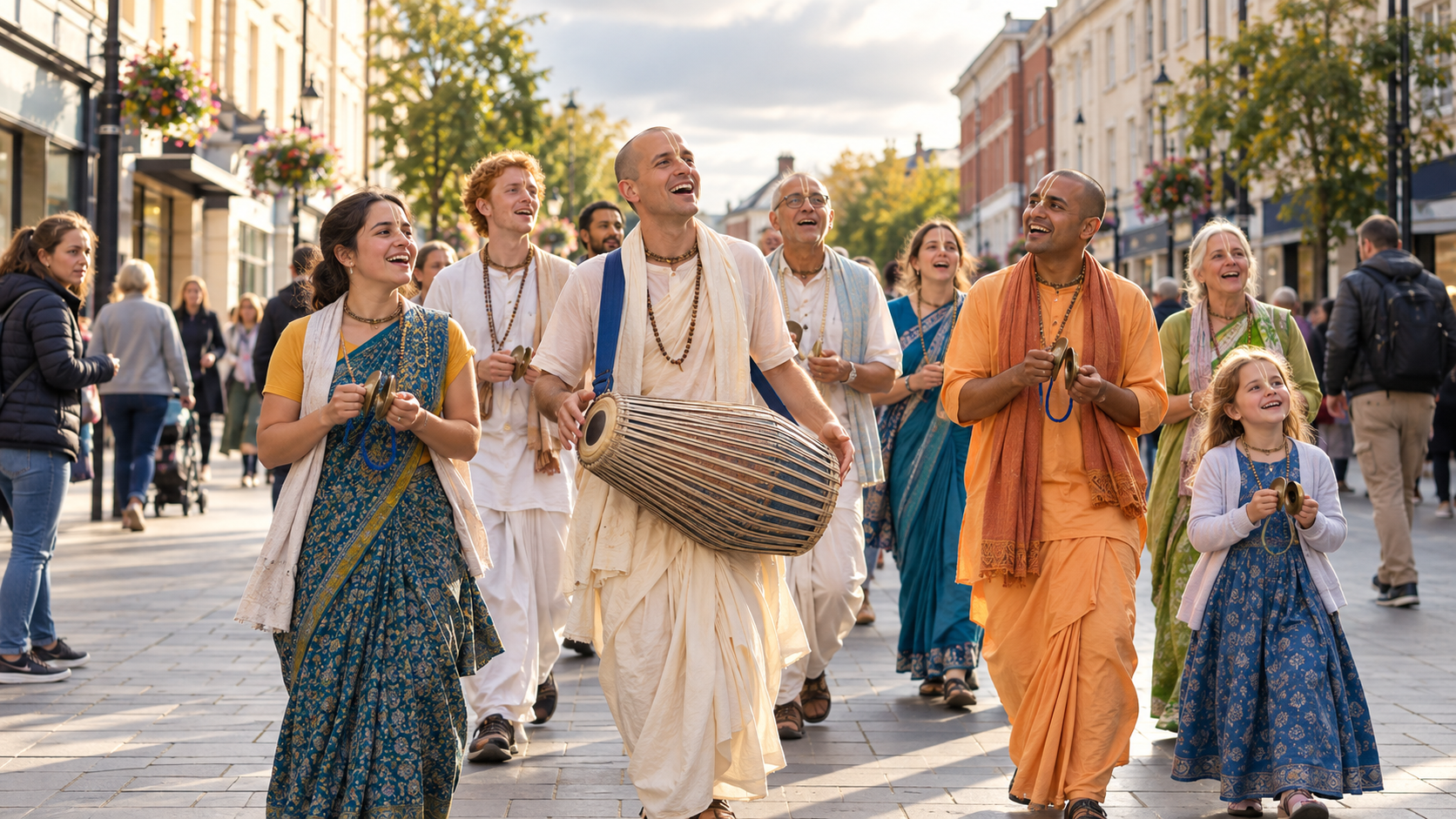
You may be trying to answer a practical question: can you join the Vaishnava Sanga 2026 Stratford Harinam, and what should you expect if you do? Start with the distinction that prevents most confusion: harinam tells you the devotional form, but it does not give you a complete itinerary.
Vaishnava Sanga 2026 names a harinam associated with Stratford. Treat the exact calendar date, country, meeting point, start time, route, duration, accessibility arrangements, and current event status as unconfirmed until you obtain them from a current organizer channel.
Confirm the journey before you leave home

A year in an event name is not a schedule, and a place name is not an assembly point. Stratford can also refer to more than one place. Do not book travel or follow a map pin until you have matched the event to a city, country, date, and organizer.
Confirm these six details:
- Status: Is this an upcoming program, a same-day notice, or a record of a gathering that has already concluded?
- Location: Which Stratford is intended, including the city, region, and country?
- Timing: What are the calendar date, local time zone, assembly time, expected starting time, and approximate finishing time?
- Route: Are the meeting point and finishing point different, and will the procession return to where it began?
- Participation: May newcomers join the procession directly, or must they register or check in first?
- Practical access: Who can answer questions about weather changes, transport, mobility needs, children, photography, or cancellation?
Use a current channel connected with the organizers or the local Vaishnava community. A search snippet, an old repost, or an unlabeled photograph cannot confirm that a public gathering is still going ahead. If no current contact or timetable is available, regard the event as unverified rather than filling the gaps with assumptions.
Know what harinam asks of you
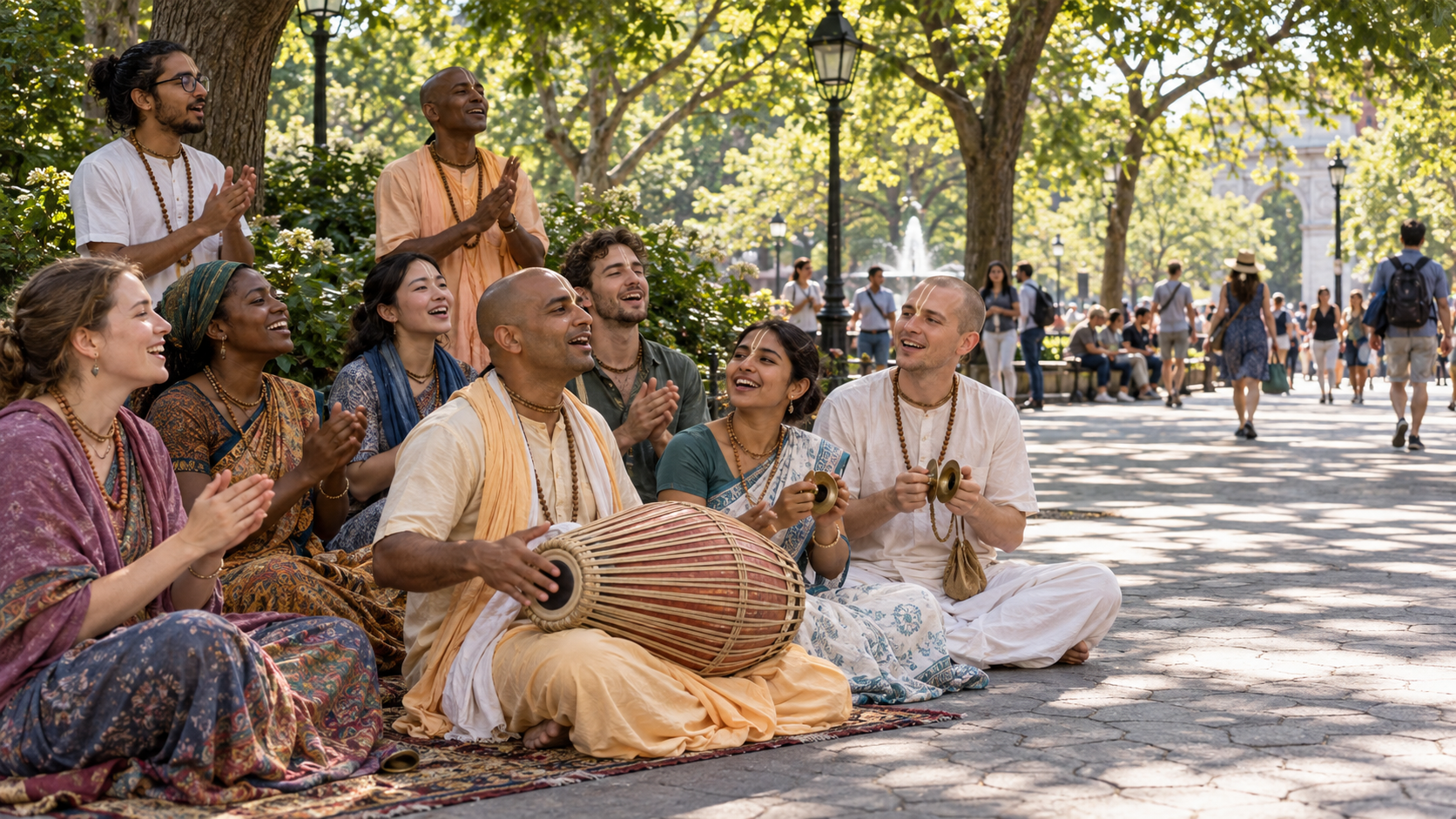
Hari-nama means the name of Hari. In Vaishnava practice, harinam commonly refers to chanting divine names aloud, often as congregational kirtana or sankirtana. In public harinam, devotion enters a shared civic space: practitioners chant together while passers-by remain free to listen, ask a question, walk alongside the group, or continue on their way.
That makes harinam different from an ordinary street performance. Musical sound may carry the gathering, but virtuosity is not the purpose. The devotional centre is attentive remembrance of the Divine through the holy names. Your first task is therefore to listen. Notice the leader’s line, the response, the tempo, and the instructions being given to the group.
Many Gaudiya Vaishnava harinams centre on the Hare Krishna maha-mantra: Hare Krishna, Hare Krishna, Krishna Krishna, Hare Hare; Hare Rama, Hare Rama, Rama Rama, Hare Hare. Do not assume, however, that every Vaishnava gathering uses the same melody, sequence, instruments, or local customs. Follow the practice actually being led.
You do not need musical training to repeat a simple response. You also do not have to imitate an experienced singer’s volume, movement, or ornamentation. A newcomer who listens carefully and chants steadily contributes more than someone who competes with the lead or treats the gathering as an opportunity to be noticed.
Join in without making extra work for the group
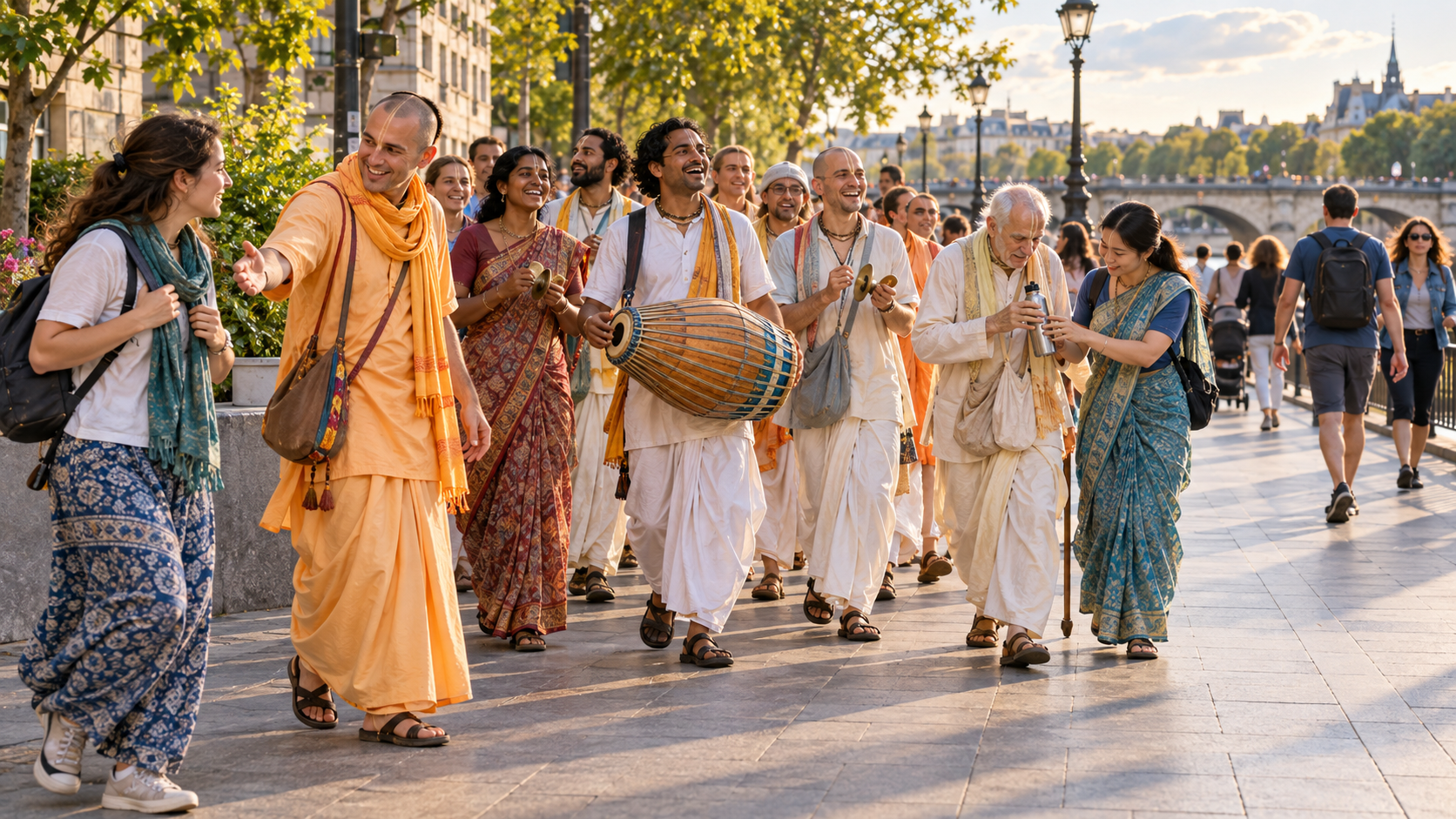
Once the logistics are confirmed, use this simple sequence:
- Find the coordinator. Introduce yourself and ask where newcomers should stand, whether the group will walk, and whether any safety or route instructions apply.
- Begin with your voice. Listen through a full call-and-response cycle before joining. Do not pick up a drum, hand cymbals, amplification equipment, flags, or literature unless someone responsible invites you to do so.
- Follow the established lead. Keep the given tempo and response. If you lose the words or melody, pause and listen rather than forcing your way through.
- Protect the procession’s shape. Stay with the group, follow stewards at road crossings, and keep shop entrances, pavements, transit stops, and emergency access clear.
- Give passers-by room to choose. A smile or brief greeting is enough unless someone actively wants a conversation. Do not surround, pursue, pressure, or argue with a person who is uninterested.
- Use the camera with restraint. Wide views of a public procession are different from close portraits. Ask before taking identifiable close-ups, and be especially careful around children or anyone who appears uncomfortable.
- Leave responsibly. If you need to depart before the finish, return anything entrusted to you and tell the relevant coordinator rather than simply disappearing with equipment or materials.
For a walking program, comfortable footwear, weather-appropriate clothing, water, and minimal valuables are sensible. Any event-specific direction takes priority. If amplification becomes uncomfortable, step farther away; devotional participation is not a test of physical endurance.
Keep the public encounter recognizably Dharmic
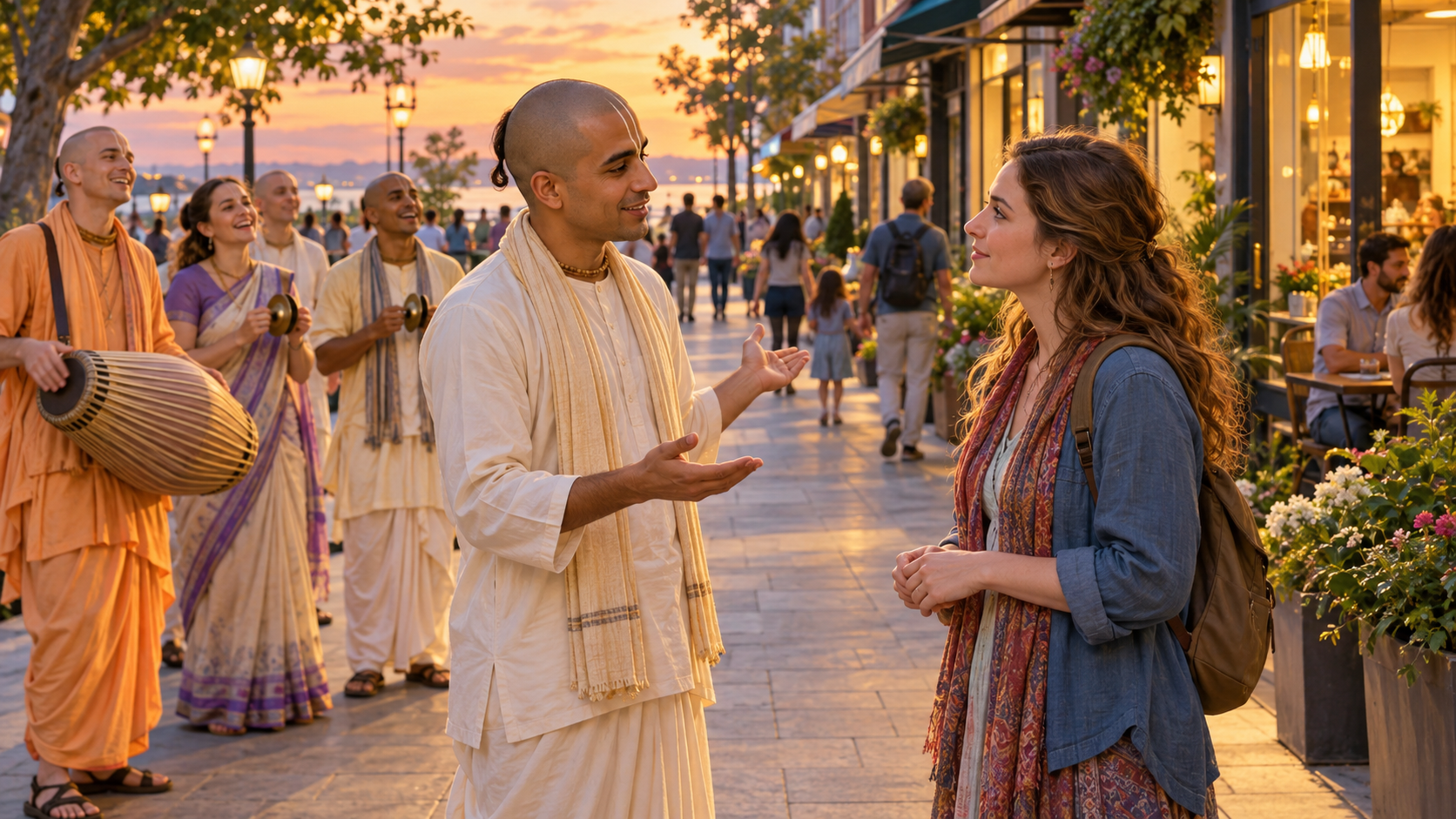
Public chanting places Vaishnava conduct beside Vaishnava sound. People who know nothing about the theology may form their impression from whether participants are patient at crossings, considerate of other pavement users, and gentle with questions. Courtesy is not separate from the spiritual practice; it is part of how the practice is carried.
Expect different reactions without trying to control them. Curiosity is not yet commitment, and disinterest is not necessarily hostility. If someone asks a question you cannot answer accurately, say so and direct the person to someone designated to speak. An honest limit protects both the listener and the tradition better than an improvised claim.
Do not turn a harinam into an unsolicited political argument, a sectarian contest, or a confrontation with critics. If disruption occurs, remain with the group and follow the organizers’ direction. The names of Hari should remain the centre; winning an exchange with a stranger should not replace them.
If you prefer not to chant immediately, attentive observation is a reasonable beginning. Stand where you are not obstructing movement, listen to the response, and speak with a coordinator when an appropriate moment comes. Respectful participation can start quietly.
Key takeaways
- The confirmed core is a Vaishnava Sanga harinam associated with Stratford in 2026; essential travel details still require direct verification.
- Confirm which Stratford, the event’s current status, the exact date and time, the assembly point, the route, and a responsible contact before travelling.
- Harinam is devotional chanting in public, not merely a musical performance.
- Listen before joining, follow the lead, and ask before handling instruments, amplification, flags, or literature.
- Make space for passers-by, follow road and steward instructions, and let humility shape every public interaction.
Your next step is simple: obtain the current logistical details, save the organizer’s contact information, and decide how you will participate. If the gathering has already concluded, use the same discipline to locate the local Vaishnava community’s next confirmed program rather than relying on an undated repost.
References

Leave a Reply
You must be logged in to post a comment.