

If you searched for BB Govinda Swami’s Riga kirtan, you probably want to know whether this is the gathering you had in mind and how to approach it without reducing it to devotional background music. The reliable identifier is 30 July 2026, Part 2, with VS BB Govinda Swami at Džaganātha Centrs Rīga.
That compact description gives you enough to locate and share the kirtan accurately. It does not give you a verified chant list, running order, duration, roster of musicians, or explanation of the initials “VS.” Keep that boundary in view, then give the chanting your full attention. Kirtan becomes intelligible through participation, not through metadata alone.
The reliable identity of the Riga kirtan
Four details belong together whenever you identify this gathering: BB Govinda Swami, Džaganātha Centrs Rīga, the date 30 July 2026, and the designation Part 2. Dropping the last detail can make a later segment look like the complete programme. If its opening feels abrupt or a chant is already under way, the Part 2 label is the first explanation to consider.
The initials “VS” also appear in the event wording. Their meaning is not supplied, so retain them as written when reproducing the full title rather than inventing an expansion. The same discipline applies to names of mantras, accompanying instruments, participating devotees, and the sequence of the gathering: identify them only when you can verify them directly.
If you are cataloguing the kirtan, use a description such as “BB Govinda Swami kirtan at Džaganātha Centrs Rīga, 30 July 2026, Part 2.” That wording is useful because another listener can distinguish the place, date, and segment without relying on a vague label such as “Riga kirtan.”
Hear the devotional grammar before judging the music
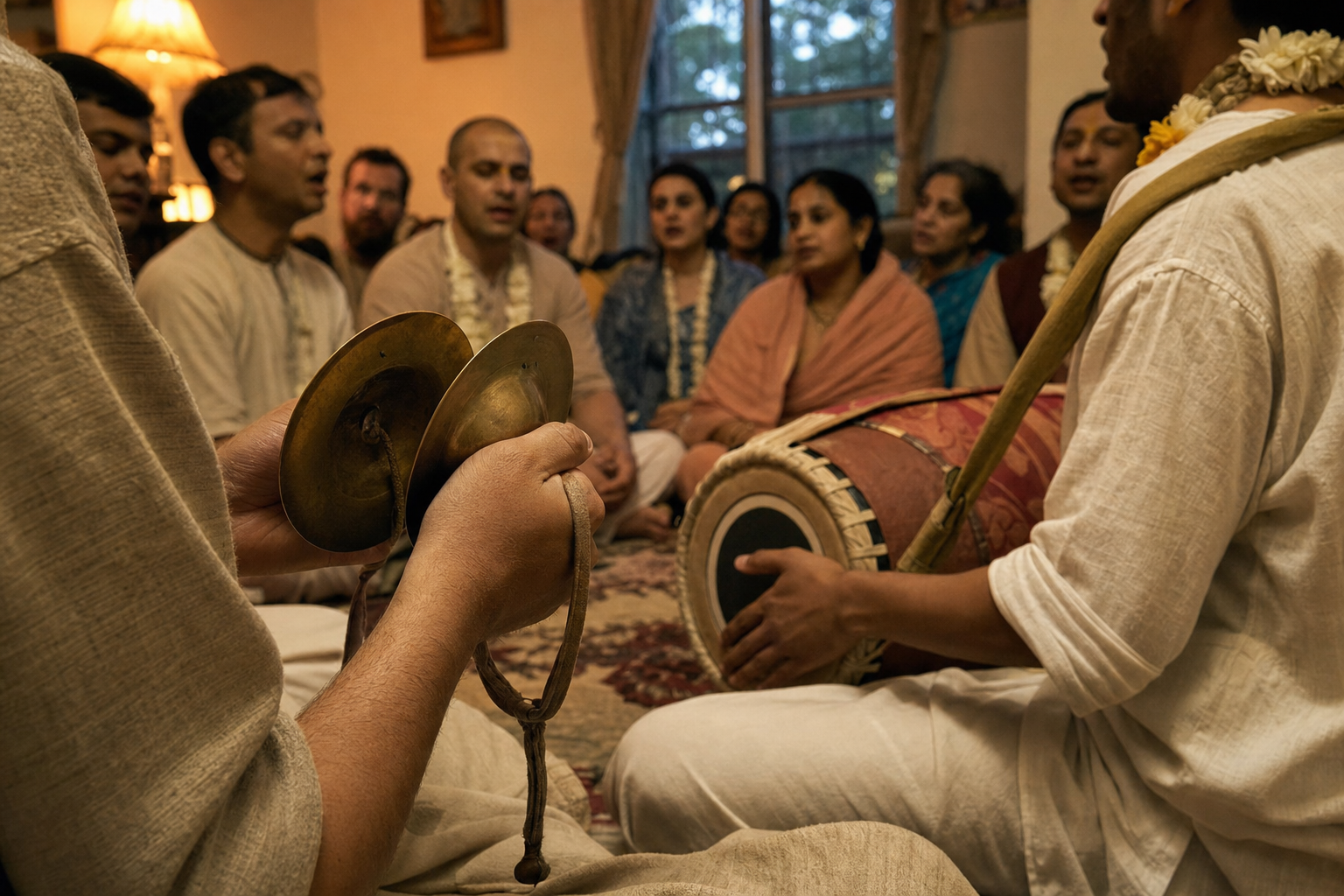
Kirtan is sung remembrance and praise. In many bhakti settings, a leader offers a sacred phrase and the assembly answers. Repetition is not a failure to develop the song; it is the method by which attention, pronunciation, breath, and collective response gather around the divine name.
This distinction changes what you listen for. A concert normally directs attention toward what the performer will do next. Call-and-response kirtan asks whether you can hear clearly enough to answer, remain with the name, and stay present as the same phrase acquires greater devotional weight. Musical skill can support that movement, but display is not the final purpose.
- Listen through a complete leader-and-response exchange before joining. This lets you hear the phrase length, accent, and point at which the response enters.
- Begin with the response rather than singing over the leader. If the words are unfamiliar, use a quieter voice until the syllables become clear.
- Follow the shared pulse instead of trying to be the loudest voice. In congregational chanting, coordination serves the mantra better than individual projection.
- If the tempo or intensity changes, keep the sacred words intelligible. Excitement that erases attentive chanting has overtaken the practice it was meant to serve.
- When a refrain resolves, allow some stillness before reaching for commentary, another track, or your phone. The inward effect of repetition is easiest to notice when you do not immediately cover it.
Use an online kirtan as sadhana, not background sound
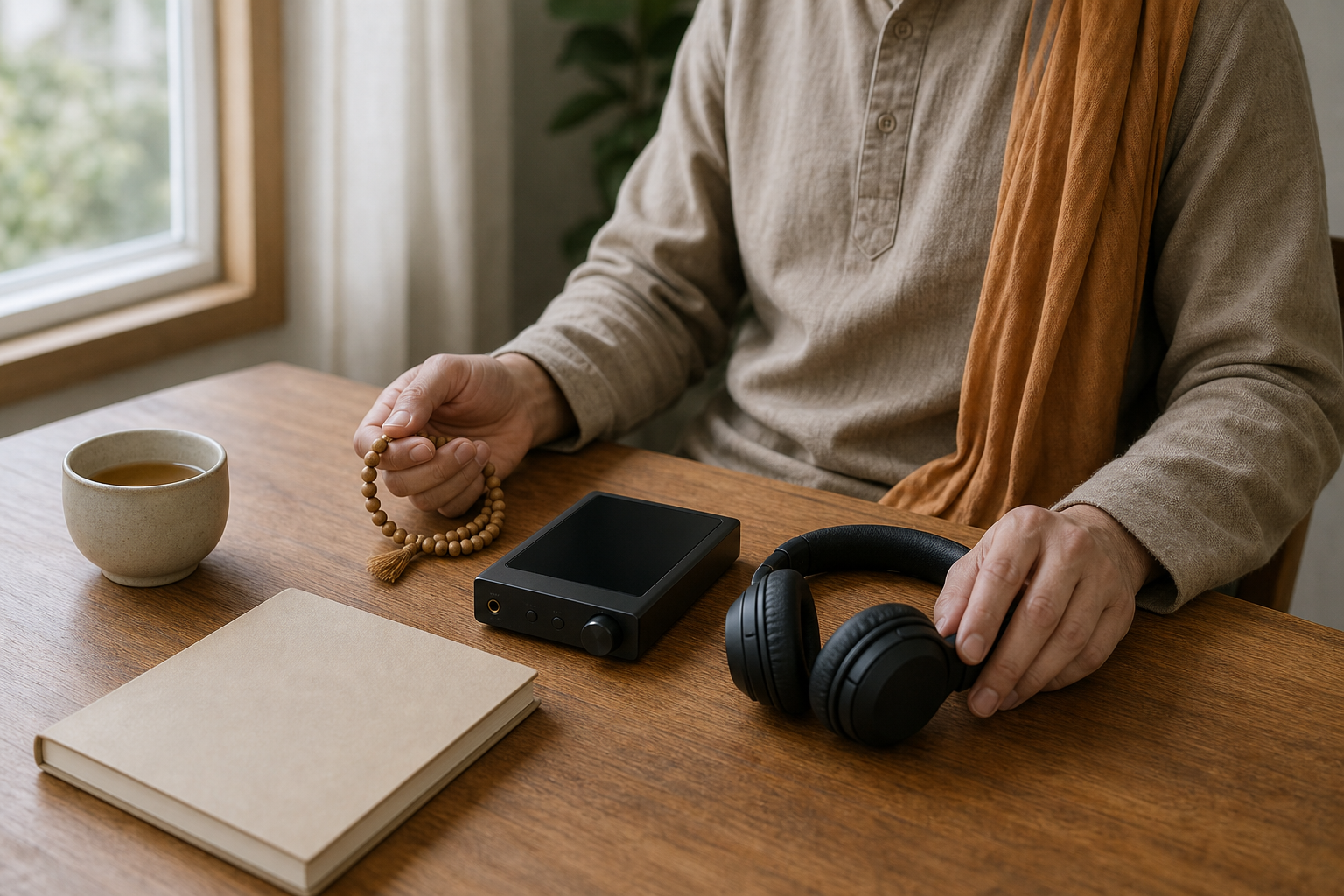
If you encounter the Riga kirtan through a recording, the main obstacle is not distance. It is divided attention. A browser makes it easy to play sacred sound while answering messages, scrolling, or doing unrelated work. That may leave a pleasant atmosphere, but it removes the responsive attention through which kirtan ordinarily works.
For your first attentive hearing, close unrelated tabs, silence notifications, and listen through a complete refrain without skipping ahead. Let the leader establish the words. Join only where the response is clear. If a syllable remains uncertain, replay it or seek verified lyrics rather than turning a guess into your habitual pronunciation.
The Part 2 designation deserves special care here. Do not assume that the first sound in this segment was the beginning of the gathering, that the first audible mantra opened the programme, or that the closing cadence ended the whole event. A segmented recording preserves a portion of an occasion, not necessarily its full liturgical or musical arc.
You can also preserve provenance in your personal sadhana notes. Record the name, Riga venue, date, and Part 2 label beside any reflection or verified mantra title. Months later, those details will let you return to the same segment without confusing it with another kirtan by the same leader.
Why the Riga setting matters without exaggeration
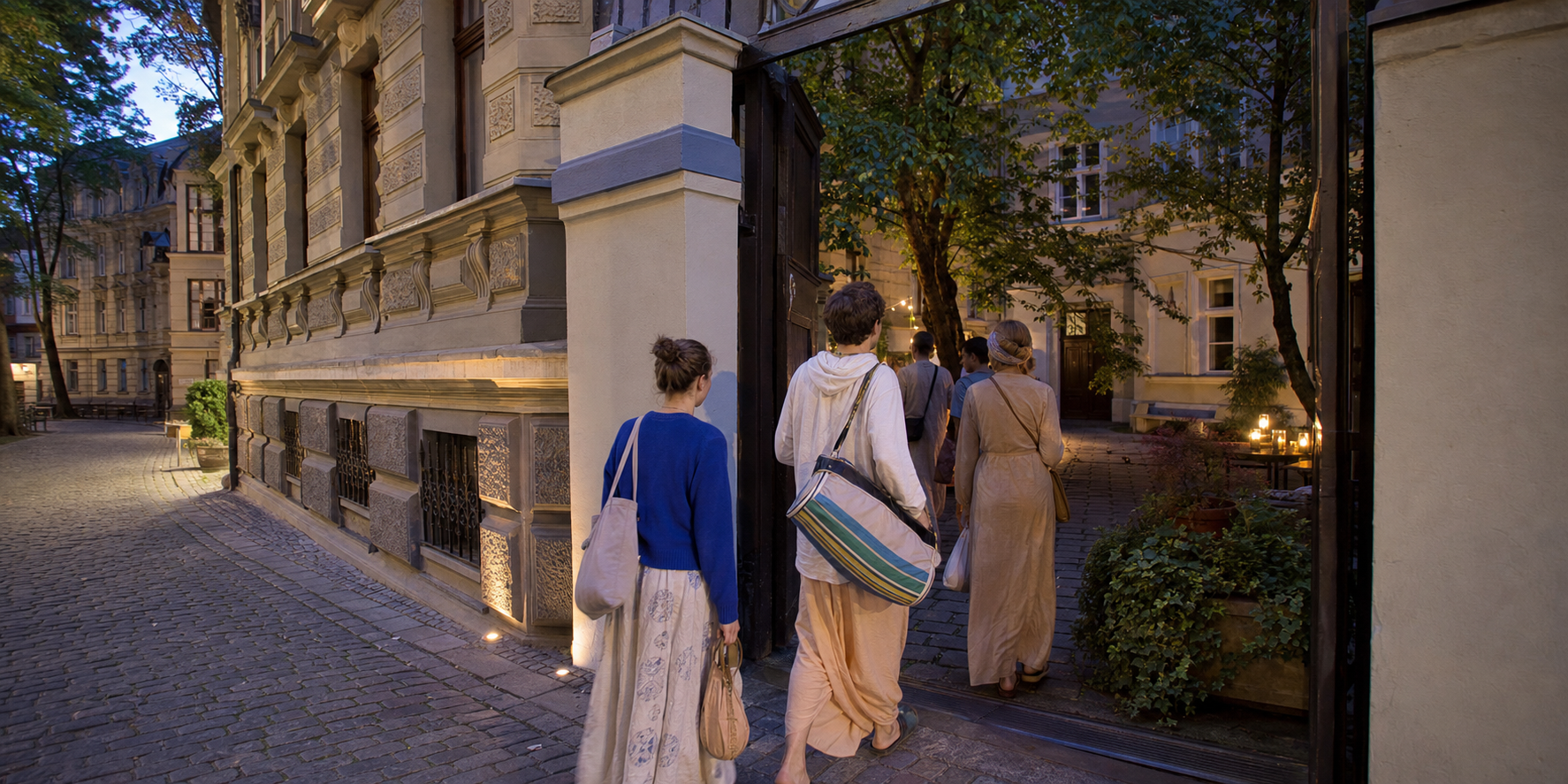
A Bharatiya devotional form being practised in Riga is a concrete example of Dharma travelling through lived practice. Kirtan does not need to become a museum exhibit when it crosses geography. Its continuity lies in remembrance, disciplined hearing, responsive chanting, and the orientation of sound toward Bhagavan.
One gathering, however, cannot establish the size of a community, a national religious trend, or Europe’s attitude toward Sanatana Dharma. Presenting it as proof of a sweeping civilizational change would make the claim larger than the evidence. The stronger and more honest point is simpler: Riga provided a setting in which this devotional practice could be heard and shared.
Accuracy is itself a form of cultural respect. When reposting the event, preserve “Džaganātha Centrs Rīga” and its diacritics where your platform permits. If your readers need an English explanation, add one parenthetically rather than silently replacing the venue’s given name. Keep the date and Part 2 designation attached. This helps the international history of a Dharmic practice remain traceable instead of dissolving into anonymous viral content.
Key takeaways
- Identify the gathering with its full anchors: BB Govinda Swami, Džaganātha Centrs Rīga, 30 July 2026, and Part 2.
- Treat Part 2 as a segment, not automatically as the complete event or the beginning of its chant sequence.
- Approach kirtan through attentive hearing and response; do not judge it only by the expectations of a concert performance.
- Verify mantra names, participants, instruments, duration, and unexplained initials before adding them to a caption or catalogue entry.
- Share the Riga setting as evidence of living Dharmic practice abroad, not as proof of an unsupported demographic or political trend.
When you open the Riga kirtan, listen through a complete response cycle before commenting or reposting. Then preserve the confirmed date, venue, leader, and Part 2 label. That small discipline gives you a more attentive encounter with the chanting and a more trustworthy account to pass on.
References
