
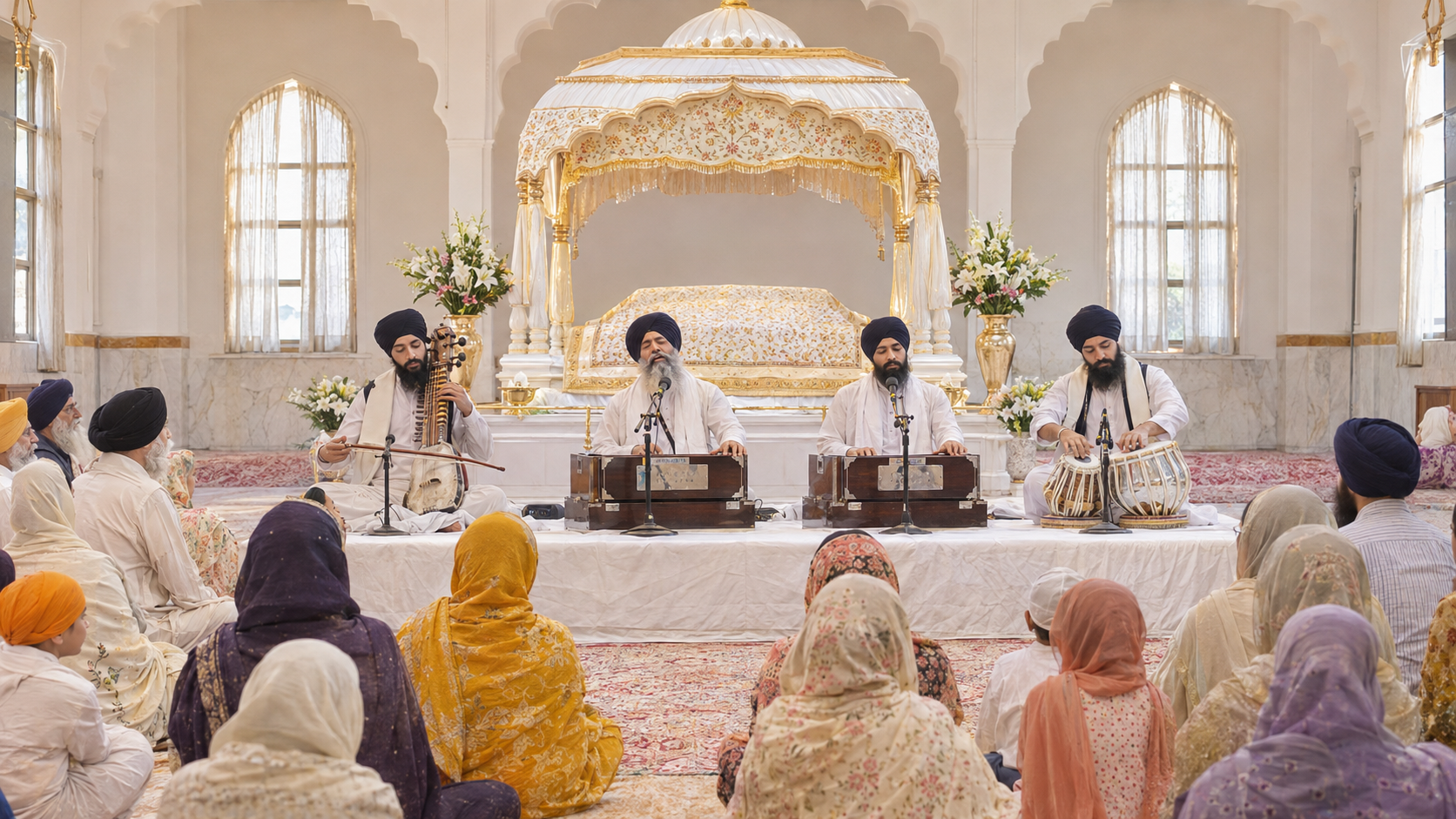
You see 31 Raag Kirtan Darbar on the schedule and want to listen, but you may wonder whether you need classical-music training to understand what is happening. You do not. A little preparation is enough to keep the experience from becoming either background audio or a test of musical knowledge.
The darbar has been announced for live transmission on SikhNet’s YouTube channel from Nov 20 through Nov 22. Your most useful task is not to memorise 31 names before it begins. It is to learn how raag, shabad and attentive listening belong together.
What the 31 raags tell you before the singing begins
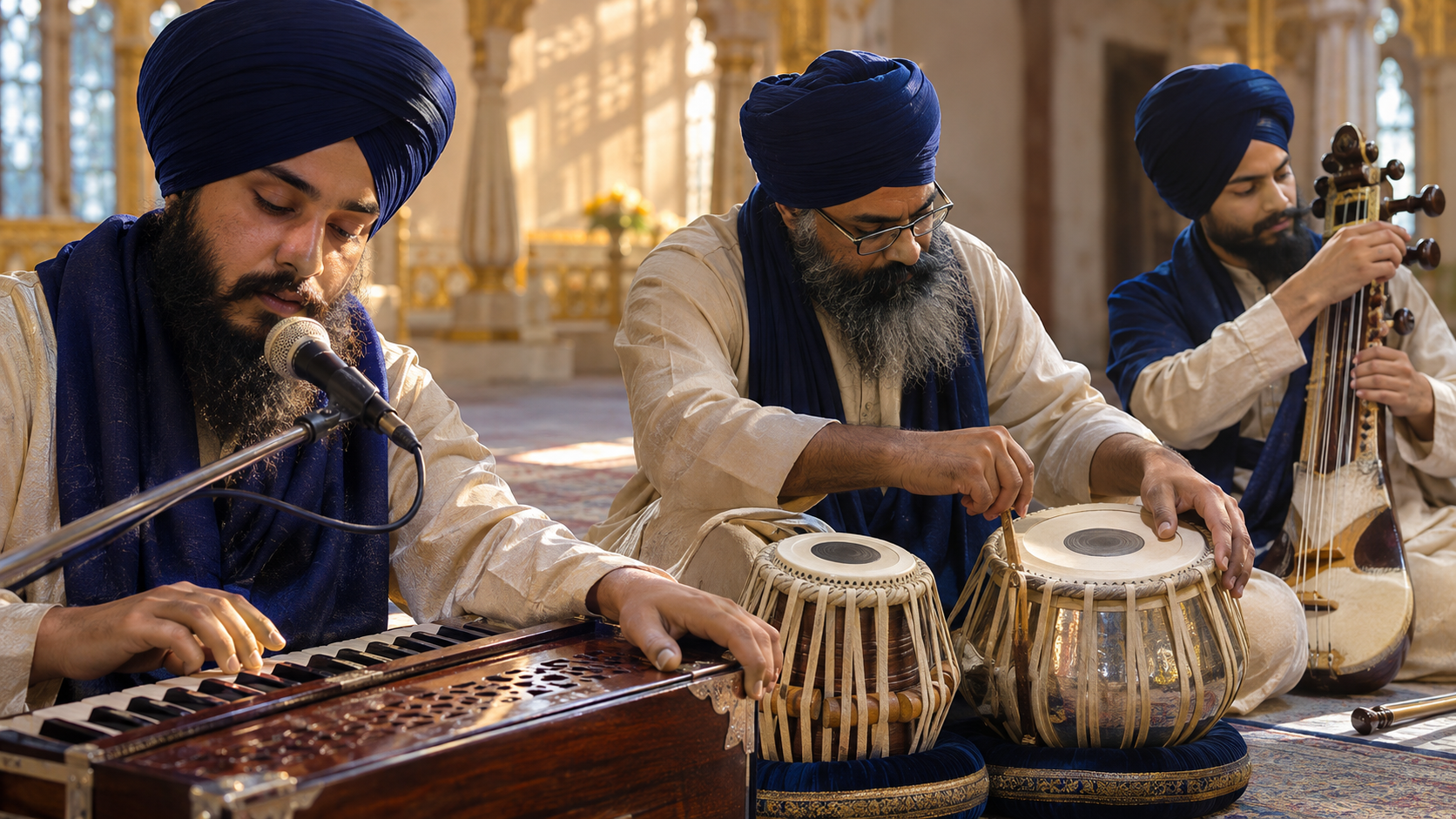
The number refers to the principal raags associated with the Guru Granth Sahib. Gurbani is not presented as prose that later happened to acquire musical accompaniment. Raag directions are part of the scriptural arrangement, placing the singing of the shabad within a disciplined melodic setting.
A raag is more than a scale and less rigid than a single fixed tune. It supplies a melodic grammar: characteristic movements, points of emphasis and ways of developing a musical idea. Different compositions can therefore inhabit the same raag without sounding identical.
This distinction prevents a common listening mistake. Do not approach the darbar as though every raag must produce one easily labelled emotion. A brief mood word may help a beginner remember a name, but it cannot replace listening. Attend to what the melodic treatment does around the words in this particular shabad.
The aim is also not to rank the raags or wait for a favourite. The darbar gives you an opportunity to notice the breadth of the scriptural musical framework. Treat each presentation as a meeting with Gurbani, not as another item completed on a checklist.
Prepare for the live darbar without guessing the timetable

Nov 20 through Nov 22 identifies the announced broadcast window, but it does not by itself tell you when an individual session begins in your time zone. Check the linked event information and the corresponding YouTube listing before you arrange your day. If YouTube displays a scheduled start, confirm that it has been converted to your local time.
- Choose a complete sitting. Set aside enough uninterrupted time to hear at least one presentation from its opening to its close. A full musical arc teaches you more than several disconnected clips.
- Reduce visual distraction. Keep the video visible when it supplies the shabad, raag name, transliteration or translation. Otherwise, let the sound hold your attention instead of reading unrelated material in another window.
- Keep a way to note unfamiliar words. Record the opening words of the shabad or the displayed raag name. Do not interrupt the singing to begin a long search.
- Enter quietly if you arrive late. Listen before trying to classify what you hear. A fragment is rarely enough for a beginner to identify the raag reliably.
If you cannot attend the entire broadcast window, do not turn that limitation into hurried sampling. One complete, attentive presentation is a better beginning than moving continuously between performers in search of an instant highlight. If an official recording remains available afterward, you can return to what you missed.
Listen in an order that keeps the shabad central
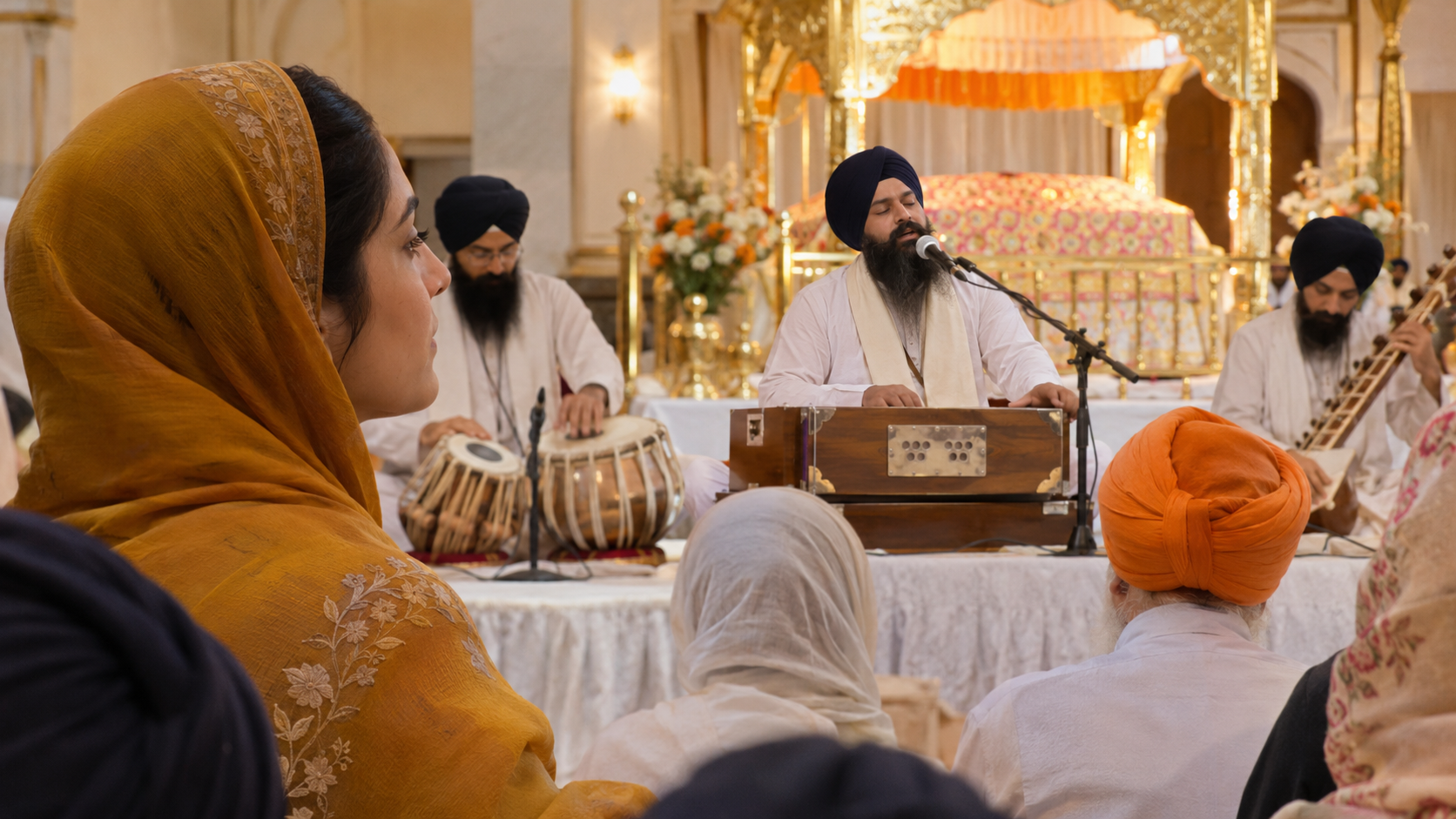
Musical knowledge can deepen kirtan listening, but it can also become a distraction when classification replaces devotion. Use the following order to keep technique in service of the bani.
- Begin with the words. Listen for a line that returns and for the words receiving repeated musical emphasis. If a reliable transliteration or translation is displayed, use it to follow the sense without staring at the screen throughout the presentation.
- Notice the melodic path. Hear how phrases rise, settle and return. You do not need to name every note. Look for recurring shapes and points that feel like musical rest.
- Notice the rhythmic unfolding. Pay attention to when the pulse becomes clear, when the singing expands and when it gathers toward a close. If you do not know the taal, honest listening is more useful than guessing its name.
- Return to the shabad. Ask whether the melodic and rhythmic development made particular words more present to you. This final step stops musical analysis from becoming the purpose of the listening.
You may not understand every word or recognise the raag on first hearing. That is not a failed session. The useful question is whether your attention became steadier and whether one part of the shabad remained with you after the sound ended.
Keep a one-shabad listening note
A short record will help you notice growth without converting the darbar into coursework. For one presentation, write down only what you actually heard or saw identified:
- The opening words of the shabad.
- The raag name, if it was announced or displayed.
- One repeated phrase that held your attention.
- One melodic movement you could recognise when it returned.
- One question to explore after the session.
Do not assign a raag name from memory when no identification was provided. Mark it as unknown. That small act of accuracy is more valuable than a confident but unsupported label.
Avoid three shortcuts that flatten raag kirtan
The first shortcut is treating raag as decorative atmosphere. In Gurbani kirtan, melody is not merely an emotional coating placed over independently complete lyrics. The raag direction helps shape how the shabad is voiced and received. Listen for that relationship rather than mentally removing the words to judge the music alone.
The second shortcut is treating virtuosity as the main measure of success. Technical command matters, but speed, range and ornamentation do not by themselves tell you whether the shabad remained clear. When you evaluate a presentation, ask whether the musical choices directed attention toward bani or toward display.
The third shortcut is forcing every presentation into the expectations of a secular concert. Knowledge of Hindustani music can help you hear melodic development, but Gurbani kirtan has a devotional and scriptural centre of gravity. Bring your musical knowledge with you, but do not let a concert template decide in advance what the presentation ought to be.
The opposite mistake is to assume that devotion makes careful musicianship irrelevant. Discipline and devotion need not compete. The better question is how musical discipline serves intelligibility, contemplation and the sangat’s encounter with the shabad.
Key takeaways for your first session
- The 31 raags point to the principal raag framework associated with the Guru Granth Sahib, not to a playlist of interchangeable tunes.
- Check the YouTube listing for the scheduled start in your own time zone; the Nov 20-Nov 22 window is not an individual-session timetable.
- Hear one presentation all the way through before moving to another.
- Follow the shabad first, then notice melodic movement and rhythm, and finally return your attention to the words.
- Use announced or displayed identification instead of guessing a raag from a short fragment.
- Judge musical skill by how it serves the bani, not by display alone.
Begin with one complete presentation and one honest listening note. Carry a single line of the shabad into the quiet after the session. That is a more faithful entry into the darbar than trying to master all 31 raags before you press play.
References

Leave a Reply
You must be logged in to post a comment.