
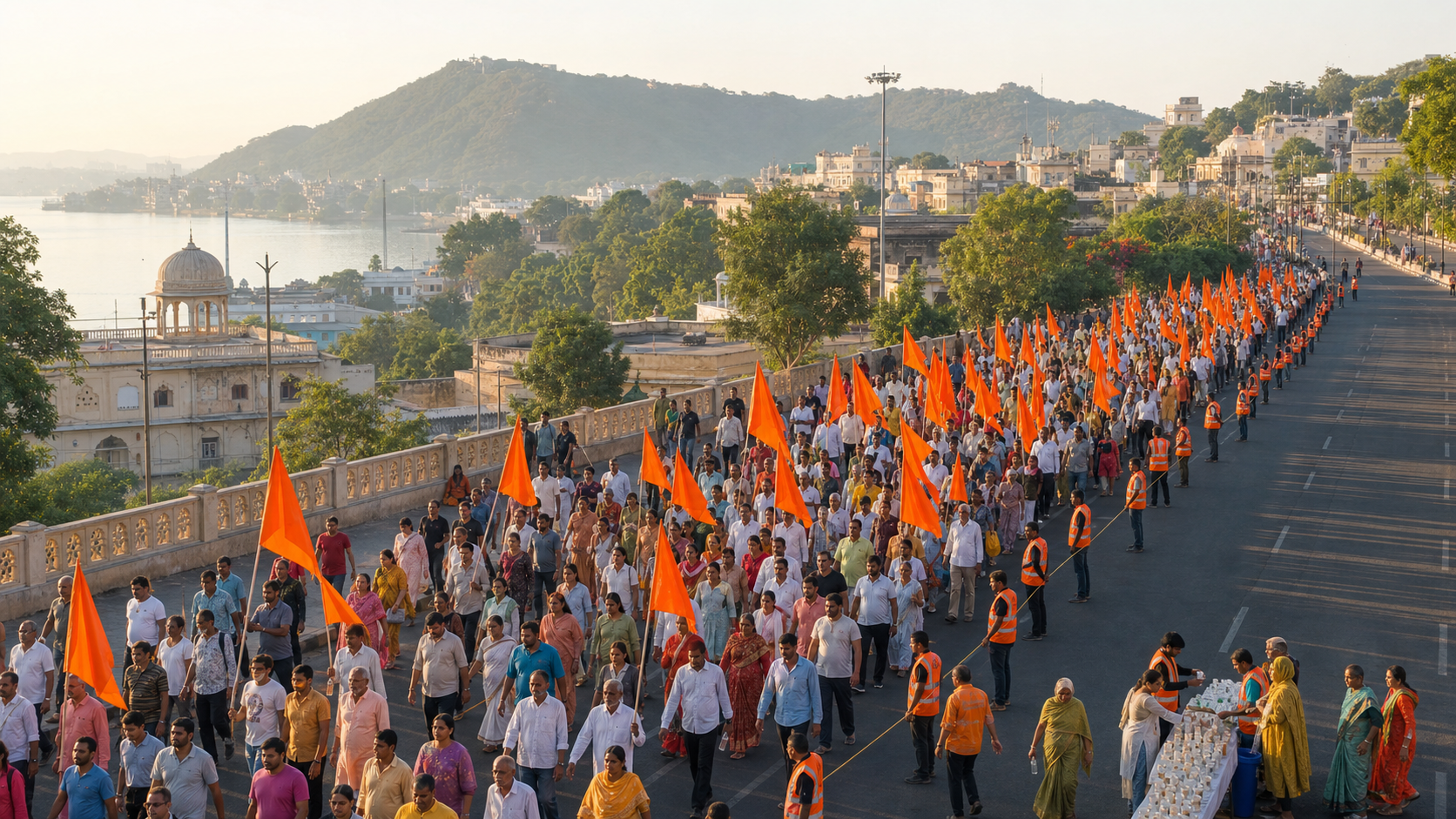
If the saffron-filled scenes from Bhopal left you wondering whether the procession was a religious celebration, an assertion of Hindu identity or a test of civic order, you do not have to force it into just one category. A Hindu procession can perform all three functions. The better question is whether its public confidence was expressed through seva, discipline and consideration for the city.
The Bhagwa Shaurya Padyatra brought thousands of Dharmarakshaks together under the coordination of the Dharmarakshak Sanghatana for the Hindu New Year. To understand why that matters, look beyond the size of the crowd. Notice the calendar being honoured, the meaning assigned to bhagwa, the language heard on the route, the care given to families and the condition in which the street was returned to its residents.
The calendar gives the procession its first meaning
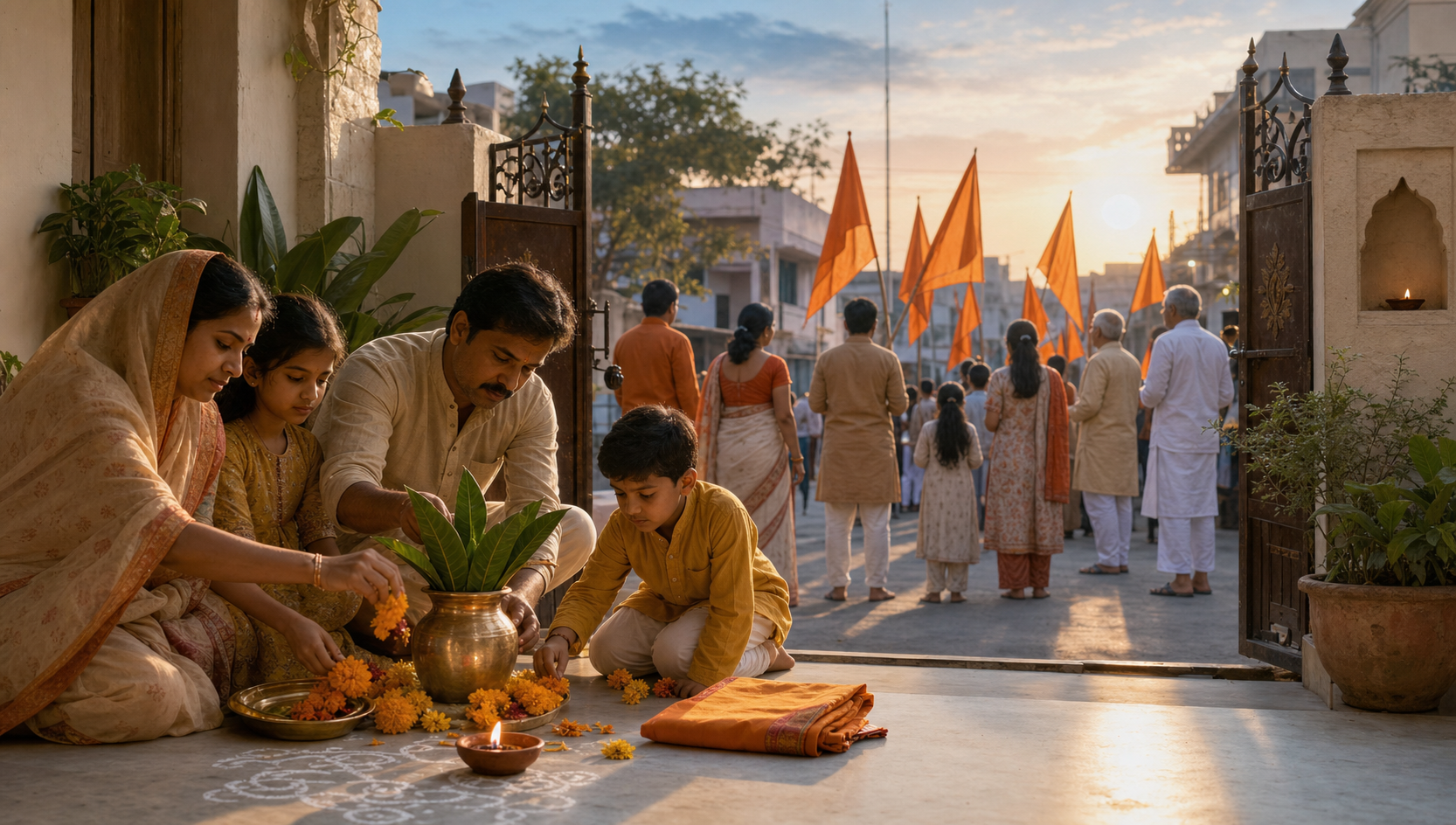
The padyatra took place on Chaitra Shukla Pratipada, the first day of the bright fortnight of Chaitra and a widely observed Hindu New Year marker. It belongs to a broader seasonal constellation that includes Gudi Padwa in Maharashtra and Goa, Ugadi in Andhra Pradesh, Telangana and Karnataka, Cheti Chand among Sindhis, and Navreh in Kashmir. In many traditions, the day also opens Chaitra Navratri.
That regional range matters when you explain the celebration to someone unfamiliar with it. Calling the occasion simply “Hindu New Year” is accessible, but it can sound as though every Hindu community follows an identical calendar and custom. A more accurate explanation is that Chaitra Shukla Pratipada is one major New Year observance within a civilizational family of related regional traditions.
This distinction helps you honour unity without manufacturing uniformity. A Maharashtrian Gudi, a Telugu or Kannada Ugadi observance, a Sindhi Cheti Chand celebration and Kashmiri Navreh retain their own memories and practices. Their coexistence is itself an Indic strength: communities can participate in a shared season of renewal without surrendering their particular inheritance.
The beginning of Chaitra Navratri also gives the public celebration an inward dimension. A new year is not only a change in the calendar. It asks what must be renewed in conduct. Before joining a procession, you can therefore make the observance personal: choose a discipline to restore, a neglected duty to resume or a form of seva to undertake. The march then becomes the visible expression of a commitment already made within.
Bhagwa carries the same demand for inner seriousness. Saffron and ochre have long associations with renunciation, sacrifice and moral courage. Hindu sannyasins wear bhagwa; Buddhist kasaya robes often use saffron or ochre; and the Sikh Nishan Sahib is characteristically saffron or deep orange. These traditions are not interchangeable, but the colour provides a recognisable Dharmic vocabulary of self-mastery and service.
This is why saffron should not be treated as a self-explanatory political signal. Its older religious and civilizational meanings deserve to be understood. At the same time, history does not give anyone a licence to behave carelessly beneath it. A flag associated with sacrifice raises the standard expected from its bearer. Bhagwa has civic credibility when restraint, service and moral courage are visible in the people carrying it.
A padyatra turns principles into observable conduct
Collective walking does something that a stage programme cannot. Organizers, musicians, youth volunteers, elders, children and other participants occupy the same route and adjust to a common pace. Repeated bhajans, kirtans and coordinated movement create belonging through action rather than through a declaration from a podium.
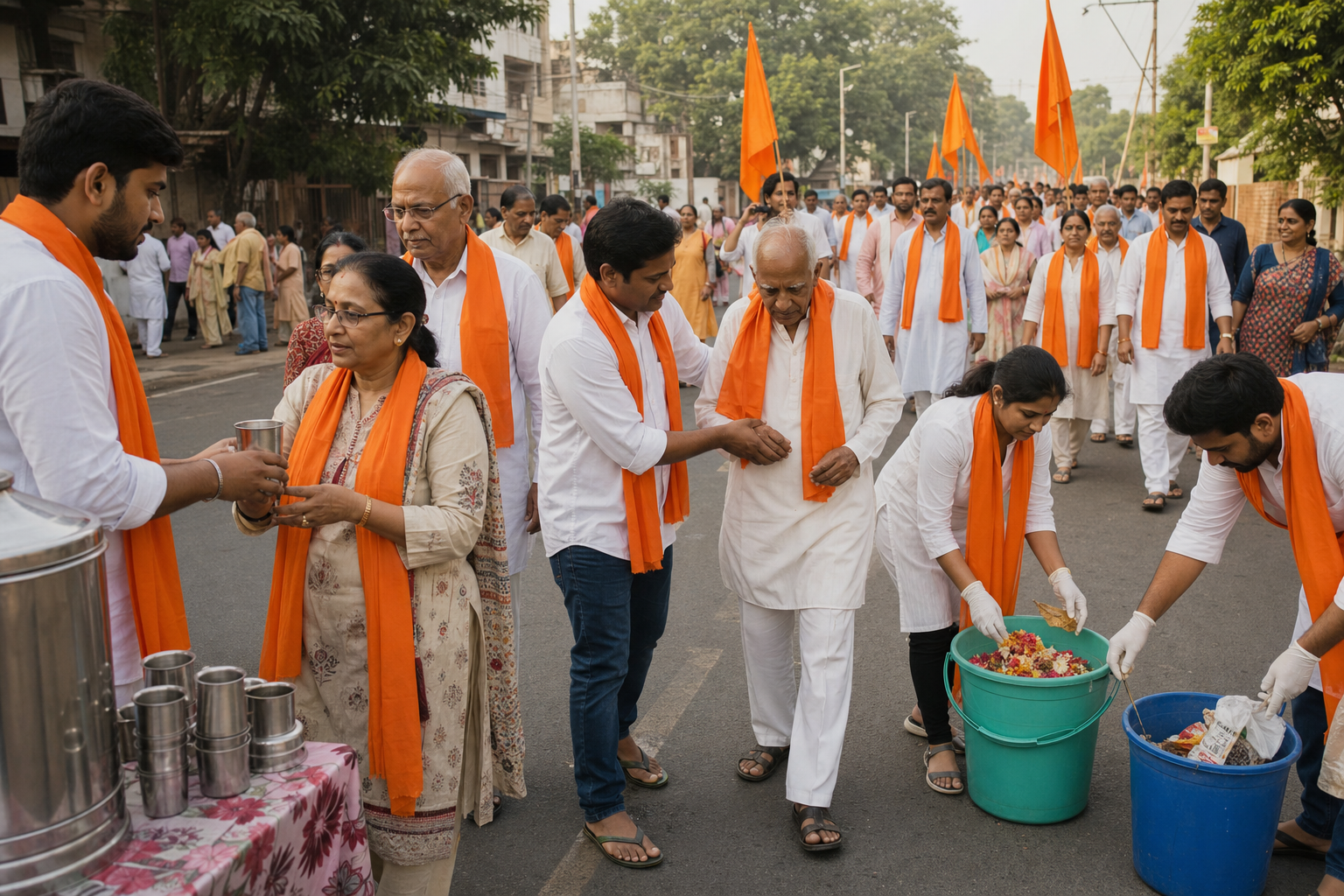
In Bhopal, dhol-nagara ensembles, devotional singing, coordinated chants and the Bhagwa Dhwaj accompanied a family-oriented procession. Youth volunteers provided jal seva, first-aid assistance and directions at turns and intersections, while elders, women and children joined the route. Those details are not peripheral. They reveal what kind of community the celebration was trying to place before the city.
A procession also borrows space that must continue to serve residents, shops, side streets and ordinary movement. Devotion therefore becomes civic the moment it enters a shared road. The pace of the march, the handling of intersections, the volume near sensitive places and the response to friction all become part of the religious message, whether participants intend them to or not.
Public Hindu visibility does not need to be apologetic. A living tradition should be able to sing, carry its symbols and mark sacred time in public. But visibility and domination are not synonyms. A confident procession allows onlookers to understand what is being honoured while making it evident that their access, dignity and peace have also been considered.
The Bhopal event invoked Vasudhaiva Kutumbakam and sarva-dharma samabhava, or equal regard for different faiths. Those expressions become meaningful only when they alter behaviour. They should be visible in welcoming onlookers, avoiding language directed against another community, respecting neighbourhoods along the route and preventing a moment of friction from becoming the identity of the entire procession.
There is a longer civic dividend as well. When resident groups, cultural organizations, volunteers and municipal contacts learn to work together, they create relationships that can outlast the festival. The same habits of communication and task allocation can assist routine neighbourhood problem-solving and emergency response. After a padyatra, ask not only how many people attended but also which useful relationships now exist that did not exist before.
The civic tests that separate dharmic confidence from spectacle
You do not have to accept either promotional enthusiasm or hostile caricature when judging a religious procession. Use observable conduct. The following tests work for organizers, participants, residents and anyone trying to interpret images from the route.
- The message test. Listen for what the gathering affirms. Bhajans, kirtans and chants centred on devotion, renewal and seva keep the event anchored in its stated purpose. Language aimed at degrading an opposing community changes the moral character of the march, even if the route remains physically orderly. Shaurya should mean the courage to uphold dharma, not the excitement of finding a target.
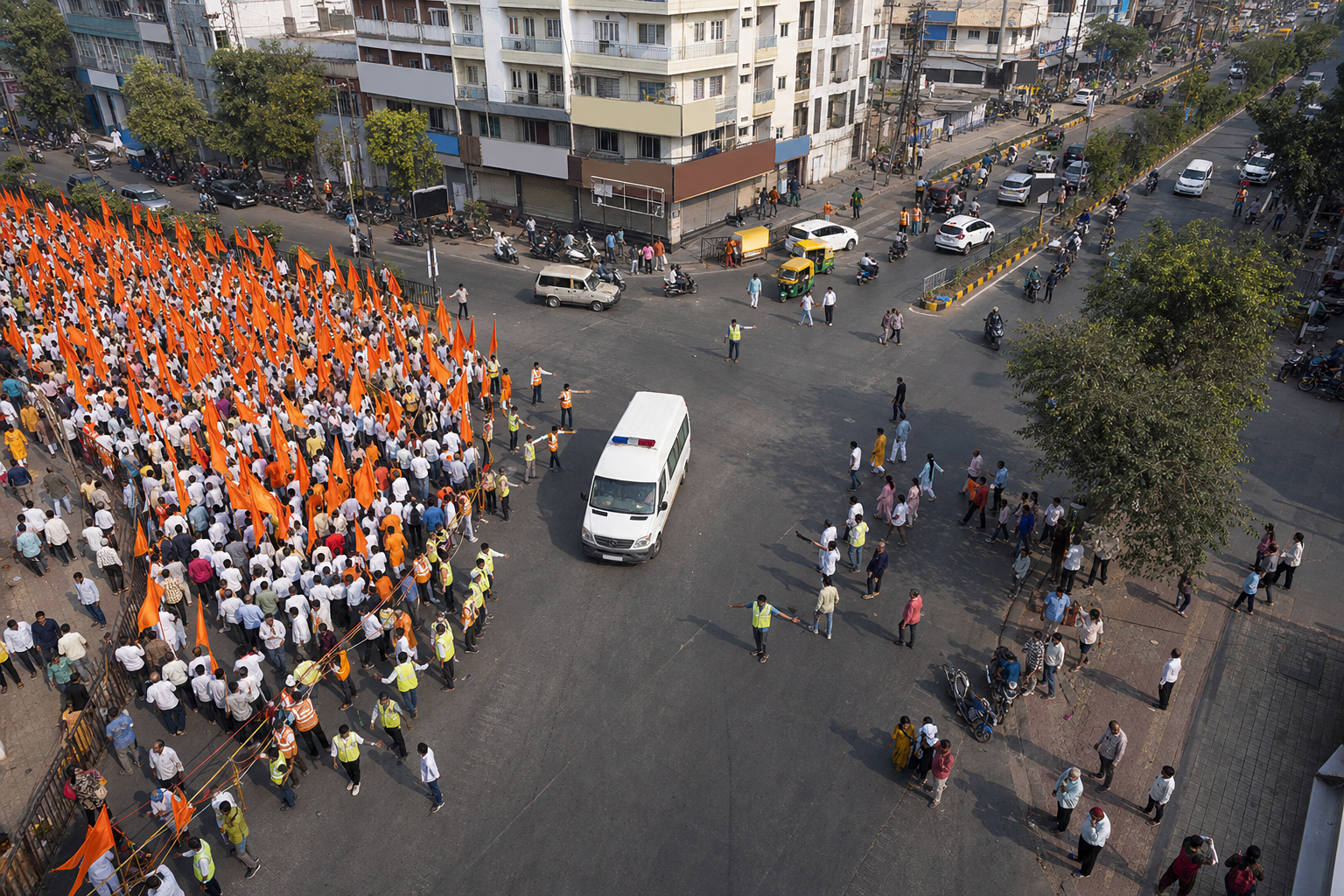
- The movement test. Watch what happens at turns, bottlenecks and side-street junctions. Route segmentation, volunteer cordons and guidance where side streets merged with the procession were part of Bhopal’s operational design. For an organizer, this means giving marshals defined responsibilities before movement begins. For a participant, it means staying within the cordon and following instructions even when the crowd appears relaxed.
- The care test. Look for practical service rather than symbolic concern. Drinking-water points, first-aid support and guidance for families make participation possible for people who cannot move at the pace of an energetic youth contingent. If you volunteer, take a specific role. If you are not trained to provide first aid, support the designated team instead of improvising treatment.
- The neighbour test. A shared road includes people who are not participating. Respectful volume near sensitive areas, access for side streets and rapid de-escalation protect both the devotional purpose and the surrounding neighbourhood. If friction occurs, do not build a second crowd around it or circulate an unverified claim. Notify a marshal and keep the procession moving according to its agreed discipline.
- The footprint test. The spiritual mood does not excuse the material waste it creates. Waste sorting, reduced dependence on single-use plastic and sanitation sweeps formed part of the civic message in Bhopal. That is especially apt in a city whose identity and well-being are closely tied to its lakes. The route is not clean-up work left for someone else; returning it in good condition is part of the observance.
No single photograph can establish all of this. A wide image may demonstrate scale but reveal little about language, service or route management. A short clip of tension may require attention without necessarily representing the conduct of the whole gathering. Apply the same standard in both directions: examine repeated, observable behaviour rather than allowing either a promotional slogan or an isolated frame to make the entire judgement for you.
This approach also clarifies the meaning of discipline. Discipline is not silence, weakness or the absence of enthusiasm. It is the capacity to sustain devotional energy without surrendering control of speech, movement or response. When provocation fails to dictate behaviour, restraint becomes a form of shaurya.
How to join as a civic participant, not merely a spectator
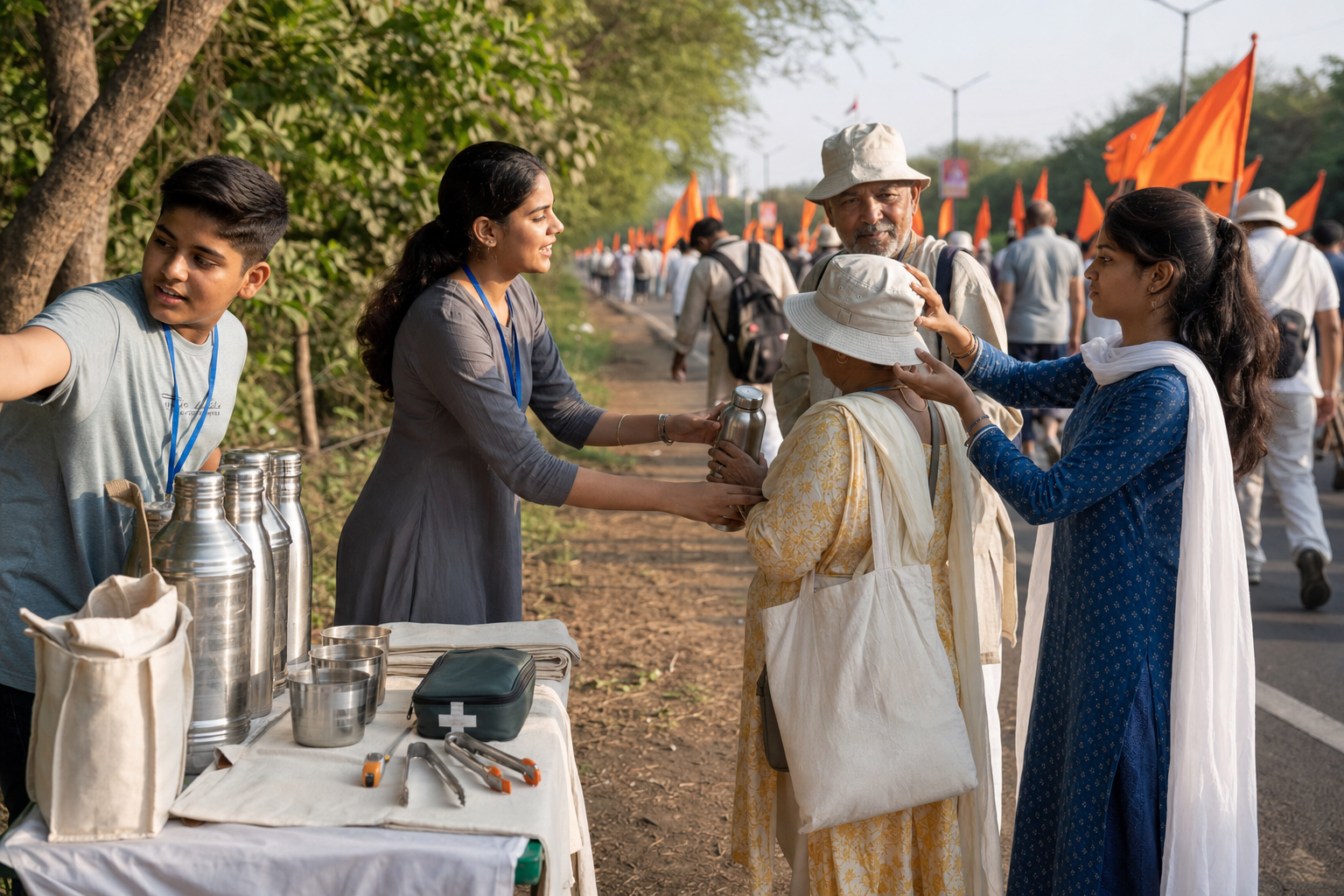
If you plan to attend a future Hindu New Year procession, the most useful decision is not what colour to wear. Decide what responsibility you will carry. Even a small assigned task changes your relationship to the gathering: you stop consuming an experience and start helping the community produce it responsibly.
Before the procession
- Learn the calendrical context well enough to explain Chaitra Shukla Pratipada without erasing Gudi Padwa, Ugadi, Cheti Chand, Navreh or other regional practices.
- Check the organizer’s route, arrival instructions, dispersal plan and code of conduct. Do not forward an old route map or an unconfirmed meeting point.
- Select a real service role: route guidance, jal seva, support for a qualified first-aid team, assistance to families, waste collection or documentation.
- If you are attending with children or elders, agree on a meeting point and exit plan before entering the moving crowd.
- Carry water in a reusable container where organizer instructions permit it. This reduces dependence on disposable plastic and helps prevent water distribution points from becoming waste points.
While the procession is moving
- Follow volunteer marshals at intersections and keep crossings, entrances and designated passageways clear.
- Use affirmative devotional language. You do not strengthen Hindu identity by making another community the subject of the celebration.
- Adjust your pace around families, elders and anyone who needs more space. The integrity of a family-friendly yatra depends on how the energetic participants treat the slower ones.
- Direct a difficulty to the responsible volunteer instead of becoming an unofficial authority. Competing instructions create confusion precisely where crowd movement is most delicate.
- If you record the event, preserve context. A chant, intervention or disagreement detached from what preceded and followed it can produce a false account in either direction.
After the route ends
- Remain available for the sanitation sweep if that was your assigned role. Dispersal is not the end of the organizer’s duty.
- Record operational lessons while memories are fresh: where movement narrowed, where water ran short, where volume caused concern and where volunteer coordination worked well.
- Preserve route maps, recordings of bhajans and oral histories with appropriate consent. Such materials can carry community memory across generations and help future organizers improve the event.
- Keep one relationship or seva activity alive after the festival. A contact list that functions only on procession day has not yet become durable civic capacity.
If you are observing rather than marching, you still have a role. Ask what the participants were commemorating, distinguish the religious symbol from assumptions attached to it, and judge the procession by the same concrete civic tests. Fair scrutiny is neither hostility to Hindu public life nor automatic endorsement of everything done in its name.
Key takeaways
- Bhopal’s padyatra marked Chaitra Shukla Pratipada within a wider family of regional Hindu New Year traditions.
- Bhagwa signifies renunciation, sacrifice and moral courage; the conduct beneath the flag determines whether those meanings remain credible.
- A successful civic procession combines devotional clarity with disciplined movement, practical seva, regard for neighbours and thorough clean-up.
- Dharmic unity does not require different Hindu, Buddhist, Jain and Sikh traditions to be treated as identical. Shared values can coexist with real distinctions.
- The most useful way to participate is to accept a defined responsibility before the event and help preserve its civic capacity afterward.
The practical standard for the next Hindu New Year is demanding but clear: celebrate visibly, organize carefully, speak constructively, serve people and return the shared street with respect. Choose your role before you arrive – marshal support, jal seva, first-aid coordination, sanitation or responsible documentation. The flag tells the city what the community honours; the responsibility you accept shows how seriously you mean it.