
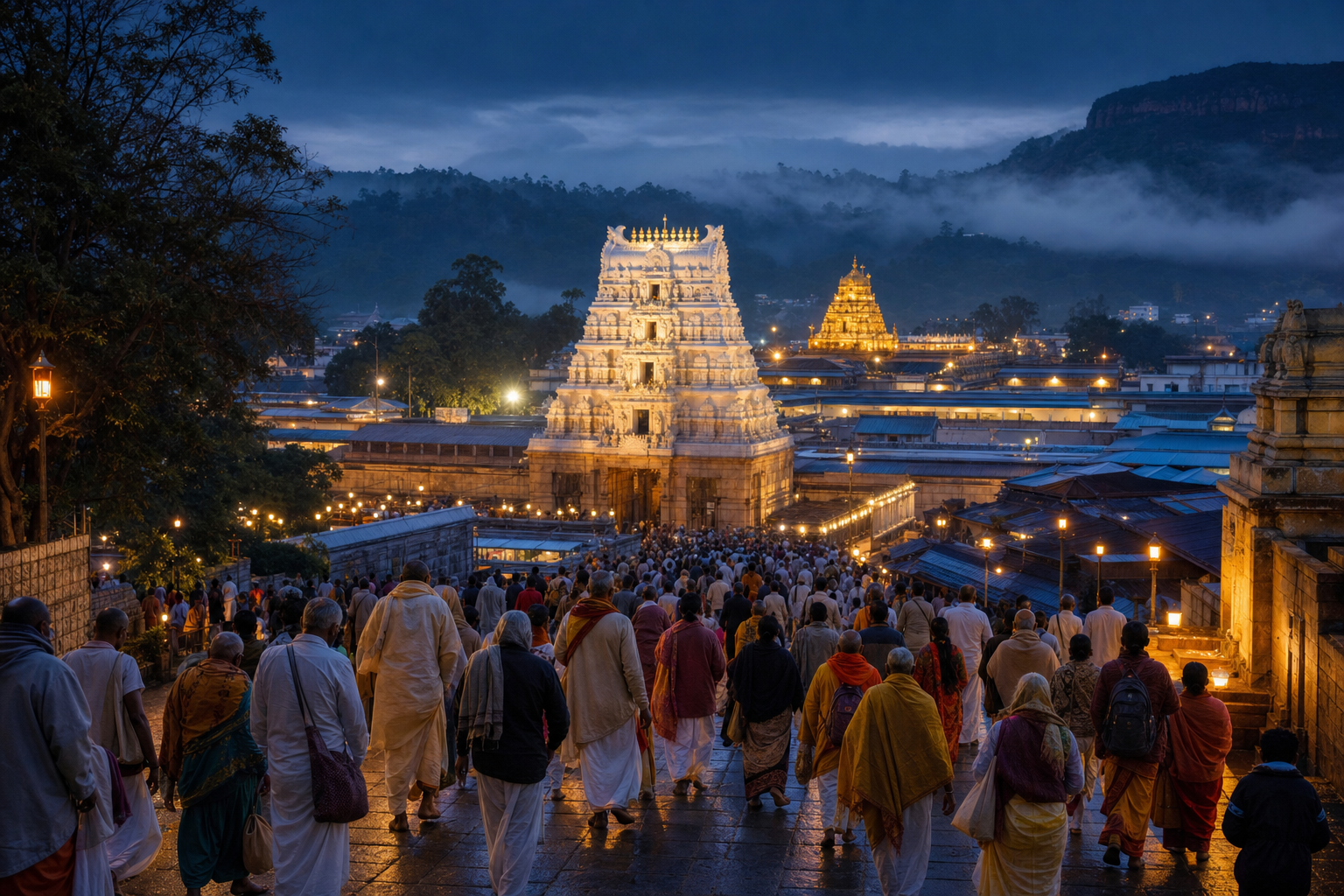
You want Vaikuntha Ekadashi at Tirumala to be more than a difficult journey followed by a few hurried seconds of darshan. That requires two kinds of preparation: confirming exactly when and how the temple observance will operate, and deciding how you will carry the vrata through the crowds, waiting, and fatigue.
The central practical lesson is simple: the Ekadashi tithi, the period announced for Vaikuntha Dwara Darshanam, and the temple’s festival preparations are related, but they are not always the same date. Separate them before arranging your pilgrimage, then bring them together through a clear devotional sankalpa.
Key takeaways for a Tirumala pilgrimage
- Confirm the Ekadashi tithi and parana time from the panchang followed by your family or sampradaya. Do not assume the observance returns on the same Gregorian date every year.
- Check the current TTD notice for the complete Vaikuntha Dwara Darshanam period. The doorway may be opened for an announced period extending beyond the Ekadashi date itself.
- Review temple notices for the preparation days before the festival. Koil Alwar Tirumanjanam can affect ordinary darshan arrangements, including particular access categories.
- Arrange travel and accommodation only after you have distinguished the sacred date from the operational darshan window.
- Decide your vrata before entering the crowd: fasting suited to your tradition and health, nama-japa, Vishnu Sahasranama, Bhagavad Gita reading, restraint in speech, and seva are all meaningful forms of observance.
- Treat the queue as part of the pilgrimage. If irritation governs the waiting and reverence appears only at the sanctum, the vrata has been reduced to an appointment.
Separate the Ekadashi date from the doorway schedule
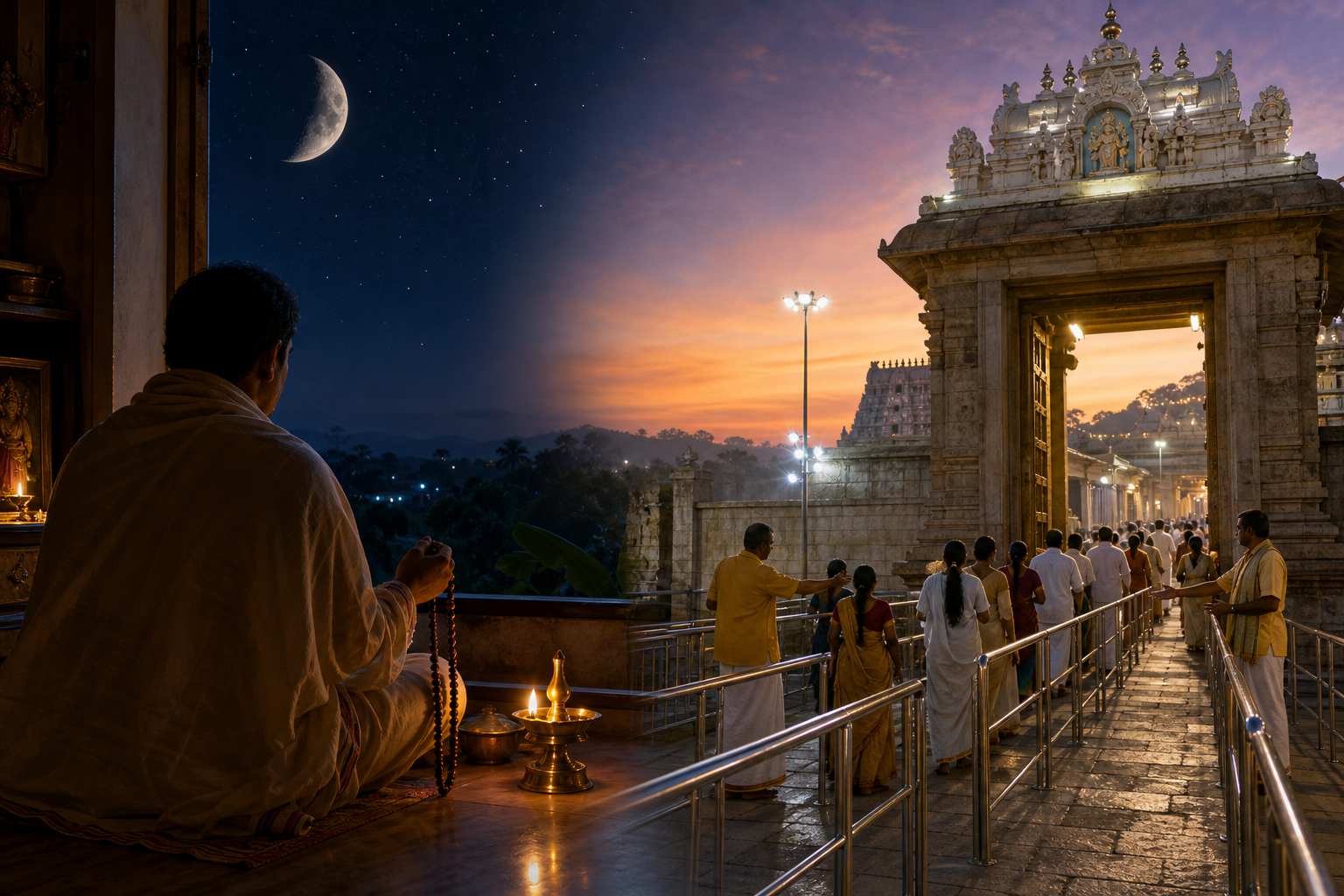
Vaikuntha Ekadashi is observed on the Ekadashi of Dhanurmasa. In South Indian devotional usage, you will also hear the name Mukkoti Ekadashi associated with this sacred observance. Its place in the Hindu lunar calendar means that a familiar Gregorian date cannot be carried forward from one year to the next.
The Gregorian year 2025 illustrated the point unusually clearly: Mukkoti Ekadashi occurred on January 10 and again on December 30. If you had remembered only the January date, you could easily have missed the later observance. Start every plan with the year, the relevant panchang, and the local tithi rather than a saved calendar reminder from a previous pilgrimage.
Next, distinguish the vrata date from Vaikuntha Dwara Darshanam. For the 2025-26 observance, TTD scheduled Vaikuntha Dwara Darshanam from December 30, 2025, through January 8, 2026. That announced window did not make every day Ekadashi. It meant that access through the sacred doorway was arranged across a longer period.
This distinction helps you make an honest decision. If your priority is observing the Ekadashi vrata on its tithi, build your worship around that date. If your practical priority is passing through the Vaikuntha Dwaram at Tirumala, examine the full TTD window and the access instructions for your intended day. If both matter equally, your plan must satisfy both calendars rather than treating them as interchangeable.
Parana is a separate timing decision. The fast should be concluded in the prescribed period followed in your tradition, so confirm the local panchang rather than choosing a convenient meal time after travel. Temple access, a delayed queue, and the parana window can pull your day in different directions. Notice that conflict before leaving home.
Plan the pilgrimage in the right order
Vaikuntha Ekadashi brings substantial pilgrim turnout to Tirumala. The workable response is not merely to arrive early. You need to remove uncertainty in the correct sequence so that a change in one part of the temple schedule does not undo the rest of your trip.
- Fix your devotional priority. Decide whether you are centering the Ekadashi vrata, Vaikuntha Dwara Darshanam, or both. This determines which date is non-negotiable.
- Verify the calendar. Confirm the tithi and parana timing using the panchang appropriate to your location and tradition.
- Read the current TTD festival notice. Check the announced doorway dates, darshan arrangements, cancellations, and any instructions affecting entry. A previous year’s system is useful context, not a promise for the next observance.
- Check the days surrounding your visit. Temple-cleansing rites and other festival preparations may alter regular arrangements before the doorway period begins.
- Arrange travel and accommodation. Do this well in advance once the relevant dates are clear. Leave enough flexibility that a long queue does not force you to abandon the vrata or miss parana without forethought.
- Give everyone in your group the same plan. Elders, younger devotees, and first-time pilgrims should know which practices you intend to maintain, what waiting may involve, and what the group will do if separated or delayed.
Do not build a current pilgrimage around screenshots, forwarded messages, or remembered rules. The temple’s operating arrangements can change with the festival calendar. Use the latest official TTD advisory close to your journey, especially for access categories and queue procedures.
Why Koil Alwar Tirumanjanam matters to your plan
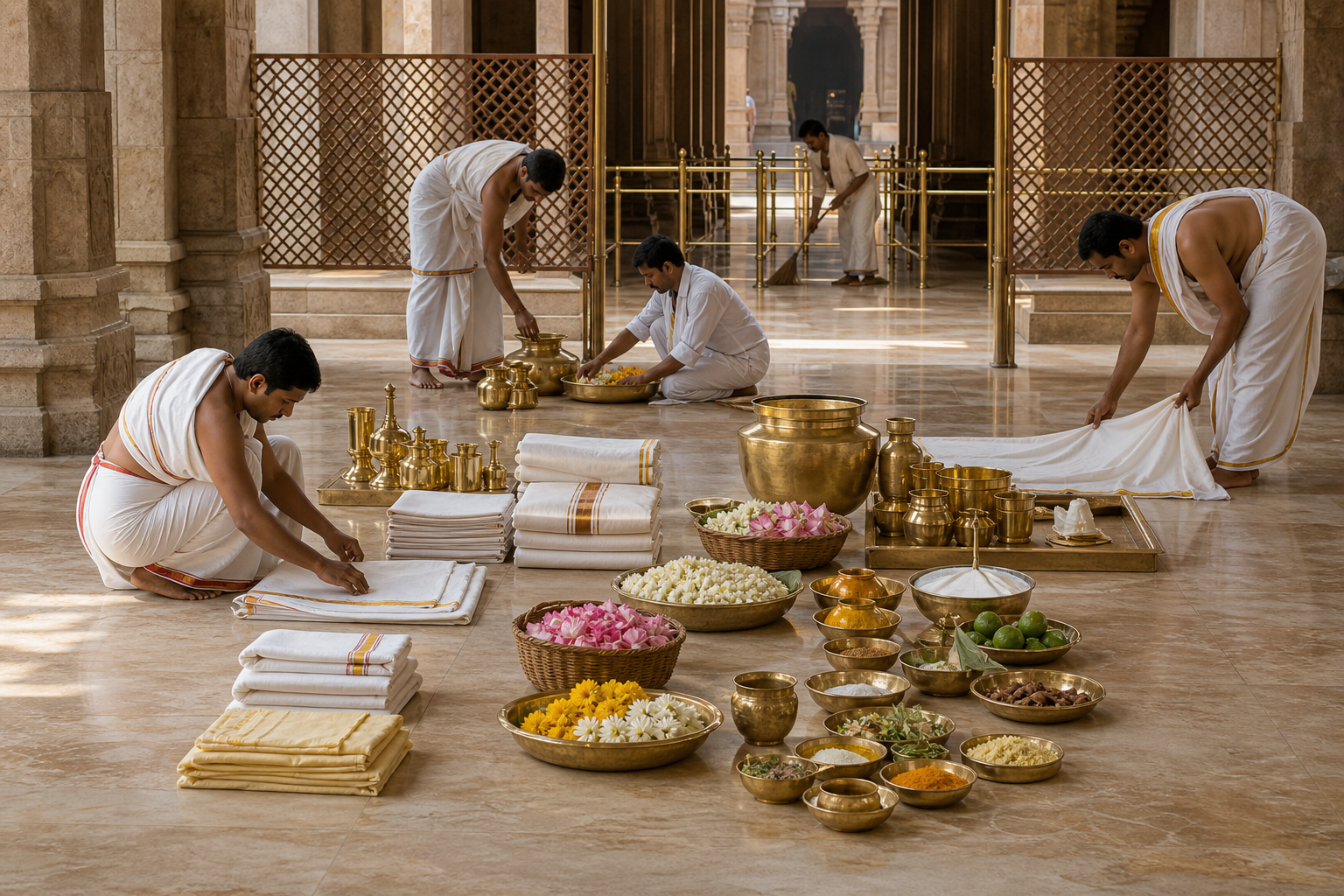
Koil Alwar Tirumanjanam is the comprehensive cleansing of the temple before major festivals. At Sri Venkateswara Temple, it is traditionally performed four times a year. The sanctum and temple interiors are methodically purified with traditional aromatic herbal preparations, joining physical care of the sacred space with ritual renewal.
For the observance beginning on December 30, 2025, the cleansing was scheduled for December 23, with VIP Break Darshan cancelled and recommendation letters not accepted that day. Those were date-specific arrangements, but they reveal an evergreen planning rule: inspect the preparation day as carefully as the festival day. A pilgrim visiting shortly before Vaikuntha Ekadashi can otherwise encounter a cancellation that has nothing to do with the doorway schedule itself.
The rite also gives you a model for personal preparation. Tirumala is not approached only by moving your body toward the hill. Before the journey, clear the avoidable clutter that travels with you: unresolved family disagreements about the plan, unnecessary demands for special treatment, and the expectation that devotion begins only when the deity becomes visible. Temple cleansing and inner preparation are not identical acts, but they point in the same direction – make space before receiving darshan.
Carry the vrata through the queue, not only the kitchen
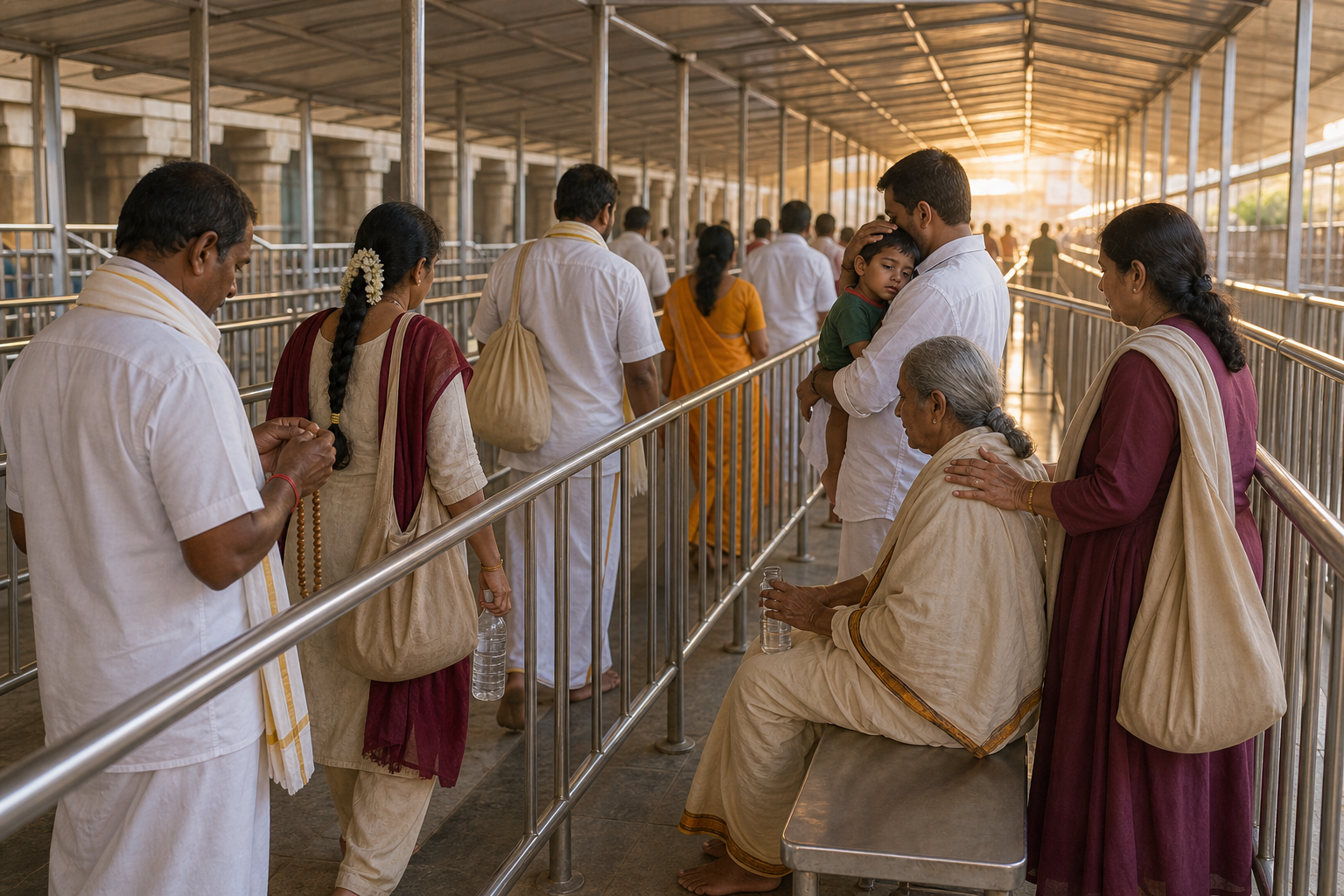
Fasting is a major part of the observance, but the vrata is larger than food restriction. Vishnu Sahasranama recitation, Bhagavad Gita reading or listening, pre-dawn prayer during Brahma muhurta, vigil, seva, and disciplined remembrance of Lord Vishnu can give structure to the day. Choose a set of practices small enough to sustain through travel rather than creating an elaborate programme that collapses as soon as the queue slows.
Follow the fasting discipline of your family or sampradaya instead of inventing a harsher version for the occasion. If fasting could endanger your health or conflict with medical needs, do not treat physical extremity as proof of bhakti. Seek appropriate medical guidance and keep the devotional discipline through a suitable form of restraint, prayer, and satvik conduct.
A simple queue practice can keep the pilgrimage coherent:
- Begin with a clear sankalpa before joining the queue.
- Use appropriate waiting periods for quiet nama-japa, Vishnu Sahasranama, or reflection on a selected Bhagavad Gita passage.
- Keep speech measured. Avoid quarrels about position, pace, or perceived privilege.
- Help children and elders follow the devotional rhythm without forcing them to imitate every austerity.
- Accept necessary crowd-management instructions as part of collective discipline.
- After darshan, preserve a few quiet moments before returning to phones, complaints, or travel logistics.
The Vaikuntha Dwaram symbolizes an inner movement from agitation toward serenity. That symbolism becomes practical in the queue. Every moment of impatience presents the same choice: protect the ego’s demand to be first, or return attention to the Lord you came to see. The doorway is not merely a prized route through the temple; it asks what you are prepared to leave behind while passing through it.
Let the darshan change the day after the festival

Vaikuntha Ekadashi is distinctly Vaishnava in form, yet its discipline speaks to the wider dharmic family. Self-restraint, compassion, mindful conduct, purification, and seva are honoured across Hindu, Buddhist, Jain, and Sikh traditions. You do not have to blur their distinct teachings to recognise that shared ethical ground.
For a family pilgrimage, give each generation a real role. An elder can lead a familiar recitation. A younger devotee can help organise the reading or keep track of the agreed devotional routine. Someone can take responsibility for a small act of seva after the observance. This turns inherited reverence into lived participation rather than leaving younger family members as passengers in an adult itinerary.
Before you travel, choose one discipline to continue after returning home: a regular Vishnu Sahasranama recitation, a passage of the Bhagavad Gita, restraint from a recurring harmful habit, or a definite act of service. Write it into your sankalpa. Then the few moments before Sri Venkateswara become the beginning of practice, not the end of a demanding journey.
References
- DharmaRenaissance Blog – Mukkoti Ekadashi 2025: Dates, Significance, and Grand Temple Celebrations in Andhra & Karnataka
- DharmaRenaissance Blog – TTD Koil Alwar Thirumanjanam on Dec 23, 2025: Sacred Cleansing for Vaikuntha Ekadashi
