
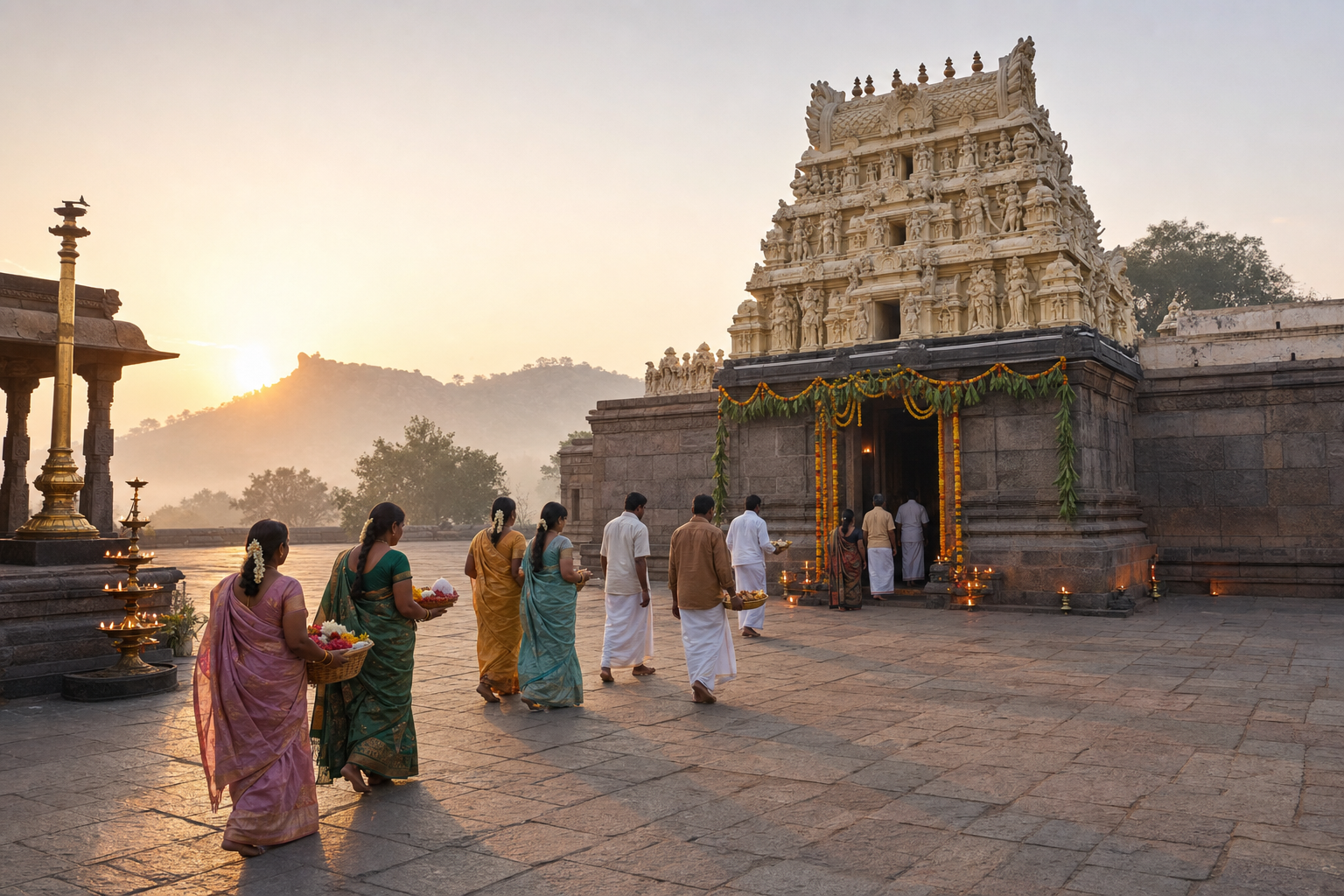
If you want to observe Tarigonda Vengamamba Jayanti in 2026, your first decision is practical: do you want to witness the principal temple rites in Tarigonda, join the wider devotional programs in Tirupati-Tirumala, or keep the day at home through worship and seva? Each can be meaningful, but each requires a different plan.
The 296th birth-anniversary observances will take place on 29-30 April 2026. The principal Tarigonda ceremony is scheduled for the morning of 30 April, while Tirupati and Tirumala will host the broader cultural and spiritual commemoration. Decide which part matters most to you before arranging transport or accommodation.
Key takeaways for the 2026 observance
- The commemoration spans 29-30 April 2026 across Tarigonda, Tirupati, and Tirumala.
- The principal Tarigonda rite is Snapana Tirumanjanam at 7:00 am on 30 April at Sri Lakshmi Narasimha Swamy Temple.
- Pushpanjali at Vengamamba’s statue follows the ceremonial bathing.
- Tirupati-Tirumala programs customarily include devotional music, Harikatha, and special aradhana, but exact venue timings remain subject to temple and administrative advisories.
- Road travel from Tirupati to Tarigonda generally takes 2.5 to 3.5 hours, depending on the route and traffic.
- If you cannot travel, a home Pushpanjali, Venkateswara or Vishnu stotra recitation, study of Vengamamba’s literature, and support for annadanam form a coherent observance.
Choose Tarigonda for the core rite and Tirumala for the living tradition
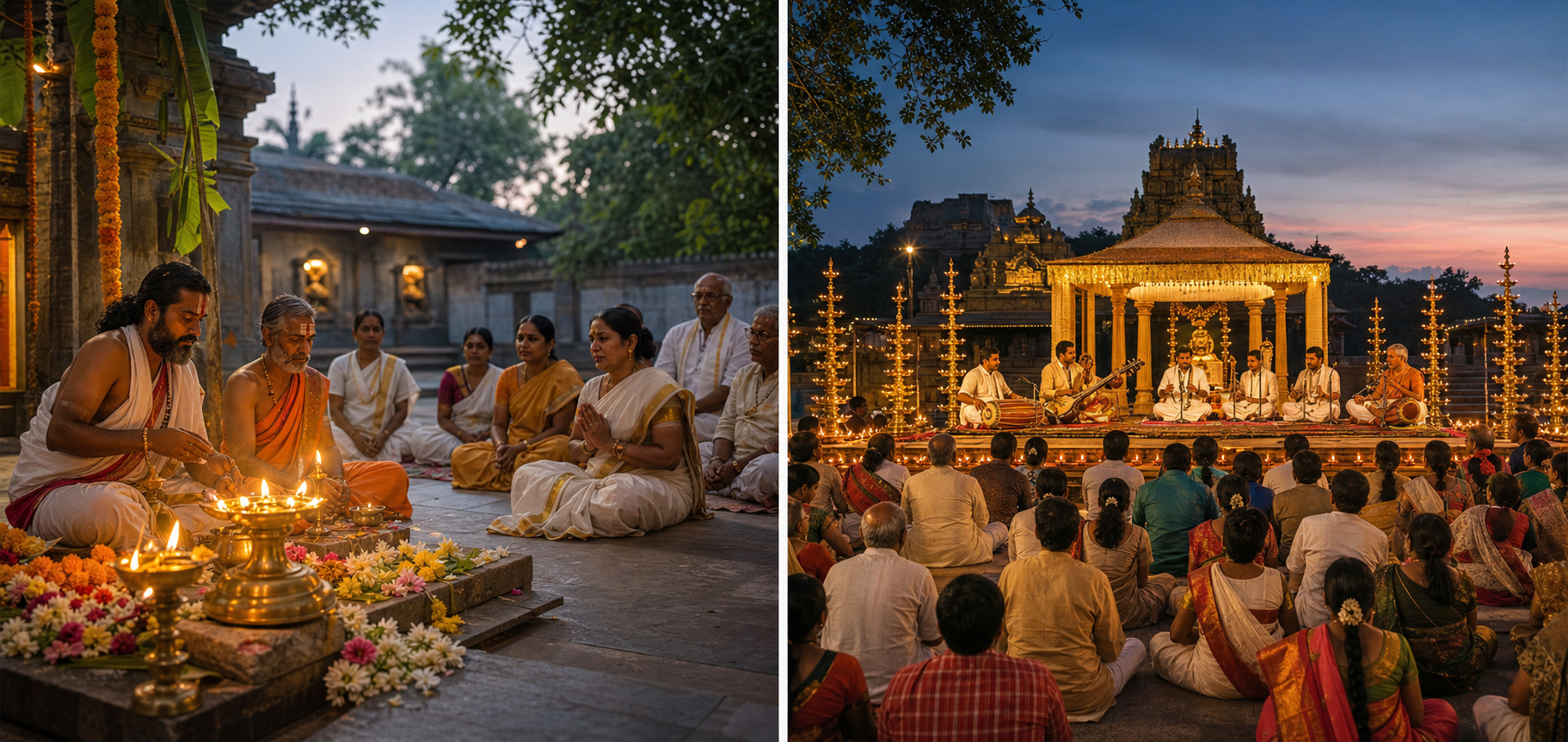
Choose Tarigonda if your priority is the central ritual sequence. At Sri Lakshmi Narasimha Swamy Temple, Snapana Tirumanjanam begins at 7:00 am on 30 April. Pushpanjali at the statue of Vengamamba follows it. Devotees may witness the abhisheka, offer flowers as permitted by the temple, and join or listen to sankeertanas celebrating her devotion to Sri Venkateswara.
Choose Tirupati-Tirumala if you are drawn to the saint-poet’s continuing place within the devotional culture of the hill shrine. Music, Harikatha, literary remembrance, and special aradhana give this part of the observance a broader cultural range. It may suit families, students of devotional literature, and practitioners of classical arts who want to encounter Vengamamba through both worship and performance.
Tirumala also preserves a particularly intimate connection with her through the customary Tarigonda Vengamamba Harati during Ekanta Seva. The nightly offering is not merely an anniversary feature; it keeps her service to Sri Venkateswara within the temple’s living memory. Its significance, however, should not be mistaken for a promise of access to a particular seva. Base your visit on the day’s published queue, security, and admission arrangements.
If you hope to attend both Tarigonda and Tirupati-Tirumala, treat them as separate legs rather than a seamless single program. The road time between Tirupati and Tarigonda makes a tightly timed itinerary fragile. Give priority to the 7:00 am Tarigonda rite, then regard any later program as a second commitment whose feasibility depends on traffic and updated timings.
Plan the 7:00 am Tarigonda morning backwards
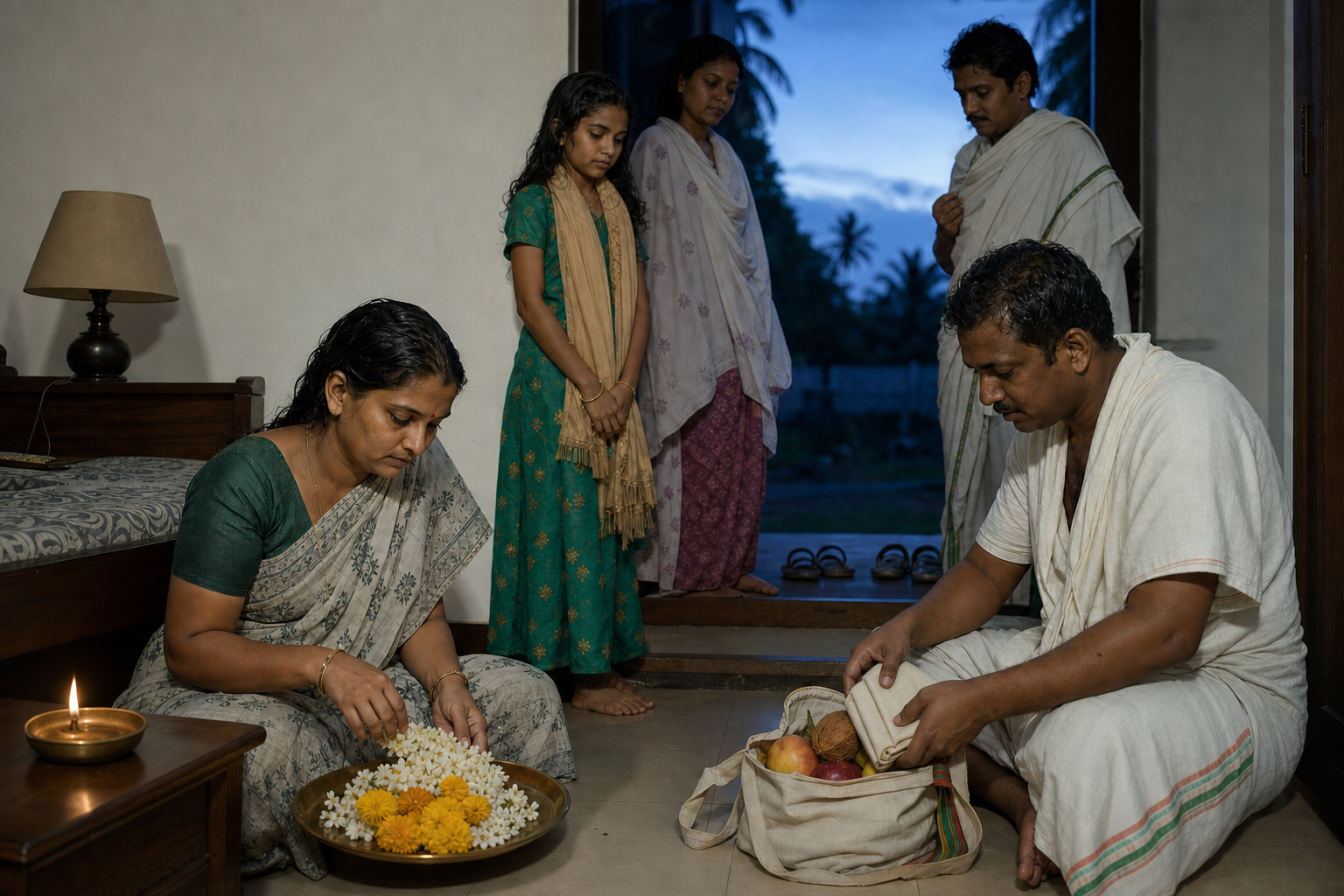
The early hour changes the journey. Tirupati is the principal rail and air gateway, but the drive from Tirupati to Tarigonda generally takes 2.5 to 3.5 hours. A 3.5-hour drive beginning at 3:30 am reaches Tarigonda at 7:00 am exactly; a 2.5-hour drive beginning at 4:30 am does the same. Neither calculation includes parking, walking, security screening, or the early arrival recommended for the abhisheka.
That means a same-morning departure from Tirupati must begin earlier than those bare calculations. If predawn road travel is unsuitable for your family, consider staying nearer Tarigonda on the previous night, subject to independently confirmed accommodation. The important point is not to let a nominal journey time become your arrival plan.
Carry valid identification and check the applicable temple dress requirements before setting out. Keep your belongings manageable, follow the designated queue, and cooperate with security instructions. Do not assume that substances used in the ceremonial bathing should be brought personally; offerings and service contributions should pass through channels authorized by the temple authorities.
Travel lightly in another sense as well. Avoid unnecessary plastic, dispose of nothing in the temple precincts, and do not let the urge to secure a better view disturb the rite for others. Vengamamba Jayanti honors disciplined devotion. Queue conduct, cleanliness, and consideration for older pilgrims are part of that discipline, not peripheral travel etiquette.
Because cultural programs may continue through the day and into the evening, keep the later part of your itinerary flexible. Confirm current temple advisories close to the event rather than relying on customary program patterns as fixed appointments.
Read the rites as instructions for your own practice
Snapana Tirumanjanam is the ceremonial bathing of the deity with sanctified substances that may include water, milk, curd, honey, turmeric, sandal, and aromatic essences. Vedic mantras and stotras accompany the rite. Its meaning lies in purification and renewal: the external act directs the devotee toward an internal clearing of distraction, pride, and disorder.
Before the rite begins, choose one specific inner discipline for the day. It may be restraint in speech, attentive mantra recitation, or a firm commitment to serve without seeking recognition. This keeps the abhisheka from becoming something you merely watch. The substances, mantras, and sacred setting then reinforce a sankalpa you have already made.
Pushpanjali carries a different instruction. A flower embodies beauty that cannot be possessed permanently. Offering it expresses gratitude, humility, and recognition of the passing nature of worldly forms. In Vengamamba’s commemoration, the flowers also honor literary and artistic work that continues to lead people toward bhakti and jnana. Offer flowers only in the manner permitted at the venue; reverence does not require bypassing temple procedure.
The ritual sequence becomes clearer when placed beside Vengamamba’s life as a Telugu Vaishnava poet-saint, circa 1730-1817. After early widowhood, she embraced an austere devotional path, moved to Tirumala, and gave herself to Sri Venkateswara through literature, worship, and public feeding. Her plays, poems, sankeertanas, and Harikatha literature were not separate from her sadhana. Creative work, temple devotion, and care for others formed one life.
You can therefore use the Jayanti to ask three concrete questions: What in your conduct needs purification? What talent or possession can you offer without clinging to it? Whom will your devotion actually feed or assist? Those questions translate Snapana Tirumanjanam, Pushpanjali, and annadanam into daily dharma.
Carry the observance from worship into annadanam
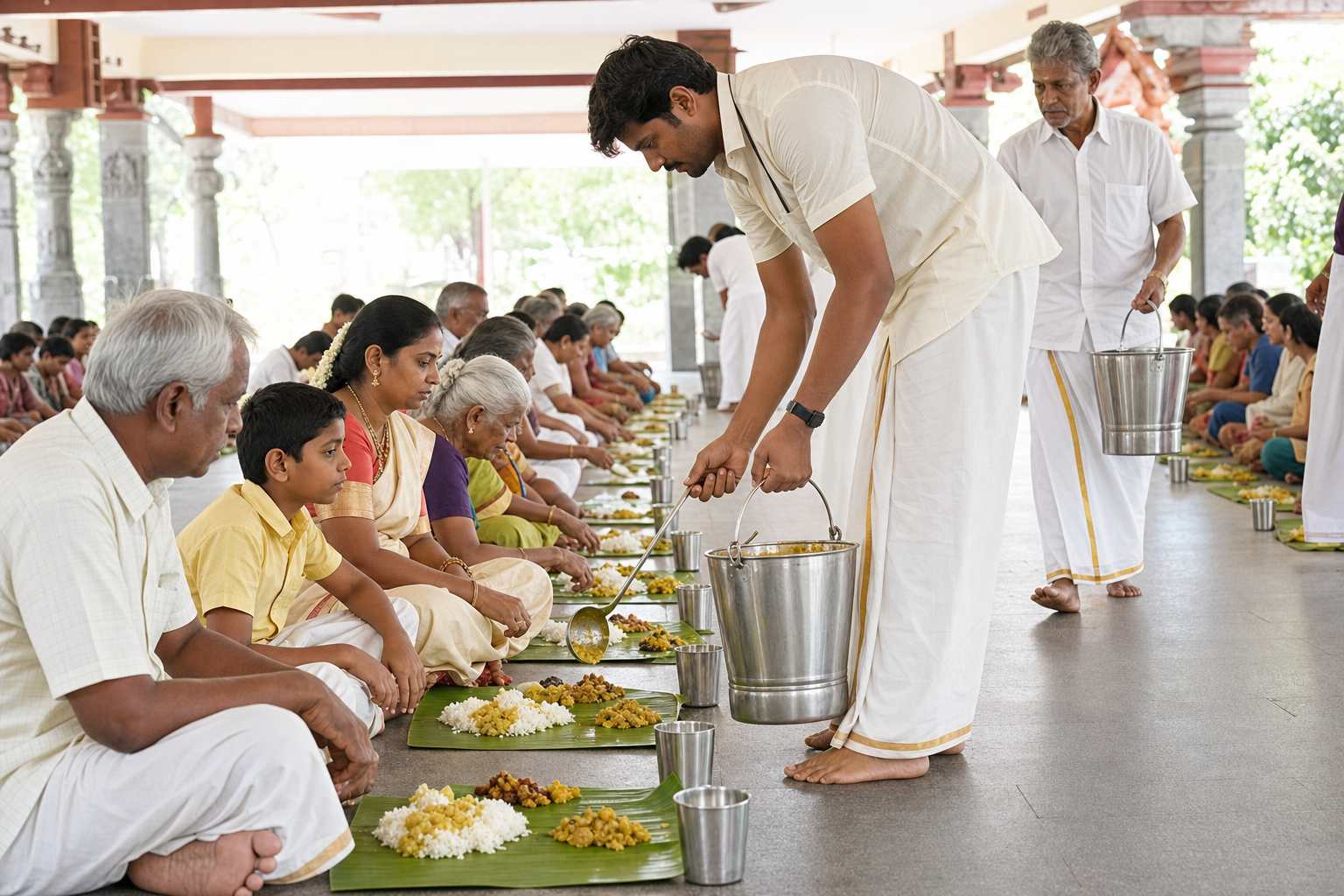
Vengamamba’s satram at Tirumala sustained nitya annadanam, making food service a continuing expression of worship. This is why annadanam should not be an optional charitable footnote to her Jayanti. It is one of the clearest ways to honor the shape of her life.
If you attend in person, ask how to support food distribution through an authorized temple channel. That may mean contributing, volunteering where volunteers are being accepted, or simply helping preserve an orderly and dignified environment. Do not set up an unauthorised distribution near a temple entrance; good intention does not remove the need for coordination, hygiene, and crowd management.
If you remain at home, you do not need to imitate the full temple abhisheka. Set aside a definite time on 30 April. Begin with a simple Pushpanjali at your altar and recite a Vishnu or Venkateswara stotra. Read a selection from Vengamamba’s devotional writing or hold a small satsanga centered on her union of bhakti and service. Then complete the observance through local annadanam or a contribution to a trusted community-feeding effort.
Families can make the connection visible without turning the day into a performance. Let one person prepare the flowers, another select the stotra or reading, and another arrange the act of food service. Children then encounter Vengamamba not only as a historical figure but as a model whose devotion produces music, learning, discipline, and care for others.
Before 29 April, make three decisions: choose your venue, verify the latest timing and access instructions, and decide what form your annadanam will take. Once those choices are made, the Jayanti stops being a date you acknowledge and becomes a practice you can carry beyond it.