
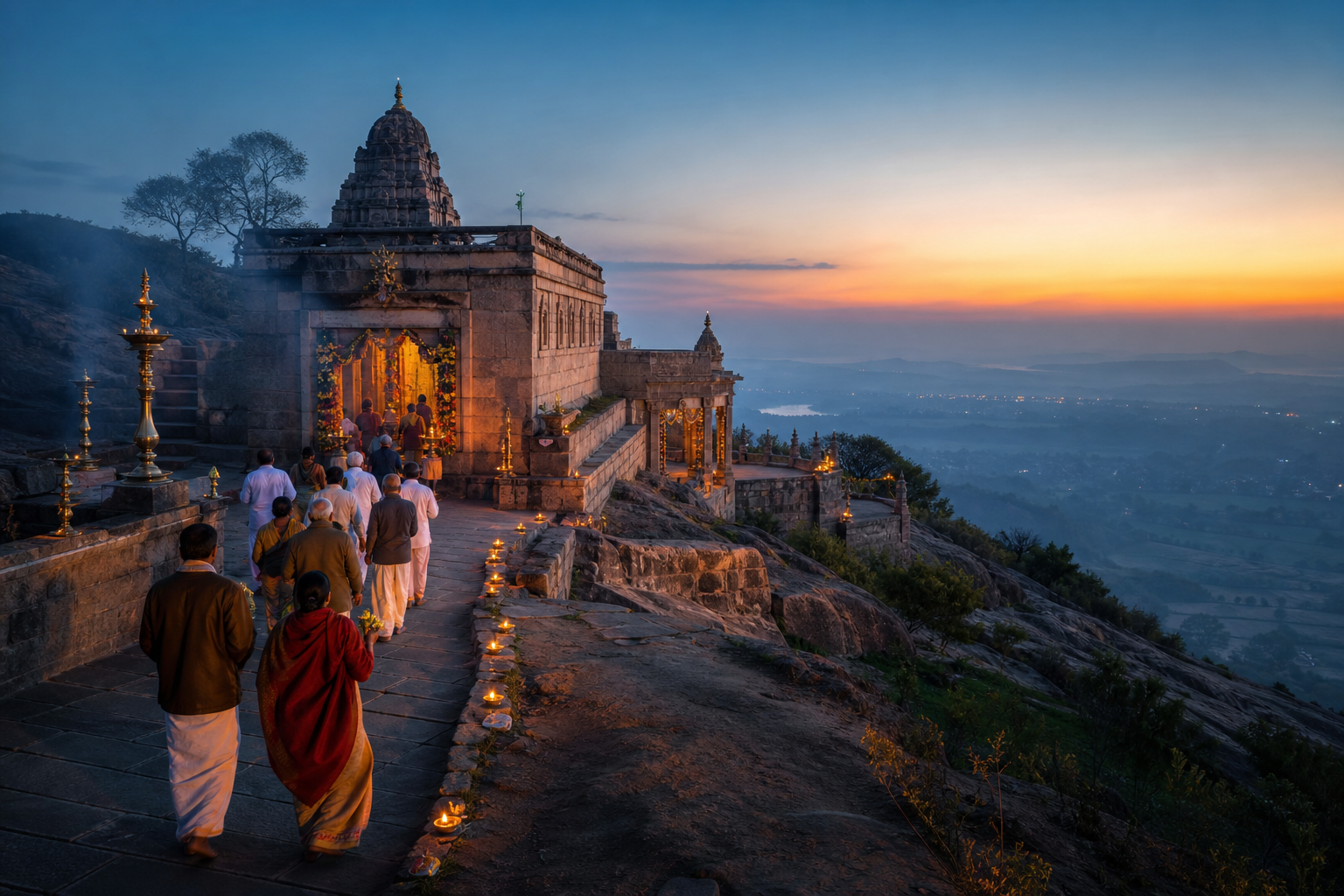
If you need the exact shape of Skandagiri’s 2025-2026 winter festival season, start with the sequence rather than a single headline date. The calendar moved from Pradosham in early December into daily Dhanurmasam worship, followed by Vaikunta Ekadashi and Arudra Darsanam within that month-long dawn observance.
The season has concluded, so the dates below form a historical calendar, not a reusable schedule for another year. They are still useful if you want to identify what was observed, understand how the rituals related to one another, or prepare intelligently for a future Skandagiri season. Festival dates follow the applicable panchang, while detailed temple timings can be announced separately.
The winter season at a glance
| Date | Observance | Ritual focus | Timing status |
|---|---|---|---|
| 2 December 2025, Tuesday | Pradosham | Abhishekam to Sri Ekambareswarar | The date and abhishekam were identified; the precise temple time required confirmation. |
| 16 December 2025-14 January 2026 | Dhanurmasam Pooja | Daily special pujas for the deities of Skandagiri | 5:30 AM every day |
| 30 December 2025, Tuesday | Vaikunta Ekadashi | Sudarshana Homam, Abhishekam, Sahasranamam and Giri Pradakshinam | Temple observances from 4:30 AM onwards |
| 3 January 2026, Saturday | Arudra Darsanam | Homam to Lord Shiva, Nataraja Abhishekam and Giri Pradakshinam | The detailed sequence and individual ritual times were to be announced closer to the date. |
The opening Shaiva observance was Pradosham on 2 December, with Abhishekam to Sri Ekambareswarar. This was the one confirmed early-December festival program; other monthly observances could follow the temple almanac, but they were not part of the same confirmed schedule.
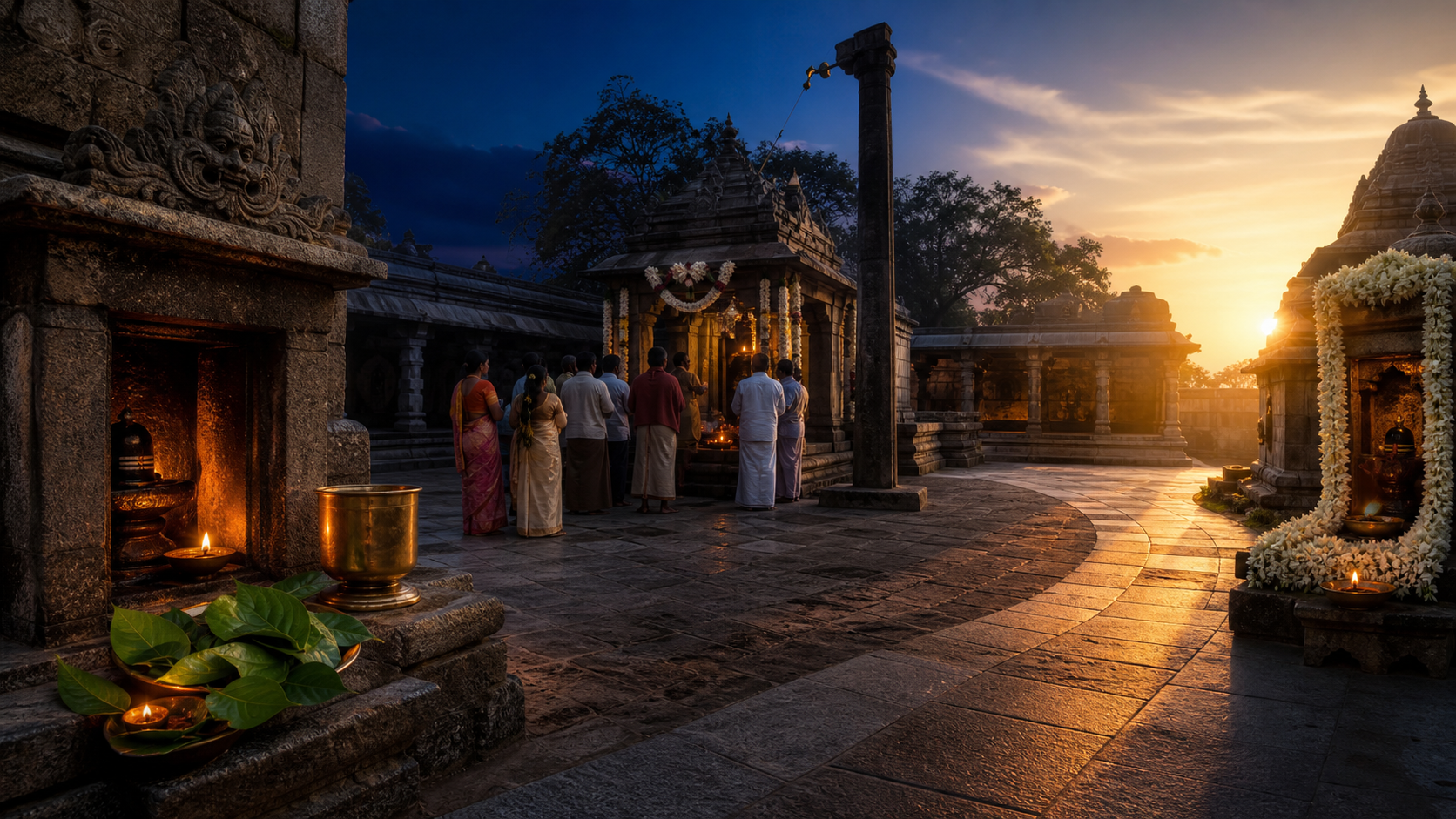
The sustained centre of the season was Dhanurmasam from 16 December 2025 through 14 January 2026, with special pujas at 5:30 AM daily. Vaikunta Ekadashi on 30 December and Arudra Darsanam on 3 January therefore did not stand outside Dhanurmasam. They occurred within its established rhythm of pre-dawn worship.
That overlap matters. A devotee attending either major festival was entering a temple already shaped by days of early worship, recitation and devotional discipline. The grand observance and the quiet daily practice belonged to one season, even though their ritual emphases differed.
Match the observance to your devotional purpose
You did not need to attend every event to participate meaningfully. The better choice depended on the form of worship you were seeking:
- For a repeatable dawn sadhana: Dhanurmasam offered the clearest structure. The same 5:30 AM starting time made it possible to attend one morning or return across several days without waiting for a large festival.
- For worship centred on Sri Ekambareswarar: Pradosham on 2 December was the direct choice, with abhishekam as its named ritual focus.
- For a Vaishnava observance with several modes of participation: Vaikunta Ekadashi combined homam, abhishekam, collective recitation and circumambulation from the early morning onwards.
- For Nataraja worship and Shaiva contemplation: Arudra Darsanam brought together Shiva Homam, Nataraja Abhishekam and Giri Pradakshinam.
- For understanding the season as a whole: Dhanurmasam supplied the daily foundation, while Vaikunta Ekadashi and Arudra Darsanam showed how distinct Vaishnava and Shaiva observances could unfold within it.
This distinction prevents a common planning mistake: choosing only by crowd size or the fame of a festival. If your purpose is disciplined pre-dawn worship, an ordinary Dhanurmasam morning may serve that intention more directly than the busiest date. If your sankalpa is tied to a particular deity or ritual, choose the observance that actually centres it.
The temple’s daily Dhanurmasam worship extended across its sacred community, including Valli Devasena Sametha Subramanya Swamy, Adi Sankar and the other deities. It should not be reduced to a waiting period before the two larger festival days. Its devotional force came from consistency: arriving before sunrise and placing worship before the ordinary demands of the day.
Read each announced time correctly
A temple opening time, a daily puja time and the starting time of a particular homam are not interchangeable. Keeping those categories separate is the most important practical lesson in this calendar.
On Vaikunta Ekadashi, the program began from 4:30 AM onwards. That tells you when the special day commenced; it does not by itself assign 4:30 AM to Sudarshana Homam, Abhishekam, Sahasranamam and Giri Pradakshinam individually. If one particular ritual is your priority in a future season, confirm its own time rather than assuming it matches the first announced hour.
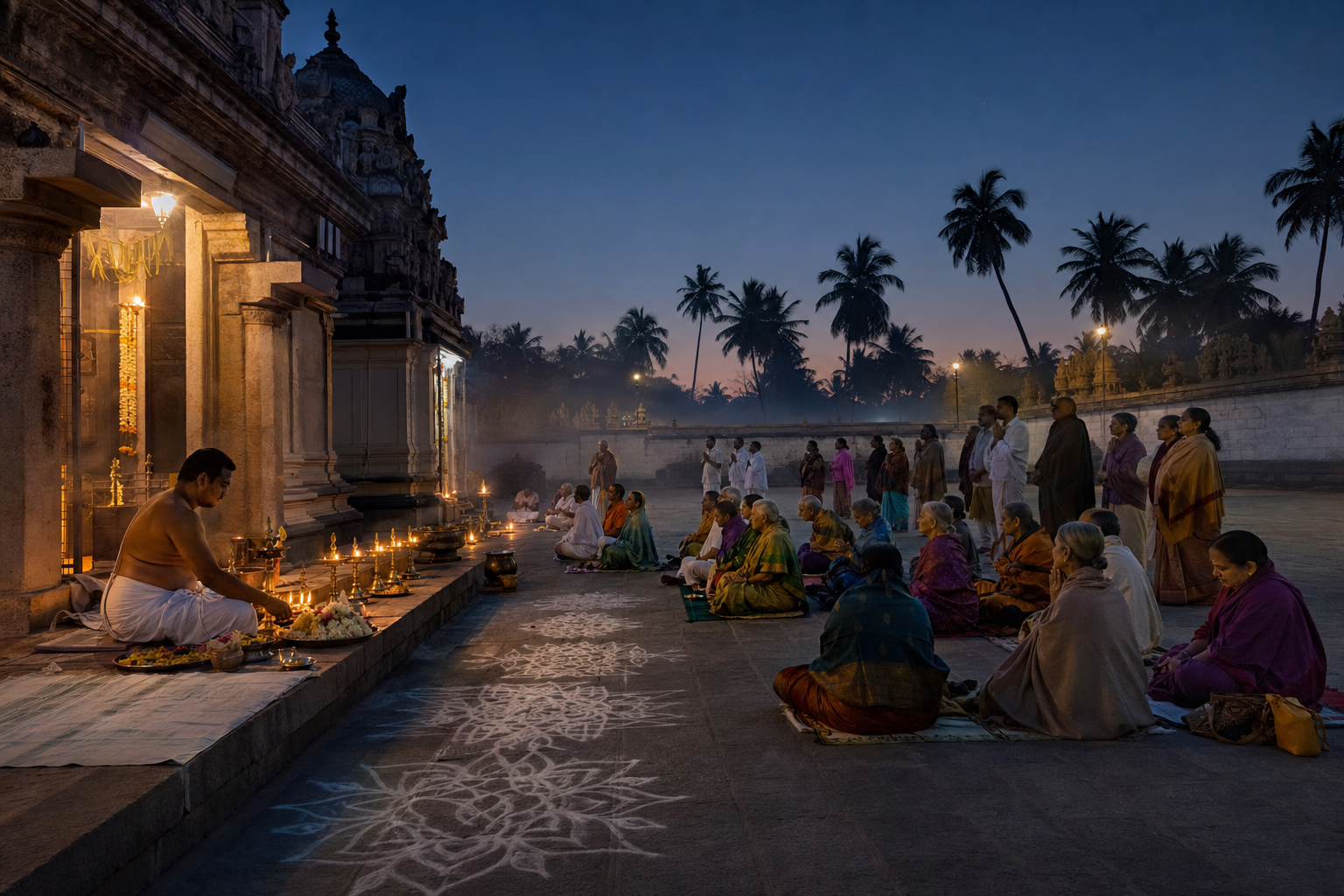
Dhanurmasam was different. Its 5:30 AM daily puja time was itself the recurring appointment. Arriving shortly before that hour gave you time to settle into the pre-dawn atmosphere instead of entering after the worship had begun.
Pradosham required another kind of care. The abhishekam to Sri Ekambareswarar was confirmed for 2 December, and Pradosham worship is customarily associated with the evening sandhya period, but the exact temple timing still had to be verified. Custom can help you anticipate the part of the day; it cannot replace the temple’s announcement.
Arudra Darsanam similarly had a confirmed date and named rites, while the detailed timing of the Homam, Nataraja Abhishekam and associated observances was to be released closer to 3 January. Attendance could extend from morning into the evening, with the greatest concentration of devotees expected around abhishekam and deeparadhana. A person seeking only general darshan and a person determined to witness Nataraja Abhishekam therefore needed different plans.
For future festival visits, use this order:
- Confirm the current year’s date under the temple’s applicable panchang.
- Identify the exact rite you want to attend, not merely the festival name.
- Check whether the published time refers to temple opening, a general program or that specific rite.
- Reconfirm the schedule with the temple administration or its current notice before travelling.
- For a major ritual with a confirmed time, allow an arrival margin of roughly 30-45 minutes for queueing and an unhurried entry.
The last step is especially useful on a high-attendance day. Arriving 30-45 minutes before a major ritual was the practical recommendation for comfortable darshan. It is a buffer for entry and orientation, not a substitute for checking the correct starting time.
Let the ritual determine how you participate
Dhanurmasam: cultivate continuity
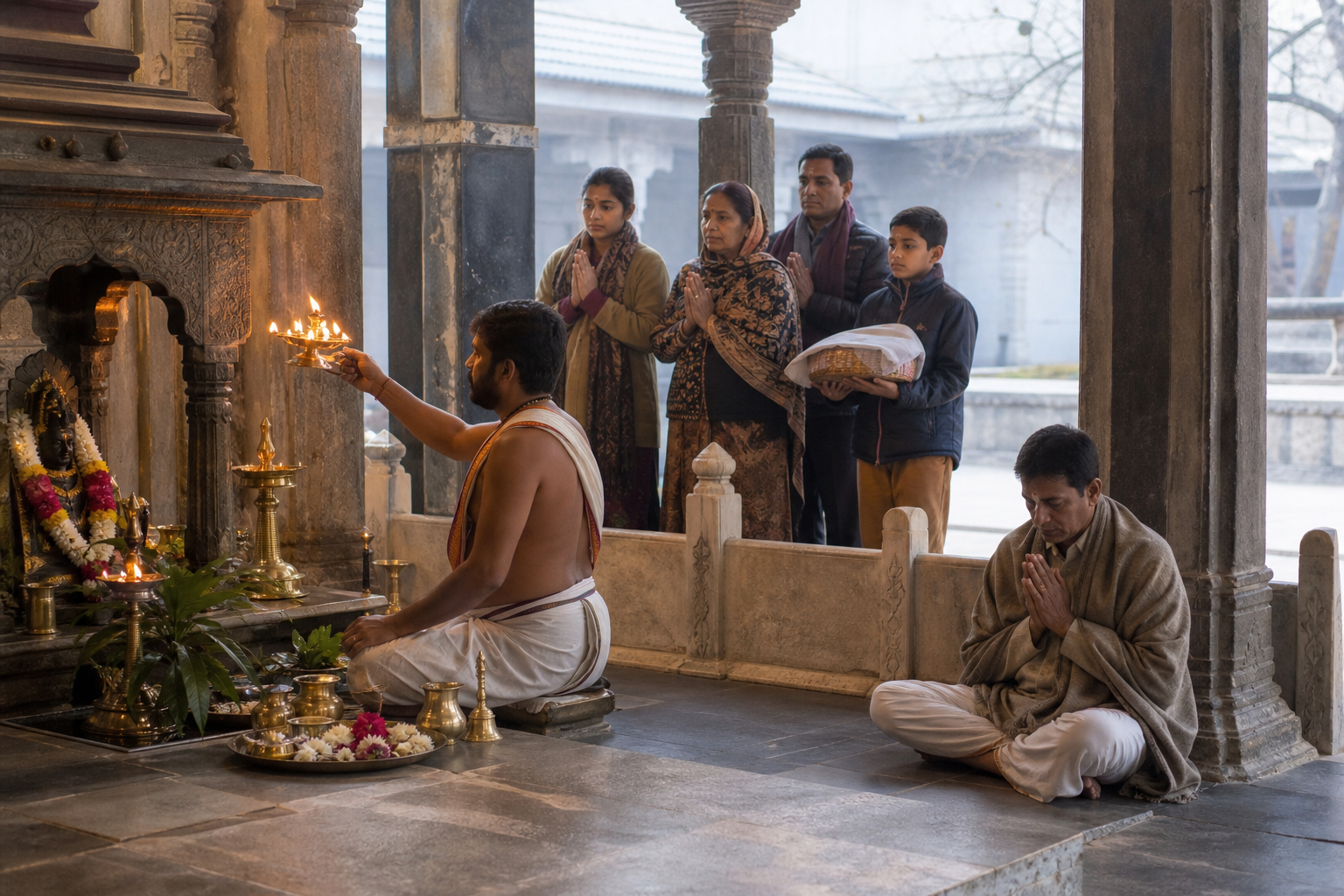
Dhanurmasam placed the discipline of showing up before the spectacle of a single festival. The lamps, mantras and quiet of daybreak supported a form of worship in which regularity was itself part of the offering. If you use this season as a model for future practice, choose your mornings in advance and protect the early hour. Do not treat the daily puja merely as background to Vaikunta Ekadashi or Arudra Darsanam.
Vaikunta Ekadashi: distinguish the four practices
The Vaikunta Ekadashi program named four complementary observances. Sudarshana Homam directed prayer toward protection and clarity. Abhishekam expressed purification and devotion through ritual bathing. Sahasranamam gathered attention through the recitation of the divine thousand names. Giri Pradakshinam turned bodily movement into reverential circumambulation.
You can prepare differently for each. For homam or abhishekam, confirm the individual time and secure your place before it begins. For Sahasranamam, arrive ready to give sustained attention to the recitation rather than treating it as background sound. For Giri Pradakshinam, follow the temple’s flow and maintain the pace and quiet of the group. The four practices belong together, but they do not demand identical forms of participation.
Pradosham and Arudra Darsanam: two Shaiva emphases
Pradosham and Arudra Darsanam should not be collapsed into a generic category of Shiva worship. At Skandagiri, the December Pradosham specifically centred on Abhishekam to Sri Ekambareswarar. Arudra Darsanam centred on Nataraja and the Ananda Tandava, presenting Shiva as the cosmic dancer whose movement encompasses creation, preservation and dissolution.
The Arudra rites joined Shiva Homam, Nataraja Abhishekam and Giri Pradakshinam. Fire ritual, sacred bathing and circumambulation offered three related ways to contemplate order, transformation and the stillness within motion. If Nataraja Abhishekam is the heart of your visit, plan around its separately announced time rather than assuming that general attendance at some point on 3 January will place you there for it.
This ritual specificity is also the right way to understand Skandagiri’s wider dharmic significance. The season was distinctly Hindu, with identifiable Shaiva, Vaishnava and Subramanya-centred forms. Its resonance with Buddhist, Jain and Sikh readers lies in shared respect for disciplined practice, ethical conduct, compassion, service and inner clarity – not in pretending that the traditions or their rituals are interchangeable.
Practical conduct completes that understanding. Carry minimal belongings, wear comfortable and temple-appropriate clothing, observe queue discipline, keep silence during chanting, and pay particular attention to elders and children in your group. On a crowded festival day, decide beforehand which rite is essential. A family that tries to cover every element without a clear priority can spend the day moving anxiously between queues instead of participating attentively.
Key takeaways for a future Skandagiri visit
- The 2025-2026 winter sequence began with Pradosham on 2 December, entered daily Dhanurmasam worship on 16 December, included Vaikunta Ekadashi on 30 December and Arudra Darsanam on 3 January, and concluded its Dhanurmasam cycle on 14 January.
- The only recurring daily time in this calendar was the 5:30 AM Dhanurmasam puja. Do not apply it automatically to the major festival rituals.
- Vaikunta Ekadashi began from 4:30 AM onwards, but that general start did not establish a separate time for every homam, abhishekam, recitation or pradakshinam.
- Pradosham and Arudra Darsanam were both Shaiva observances, but they centred different manifestations and ritual intentions: Sri Ekambareswarar on Pradosham and Nataraja on Arudra Darsanam.
- Routine monthly rites such as Shashti, Sankatahara Chaturthi, Pournami and Amavasya should not be inserted into a confirmed festival itinerary unless the temple publishes them for that year.
- Never transfer these dates to a later winter. Recheck the panchang-based date, the temple notice and the individual ritual time before you travel.
For the next season you attend, begin with one clear devotional intention and verify the current schedule around it. Once the date and ritual time are secure, arrive early enough to become still before worship begins. That small act of preparation is what turns a festival visit from a rushed appearance into sadhana.
References
- DharmaRenaissance Blog – December 2025 Skandagiri Temple Festivals: Dates, Programs, and Devotional Highlights
- DharmaRenaissance Blog – Skandagiri Temple Hyderabad: Complete Vaikunta Ekadashi 2025 Guide, Rituals, Timings, Darshan
- DharmaRenaissance Blog – Dhanurmasam Pooja at Skandagiri Temple, Hyderabad: Comprehensive Guide to Dates and 5:30 AM Rituals
- DharmaRenaissance Blog – Skandagiri Temple’s Arudra Darsanam 2026: Powerful Nataraja Abhishekam in Hyderabad
