
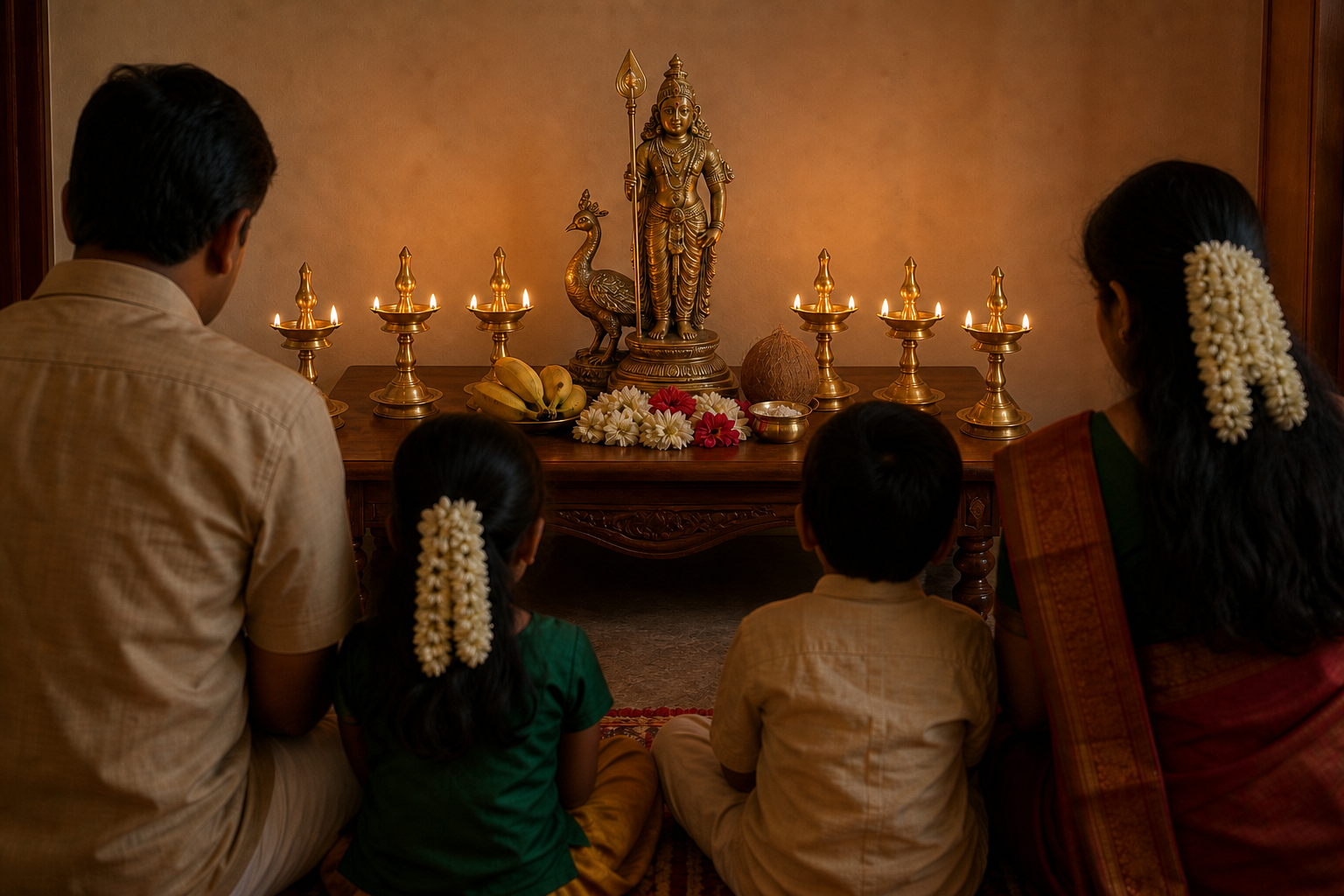
If you are checking the 2025 calendar, the likely point of confusion is the gap between October 27 and November 8. October 27 was the climactic Sashti day and Soorasamharam. November 8 was the later Thirukalyanam date used by many temples. They belonged to the same festival cycle, but they were not interchangeable.
The six-day vrata itself ran from October 22 through October 27. To observe it coherently, you needed three things: the correct local schedule, a fasting rule you could keep safely, and a daily practice that joined worship to restraint, compassion and service.
Put the 2025 dates in the right order
The central dates were October 22 to October 27 for the six-day vrata, October 27 for Soorasamharam, and November 8 for Thirukalyanam in many temple calendars. That sequence matters because each date carries a different devotional emphasis.
| Date | Place in the observance | Practical meaning |
|---|---|---|
| October 22, 2025 | First day of the six-day vrata | The chosen food discipline and daily worship rhythm begin. |
| October 22-26, 2025 | Continuing days of fasting, prayer and restraint | Keep the same sustainable discipline instead of repeatedly changing its intensity. |
| October 27, 2025 | Sashti and Soorasamharam | This is the culmination of the vrata and the ritual remembrance of Skanda’s victory over Surapadman. |
| November 8, 2025 | Thirukalyanam in many temple calendars | Confirm the local date before attending; this later celebration should not be mistaken for the Sashti tithi itself. |
In the Tamil calendar, the cycle fell in Aippasi, corresponding to Tula, with the principal observances associated with Aippasi Shukla Paksha and the Sashti tithi marking the climax. A temple’s exact puja, procession or reenactment time could differ because regional panchangam reckoning and local tradition affect the published schedule.
For that reason, a date found on a general calendar was only the first step. A devotee attending in person also needed to check the temple bulletin for the start of its vrata program, the October 27 worship schedule, the time of Soorasamharam, and whether Thirukalyanam would in fact be held on November 8. The local announcement governed participation at that temple.
Choose a vrata you can keep without harming yourself
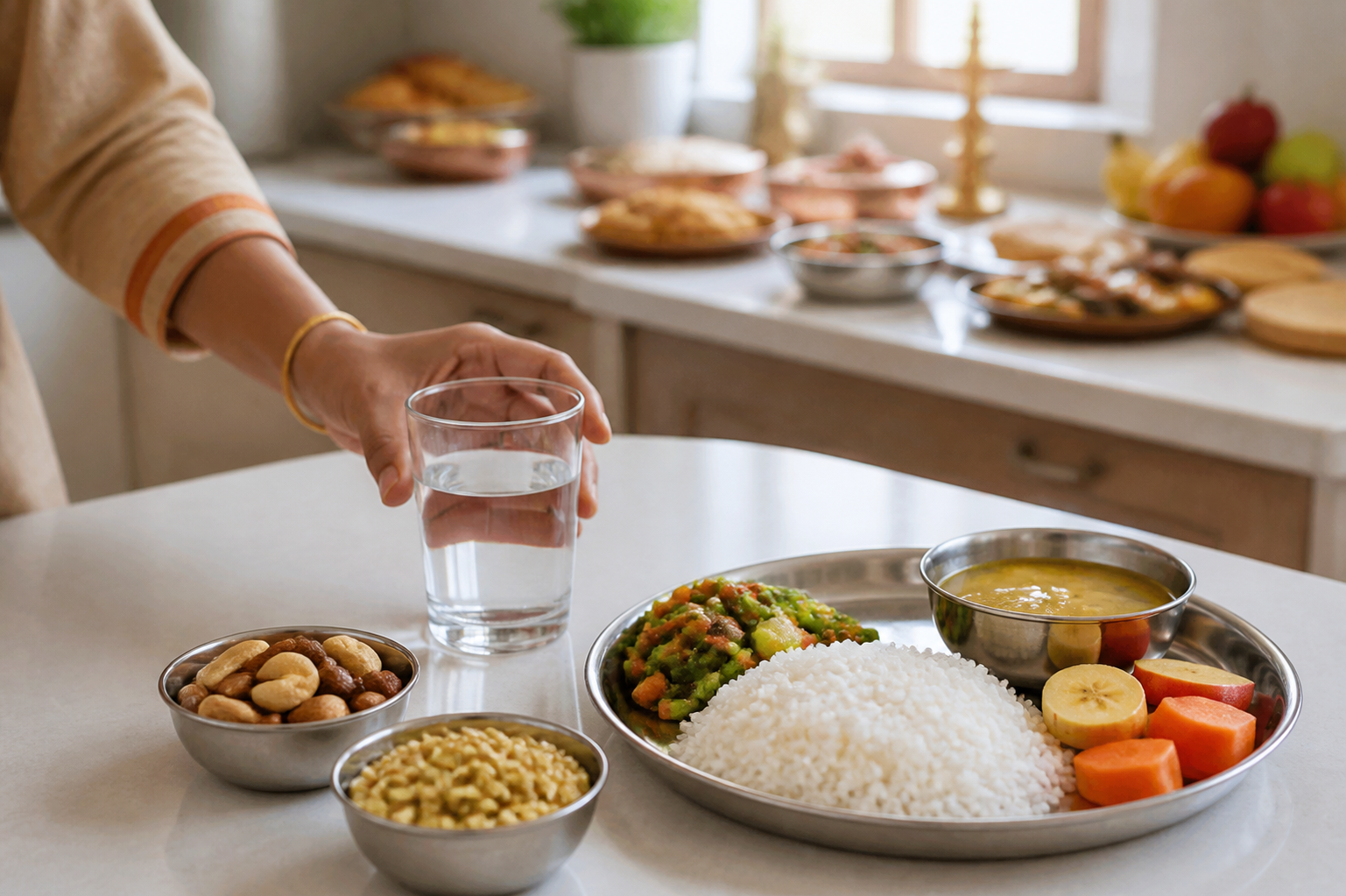
Kanda Sashti fasting does not have a single food rule followed identically by every devotee. Its forms range from strict upavasa to a simpler sattvic regimen using fruit, tiffin items or kanji. The useful question is therefore not, “Which option sounds most severe?” It is, “Which vrata can I keep steadily, honestly and prayerfully for all six days?”
- Choose the form before the first day. Decide whether you will undertake strict upavasa or a permitted sattvic regimen, preferably in keeping with your family, guru or temple tradition.
- Make the rule clear enough to follow. Do not leave every meal to a fresh negotiation with yourself; decide what your chosen form includes and excludes.
- Protect hydration. Do not treat dehydration as proof of devotion. If restricting food or fluids could affect your health or medical treatment, use a nourishing form of the vrata and seek advice from a qualified clinician.
- Pair the food rule with a rule of conduct. Choose a concrete restraint in speech or habit, and add a manageable act of compassion or service.
- Keep the commitment stable. A modest rule followed for the full period is more coherent than an extreme rule abandoned or repeatedly revised halfway through.
This distinction between purpose and severity is important. Food discipline creates room for attention, but it is not the whole vrata. Prayer without restraint can become routine; restraint without compassion can become self-absorption; fasting without regard for health can become harmful. The practices work together when they make you more attentive to Muruga and more responsible in your conduct.
Use the same simple worship rhythm for all six days
A complicated home program is easy to design and difficult to sustain. A short sequence repeated daily usually serves the vrata better. The established devotional elements include recitation of Kanda Sashti Kavasam, abhishekam and alankaram for Lord Muruga, and an evening lamp offering. Use the elements appropriate to your lineage and household rather than trying to reproduce a large temple ceremony at home.
- Begin the day by remembering the vrata you have undertaken. State its purpose plainly: devotion to Muruga, purification of conduct, and perseverance in dharma.
- Recite Kanda Sashti Kavasam or the Muruga prayer already used in your family tradition. If the full recitation is not practical on a workday, preserve a consistent period of focused prayer instead of abandoning the day entirely.
- Where customary and manageable, perform a simple abhishekam or alankaram for the household Muruga murti or image. Keep the worship reverent and within the practice you actually know.
- Carry one observable discipline into the day. Restrain harsh speech, interrupt an ego-driven reaction, help someone, or complete a needed act of service without seeking recognition.
- In the evening, light the lamp, pray again, and examine whether the day’s conduct matched the sankalpa. The review is not an invitation to brood; it tells you what to correct the following day.
If work, caregiving or distance made daily temple attendance impossible, the home rhythm still gave the six days continuity. You could then reserve the principal temple visit for the climax or another locally significant service. Families could also divide practical roles: one person prepares the worship space, another leads the recitation, and children participate through the lamp offering or an age-appropriate act of service.
Do not invent a new level of complexity on each successive day. The deepening should occur in attention and conduct, not merely in the number of ritual tasks. By the sixth day, you should be able to notice where your mind has become clearer and where the same fear, pride or agitation continues to resist discipline.
Understand Soorasamharam and Thirukalyanam as two movements

Soorasamharam: the confrontation with adharma
Soorasamharam on October 27 commemorated Lord Skanda’s victory over Surapadman. Public reenactments gave visible form to the triumph of dharma over adharma, while the vrata asked the devotee to undertake the corresponding inward struggle. The event was not simply a spectacle placed at the end of six days; it was the ritual culmination toward which the fasting, prayer and restraint had been moving.
Large gatherings were associated with major Murugan temples including Tiruchendur, Palani, Thirupparankundram, Swamimalai, Tiruttani and Pazhamudircholai. Anyone attending such a celebration needed the temple’s own event information rather than an assumed universal timetable.
The inward reading also protects the observance from a common distortion. “Asura” should not become a convenient label for every person or group you dislike. Use the symbolism first to identify the fear, negativity and ego that deform your own judgement. Name one recurring pattern before the climactic day, then choose a contrary action: truthful speech instead of evasion, service instead of self-importance, or composure instead of a reflexive reaction.
This work has recognisable parallels across dharmic traditions without making their teachings identical. The obstacles called kleshas in Buddhism, kasayas in Jainism and haumai in Sikh teaching belong to distinct doctrinal settings, yet each directs attention toward the forces that obscure clear, ethical action. The shared point is practical: dharma is not defended only in public language; it must also discipline the person who invokes it.
Thirukalyanam: harmony after the struggle
Many temple calendars placed Thirukalyanam on November 8, 2025. The ceremony celebrates Muruga’s divine wedding, often with Deivayanai, also known as Devasena, while certain traditions include Valli. Because the date and ceremonial form can vary, the pairing and schedule should be confirmed with the temple whose celebration you intend to follow.
The movement from Soorasamharam to Thirukalyanam is spiritually useful. The first confronts disorder; the second turns victory toward harmony, auspiciousness and renewed bonds. A household can mark that change by sharing prasadam, expressing gratitude for the completed vrata, and repairing a neglected communal or family obligation. This prevents the observance from ending with the excitement of conquest while leaving relationships untouched.
Key takeaways for a coherent observance
- Record October 22-27 as the six-day Skanda Sashti 2025 vrata period.
- Place Soorasamharam on October 27, the climactic Sashti day.
- Treat November 8 as the Thirukalyanam date used by many temples, not as a universal date that overrides a local calendar.
- Choose one safe, sustainable fasting form before the vrata begins and accompany it with prayer, restraint and service.
- Build each day around a repeatable practice such as Kanda Sashti Kavasam, appropriate household worship and an evening lamp offering.
- Read Surapadman’s defeat inwardly as a demand to confront fear, negativity and ego, then let Thirukalyanam redirect that discipline toward gratitude and harmony.
Keep the 2025 schedule as an archival calendar, not as a set of dates to reuse in another year. For a future Skanda Sashti, confirm that year’s panchangam and temple bulletin afresh. Then settle the vrata rule early enough that the first day begins with worship, not uncertainty.
References
