
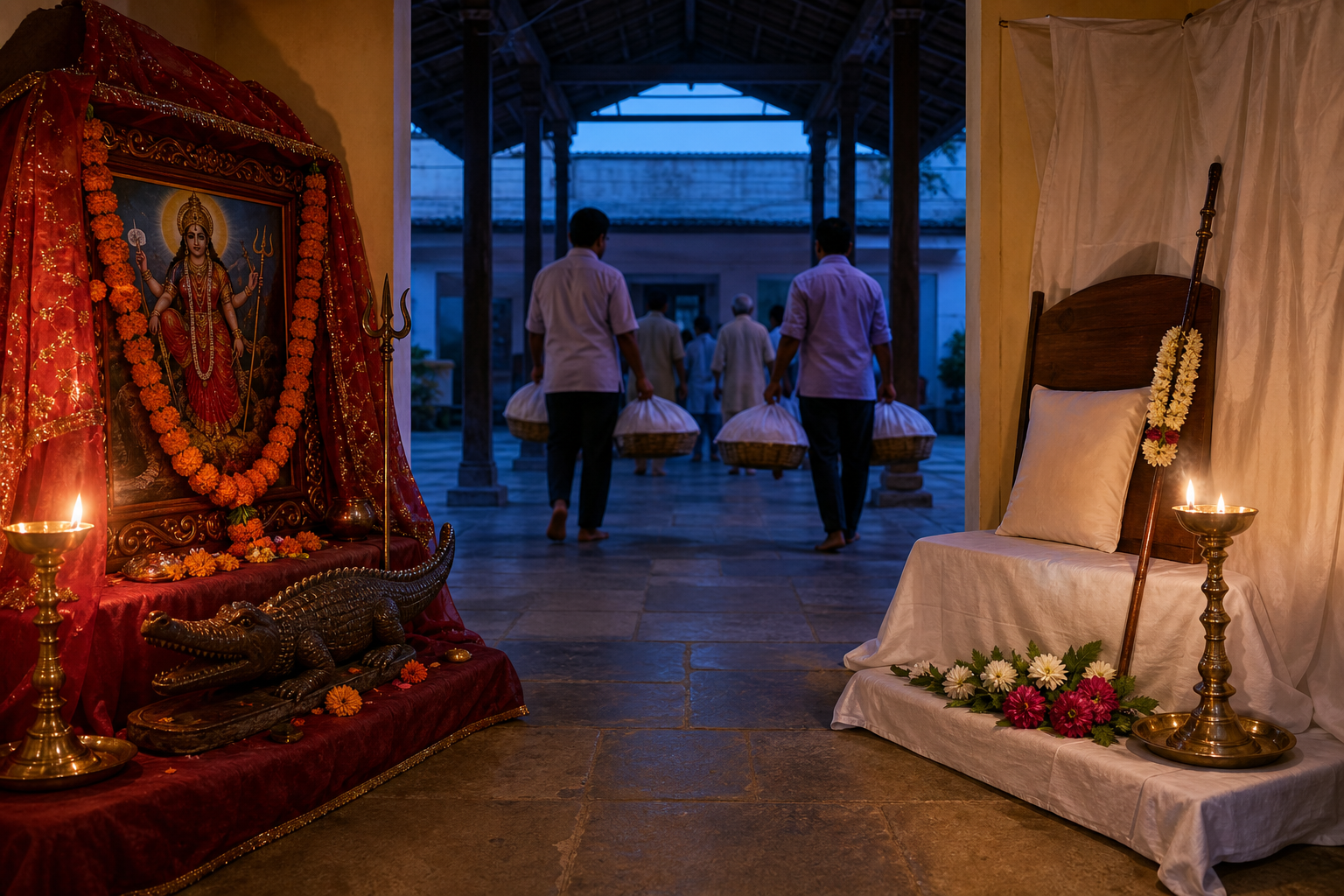
You may be looking at the Magha calendar and wondering how to honour two neighbouring regional Jayantis without reducing them to interchangeable festival days. In 2026, Khodiyar Mata Jayanti falls on January 26, while Harsu Brahma Jayanti falls on January 27.
The dates sit close together, and both observances speak to protection under pressure. Their meanings are not identical, however. Khodiyar Mata is approached as protective Shakti; Harsu Brahma Pandey is remembered for principled resistance to injustice. If you keep that distinction clear, a lamp, an honest retelling, a thoughtful question and one act of seva can make the observance more meaningful than an elaborate programme with no ethical follow-through.
Two memories of how dharma protects a community
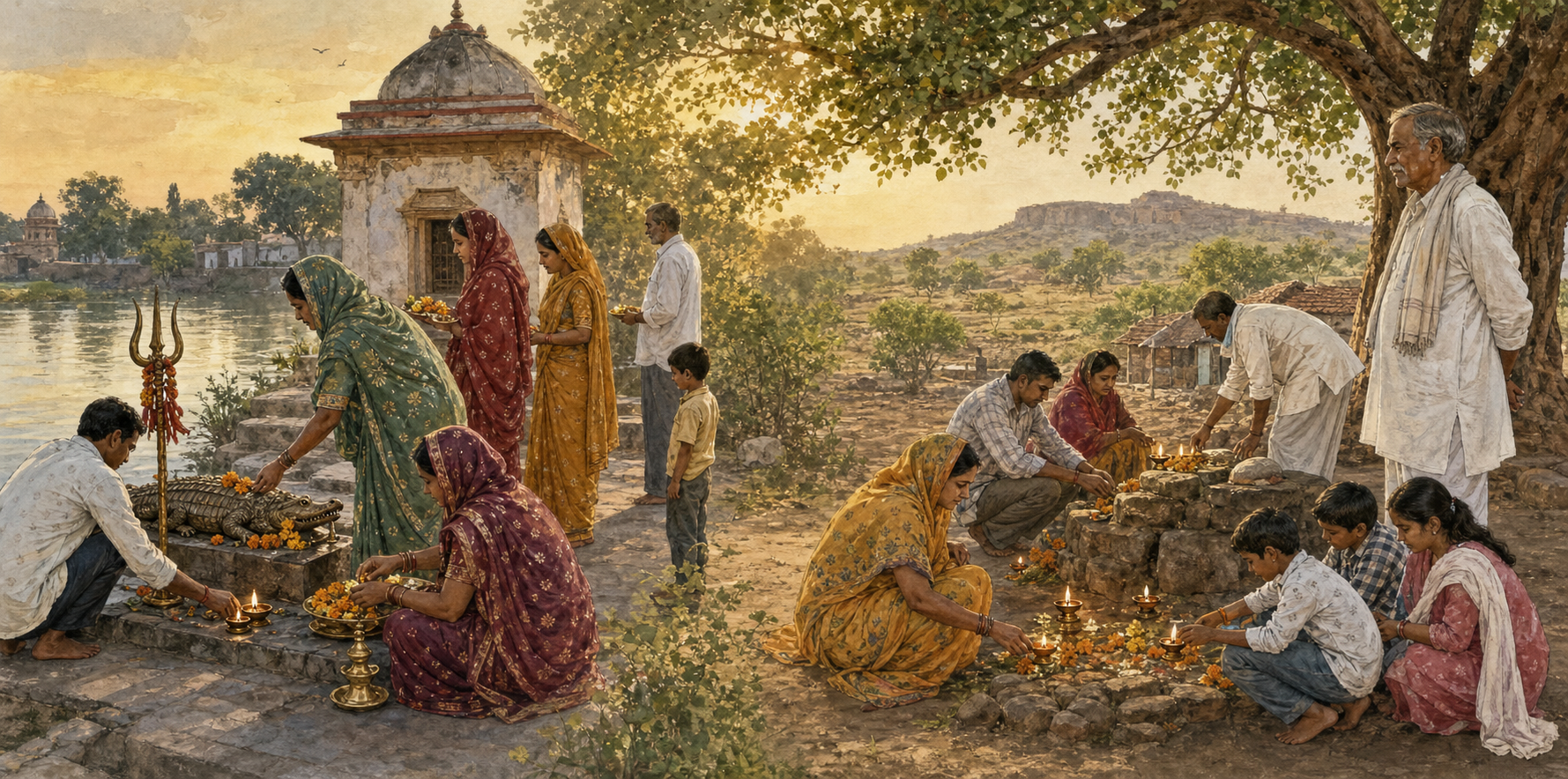
Khodiyar Maa Pragatya Din commemorates the manifestation of Khodiyar Mata, revered as a form of Shakti and invoked as a compassionate guardian. Devotional memory, including the sacred narrative associated with Mamaniya, places resilience and protective grace at the centre of the day. The appropriate response is not merely to ask for safety. It is to consider whether the strength you seek will also make you a source of shelter for someone else.
Harsu Brahma Pandey is remembered as a Kanyakubja priest in Raja Saliwahan’s kingdom. Community memory holds that he lost his life during a principled protest against the demolition of his home, reportedly undertaken at the queen’s instigation. This should be narrated with the uncertainty preserved: it is a remembered account of courage, restraint and fidelity to dharma, not an excuse to embellish every detail as established archival fact.
| Observance | 2026 calendar anchor | Central remembrance | Question for practice |
|---|---|---|---|
| Khodiyar Mata Jayanti | January 26; Magha Shukla Ashtami | Protective Shakti, compassion and resilience | Whom can your strength shelter? |
| Harsu Brahma Jayanti | January 27; local Panchang should guide the tithi observance | Moral courage, civil restraint and resistance to injustice | What truth must you uphold without abandoning restraint? |
That distinction is the key to a responsible joint programme. One segment may invoke the Goddess through the devotional forms familiar to her worshippers. The other may remember a revered life through prayer, a brief biographical reading and reflection. Do not present an original reflection as an inherited mantra, and do not transfer the ritual grammar of deity worship wholesale to a historical remembrance.
Khodiyar Mata Jayanti’s place on Magha Shukla Ashtami also gives you a useful contemplative frame. The waxing fortnight signifies increasing light and clarity, while Magha is associated with purity, disciplined devotion and steadfastness. Use that symbolism as a prompt for conduct: identify one confused or fearful situation in which you can act with greater clarity, care and steadiness.
Let the local Panchang settle the ritual timing
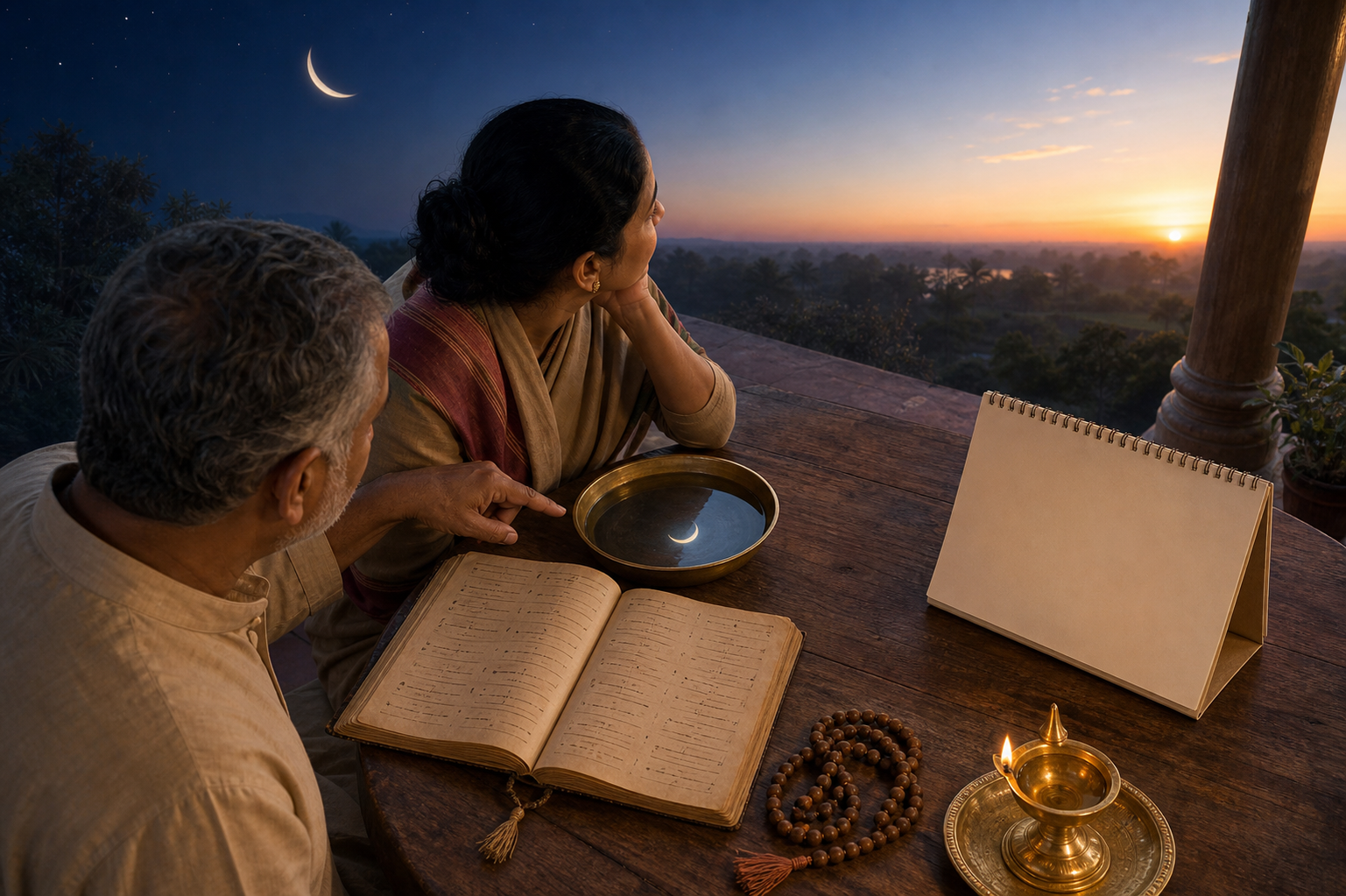
A civil date helps a family arrange leave, travel and invitations. A tithi places the observance within the lunar calendar. Those are related decisions, but they are not the same decision. Regional calculations can affect the applicable tithi window and auspicious timing, so a date graphic made for another location should not overrule a Panchang calculated for yours.
- Choose a Panchang used by your household, temple or regional community and calculated for your location.
- Confirm the convention with the temple or organisers before publishing an event time. Do this before invitations circulate, not after families have made plans.
- Write the civil date, relevant tithi, event time and location on the notice. For Khodiyar Mata Jayanti, identify Magha Shukla Ashtami. For Harsu Brahma Jayanti, do not guess a tithi name that your local calendar or tradition has not supplied.
- If two communities observe at different local times, state which Panchang and location each is following. A calendrical difference need not be turned into a dispute about devotion.
For 2026 planning, January 26 and January 27 are the practical civil dates. The local Panchang still governs how you align prayer or ritual with the lunar observance. If you cannot verify an exact window, announce the civil gathering accurately and say that ritual timing follows the local Panchang. A transparent limitation is better than false precision.
A simple observance that moves from memory to action
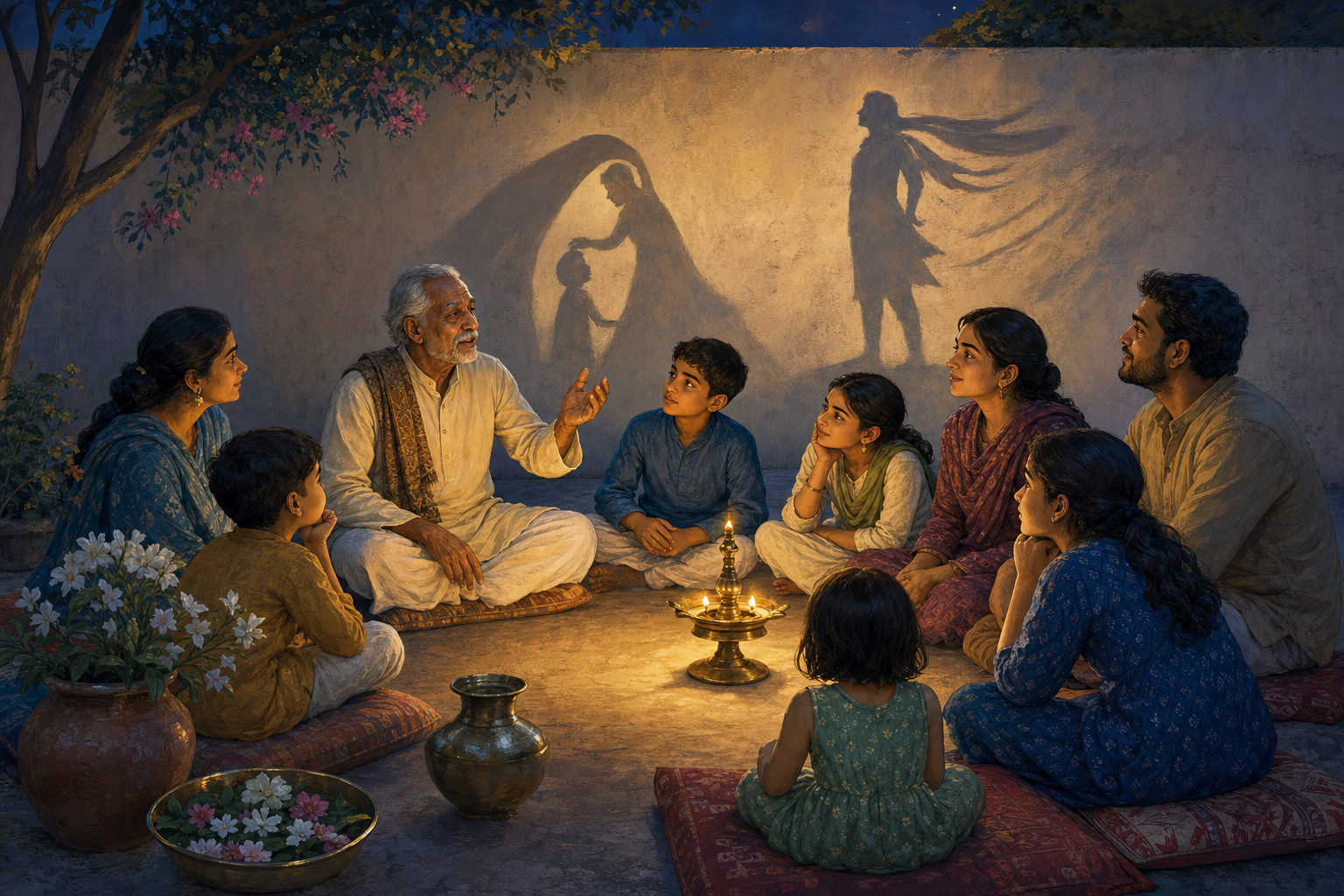
You do not need to manufacture an elaborate ceremony. The devotional practices associated with these days are deliberately accessible: lighting a lamp, offering prayer, reciting a familiar mantra where appropriate, reading a short life account, gathering the family and undertaking seva. What matters is the sequence. Remembrance should lead to reflection, and reflection should produce a visible act of responsibility.
- Prepare the space. Use the image, symbol, lamp and offerings customary in your family or temple tradition. If you are unsure about a ritual element, ask someone who actually maintains that tradition rather than improvising a claim of authenticity.
- Name the intention. For Khodiyar Mata, centre gratitude, protection and resilience. For Harsu Brahma, centre truthfulness, moral courage and restraint under injustice. A combined event should announce these intentions separately.
- Tell the memory carefully. Introduce Khodiyar Mata’s account as devotional sacred narrative and Harsu Brahma’s account as a legacy preserved in community memory. These descriptions honour each mode of remembrance without forcing both into the same category.
- Ask a question that requires a real answer. Children might be asked, “How can strength protect rather than frighten?” Adults might consider, “Where are we avoiding a truthful stand because it is inconvenient?” Let family members name situations appropriate to their age and responsibilities.
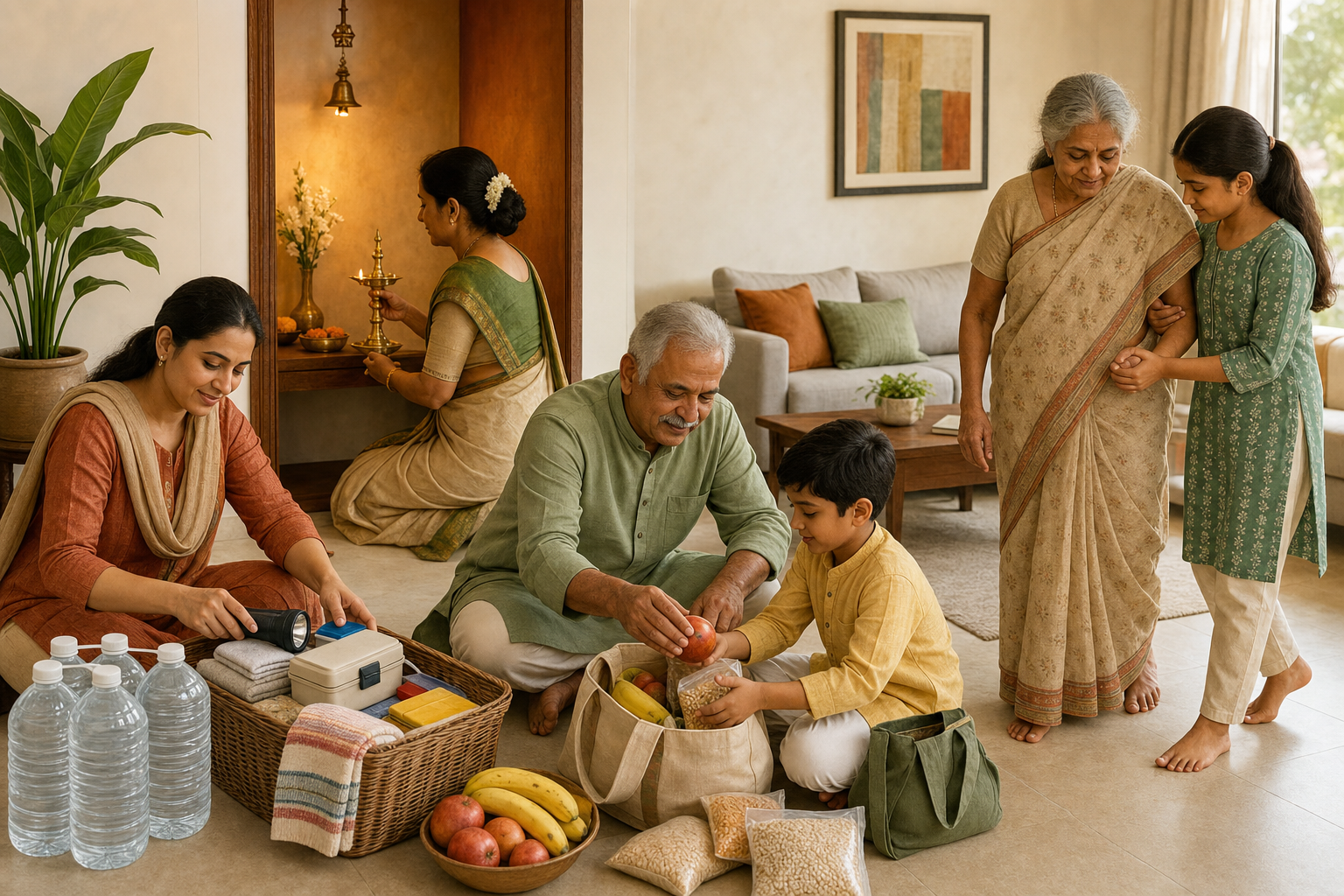
- Choose protective seva. Help a family carrying an immediate burden, accompany someone who should not face a difficult errand alone, prepare food for a person under strain, repair a neglected shared space or give time to an existing community effort. Select an action that meets an actual need, not one designed mainly for photographs.
For a community gathering, assign responsibility in advance. One person verifies the local calendar, one prepares the devotional segment, one checks the wording of the historical remembrance, and one coordinates the seva. This prevents the familiar outcome in which the stage programme receives all the attention and the service commitment remains vague.
Protection must not become a religious word for aggression
Protection and courage are easily praised in the abstract. Their dharmic test appears in the method. Khodiyar Mata’s protective presence is remembered through compassion and resilience, not domination. Harsu Brahma’s stand is remembered as principled protest and civil restraint, not retaliatory cruelty. Courage without ethical discipline can reproduce the injustice it claims to oppose.
Four shared ethical terms can keep an observance grounded: satya, karuna, ahimsa and seva. Truth prevents convenient distortion. Compassion asks who is carrying the harm. Non-violence disciplines the method. Service converts sentiment into responsibility. These values resonate across Hindu, Buddhist, Jain and Sikh traditions without making those traditions doctrinally identical.
- Test the narration through satya: Have you separated what the tradition remembers from what you can state with certainty?
- Test the purpose through karuna: Does the programme notice someone who needs protection, dignity or practical help?
- Test the method through ahimsa: Can you uphold the principle without humiliating, threatening or dehumanising another person?
- Test the outcome through seva: What will be different for someone after the lamps, prayers and speeches are finished?
This framework is especially useful when addressing younger people or a mixed dharmic gathering. Name the particular deity, person, regional tradition and calendar first. Draw out the shared ethical lesson only after the identity of the observance is clear. Unity becomes credible when it respects particularity; it becomes hollow when every tradition is flattened into the same generic message.
Key takeaways for your 2026 observance
- Khodiyar Mata Jayanti falls on January 26, 2026 and is observed on Magha Shukla Ashtami.
- Harsu Brahma Jayanti falls on January 27, 2026; use a local Panchang for the applicable tithi and ritual timing.
- Keep the meanings distinct: Khodiyar Mata embodies protective Shakti, while Harsu Brahma is remembered for restrained moral courage in the face of injustice.
- A lamp, faithful narration, a serious family question and concrete seva form a complete and accessible observance.
- Judge every claim of courage or protection by truth, compassion, non-violence and service.
Put both civil dates on your calendar now, then give two responsibilities to named people: verifying the local Panchang and identifying a real need for seva. That small act of preparation will help the Jayantis protect more than memory; it will carry their dharma into the life of your family or community.
References
- DharmaRenaissance Blog — Harsu Brahma Jayanti 2026: Date, Tithi, and the Inspiring Legacy of Dharma and Courage
- DharmaRenaissance Blog — Khodiyar Mata Jayanti 2026: Date, Magha Shukla Ashtami Significance and Dharmic Unity
