
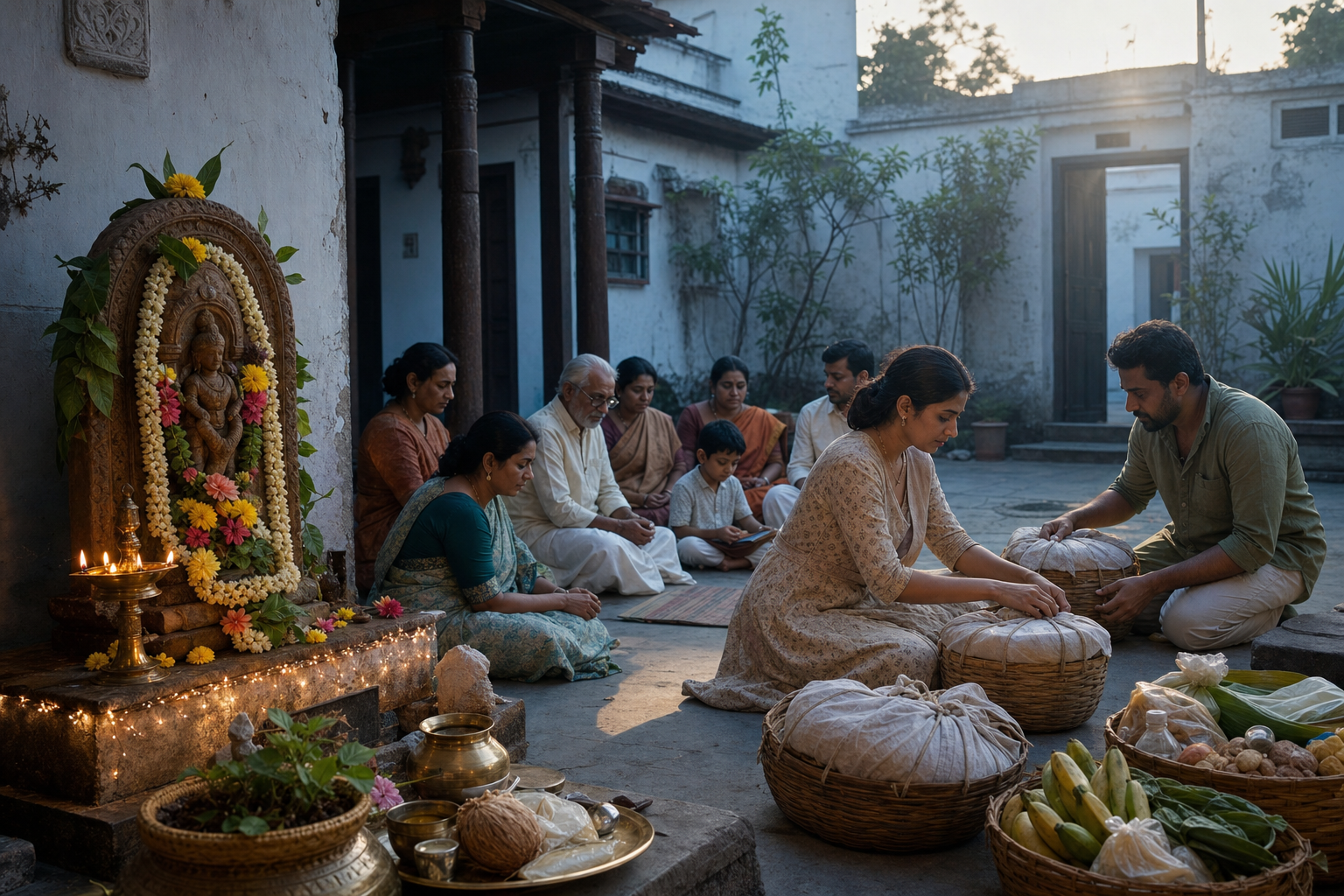
If you have inherited a regional Jayanti but not its full household routine, the difficult question is not whether the day matters. It is how to honor it without copying a generic festival checklist, losing the local story, or letting a calendar disagreement consume the observance.
Use three anchors: the locally observed tithi, the memory carried by the family or temple, and a form of seva that expresses the values being remembered. That is enough to make a regional Jayanti both recognizably traditional and useful in the present.
Key takeaways
- Treat a published civil date as a planning reference. Confirm the observance through the local Panchang, family tradition, or temple schedule, especially when a tithi crosses midnight or sunrise.
- First identify what the Jayanti commemorates: a birth, a divine appearance, or a life remembered through regional oral tradition. The answer determines the tone of the worship.
- Keep the devotional core simple: sankalpa, diya, familiar prayer or stuti, appropriate offerings, and a closing prayer for collective well-being.
- Choose seva that reflects the tradition itself. Annadanam suits a remembrance centered on dignity and solidarity; water distribution naturally expresses a protective deity’s association with nurture and renewal.
- Give younger family members both the story and a real responsibility. A tradition survives through participation, not merely through hearing a festival name once a year.
A regional Jayanti is not a lesser festival
A regional Jayanti may be concentrated in one part of Bharat, one community, or a network of family shrines. That makes its memory more locally rooted, not spiritually inferior. Its names, stories, offerings, and service customs often preserve a close relationship between place, community, and dharma.
Harsu Brahma Jayanti, for example, keeps alive the memory of Harsu Brahma Pandey, remembered in regional accounts as a Kanyakubja priest associated with the kingdom of Raja Saliwahan. Oral histories connect his death with a protest over the demolition of his dwelling and interpret his conduct as a defense of dignity, justice, and dharma. Because this material comes through local memory, the responsible language is “regional oral histories remember,” not an overconfident claim that every historical detail has been independently established.
Khodiyar Mata Jayanti has a different devotional center. Also called Khodiyar Maa Pragatya Din, it commemorates the goddess’s first appearance. The story of Mamaniya, the crocodile vahana, and the symbolism of nurturing and renewing waters presents Khodiyar Mata as a protective and compassionate Devi. This is not merely a biography remembered with respect; it is a celebration of divine protection and presence.
Before arranging the puja, write down the following for your own Jayanti:
- The identity: Who is being remembered, and what name does your community use for the occasion?
- The sacred event: Is it understood as a janma, a pragatya, or another form of commemoration?
- The ethical center: Which quality dominates the local memory: courage, protection, fidelity, justice, compassion, or service?
- The living response: What act of worship and what act of seva make that quality visible now?
These distinctions protect the Jayanti from being flattened into a generic “regional festival.” They also tell you what not to borrow. A prayer, vrata, or offering associated with another deity should not be inserted merely because it appeared on a general festival checklist. Begin with what your family, temple, and regional tradition actually recognize.
Set the date without turning tithi into a dispute

A lunar tithi does not map permanently to one Gregorian date. It can begin or end during the night, and communities may apply local calendar conventions when deciding when the principal puja or vrata will be observed. The practical question is therefore not simply, “What date did an online calendar print?” It is, “Which local observance am I joining, and which Panchang convention does it follow?”
In 2026, Khodiyar Mata Jayanti was marked on 26 January, corresponding in most regional Panchangs to Magha Shukla Ashtami. The Ashtami could extend from late night toward the following sunrise in some locations. Harsu Brahma Jayanti was commonly listed for 27 January 2026, with devotees advised to consult a local Panchang because regional tithi calculations may vary. Those dates apply to 2026; they should not be carried into another year without recalculation.
Use this order when several calendars appear to disagree:
- If you are attending a temple celebration, follow that temple’s announced schedule. A collective observance needs a common time.
- If you are worshipping at home, give priority to your inherited family practice and a Panchang calculated for your locality.
- When sending an invitation, state both the tithi and the civil date whenever the tithi is known. “Magha Shukla Ashtami; community puja on 26 January 2026” is clearer than a date standing alone.
- If a household and a temple observe on adjacent civil dates because of local timing or convention, do not turn the difference into a verdict on another community’s devotion. Follow one coherent schedule and preserve the reason for it in the family record.
This approach keeps calendar precision in its proper place. Tithi guides the ritual; it is not meant to displace the deity, the remembered life, or the duty attached to the day.
Build worship, memory, and service into one sequence
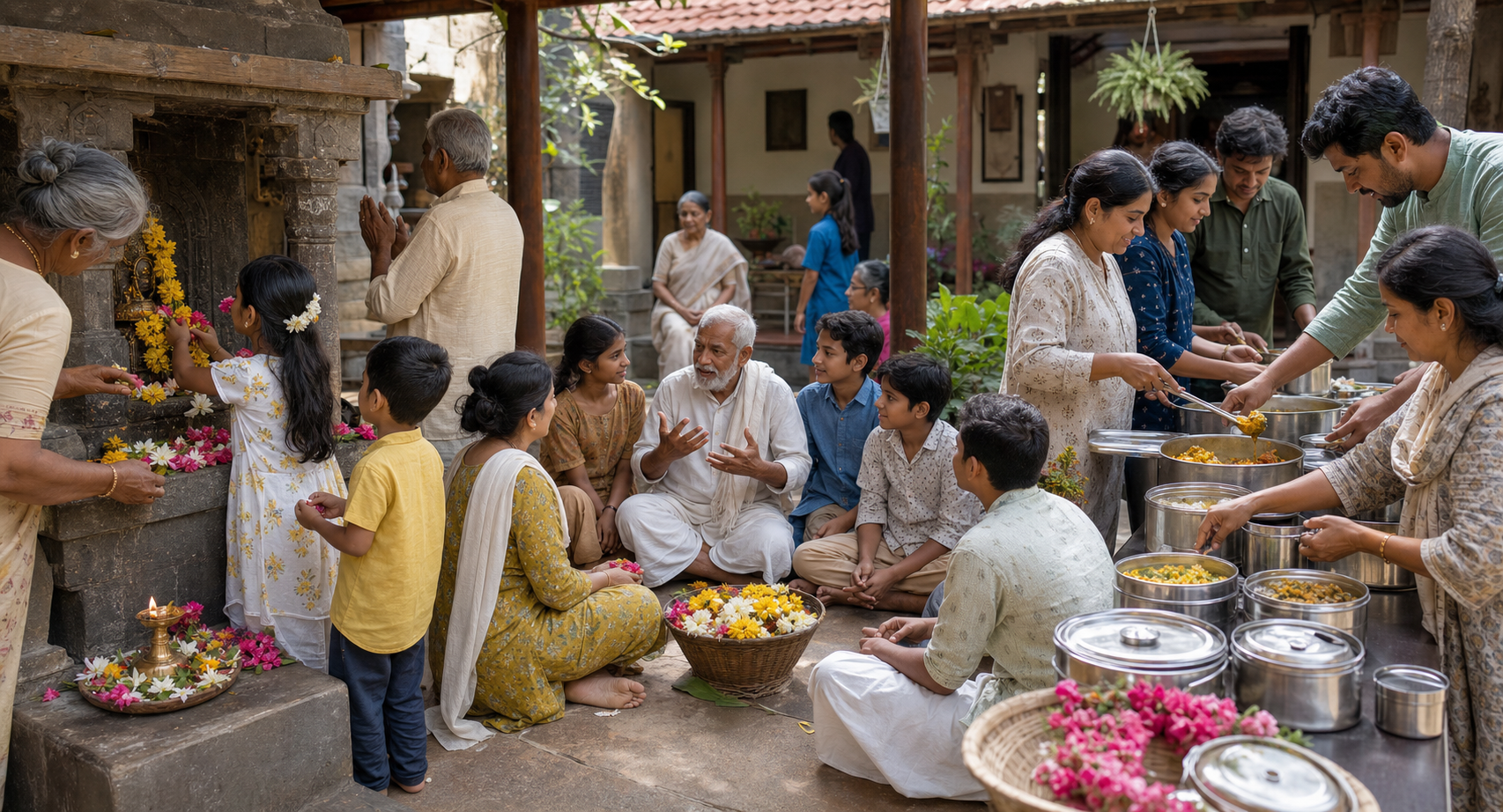
You do not need an elaborate public program to observe a regional Jayanti faithfully. A calm home observance can carry the tradition when it retains the correct name, story, prayer, and ethical intention.
- Prepare the space. Use a clean, uncluttered puja area. Place the image or symbol honored by your household and gather only the offerings recognized in the tradition.
- Make the sankalpa. Name the Jayanti, remember its central quality, and dedicate the worship and service to collective well-being. Harsu Brahma observances commonly begin with a morning sankalpa and simple offerings.
- Perform the familiar worship. Harsu Brahma Jayanti can include a diya, home puja, temple darshan, and stotra recitation. Khodiyar Mata worship commonly includes kumkum, flowers, coconut, freshly prepared bhog, stuti, and aarti. Use prayers known to the family instead of improvising a supposedly universal mantra.
- Tell the local story carefully. Explain who is remembered, what trial or divine act gives the day its meaning, and which virtue the family is expected to practice. Preserve devotional meaning while being honest about details carried through oral history.
- Complete or commit the seva. If the service can happen that day, connect it visibly to the sankalpa. If it must occur later, name the planned action and date rather than leaving it as an indefinite good intention.
- Close without self-congratulation. Offer the result of both puja and seva for the welfare of the community. The act should direct attention toward dharma and the recipient, not toward the donor.
If your household traditionally observes a vrata, follow the inherited rule rather than constructing a new austerity from unrelated customs. Vrata, bhajan, japa, meditation, kirtan, or temple darshan can deepen an observance, but accumulation is not the goal. A shorter practice with a clear sankalpa and completed seva carries more integrity than an ambitious program abandoned halfway through.
Let the remembered values determine the form of seva
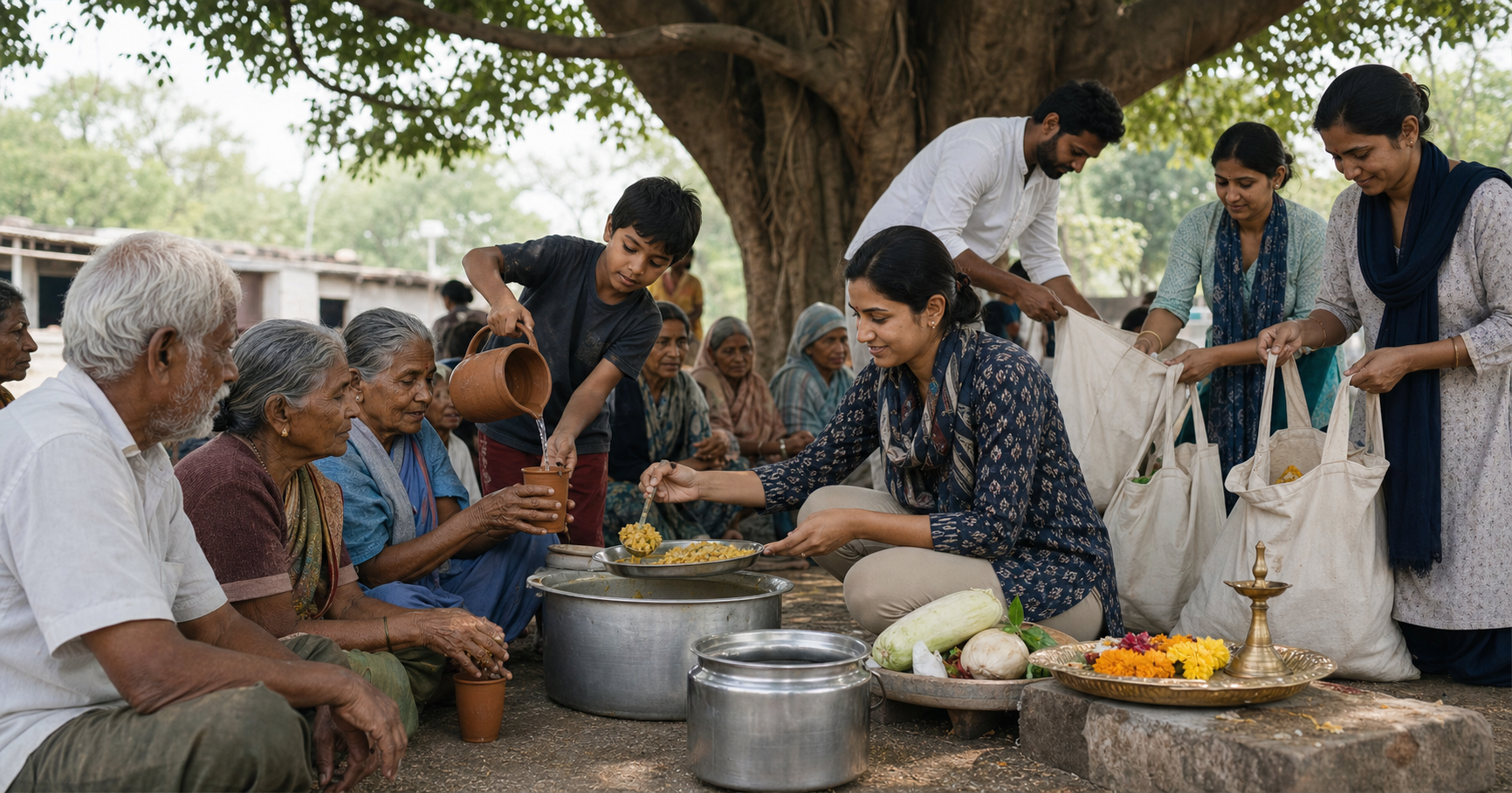
Seva is not a charitable decoration added after the “religious” portion has ended. In these traditions, service is how the devotional meaning crosses from the altar into community life.
The memory of Harsu Brahma centers on integrity, courage, fairness, and dignity under adversity. It is therefore fitting that the Jayanti is associated with annadanam, community solidarity, and prayers for harmonious living. A meal offered respectfully does more than mark attendance; it converts remembrance of dignity into the dignified care of another person.
Khodiyar Mata’s protective character and association with water give her Jayanti a different but equally concrete service language. Communities may organize water distribution, bhandara, or assistance for people in need. Water service is especially meaningful when it is handled as real care: confirm where it is needed, arrange replenishment, avoid preventable waste, and plan the cleanup as part of the seva.
Before announcing a service activity, test it against these criteria:
- Doctrinal fit: Can you explain how the act expresses the deity’s character or the remembered person’s dharmic example?
- Actual usefulness: Has someone confirmed that the food, water, material help, or volunteer effort is needed?
- Recipient dignity: Can the service be delivered without turning recipients into scenery for publicity?
- Complete logistics: Are preparation, distribution, sanitation, leftovers, and cleanup assigned rather than assumed?
- Household capacity: Is the commitment small enough to complete properly and meaningful enough to repeat?
The deity and ritual should remain regionally and theologically specific. At the same time, courage, compassion, fairness, and service provide an ethical meeting point across Hindu, Buddhist, Jain, and Sikh traditions. Shared values need not erase distinctive forms of worship. They can help neighbors cooperate in service while each community preserves its own sacred vocabulary.
Pass on a practice, not just a festival name
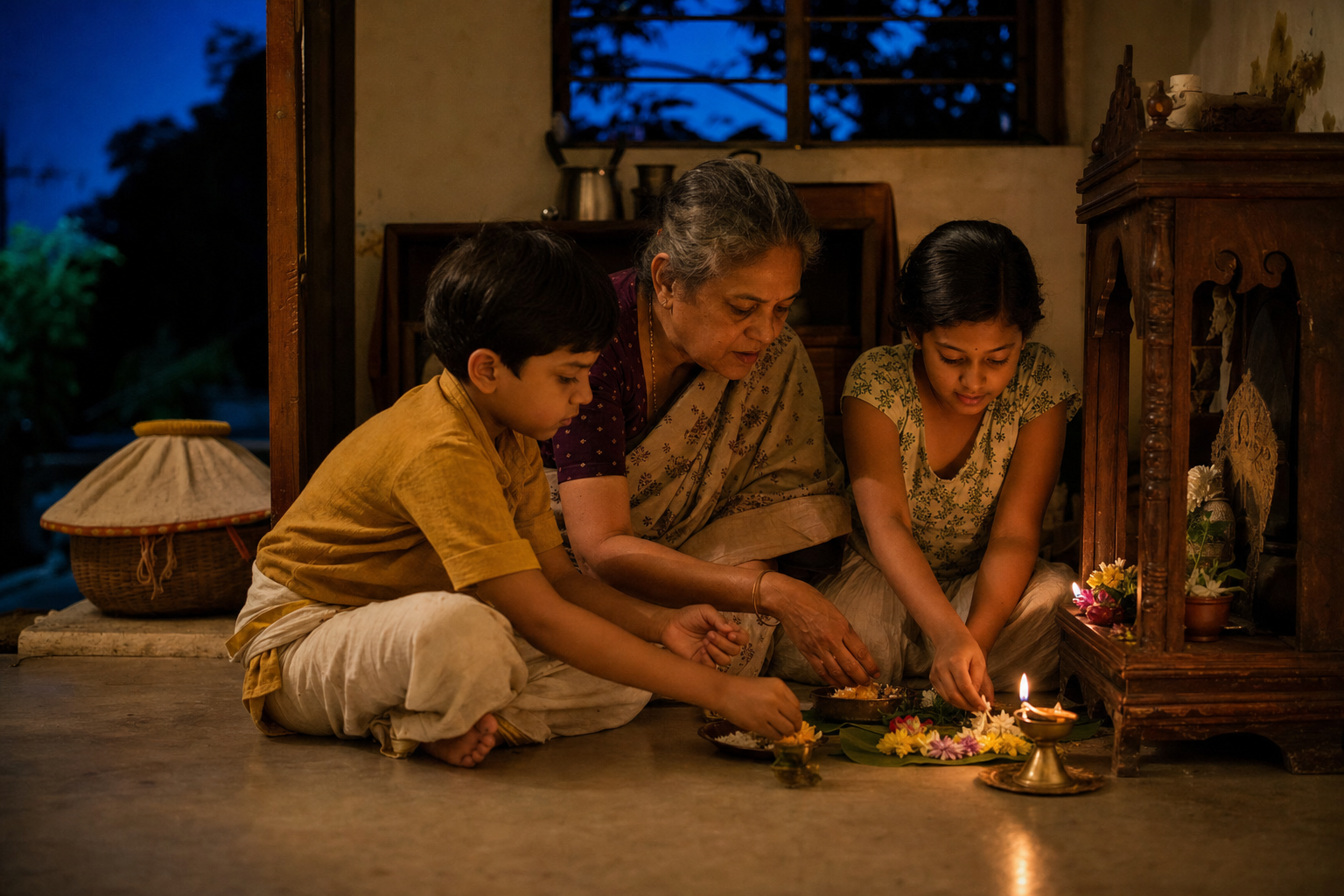
Regional traditions become vulnerable when a family remembers the date but no longer knows what the date is for. This is especially relevant outside the region of origin, where a local temple, specialist priest, or larger community gathering may not be available. Khodiyar Mata Jayanti already functions in diaspora communities as an occasion for elders to pass on the story of Mamaniya and the virtues of courage, loyalty, and compassion. The same method works for other regional Jayantis.
Keep a household record with the information a younger family member will actually need:
- The customary name of the Jayanti, including a regional name such as Pragatya Din where applicable.
- The lunar marker, such as Magha Shukla Ashtami, and the method used to confirm the local civil date.
- A brief account of the sacred event or remembered life, with oral tradition identified honestly as oral tradition.
- The prayers, aarti, stuti, offerings, and vrata rules followed by the household.
- The seva normally associated with the day and the people responsible for arranging it.
- The temple or community whose calendar the family follows when observing collectively.
Then give each younger participant an age-appropriate responsibility. They might prepare flowers, learn the name and meaning of an offering, help pack food, welcome visitors, or retell the central episode in their own words. An adult should handle any flame or other task that is not suitable for a child. The point is to move the next generation from passive audience to responsible participant.
For your next regional Jayanti, confirm the local date first, record the tradition in your family’s own language, and commit the seva before invitations are sent. When worship, memory, and service are planned as one observance, the Jayanti ceases to be a name on the calendar and becomes a living discipline of dharma.
References
- Hindu Pad – Harsu Brahma Jayanti 2026: Date, Tithi, and the Enduring Legacy of Courage and Dharma
- Hindu Pad – Khodiyar Mata Jayanti 2026: Magha Shukla Ashtami Date, Significance, Puja Vidhi, and Traditions
