
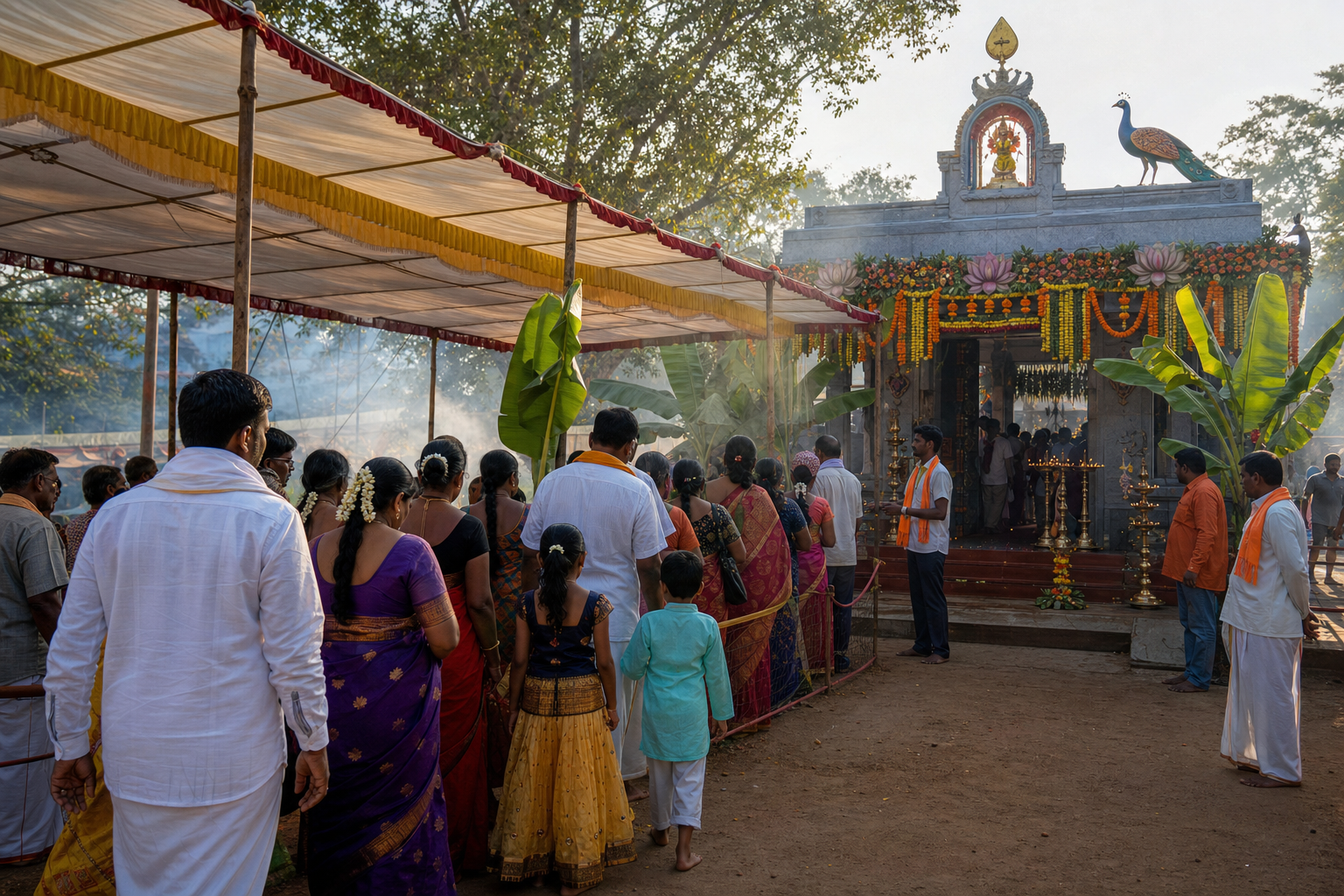
If you are planning to attend Subramanya Shashti at Siddalingapura, settle the temple date before you plan the journey. The observance follows a lunar tithi, not a permanently fixed Gregorian date, and the rites you most want to witness may happen in the morning, around midday, or in the evening.
Your second decision is just as important: are you going primarily for abhishekam, unhurried darshan, the festival alankara, the possible procession, or a day of family worship and seva? Once you answer that, the visit becomes much easier to organize.
Fix the temple date before arranging your journey
Subramanya Shashti is observed on Margashirsha Shukla Paksha Shashti, the sixth lunar day of the bright fortnight in Margashirsha. It generally occurs from late November into December, but that range is not precise enough for travel planning. A lunar tithi can begin on one civil date and end on another.
Temples in Karnataka commonly use udaya-tithi, meaning the tithi prevailing at sunrise, when fixing the festival observance. That is why a generic calendar, a date followed in another region, or a message forwarded from a different temple may not match the Siddalingapura schedule. Confirm the date and program announced for Sri Subramanyeswara Swamy Temple itself.
Do the same with the clock times. The expected rhythm is morning abhishekam, midday alankara, and an evening procession when local arrangements permit, but those are stages rather than guaranteed appointment times. Treat the temple’s program as authoritative for that observance.
If one rite matters most to you, arrive before its announced starting time rather than aiming for the end of it. Festival traffic, the turn from the Mysuru-Bengaluru Highway, and the queue inside the precinct can consume the margin you thought you had. Build the buffer into your departure time, not into the ritual you are willing to miss.
Choose your arrival window by the worship you seek
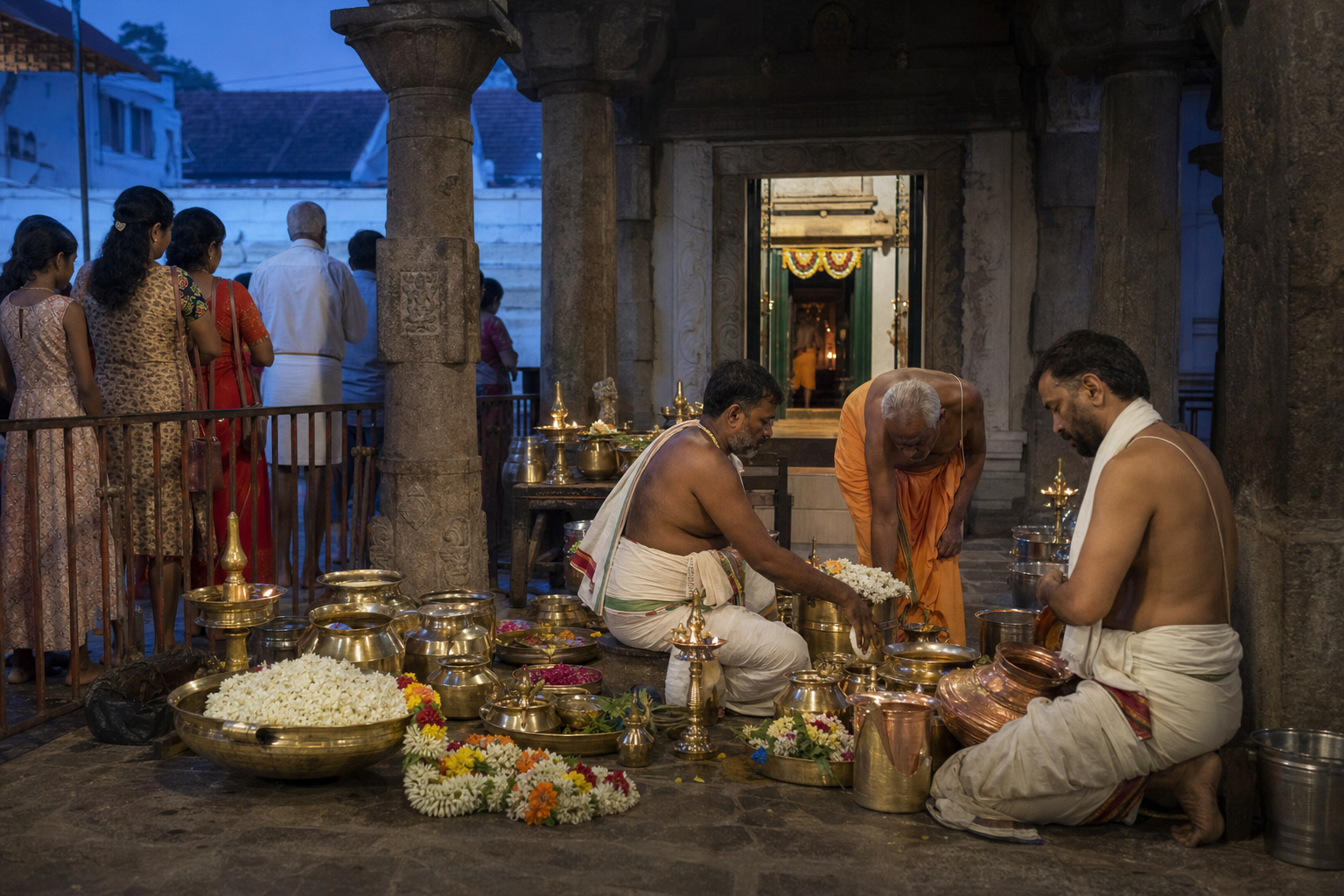
The morning is the natural choice if abhishekam is central to your vrata. The ritual bathing may include jaladhara and panchamrita prepared with milk, curd, ghee, honey, and sugar. Vastra samarpana, the application of vibhuti and chandan, and the deity’s detailed alankara follow in the broader ritual sequence.
Midday places greater emphasis on the completed alankara and congregational darshan. It can also mean more heat and longer standing. If you are accompanying children, an older relative, or anyone who cannot remain comfortably in a dense queue, do not choose this window merely because it appears convenient on a travel map.
Mid-morning or late afternoon can offer a more manageable balance for families. During the 2026 observance, these periods were identified as steadier and milder than the midday peak. That does not guarantee a short queue on a future festival day, but it gives you a sensible starting point when mobility and heat matter.
The evening is the better choice if the jathra atmosphere and collective participation are your priorities. A pallakki or another procession of the utsava murti may take place within or around the temple precincts, accompanied by traditional instruments, conch-blowing, nagara sankeertana, and shared chanting. Because the procession depends on temple custom and local logistics, verify that it is part of the program before arranging a late visit around it.
Whenever you arrive, allow time after darshan. Naivedya, mangalarati, teertha-prasada, and annadana are not incidental extras to be squeezed between the queue and the return journey. They complete the movement from offering to receiving and sharing.
Prepare for a regional jathra, not an ordinary stop beside the highway
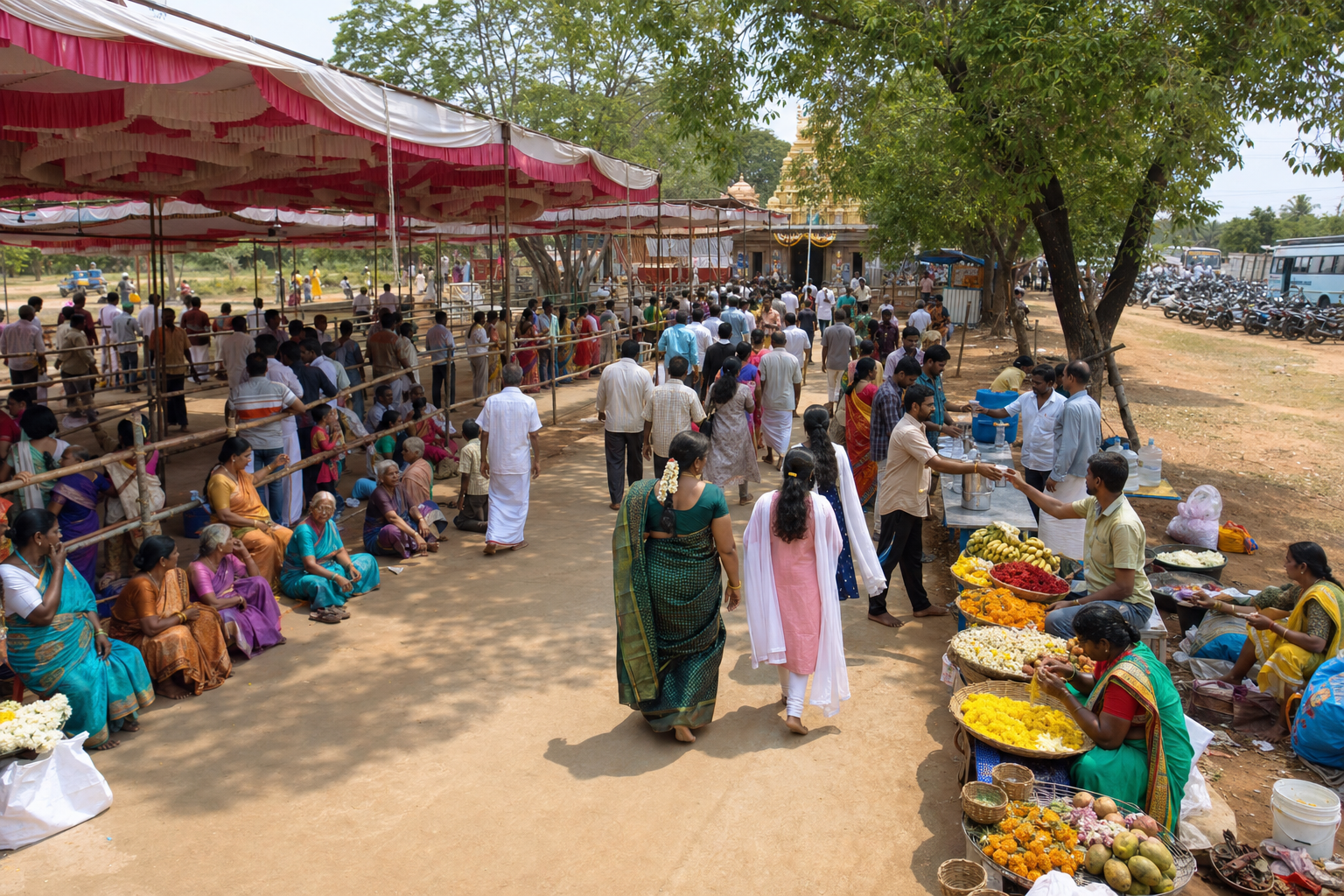
Sri Subramanyeswara Swamy Temple stands near the Mysuru-Bengaluru Highway at Siddalingapura, but convenient road access does not make a festival visit instantaneous. The jathra draws devotees from Mysuru, Mandya, Chamarajanagar, neighboring taluks, and nearby villages. The pressure is therefore concentrated at the approach road, temple entrance, ritual windows, and prasada distribution points.
Travel in clothing suitable for temple decorum as well as extended walking and standing. Carry drinking water, especially if you expect to remain through midday or wait for an evening procession. Keep what you bring compact enough that it does not become an obstacle in the queue or a burden during pradakshina and collective worship.
The 2026 jathra used directional signs, shaded holding areas, water points, first-aid support, and volunteer-assisted queues. These are useful indicators of thoughtful festival management, but you should not assume that every facility will be in the same place or operate at the same time during a later observance. Follow the current signs and the volunteers managing the flow.
If you are bringing an older family member, agree on the minimum plan before leaving home: the preferred darshan window, how long the person can comfortably stand, and whether staying for the procession is realistic. A shorter visit completed with composure is better than forcing the entire program at the cost of the devotee’s well-being.
Accept queue discipline as part of the vrata. Making space for children, elders, and those who need assistance is not separate from worship. At a jathra, your conduct determines whether another devotee encounters the temple as a place of order or of avoidable strain.
Let Subrahmanya’s symbols shape what you do after darshan
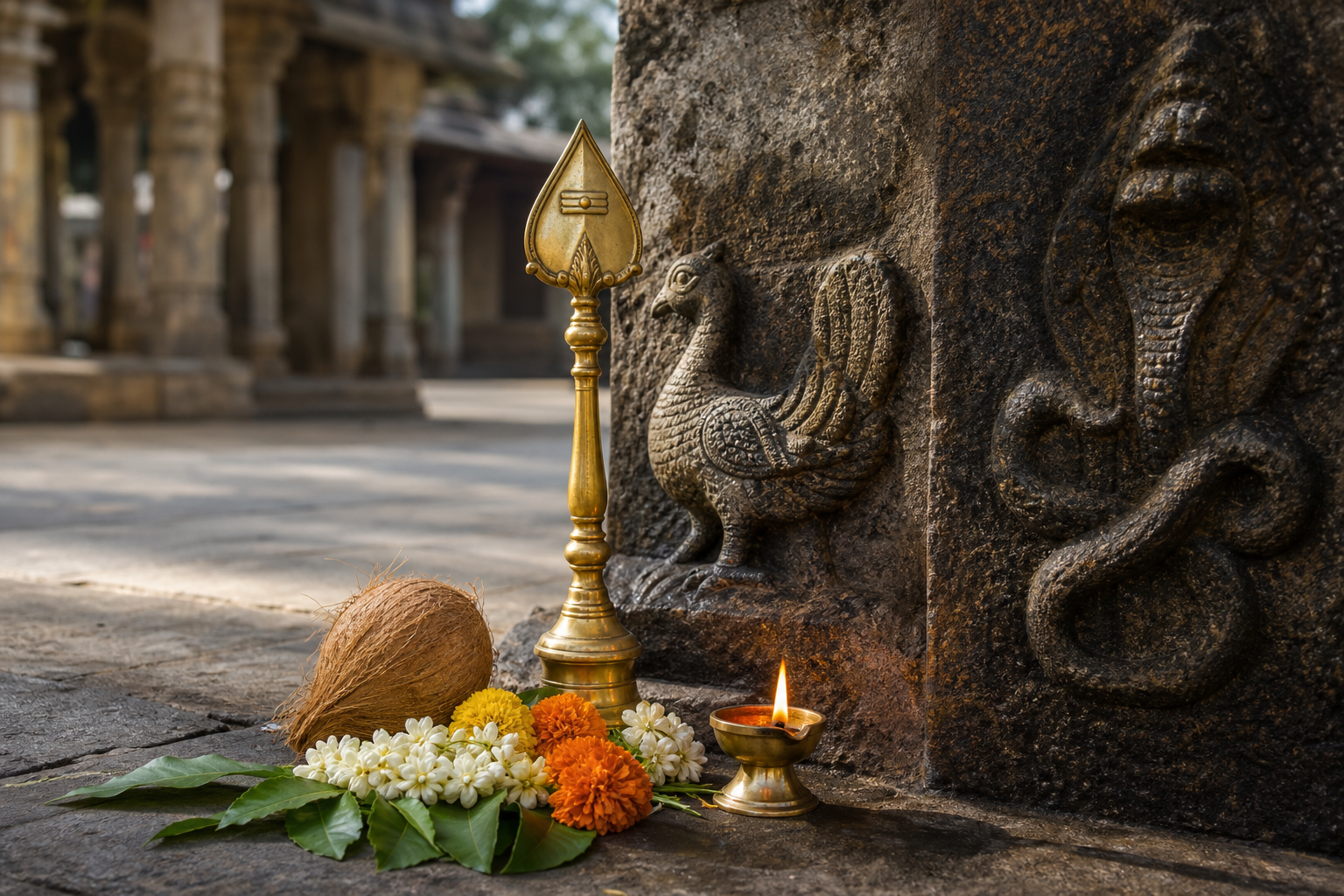
Subrahmanya is worshipped under names including Skanda, Kartikeya, and Murugan. At Siddalingapura, the festival foregrounds valor, cultivated intelligence, and spiritual leadership. These are not invitations to admire power without restraint. They describe energy governed by clarity and directed toward the defense of dharma.
The peacock vahana gives you a practical image for the day: pride and restless energy do not have to be denied, but they must be disciplined. The shakti-ayudha, or vel, represents the clarity that pierces confusion. Before entering the queue, identify one confusion that needs an honest decision or one recurring impulse that needs restraint. That gives your sankalpa a definite object.
During the rites, let the archakas lead the liturgical order. Subrahmanya Ashtottara and portions of Subrahmanya Sahasranama may accompany the worship, while devotees often recite Subrahmanya Bhujangam. Use a stotra you already know or join the congregational response without treating the festival as a contest in ritual display.
Subrahmanya’s association with nagas is deeply present in South Indian devotion, including Karnataka. That association does not mean every Subrahmanya shrine offers every specialized sarpa-related rite. If your purpose is a particular shanti, ask specifically whether it is performed at Siddalingapura and how it must be arranged. Do not infer a ritual service from the deity’s name alone.
The most durable way to carry the worship home is the threefold movement of sankalpa, niyama, and seva: make a clear resolve, support it with disciplined conduct, and express it through useful service. At the temple, that service may be as simple as respecting the queue, using water carefully, keeping the precinct clean, or assisting a family member without impatience.
This is also where a regional temple reveals its larger importance. Famous pilgrimage centers have specialized traditions and wider renown, but neighborhood and regional shrines keep the dharmic calendar within reach of ordinary households. Siddalingapura links village communities, Mysuru-area families, and travelers through recurring worship rather than spectacle alone.
The ritual is distinctly Hindu, yet the virtues it trains – self-restraint, compassion, reverence for knowledge, and community responsibility – belong to a wider dharmic ethical conversation that also includes Buddhist, Jain, and Sikh paths. Recognizing that kinship need not erase the theological and liturgical distinctions among those traditions.
Key takeaways for your Siddalingapura visit
- Confirm the date announced by Sri Subramanyeswara Swamy Temple; do not rely solely on a generic Gregorian calendar or another temple’s Shashti date.
- Choose morning for abhishekam, midday for the completed alankara, or evening for the possible procession, then verify the actual program.
- Add a travel buffer for congestion near the NH-275 approach and for the queue inside the temple precinct.
- For children and older relatives, consider mid-morning or late afternoon and decide in advance how much of the program they can comfortably attend.
- Carry water, dress for temple decorum and prolonged standing, follow volunteer directions, and keep your belongings compact.
- Take one precise sankalpa into worship and convert it into a niyama or act of seva after you return home.
Plan the date first, select one part of the festival you will not rush, and leave enough room for prasada and seva. If you return from Siddalingapura with one disciplined commitment rather than only a crowded schedule of rites, the jathra will continue to work in your life after the procession has ended.
References
