
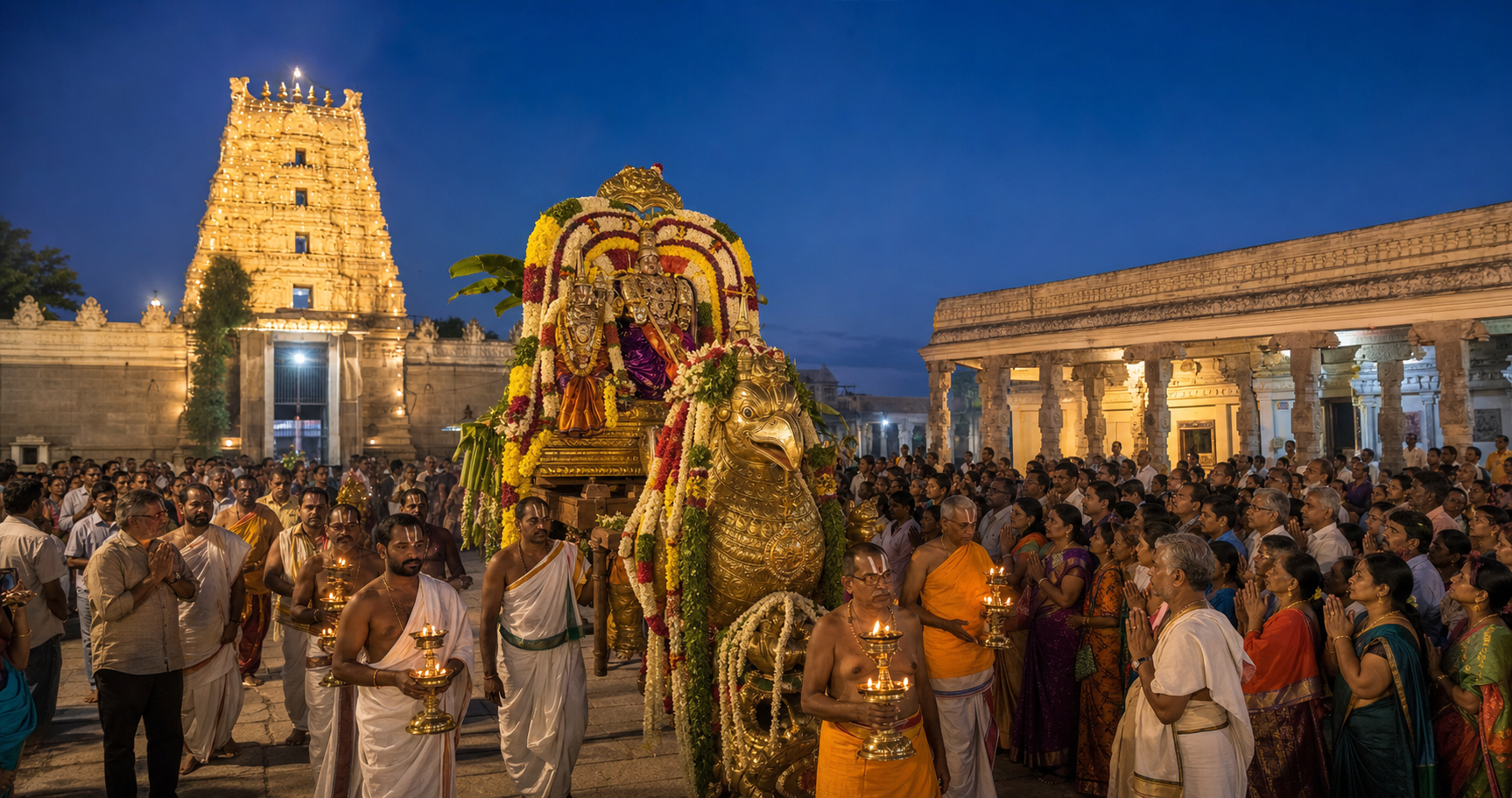
If you are planning one visit to Narayanavanam in 2026, the real decision is not simply whether to attend Brahmotsavam. It is which part of the festival matches your purpose: the great public darshan of Garuda Seva, the temple’s distinctive Kalyanotsavam, or a less crowded day within the full nine-day observance.
The main Brahmotsavam runs for nine days, from May 28 through June 5. Preparatory rites begin earlier, and exact seva and procession times may be refined locally. Choose your date now, but leave the hour flexible until the temple announces the detailed programme.
Key dates and planning takeaways
- May 24: Koil Alwar Tirumanjanam, the pre-festival purification and sanctification of the temple.
- May 27: Ankurarpanam, the ceremonial sowing of sacred seeds that marks the festival’s auspicious beginning.
- May 28 to June 5: The nine public days of Brahmotsavam, with worship, recitation and vahana processions.
- June 1: Garuda Seva, the best choice if you want the festival’s most prominent procession and can manage a larger crowd.
- June 4: Kalyanotsavam, especially meaningful for devotees seeking blessings connected with marriage, family harmony and responsible household life.
- Before travelling: Confirm the latest local timings. The dates are the firm planning framework, but individual seva and procession hours may be adjusted.
May 24 and May 27 are preparatory milestones, not additional days in the May 28-June 5 public festival count. Keeping that distinction clear will prevent the most common calendar mistake when arranging transport or accommodation.
Choose the day that matches your reason for going
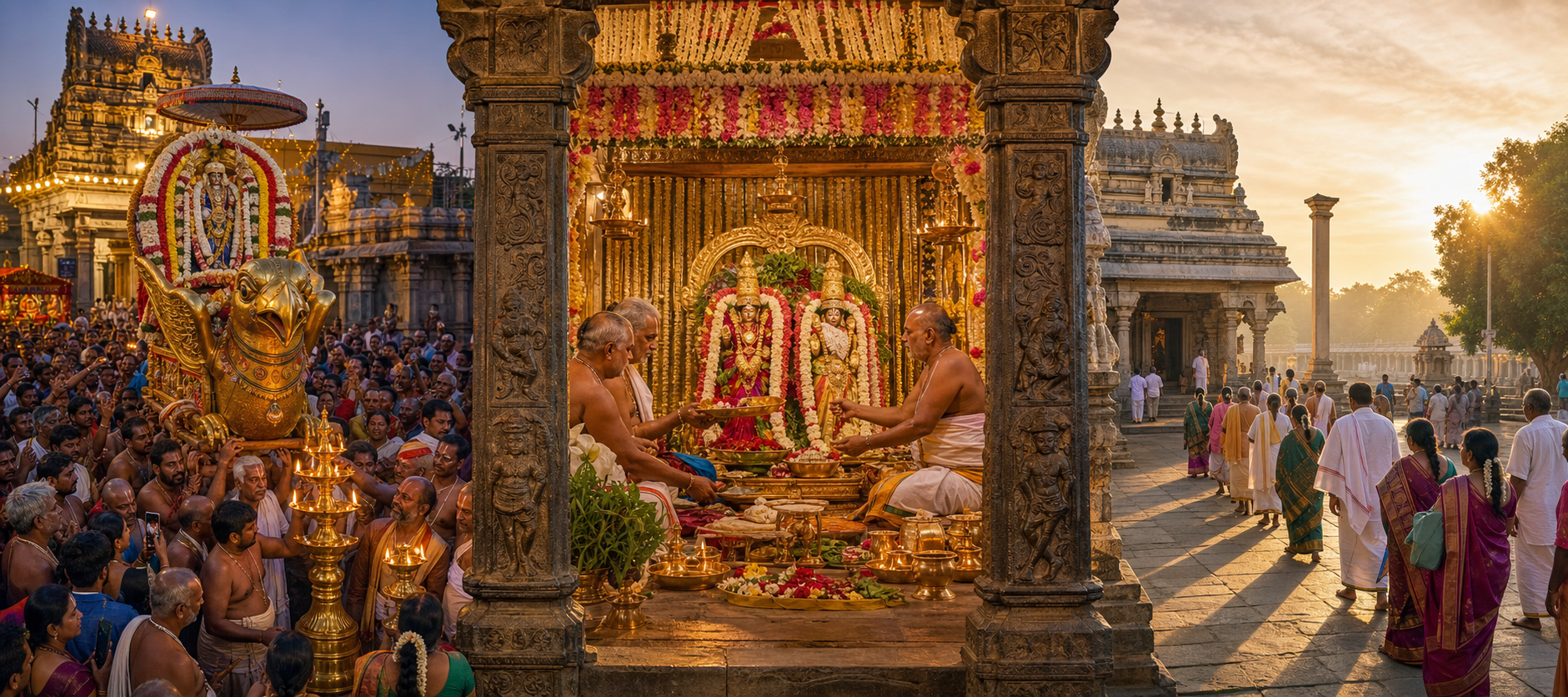
Choose June 1 for Garuda Seva
Garuda Seva is the natural choice when you want to experience Brahmotsavam at its most visibly public and devotional. Sri Kalyana Venkateswara Swamy is borne on Garuda, who represents unwavering bhakti and is traditionally associated with the Vedas. The procession gathers temple music, Vedic chanting, alankara and collective worship into one of the festival’s central moments.
This prominence also brings heavier footfall. If June 1 is your chosen day, arrive early rather than planning around the last possible arrival. Early arrival cannot guarantee a particular position or form of darshan, but it gives you more room to follow local arrangements without rushing through a dense crowd.
Choose June 4 for Kalyanotsavam
Narayanavanam is not merely another venue for a divine-wedding ritual. In the temple’s sthala-purana, this place is bound to the sacred marriage of Lord Venkateswara and Goddess Padmavati. That memory gives the June 4 Kalyanotsavam unusual local depth.
The ritual wedding invokes the union of divine masculine and feminine principles. Families commonly approach it with prayers for harmony, health and prosperity. If your pilgrimage is connected with marriage, reconciliation, a household transition or gratitude for family life, June 4 gives that intention the clearest ritual setting.
Choose another festival day for a steadier pace
You do not receive a lesser Brahmotsavam by avoiding the two headline dates. The opening and closing portions reveal the festival as a complete discipline rather than a single spectacle. They are also the more sensible choice if your priority is a quieter devotional rhythm instead of the largest gathering.
If you can stay for several days, let one major observance anchor the visit and use another day to attend without chasing a particular viewing position. That combination makes space for both the collective energy of the procession and the inward attention of worship.
Read Brahmotsavam as a ritual journey
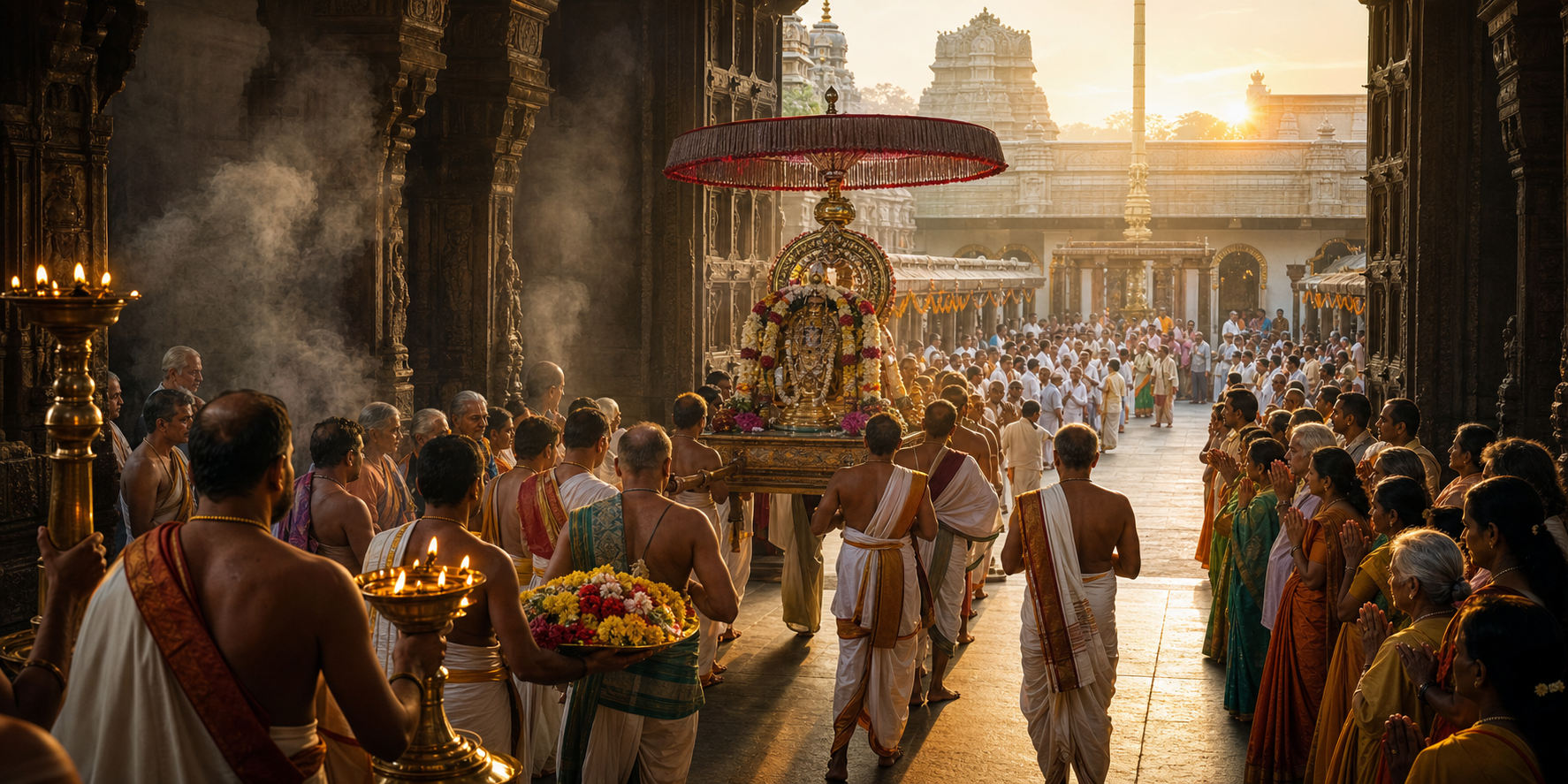
The festival makes more sense when you see its rites as a sequence. Each stage prepares for the next: sacred space is renewed, auspicious growth is invoked, the divine presence moves among the community, and the extraordinary festival period eventually returns to the temple’s daily order.
Purification comes first. During Koil Alwar Tirumanjanam on May 24, the sanctum and essential temple spaces are cleansed with water and a prescribed preparation of aromatic and herbal substances. This is an agamic act of renewal before the festival crowds and public celebrations arrive. For a pilgrim, it establishes an important principle: preparation is already part of worship.
The festival is planted before it unfolds. Ankurarpanam on May 27 uses navadhanya, or sacred seeds, sown in sanctified earth. Germination becomes the ritual image of auspicious growth and shared merit. The act asks devotees to think beyond a momentary blessing: what is invoked in worship should be cultivated through conduct.
The sacred flag declares a different kind of time. Dhvajarohanam announces the commencement of Brahmotsavam to the community and, ritually, to the cosmos. Morning and evening vahana processions then bring the utsava-murti beyond the innermost temple space. Traditional vahanams at Narayanavanam include Sesha, Hamsa, Hanumantha, Gaja and Garuda, although you should wait for the detailed local schedule before assigning a particular vehicle to a particular session.
The changing vahanams are not decorative transport. They make theological qualities visible. Steadiness, discernment, selfless service, strength, devotion and the protection of dharma can be contemplated through form, movement, music and mantra. Instead of trying to photograph every feature, choose one quality represented before you and hold it as the focus of that procession.
Closure is part of the teaching. As the festival ends, the flag is lowered and the temple returns to its ordinary cycle. Dhvajavarohanam does not imply that sacred life has stopped. It asks the devotee to carry the clarity of exceptional days back into routine duties, where dharma is usually tested.
Build a practical plan without inventing the timetable
Narayanavanam lies in Andhra Pradesh and is accessible through the Tirupati-Puttur corridor in the Chittoor district area. That is enough to choose the broad route, but not enough to calculate a last-minute arrival. Your transport plan should include time for local movement, crowd controls and walking after you reach the temple vicinity.
- Fix the date before the hour. Reserve May 28-June 5 as the festival window, June 1 for Garuda Seva or June 4 for Kalyanotsavam. Keep the day’s detailed schedule editable until local timings are released.
- Do not treat a forwarded time as final. Exact seva and procession hours may be refined as the festival approaches. Reconfirm locally before departure, especially if your entire visit depends on one observance.
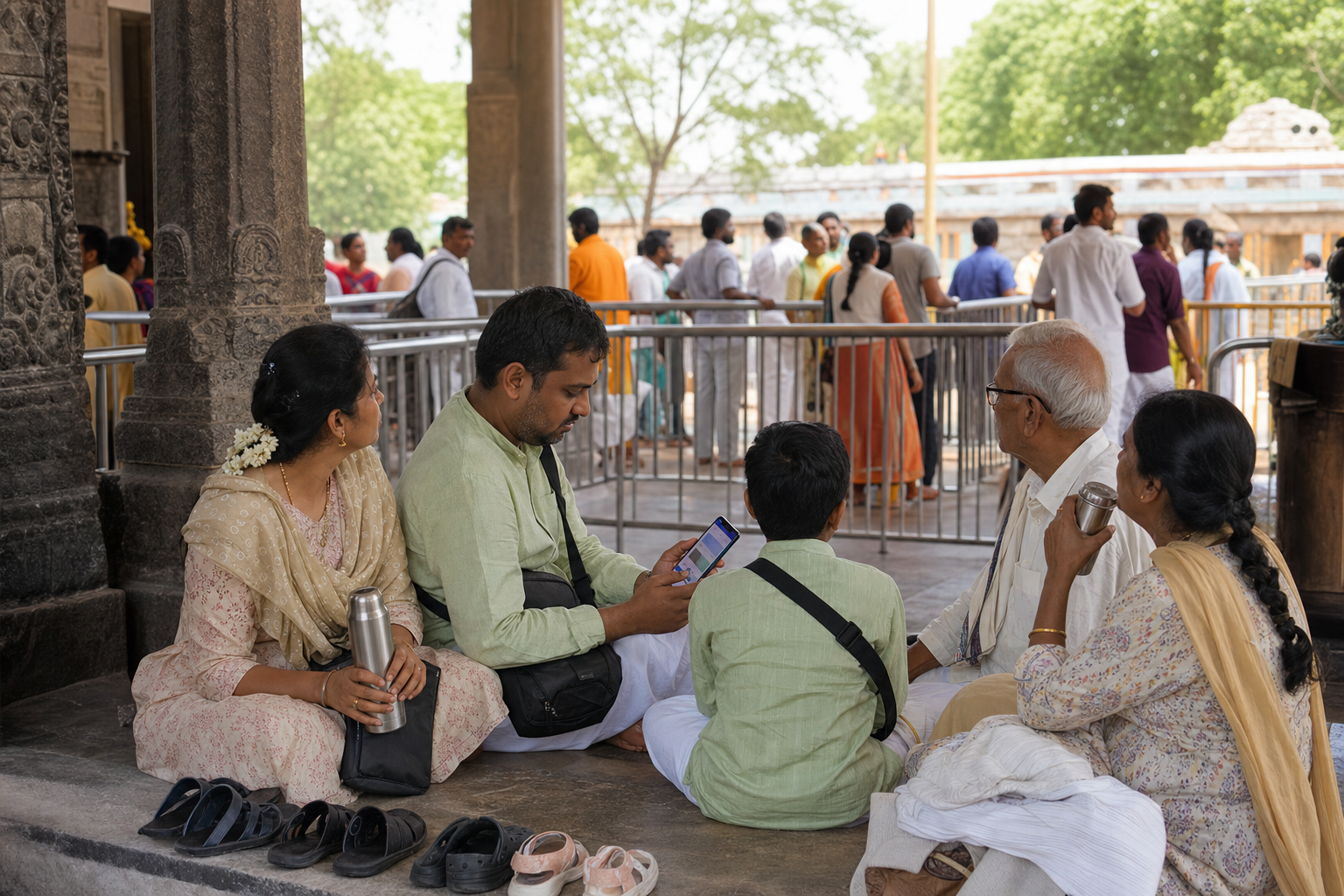
- Prepare for warm weather. Late May and early June in the region are typically warm. Wear light, modest clothing and plan regular hydration. Follow whatever rules are in force concerning bottles and carried items within temple areas.
- Arrive earlier on June 1 and June 4. Garuda Seva and Kalyanotsavam draw particular interest. A schedule with no margin is most likely to fail on the days when the crowd matters most.
- Agree on a meeting point. Families should decide where to regroup if members become separated, especially when elders or younger pilgrims are present. Keep the arrangement simple enough for everyone to remember.
- Carry only what you can manage respectfully. A crowded procession is not the place for unnecessary baggage. Bring essential items, keep pathways clear and follow volunteers or temple personnel directing movement.
Separate what is known from what is still pending. The festival dates and principal observances give you a reliable calendar framework. Detailed entry arrangements, session hours and the sequence of individual daily processions should not be assumed until announced locally.
Let Narayanavanam’s kalyana teaching shape the visit
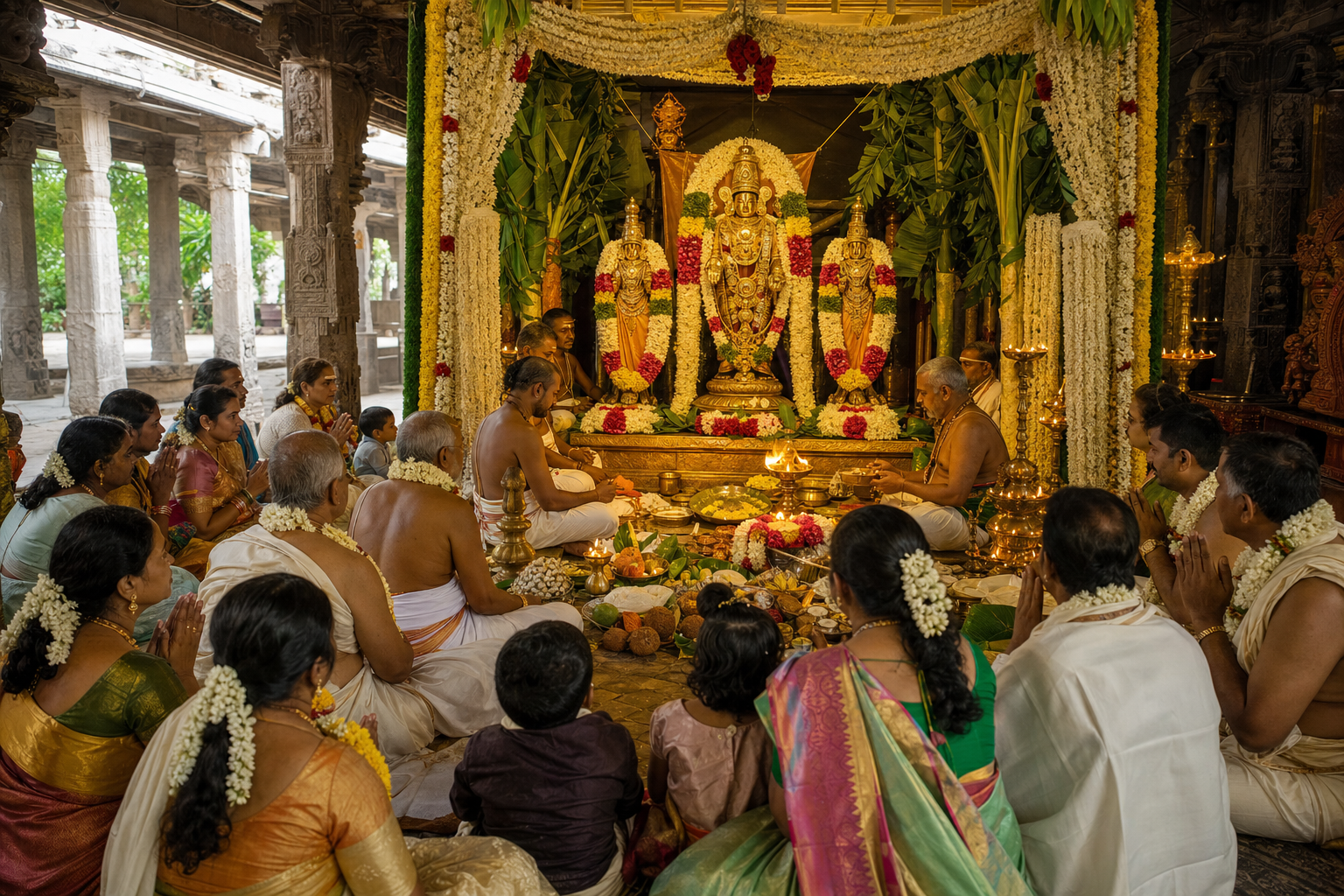
The temple venerates Sri Kalyana Venkateswara Swamy, a form of Lord Vishnu inseparable here from the remembrance of his sacred wedding to Goddess Padmavati. That identity turns kalyana from a ceremonial theme into a teaching about grahastha-dharma: fidelity to commitments, harmony in the household, mutual care and responsibility toward society.
You can make this teaching concrete before entering the festival. Name one household duty you have been postponing, one promise that needs to be kept, or one relationship that needs more patient attention. Carry that intention into darshan. A pilgrimage becomes more than attendance when it changes what you do after returning home.
The same principle applies in the crowd. Waiting without aggression, assisting someone who needs room, sharing prasadam appropriately and cooperating with volunteers are not minor courtesies outside the religious experience. They are forms of ahimsa and seva through which the festival’s dharma becomes visible.
This wider moral resonance does not require the festival’s Vaishnava character to be blurred. Hindu, Buddhist, Jain and Sikh traditions express their teachings through distinct practices, yet disciplined service, non-harm and responsibility to others remain intelligible across the Dharmic family. Narayanavanam offers those values in a specifically Venkateswara-centred ritual language.
Put May 28-June 5 on your calendar now. Choose June 1 if Garuda Seva is your priority, June 4 if the kalyana meaning draws you, or another day if a steadier pace will serve your worship better. Then leave space for the final local timetable and arrive with one clear sankalpa about the dharma you intend to practise at home.