
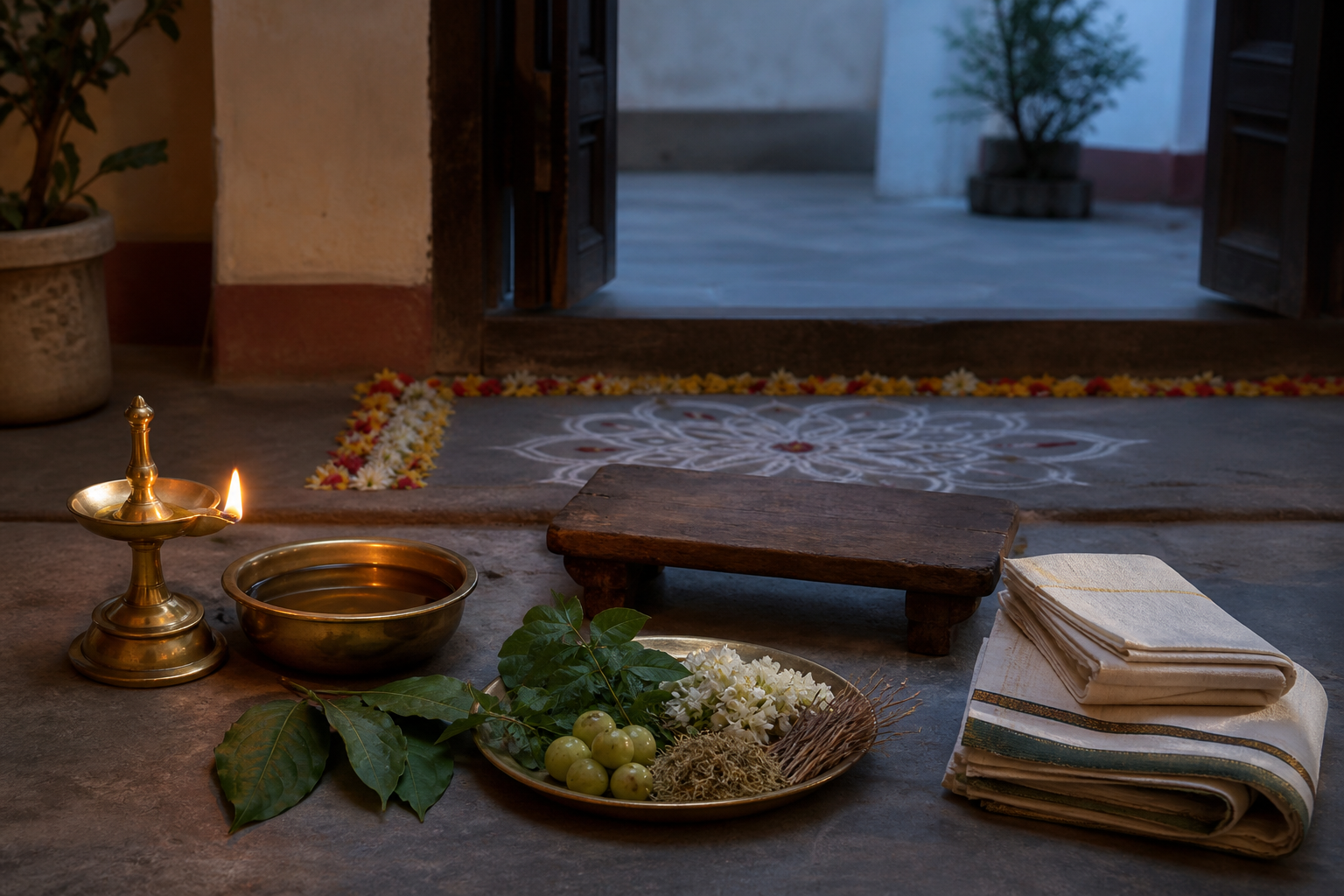
If you know Naraka Chaturdashi only as Chhoti Diwali, the day can feel like a hurried preface to the main celebration. It is more deliberate than that. Its sequence is the lesson: cleanse first, confront what should not be carried forward, and then welcome the light of Deepavali.
If your family calls the day Kali Chaudas, Roop Chaudas, or Bhoota Chaturdashi, you do not have to decide which name is universally correct. Ask a more useful question: what inheritance does this name preserve, and what does it ask you to do? That approach lets you observe the tithi faithfully without flattening India’s regional traditions into one generic ritual.
Key takeaways
- Naraka Chaturdashi falls on Krishna Paksha Chaturdashi, the fourteenth lunar tithi associated with the Deepavali season. The month may be identified as Ashwin or Kartik according to regional calendrical practice.
- Its central narrative remembers Sri Krishna’s defeat of Narakasura, the liberation of people held captive, and the restoration of what had been unlawfully seized.
- The practical rhythm is purification before illumination: a pre-dawn abhyanga snana is central in many homes, while lamps and regional forms of worship follow later.
- Kali Chaudas, Roop Chaturdashi, Bhoota Chaturdashi, and Naraka Chaturdashi may share a tithi, but their ritual emphases are not interchangeable.
- Your family’s sampradaya, inherited custom, and local panchang should take priority over a universal checklist found online.
What Narakasura’s defeat asks you to remember
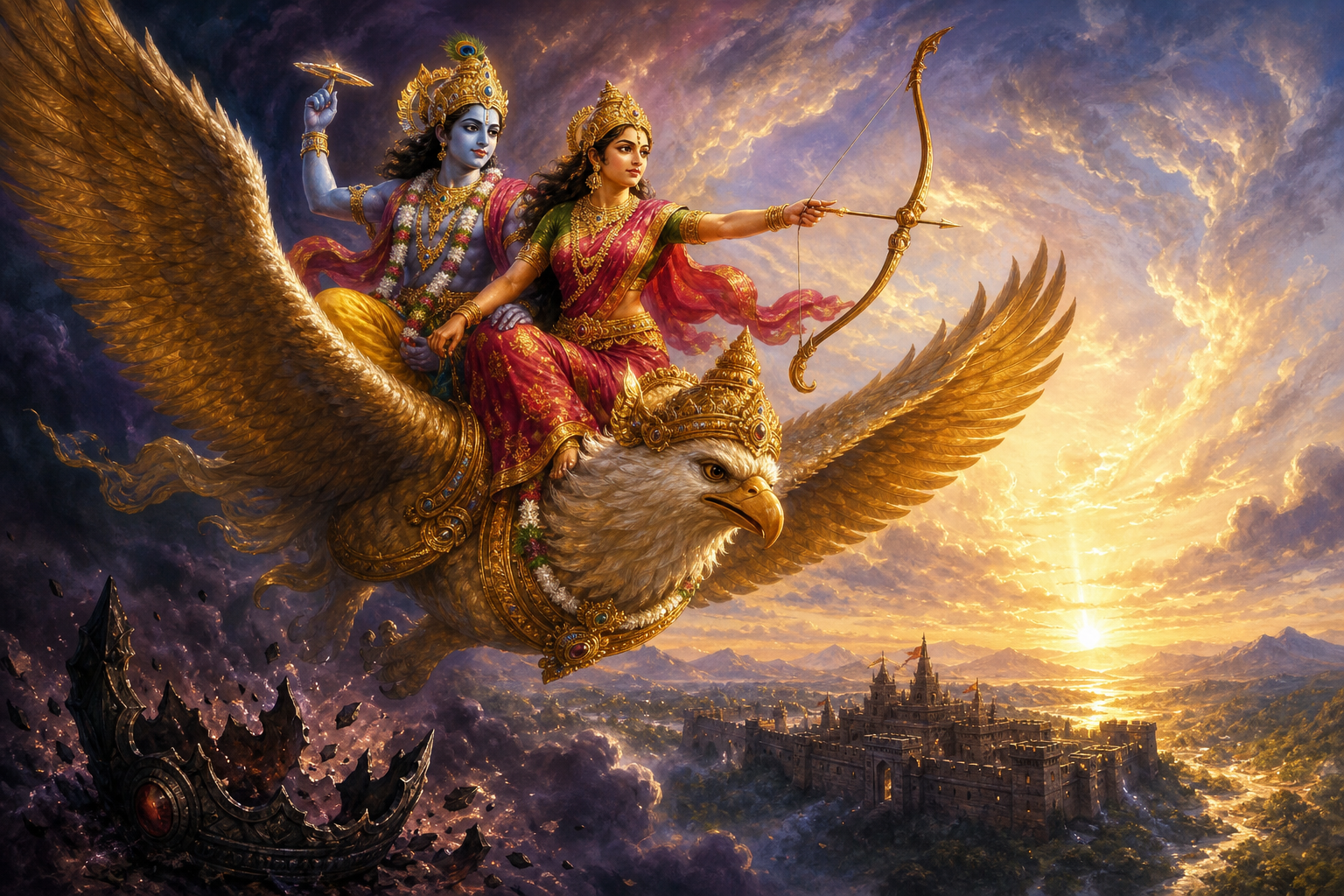
Narakasura, also called Bhauma, is remembered as the son of Bhumi Devi and Lord Varaha. His birth gave him an exalted lineage, but lineage did not excuse his conduct. He turned toward adharma, ruled oppressively from Pragjyotisha, confined people unlawfully, and took sacred possessions that were not his.
Sri Krishna’s intervention therefore means more than the defeat of a powerful enemy. The narrative joins force to moral purpose: the captives are freed, sacred property is recovered, and lawful order is restored. Regional retellings give Satyabhama a particularly active place in the confrontation. You can honor that emphasis without insisting that every community narrate the episode in precisely the same way.
The first lesson is uncomfortable and necessary: a noble origin does not make every later action noble. Dharma has to be sustained in conduct. Power that no longer protects the vulnerable has already separated itself from its proper purpose.
A popular continuation says that Narakasura sought a final boon: his fall should be remembered with light, joy, freedom from fear, and purifying ablutions. This part of the account is especially prominent in later and regional tradition. The defeat of Naraka, liberation of captives, and recovery of sacred objects belong to the narrative core associated with the Vishnu Purana and Harivamsa; the exact formulation of the final boon varies. Keeping that distinction does not weaken the tradition. It shows how a living sacred memory develops through texts, household narration, and regional practice.
When you tell the story to children, three sentences are enough to preserve its ethical force: power without dharma becomes oppression; courage must be used to protect those who cannot protect themselves; and victory is incomplete until fear gives way to compassionate order. The oil bath and lamps then become intelligible actions, not festival chores detached from meaning.
One tithi carries several regional inheritances
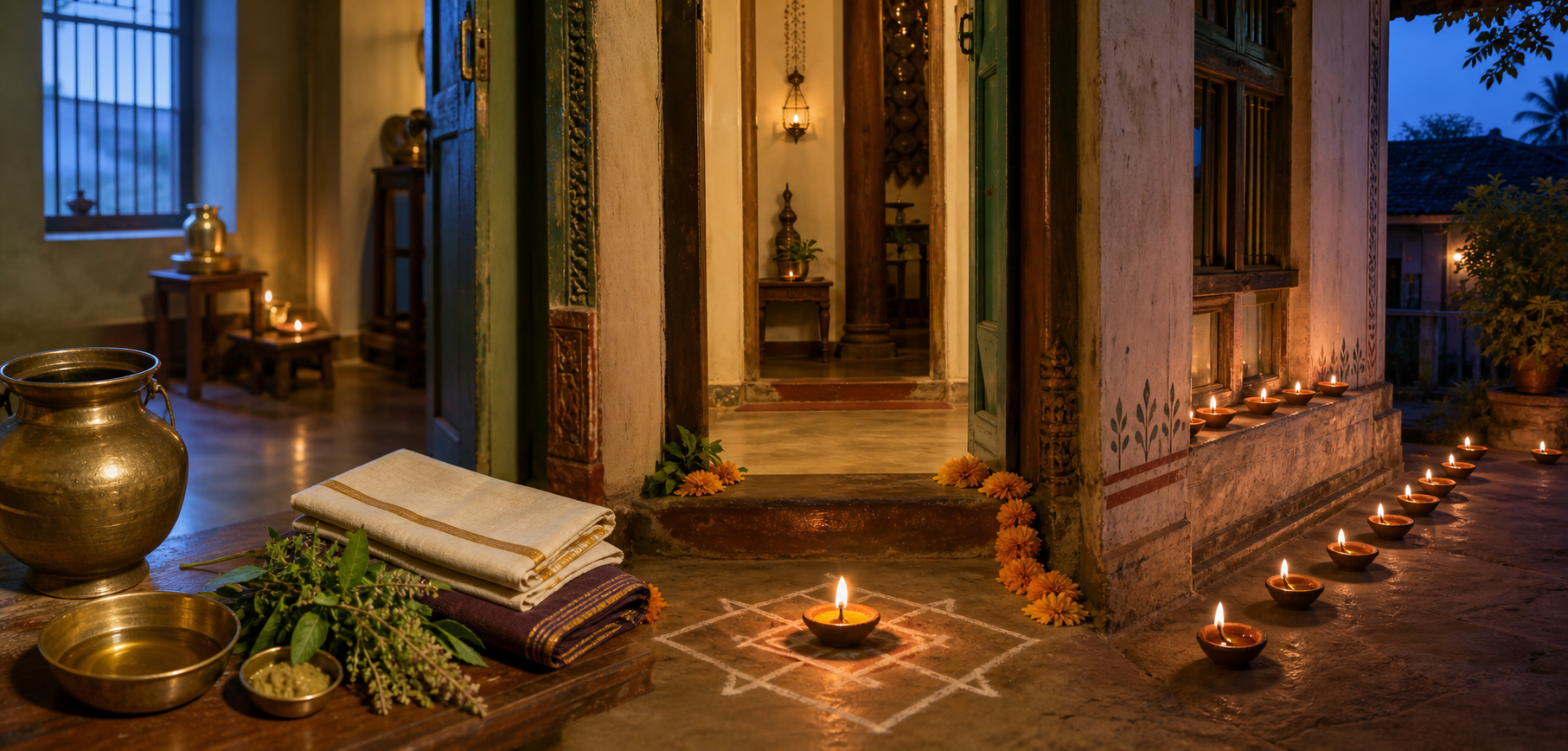
Several observances cluster around the Chaturdashi before Diwali. They share themes of cleansing, protection, remembrance, and illumination, but each one preserves a particular regional vocabulary. This is why two families can observe the same lunar day differently without either family being mistaken.
| Name | Regional emphasis | Distinctive focus | Typical practice |
|---|---|---|---|
| Naraka Chaturdashi | Especially prominent in parts of Maharashtra, Goa, Karnataka, and elsewhere | Sri Krishna and Satyabhama’s victory over Narakasura; freedom from oppression | Pre-dawn oil bath, clean clothing, remembrance of the victory, and lamps |
| Kali Chaudas | Gujarat | Mahakali’s power to dissolve fear, inertia, and negativity; Hanuman is also worshipped in many homes | Mahakali or Hanuman upasana, protective prayers, offerings, and evening lamps |
| Roop Chaturdashi or Roop Chaudas | North India | Outer cleanliness joined to inner radiance and well-being | Pre-dawn abhyanga snana, optional herbal ubtan, clean attire, prayer, rangoli, and diyas |
| Bhoota Chaturdashi | Bengal | Remembrance of forebears and protection from inauspicious influences | Fourteen lamps and, in many households, fourteen leafy greens |
| Chhoti Diwali | Common in parts of North India | Preparation for the principal Diwali celebration | Cleaning, lamps, family prayer, and, in some communities, Hanuman worship |
Use this table as a map, not a menu. A Gujarati household does not need to add every Bengali practice, and a family observing Roop Chaudas does not need to import a specialized Mahakali rite. Preserve the custom you actually received. If your family history has been interrupted, begin with the broadly shared practices and ask elders, your temple, or a trusted acharya about the regional form appropriate to you.
There is another distinction worth protecting. The principal Kali Puja in eastern India is associated with Diwali Amavasya. It should not automatically be moved to Chaturdashi merely because Gujarat observes Kali Chaudas then. Similar names and related symbolism do not erase calendrical differences.
A simple Naraka Chaturdashi observance at home
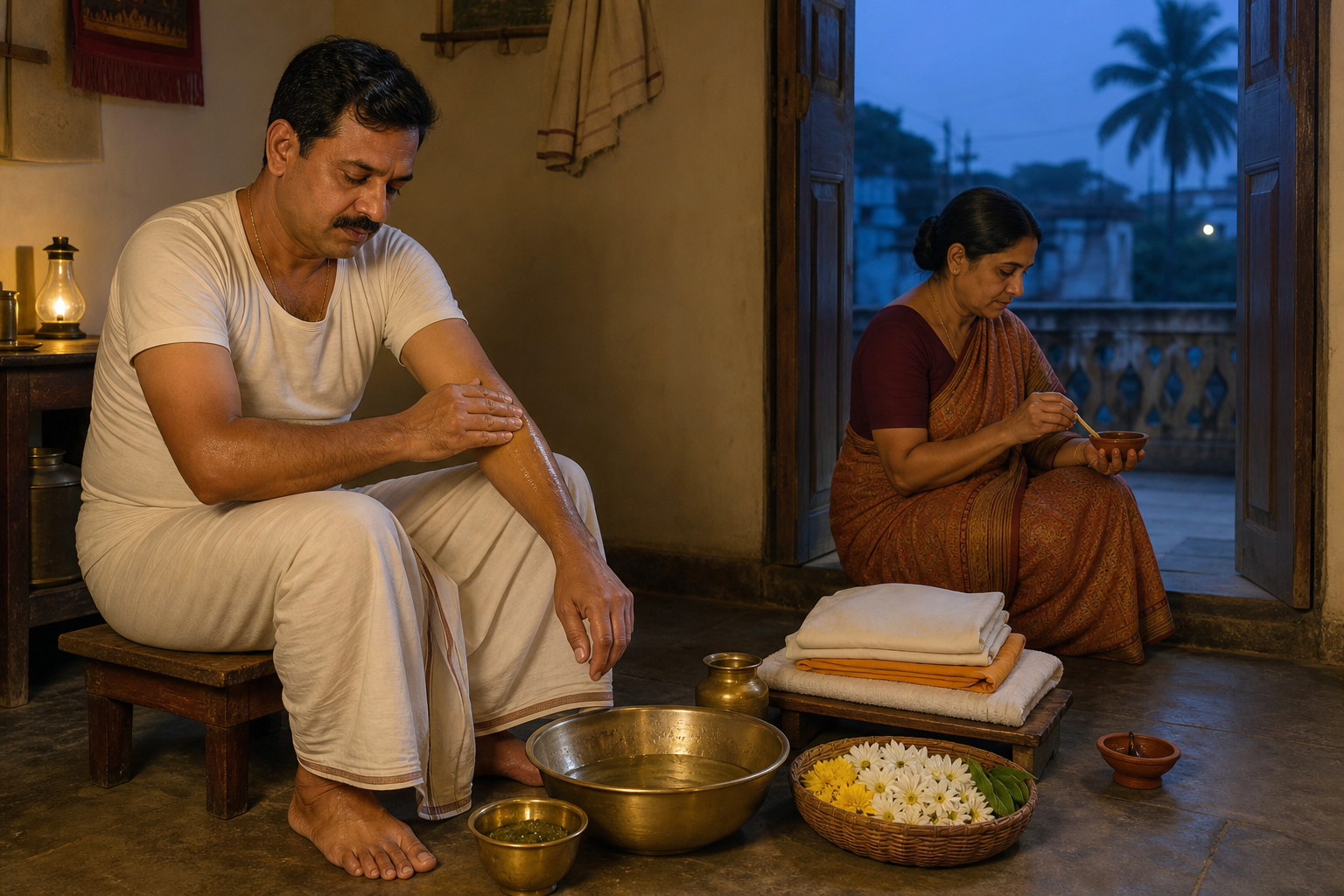
You do not need an elaborate arrangement to make the day meaningful. You need the correct tithi for your location, a coherent family practice, and enough quiet to understand what each action represents.
- Check your local panchang. Confirm when Chaturdashi prevails where you live and whether your tradition places the abhyanga snana before sunrise. Do not rely on a date copied from another city, because tithi boundaries and preferred ritual periods can differ by location.
- Prepare the evening before. Clean the shrine and bathing area, set out sesame oil, clean clothes, towels, diyas, wicks, and the offerings used in your home. Preparation keeps the pre-dawn observance from becoming rushed.
- Begin with abhyanga snana if this belongs to your tradition. Apply sesame oil before bathing, then wash and put on clean clothes. Some Roop Chaturdashi households use an ubtan made with ingredients such as chickpea flour, turmeric, sandalwood, and rose water. Treat the ubtan as an optional family custom, not a compulsory formula or a promise of cosmetic results. Oil can make the floor slippery, so clean spills promptly and provide a steady surface for children and elders.
- Make the inner cleansing explicit. Before prayer, identify one tendency you do not want to carry into Diwali, such as habitual anger, avoidant fear, lethargy, or harsh speech. Pair it with a quality you will practice: courage, discernment, steadiness, compassion, or service. The resolve should be concrete enough to guide an action after the festival.
- Offer worship according to your lineage. Keep the altar clean, light a lamp, make the offerings customary in your home, recite the prayer you know, and remember the day’s central movement from fear toward dharmic clarity.
- Light diyas at dusk and close with gratitude. Place every flame on a stable surface away from curtains, loose clothing, and rangoli powders that may ignite. Children should light or carry lamps only with direct adult supervision.
- Complete the ritual through conduct. Share prasad, offer food or practical support to someone in need, or take up a modest act of seva. The victory over oppression is better remembered by reducing another person’s burden than by increasing noise or display.
If your household centers Mahakali, customary home offerings may include red hibiscus, black sesame, sweets, and a lamp using sesame oil or ghee. The point is not to cultivate fear of the Goddess but to seek the clarity and strength required to relinquish tamas, fear, and destructive habits. Specialized tantric practices should remain within the guidance of a qualified tradition rather than being improvised from fragments.
If your household centers Hanuman, prepare a clean shrine and offer red or orange flowers, sindoor, oil customary to your practice, and a simple sweet such as boondi or laddu. Reciting the Hanuman Chalisa or reading from Sundara Kanda places the emphasis on courage, bhakti, protection, and seva. Hanuman worship is particularly prominent in Gujarat and parts of North India, but it need not be added where another inherited observance already gives the day its form.
If the Narakasura narrative is your main focus, light the lamp and tell the story without reducing it to spectacle. Remember the people who were freed, not only the combat; the restoration of dharma, not only the destruction of an adversary; and Satyabhama’s role where your regional telling preserves it. This keeps the puja aligned with protection and justice.
Let purification change something after the bath

The symbolism becomes shallow if Narakasura is always located outside us. At the same time, inner reflection must not erase the story’s public meaning. Narakasura represents both undisciplined tendencies and the real social consequences of power separated from dharma. Naraka Chaturdashi therefore asks for two kinds of vigilance: mastery over your own anger, fear, greed, or inertia, and courage when other people are mistreated.
This is not permission to call every opponent an asura. The narrative identifies adharma through conduct: coercion, unlawful confinement, seizure, and the misuse of authority. Apply that moral standard first to actions, including your own. Otherwise, a festival about removing darkness becomes an excuse to indulge hostility.
You can make the evening lamp a small accountability practice. Name one duty you have postponed, one relationship in which your speech needs restraint, and one act of seva you will complete before the Diwali season ends. Choose actions within your control. A phone call made respectfully, food delivered without publicity, a debt of gratitude acknowledged, or a recurring household responsibility finally accepted gives the sankalpa a visible form.
Environmental restraint belongs to the same ethic. Clay diyas, natural rangoli materials, considerate sound levels, and inclusive family or community gatherings keep celebration from shifting its costs onto neighbors, animals, or the surroundings. The objective is not a joyless Diwali. It is joy governed by responsibility.
Naraka Chaturdashi is a specifically Hindu observance, although its ethical themes can resonate across the wider dharmic family. Jains remember Mahavira’s nirvana during Diwali; Sikhs celebrate liberation through Bandi Chhor Divas; and Buddhist communities have their own forms of illumination, reflection, compassion, and wisdom. Shared values become more credible when we respect these distinct histories rather than pretending that every community observes the same event.
When Chaturdashi approaches, do not try to perform every regional custom at once. Check the local tithi, follow the practice your family can perform with understanding, tell the Narakasura story carefully, and choose one courageous or compassionate action that will outlast the lamps. Then the house is not merely decorated for Deepavali; you are entering it with a clearer intention.
References
- DharmaRenaissance Blog – Kali Chaudas 2025 Date: Discover the Complete Significance, Proven Puja Steps, and Diwali Connection
- DharmaRenaissance Blog – Roop Chaturdashi 2025: Complete Guide to Roop Chaudas Rituals, Significance, and Regional Traditions
- DharmaRenaissance Blog – Discover Narakasura’s Ultimate Boon: A Complete Diwali Tale of Redemption and Dharma
- DharmaRenaissance Blog – Essential Guide: Discover Hanuman Puja on Narak Chaturdashi during Diwali 2025 (Oct 19)
