
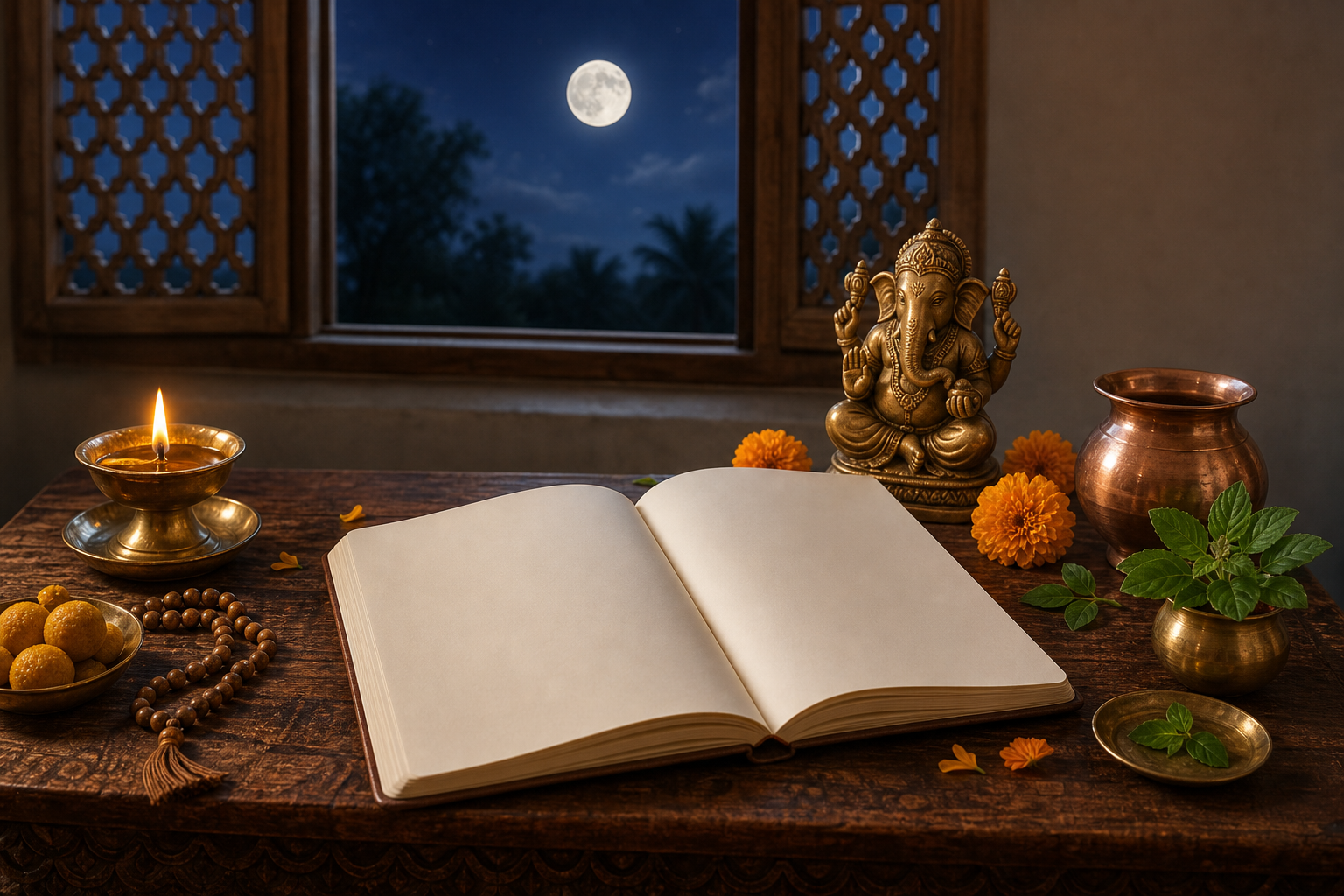
If you are trying to place May’s Hindu observances on your family calendar, begin with two anchor dates: May 1 and May 5. The first gathers several Full Moon traditions into one spiritually rich day; the second is a Ganesha vrata whose conclusion depends on your local moonrise.
The dates below use Indian Standard Time as a planning reference. Your final decision should come from a Panchang calculated for your location, especially if you live outside India or intend to keep the Sankashti fast until Chandra Darshan.
Key dates and takeaways for May 2026
- Friday, May 1, 2026, is Vaishakh Purnima, also observed as Snan-Daan-Vrat Purnima. It concludes the Vaishakh Snan discipline and is associated regionally with Gandheswari Puja and Annamacharya Jayanti. Many Vaishnava calendars also mark Kurma Jayanti.
- Tuesday, May 5, 2026, is Sankashti Chaturthi Vrat. The traditional fast is completed only after the local moonrise observance, not at an arbitrary dinner time.
- May 1 is not a demand to perform every custom attached to the date. Choose the practices belonging to your family, temple, region, or sampradaya.
- IST fixes an India-wide planning date, but it does not fix your local tithi boundaries or moonrise. Record the city for which your Panchang was calculated.
- If a strict fast is unsuitable because of age, health, medication, or other needs, keep a partial or phalahara observance. The sankalpa and discipline matter more than forcing physical severity.
How to observe Vaishakh Purnima on May 1
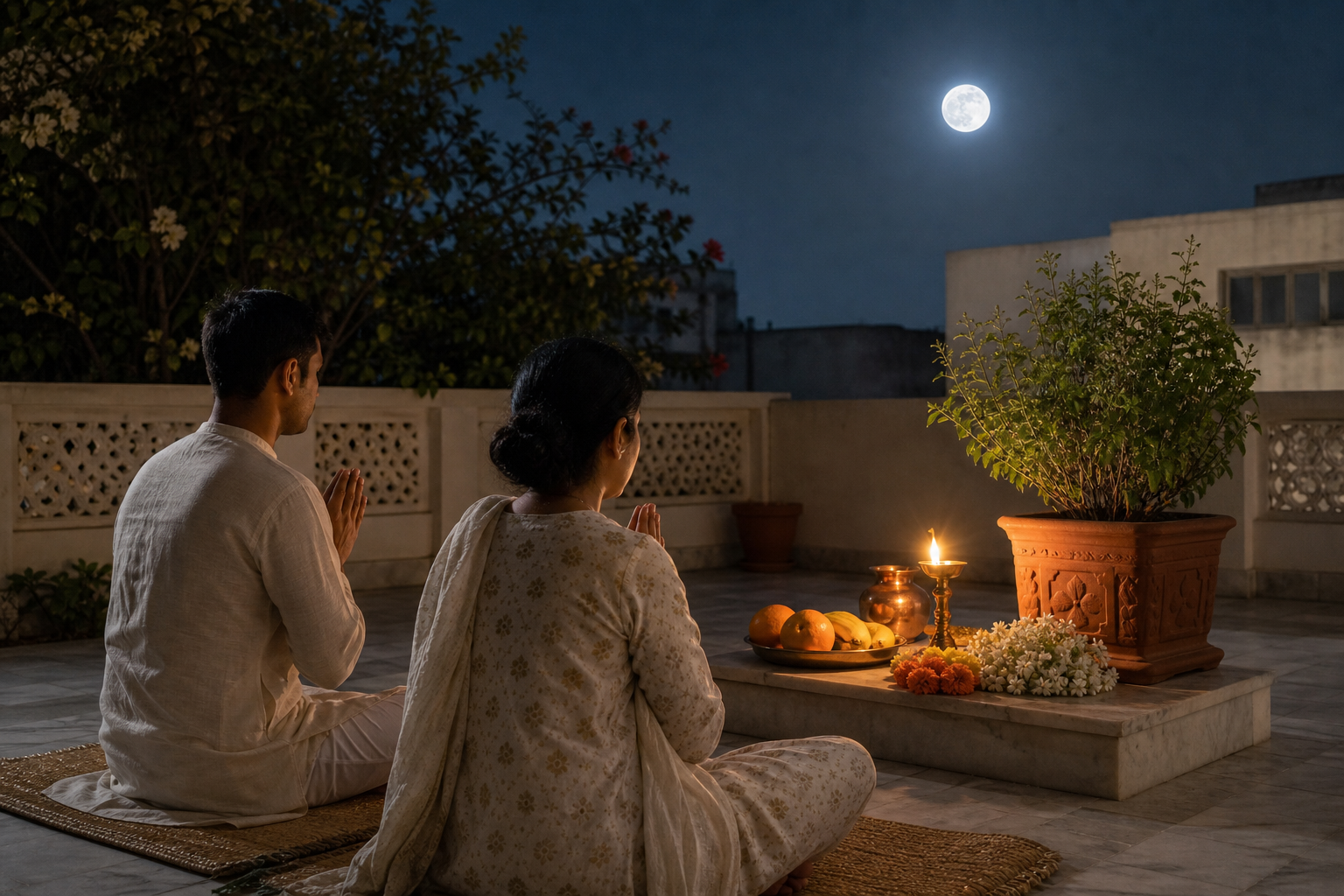
Vaishakh Purnima brings three practices into a single frame: snana, or purificatory bathing; dana, or generous giving; and vrata, or intentional restraint. That structure is more useful than treating the day as a collection of unrelated festival names. You begin with purification, govern your own appetites, and then turn the benefit of the observance outward through charity.
In the Purnimanta calendar followed widely in North India, this Full Moon concludes the month of Vaishakh. In Amanta calendars common in parts of South and Western India, it occurs within the month rather than at its end. The monthly label changes, but the Purnima tithi and its devotional importance remain.
A workable home sequence
Your family tradition may arrange the rites differently, so treat this as a practical sequence rather than a universal replacement for instructions from your purohit or temple.
- Confirm that your local Panchang places the relevant Purnima observance on May 1. If you are joining a temple programme, use the temple’s announced date and time.
- Begin the morning with snana. A river, lake, or seashore may be used where appropriate and safe; at home, some devotees add Ganga-jal to the bathing water.
- Perform your customary morning prayers. These may include sandhya, tarpana, and arghya according to family practice. If you have maintained the Vaishakh Snan discipline, make a clear completion sankalpa rather than allowing the month-long vrata simply to trail off.
- Keep the day sattvic. Choose the form of fasting you can observe responsibly, and give the saved time to japa, svadhyaya, katha, or quiet devotional reflection.
- Set aside dana before ordinary spending takes over the day. Traditional choices include a water-filled pot, clothing, grains, cooked food, or financial support for people in need and trustworthy spiritual or charitable institutions.
- Complete the day with the worship followed in your household. Many families perform Satyanarayana Puja on Purnima. Those concluding Vaishakh Snan may offer arghya to Surya or Vishnu, light a deepa, and dedicate the merit of the completed discipline to wider wellbeing.
Dana should be useful to its recipient, not merely convenient for the giver. If you plan to donate money or food through an organisation, verify the channel beforehand. That preserves both the dignity of the recipient and the purpose of the vrata.
Choose the regional or sampradaya layer that is actually yours
- Gandheswari Puja: Several Bengali communities worship Gandheswari, a regional form of Shakti, on Vaishakh Purnima. Fragrant offerings, flowers, lamps, sankirtan, and community offerings may form part of the observance. Because practice varies by district and temple, obtain the muhurta and ritual sequence locally.
- Annamacharya Jayanti: Several 2026 Panchang listings place the commemoration of Sri Tallapaka Annamacharya on May 1. The 15th-century saint-composer is credited with more than 30,000 sankeertanas offered to Sri Venkateswara. A fitting household observance is sankeertana parayana, collective singing, or seva shaped by the devotional themes of surrender and compassion.
- Kurma Jayanti: Many Vaishnava almanacs associate Vaishakh Purnima with the appearance of Sri Vishnu as Kurma, the Tortoise avatara. Follow this layer when it belongs to your lineage or temple calendar; its appearance in one almanac does not make it compulsory for every household.
The same Full Moon is Buddha Purnima, or Vesak, for Buddhist communities, commemorating the Buddha’s birth, enlightenment, and parinirvana. Jain practice during this sacred period may place added weight on svadhyaya, pratikraman, and tapas, while Sikh Pooranmashi gatherings often emphasise kirtan and seva. The rites are not interchangeable, but dana, ahimsa, self-restraint, remembrance, and service reveal a recognisable civilizational kinship across Dharmic traditions.
How to keep Sankashti Chaturthi on May 5
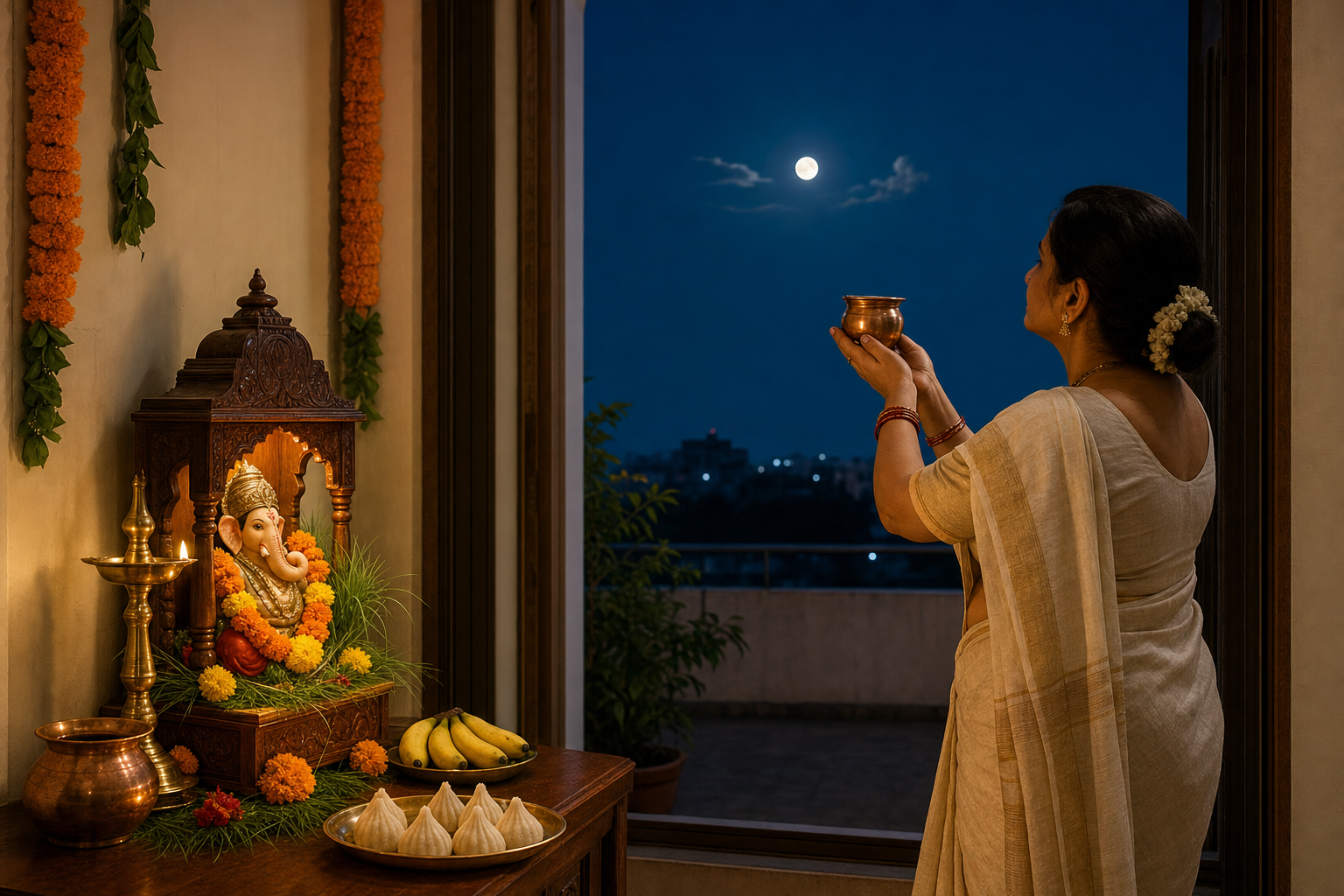
Sankashti Chaturthi falls on Krishna Paksha Chaturthi after the Full Moon and is dedicated to Sri Ganesha as Vighna Vinayaka, the remover of obstacles. Its defining timing rule is simple but frequently mishandled: the vrata is traditionally completed after Chandra Darshan, so the moonrise for your city is part of the ritual itself.
- Check the Chaturthi tithi and moonrise for your location before the day begins. Do not copy a moonrise time published for another city.
- Choose the form of upavasa you can sustain properly. A full fast, phalahara, or partial fast should be determined by your tradition and genuine capacity. If fasting could interfere with a health condition or medication, follow appropriate medical guidance and adopt a safer form of restraint.
- Make your sankalpa and worship Sri Ganesha. Keep speech measured or reduce unnecessary conversation if your circumstances allow.
- Use the day for Ganesha-centred recitation. Established options include the Ganesha Atharvashirsha, Sankata Nashana Ganapati Stotra, and Ganesha Ashtottara.
- At the local moonrise, undertake Chandra Darshan and offer arghya to the Moon according to your custom.
- Worship Sri Ganesha with naivedya, read or hear the month’s Sankashti Vrat Katha, and then complete the fast in the manner prescribed by your household tradition.
The common planning error is to focus on the May 5 date while leaving moonrise unresolved. Reverse that order: find the local moonrise first, then plan your work, travel, puja materials, meal, and family participation around it. This matters even within India because moonrise varies by latitude and longitude.
Why a Panchang can disagree with your civil calendar

A tithi is not a midnight-to-midnight date. It measures each 12-degree increase in the angular separation of the Moon and Sun, so it can begin or end during any part of the civil day. A festival therefore belongs to the applicable tithi rule, not automatically to the date printed at the top of a wall calendar.
As a working rule, many vratas use the tithi prevailing at local sunrise. Sankashti Chaturthi also requires the Chaturthi and local moonrise relationship because the fast concludes with Chandra Darshan. Regional conventions, sunrise calculations, and sampradaya rules can produce legitimate differences, so a local temple may announce an observance differently from a generic India-wide calendar.
- If you live in India, use the IST date to begin planning, then confirm the tithi and moonrise in a city-specific Panchang.
- If you live outside India, do not assume the Indian civil date carries over unchanged. Confirm the local tithi, local date, and local moonrise.
- If your family follows a particular temple or sampradaya, use its calendar consistently instead of switching between almanacs to obtain a preferred date.
- When asking a priest or temple for confirmation, give your city and the observance you intend to keep. Asking only, “What time is moonrise?” without a location cannot produce a reliable answer.
A timezone conversion can translate an Indian clock time, but it cannot substitute for a location-specific moonrise calculation. This is why Sankashti needs a local Panchang even when the broad May 5 planning date is already known.
Make your observance plan before May begins
- Enter May 1 and May 5 in your calendar now. Reserve May 1 morning for the Full Moon observance and protect the period around local moonrise on May 5.
- Decide which May 1 traditions belong to your household. A Vaishakh Snan completion, Gandheswari Puja, Annamacharya commemoration, Kurma Jayanti observance, and Satyanarayana Puja are distinct choices, not a single compulsory checklist.
- Select the fasting level for each family member in advance. Children, elders, and people with medical needs can participate through prayer, seva, japa, simple food discipline, or a partial fast rather than being pressured into a uniform rule.
- Prepare only the materials your chosen observance requires. Possible needs include Ganga-jal, a deepa, flowers, naivedya, sattvic foods such as fruit, nuts, or milk, and the items or funds set aside for dana.
- Contact your temple or purohit early if you need a local muhurta, a formal udyapana, Gandheswari Puja instructions, or confirmation of the Sankashti moonrise.
- Give family members concrete roles. One person can check the Panchang, another can prepare the dana, and children can help arrange the lamp, offerings, reading, or kirtan.
Put the two dates into your calendar, obtain the local timings, and choose a scale your household can keep with attention. A modest sankalpa completed well is more meaningful than gathering every festival name into an exhausting schedule.
References
