
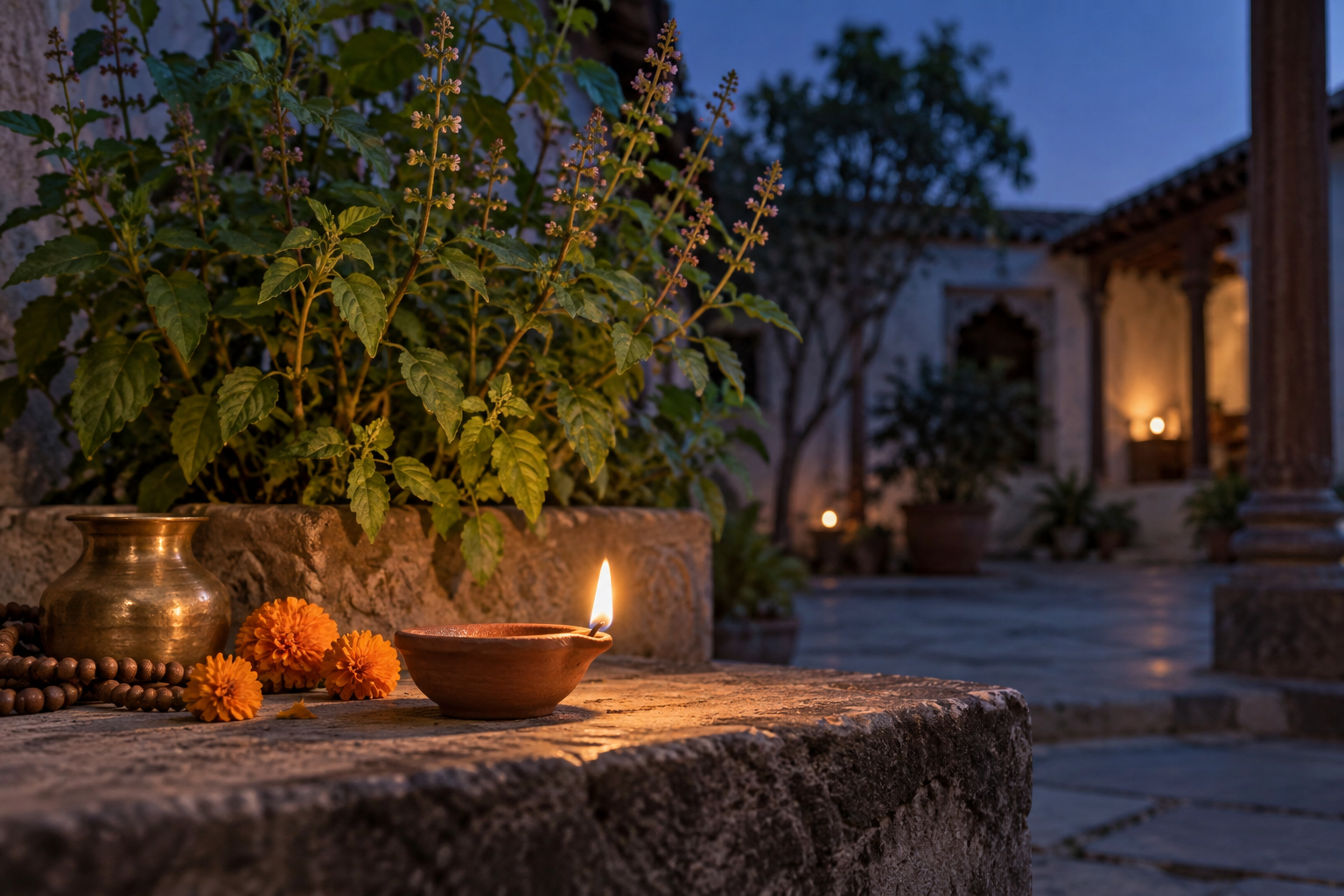
You want to honour Kartik, but you may not know whether to begin with a lamp, undertake an Ekadashi fast, or follow every observance listed on a calendar. The answer need not be complicated: choose a discipline you can keep reverently, confirm the date through the calendar your tradition follows, and do not turn devotion into a contest of endurance.
Lamp offering and Ekadashi express two sides of the same inward work. The lamp makes remembrance visible; the vrata reduces distraction and strengthens restraint. A modest observance performed attentively will usually shape your month more deeply than an elaborate plan abandoned after a few days.
Choose what you are actually committing to
Before Kartik begins, define your sankalpa in practical terms. A workable commitment has three parts: the action, its frequency, and its boundary. You might decide to offer an attended lamp each evening, to light one on the Kartik Ekadashi observed by your family, or to combine lamp worship with a manageable Ekadashi vrata.
- Name the action: lighting a lamp, reciting a familiar prayer, performing nama-japa, visiting a temple, giving dana, or observing dietary restraint.
- Set the frequency: daily, on particular sacred days, or according to the custom of your family or sampradaya.
- Set the boundary: choose a duration and level of austerity that fit your health, duties, and household responsibilities.
This is not permission to declare every form interchangeable. If your lineage gives a specific procedure, follow it. The point is to remove vagueness. A clear, limited vow helps you remember why you began and prevents the observance from expanding into something you cannot safely sustain.
Kartik deepa is praised in exceptionally strong karmic language: offering a lamp during Kartik is said to destroy sins accumulated across innumerable births with extraordinary speed. That is a devotional claim, not a mechanical promise about an object. Receive it as an invitation to repentance, remembrance, and changed conduct. If the lamp is lit while the habits it is meant to illuminate remain unexamined, the outward act has been separated from its moral purpose.
A simple Kartik lamp routine you can keep
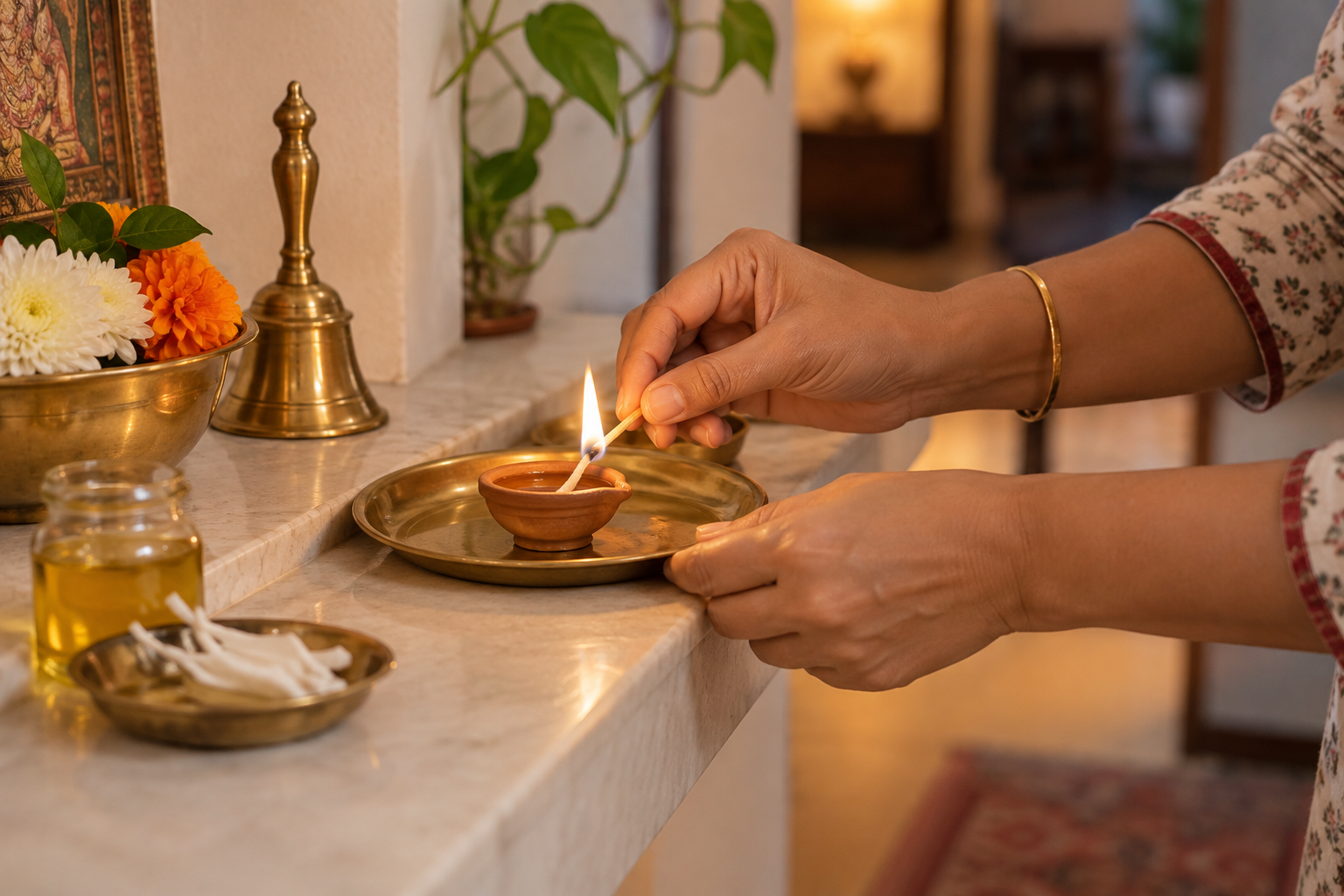
You do not need an elaborate arrangement to begin unless your household tradition requires one. Use a stable diya or lamp, a suitable wick and fuel, and a clean place associated with worship. If you have inherited instructions about the lamp’s material, direction, fuel, mantra, or placement, those instructions should take precedence over a generic routine.
- Prepare before lighting: clear papers, cloth, decorations, curtains, and other combustible material from the area. Place the lamp where it cannot be knocked over.
- State your intention: in your own language, connect the act with remembrance of Bhagavan, gratitude, self-correction, or the welfare of others. This need not be treated as a substitute for a mantra received through tradition.
- Light the lamp attentively: remain present for prayer, nama-japa, aarti, silent contemplation, or a reading already honoured in your home.
- Add one ethical discipline: restrain harsh speech, repair a neglected duty, offer food or assistance, or give up a habit that makes the mind less clear. This carries the symbolism of light into conduct.
- Close safely: let the lamp burn only while a responsible adult can supervise it. If it must be put out, do so carefully and in a manner compatible with household custom.
Never leave an open flame unattended, including in a home shrine. Keep it beyond the reach of children and animals, and do not place it in a crowded doorway or on an unstable ledge. Fire safety is not a lesser concern than ritual completeness; preventable danger does not honour the purpose of the offering.
Observe Ekadashi by capacity, not display
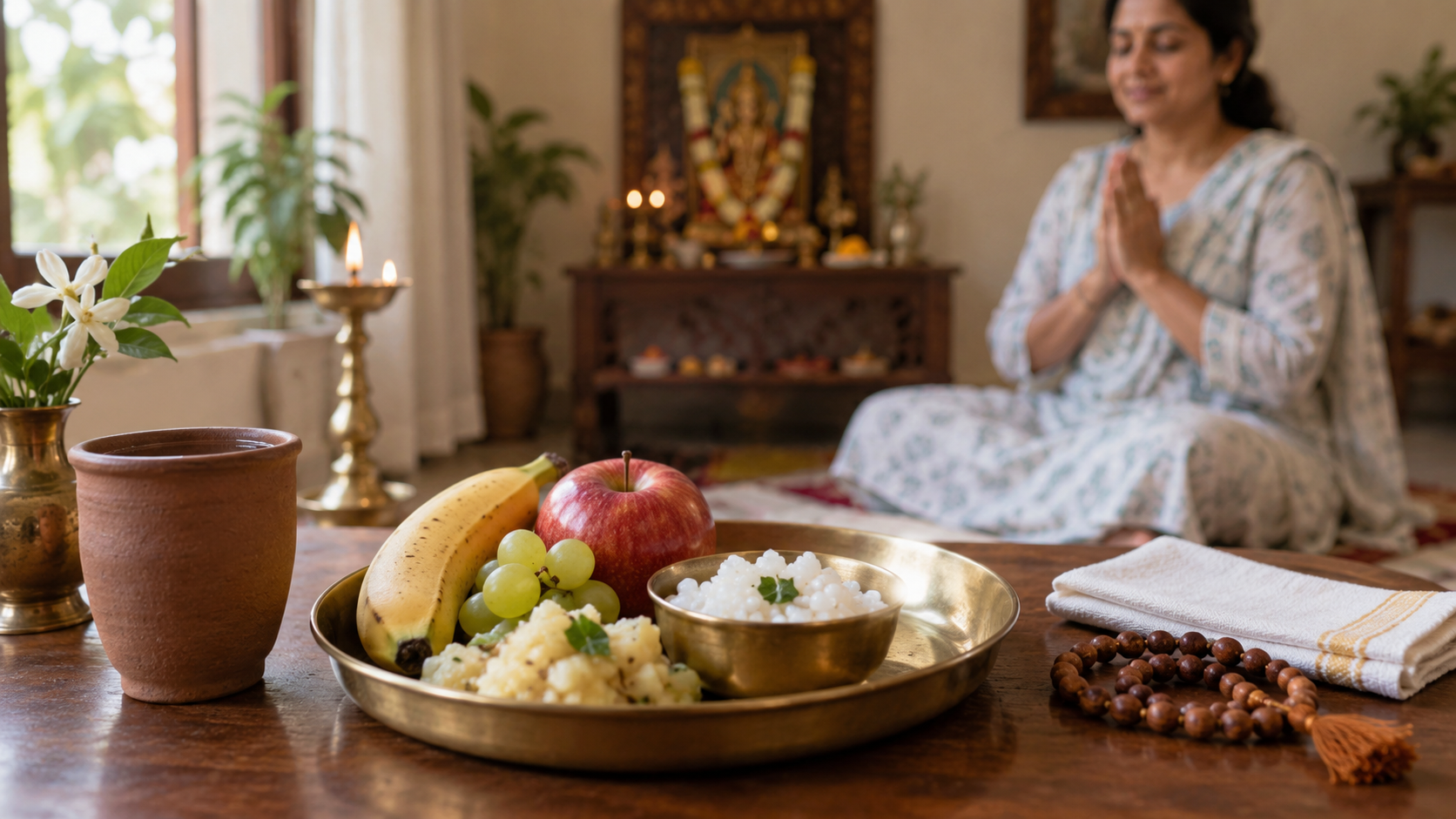
Ekadashi is a vrata, not merely a skipped meal. Dietary restraint matters, but it supports a larger discipline of attention, prayer, conduct, and remembrance. Decide in advance what you will observe so that hunger or a busy schedule does not force an improvised decision midway through the day.
- Confirm the correct day: consult the panchanga used by your temple, family, or sampradaya. A tithi does not necessarily begin and end with the civil day, so a date copied from another region may not settle your local observance or the proper parana period.
- Choose the form of vrata: follow a complete fast only when it is customary and safe for you. Otherwise, use the restricted diet prescribed in your tradition. Many Ekadashi customs exclude grains, but the detailed rules differ; do not assemble a universal menu from unrelated regional practices.
- Prepare beforehand: arrange permitted food if needed, reduce avoidable commitments, and decide when you will pray. Preparation keeps the day from becoming an exercise in searching for substitutes.
- Restrain more than food: reduce entertainment, needless argument, gossip, and compulsive consumption. Use the space for nama-japa, worship, seva, or quiet scriptural reflection.
- End the vrata deliberately: use your local panchanga or temple guidance for parana rather than guessing an exact time. Break the fast simply instead of treating its completion as permission to overeat.
Do not stop prescribed medicine or undertake a severe fast against medical advice. Children, pregnant or nursing people, frail older adults, people with diabetes, anyone with an eating-disorder history, and those whose medicines depend on food may require a modified or non-food observance. Ask an appropriate clinician when fasting could affect your health. Prayer, dana, sense-restraint, and dietary simplicity can preserve the vrata’s devotional direction without creating avoidable harm.
Understand the names and date of Bada Ekadashi
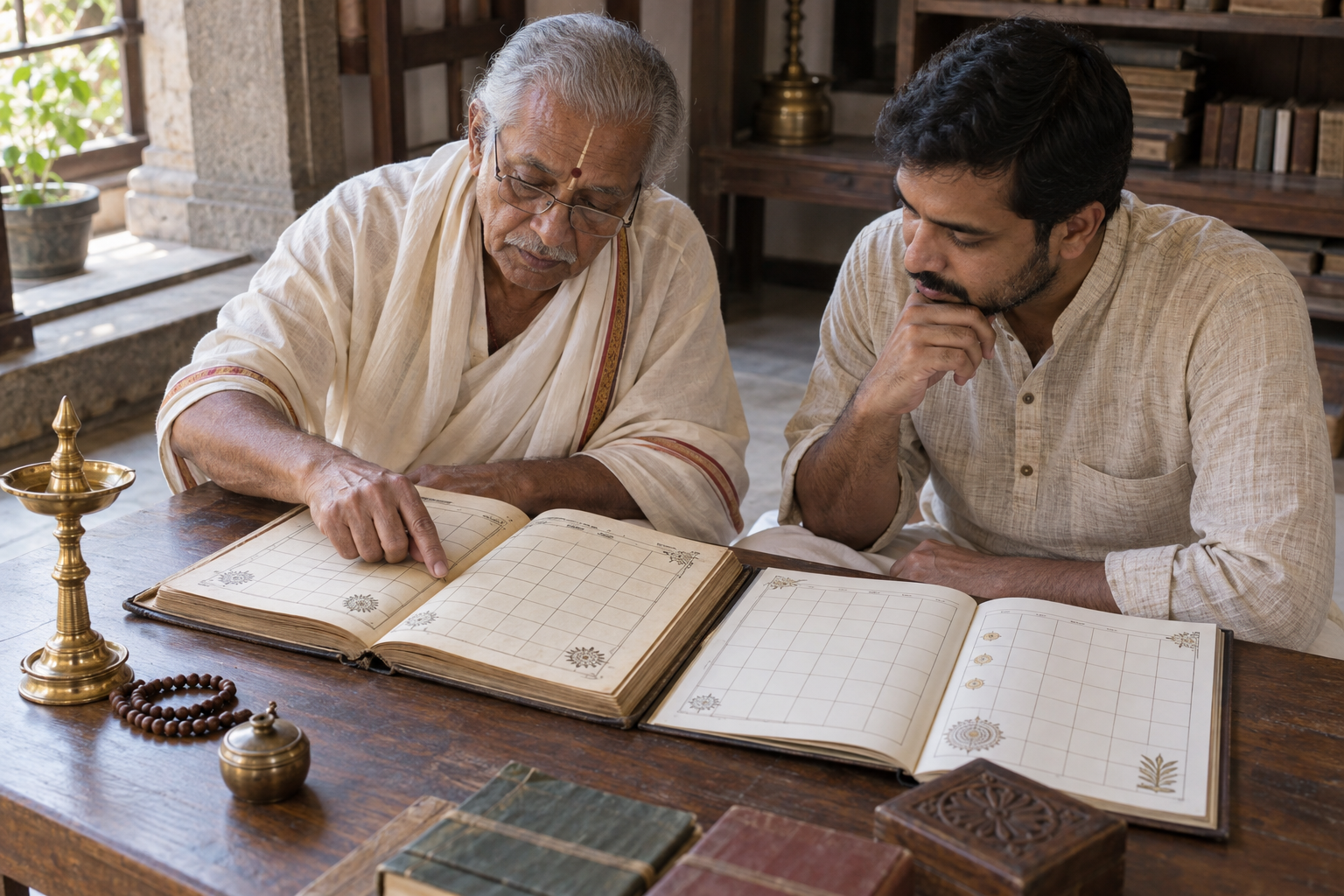
Bada Ekadashi is observed at Puri’s Jagannath Temple. The same Kartik Shukla Paksha observance is identified by several names, including Hari Utthapana Ekadashi, Prabodhini Ekadashi, Haribodhini Ekadashi, Devutthana Ekadashi, Tulsi Ekadashi, and Kartik Ekadashi. If several of these names appear in calendars or temple notices, do not automatically treat them as separate fasts.
For 2026, Bada Ekadashi falls on November 21 under the Odisha calendar. That qualifier matters. If you live outside Odisha or follow another regional calendar, verify the date and parana locally before making plans. The safest practical sequence is to identify your family’s calendar, confirm the temple you follow, and then record both the observance date and the breaking time.
The many names emphasize different devotional associations, but you do not need to collect every label before you can observe the day. Learn the name used in your own community, understand that it belongs to the bright fortnight of Kartik in the Odisha reckoning described here, and place your attention on the vrata itself.
Key takeaways
- Make one precise Kartik sankalpa instead of promising an unsustainable collection of rituals.
- Treat the lamp as an act of remembrance and moral clarification, not as a transaction that replaces conduct.
- Use the procedure of your family, temple, or sampradaya wherever it supplies details.
- Confirm Ekadashi and parana through the regional panchanga you actually follow.
- Modify food restraint when health requires it; a vrata should discipline the body, not recklessly endanger it.
- In the Odisha calendar, Bada Ekadashi in 2026 is November 21, and several familiar Ekadashi names refer to that observance.
Before the month starts, place the lamp safely, write down your exact sankalpa, and confirm the Ekadashi date with your temple or panchanga. Those three small acts remove most of the uncertainty and leave you free to attend to the purpose of Kartik: bringing greater light, restraint, and remembrance into how you live.
References
- Hindu Pad – Importance of Karthika Deepotsava | Deeparadhana in Kartik Month
- Hindu Pad – Bada Ekadashi 2026

Leave a Reply
You must be logged in to post a comment.