
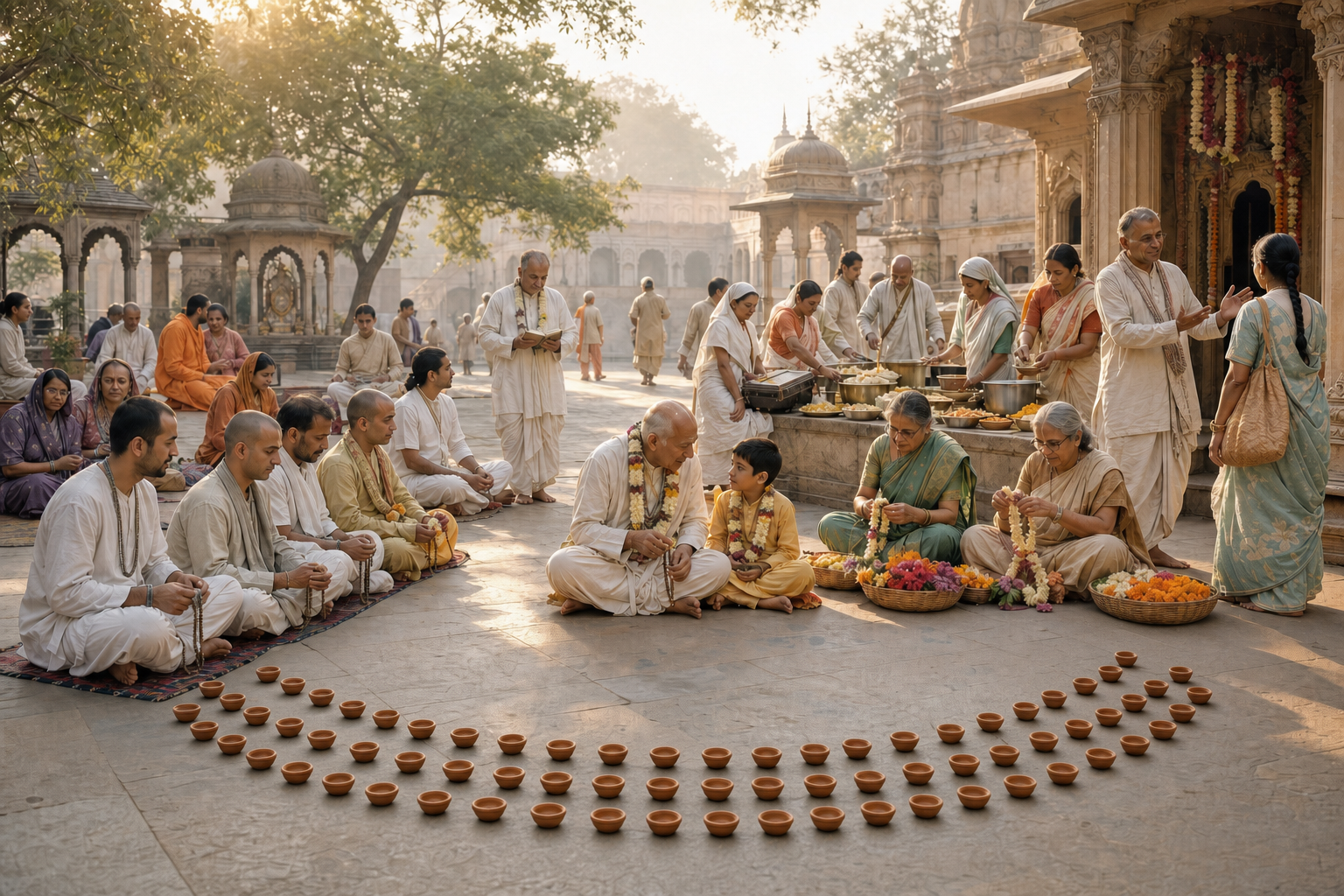
If ISKCON’s 60th anniversary has made you wonder how to observe it without reducing the occasion to a stage program, begin with a demanding question: what should remain different after the celebration ends?
A Dharmic anniversary has value when remembrance renews practice. For an ISKCON devotee, supporter, family, temple organizer, or curious visitor, that means connecting the milestone to hearing, chanting, study, prasada, seva, honest memory, and responsible transmission. The banners will come down. What you carry forward is the real observance.
Turn the milestone into a spiritual audit
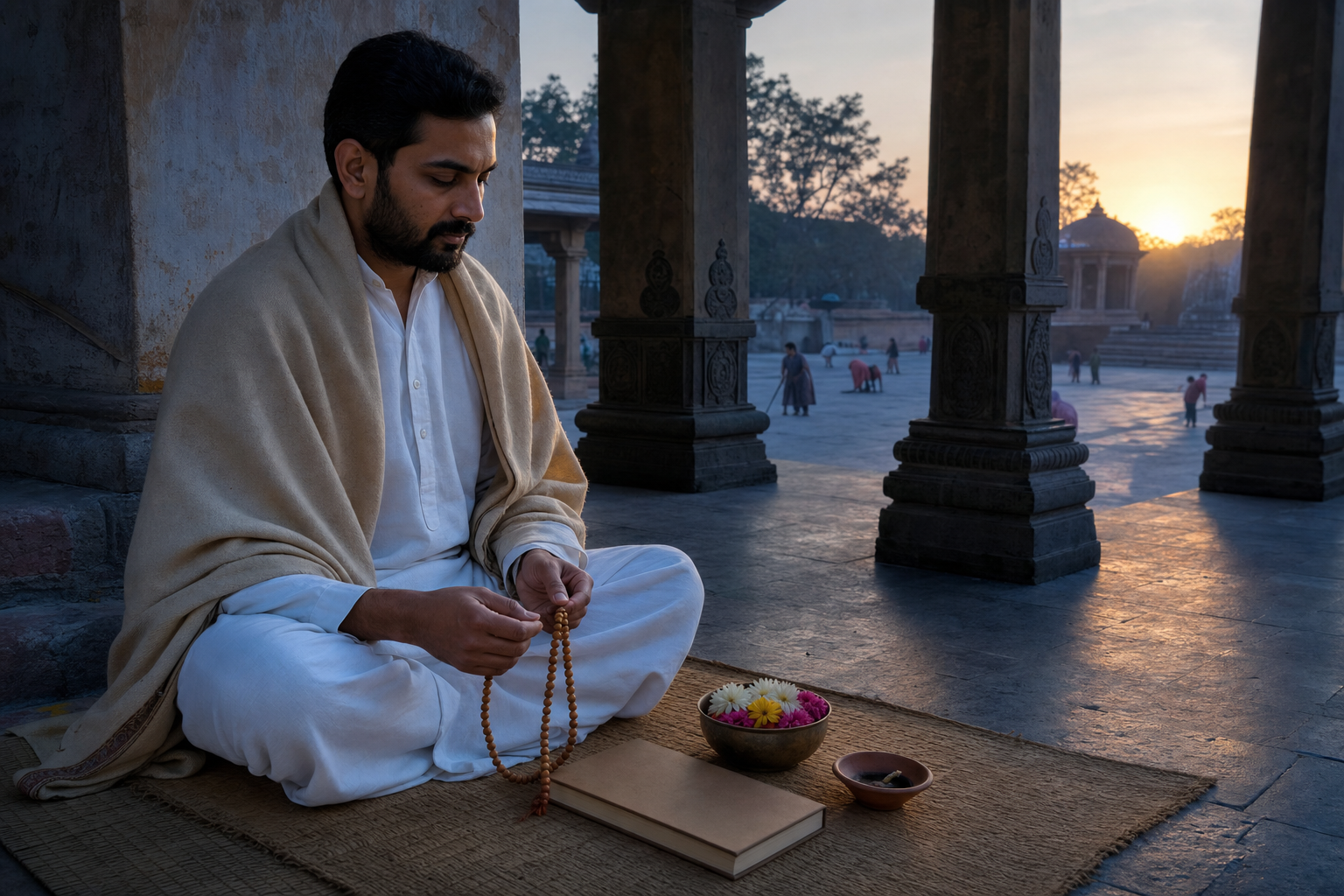
Anniversaries naturally produce gratitude, but gratitude becomes useful only when it identifies what was received and what must now be passed on. Before planning an event, make a simple audit of your relationship with ISKCON.
- What did you receive? Name the teaching, practice, book, relationship, temple, kirtana, or act of hospitality that made Krishna bhakti intelligible to you.
- What did you actually practise? Distinguish what changed your daily conduct from what you merely admired.
- What has weakened? Look for a neglected discipline, an unresolved community responsibility, or a teaching that has become a slogan rather than something you understand.
- What can you transmit? Choose something concrete enough to share accurately: a practice you can demonstrate, a passage you can study with another person, a service you can sustain, or a memory you can preserve.
This audit prevents two common mistakes. The first is nostalgia without renewal: celebrating what earlier devotees did while accepting no responsibility in the present. The second is activity without spiritual direction: filling a calendar with programs that leave participants unsure what to do when they return home.
Keep the anniversary itself in historical proportion. ISKCON’s 60 years measure the life of an institution. They do not measure the age of Krishna bhakti, the Bhagavad-gita, or the Gaudiya Vaishnava inheritance the institution carries. The modern organization and the older sampradaya are connected, but they are not interchangeable. Saying this clearly protects both histories.
That distinction also sharpens accountability. The antiquity of a tradition cannot by itself validate every modern administrative decision. Conversely, a modern institutional failure does not automatically refute the siddhanta. You serve the future better when you know which claim you are examining.
Build the observance around hearing, practice, food, and service
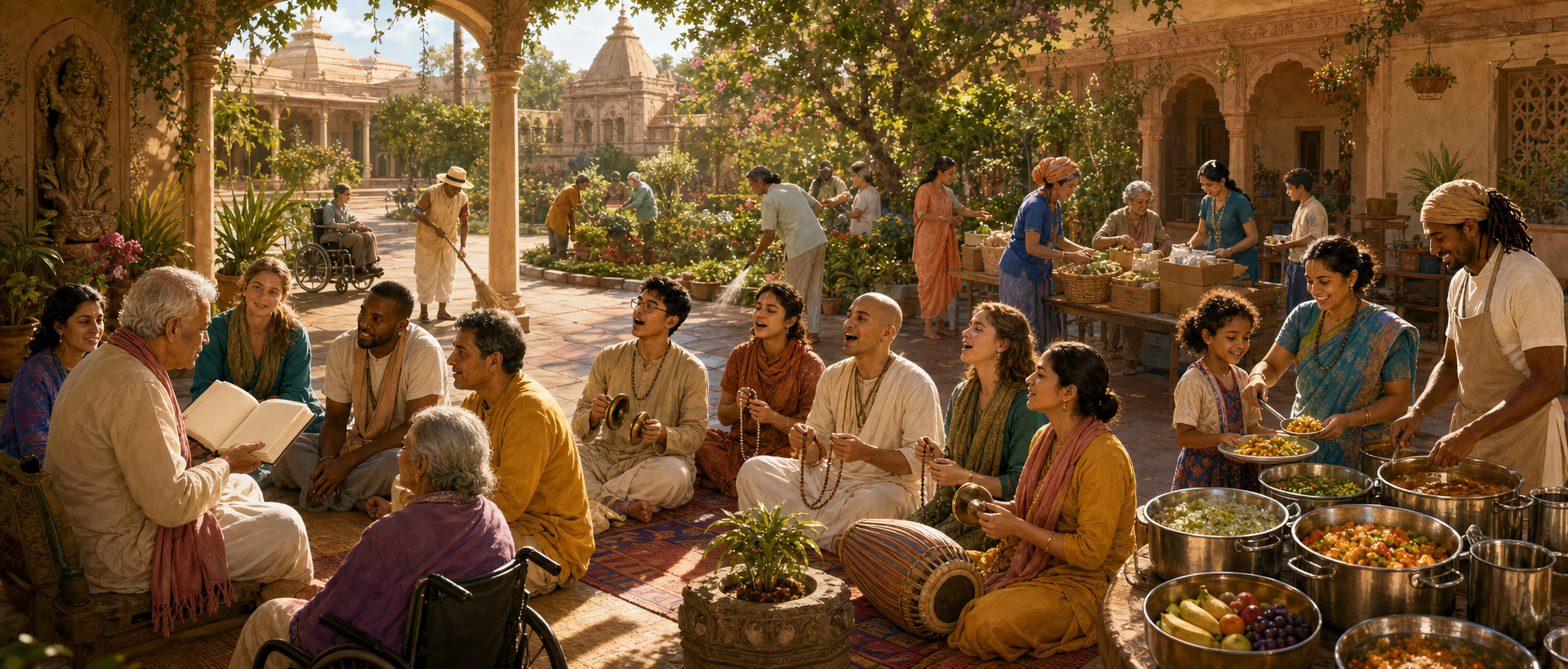
A large program can be meaningful, but scale is not the test. Ask whether the observance lets people encounter the actual disciplines of Vaishnava life. A sound structure moves from hearing to participation, and from participation to responsibility.
- Begin with shravana. Select a passage from the Bhagavad-gita or the Bhagavata tradition and give it enough context to be understood. Explain the question being addressed, the principle at stake, and the change in conduct the teaching asks of the listener. A crowded sequence of verses is less useful than sustained attention to a passage people can revisit.
- Make chanting participatory. If newcomers are present, explain what is being chanted and how they may join without embarrassment. If experienced practitioners are present, resist treating kirtana as a performance judged by novelty, volume, or applause. The anniversary should return attention to remembrance of Krishna.
- Treat prasada as part of the teaching. Food offered to Krishna and then shared is not merely event catering. Explain the devotional act without turning the meal into a lecture. Welcome guests, label ingredients clearly, serve with care, and make sure volunteers can also receive prasada rather than spending the whole occasion unseen in the background.
- Attach seva to a real need. Ask the local temple or community what work is presently underserved. It may be cleaning, cooking, welcoming visitors, caring for books, maintaining records, supporting elders, teaching children, or following up with newcomers. Accept a defined responsibility instead of announcing a vague intention to help.
- End with a next step. Give participants a named contact, a study opportunity, a service task, or a regular gathering they can actually reach. Without a bridge into ordinary life, the emotional high of an anniversary remains isolated from sadhana.
If you are organizing a temple program, assign responsibility for each part before publicity begins. Someone should know who will welcome first-time visitors, who will explain unfamiliar terms, who will care for children and elders, who will coordinate prasada, and who will contact interested guests afterward. These are not secondary logistics. They determine whether the theology of service is visible in the way people are treated.
If you are observing at home, use the same structure on a smaller scale. Read attentively, chant without rushing, prepare an offering, serve someone, and record the commitment you intend to continue. A household observance need not imitate a festival to be substantial.
Preserve living memory before it becomes a slogan
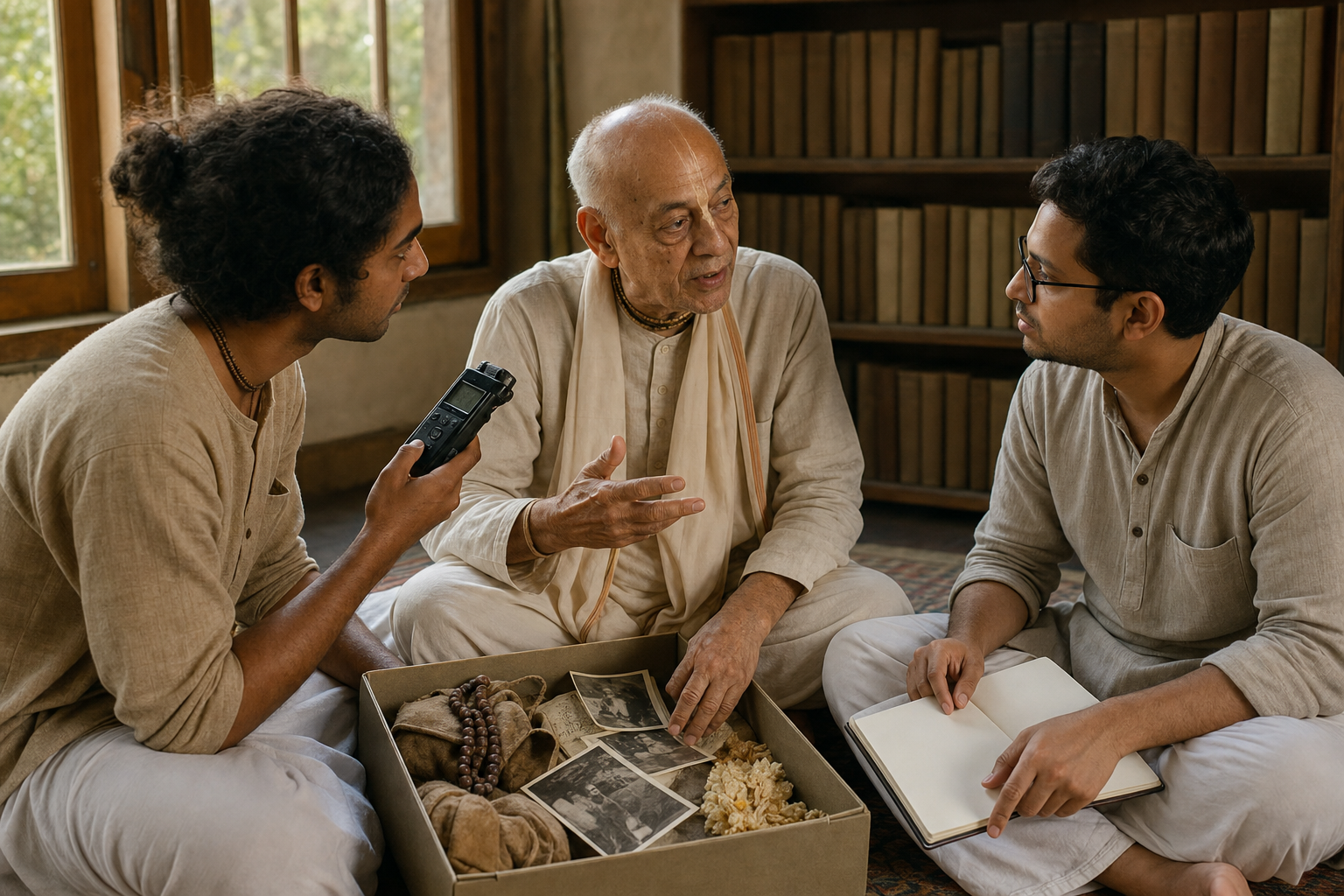
At a 60-year milestone, personal memories are valuable and vulnerable. Photographs lose their labels. Recordings become inaccessible. Names disappear from captions. Familiar stories acquire polished details that nobody can verify. Memory preservation is therefore a form of seva, not an ornamental history project.
If your family or community has a connection with ISKCON’s development, preserve it methodically:
- Ask the person for permission before recording or publishing a recollection.
- Record the speaker’s full name, the place being discussed, the approximate date, and how the speaker knows what happened.
- Use open prompts such as, “What did an ordinary day look like?”, “Which practice was hardest to sustain?”, and “What do people now misunderstand about that period?”
- Keep the original recording as well as any edited version. Editing for length should not erase hesitation, uncertainty, or context.
- Label recollection as recollection. Where a date or sequence is uncertain, preserve the uncertainty instead of converting it into a confident claim.
- Store a copy where someone besides the recorder can find it. A private device with no catalogue is not an archive.
Record difficulty as well as achievement
A useful institutional memory includes more than triumphant moments. Ask what sustained devotion, what exhausted volunteers, what helped families remain involved, what created avoidable conflict, and what local adaptations preserved the principle without distorting it. Future devotees need usable wisdom, not a spotless legend.
This does not require a hostile account of the past. Nor does a pro-Dharmic outlook require hagiography. Honest remembrance can honour sacrifice while acknowledging human limitation. In fact, accuracy is a deeper form of respect: it lets later generations learn from what people actually faced.
When preserving stories about A.C. Bhaktivedanta Swami Prabhupada, keep the teaching connected to the action being remembered. A charming anecdote may reveal warmth or character, but it should not silently become a doctrinal ruling. Identify whether you are preserving personal testimony, an instruction, an interpretation, or an institutional decision.
Tell ISKCON’s story without flattening the tradition
The anniversary will lead some readers to explain ISKCON to relatives, colleagues, students, or children. Precision matters here. Avoid both promotional exaggeration and dismissive shorthand. Separate the layers of the subject before making a claim.
- Siddhanta: the theological teachings, scriptural interpretations, and account of the relationship between Krishna, the living being, and the world.
- Sadhana: the disciplines through which a practitioner hears, chants, remembers, worships, studies, serves, and shapes daily conduct.
- Sampradaya: the lineage and inherited framework within which teachings are transmitted and interpreted.
- Institution: the modern organization, its leadership, policies, temples, projects, and systems of responsibility.
- Local community: the particular people and habits a visitor encounters in a temple or congregation.
- Individual conduct: the choices of a practitioner, which may embody the teaching well, poorly, or inconsistently.
This separation makes praise more credible and criticism more exact. A generous encounter with a devotee does not prove that every institutional practice is sound. A painful experience in a local community should not be dismissed merely because the theology is profound. Nor does that experience, by itself, settle a philosophical question. Identify the level on which the claim belongs, then address it there.
Use doctrinal terms only when you are prepared to explain them. If you mention acintya-bheda-abheda, for example, explain the central idea of inconceivable simultaneous oneness and difference instead of offering the Sanskrit phrase as a badge of authority. Then direct the interested listener toward careful study. A technical term should open understanding, not end a conversation.
Be equally careful when placing ISKCON within the wider Hindu and Dharmic world. You need not blur real differences among Vaishnava, Shaiva, Shakta, Smarta, Buddhist, Jain, or Sikh traditions to show respect. Speak accurately from the Gaudiya Vaishnava standpoint, identify what is distinctive, and recognise shared Dharmic concerns where they genuinely exist. Unity built on vagueness will not survive serious questions.
Choose an anniversary role you can sustain
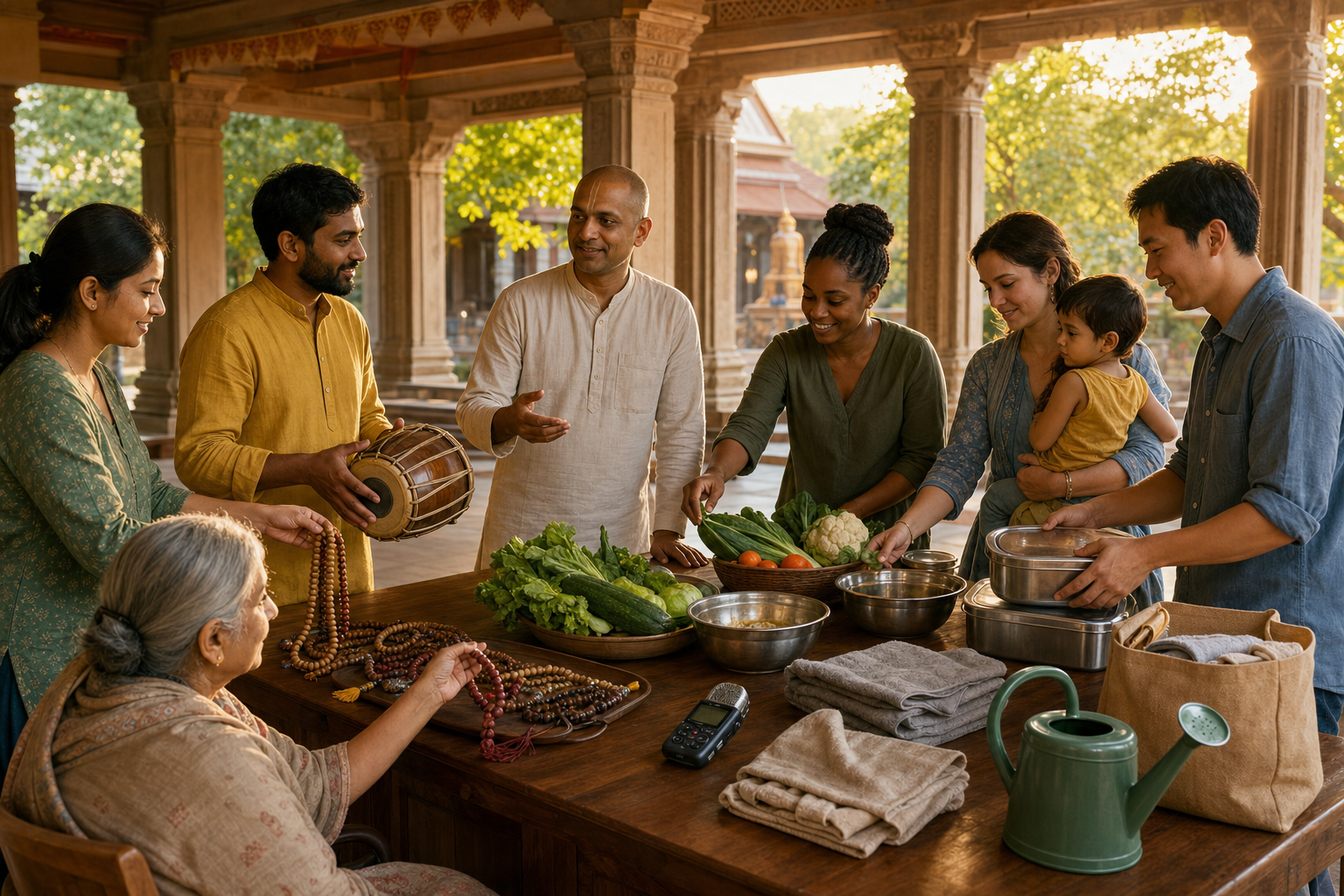
You do not need the same anniversary plan as a temple president, a lifelong practitioner, or a first-time visitor. Choose the role that matches your actual relationship to ISKCON.
If you are new or returning after a long absence
Attend as a learner rather than pretending familiarity. Ask what is being chanted, why food is offered, where beginners can study, and whom to contact with questions after the event. Notice whether explanations connect philosophy with conduct. You are entitled to ask for clarity, and you do not need to make a commitment before you understand it.
If you are an established practitioner
Choose a neglected part of your practice and restore it quietly. It might be attentive reading, dependable temple service, hospitality toward newcomers, reconciliation with someone in the community, or greater care in speech. Do not make the anniversary vow larger than your capacity. A commitment that survives an ordinary week is more meaningful than one designed for public admiration.
If you are a parent or family elder
Give younger family members more than names and dates. Explain what a practice does, why your family kept it, what questions you struggled with, and where you still have uncertainty. Invite questions without treating them as disloyalty. Transmission becomes brittle when the next generation is permitted to inherit conclusions but not the path of inquiry.
If you are organizing for a temple or community
Review the program from the participant’s point of view. Can a newcomer follow the language? Can an elder hear and sit comfortably? Can a child participate rather than merely remain occupied? Are volunteers visible as people rather than treated as an unlimited resource? Does the program offer a realistic path into continuing study or seva? If these questions have no owner, assign one before expanding the schedule.
Also decide how success will be recognized. Attendance alone cannot tell you whether the anniversary strengthened practice. Look for grounded signs: people returning to study, volunteers completing a defined service, memories properly archived, newcomers receiving follow-up, and commitments remaining active after the decorations are removed.
Key takeaways
- Celebrate ISKCON’s institutional milestone without confusing the age of the organization with the older Vaishnava tradition it carries.
- Build observance around shravana, chanting, prasada, seva, and a clear path into continuing practice.
- Preserve memories with consent, labels, context, original recordings, and an honest distinction between testimony and verified fact.
- Separate siddhanta, sadhana, sampradaya, institution, local community, and individual conduct when praising, explaining, or criticizing ISKCON.
- Choose a commitment suited to your real role and capacity, then give it an owner, a place in your routine, and a way to continue.
Before adding another item to an anniversary program, ask whether it helps someone hear, practise, serve, remember, or continue. Remove what serves none of those purposes. Then put the saved attention into a commitment that will still be alive after the commemoration. That is how gratitude to Prabhupada becomes responsibility rather than ceremony alone.
References
