
If Janmashtami is approaching and you are wondering whether your observance is elaborate enough, settle the main question first: will the day help you turn toward Sri Krishna with steady attention? A crowded programme can miss that purpose. A simple observance centred on hearing, chanting, seva and remembrance can fulfil it honestly.
You do not need to copy the largest celebration you have seen. You need a plan that respects your family, temple or sampradaya and gives each devotional practice enough space to become meaningful.
Begin with the purpose, not the decoration

Within Krishna bhakti, Sri Krishna is understood to appear in this world to draw hearts toward him, protect his devotees, establish dharma and invite a loving relationship. Those purposes give you a practical test for every part of the observance.
- To turn your heart toward Krishna: remove at least one distraction from the period you have reserved for worship. Hearing a sacred narration while repeatedly checking your phone defeats the choice you have already made.
- To seek divine shelter: bring a real concern into prayer. You do not have to manufacture a devotional mood or pretend that nothing troubles you.
- To honour dharma: identify one duty you already know you should fulfil. The celebration should clarify right action, not become an escape from it.
- To deepen loving relationship: offer attention, time and service rather than treating worship as something performed for you by other people.
This approach keeps Janmashtami from becoming only an attractive annual event. Decorations, music and communal celebration can support devotion, but they work best when you know what they are helping you remember.
Build an observance you can keep attentively
Plan the devotional core before you plan the extras. Put one concrete action beside each of the four central practices.
- Choose what you will hear. Select a reliable narration or teaching about Krishna from a text, teacher or community trusted in your tradition. Decide this beforehand so that the time is not lost searching.
- Choose how you will chant. Use the holy names, mantra or kirtan form you already know, or follow the practice led by your temple. Make a commitment you can keep with attention.
- Choose whom you will serve. Help your household prepare, accept a needed temple duty, welcome someone attending for the first time or take responsibility for cleaning after worship. Seva becomes concrete when another person or community actually benefits.
- Choose when you will pause to remember. Leave a quiet interval before or after the main celebration. Without that pause, a full programme can pass without giving you time to absorb it.
- Choose what will continue. Carry one small practice into the following day. The point is not to reproduce the entire festival daily, but to prevent remembrance from ending when the event ends.
If your plan is so ambitious that hearing becomes background noise and chanting becomes hurried, reduce it. Devotional seriousness is not measured by how many items you can fit into a schedule. It is visible in the attention with which you keep the commitments you make.
Let hearing, chanting, seva and remembrance do distinct work
Hear for understanding
Do not use sacred narration merely as atmosphere while you prepare other things. Listen for one quality of Krishna, one dimension of dharma and one response the teaching asks from you. Afterward, state these in your own words. If you cannot explain what you heard, return to the part where your attention drifted rather than rushing to more material.
Chant as participation, not performance
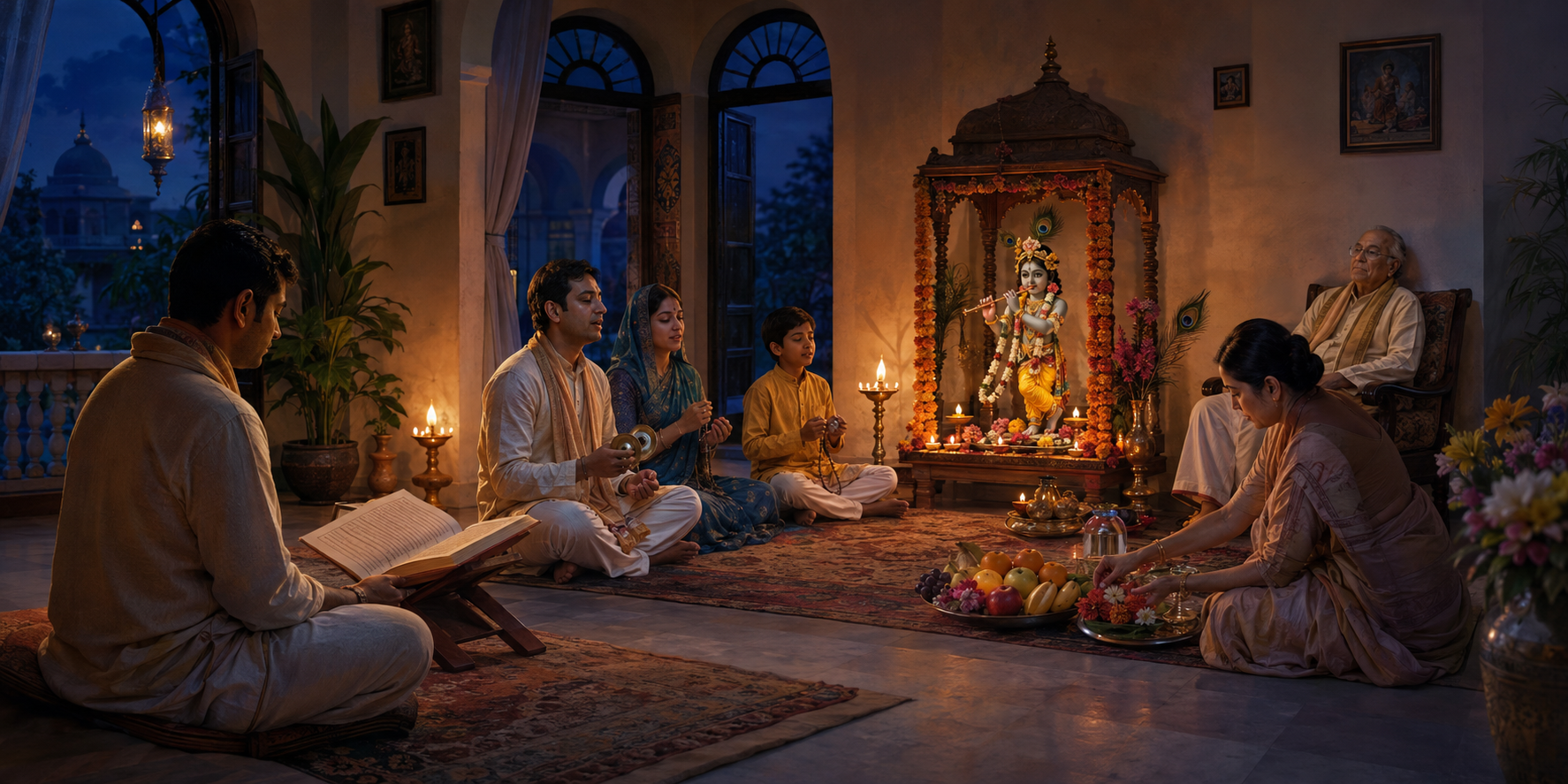
When chanting alone, let clarity and attention matter more than display. During communal kirtan, listen closely enough to respond with the group instead of anticipating the next musical turn. If you are unfamiliar with the words or form, follow the leader without embarrassment. Attentive participation is more honest than pretending expertise.
Make service useful to devotees
Service is not an ornamental label for whatever you already wanted to do. Ask what is actually needed. The answer may be setting up the worship space, assisting an elder, guiding a newcomer, preparing something requested by the host or restoring the space afterward. Accepting an unnoticed task can reveal whether your seva is centred on Krishna or on being seen.
Turn remembrance into a thread through the day
Remembrance should connect the other practices. After hearing, retain one teaching. After chanting, keep one divine name in mind. After seva, remember whom the service was meant to please. At the close of your observance, write down the one duty or devotional practice you intend to carry forward. That final step turns a passing feeling into a deliberate response.
Respect your tradition without turning custom into a contest
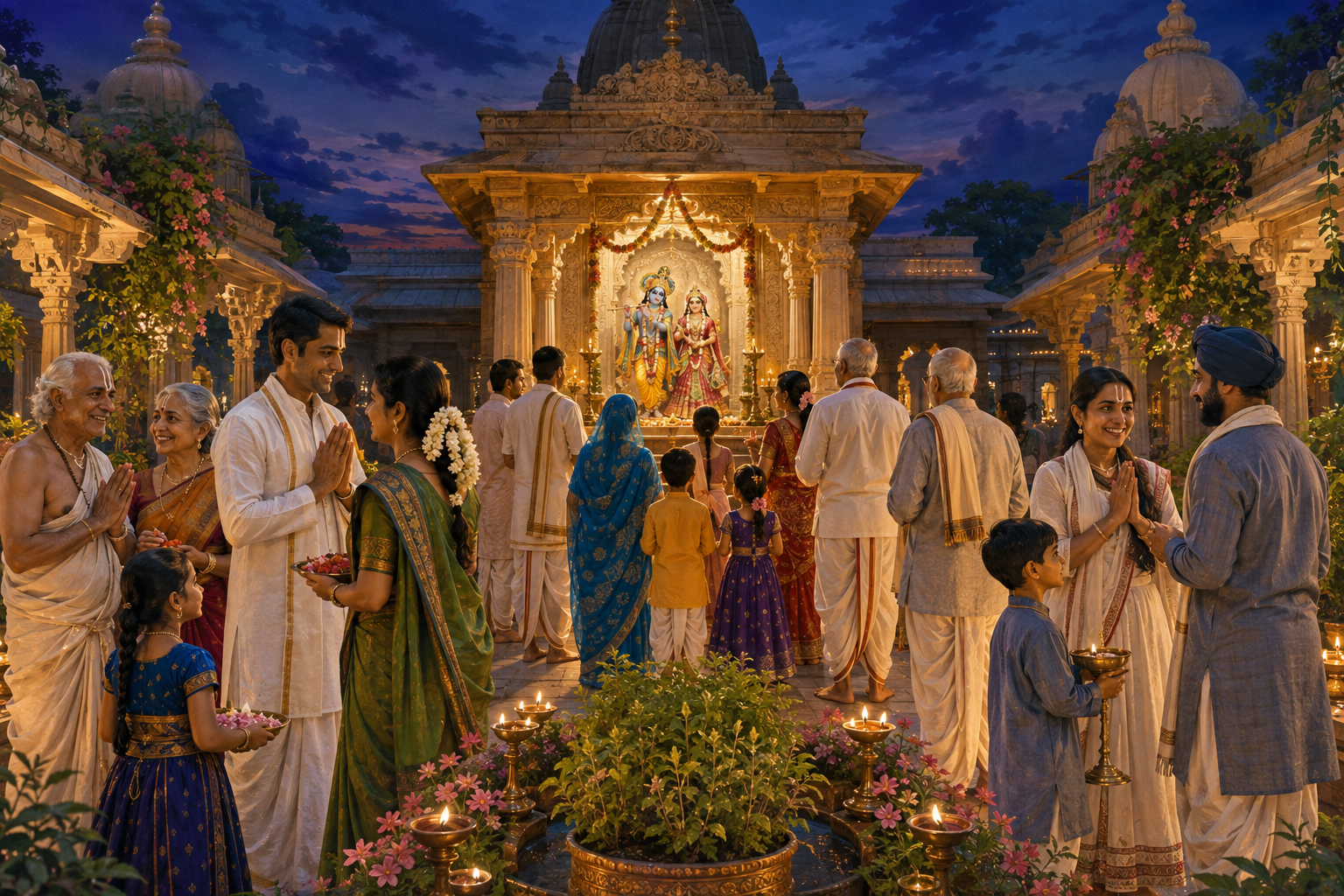
Families, temples and sampradayas can differ in the sequence of worship, vrata disciplines, offerings and forms of participation. These differences do not make every practice interchangeable, but neither does one community’s detailed checklist automatically become a universal rule for every Hindu household.
When you are uncertain about a specific observance, ask a trusted elder, acharya or temple four direct questions:
- Which practices does our tradition treat as central for Janmashtami?
- Which parts are expected, and which are optional expressions of devotion?
- What should a participant bring, prepare or do at the temple?
- If someone cannot complete the full observance, what simpler form remains faithful to its purpose?
If this is your first Janmashtami, resist the urge to imitate the most elaborate celebration you encounter. Attend a temple programme and follow its instructions, or keep a modest home observance built around a trusted narration, sincere chanting, one useful act of seva and a period of remembrance. You can learn additional customs without pretending that you already know them.
If aarti forms part of your observance, learn the response and sequence from the people leading it, or stand with full attention and follow respectfully. The same principle applies throughout the celebration: participate to the extent that you understand, and let questions lead you toward instruction rather than improvisation.
Key takeaways
- Centre the day on four practices: hearing about Krishna, chanting his holy names, serving devotees and remembering him.
- Attach one concrete, achievable action to each practice before the celebration begins.
- Follow your family, temple or sampradaya for the exact form of worship instead of treating an unfamiliar checklist as universal.
- Reduce the programme if its size prevents attentive participation.
- Carry one act of remembrance, service or dharmic responsibility into the following day.
Before the observance begins, write four verbs on a page: hear, chant, serve and remember. Put one real action beside each. Then choose the one action you will continue afterward. Janmashtami will have done more than fill a sacred date if it renews the way you turn toward Sri Krishna in ordinary life.
References
