
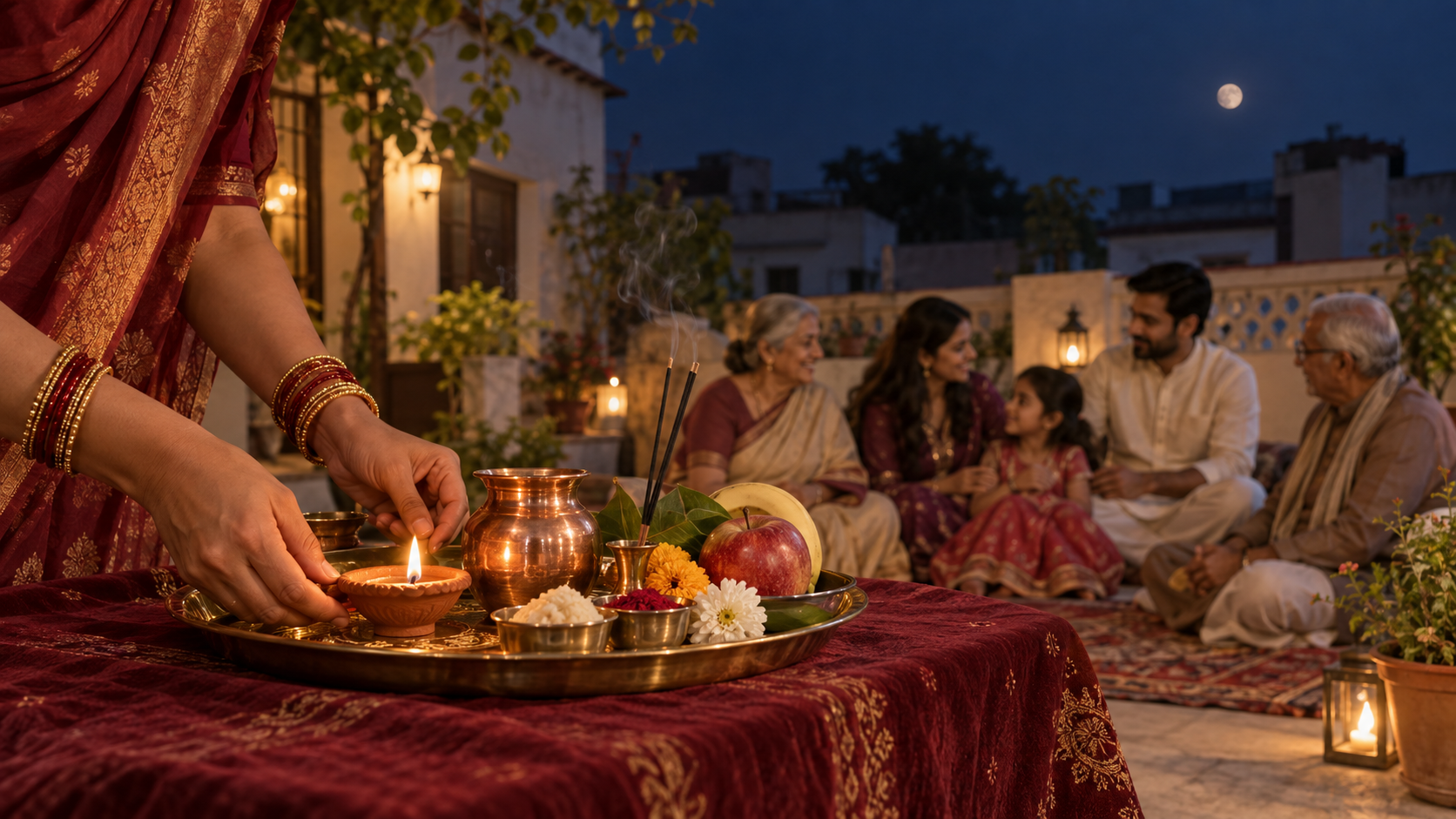
You are probably here with a practical question: which November observances belong in your family calendar, and which clock time can you safely plan around? Mark 1 November 2026 for Ahoi Ashtami, Karashtami and Kalashtami. The India-based timing for Ahoi Ashtami gives moonrise as 9:09 PM IST.
That entry needs two kinds of care. The moonrise time is specific to the India-based calendar, and three observance names sharing one civil date does not make their rituals interchangeable. Use the date to begin planning, then confirm the vrata and local timing followed by your family, sampradaya or temple.
The November 2026 date to place on your calendar
| Date | Observances listed | Timing supplied | Planning action |
|---|---|---|---|
| 1 November 2026 | Ahoi Ashtami, Karashtami and Kalashtami | Ahoi Ashtami moonrise: 9:09 PM IST | Reserve the date, identify the observance your tradition follows and obtain the applicable local timing before beginning the vrata. |
Only the date supported by the available November calendar record is included here. Filling the rest of the month from memory would risk assigning a lunar observance to the wrong Gregorian date. Treat this as a verified planning entry, not as a complete regional panchang for every Hindu community.
Key takeaways
- In the India-based calendar, Ahoi Ashtami, Karashtami and Kalashtami fall on 1 November 2026.
- The listed Ahoi Ashtami moonrise is 9:09 PM IST.
- If you live outside the location for which that timing was calculated, obtain your local moonrise rather than converting 9:09 PM IST as though it were a universal instant.
- A shared date does not mean that the three observances have the same sankalpa, worship or fasting procedure.
- Your local panchang and inherited family practice should settle ritual details that a monthly date list cannot settle.
Why the IST moonrise cannot simply be converted

A moonrise is a local astronomical event. The Moon rises at different local times in different places, so converting 9:09 PM IST into your time zone does not give you the moonrise at your own horizon. If your observance depends on seeing the Moon or acting after moonrise, use a panchang calculated for your city.
The civil date also tells only part of the story. A Hindu panchang works with tithi and other calendrical factors, while a household diary works with midnight-to-midnight dates. The practical question is therefore not merely, “What date is the festival?” It is, “Which tithi applies at the ritual point used by my tradition, and what is the corresponding local time?”
If you are outside India, ask your local temple or priest to confirm three things: whether 1 November remains the observance date in your city, the local moonrise relevant to Ahoi Ashtami and the start or completion rule followed in your lineage. That short check prevents the most common calendar mistake: keeping the correct vrata according to the wrong location.
Turn the calendar entry into a workable vrata plan
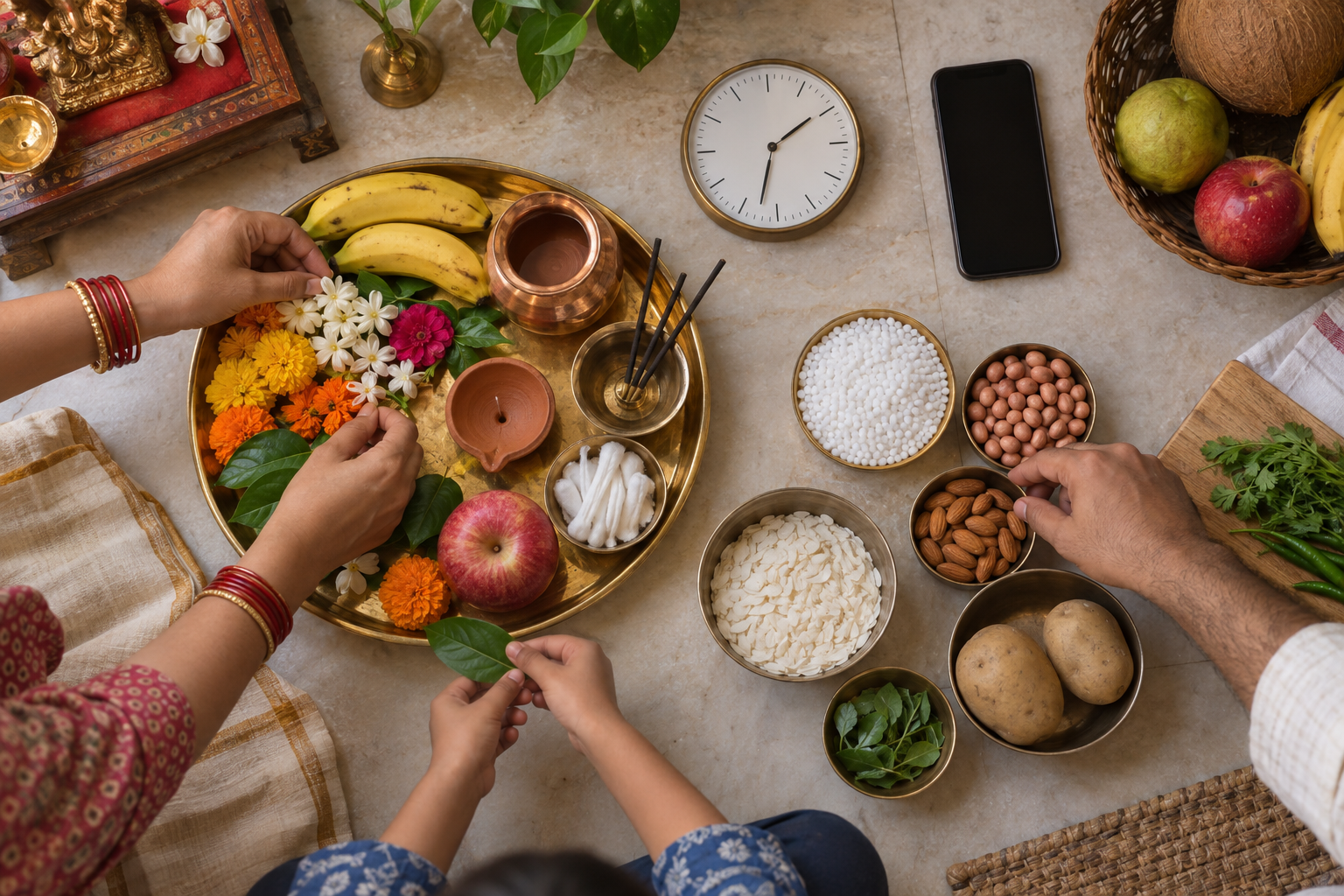
- Create one calendar entry for 1 November 2026 and record all three names: Ahoi Ashtami, Karashtami and Kalashtami. This lets family members recognise the day even if they use different names or follow different observances.
- Write “9:09 PM IST” beside Ahoi Ashtami, including the time-zone label. A bare “9:09 PM” is easy to mistake for local time later.
- Identify which observance actually belongs to your family practice. Do not assume that a monthly list requires every household to undertake every vrata appearing on that date.
- Consult a city-specific panchang or local temple and replace the India-based moonrise with the appropriate local value when necessary. Keep the original IST figure in a note so you can see why the two times differ.
- Confirm the fasting discipline before the day arrives: when it begins, what your tradition permits, which worship is performed and how the observance is completed. These details come from the vrata tradition, not from the date alone.
- Put the ritual time, meal arrangements and any temple visit into the household calendar. A date without those practical details often leads to rushed preparation at the point when the observance is meant to become inward and attentive.
If fasting could interfere with a medical condition, medication, pregnancy or recovery from illness, do not copy a strict regimen without appropriate guidance. Ask a qualified clinician about the health constraint and a trusted religious guide about a suitable observance. The calendar establishes a sacred occasion; it does not determine what is medically safe for an individual.
Keep the three observances distinct
A crowded calendar line compresses information. It does not merge separate observances into one ritual. Before combining instructions found under Ahoi Ashtami, Karashtami or Kalashtami, establish which name your family uses and which procedure accompanies it.
- Ask which vrata or sankalpa is being observed in your household.
- Confirm whether the supplied moonrise has a ritual role in that specific observance.
- Check whether your temple follows a regional or sampradaya-specific calendar.
- Record the answer for other family members rather than leaving them to reconstruct the practice from a list of names.
Put 1 November into your calendar now, but mark the imported timing as IST until you have checked your locality. Then obtain the relevant vrata instructions from the tradition you actually follow. Leave other November dates uncommitted until you have a complete local panchang; a blank space is easier to correct than a confidently entered but unsupported festival date.
References

Leave a Reply
You must be logged in to post a comment.