
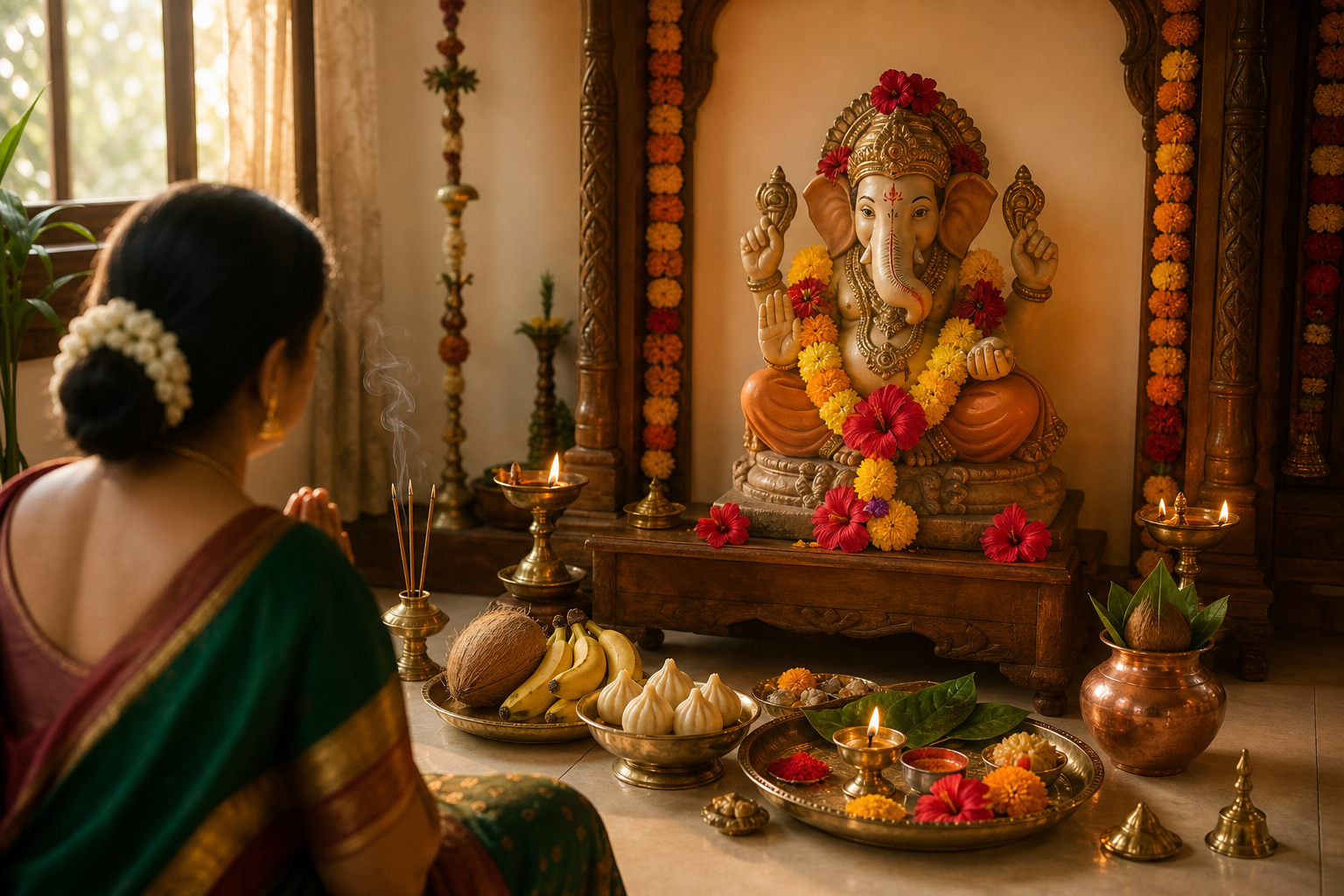
You may know that Ganesh Jayanti falls in January 2026 and still be unsure about the part that affects your observance: which local time to use, what belongs on the altar, and how much ritual is actually necessary. The date is fixed, but the correct puja window is local, and a sincere home observance need not become an elaborate production.
Ganesh Jayanti, also known as Maghi Ganesha Jayanthi, commemorates the birth of Lord Ganesha. You can mark it through a clear sequence of purification, worship, prayer, learning, and seva while preserving the customs of your family and region.
Ganesh Jayanti 2026 at a glance
- Date: Thursday, 22 January 2026.
- Lunar observance: Magha Shukla Paksha Chaturthi, the fourth tithi of the bright fortnight in Magha.
- Puja timing: Use the daytime period during which Chaturthi prevails, based on a Panchang calculated for the place where you will perform the puja.
- Traditional offerings: Durva grass, red flowers, modak or another sattvic sweet, sesame, and jaggery.
- Devotional focus: Prayer to Lord Ganesha, disciplined intention, study, ethical action, and seva.
The civil date and the ritual time answer different questions. Thursday, 22 January 2026, tells you which day to reserve. The Chaturthi tithi tells you when the observance has its lunar basis. Because the exact local muhurta varies by place, there is no responsible clock time that can be copied worldwide.
Check a regional Panchang for the city where you will actually worship, not merely for your ancestral town or a temple in another time zone. Find Magha Shukla Chaturthi and identify the daytime period during which it prevails. If your family priest, sampradaya, or local temple follows a more specific rule, use that established practice. A forwarded timing card without a location should not overrule a locality-specific Panchang.
Build the home puja around the essentials
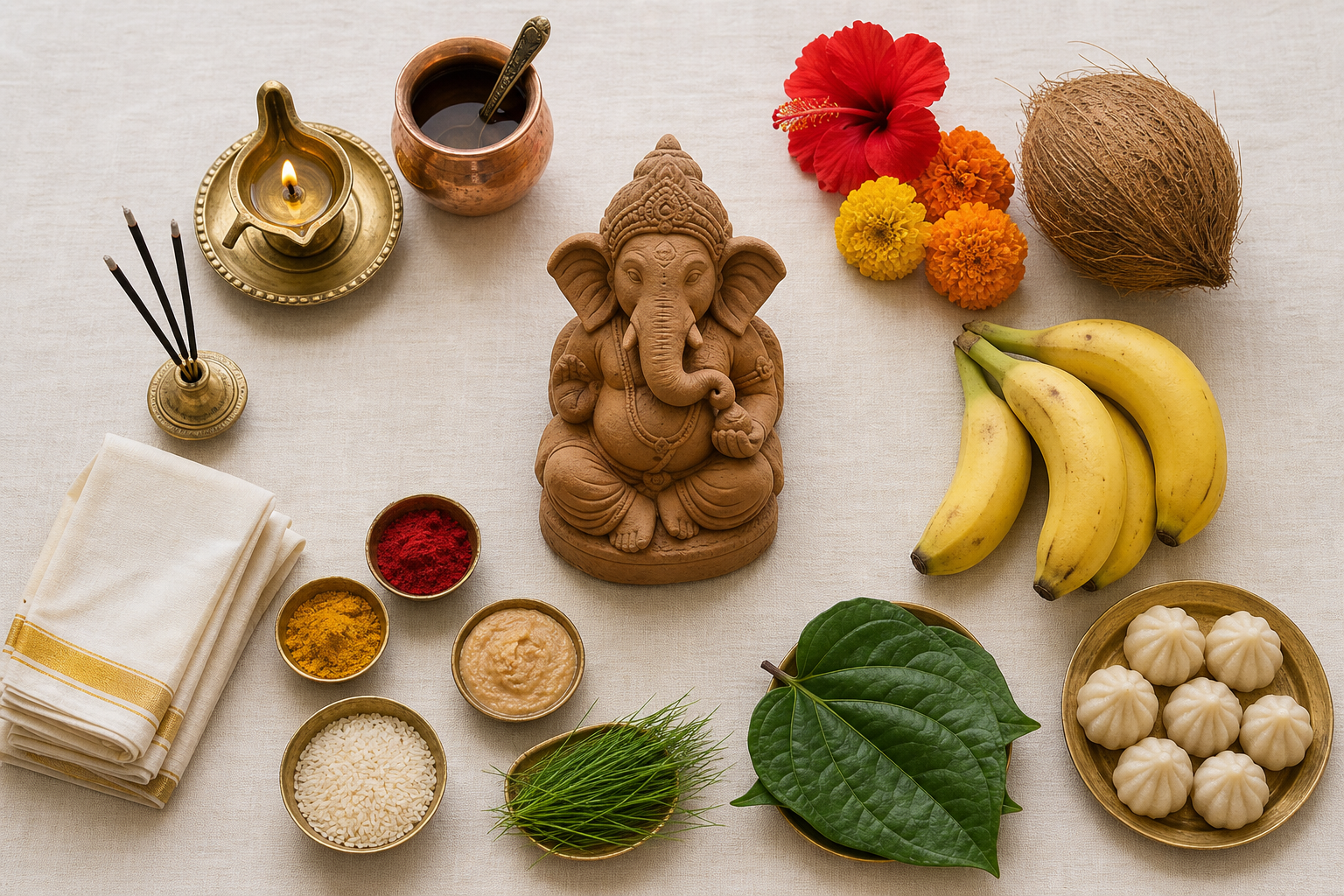
A long shopping list can obscure the purpose of the day. Start with a clean place, an image or murti of Lord Ganesha, a lamp, a sincere offering, and enough uninterrupted time to pray attentively. Add the customary materials that are available to you without treating abundance as a measure of bhakti.
Gather the materials before the puja window
- An image or murti of Lord Ganesha for a clean altar.
- A lamp that can be placed and tended safely.
- Durva grass and red flowers, where available and permitted by your tradition.
- Modak or another sattvic sweet for naivedya.
- Sesame and jaggery, either as offerings or in a customary til-gul preparation.
- The words of a Ganesha stotra you already follow, or the mantra Om Gam Ganapataye Namah.
- A written sankalpa naming the study, duty, or act of seva you intend to begin.
If one traditional material is unavailable, do not let that cancel the observance. Use what your household custom permits and keep the worship dignified. It is better to offer a modest naivedya with attention than to spend the puja window searching for a perfect assortment of items.
Follow a simple home sequence
- Set the time first. Note the local daytime Chaturthi window so that preparation does not consume it.
- Prepare yourself and the space. Bathe, wear clean clothing, clean the altar area, and place the Ganesha image or murti respectfully.
- State your sankalpa. Name the occasion and the specific discipline, beginning, or service to which you are committing yourself.
- Light the lamp and begin the worship. Settle your attention before making the offerings.
- Offer the customary items. Present durva, red flowers, modak or another sattvic sweet, and sesame-jaggery preparations according to your practice.
- Recite rather than rush. Chant Om Gam Ganapataye Namah, recite Ganesha Ashtottara or another familiar Ganesha stotra, or join a household bhajan.
- Reflect on Ganesha’s qualities. Give a few quiet moments to viveka, medha, and karuna: discernment, intellect, and compassion.
- Conclude with follow-through. Share the prasad, begin the study or ethical resolve you named, and carry out the chosen act of seva.
This is a practical devotional sequence, not a claim that every lineage has one universal paddhati. Preserve your family procedure where it differs. Temples may conduct special abhisheka, archana, and collective bhajans; at home, follow established practice for elaborate rites instead of improvising them.
Choose a vrata you can observe with integrity
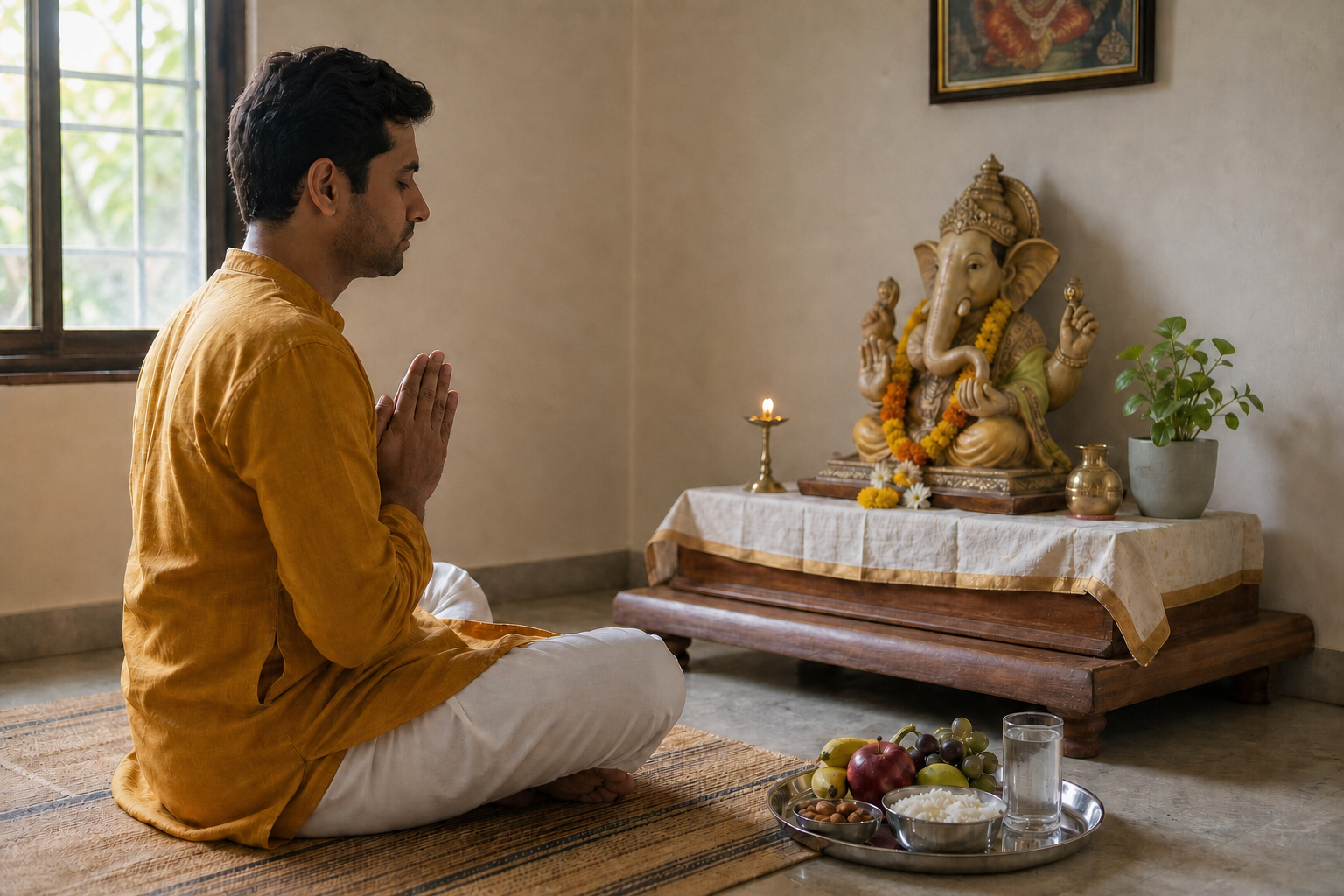
Many devotees keep a fast, but fasting is one expression of vrata rather than a competition in severity. Decide what you will undertake before the puja begins. If your household has a recognised fasting practice, follow it. If fasting would be unsafe for you, do not force it; use prayer, restraint, study, or seva as the disciplined form of the day, and seek appropriate medical guidance where needed.
The useful test is whether the vrata makes your conduct more attentive. A vow that leaves you irritable, careless, or unable to fulfil an essential duty has lost sight of its purpose. Keep the discipline clear enough that you can say at the end of the day whether you honoured it.
Regional customs can help you decide what a grounded observance looks like without turning regional patterns into rigid boundaries:
- Maharashtra and the Konkan belt: Home-centred pujas, seasonal sesame-jaggery preparations, gratitude, and the sharing of til-gul are characteristic expressions of the occasion.
- Parts of Karnataka and Goa: Devotees may combine visits to prominent Ganpati temples and communal worship with a restrained household puja focused on prayer and study.
- Families living elsewhere: Preserve the core through a local Panchang, a clean altar, familiar prayers, sattvic offerings, and a concrete act of service. You do not need to reproduce a large public celebration to maintain continuity.
Ganesh Jayanti is a Hindu observance. Its wider dharmic resonance lies in values that Hindu, Buddhist, Jain, and Sikh communities can recognise in their own distinct ways: compassion, learning, ethical action, humility, and service. Respecting that kinship does not require treating different rituals or doctrines as interchangeable.
Use the sankalpa to begin something real
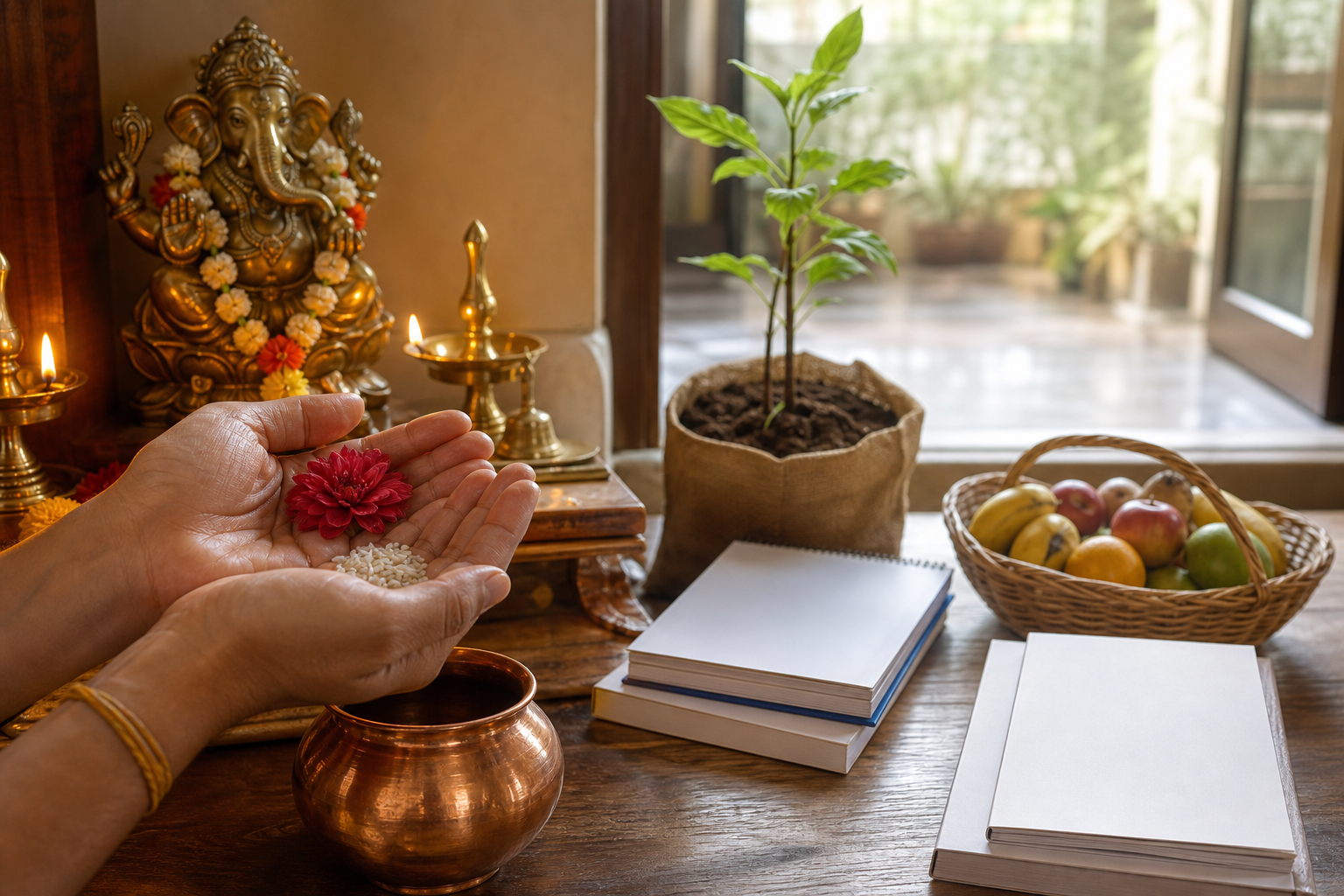
Lord Ganesha is honoured in connection with auspicious beginnings, wisdom, and the removal of obstacles. That does not make the festival a request for obstacles to disappear while your conduct remains unchanged. The practical force of the observance comes from joining devotion to a first responsible action.
- For viveka, choose one decision. Write down the dharmic principle that should govern it, then remove one option that plainly conflicts with that principle.
- For medha, begin one course of learning. Open the text, lesson, or study plan on the day itself. A named first session is stronger than a vague promise to study more.
- For karuna, complete one act of seva. Give time, practical help, food, teaching, or another form of support that meets a real need within your capacity.
Keep the sankalpa narrow. One ethical resolve that changes your next action is more useful than ten ceremonial promises. You might write it in this form: On Ganesh Jayanti, I will begin this duty by taking this first step. The sentence should name an action you can verify, not merely a feeling you hope to have.
For the 2026 observance, place four details on one note: Thursday, 22 January; your local daytime Chaturthi window; the few puja materials you will use; and one sankalpa you can start that day. Let the altar remain as simple as necessary, but make the commitment exact enough to carry into the days that follow.
References
