
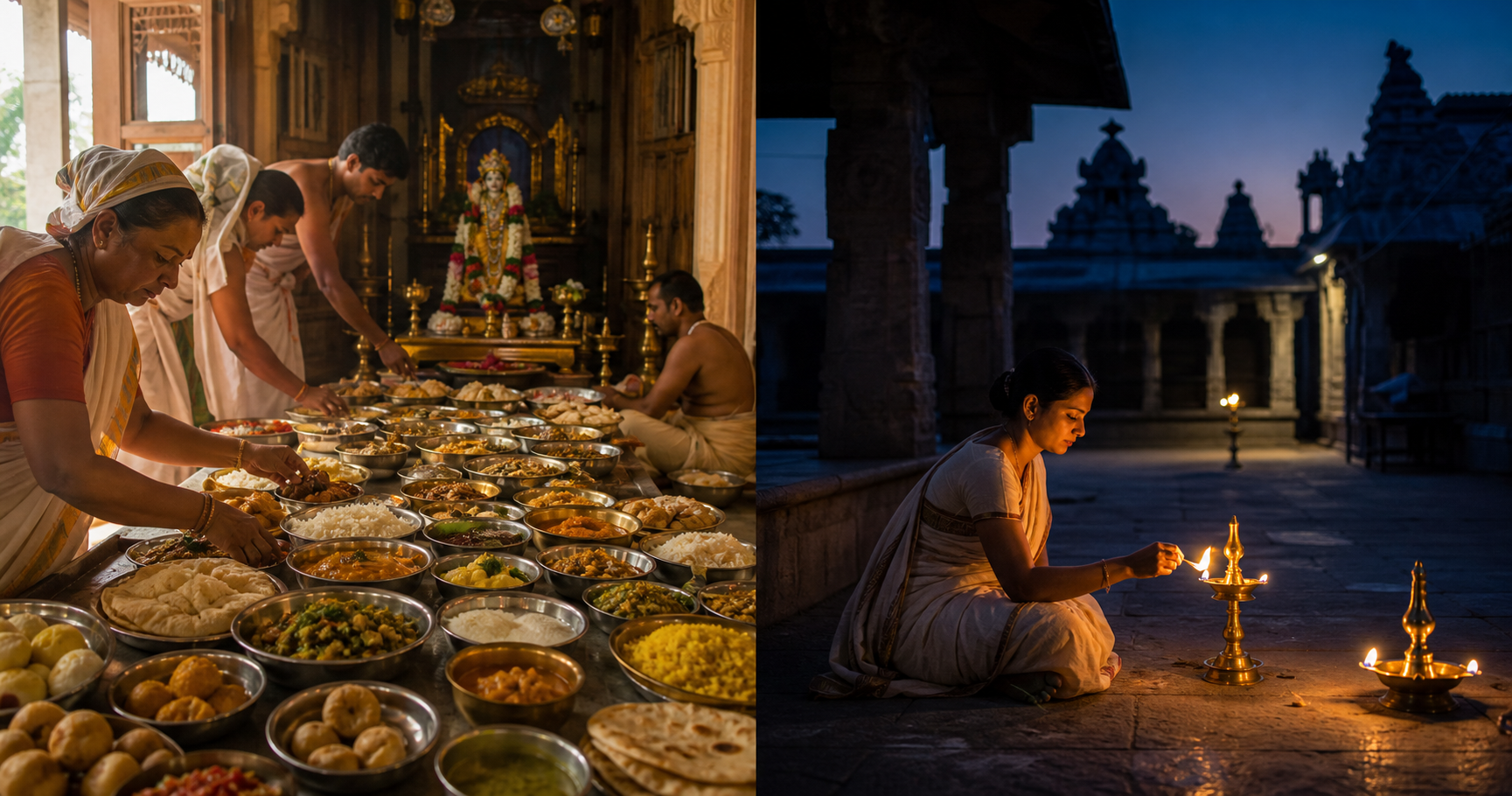
If you are deciding how to observe December 2 and 3, 2025, do not treat them as interchangeable festival dates. Vyanjan Dwadashi places Sri Krishna seva, nourishing food, and community sharing at the center of December 2. Bharani Deepam asks you to protect a quiet predawn hour on December 3 before the wider radiance of Karthigai Maha Deepam later that day.
You can participate meaningfully without attempting an elaborate program. The practical priority is different on each day: prepare and share on the first, then rise early and light the lamp on the second. Here is how to plan both observances while respecting their distinct traditions.
The two-day calendar at a glance
| Date | Observance | Traditional anchor | Your practical priority |
|---|---|---|---|
| December 2, 2025 | Vyanjan Dwadashi | Margashirsha Shukla Dwadashi; Sri Krishna worship and the beginning of khichdi bhog for Sri Radharaman Dev | Offer a sattvic meal, remember Sri Krishna, and share prasada or food |
| December 3, 2025 | Bharani Deepam | Predawn inaugural rite of Karthigai Deepam, traditionally around 4:00 AM IST | Prepare the lamp the night before, observe a quiet predawn practice, and check the local temple schedule for the evening celebration |
The published dates give you the overall sequence, but a temple may announce its own darshan, sankirtan, prasada, Deeparadhanai, or evening Maha Deepam schedule. If you plan to attend in person, confirm those local times rather than assuming that the principal observance begins when the temple normally opens.
The time-zone distinction matters especially on December 3. The traditional Bharani Deepam time given here is approximately 4:00 AM IST. If you live outside India, ask your temple whether it will follow its own local liturgical schedule or mark the Indian observance simultaneously. Do not assume that 4:00 AM IST automatically means 4:00 AM where you live.
December 2: Make Vyanjan Dwadashi a day of nourishing seva
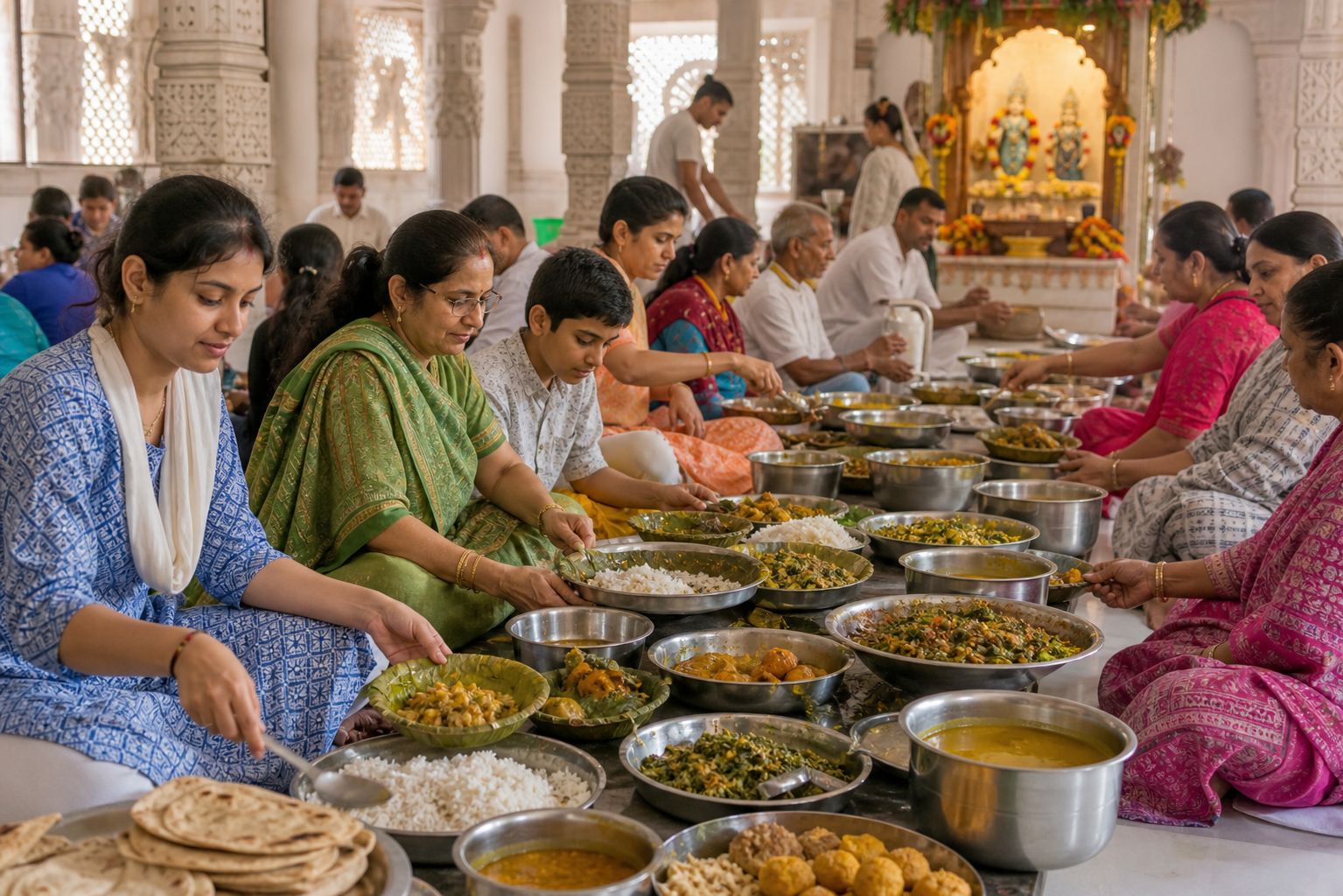
Vyanjan Dwadashi occurs on Margashirsha Shukla Dwadashi, immediately after the Ekadashi associated with Gita Jayanti. Its devotional mood carries contemplation into service. The characteristic act is not display but nourishment: khichdi made with rice, lentils, and seasonal produce becomes bhog for Sri Krishna and then prasada to be shared.
If you are observing at home, decide in advance who will receive the food after the offering. That decision keeps the practice from ending at the altar. Your recipient might be your household, a neighbor, or a community food program. If cooked-food distribution is impractical, contributing grains for anna-dana remains aligned with the day’s emphasis on nourishment and charity.
- Clean the cooking and worship areas before you begin. Choose a simple sattvic preparation rather than turning the meal into a culinary display.
- Prepare khichdi from rice, lentils, and seasonal vegetables. Keep a portion untouched for the offering.
- Place the bhog before Sri Krishna with tulsi leaves and light a simple lamp.
- Chant Sri Krishna’s names or recite verses from the Bhagavad Gita. No elaborate program is necessary; attentive devotion is the point.
- After the offering, serve the food as prasada. Share it while it is fresh rather than saving the charitable part of the observance for an unspecified later time.
If you are going to a Krishna temple, look for more than the main darshan time. Krishna temples and many ISKCON centers may organize special darshan, sankirtan, prasada distribution, and anna-dana. Ask whether the temple needs uncooked grains, help with preparation, serving assistance, or a contribution toward the meal. A useful offering is one the temple can actually receive and distribute.
The association with Sri Radharaman Dev gives the khichdi bhog a tender mood of personal service. You do not have to reproduce a major temple’s arrangements at home. A modest meal prepared carefully, offered without haste, and shared promptly preserves the essential movement from food to bhog, from bhog to prasada, and from private devotion to fellowship.
December 3: Protect the predawn hour for Bharani Deepam
Bharani Deepam is the opening rite of the Karthigai Deepam festival day. The temple ceremony takes place before dawn and centers on Deeparadhanai, with consecrated ghee offered into the sacred flame. The traditional time is around 4:00 AM IST on December 3, 2025, well before the evening radiance of Karthigai Maha Deepam.
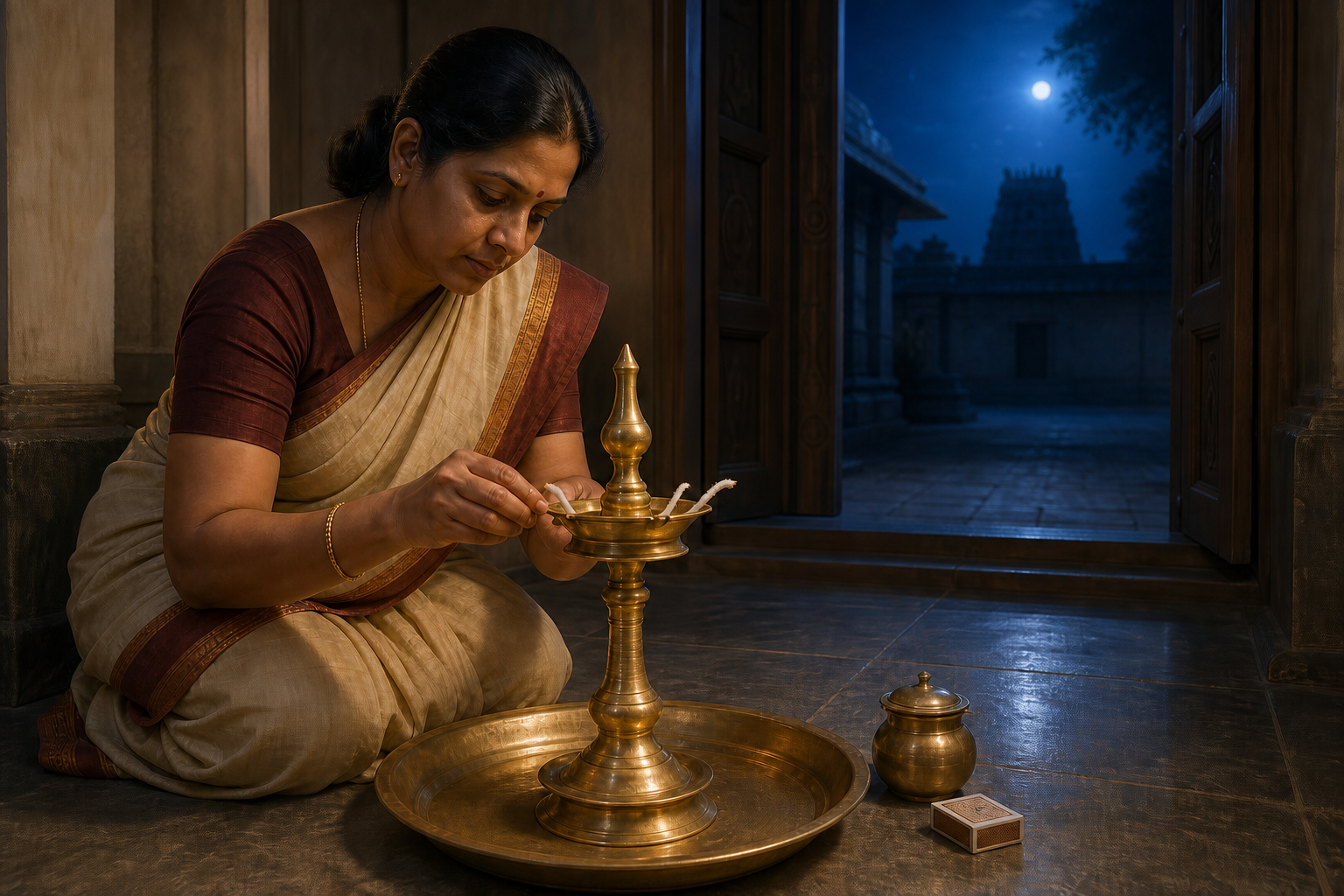
The main obstacle is usually not the ritual itself but the hour. Prepare before you sleep. Set out the lamp, wick, ghee, matches, and a clean plate on a stable surface. Choose your short prayer or meditation in advance. This lets you enter the observance quietly instead of searching for supplies while half awake.
- Wake with enough time to wash and settle before the chosen observance time.
- Keep the room quiet and the worship space uncluttered.
- Light one ghee lamp. Place it on a stable, heat-resistant surface, away from fabric, drafts, children, and pets, and never leave the flame unattended.
- Offer a short prayer, recite a familiar mantra, or remain in silent meditation. Let the single flame hold your attention without adding unnecessary activity.
- Afterward, carry the discipline into the day through mindful giving, care for an elder, or another concrete act of service.
A home lamp is a meaningful way to join the observance when temple attendance is not possible. It is not necessary to imitate a temple fire sacrifice without the setting, preparation, or customary guidance that belongs to that rite. The household practice described for Bharani Deepam is deliberately simple: a clean space, a ghee lamp, prayer or silence, and focused attention.
Do not let the predawn observance erase the rest of the festival day. Bharani Deepam is a threshold to Karthigai Maha Deepam, not a substitute for it. If you hope to attend the evening celebration, confirm the temple’s entry arrangements and lighting time beforehand. If you will remain at home, keep the evening lamp observance distinct from the stillness of the predawn vigil.
Connect the values without flattening the traditions
The two consecutive dates create a natural devotional progression. On December 2, an everyday meal becomes an offering and then shared nourishment. On December 3, a small flame becomes a discipline of attention before the larger communal celebration. Food and light are different ritual languages, but both ask you to move from inward intention to outward conduct.
This connection is especially useful for a mixed household or a community arranging a two-day program. Name each observance accurately before speaking about shared values. Vyanjan Dwadashi belongs to a Vaishnava bhakti setting centered on Sri Krishna, khichdi bhog, prasada, and sankirtan. Bharani Deepam belongs to the Tamil Karthigai Deepam cycle and is marked by the predawn sacred flame and the evening Maha Deepam. Respect begins with keeping those identities visible.
After that distinction is clear, the wider Dharmic resonance becomes meaningful. Compassion, ahimsa, dana, disciplined self-cultivation, and service are honored across Hindu, Buddhist, Jain, and Sikh communities, although their rituals and theological meanings are not identical. A shared meal can recall the social ethic of community nourishment; a lamp can direct attention toward wisdom and the removal of inner obscuration. These parallels should build fellowship, not claim that every tradition performs the same observance.
If you are organizing a public program, use that sequence in your announcements. Give the precise festival name, date, tradition, and practice first. Then invite broader participation through food service, charitable giving, care for elders, or quiet reflection. Guests can join the common ethical work without being asked to blur the lineage of the worship itself.
Key takeaways
- Reserve December 2 for Vyanjan Dwadashi: prepare a simple khichdi bhog for Sri Krishna, include tulsi and a lamp, and plan the sharing of prasada before you start cooking.
- Ask Krishna temples and ISKCON centers about special darshan, sankirtan, anna-dana, and prasada distribution rather than relying on ordinary opening hours.
- Prepare the Bharani Deepam lamp on the night of December 2 so the predawn observance on December 3 remains quiet and focused.
- Treat approximately 4:00 AM as an IST timing. Outside India, confirm whether your local temple follows local time or coordinates with the observance in India.
- Keep a home lamp safe and simple. Do not leave it unattended or attempt to reproduce a formal temple fire rite without customary guidance.
- Connect the two days through seva, clarity, compassion, and disciplined devotion while preserving each observance’s own name, setting, and ritual character.
Before December begins, make two decisions: where the khichdi will be shared on December 2, and where the lamp will be safely lit before dawn on December 3. Once those are settled, the observances stop being calendar entries and become a coherent two-day practice of nourishment, attention, and service.
References
- DharmaRenaissance Blog – Vyanjan Dwadashi 2025 (Dec 2): Sacred Significance, Khichdi Bhog, and Krishna Temple Rituals
- DharmaRenaissance Blog – Bharani Deepam 2025: Predawn Fire Rite Ignites Karthigai Deepam with Sacred Light
