
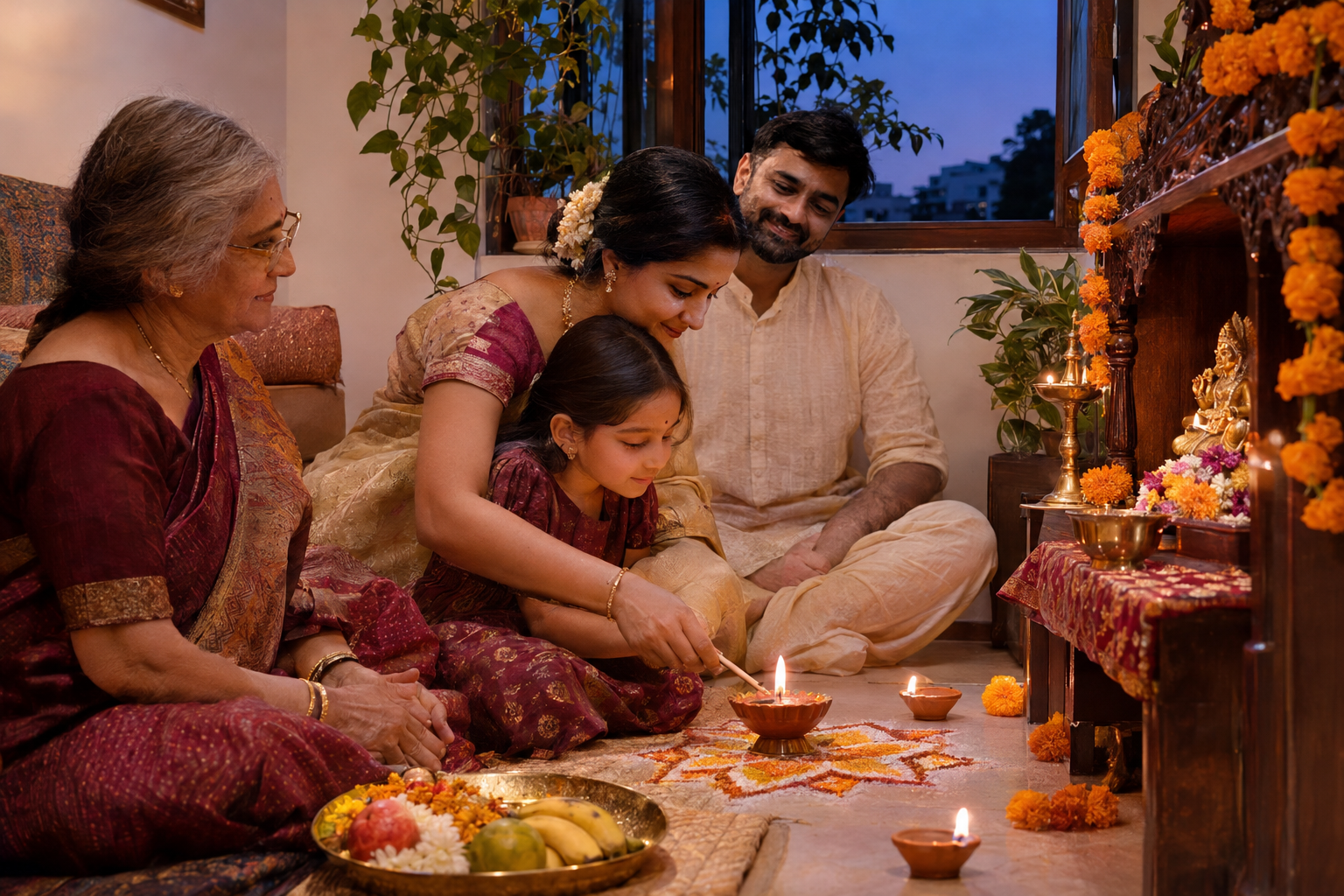
If your Diwali becomes a race between cleaning, shopping, cooking, messages and visits, the sacred part can shrink to a hurried lamp-lighting at the end. You do not need a more elaborate celebration. You need a spiritual center strong enough to order everything around it.
A workable way to make Diwali spiritually special is to protect three movements: prepare with sankalpa, worship with attention, and let the observance change how you give and relate. The details should come from your family, sampradaya and region. The structure simply keeps those details from disappearing into logistics.
Choose a sankalpa before preparations choose your priorities
A sankalpa is a deliberate resolve. It gives your observance a direction beyond having a pleasant evening or completing a ritual checklist. Write it before you begin the busiest preparations, while you can still distinguish spiritual intention from social expectation.
Use these prompts to make the resolve concrete:
- What habit or tendency has been darkening your judgement: resentment, distraction, dishonesty, waste, harsh speech or indifference?
- What quality do you want to cultivate in its place: steadiness, gratitude, restraint, courage, generosity or devotion?
- Who should benefit if that quality becomes visible in your conduct?
Turn your answers into a sentence you can remember during puja. For example: May this Diwali help me loosen resentment, speak more truthfully and bring greater peace into my home. The wording need not sound formal. A sincere resolve expressed in your own language is more useful than a grand promise you will not carry into daily life.
Keep the sankalpa narrow. Do not use the festival to promise a total reconstruction of your personality. Choose a change that can be noticed in an ordinary interaction after Diwali. If your resolve concerns speech, decide what you will stop saying. If it concerns generosity, decide whom you will serve. If it concerns devotion, identify the practice you will continue when the celebration is over.
A family can make a shared sankalpa while allowing each person to keep a private one. The shared resolve might concern hospitality, unnecessary consumption, care for elders or regular family prayer. Children can name a simple quality they understand instead of repeating adult language.
Prepare the home without mistaking polish for purity
Cleaning can prepare the mind when it removes neglect and makes room for worship. It loses that purpose when comparison takes over: the house must look richer, the decorations must be newer, or the celebration must impress visitors. Set the order of work according to sacred use rather than appearance.
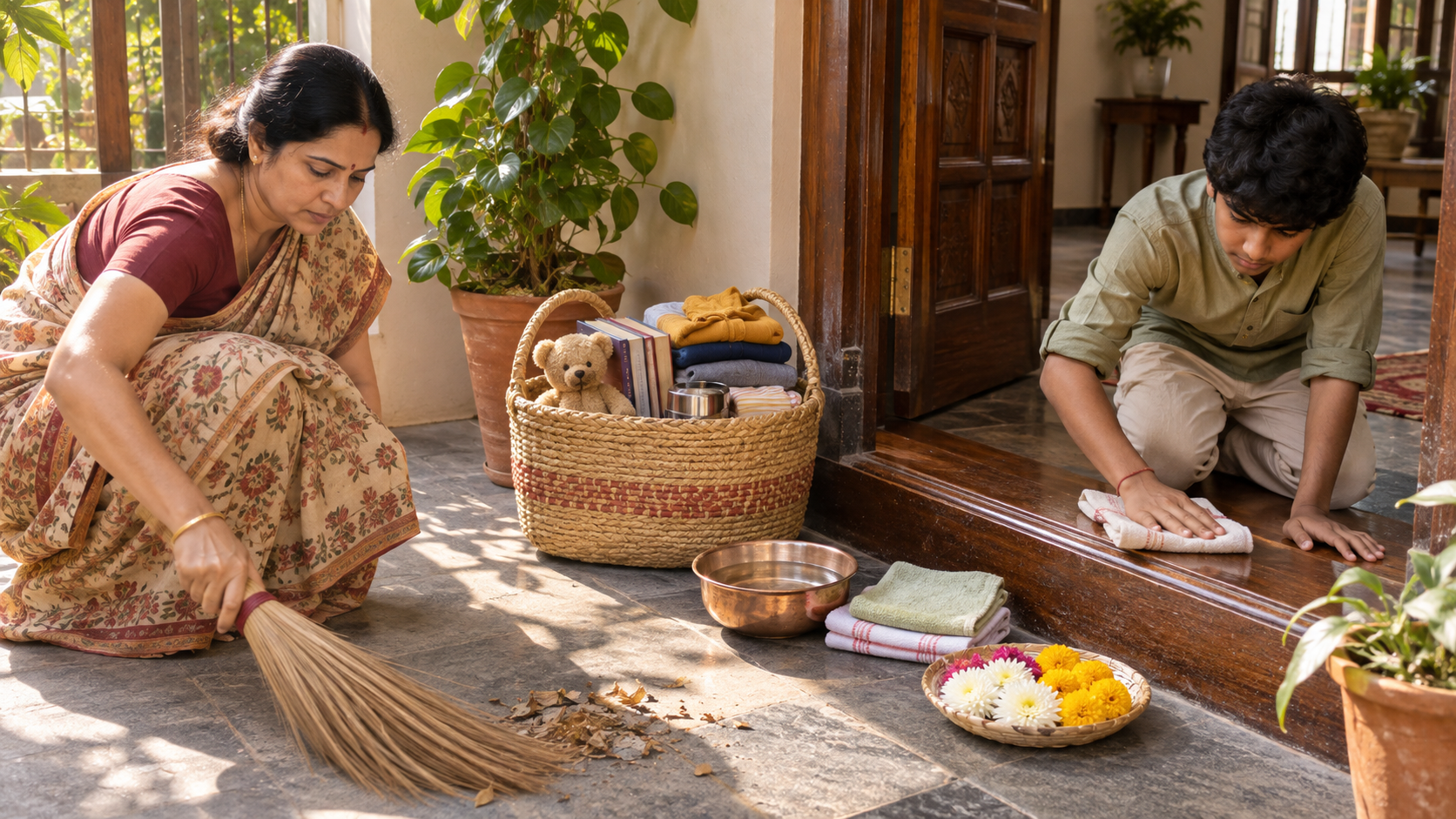
Begin with the place where you will pray. Remove dust, discard stale offerings appropriately, wash reusable vessels and gather the items required by your own tradition. Repair what can be repaired. After the worship space is ready, attend to the entrance and the room in which the household will gather. This sequence ensures that the altar is not the task left until everyone is exhausted.
If Abhyanga Snana belongs to your family’s observance, keep it in the customary place within the festival sequence. Treat bathing and clean clothing as preparation for attention, not as a substitute for it. If the practice is not part of your tradition, there is no need to borrow it merely because it appears on a generic festival checklist.
Divide the work so that the person cooking, cleaning or receiving guests also has uninterrupted time for worship. A celebration of dharma should not depend on making one member of the household invisible. Give children real, manageable responsibilities such as arranging flowers, placing unlit lamps, preparing seats or carrying prasad after an adult has completed the offering.
Decide in advance when shopping is finished. Without that boundary, preparation expands until it consumes the attention meant for prayer. Before buying another decorative object, ask whether it serves worship, hospitality or genuine delight. If it serves only comparison, leave it behind.
Conduct a simple puja you can actually attend to
Diwali observances differ across regions, communities and lineages. If your household performs Lakshmi Puja, follow the vidhi you have received. If another deity, teaching or sacred event stands at the center of your tradition, keep that center. Jain and Sikh families should likewise follow the observances proper to their traditions rather than treating a generic Hindu checklist as universal.
When you have no established household sequence, the following modest order can hold the evening together without pretending to replace sampradaya-specific instruction:
- End unrelated conversation and put distracting devices away from the worship space.
- Arrange the altar neatly with the murti, image or sacred focus your household normally uses.
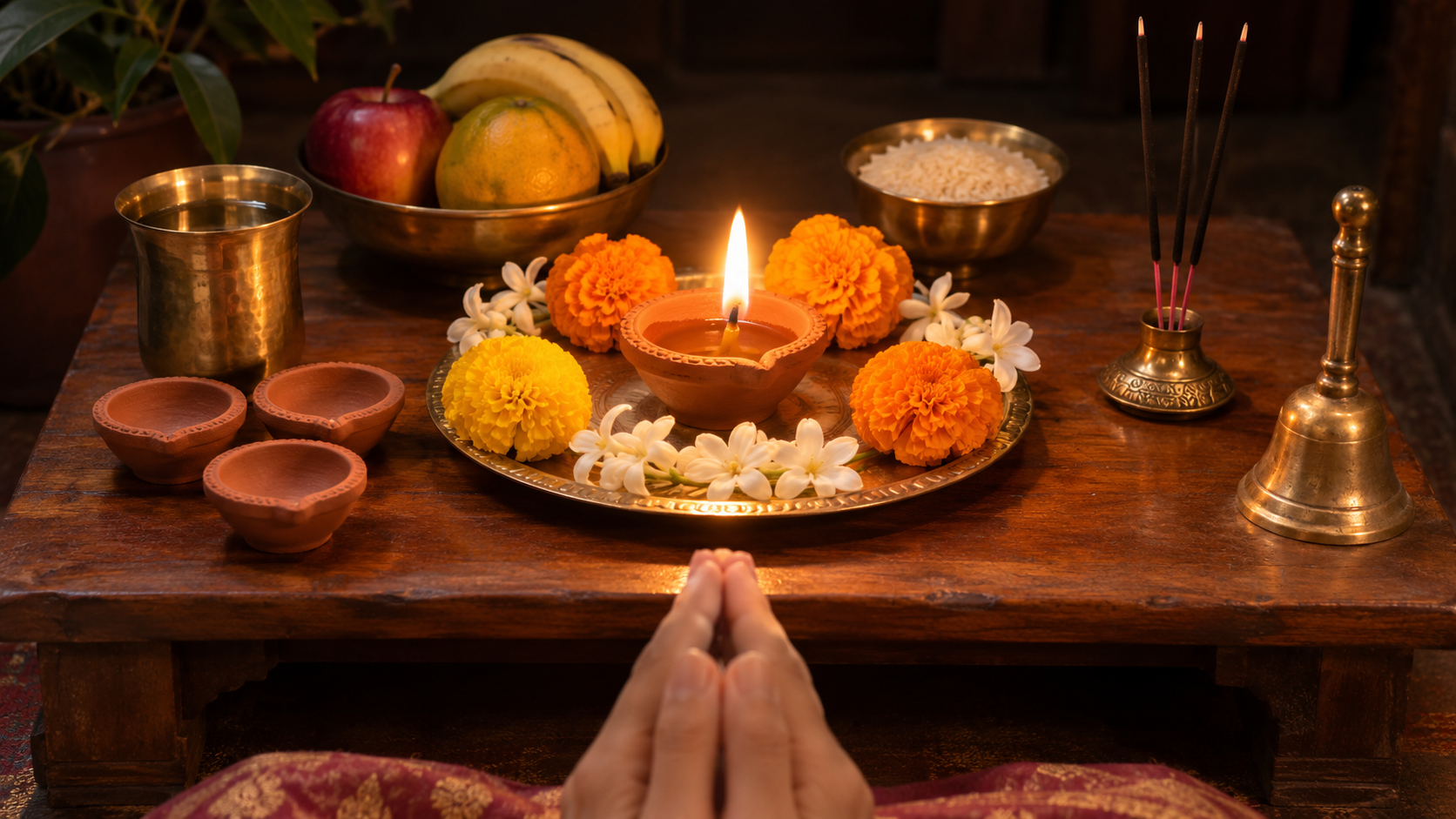
- Place appropriate offerings such as water, flowers, fruit or sweets according to your custom.
- State your sankalpa before beginning the main prayer.
- Light the diya and allow the act to mark a real change from preparation to worship.
- Recite the mantra, nama, stotra or prayer you know well enough to say with attention.
- Sit quietly after the recitation instead of immediately reaching for a phone or beginning the next task.
- Conclude according to your tradition, which may include aarti, pranam and the respectful distribution of prasad.
If your family has a received order, that order takes precedence over this outline. When you want to learn a fuller vidhi, ask an elder, acharya, pandit or temple teacher rooted in the relevant sampradaya. Combining unrelated instructions gathered from scattered videos can produce more anxiety than devotion.
Do not measure the puja by the quantity of materials on the altar. A familiar mantra recited attentively is preferable to a long recitation rushed through for completion. Silence also belongs in the observance. After prayer, let the meaning reach you before conversation, photography and entertainment resume.
If you use a real flame, place the diya on a stable, heat-resistant surface away from curtains, clothing, paper decorations and crowded edges. Keep children and animals from reaching it, and never leave it unattended. Where an open flame is unsafe or prohibited, use a safe electric lamp rather than turning devotion into a preventable danger.
When time is limited, protect the essential movement: arrive inwardly, state the resolve, make the offering, pray with attention, remain quiet and conclude respectfully. Shortening the observance is not the same as becoming careless.
Turn the light outward through dana, seva and repair
A lamp can remain a decoration, or it can expose a contradiction. If worship leaves your grudges, consumption and treatment of other people untouched, the outer brightness has not yet become a spiritual practice. Complete the observance with an action that costs you something meaningful: money you could have spent, time you could have kept, pride you could have defended or convenience you could have protected.
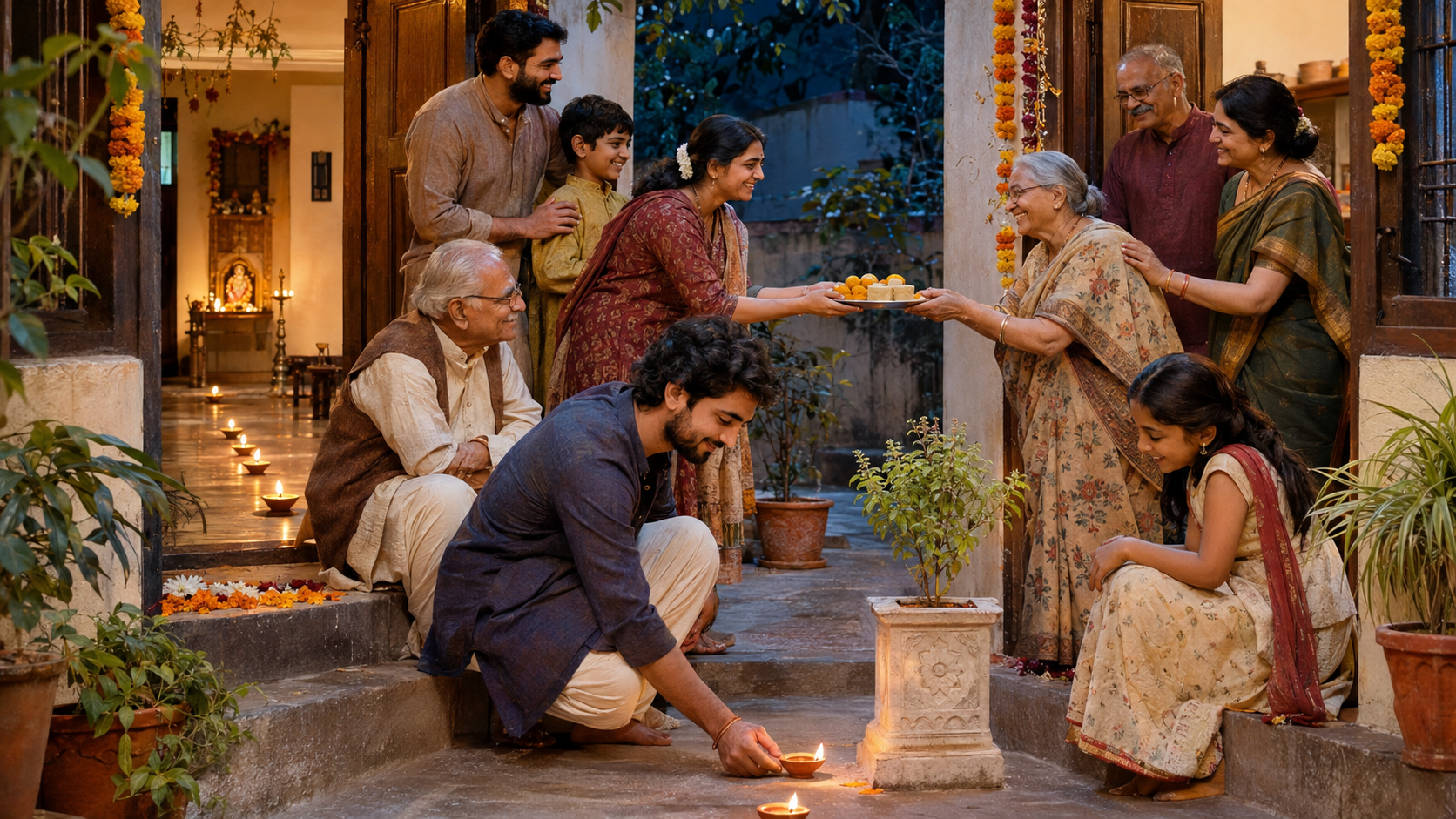
For dana, choose the recipient before festival spending absorbs the available money. Give within your means and without neglecting household obligations. Offer useful food, clothing, money or practical support according to the recipient’s actual needs. Do not use damaged leftovers as a performance of generosity. Preserve the person’s dignity, and do not photograph or publicize the gift without genuine consent.
Seva can be directed close to home. Make sure an elderly relative is included rather than merely sent a greeting. Carry food to someone who cannot join the gathering. Relieve the household member who has done most of the preparation. Thank workers directly and avoid creating needless labor for others in the name of celebration.
Relationship repair requires care. Diwali does not oblige you to resume an unsafe relationship or erase a serious wrong. It can, however, be an occasion to acknowledge your own conduct. If you owe an apology, name what you did without defending it, ask what repair is possible and accept that the other person may need time. Do not demand forgiveness as part of your festival experience.
Finally, connect the sankalpa to a continuing practice. Put the diya away when appropriate, but retain a visible reminder of the resolve near your prayer space. Continue a familiar prayer, an act of restraint, a form of service or a correction in speech. The practice should be small enough to survive an ordinary working day. That is where the festival begins to shape character rather than memory alone.
Key takeaways for a spiritually focused Diwali
- Write a specific sankalpa before shopping, cleaning and social obligations take over.
- Prepare the worship space first, then organize the rest of the home around its sacred use.
- Follow your family and sampradaya rather than assembling an impressive but disconnected ritual.
- Keep the puja simple enough that you can pray, offer and sit in silence with full attention.
- Complete worship through dana, seva or a sincere act of relationship repair.
- Carry a manageable part of the sankalpa into ordinary life after the celebration.
Before the festival rush begins, write your sankalpa and decide where your dana or seva will go. Put both commitments where the household can see them. Once those choices are protected, the lamps, food and gatherings can support the observance instead of replacing it.
References

Leave a Reply
You must be logged in to post a comment.