
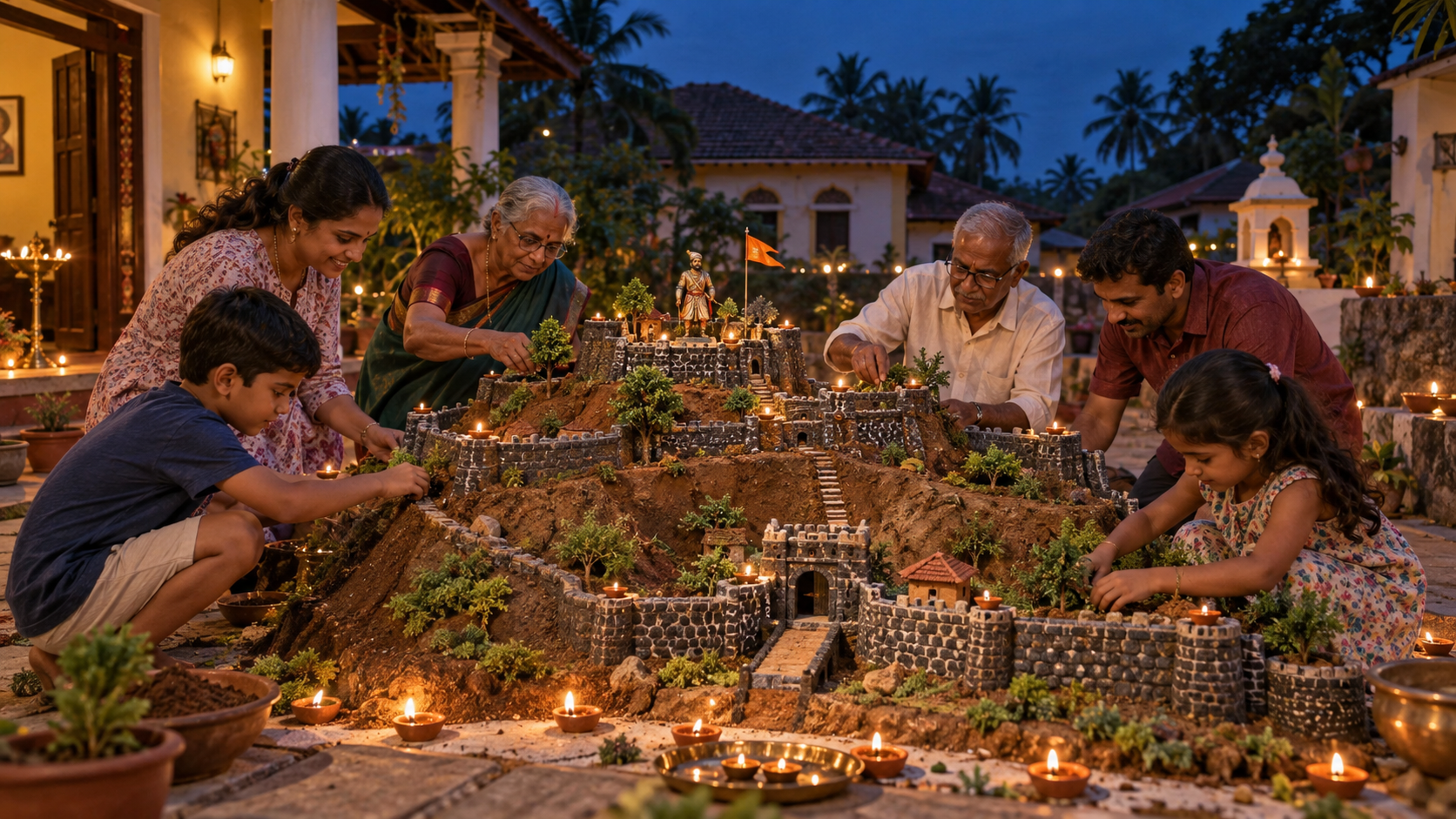
If you are helping a child, school, temple group or neighbourhood team make a Diwali fort in Goa, the easiest mistake is to begin with craft materials and decoration. Begin with a question instead: what should the young builder understand about Chhatrapati Shivaji Maharaj when the model is complete?
A meaningful fort does not have to be the largest or most elaborate entry. It has to make a clear historical idea visible, separate knowledge from imagination and give its builders something worth explaining.
Why this Diwali activity carries a historical purpose
In Goa, the Akhil Gomantak Shivpremi Sanghatana, in association with the state’s Directorate of Archives and Archaeology, has announced a state-level Diwali fort-making competition. Its stated purpose is to awaken valour among young people and connect them with the legacy of Chhatrapati Shivaji Maharaj.
That purpose gives you a practical test for the finished work. Remove the lamps, flags and decorative finish in your mind. Can the builder still explain what the fort represents, why its parts were arranged that way and what Shivaji Maharaj’s legacy means to the project? If not, the historical lesson has been buried beneath the display.
Valour should not be reduced to aggression or theatrical scenes of conflict. For an educational project, you can frame it through courage, preparedness, discipline, responsibility and service to a larger cause. Those ideas give young participants something they can practise, not merely praise.
Plan the lesson before planning the miniature
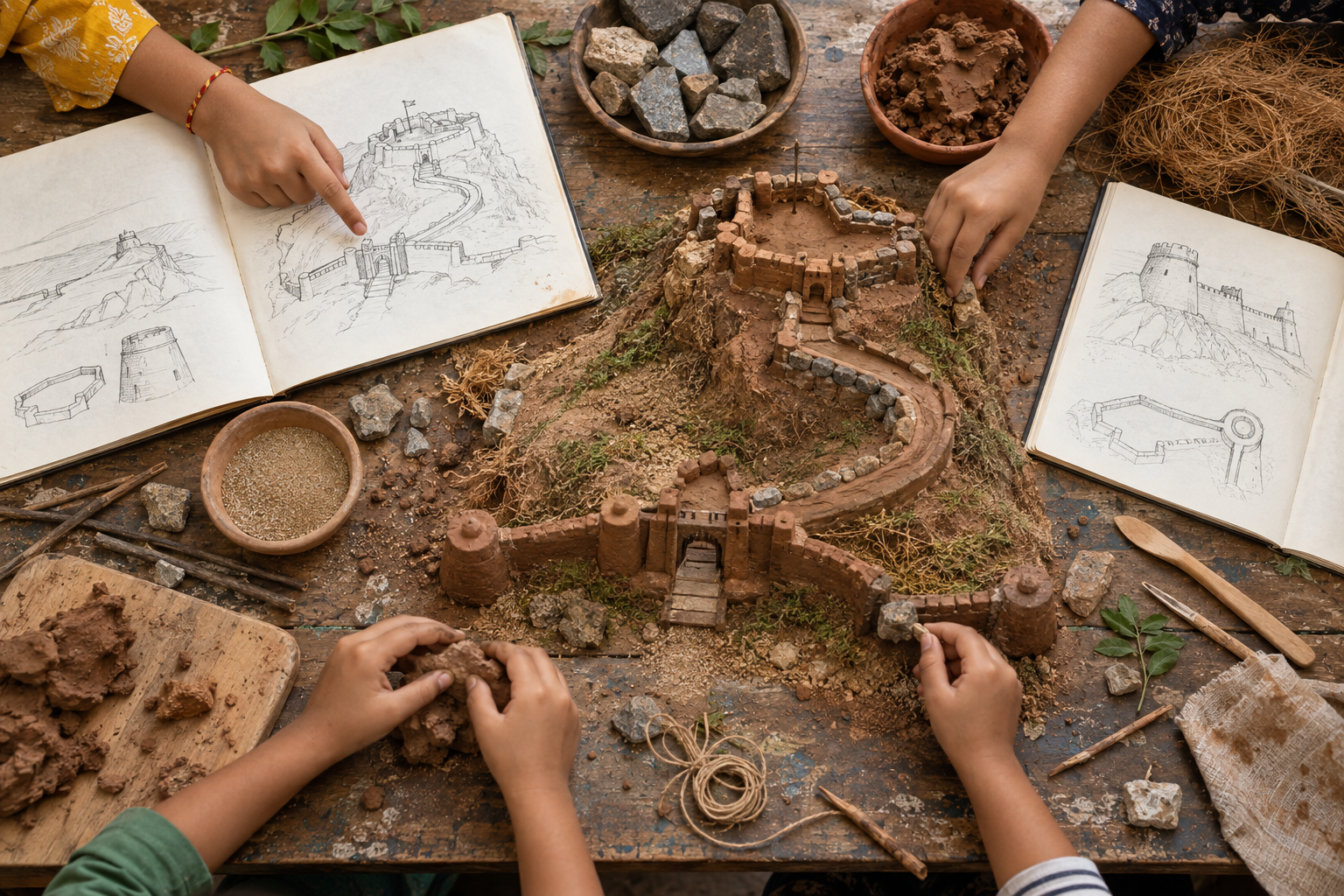
A model becomes easier to design once its learning purpose is written down. Use this sequence before anyone starts cutting, shaping or painting:
- Choose one guiding question. You might ask how terrain influences a fort’s plan, why an entrance cannot be treated as an ordinary opening, or how preparation supports courage. Do not try to teach the whole life of Shivaji Maharaj through one miniature.
- Select a historical anchor. This can be an identified fort or a clearly defined principle of fort planning. Verify the claims you intend to present, especially names, dates and associations. If you cannot verify a detail, do not turn it into a confident historical statement.
- Separate three kinds of decisions on the planning sheet: verified history, reasonable interpretation and decorative choice. This prevents a creative addition from quietly becoming a supposed fact.
- Draw the layout from above. Mark the entrance, routes, walls, changes in ground level and any other element you intend to build. Include only features that the participants can explain.
- Prepare the explanation alongside the model. Each builder should be able to identify the historical anchor, describe one deliberate design choice and state what was learned.
If you intend to enter the competition, confirm the official rules with the organisers before buying or cutting materials. Do not assume the permitted dimensions, materials, age groups, judging criteria, submission process or deadline. A historically thoughtful model can still become ineligible if its team works from guessed competition requirements.
Build a fort that teaches, not just impresses
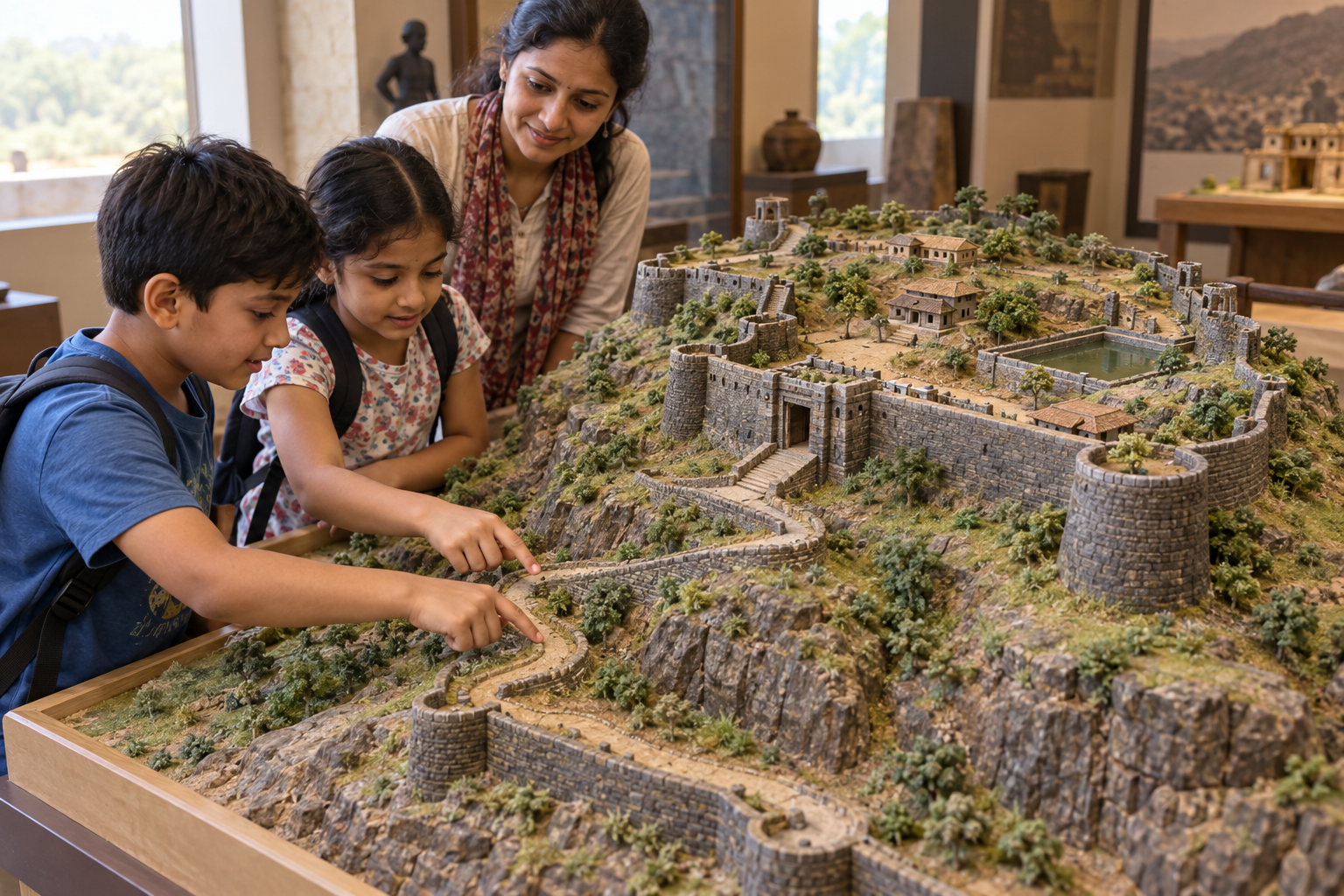
Good visual design helps a viewer understand the model without a long speech. Before adding more ornament, inspect the basic structure with these questions:
- Can a viewer distinguish the fort from the surrounding terrain?
- Is the entrance visible, and does its placement appear deliberate?
- Do the paths, walls and changes in height form a coherent plan?
- Can the builder explain the purpose of every prominent feature?
- Are labels readable without covering the structure they describe?
- Does the decoration support the historical subject, or is it competing with it?
Use restraint when evidence is limited. Combining attractive features from unrelated places may produce a dramatic model, but it should not be presented as an accurate reconstruction of a particular fort. Call it a creative interpretation and say which parts are imaginative. Historical pride becomes more credible, not less, when you are candid about what you know.
Keep Shivaji Maharaj at the centre through thought, not simply through a portrait or nameplate. Ask the participants why the position was chosen, how people would enter and move through the space, what weakness they tried to avoid and which design decision required the most care. Their answers reveal whether they built a meaningful representation or merely decorated an object.
The association with Goa’s Directorate of Archives and Archaeology is also a reason to take historical accuracy seriously. It does not require children to produce a museum reconstruction. It does require adults to stop rewarding invented incidents, unsupported dates and confident storytelling that cannot be distinguished from fact.
Safety belongs in the plan as well. Match tools and tasks to the participant’s ability, keep cutting and electrical work under appropriate adult supervision, stabilise the base before adding height and keep lamps or other heat sources away from flammable craft materials. A display intended to teach responsibility should be built responsibly.
Key takeaways for families, schools and community groups
- Treat the fort as a heritage lesson with a physical form, not as decoration carrying a historical label.
- Begin with one question that the model will help a young builder answer.
- Separate verified history, interpretation and artistic choice before construction begins.
- Include only prominent features that participants can identify and explain.
- Present valour through courage joined to preparation, discipline and responsibility.
- Confirm all competition rules directly with the organisers instead of guessing from previous events or informal messages.
Let the learning remain after the model is dismantled
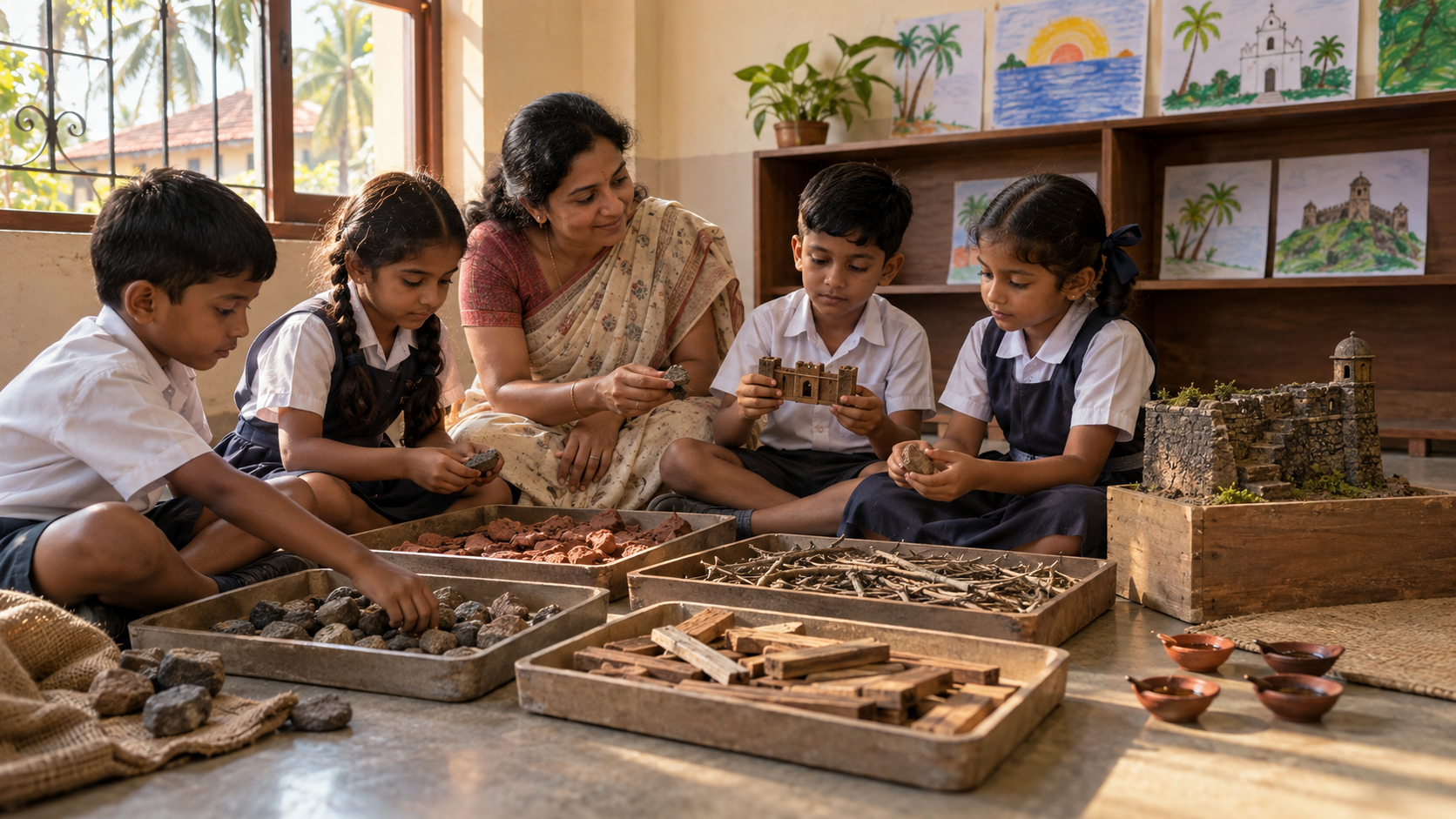
Before the Diwali display comes down, photograph the fort from above, at entrance level and close enough to preserve its important details. Keep the original plan, the distinction between historical and creative elements, and a short note written by the builder. A school or community group can display that record later without storing the entire model.
Then ask the builder what should change in a future version. Perhaps the terrain needs to be clearer, a claim needs better verification or an ornamental feature should be removed. That final act of reflection turns a seasonal project into continuing heritage education. Build this Diwali’s fort carefully enough that the next one begins with better questions.
References

Leave a Reply
You must be logged in to post a comment.