
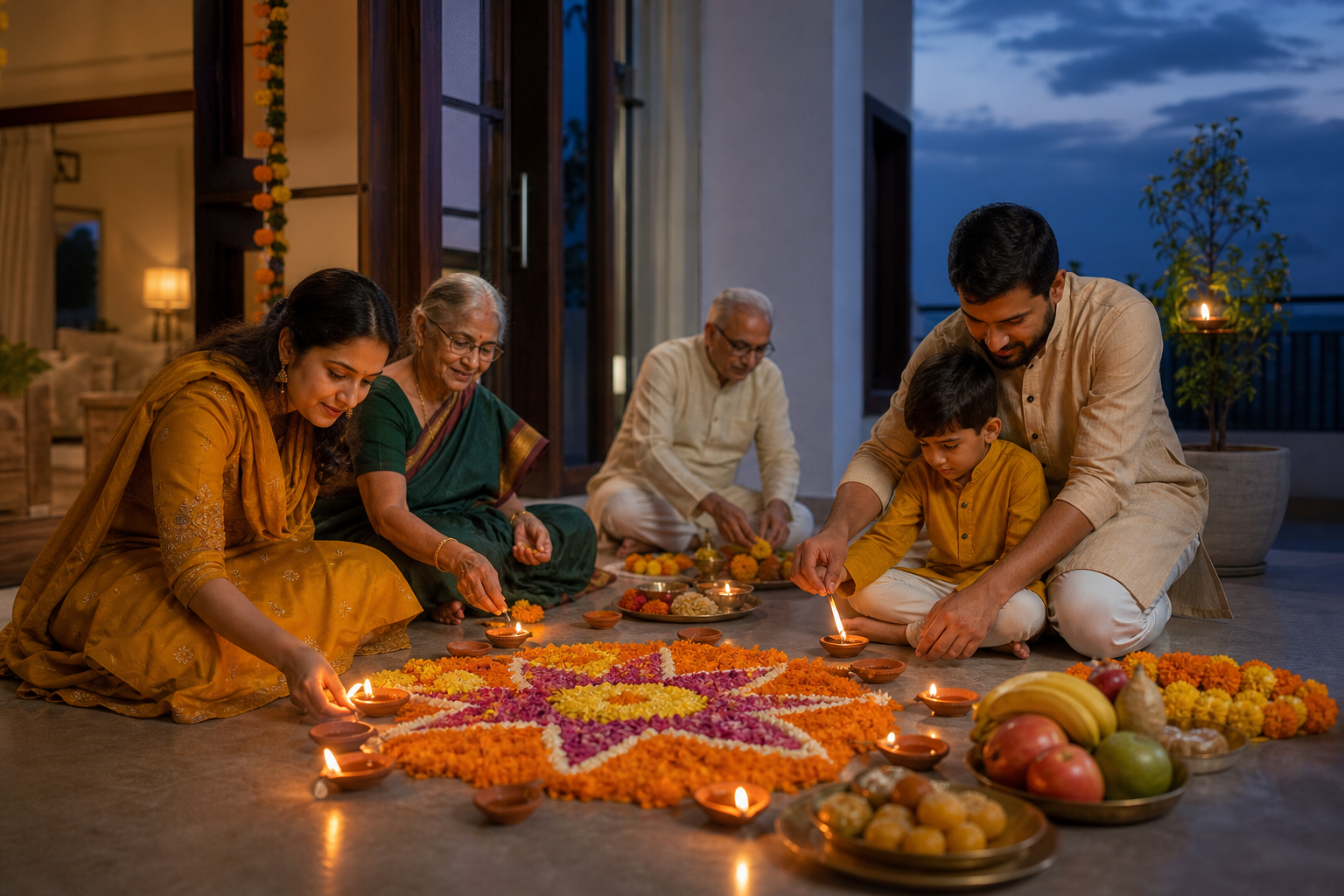
Your family chat may show several dates, several regional names, and more rituals than anyone can complete calmly. Start by separating the fixed 2025 calendar anchors from the local tithi and muhurta details. That gives you a dependable plan without treating one regional custom as universal.
The dates to reserve are October 18 for Dhanteras and Yam Deep Daan, October 20 for the principal Diwali observance, and October 23 for Bhai Dooj. Confirm the exact worship window for your location, then choose a small Kartika discipline that can continue after the festival lamps and decorations come down.
The three dates that anchor Diwali 2025
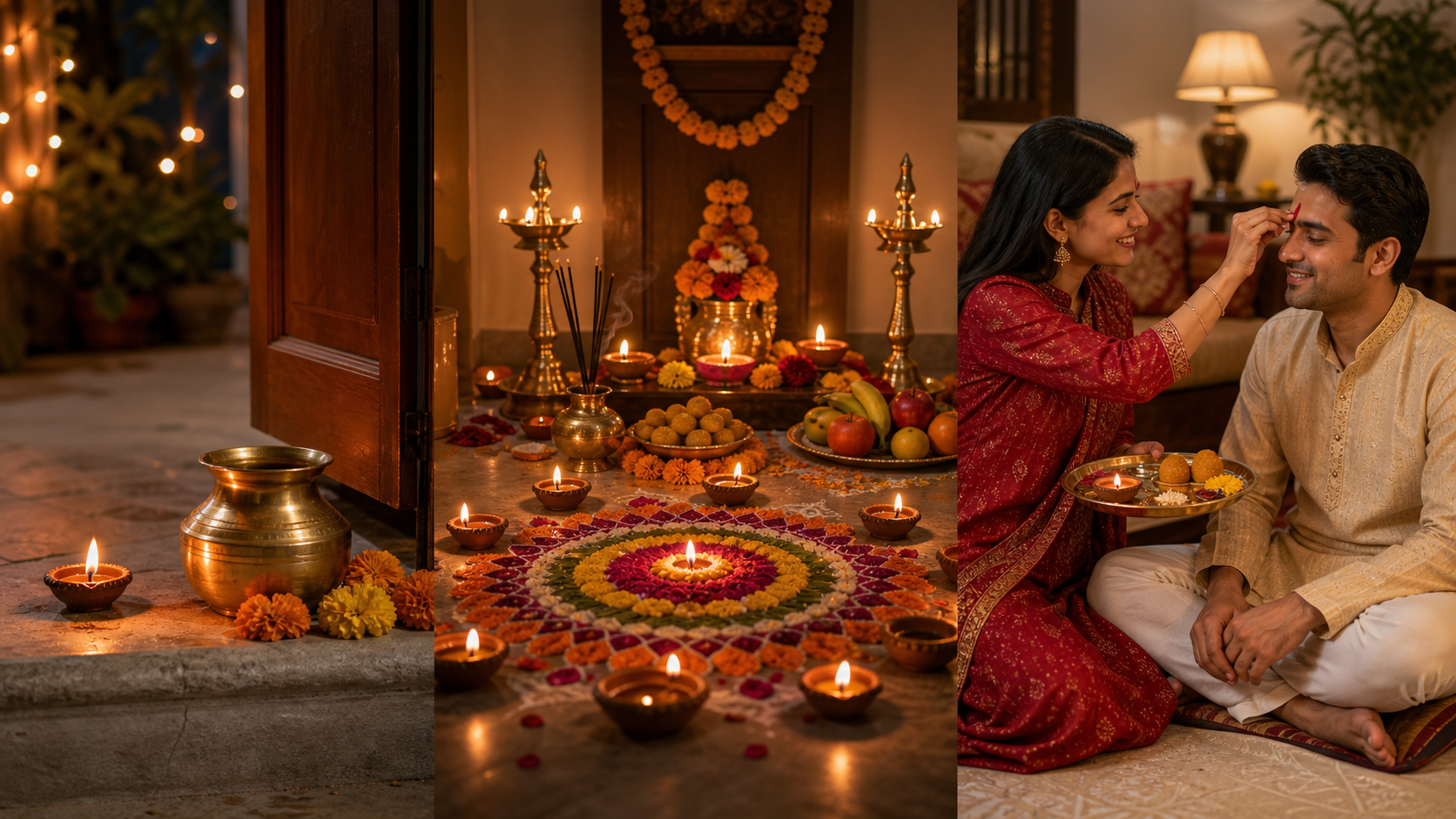
Put these dates into the shared family calendar first. The days around them may be labelled differently by regional calendars, and the local tithi can affect when a particular rite is performed.
| Date | Observance | What to plan |
|---|---|---|
| October 18, 2025 | Dhanteras, Dhantrayodashi, and Dhanvantari Jayanti | Prepare the shrine and entrance, make any considered purchase, perform Lakshmi-Kuber worship according to family custom, remember Dhanvantari, and offer Yam Deep after dusk. |
| October 20, 2025 | Principal Diwali and Lakshmi Puja | Keep the evening available for puja, lamps, family prayer, hospitality, gratitude, and giving. In many regional traditions, Diwali is associated with Kartika Amavasya. |
| October 23, 2025 | Bhai Dooj, Bhau Beej, Bhai Phonta, or Yama Dwitiya | Arrange the sibling visit or call, prepare the tilak and aarti thali, share sweets or a meal, and exchange blessings and thoughtful gifts. |
Key takeaways
- Reserve October 18, October 20, and October 23 before coordinating travel, meals, temple visits, or virtual participation.
- Place Yam Deep Daan with Dhanteras on October 18 after dusk; do not move it to Bhai Dooj on October 23.
- Use a panchang calculated for the place where the ritual will occur. A muhurta published for Bharat cannot be copied unchanged to another time zone.
- Do not wait until Diwali night to buy wicks, oil, flowers, puja ingredients, sweets, or sibling gifts.
- Choose one modest Kartika practice that you can sustain beyond the five-day festival.
One date confusion deserves special attention. Yam Deep Daan belongs to Trayodashi and the opening Dhanteras observance, while October 23 is Kartika Shukla Dwitiya and Bhai Dooj. Both days have Yama-linked narratives, but they are not the same ritual day. For a workable 2025 household calendar, offer the threshold lamp on October 18 and keep October 23 for the sibling observance.
Plan the Diwali arc as five different duties
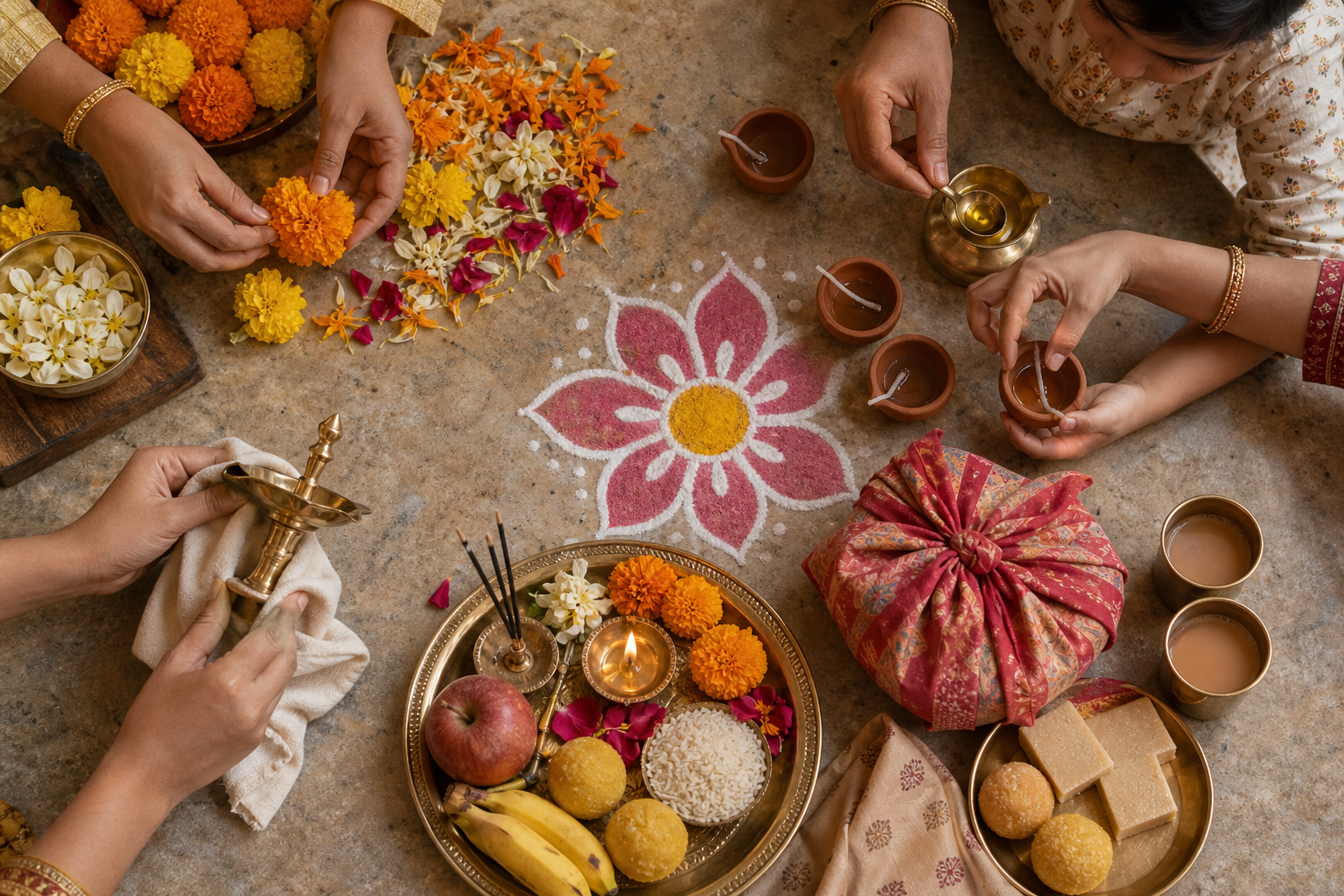
The familiar five-day sequence works best when each day has a distinct purpose. If every activity is postponed until Diwali night, puja competes with cooking, social visits, decorations, photographs, and messages. Spread the work across the festival instead.
- Dhanteras: prepare, protect, and purchase with discernment. Finish essential cleaning before the evening rather than turning the day into an exhausting renovation. Set out the lamps, cotton wicks, oil or ghee, flowers, sweets, kumkum, rice, and puja vessels. If you buy gold, silver, utensils, tools, or another household item, choose something useful and affordable. Dhanteras joins prosperity with health: Lakshmi and Kuber represent the responsible cultivation of resources, while Dhanvantari Jayanti places wellbeing and preventive care alongside wealth.
- Naraka Chaturdashi or Choti Diwali: make room for purification. Confirm its local tithi rather than assigning it a date from another city. Follow your household practice, which may include an oil bath, early worship, final cleaning, or the first larger arrangement of lamps. Keep the purpose visible: habits and disorder that darken the home should not be carried forward merely because the decorations look complete.
- Diwali and Lakshmi Puja: protect the centre of the evening. Reserve October 20 for the principal celebration. Decide before the day begins who will prepare the shrine, who will supervise lamps, who will welcome guests, and who will keep children away from open flames. A short, attentive family puja is better than a long ceremony conducted while everyone is distracted.
- Govardhan Puja or Annakut: follow your sampradaya and local temple. This observance belongs to the continuing Diwali sequence, but regional practice and tithi placement vary. If your family or temple observes it, ask in advance about food offerings, seva, darshan, or community meals. Do not assume that every household must reproduce the same Annakut arrangement.
- Bhai Dooj: make reciprocity real. On October 23, a sister may welcome her brother, perform aarti, apply tilak, and pray for his health and long life. The brother responds with blessings, goodwill, and a gift. A basic thali can contain a diya, kumkum or roli, rice, flowers, and sweets. When siblings live apart, agree on a call in advance; each person can honour the bond locally without pretending that a video call must reproduce every physical rite.
Apply a stewardship test to Dhanteras shopping
Dhanteras is not a command to spend beyond your means. Before buying, ask three questions: Will this item be used? Will it last? Does the purchase strengthen the household or support a craftsperson whose work you value? Gold or silver may suit one family; a steel vessel, a necessary tool, new clay diyas, or another durable household item may suit another. The dharmic measure is responsible prosperity, not the size of the receipt.
Make dāna part of the budget before discretionary shopping begins. Supporting a local potter, sharing food, or helping someone meet a practical need carries abundance beyond the household. It also prevents Lakshmi worship from being reduced to private accumulation.
Let one diya remain the spiritual centre
A crowded lighting display can be beautiful, but one carefully tended flame is sufficient for contemplative practice. The diya recalls Agni as purifier and witness, while its light represents discernment overcoming ignorance. A traditional interpretation sees the wick as the mind, the oil or ghee as the impressions and effort that feed it, and the flame as transforming knowledge. Use that image to make a specific sankalpa rather than a vague wish.
For Yam Deep Daan, families commonly place a clay lamp at the entrance after sunset, traditionally oriented toward the south. Sesame oil or ghee and a cotton wick are widely used, while the number of lamps varies by family custom. Place any diya on a stable, non-flammable surface, away from curtains, dry decorations, pets, and children. Never leave it unattended or obstruct a shared corridor. If an open threshold flame is unsafe where you live, keep the devotional lamp in a protected place near the entrance or household shrine.
Use the local panchang without getting trapped by time zones
A lunar tithi does not begin neatly at midnight, and its interval will not appear identical in every location. Sunrise, sunset, Pradosh Kaal, and a chosen lagna are local. This is why a calendar can identify the correct civil date but still be inadequate for the exact puja time.
- Choose the ritual location. Use the city where the diya will be lit and the puja performed, not the city where relatives or a family priest happen to live.
- Verify the relevant tithi. Look for Trayodashi for Dhanteras, Amavasya for the principal Diwali observance in traditions that follow it, and Shukla Dwitiya for Bhai Dooj.
- Check the evening window. Pradosh Kaal after sunset is traditionally favoured for Dhanteras worship and Yam Deep Daan. Households that use a Sthir Lagna for Lakshmi Puja should verify that separately.
- Coordinate remote families without merging clocks. Each household can perform its rite in its own valid local window. Use a mutually convenient time for greetings or shared recitation, even if that call does not coincide with every household’s puja.
- Give parampara its proper place. When two reputable calendars offer different practical choices because a tithi spans dates, follow the established method of your family, temple, or sampradaya. Do not combine fragments from several systems merely to produce the longest possible muhurta.
Month names can also differ without the underlying lunar sequence being different. Dhanteras may be identified with Kartika Krishna Trayodashi in a North Indian calendar and with Ashwin in Marathi, Telugu, Kannada, or Gujarati usage. The Gujarati New Year then begins with Kartik Sud 1 after Diwali. Treat the tithi, regional calendar system, and civil date as three related pieces of information rather than forcing every tradition to use one month label.
Carry the light forward through Kartika
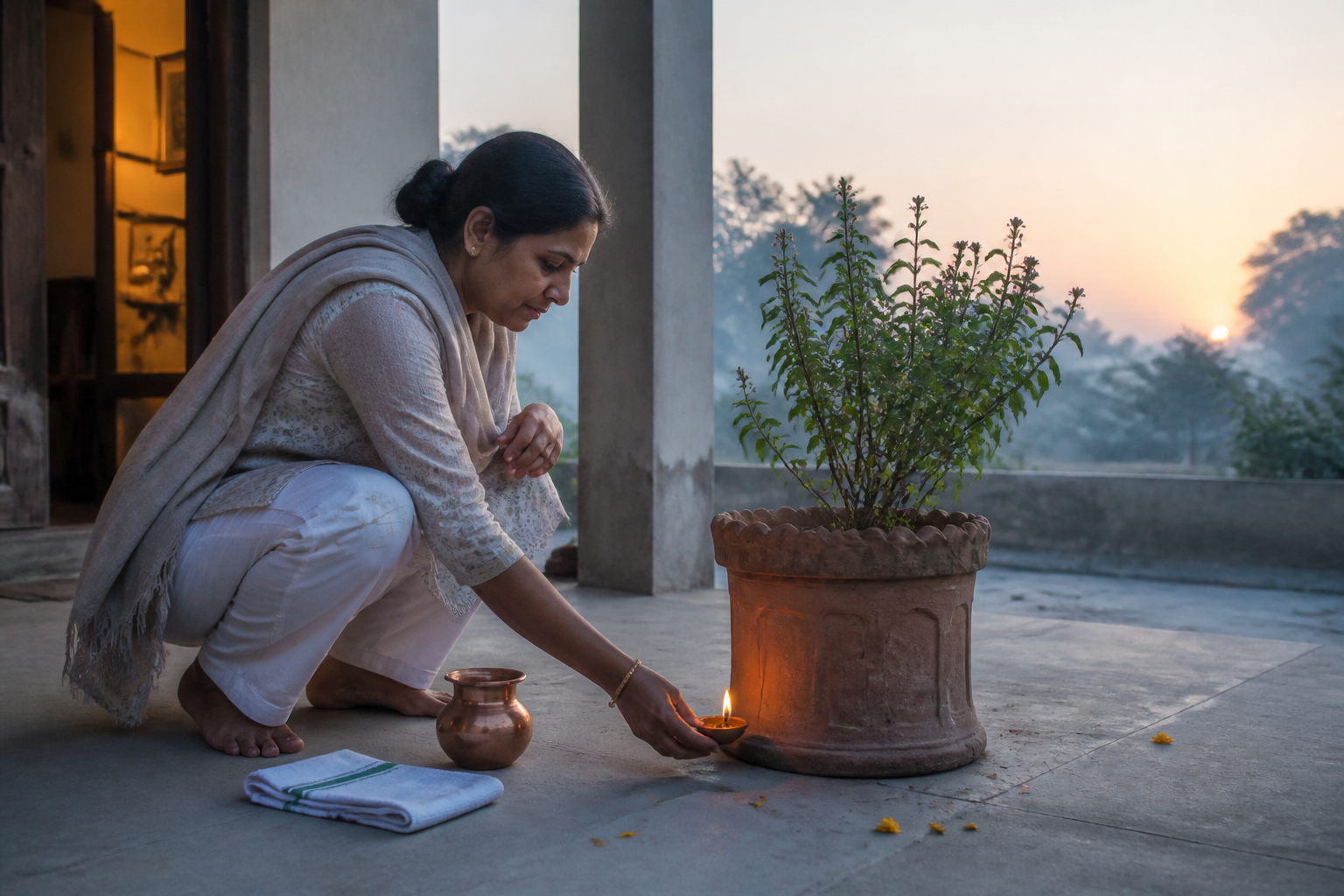
Diwali is a high point, not the whole of Kartika. The Skanda Purana and Padma Purana give special importance to disciplines such as vrata, dāna, dīpa-dāna, sacred bathing, and devotion during this month. Their practical strength lies in repetition: one lamp lit with attention every evening can shape conduct more deeply than a single elaborate night followed by complete neglect.
Build a Kartika routine that survives ordinary workdays:
- At dusk: light one safe diya at the shrine or another protected place. Recite a short mantra, read a small passage, or sit silently until your attention settles.
- At the household shrine: include Tulasi worship if it belongs to your tradition. Keep the practice simple enough that another family member can maintain it when you are busy.
- In the morning: follow Kartik Snan according to your health, climate, and family custom. Spiritual discipline does not require unsafe exposure or a performance of endurance.
- Through the month: choose a recurring act of dāna or seva. Decide the recipient, amount, food contribution, or service commitment in advance so generosity does not remain an intention.
- On key tithis: mark Prabodhini Ekadashi and Kartik Purnima using your local panchang. If fasting is part of your practice, follow the rules of your sampradaya and your actual physical capacity.
- At Kartik Purnima: participate in local temple observances where available. Dev Deepavali in Kashi is a prominent collective expression of Kartika lamp worship, but a home diya and sincere dāna remain meaningful when pilgrimage is not possible.
Honour shared light without flattening Dharmic traditions
Light carries recognisable meanings across the Dharmic family, but the observances are not interchangeable. Hindu households offer diyas in worship and renewal. Buddhist butter-lamp offerings express generosity and clarity. Jain uses of light and aarti honour the Jinas and awakened knowledge. Sikh communities observe Bandi Chhor Divas during the Diwali period, with illuminated gurdwaras recalling freedom and compassion. The shared image is wisdom dispelling darkness; the history, theology, and ritual grammar of each tradition should still be named on their own terms.
Your next step is concrete: reserve October 18, October 20, and October 23; ask your temple or family authority which local panchang to follow; buy only the supplies you will actually use; and choose one daily Kartika observance before Diwali begins. That small decision turns a crowded festival calendar into a sustained practice of clarity, stewardship, and seva.
References
- DharmaRenaissance Blog — Dhanteras 2025 Date: The Essential Guide to Puja Significance, Auspicious Buying, and Diwali Prep
- DharmaRenaissance Blog — Bhai Dooj 2025 (Bhau Beej): Discover the Complete Guide to Date, Rituals, and Meaning
- DharmaRenaissance Blog — पूजा-पाठ में दीपक क्यों जलाया जाता है? Discover the Complete, Proven Significance
- DharmaRenaissance Blog — Complete Guide to Kartika’s Transformative Month: Discover Proven Glories in Skanda & Padma Purana
- DharmaRenaissance Blog — Yam Deep Daan Pooja 2025: Complete Guide to Rituals, Significance, and Diwali Harmony
